15 Fish That Jump Out of Water (Ocean Acrobats and Tank Escape Species)
I still remember the first time a fish landed on my living room floor. It was a giant danio, mid-morning, three feet from the tank. No lid, no warning, just a small silver body flopping on the carpet.
That moment taught me something every fish keeper eventually learns: fish jump far more often than people expect, and some species do it constantly.
This is not just a home aquarium quirk either. Out in open water, jumping is one of the most dramatic behaviors in the entire animal kingdom. Flying fish glide the length of a football field. Salmon launch themselves over waterfalls. Silver carp leap high enough to strike boaters in the face.
This guide covers 15 fish that jump out of water, split into two groups: wild species famous for their aerial displays, and aquarium fish that are notorious for leaping straight out of the tank.
Why Do Fish Jump Out of Water in the First Place?
Before diving into the list, it helps to understand the biology behind this behavior.
Escaping predators is the most common reason in the wild. A sudden burst upward and forward can throw off a chasing predator in a way that swimming alone cannot.
Catching prey works too. Several species leap to snatch insects off low branches or ambush baitfish schooling near the surface.
Reproduction drives some of the most famous jumps. Salmon leaping waterfalls is a textbook example, and it is essential to reaching spawning grounds upstream.
In aquariums, the reasons shift. Poor water quality, low oxygen, stress from tankmates, or simple curiosity about the world beyond the glass all play a role. A lack of hiding spots or floating cover also pushes nervous fish toward the surface and, eventually, over the edge.
Wild and Game Fish Famous for Jumping
1. Flying Fish
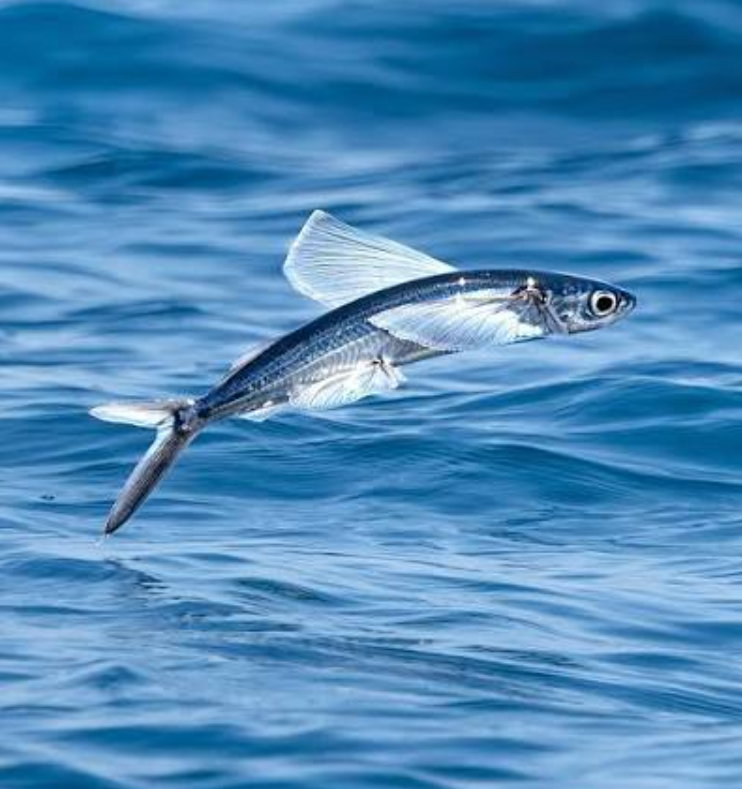
No fish on this list is more famous for leaving the water than the Flying Fish.
There are roughly 40 species in the family Exocoetidae, all built with long, wing-like pectoral fins. According to the National Wildlife Federation, these fish propel themselves out of the water at speeds over 35 miles an hour before gliding for distances up to 650 feet.
They don’t flap their fins like birds. Instead, they lock their fins open and ride air currents, sometimes performing several consecutive glides before fully returning to the ocean.
Flying fish do this almost entirely to escape predators like tuna, marlin, and dolphins that hunt them from below.
2. Atlantic Salmon
Few jumps carry more meaning than a Atlantic Salmon clearing a waterfall on its way home to spawn.
NOAA Fisheries describes this leaping ability as essential for salmon navigating rivers and rocks during their upstream migration, a behavior so central to the species that its scientific name, Salmo salar, translates loosely to “the leaper.”
These fish are endangered in the United States, largely due to dams blocking their historic migration routes. NOAA has run public awareness campaigns specifically encouraging support for salmon passage projects.
Some populations have been documented clearing obstacles several feet high in a single leap, powered by a strong, slightly forked tail built for exactly this task.
3. Silver Carp
If you want a fish that jumps for no obvious survival reason at all, meet the Silver Carp.
This invasive species, native to eastern Asia, was imported to the United States in the 1970s to control algae in aquaculture ponds. It escaped into the Mississippi River basin during flooding and has since spread widely.
According to the U.S. Geological Survey, silver carp can leap as high as 10 feet into the air in response to loud sounds like passing trains, geese taking flight, or most notably, outboard motor noise.
The U.S. Fish and Wildlife Service reports that these startled jumps have caused real injuries to boaters, including cuts, broken bones, and concussions, along with damage to boats and fishing gear.
Entire schools sometimes leap simultaneously, creating a wall of jumping fish around moving boats.
4. Atlantic Tarpon
Anglers chase the Atlantic Tarpon specifically for its jumping ability.
Known as the “Silver King,” this species can weigh well over 100 pounds and is capable of launching its entire body out of the water once hooked. The U.S. Fish and Wildlife Service lists this species profile as one of the most recognized game fish along the Atlantic coast.
The jump serves a practical purpose for the tarpon. It is trying to shake the hook loose, and anglers must “bow” their rods toward the fish mid-air to avoid losing it.
Tarpon also have a modified swim bladder that lets them gulp air at the surface, an adaptation that helps them survive in low-oxygen water and contributes to their acrobatic surface behavior.
5. Striped Mullet
Anyone who has spent time on a dock has likely watched a Striped Mullet launch itself repeatedly out of calm water for no apparent reason.
Unlike predator-driven jumps, mullet behavior remains something of a mystery to researchers. Leading theories include escaping predators lurking below, dislodging parasites, or simply adding oxygen intake at the surface.
These jumps often happen in quick succession. A single mullet may leap several times within a few minutes, sometimes triggering nearby fish to do the same.
Mullet are found in coastal waters worldwide and are one of the most commonly observed “surface jumpers” in shallow bays and estuaries.
6. Sailfish
The Sailfish holds a reputation as one of the fastest fish in the ocean, and its jumping style matches that intensity.
This species often leaps while hunting, using bursts of speed to strike schools of baitfish near the surface before crashing back down.
Its signature dorsal sail plays a role in these hunts. Sailfish can raise or lower the fin to help herd prey, and the acrobatic jumps that follow are part of a coordinated feeding strategy rather than random behavior.
Sport fishers prize sailfish for the same aerial displays that make them such effective hunters.
7. Mahi-Mahi (Dolphinfish)
The Mahi-Mahi, also called dolphinfish, is known for spectacular, rainbow-colored leaps when hooked or threatened.
These fish grow quickly and swim in fast, erratic bursts, which translates directly into dramatic jumps once they feel pressure from a fishing line or sense a predator nearby.
Their coloring shifts dramatically after death, fading from vivid gold and blue to a duller gray, which is part of why live jumping mahi-mahi photos are so prized by anglers.
Jumping for mahi-mahi is primarily a predator-evasion tactic, similar to flying fish, one of their favorite prey items.
8. Northern Pike
The Northern Pike jumps for entirely different reasons than most fish on this list: aggression and survival within its own species.
Larger pike are known to prey on smaller, younger pike, and this pressure can drive smaller individuals to leap out of the water in an attempt to escape.
Pike also jump aggressively while attacking prey near the surface, using explosive bursts of speed that sometimes carry them briefly airborne.
Found across the Northern Hemisphere in freshwater and brackish systems, pike are considered one of the most agile and aggressive freshwater predators anglers regularly encounter.
Aquarium and Pond Fish Known for Jumping
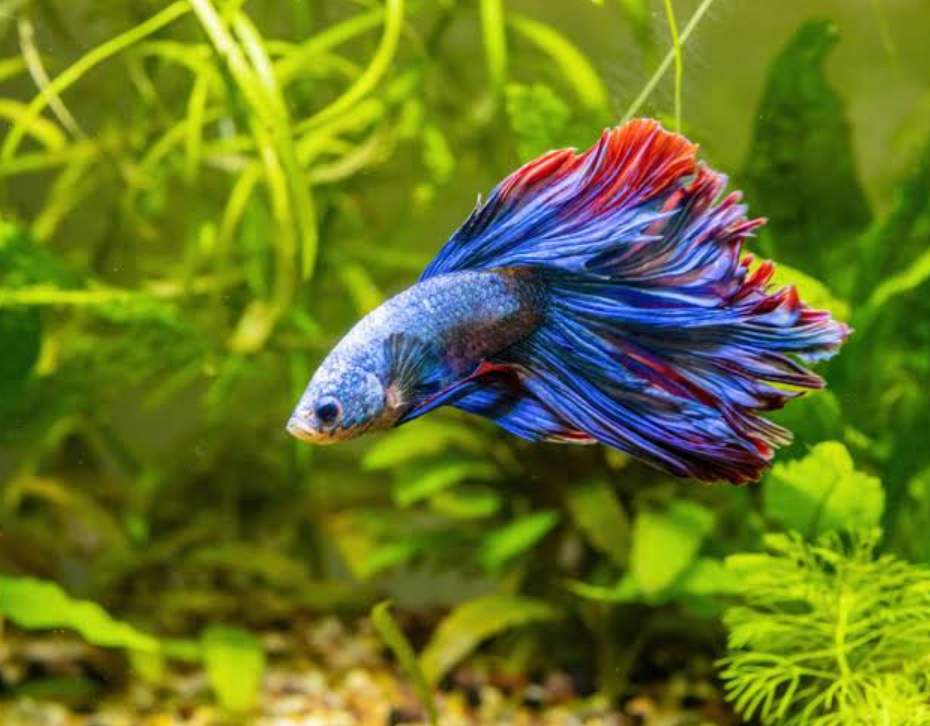
9. Betta Fish
Despite their small size, Betta Fish are shockingly capable jumpers.
Bettas are labyrinth fish, meaning they breathe atmospheric air at the surface using a specialized organ. This adaptation lets them survive in low-oxygen water, but it also puts them constantly near the surface, and near the edge of an open tank.
Stress and boredom both play a role. Bettas kept in bare tanks with no plants or decorations tend to jump more often than those with stimulating, covered environments.
A secure, tight-fitting lid is considered essential equipment for any betta tank.
10. Marbled Hatchetfish
The Marbled Hatchetfish is arguably the most accomplished jumper in the freshwater aquarium hobby.
In the wild, this species leaps out of the water to knock insects off low-hanging leaves and branches, then eats them once they fall into the water. Its flattened, wing-like body shape supports genuinely impressive bursts of speed.
A loose-fitting aquarium lid is not enough for this fish. Any small gap becomes an escape route, and hatchetfish are notorious for finding it.
Their natural hunting instinct simply does not switch off in captivity, which is why unsecured hatchetfish tanks so often end up with a fish on the floor.
11. African Butterflyfish
The African Butterflyfish looks almost like a leaf floating on the water’s surface, and that camouflage is intentional.
This ambush predator lives right at the surface, using upward-facing eyes to spot prey both above and below the waterline simultaneously. When it strikes, it can launch its entire body out of the water.
It also jumps defensively. Sudden movement near the tank, aggressive tankmates, or startling noises can trigger an escape attempt at any time.
Because it spends nearly all its time at the surface, this species needs a tightly covered tank far more than most bottom-dwelling fish.
12. Killifish
Killifish are small but relentless jumpers, and their wild behavior explains why.
In their natural habitat, many killifish species live in temporary pools and puddles that dry up seasonally. To survive, they have evolved the instinct to jump from a shrinking puddle toward a larger body of water nearby.
That instinct doesn’t disappear in a home aquarium. A killifish will treat any gap in the lid as a potential escape route to a “better” pool of water.
Experienced keepers typically recommend a fully sealed tank top for any killifish species, with no exceptions.
13. Comet Goldfish
Many people assume goldfish are too slow to jump, but the Comet Goldfish proves otherwise.
This fast-swimming, single-tailed goldfish variety is far more agile than fancy, round-bodied goldfish types. It also tends to startle more easily, especially in ponds with predators like herons nearby.
Poor water quality is a major trigger. Ammonia spikes or low oxygen levels often push comet goldfish toward the surface and, eventually, out of the tank or pond.
Pond owners frequently report comet goldfish jumping during sudden weather changes or after new fish are introduced.
14. Giant Danio
The Giant Danio is a fast, energetic schooling fish, and that same energy makes it a frequent jumper.
These fish naturally patrol the upper third of the water column at high speed. When startled by a sudden light change, tank tap, or aggressive tankmate, that speed easily carries them straight over an open tank edge.
Keeping them in a proper school helps. Giant danios kept in groups of six or more tend to feel more secure and are less prone to panic-driven jumps than those kept alone or in pairs.
Owners of open-top tanks report giant danios as one of the most commonly lost fish to jumping incidents.
15. Bichir (Rope Fish)
The Bichir, sometimes called Rope Fish, deserves a spot on this list for a slightly different reason: it doesn’t just jump, it can also crawl.
This ancient, eel-like fish can breathe air using a modified lung-like organ, allowing it to survive briefly outside water. Combined with its snake-like body, this means bichirs can propel themselves over the edge of a tank and even move along a floor afterward.
Any gap around filter intakes, heater cords, or lid corners is a potential exit. Bichir keepers often need custom-cut covers to seal every possible opening.
New owners are frequently surprised to find their bichir has escaped despite what looked like a fully covered tank.
Comparison Table: Jumping Behavior at a Glance
| Fish | Habitat | Jump Trigger | Jump Height/Distance |
| Flying Fish | Ocean | Predator escape | Up to 650 ft glide |
| Atlantic Salmon | River (migration) | Spawning migration | Several feet vertical |
| Silver Carp | Freshwater rivers | Sound/vibration | Up to 10 ft |
| Atlantic Tarpon | Coastal/estuary | Hook evasion | Full body, several feet |
| Striped Mullet | Coastal/estuary | Unclear, possibly parasites/oxygen | 1–3 ft |
| Sailfish | Open ocean | Hunting prey | Several feet |
| Mahi-Mahi | Open ocean | Predator/hook evasion | Several feet |
| Northern Pike | Freshwater | Predation, aggression | Short bursts |
| Betta Fish | Aquarium | Stress, low oxygen | Tank height |
| Marbled Hatchetfish | Aquarium | Hunting instinct | Tank height, strong |
| African Butterflyfish | Aquarium | Hunting, startle | Tank height |
| Killifish | Aquarium | Instinct to find new water | Tank height |
| Comet Goldfish | Pond/aquarium | Poor water quality, startle | Pond/tank edge |
| Giant Danio | Aquarium | Speed, panic | Tank height |
| Bichir | Aquarium | Air-breathing, crawling ability | Tank height, plus crawling |
How to Stop Aquarium Fish From Jumping
If you keep any of the species from the second half of this list, a few habits make a real difference.
Use a tight-fitting lid with no gaps. Even a half-inch opening is enough for a determined hatchetfish or killifish to escape through.
Keep water quality stable. Regular testing for ammonia, nitrite, and oxygen levels reduces one of the biggest stress triggers behind jumping behavior.
Add floating plants or surface cover. This reduces the open, exposed feeling that pushes nervous fish toward the surface in the first place.
Avoid sudden loud noises or bright lights. Startled fish react instantly, and that reaction often ends with a leap toward the nearest gap.
Frequently Asked Questions
What fish jumps the highest out of water? Among the species covered here, Silver Carp and Atlantic Tarpon both reach roughly 10 feet in a single leap, according to U.S. Geological Survey and angling data, making them the most dramatic jumpers on this list.
Why do aquarium fish jump out of the tank? Most aquarium jumps come down to stress, poor water quality, low oxygen, aggressive tankmates, or natural instinct, as seen in species like killifish and hatchetfish that jump even in ideal conditions.
Do all fish jump, or just certain species? While almost any startled fish can leap briefly, species like flying fish, hatchetfish, and killifish have specific physical adaptations or instincts that make jumping a regular, deliberate behavior rather than a rare accident.
Is fish jumping always a sign of a problem? Not always. In the wild, jumping often serves a clear purpose like hunting or migration. In aquariums, however, frequent jumping is usually worth investigating as a sign of stress or poor conditions.
How far can a flying fish glide in one flight? According to the National Wildlife Federation, flying fish can glide up to 650 feet in a single flight, and some individuals string together multiple glides to cover even greater distances.
Final Thoughts
Jumping is one of the most striking behaviors in the fish world, and the reasons behind it are more varied than most people realize. Some fish leap to survive. Others leap to hunt, migrate, or simply because instinct tells them to find better water.
If you keep any of the aquarium species on this list, take jumping seriously. A secure lid and stable water conditions can be the difference between a thriving tank and a sad discovery on the floor the next morning.
And if you ever get the chance to watch a tarpon clear the water at sunset or a school of flying fish skim across open ocean, take a moment to appreciate it. Few sights in nature capture raw athletic power quite like a fish in mid-air.
References
- NOAA Fisheries. Taking Giant LEAPS for Salmon. https://www.fisheries.noaa.gov/new-england-mid-atlantic/endangered-species-conservation/taking-giant-leaps-salmon
- NOAA Fisheries. Fun Facts About Amazing Atlantic Salmon. https://www.fisheries.noaa.gov/national/outreach-and-education/fun-facts-about-amazing-atlantic-salmon
- U.S. Geological Survey. What Are Invasive Carp? https://www.usgs.gov/faqs/what-are-invasive-carp
- U.S. Fish and Wildlife Service. Silver Carp (Hypophthalmichthys molitrix) Species Profile. https://www.fws.gov/species/silver-carp-hypophthalmichthys-molitrix
- U.S. Geological Survey. Silver Carp (Hypophthalmichthys molitrix) — Nonindigenous Aquatic Species Database. https://nas.er.usgs.gov/queries/factsheet.aspx?SpeciesID=549
- National Park Service. Silver Carp — Mississippi National River and Recreation Area. https://www.nps.gov/miss/learn/nature/ascarp_silver.htm
- U.S. Fish and Wildlife Service. Tarpon (Megalops atlanticus) Species Profile. https://www.fws.gov/species/tarpon-megalops-atlanticus