25 Types of Loaches Explained (With Pictures, and Care Tips)
If you have ever watched a loach dart across the substrate of a fish tank, you know why so many aquarists fall for these fish. I have kept a few types myself, and I still find their personalities more entertaining than most other bottom dwellers.
They dig, they hide, they play tag with tank mates, and some even “talk” to each other with tiny clicking sounds.
Loaches belong to the superfamily Cobitoidea. This group holds over a thousand recognized species spread across Europe, North Africa, and Asia. Only a small slice of that number ever reaches the aquarium trade, but that slice is wonderfully diverse.
This guide walks through 25 types of loaches that cover the true loaches, the botiid loaches, the kuhli loaches, and the hillstream loaches. I have grouped them by family so the differences make more sense, and I have added a summary table you can scan in seconds.
| Loach Type | Scientific Name | Adult Size | Temperament |
| Clown Loach | Chromobotia macracanthus | Up to 12 in (30 cm) | Peaceful, social |
| Yoyo Loach | Botia almorhae | 4-5 in (10-12 cm) | Active, playful |
| Zebra Loach | Botia striata | 3-4 in (8-10 cm) | Peaceful |
| Skunk Loach | Yasuhikotakia morleti | 3-4 in (8-10 cm) | Semi-aggressive |
| Dwarf Chain Loach | Ambastaia sidthimunki | 2 in (5 cm) | Very peaceful |
| Polka Dot Loach | Botia kubotai | 4-5 in (10-12 cm) | Semi-aggressive |
| Redtail Botia | Yasuhikotakia modesta | 8-9 in (20-23 cm) | Semi-aggressive |
| Tiger Botia | Syncrossus hymenophysa | 12 in (30 cm) | Aggressive |
| Horseface Loach | Acantopsis dialuzona | 8 in (20 cm) | Peaceful |
| Kuhli Loach | Pangio kuhlii | 3-4 in (8-10 cm) | Peaceful, shy |
| Black Kuhli Loach | Pangio semicincta | 3 in (7-8 cm) | Peaceful, shy |
| Java Loach | Pangio java | 2.5 in (6 cm) | Peaceful, shy |
| Silver Kuhli Loach | Pangio anguillaris | 4 in (10 cm) | Peaceful, shy |
| Dojo Loach | Misgurnus anguillicaudatus | 6-11 in (15-28 cm) | Peaceful, cool-water |
| Chinese Golden Loach | Paramisgurnus dabryanus | 8 in (20 cm) | Peaceful |
| European Spined Loach | Cobitis taenia | 4-5 in (10-12 cm) | Peaceful |
| Stone Loach | Barbatula barbatula | 4-6 in (10-15 cm) | Peaceful |
| Hillstream Loach | Sewellia lineolata | 2-3 in (5-7.6 cm) | Peaceful |
| Reticulated Hillstream Loach | Sewellia sp. | 2.5 in (6 cm) | Peaceful |
| Panda Loach | Yaoshania pachychilus | 2-2.4 in (5-6 cm) | Peaceful |
| Rosy Loach | Petruichthys sp. / Yunnanilus sp. | 1-1.25 in (2.5-3 cm) | Peaceful, nano |
| Lepto Loach | Schistura sp. | 2-3 in (5-7.6 cm) | Aggressive |
| Sumo Loach | Schistura sp. “Sumo” | 2 in (5 cm) | Semi-aggressive |
| Angelicus Loach | Botia kubotai (variant) | 5 in (12.7 cm) | Semi-aggressive |
| Blue-Eyed Chameleon Loach | Schistura sp. | 3 in (7.6 cm) | Peaceful |
Botiid Loaches: The Bold, Social Bottom-Dwellers
Botiid loaches belong to the family Botiidae, and they make up most of the “personality-driven” loaches in the hobby. They love company, they dig, and several species are outright mischief-makers.
1. Clown Loach
The clown loach is probably the most recognized loach on this list. Its bright orange body with three black bands makes it an instant showpiece. I have seen clown loaches lie on their sides and play dead, which panics new owners every single time.
This species grows large, sometimes past 30 cm in a mature aquarium. It needs a big tank and a real group of five or more. Buying a single clown loach is one of the most common mistakes new keepers make.
2. Yoyo Loach
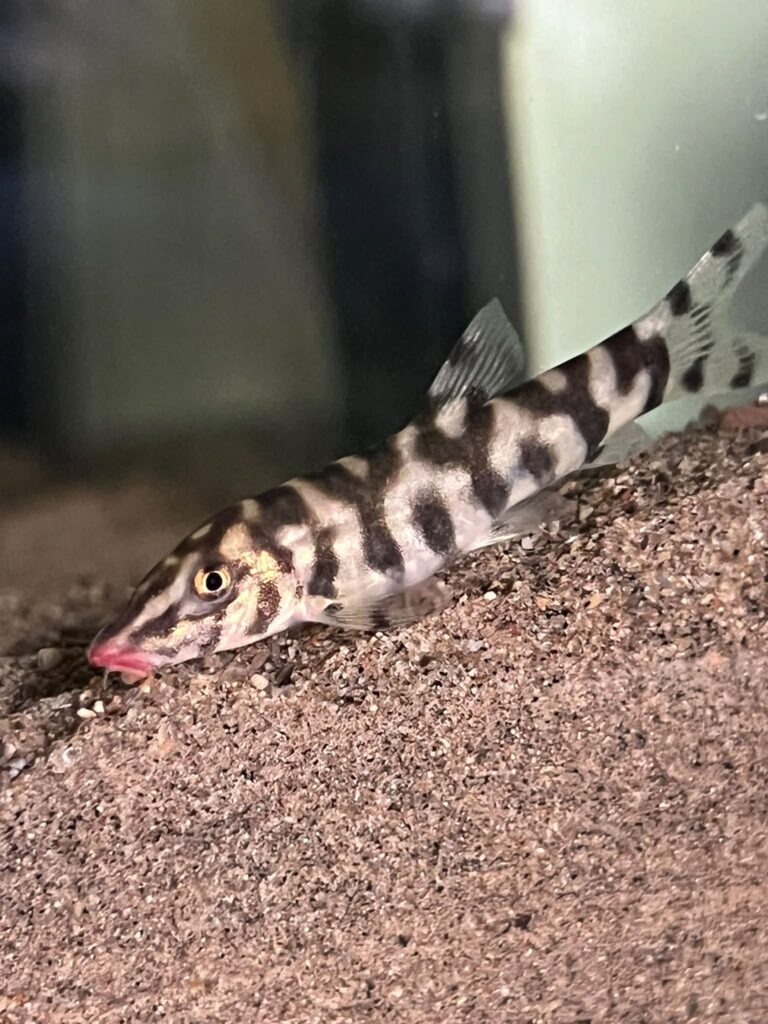
The yoyo loach earns its name from juvenile markings that spell out “yoyo” along the flank. It is one of the busiest loaches you can own, constantly patrolling the tank during the day rather than hiding at night.
Yoyo loaches recognize their owners over time, which is a rare trait for a bottom feeder. They do well in groups of five or six and rarely bother slower tank mates.
3. Zebra Loach
Zebra loaches wear nine bluish-green bands across a yellow-green body. This species is endemic to the Krishna River basin in India, and wild populations are declining due to pollution and habitat loss.
Among the botiid loaches, zebra loaches are one of the calmest choices. They stay under 10 cm, making them suitable for community tanks that other botiids would outgrow.
4. Skunk Loach
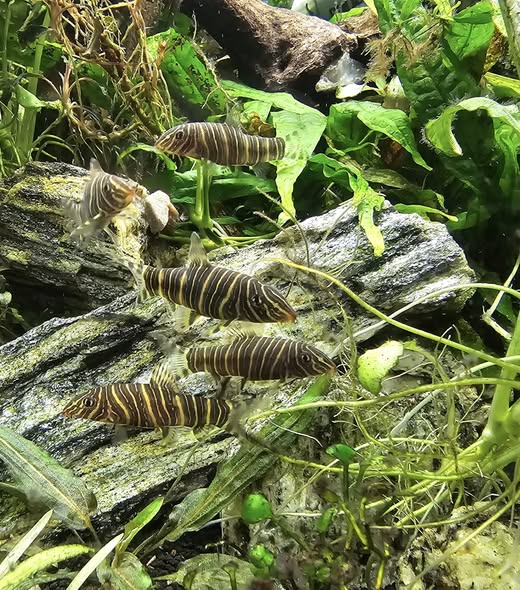
A dark stripe running down the back gives this loach its skunk-like name. Skunk loaches are hardy and easy to feed, but they carry a reputation for nipping at slow, long-finned fish.
I would not pair this species with bettas or fancy guppies. Keep skunk loaches with robust tank mates and they settle into a peaceful routine.
5. Dwarf Chain Loach
This is the smallest widely kept botiid, reaching only about 5 cm. It is native to Thailand, where it holds protected status due to overcollection pressure in the wild.
Dwarf chain loaches are considered one of the friendliest loaches available. They school tightly, rarely show aggression, and work well in nano and planted community tanks.
6. Polka Dot Loach
Also called the angelicus loach in some circles, this species has a striking black-and-white spotted pattern over an orange-gold body. It comes from the Salween River basin in Myanmar.
Polka dot loaches can nip fins when kept in pairs rather than groups. A school of six or more channels their energy into play instead of territorial spats.
7. Redtail Botia
The redtail botia carries a blue-grey body with a bright orange-red tail, giving it a striking, two-toned look. It grows fairly large for a botiid, often exceeding 20 cm.
This species can be territorial once it matures. Give it plenty of hiding spaces and keep the group size generous to spread out any aggression.
8. Tiger Botia
Tiger botias display dark vertical bands over a yellow-green body, and they are among the largest and most assertive loaches you can keep. Adults can push past 30 cm in the right setup.
This is not a beginner fish. Tiger botias need experienced keepers, huge tanks, and tank mates that will not be intimidated or eaten.
9. Horseface Loach
The horseface loach has an elongated snout that genuinely resembles a horse’s face, which makes it one of the odder-looking entries here. It buries itself in sand and ambushes small prey.
This species needs a soft, deep sand bed to feel secure. Without it, horseface loaches become stressed and stop eating, so substrate choice really matters here.
Kuhli Loaches: The Eel-Like Nocturnal Foragers
Kuhli loaches belong to the genus Pangio, and they look more like small, banded eels than typical fish. They are nocturnal, gentle, and among the easiest loaches to keep well.
10. Kuhli Loach
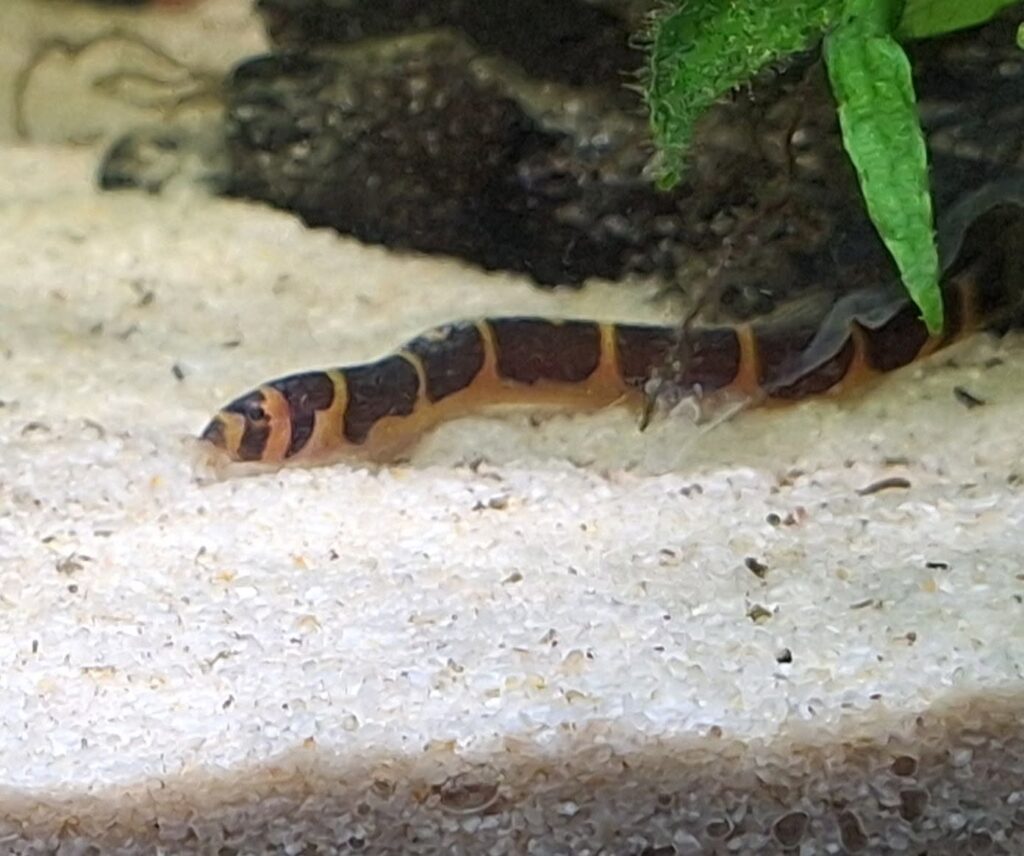
The classic kuhli loach shows alternating yellow and dark brown bands along a worm-like body. During the day it hides in driftwood and plant roots, then comes out at night to forage.
Kuhli loaches need fine sand to protect their scaleless skin. A group of at least six will feel confident enough to show themselves more often, even in daylight.
11. Black Kuhli Loach
This variant carries a mostly black body with faint pale bands, giving it a sleeker look than the standard kuhli. Its care requirements mirror the classic kuhli loach almost exactly.
I like mixing black kuhlis with regular striped kuhlis in the same tank. The visual contrast is subtle, but it adds depth to a planted substrate scene.
12. Java Loach
Java loaches are smaller and slightly more slender than other Pangio species, rarely growing past 6 cm. They come from the island of Java in Indonesia, hence the name.
Because of their small size, java loaches suit nano tanks better than most kuhli relatives. They still need groups and soft substrate to thrive long term.
13. Silver Kuhli Loach
Unlike its banded cousins, the silver kuhli loach is entirely metallic silver with no patterning. It stands out immediately next to a group of striped kuhlis.
Care needs match the standard kuhli loach closely. Many keepers combine both types in one aquarium to show off the color variation among “miniature eels.”
Cold-Water and Pond-Friendly Loaches
Not every loach needs a tropical heater. This next group tolerates cooler water and, in some cases, unheated ponds.
14. Dojo Loach (Weather Loach)
The dojo loach, also called the weather loach, has an eel-like body that can stretch past 25 cm. Its nickname comes from its habit of becoming restless before storms, reacting to shifts in barometric pressure.
This species tolerates cold water down to about 16°C, making it a favorite for unheated ponds alongside goldfish. Dojo loaches are hardy but sensitive to warm water above 27°C, where infections become more likely.
I should also mention that this species has escaped into wild waterways across parts of the United States. Government wildlife agencies track it as a nonnative species in several states, so responsible disposal matters if you ever need to rehome one.
15. Chinese Golden Loach
Closely related to the dojo loach, the Chinese golden loach (also called the Taiwanese loach) is farmed widely across China and Taiwan for both food and the aquarium trade. It shares the same eel-like shape and burrowing habit.
This species handles a wide temperature range and does well in unheated setups. It is less common in Western fish stores but appears regularly in Asian aquaculture markets.
16. European Spined Loach
The European spined loach is a slender, mottled species found across rivers and streams throughout Europe. It carries a small erectile spine below the eye, a shared trait among many true loaches.
This species prefers cooler, well-oxygenated water and is rarely traded commercially. Most sightings come from conservation surveys rather than aquarium shops.
17. Stone Loach
Stone loaches have six barbels around the mouth that resemble a tiny mustache. They are native to European streams and tolerate a wide pH and temperature range.
Growing to about 15 cm, stone loaches are slow-growing enough to suit a modestly sized aquarium for a while. They are most active after dark, emerging from cover once the lights dim.
Hillstream and Panda Loaches: The Stingray Look-Alikes
This group looks nothing like a typical loach. Flat bodies and powerful fins let them cling to rocks in fast-flowing streams, which is exactly the kind of current your tank needs to replicate.
18. Hillstream Loach
The hillstream loach has a flattened, sucker-like body that lets it grip smooth rocks in rushing water. Its reticulated pattern blends beautifully with light-dappled riverbeds.
This species needs strong water flow and high oxygen levels, usually from a powerhead or extra airstone. Without that current, hillstream loaches tend to become lethargic and stressed.
19. Reticulated Hillstream Loach
A close relative of the standard hillstream loach, this variant carries a more intricate net-like pattern across its back. It shares the same need for cooler, fast-moving, oxygen-rich water.
Both hillstream types do best in a species-only setup or alongside other current-loving fish. Community tanks with calm water rarely suit them well.
20. Panda Loach
The panda loach lives in the fast headwaters of China’s Dayao Mountain region, where the water stays crystal clear and oxygen-rich. It rarely exceeds 6 cm as an adult.
Despite its small size, this species needs a larger tank to manage the water flow and oxygenation it requires. It is one of the pickier loaches on this list regarding water quality.
Nano and Specialty Loaches for Experienced Keepers
The final group covers smaller or more niche species. Some are gentle nano fish, while others carry a surprising bite for their size.
21. Rosy Loach
At just 2.5 to 3 cm, the rosy loach is the smallest loach commonly available in the hobby. Males display a rosy color with a dark horizontal stripe, while females look brownish-gray with spots.
This nano species suits small planted tanks with peaceful tank mates. Because of its size, it should never be paired with larger or more boisterous fish that could out-compete it for food.
22. Lepto Loach
Lepto loaches are uncommon in fish stores, and for good reason. They rank among the most aggressive loaches in the hobby, known for fin nibbling and even hunting smaller fish.
I would only recommend this species to experienced keepers who can provide a large tank and careful tank mate selection. Groups of four or more help spread out their aggression.
23. Sumo Loach
The sumo loach is a stocky, thick-bodied Schistura species that stays fairly small but shows a feisty streak. It favors clear, oxygen-rich streams in its native range.
This species does best with similarly sized tank mates that will not be intimidated. It is not commonly available, so expect to search specialty importers.
24. Angelicus Loach
Sometimes listed as a color variant of the polka dot loach, the angelicus loach shows a slightly different spotting pattern and a more golden base color. Its care needs mirror the standard polka dot loach.
This species can be territorial toward its own kind if kept in pairs. A proper school reduces most of the squabbling you would otherwise see.
25. Blue-Eyed Chameleon Loach
This lesser-known Schistura species stands out for its pale blue eyes and a body that shifts shade depending on mood and substrate. It stays peaceful compared to many of its Schistura relatives.
Because it is rarely bred commercially, most specimens are wild-caught. Sourcing from a reputable importer helps ensure the fish arrives in good health.
General Care Tips That Apply Across Loach Species
Substrate matters more than most keepers expect. Loaches have small, sensitive scales and delicate barbels. Coarse gravel frays those barbels over time, so fine sand or pool filter sand is the safer choice for nearly every species on this list.
Filtration needs to run strong. Most loaches come from oxygen-rich streams, so aim for eight to ten times the tank volume in turnover per hour. Hillstream and panda loaches need even more flow, often with an added powerhead.
Groups are non-negotiable for most species. Loaches are social by nature and shoal in the wild. A single loach, or even a pair, tends to hide constantly and shows duller color than one kept in a proper group of five or six.
Lids should be secure at all times. Nearly every loach species is a determined jumper. A loose-fitting lid is often how keepers lose a loach without ever noticing a leak or a spill.
Watch the medication cabinet. Loaches lack full scale coverage, which makes them sensitive to copper-based treatments common in general fish medications. Always check the label before treating a tank that houses loaches.
Frequently Asked Questions
Are loaches good for beginners? Some are. The dwarf chain loach, zebra loach, and dojo loach tolerate beginner mistakes reasonably well. Species like the tiger botia or lepto loach are better left to experienced keepers.
Do loaches eat snails? Many species, including the clown loach and yoyo loach, happily eat nuisance snails. This makes them a popular natural solution for snail overpopulation in planted tanks.
How long do loaches live? Lifespans vary widely by species. Kuhli loaches often live around 10 years, while clown loaches can live for decades under excellent care.
Final Thoughts
Twenty-five loach types barely scratch the surface of what Cobitoidea has to offer, yet this list covers the species most aquarists will actually encounter. Whether you want a peaceful dwarf chain loach for a planted nano tank or a striking clown loach for a large community setup, there is a loach suited to nearly every kind of aquarium.
My honest advice: start with a hardier, more social species before attempting the aggressive or specialty types. Loaches reward patient keepers with years of quiet, curious companionship at the bottom of the tank.
References
- U.S. Geological Survey. Pond Loach (Misgurnus anguillicaudatus) – Species Profile. Nonindigenous Aquatic Species Database. https://nas.er.usgs.gov/queries/factsheet.aspx?SpeciesID=498
- U.S. Geological Survey. Introduction of the Oriental Weatherfish, Misgurnus anguillicaudatus (Cantor, 1842) in the United States. https://www.usgs.gov/publications/introduction-oriental-weatherfish-misgurnus-anguillicaudatus-cantor-1842-united-states
- University of Florida, IFAS Extension. The Ornamental Fish Trade: An Introduction with Perspectives for Responsible Aquarium Fish Ownership (FA124). https://edis.ifas.ufl.edu/fa124
- Smithsonian Environmental Research Center. Misgurnus anguillicaudatus – Species Summary. NEMESIS Chesapeake Bay Introduced Species Database. https://invasions.si.edu/nemesis/chesreport/species_summary/misgurnus%20anguillicaudatus
- Integrated Taxonomic Information System (ITIS). Misgurnus anguillicaudatus (Cantor, 1842) – Taxonomic Serial No. 163978. https://www.itis.gov/servlet/SingleRpt/SingleRpt?search_topic=TSN&search_value=163978
- National Center for Biotechnology Information (NCBI), National Institutes of Health. The Complete Mitochondrial Genome of the Jaguar Loach (Yasuhikotakia splendida). https://www.ncbi.nlm.nih.gov/pmc/articles/PMC8158244/
- National Center for Biotechnology Information (NCBI), National Institutes of Health. Combining Morphology and Genetics in Resolving Taxonomy – A Systematic Revision of Spined Loaches (Genus Cobitis) in the Adriatic Watershed. https://www.ncbi.nlm.nih.gov/pmc/articles/PMC4053515/