10 Best Algae Eater Fish (Species That Naturally Clean Tank, With Pictures)
Green film on the glass. Brown dust on the plant leaves. A cloudy tint in the water that just will not go away.
If you keep fish, you already know this feeling. Algae is the most common complaint among aquarium and pond owners, and it usually shows up right when you thought your tank looked perfect.
The good news is that nature already solved this problem. Certain fish species have evolved to graze algae as a primary food source. Add the right one to your setup, and you get a living, swimming cleanup crew that works every single day.
I have kept community tanks long enough to learn this the hard way: not every “algae eater” sold at the pet store actually eats algae once it grows up. Some outgrow their tanks. Some turn aggressive. A few barely touch algae at all after their first year.
This guide cuts through that confusion. Below are the 10 best algae eater fish, chosen for real effectiveness, manageable size, and temperament that fits most home aquariums and backyard ponds.
Quick Answer: Best Algae Eaters at a Glance
If you only remember one thing from this article, remember this list:
- Bristlenose Pleco – best all-around choice, eats tough black beard algae
- Siamese Algae Eater – the only common fish that reliably eats red/black brush algae
- Otocinclus Catfish – best for small, delicate planted tanks
- Chinese Algae Eater – strong juvenile grazer, needs careful monitoring as it matures
- Twig Catfish – specialist for wood and hair algae
- Florida Flagfish – excellent against hair algae in cooler tanks
- Panda Garra – active rock and hardscape grazer
- Molly Fish – easy, adaptable, and a light algae snacker
- Common Pleco – powerful grazer, but only for large tanks or ponds
- Grass Carp – the top choice for outdoor ponds and large water features
Now let’s look at each one in detail, including what type of algae they prefer, how big they get, and what kind of home they need.
Why Algae Eaters Matter (And What They Can’t Fix)
Before picking a fish, it helps to understand the role they actually play.
Algae eaters do not cause algae to disappear on their own. They reduce the algae that is already growing while you handle the root causes: excess light, extra nutrients, and overfeeding.
According to extension research from the University of Florida’s Tropical Aquaculture Laboratory, the United States is the single largest importer of ornamental fish in the world, and freshwater species make up roughly 90 to 96 percent of that trade. That scale explains why so many algae-eating species are now widely available and affordable for home aquarists.
Think of algae eaters as part of a team. Good lighting habits, regular water changes, and controlled feeding do the heavy lifting. The fish simply finish the job.
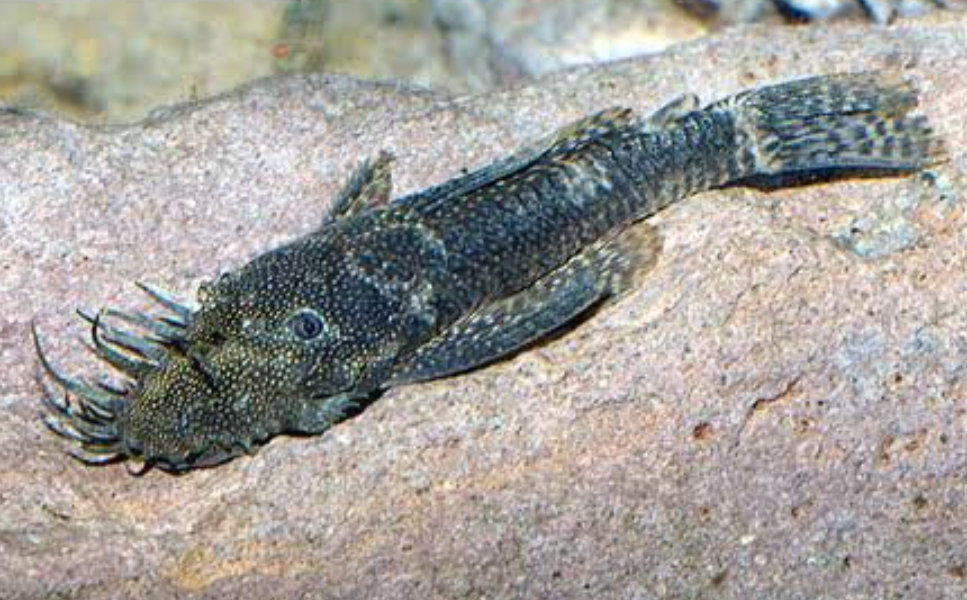
1. Bristlenose Pleco (Ancistrus cirrhosus)
The Bristlenose Pleco is the fish most experienced aquarists recommend first, and for good reason.
Unlike its larger cousins, this pleco stays a manageable 4 to 5 inches at full size. It spends most of its day attached to glass, rocks, and driftwood, scraping off algae with a sucker-shaped mouth.
What makes it special is its appetite for Black Beard Algae, a stubborn reddish-black growth that most other species ignore completely. Planted tank owners consider this fish nearly essential for that reason alone.
- Tank size: 20 gallons minimum
- Temperament: Peaceful, safe with most community fish
- Diet: Algae wafers, blanched vegetables, driftwood fiber
I have always found bristlenose plecos oddly endearing. They hide during the day and only reveal their bushy “beard” of skin tentacles once the lights go down.
2. Siamese Algae Eater (Crossocheilus oblongus)
If black beard algae or red algae is taking over your tank, the Siamese Algae Eater is often the only fish that will touch it.
This slim, torpedo-shaped fish is frequently confused with the look-alike Flying Fox or the aggressive Chinese Algae Eater. The true Siamese Algae Eater has a distinct black stripe running from nose to tail and stays peaceful throughout its life.
They do best in small groups. Keeping five or more together reduces territorial squabbles and encourages more consistent grazing behavior across the tank.
- Tank size: 25 to 30 gallons
- Adult size: Up to 6 inches
- Best against: Black beard algae, hair algae, green film algae
Retailers sometimes mislabel other species as “Siamese Algae Eaters.” Always check for the true black stripe before buying, since imposters rarely eat algae with the same enthusiasm.
3. Otocinclus Catfish (Otocinclus spp.)
For nano tanks and delicately planted setups, nothing beats the Otocinclus Catfish.
These tiny schooling catfish rarely exceed 2 inches, making them safe around fragile plant leaves that larger algae eaters might damage. They graze constantly on soft green and brown algae coating glass, leaves, and decorations.
Otocinclus need stable water conditions. Sudden shifts in temperature, hardness, or pH stress them quickly, so they are better suited to established tanks rather than brand-new setups.
- Tank size: 10 gallons minimum, kept in groups of 6+
- Diet: Soft algae, biofilm, supplemental algae wafers
- Note: Avoid adding them to tanks under two months old
I always wait until a tank has matured before introducing otocinclus. Their survival rate improves dramatically once natural biofilm has had time to establish.
4. Chinese Algae Eater (Gyrinocheilus aymonieri)
The Chinese Algae Eater earns a spot on this list with an important caveat.
As juveniles, few fish work harder at clearing algae from glass and rocks. But this species can grow up to 10 inches and often becomes territorial or outright aggressive as it matures, sometimes harassing slow-moving tankmates.
They also tend to stop eating algae as adults, shifting toward general omnivory. That trade-off makes them a better short-term solution than a permanent tank resident.
- Tank size: 30 gallons minimum
- Ideal owner: Someone managing a new tank’s early algae bloom
- Watch for: Increasing aggression after 6 to 12 months
If you go this route, have a rehoming plan ready. Many aquarists move Chinese Algae Eaters to larger, single-species setups once they mature.
5. Twig Catfish (Farlowella spp.)
The Twig Catfish looks exactly like its name suggests: a thin, stick-like fish that blends perfectly into driftwood.
This specialist grazes slowly but steadily on soft algae and biofilm growing on wood surfaces. It is not a fast solution for a heavy algae outbreak, but it excels at long-term maintenance in a stable, planted tank.
Patience is key with this species. Twig catfish are shy, slow eaters that do poorly in tanks with fast, aggressive competitors for food.
- Tank size: 20 gallons with driftwood present
- Adult size: 6 to 7 inches, very slender
- Best paired with: Calm, peaceful community fish
6. Florida Flagfish (Jordanella floridae)
Native to Florida’s St. Johns and Ochlockonee river systems, the Florida Flagfish is one of the few fish that will actively eat hair algae, a type most species avoid.
Males display a striking pattern of red and blue-green stripes with a dark spot, resembling the American flag, which is exactly where the common name comes from.
They tolerate cooler water better than many tropical algae eaters, making them a flexible option for unheated tanks or outdoor setups in mild climates.
- Tank size: 20 gallons
- Temperament: Can be semi-aggressive toward slow fish or long fins
- Best against: Hair algae, thread algae
7. Panda Garra (Garra flavatra)
The Panda Garra has grown popular quickly, and not just because of its striking black-and-tan pattern.
These fish are constant movers. They spend nearly all their active hours grazing rocks, hardscape, and driftwood, using a specialized sucker mouth to strip algae from hard surfaces.
They prefer moving water. Panda Garra come from fast-flowing streams, so a tank with strong filtration and current mimics their natural habitat and keeps them active and healthy.
- Tank size: 30 gallons with good water flow
- Adult size: 3 to 4 inches
- Temperament: Semi-aggressive with same-species rivals, fine with community fish
8. Molly Fish (Poecilia sphenops)
Mollies are not marketed as algae eaters, but they deserve a mention here for one simple reason: consistency.
These livebearers are opportunistic omnivores that graze on algae throughout the day, alongside prepared foods. They breed readily in healthy tanks, meaning their population — and their grazing activity — replenishes naturally over time.
They are not a heavy-duty solution. Mollies work best as a supporting cast member rather than the main defense against a serious algae problem.
- Tank size: 20 gallons, brackish water tolerant
- Temperament: Peaceful, great community fish
- Bonus: Extremely hardy for beginners
9. Common Pleco (Hypostomus plecostomus)
The Common Pleco is famous, easy to find, and honestly, a fish I would warn most beginners away from.
It is an enthusiastic algae eater when young, which is exactly why pet stores sell so many. The problem is size: common plecos can reach nearly 20 inches in the wild and regularly grow past 12 inches in captivity.
According to the U.S. Geological Survey’s Nonindigenous Aquatic Species database, this species has already become established in parts of Texas after aquarium releases, and has been reported in Florida, Nevada, and Puerto Rico. That is a direct result of owners releasing oversized plecos once they outgrow home tanks.
Never release unwanted fish into local waterways. It harms native ecosystems and is illegal in most U.S. states.
- Tank size: 75+ gallons for a fully grown adult
- Best suited to: Large aquariums, ponds, or dedicated pleco keepers
- Diet shift: Becomes mostly detritus-feeding as it matures, with algae as a minor part of its diet
10. Grass Carp (Ctenopharyngodon idella)
For outdoor ponds, lakes, and large water features, the Grass Carp is the heavyweight champion of vegetation control.
Research published by the Southern Regional Aquaculture Center notes that grass carp are widely stocked across the southern United States specifically to manage aquatic weeds and algae in ponds, with recommended stocking rates depending on the density of vegetation present.
Regulations vary significantly by state. Some states allow grass carp stocking without a permit, while others, including Florida, require permits and mandate sterile triploid fish to prevent uncontrolled breeding in open waterways.
- Best for: Large ponds, farm impoundments, water features over an acre
- Not suitable for: Home aquariums of any size
- Check first: Your state wildlife agency’s stocking regulations before purchase
Comparison Table: Algae Eater Fish at a Glance
| Fish | Adult Size | Min. Tank Size | Best Algae Type | Difficulty |
| Bristlenose Pleco | 4–5 in | 20 gal | Black beard algae | Easy |
| Siamese Algae Eater | 6 in | 25–30 gal | Black beard, hair algae | Easy |
| Otocinclus Catfish | 2 in | 10 gal | Soft green/brown algae | Moderate |
| Chinese Algae Eater | Up to 10 in | 30 gal | Green film (juveniles) | Moderate |
| Twig Catfish | 6–7 in | 20 gal | Wood biofilm | Moderate |
| Florida Flagfish | 2.5 in | 20 gal | Hair algae | Easy |
| Panda Garra | 3–4 in | 30 gal | Rock and hardscape algae | Easy |
| Molly Fish | 3–4 in | 20 gal | Light general grazing | Very easy |
| Common Pleco | Up to 20 in | 75+ gal | Detritus and some algae | Advanced |
| Grass Carp | Up to 40 in | Pond only | Aquatic vegetation, algae | Advanced |
How to Choose the Right Algae Eater for Your Tank
Picking the wrong species is the single biggest mistake I see new hobbyists make. A few questions can steer you right.
What type of algae do you have? Hair algae, black beard algae, and green film algae each respond to different species. Match the fish to the actual problem, not just the label on the tank at the store.
How big is your tank, and how big will the fish get? A common pleco bought for a 20-gallon tank will outgrow it within a year or two. Always research adult size before buying.
What are your current tankmates like? Fin-nippers and territorial species do not mix well with slow-moving fish like otocinclus or twig catfish.
Common Mistakes to Avoid
Buying too many algae eaters at once. Overcrowding creates more waste, which feeds more algae — the opposite of what you want.
Assuming the fish will survive on algae alone. Nearly every species on this list needs supplemental food, especially once the initial algae supply runs low.
Ignoring the root cause. Excess light exposure and overfeeding remain the top drivers of algae blooms. Extension research on pond and aquaculture systems consistently points to nutrient control as the foundation of algae management, with biological grazers acting as a supporting tool rather than a complete fix.
ALSO READ: 30 Types of Catfish Explained (With Pictures)
Frequently Asked Questions
What is the single best algae eater fish for beginners? The Bristlenose Pleco is widely considered the top choice. It stays a manageable size, tolerates a wide range of water conditions, and eats algae types that many other species avoid.
Do algae eaters really work? Yes, but with limits. They reduce existing algae through grazing, but they cannot fix underlying causes like excess light or nutrient overload on their own.
Can I put an algae eater in a new tank? It is better to wait. Most species, especially otocinclus catfish, do best in tanks that have matured for at least four to six weeks and developed a natural biofilm layer.
Is it legal to release algae eater fish into local ponds or rivers? In most cases, no. Releasing aquarium fish into public waterways is illegal in many U.S. states and has already led to established invasive populations of species like the common pleco, according to USGS records.
What algae eater works best for outdoor ponds? The Grass Carp is the standard choice for large ponds and water features, though permit requirements and genetic restrictions (such as sterile triploid stock) vary by state.
Final Thoughts
There is no single fish that solves every algae problem. The right choice always depends on your tank size, the type of algae you are fighting, and how much long-term commitment you are ready to make.
Start small. A few Otocinclus or a single Bristlenose Pleco can transform a struggling tank without adding maintenance headaches later on. Save the bigger commitments, like Common Plecos or Grass Carp, for setups built specifically to house them.
Whichever species you choose, remember that the fish is a helper, not a fix. Pair it with good lighting habits and regular maintenance, and your tank will stay cleaner for the long run.
References
- Livengood, E.J. & Chapman, F.A. The Ornamental Fish Trade: An Introduction with Perspectives for Responsible Aquarium Fish Ownership (FA124). University of Florida IFAS Extension. https://edis.ifas.ufl.edu/publication/FA124/pdf
- Hill, J.E. & Yanong, R.P.E. Freshwater Ornamental Fish Commonly Cultured in Florida (Circular 54/FA054). University of Florida IFAS Extension. https://edis.ifas.ufl.edu/publication/FA054/pdf
- U.S. Geological Survey. Hypostomus plecostomus (Suckermouth Catfish) Species Profile. Nonindigenous Aquatic Species Database. https://nas.er.usgs.gov/queries/factsheet.aspx?SpeciesID=761
- Neilson, M.E. & Fuller, P.L. (2017). The National Nonindigenous Aquatic Species Database (Fact Sheet 2012–3100). U.S. Geological Survey. https://pubs.usgs.gov/fs/2012/3100
- U.S. Fish and Wildlife Service. Ecological Risk Screening Summary: Suckermouth Catfish (Hypostomus plecostomus). https://www.fws.gov/sites/default/files/documents/Ecological-Risk-Screening-Summary-Suckermouth-Catfish.pdf
- Masser, M.P. (2002). Using Grass Carp in Aquaculture and Private Impoundments (SRAC Publication No. 3600). Southern Regional Aquaculture Center, Texas Cooperative Extension, Texas A&M University System. https://www.ncrac.org/files/inline-files/SRAC3600.pdf
- Texas A&M AgriLife Extension. Triploid Grass Carp for Biological Control (RWFM-PU-392). https://extension.rwfm.tamu.edu/wp-content/uploads/sites/7/2022/06/TriploidCarp.pdf