How to Raise Angelfish Fry Without Parents: A Complete Guide
Raising angelfish fry without their parents is one of the most rewarding experiences in freshwater fishkeeping. Whether your adult angels ate the eggs (again), you removed the clutch deliberately to increase survival rates, or you are working with a breeding pair that has not yet developed parental instincts, the good news is this: angelfish fry can be raised successfully without any parental involvement.
However, it takes attention, consistency, and a basic understanding of what these tiny fish need at each stage of life. This guide walks you through every step of the process, from the moment the eggs are laid to the point where the fry are free-swimming and eating on their own.
Why Raise Angelfish Fry Without Parents?
In the wild, angelfish parents play an important role in guarding eggs, fanning them to ensure oxygenation, and eating any unfertilized or fungus-affected eggs to protect healthy ones. In captivity, however, many angelfish fail as parents — especially young or first-time breeders. They may eat the eggs out of stress, nervousness, or simply inexperience.
Removing the eggs and raising the fry artificially removes this risk entirely. It also allows the female to spawn again sooner, which is useful for breeders aiming for higher production. For keepers, it gives you direct control over survival conditions, which ultimately leads to healthier fish.
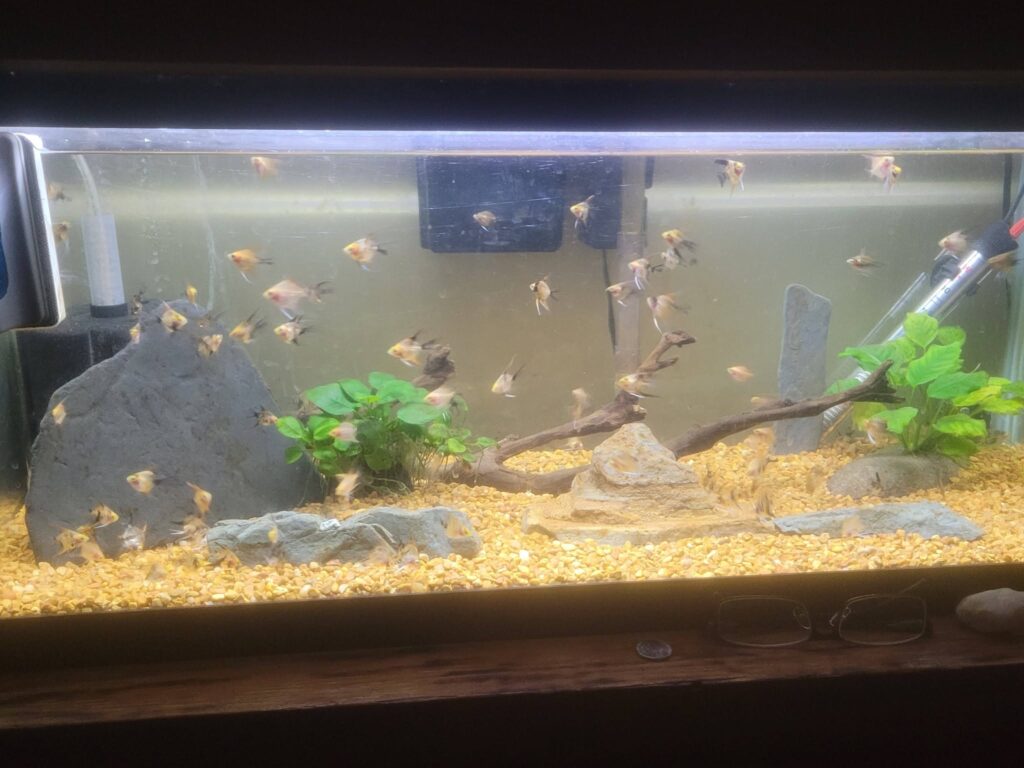
Stage 1: Collecting and Preparing the Eggs
Identify Fertilized Eggs
Angelfish eggs are typically laid on a flat, vertical surface — a broad leaf, a piece of slate, or even the side of the aquarium glass. Within 24 hours, you will begin to see a difference between fertilized and unfertilized eggs.
Fertilized eggs appear light tan or brownish and are slightly translucent. Unfertilized eggs turn white and begin to develop a fuzzy white fungus, which spreads quickly if not addressed.
Remove the Eggs Carefully
If the eggs were laid on a movable surface such as a piece of slate or a broad Amazon sword leaf, carefully lift it and transfer it to the hatching container. Keep the eggs submerged during transfer to avoid thermal shock or air exposure.
If the eggs are on the glass, you have two options: leave them in place and manage the parent situation, or gently use a razor blade to slide beneath the eggs and transfer them with a net or flat object. The first method is less stressful for the eggs.
Set Up the Hatching Container
A small separate aquarium of 5 to 10 gallons works well for this stage. Fill it with water from the main breeding tank so the parameters are already matched. The temperature should be between 80°F and 82°F (26.5°C to 27.8°C). This warmer range accelerates development and reduces the risk of fungal infection.
Add a gentle air stone or a sponge filter positioned nearby to create a mild current over the eggs. This mimics the fanning behaviour of the parents and ensures the eggs receive adequate oxygen. Do not use a power filter at this stage — the suction can pull eggs and later the fragile fry into the intake.
Use Methylene Blue or Acriflavine
One of the most effective tools for protecting eggs from fungal infection is methylene blue, a mild antifungal agent commonly available in fish stores. Add a few drops to the hatching container until the water turns a light blue colour.
It is not toxic to eggs or fry at the recommended dose and works to suppress fungal growth significantly. Some breeders prefer acriflavine as an alternative, which works in a similar fashion.
Remove any eggs that turn completely white and fuzzy as soon as you notice them. Use a clean pipette to gently suck them out. If you leave them, the fungus will spread to the healthy eggs quickly.
Stage 2: Hatching (24–60 Hours)
At the right temperature, angelfish eggs typically hatch within 48 to 60 hours. At warmer temperatures closer to 82°F, hatching can begin as early as 36 to 40 hours.
When the eggs hatch, the larvae (often called “wigglers”) will still be attached to the surface by a sticky thread from their head. At this point, they are not free-swimming and are still absorbing nutrients from their yolk sac. This is completely normal. They wriggle constantly, which is how they earned the name.
During the wiggler stage, continue maintaining the gentle water flow and keep the methylene blue in the water. The wigglers do not need to be fed — they are self-sufficient as long as their yolk sac remains intact. Do not be alarmed if some fall from the surface; this happens naturally. A flat sponge or smooth substrate at the bottom prevents injury.
Maintain excellent water quality during this phase. Perform a 10% to 15% water change every day using water matched precisely to the tank temperature. Even a one or two degree difference can stress the developing larvae.
Stage 3: Free-Swimming Fry (Days 5–7)
Around day five to seven after hatching, the fry will absorb their yolk sac completely and begin to swim freely. This is one of the most exciting moments in the whole process. You will see tiny transparent fish darting around the aquarium, often in small groups near the surface or at mid-depth.
This is also the most critical feeding window. Once the yolk sac is gone, the fry must eat external food within the first 24 to 48 hours or they will not survive. This stage requires your immediate and consistent attention.
Stage 4: Feeding the Fry
Feeding is where many first-time breeders struggle. Newly free-swimming angelfish fry have very small mouths and equally small digestive systems. The food must be tiny enough to fit, nutritious enough to support rapid growth, and available almost constantly since fry have fast metabolisms and small stomachs.
First Foods: Baby Brine Shrimp (BBS)
Newly hatched brine shrimp (Artemia nauplii) are widely considered the gold standard first food for angelfish fry. They are the right size, highly nutritious, and their movement triggers the fry’s feeding response naturally.
To hatch brine shrimp, you will need a brine shrimp hatchery (a simple DIY version works — an inverted plastic bottle with an air line and a light source). Use 1 to 1.5 teaspoons of aquarium salt per 500 ml of water, add the eggs, and provide constant aeration and light.
Within 18 to 24 hours at room temperature, nauplii will hatch and collect at the bottom near the light source. Harvest them using a pipette and rinse them through a fine mesh net before feeding.
Feed the fry baby brine shrimp three to four times daily. The fry’s bellies should appear slightly orange or pink after a feeding — this confirms they have eaten. If you see empty, concave bellies, they are not eating enough.
Alternative First Foods
Not everyone can hatch live brine shrimp consistently. Suitable alternatives include:
Microworms are cultured in a small container with oat or wheat paste and grow quickly. They are slightly smaller than brine shrimp nauplii and work well for very young fry. They are also easy to maintain at home.
Vinegar eels are another small live food that survives in fresh water long enough for the fry to find and eat them. They are not as nutritious as brine shrimp but serve as a reasonable backup.
Commercial micro-foods such as Hikari First Bites or Sera Micron are finely powdered foods designed for fry. They work reasonably well but require more consistent delivery throughout the day since they sink and disperse quickly.
Egg yolk suspension can be used as an emergency food. Hard-boil an egg, take a small piece of the yolk, wrap it in a fine cloth or paper towel, and squeeze a tiny cloud of particles into the water. It is messy and can quickly foul the water, so it should only be used sparingly and with immediate partial water changes afterward.
Feeding Frequency
Feed the fry at least three to four times per day, ideally five or six small feedings. Some dedicated breeders set alarms to feed overnight during the first two weeks. The more frequently you feed, the faster the fry grow — and the sooner they reach a size where they are more resilient.
After each feeding session, wait about 30 minutes and then perform a small targeted water change using a thin airline tube to siphon out uneaten food from the bottom. This prevents ammonia build-up, which is lethal to fry.
Stage 5: Water Quality Management
This cannot be emphasised enough — water quality is the single most decisive factor in whether your fry survive and thrive. Angelfish fry are extremely sensitive to ammonia, nitrite, and nitrate. Even small spikes that adult fish tolerate without visible symptoms can kill fry in hours.
Daily Water Changes
Perform a 20% to 25% water change every day during the first three weeks. Use aged or dechlorinated water that matches the tank temperature exactly. A separate five-gallon bucket filled with treated water and kept at the right temperature the night before is a practical habit to develop.
Avoid gravel substrates during the fry stage — bare-bottom tanks are far easier to clean and allow you to see and remove debris instantly.
Filtration
A sponge filter is the most appropriate filtration method at this stage. It provides biological filtration through beneficial bacteria, creates a gentle water current, and does not pose a suction risk to the fry. Rinse the sponge filter in old tank water (never tap water) during water changes to preserve the bacterial colony.
Ammonia and Nitrite Monitoring
Test the water for ammonia and nitrite at least every two days. Both should read zero at all times. If either spikes, increase the frequency and volume of water changes immediately and reduce feeding until levels normalise.
Temperature Consistency
Maintain a stable temperature between 80°F and 82°F. Sudden drops or fluctuations weaken the fry’s immune systems and slow growth. Use a reliable heater with a thermostat and a thermometer you check daily.
Stage 6: Growth and Transition (Weeks 2–6)
Between two and three weeks of age, the fry will grow noticeably and begin to show the first signs of the iconic angelfish body shape — a slightly taller profile and the beginning of fin elongation. At this point, you can begin transitioning them to larger foods.
Gradually introduce finely crushed flake food alongside live baby brine shrimp. You can also begin offering crushed freeze-dried or frozen brine shrimp, daphnia, or micro-pellets. The key word is gradually — do not remove live foods abruptly. Maintain variety to ensure broad nutrition.
By week four to six, the fry should be approximately half an inch long. They will look like miniature versions of the adult angelfish. At this stage, you can transition them to a general fry or juvenile diet of high-quality crushed flake food, frozen baby brine shrimp, and micro-pellets fed two to three times daily.
Stage 7: Separating by Size
As the fry grow, size differences will appear within the group. Larger, more aggressive fry will begin to outcompete smaller ones for food, and in some cases may even nip at smaller tank mates. Separate fry into size groups every week or two to give smaller individuals a fair chance at feeding and growth.
This practice also allows you to monitor each group’s health more effectively and manage feeding quantities more precisely.
Suggested For You:
Angelfish Breeding Pair Signs: Identifying Mating Behavior
10 Reasons Angelfish Eggs are Not Hatching: Solutions and What Every Keeper Should Know
How Big Do Marble Angelfish Get? (Their Size, Growth, and Care Requirements)
Platinum Angelfish vs White Angelfish: Comparisons and Key Differences Explained
Koi Angelfish Care Guide: Everything You Need to Know
Common Problems and Solutions
Fry dying suddenly in the first week: This is almost always caused by ammonia poisoning from overfeeding or inadequate water changes. Increase water change frequency and reduce food amount immediately.
Fungus spreading on eggs: Increase methylene blue dosage slightly, remove all affected eggs promptly, and ensure adequate water movement over the egg surface.
Fry not eating: Check that the food particle size is appropriate. Very young fry cannot eat food that is too large. Also ensure water temperature is in the correct range — cold water slows their metabolism and suppresses appetite.
High mortality in the first few days after free-swimming: This often indicates the fry were not fed soon enough after becoming free-swimming, or the food was not appropriate. Always have baby brine shrimp ready before the fry are expected to become free-swimming.
Deformed or stunted fry: Occasional deformities are normal in any clutch. Remove visibly deformed fish humanely. Stunting in otherwise healthy fry usually points to overcrowding or inconsistent nutrition.
Key Parameters at a Glance
| Parameter | Recommended Range |
| Temperature | 80°F – 82°F (26.5°C – 27.8°C) |
| pH | 6.5 – 7.0 |
| Ammonia | 0 ppm |
| Nitrite | 0 ppm |
| Nitrate | Below 20 ppm |
| Daily Water Change | 20% – 25% |
| First Feeding Age | Day 5 – 7 (free-swimming) |
| Initial Food | Baby brine shrimp nauplii |
| Feeding Frequency | 3 – 5 times daily |
Final Thoughts
Raising angelfish fry without parents is absolutely achievable. Many experienced hobbyists and professional breeders actually prefer it because it gives them full control over survival conditions, water quality, and growth rates. The early weeks demand time and consistency, but once the fry pass the two-week mark and are eating well, the effort required drops significantly.
The satisfaction of watching a clutch of eggs transform into a group of healthy juvenile angelfish — all under your care — is something that is hard to put into words. It is one of those experiences in fishkeeping that makes all the early morning water changes and midnight feedings feel completely worthwhile.
Stay attentive, keep the water clean, feed consistently, and the fry will reward your effort.
References
- Fishbase.org — Pterophyllum scalare Species Profile. https://www.fishbase.se/summary/Pterophyllum-scalare.html
- University of Florida IFAS Extension — Freshwater Ornamental Fish Breeding and Culture. https://edis.ifas.ufl.edu/publication/FA005
- Purdue University Extension — Water Quality for Ornamental Fish Production. https://www.extension.purdue.edu/extmedia/AS/AS-597-W.pdf
- Food and Agriculture Organization of the United Nations (FAO) — Manual on Small-Scale Freshwater Fish Culture. https://www.fao.org/3/t0700e/t0700e00.htm
- North Carolina State University — Principles of Disease Control in Aquaculture. https://content.ces.ncsu.edu/aquaculture-disease-management