Understanding Assassin Snail (Clea helena): Size, Lifespan, Breeding, and Care
The assassin snail is a small but extraordinarily effective carnivorous freshwater gastropod native to the river systems of Southeast Asia. It earns its dramatic name honestly — it hunts, kills, and consumes other snails with quiet, methodical precision.
Unlike most aquarium snails that are scavengers or herbivores, the assassin snail is a true predator. It targets pest snails such as bladder snails, pond snails, and ramshorn snails — the same species that plague aquarists worldwide.
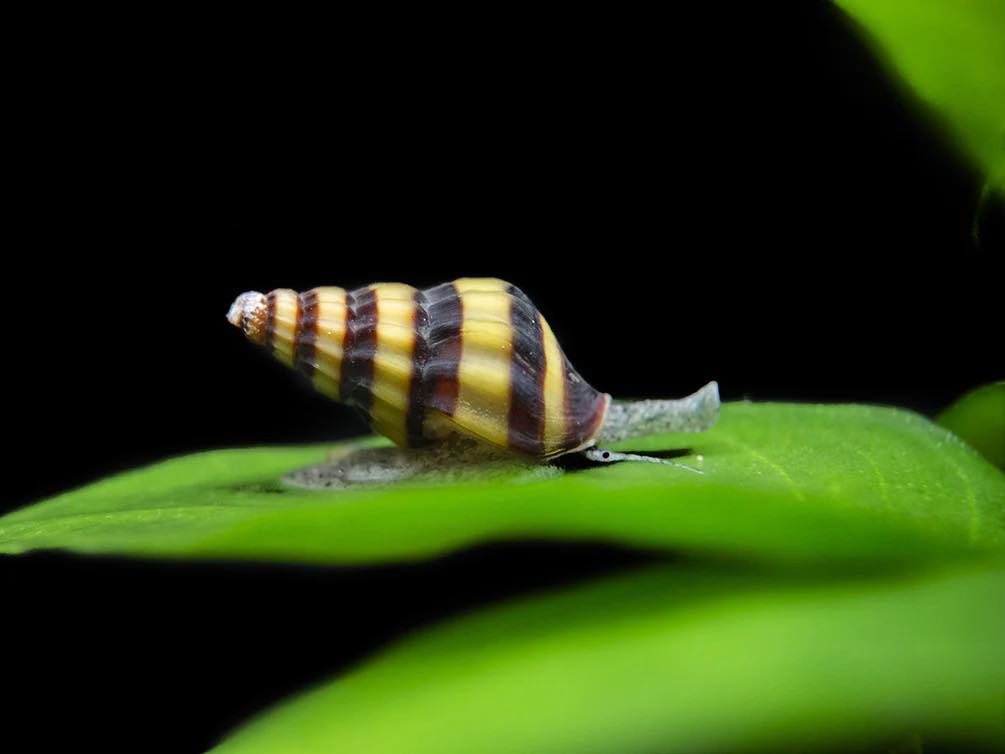
Beyond its pest-control role, Clea helena is visually striking. Its shell displays a distinctive yellow and dark brown banded pattern, which is why it is sometimes called the “bumblebee snail” in the aquarium trade.
This snail is compact, hardy, and relatively easy to care for — making it one of the most practical additions to a community freshwater tank.
This article explores everything from the assassin snail’s natural habitat and biology to its care requirements, breeding behavior, tank compatibility, and frequently asked questions.
Assassin Snail at a Glance
| Common Name | Assassin Snail, Bumblebee Snail |
| Scientific Name | Clea helena (formerly Anentome helena) |
| Family | Buccinidae |
| Origin | Southeast Asia (Thailand, Malaysia, Indonesia, Myanmar) |
| Adult Size | 2.5 – 3.5 cm (approx. 1 – 1.5 inches) |
| Lifespan | 2 – 3 years (up to 5 with optimal care) |
| Diet | Carnivorous — pest snails, worms, carrion, sinking pellets |
| Water Temperature | 24°C – 28°C (75°F – 82°F) |
| pH Range | 7.0 – 8.0 |
| Water Hardness | 8 – 15 dKH (moderately hard) |
| Tank Size | Minimum 38 litres (10 gallons) |
| Behavior | Mostly nocturnal; burrowing |
| Compatibility | Peaceful with fish; predatory toward smaller snails |
| Breeding | Sexual; egg capsules deposited on hard surfaces |
| Conservation Status | Not evaluated (common in trade) |
| Care Level | Easy to Moderate |
Natural Habitat and Geographic Range
Where Do Assassin Snails Come From? Assassin snails are native to the freshwater environments of Southeast Asia, particularly:
- Thailand — especially rivers and streams in the central and northern regions
- Malaysia — found throughout Peninsular Malaysia
- Indonesia — present in Sumatra and Borneo
- Myanmar — recorded in several river systems
In the wild, they inhabit slow-moving or still waters such as rivers, streams, swamps, and rice paddies. They prefer shallow areas with soft, muddy, or sandy substrates where they can burrow.
Their Natural Environment
The natural habitats of Clea helena share a few consistent features:
- Warm water temperatures — typically 24°C to 28°C year-round
- Neutral to slightly alkaline pH — between 7.0 and 7.8
- Leaf litter and organic debris — which attract the pest snails they prey upon
- Soft sediment — essential for burrowing behavior
Understanding their natural environment is the foundation for providing good care in captivity. Recreating these conditions in an aquarium is both straightforward and rewarding.
Taxonomy and Classification
The assassin snail has gone through some taxonomic revisions over the years, which can cause confusion in aquarium literature.
- Kingdom: Animalia
- Phylum: Mollusca
- Class: Gastropoda
- Order: Neogastropoda
- Family: Buccinidae
- Genus: Clea
- Species: Clea helena
The snail was previously classified under the genus Anentome (as Anentome helena), but genetic and morphological studies have reclassified it to Clea. You may still encounter the older name in older aquarium guides or scientific literature. Both names refer to the same species.
Physical Appearance and Identification
The Shell
The assassin snail’s shell is conical and elongated, resembling a classic gastropod spire. The shell typically measures between 2.5 and 3.5 centimeters in adult specimens.
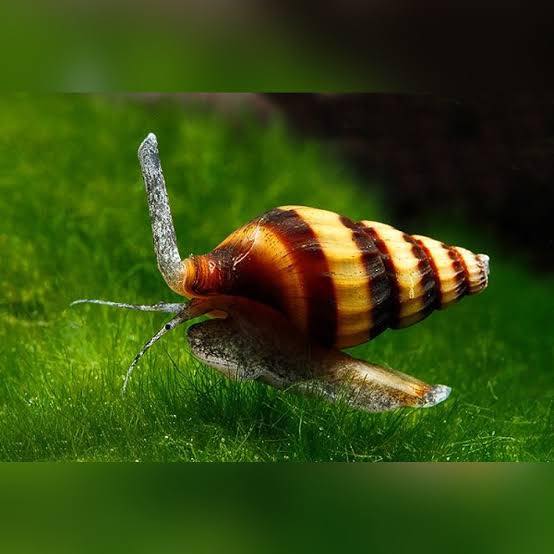
The most recognizable feature is the coloration: alternating bands of bright yellow and dark brown run horizontally along the shell whorls. This banded pattern is what earns the snail its “bumblebee” nickname.
The shell has a noticeable pointed apex and a relatively wide aperture (opening). It is smooth, moderately glossy, and structurally strong compared to many other freshwater snails.
The Body
The snail’s soft body (the foot and mantle) is typically cream to pale beige, sometimes with a slight bluish-grey tint. The foot is muscular and broad, allowing the snail to move with surprising efficiency through sand and gravel substrates.
Like all members of the Buccinidae family, assassin snails possess a proboscis — a tubular feeding organ they extend to penetrate prey. This proboscis is the biological tool that makes them such effective predators.
Distinguishing Males from Females
Sexing assassin snails visually is notoriously difficult. There is no obvious external difference between males and females. The only reliable method is microscopic examination of the reproductive organs — something that is impractical for the average aquarist.
That said, keeping a group of six or more virtually guarantees that both sexes are present, which matters when you want them to breed.
Behavior and Activity Patterns
Nocturnal Nature
Assassin snails are predominantly nocturnal. During the day, they often remain buried in the substrate or motionless beneath decorations. After lights-out, they become significantly more active — moving around the tank, hunting, and feeding.
This behavior can initially worry new keepers who may think their snails are dead or sick. If your assassin snail is motionless during the day, that is entirely normal.
Hunting Behavior: How They Kill
The hunting technique of Clea helena is both elegant and slightly unsettling to watch.
- The assassin snail detects prey via chemical signals dissolved in the water.
- It approaches the target snail from behind or from the side.
- It extends its proboscis into the opening of the prey’s shell.
- It then sucks out the soft body of the prey snail, leaving behind an empty shell.
The entire process can take anywhere from a few minutes to over an hour, depending on the size of the prey. Smaller snails are dispatched quickly; larger species may require more effort.
Burrowing Behavior
Assassin snails burrow readily into soft substrates. They often rest just below the surface of sand or fine gravel with only their shell tip visible. This is natural behavior — not a sign of stress. In fact, access to a soft substrate is considered an important welfare requirement for this species.
Social Behavior
Despite their predatory reputation, assassin snails are not aggressive toward each other or toward most tankmates. They do not form social groups, but they do not fight over territory either. Multiple assassin snails can coexist peacefully in the same tank.
Diet: What Do Assassin Snails Eat?
Primary Diet in the Aquarium
The assassin snail’s preferred food is, unsurprisingly, other snails. In an aquarium setting, their favorite targets include:
- Bladder snails (Physella acuta)
- Pond snails (Lymnaea spp.)
- Ramshorn snails (Planorbarius corneus)
- Malaysian trumpet snails (Melanoides tuberculata) — though larger adults may be ignored
- Mystery snails (Pomacea bridgesii) — only very small juveniles are at risk
Larger, well-established mystery snails and nerite snails are generally safe, as assassin snails tend to target prey they can overpower.
Supplementary Foods
When pest snails are scarce — which will eventually happen if your assassin snails do their job — you will need to supplement their diet. Suitable options include:
- Sinking carnivore pellets — an easy and nutritious staple
- Bloodworms (frozen or freeze-dried)
- Shrimp pellets
- Frozen brine shrimp
- Small pieces of raw, unseasoned fish or prawn flesh
- Uneaten fish food that sinks to the substrate
It is worth noting that assassin snails will also scavenge on dead fish and invertebrates. This is normal and does not indicate that they are attacking live fish.
Will They Starve Without Pest Snails?
This is a common concern. Yes, they can survive without pest snails, provided they are offered the supplementary foods listed above.
However, if food becomes very scarce, assassin snails may begin to target smaller or weaker individuals of their own kind — a behavior that is uncommon but documented.
Aquarium Care Requirements
Tank Size
The minimum recommended tank size for a small group of assassin snails is 38 litres (10 gallons). Larger tanks are always better — more space means more natural foraging behavior and a more stable environment.
For a dedicated pest-control setup or a breeding colony, a 60-80 litre (15-20 gallon) tank is ideal.
Water Parameters
Maintaining appropriate water chemistry is critical for shell health and overall wellbeing.
| Parameter | Ideal Range |
| Temperature | 24°C – 28°C (75°F – 82°F) |
| pH | 7.0 – 8.0 |
| Hardness | 8 – 15 dKH |
| Ammonia | 0 ppm |
| Nitrite | 0 ppm |
| Nitrate | < 20 ppm |
Hard water is essential. Calcium in the water is what snails use to build and maintain their shells. In soft or acidic water, assassin snail shells may become pitted, thin, or cracked — a condition called shell erosion. This is one of the most common care mistakes new keepers make.
If your water is naturally soft, consider adding crushed coral, cuttlebone, or limestone to the tank or filter to raise hardness and buffering capacity.
Substrate
A soft, fine substrate is strongly recommended. Play sand, pool filter sand, or fine-grain aquarium substrate allows the snails to burrow naturally and reduces stress. Coarse gravel should be avoided — it makes burrowing impossible and can damage the snail’s soft foot.
Filtration and Water Flow
Assassin snails prefer moderate water flow. A gentle sponge filter or a hang-on-back filter with a reduced flow rate works well. Strong currents can exhaust the snails and make foraging difficult.
Sponge filters are particularly popular in assassin snail tanks because they cannot suck up juvenile snails — an important consideration if you intend to breed them.
Lighting
There are no specific lighting requirements for assassin snails. Since they are nocturnal, they actually prefer dimmer conditions or longer dark periods. A standard aquarium light on a timer (8–10 hours of light per day) is perfectly adequate.
Plants and Decorations
Assassin snails are safe with live plants. They do not eat plant matter and will not damage aquatic vegetation. A well-planted tank provides:
- Hiding spots that reduce stress
- Leaf litter that attracts pest snails (and thus creates natural feeding opportunities)
- Better water quality through nutrient uptake
Driftwood, rocks, and terracotta pots also make excellent additions — they provide shelter and surfaces for egg-laying.
Tank Compatibility
Compatible Tankmates
Assassin snails are compatible with a wide range of peaceful freshwater fish, including:
- Tetras (all varieties)
- Rasboras
- Danios
- Gouramis
- Corydoras catfish
- Plecostomus (plecos)
- Guppies, mollies, and platies
- Bettas (with some caveats — see below)
- Dwarf cichlids such as apistogrammas
Most fish will completely ignore assassin snails, and the snails will ignore the fish in return. The main consideration is ensuring no fish in the tank are large enough or aggressive enough to harass or eat the snails.
Bettas and Assassin Snails
Many aquarists successfully keep bettas with assassin snails. However, individual betta temperament matters. Some bettas are highly aggressive and may nip at the snail’s foot or antennae. Others will ignore the snails entirely. Observation is key when introducing them together.
Shrimp Compatibility: Proceed with Caution
This is where things get complicated. Assassin snails can and do prey on small shrimp, particularly:
- Neocaridina shrimp (cherry shrimp, snowball shrimp)
- Caridina shrimp (crystal red, amano — though amano shrimp are usually large enough to escape)
- Newly hatched shrimp (shrimplets) of virtually all species
In practice, many aquarists do keep assassin snails with cherry shrimp, and report no issues. The assassin snails tend to focus on snail prey when it is available. But the risk is real and should not be dismissed, especially in smaller tanks with limited hiding spots.
If shrimp are a priority, consider not keeping assassin snails in the same tank.
Snails to Avoid Mixing
Do not keep assassin snails with any snail species you wish to protect. As noted above, nerite snails and large mystery snails are generally safe, but smaller species — ramshorns, bladder snails, pond snails — will be hunted and consumed.
Breeding Assassin Snails in Captivity
One of the most rewarding aspects of keeping Clea helena is that they breed readily in captivity without any special intervention. However, the process is slow compared to many pest snail species — which is actually a good thing.
How Reproduction Works
Assassin snails are gonochoric — meaning there are distinct males and females. Unlike many freshwater snails, they cannot self-fertilize or reproduce asexually.
Mating occurs when a male mounts a female and inserts a spermatophore. The process can last several hours. Interestingly, multiple males may attempt to mate with a single female at the same time, forming what aquarists sometimes describe as a “snail pile.”
Egg Laying
After mating, the female deposits eggs in small, square to slightly rectangular, transparent-to-pale-yellow capsules. Each capsule contains a single egg.
Egg capsules are deposited:
- On the glass walls of the aquarium
- On driftwood
- On plant stems
- On smooth rocks and decorations
They are quite small — roughly 2 mm in diameter — and can be easy to overlook. A prolific pair can lay dozens of capsules over several weeks.
Incubation and Hatching
The eggs incubate for approximately 4 to 8 weeks, depending on temperature. Warmer water (toward the upper end of the acceptable range) speeds up development.
Baby assassin snails hatch as fully formed miniature versions of their parents — there is no larval stage. The juveniles immediately burrow into the substrate, where they remain mostly hidden for the first few weeks of life.
Growth Rate
Young assassin snails grow slowly — reaching adult size over the course of several months. During the juvenile phase, they feed primarily on very small prey or scavenged organic material in the substrate.
This slow growth rate means assassin snail populations are self-regulating to a degree. Unlike pest snails, they will not rapidly overrun a tank.
Common Health Issues and How to Address Them
Shell Erosion and Pitting
The most frequently observed health problem in captive assassin snails is shell erosion — a gradual wearing away or pitting of the shell surface. This is almost always caused by:
- Low pH (below 7.0)
- Soft water (low calcium and hardness)
- A combination of both
To address this, raise the pH and hardness by adding crushed coral to the filter media or cuttlebone to the tank. Results are not immediate — the shell repairs gradually over several molts. Severe erosion may be permanent, but the snail can still live a full life if conditions are corrected promptly.
Parasites
Assassin snails are generally quite resistant to disease. However, they can occasionally carry trematode parasites when wild-caught. This is rarely a serious problem in established aquariums but is worth considering when sourcing new snails.
Always quarantine new assassin snails for two to four weeks before introducing them to a display tank.
Copper Sensitivity
Like all invertebrates, assassin snails are extremely sensitive to copper. Even trace amounts of copper in the water — common in some tap water supplies and many commercial fish medications — can be lethal.
- Always check the label of any medication before treating a tank that contains snails.
- Use invertebrate-safe formulations where possible.
- Consider a dedicated invertebrate tank when treating with copper-based medications.
Inactivity and Apparent Death
As mentioned earlier, assassin snails are highly inactive during daylight hours. A snail that appears to be dead should be tested by gently removing it and smelling the shell opening. A healthy (but dormant) snail will have no foul odor. A deceased snail will smell distinctly unpleasant.
The Role of Assassin Snails in Pest Control
The Pest Snail Problem
Pest snails are a genuine challenge in freshwater aquariums. Species like Physella acuta (bladder snails) and Gyraulus spp. (ramshorn snails) can reproduce explosively under favorable conditions. A single snail can colonize an entire tank in a matter of weeks.
Traditional control methods include:
- Manual removal (time-consuming and rarely effective long-term)
- Chemical treatments (harmful to plants and other invertebrates)
- Reducing feeding (leads to poor fish health)
The assassin snail provides a biological, sustainable, and ecologically appropriate solution.
Effectiveness
In aquarist experience and anecdotal reports, a group of 6 to 10 assassin snails can significantly reduce a moderate pest snail population within four to eight weeks. A more severe infestation may take longer.
They are most effective against smaller snail species. Malaysian trumpet snails, which are large and have thick shells, may be targeted only when the snails are juvenile or when no other prey is available.
Long-Term Management
One practical consideration: once assassin snails have cleared the pest snails, they still need to eat. This is where supplementary feeding becomes important.
Aquarists who plan ahead can maintain a small culture of bladder snails in a separate container to provide ongoing prey.
Assassin Snails and Invasive Species Concerns
It is important to address a genuine ecological concern. Clea helena has the potential to become an invasive species in regions outside its native range if released into local waterways.
Invasive freshwater snails can disrupt native ecosystems by outcompeting indigenous gastropod species, disrupting food chains, and altering benthic (substrate-level) community structures.
Never release assassin snails — or any aquarium organism — into natural waterways. This is not only ecologically irresponsible but is also illegal in many jurisdictions.
If you no longer want your snails, donate them to another aquarist, a local fish store, or a school biology program. Do not flush them or release them outdoors.
Sourcing Assassin Snails: What to Look for
When purchasing assassin snails, look for:
- Intact shells — no cracks, major chips, or severe erosion
- Active behavior — the snail should retract when touched and resume movement within a few minutes
- Clear, unclouded water in the seller’s tank
- No foul odor from the packaging or transport water
Reputable aquarium stores and online specialty invertebrate suppliers are typically the best sources. Avoid purchasing from sellers who cannot tell you the species name or basic care requirements.
A group of 6 to 10 snails is ideal for starting a colony and ensures a good sex ratio for breeding.
Frequently Asked Questions
Will assassin snails eat my mystery snails? Not typically, unless the mystery snail is a small juvenile. Adult mystery snails are too large for assassin snails to handle.
How many assassin snails do I need to control a pest snail problem? For a 40-litre tank with a moderate infestation, start with 6 assassin snails. Larger or more severe infestations may require 10 or more.
Do assassin snails eat algae? No. They are strictly carnivorous and will not consume algae, plants, or plant-based foods.
How do I know if my assassin snail is dead? Remove it and smell the shell opening. A live (even dormant) snail smells neutral. A dead one has a distinctly strong and unpleasant odor.
Can assassin snails live with nerite snails? Yes, in most cases. Nerite snails are large and have tightly fitting operculi (trap doors) that make them very difficult for assassin snails to prey upon.
Why is my assassin snail always buried? Burrowing is natural, especially during daylight hours. It is not a sign of illness.
Conclusion
The assassin snail (Clea helena) is one of the most genuinely useful invertebrates available to the freshwater aquarist. It is visually attractive, behaviorally fascinating, and practically effective at solving one of the hobby’s most persistent headaches — the pest snail infestation.
It is not, however, a “set and forget” solution. Like any living creature in your care, it requires appropriate water chemistry, a soft substrate, a suitable diet (especially once pest snails are cleared), and compatible tankmates.
What makes Clea helena particularly appealing is that it does all of this without harming plants, destabilizing your tank’s nitrogen cycle, or requiring complex care protocols.
For the intermediate aquarist willing to understand its needs, the assassin snail is an excellent and rewarding addition to a freshwater community tank.
I have kept assassin snails for several years in different tank configurations — and I continue to recommend them without hesitation. They are quiet, methodical, and curiously watchable.
Once you observe your first hunt, you will understand exactly why this small gastropod has earned such a commanding name.
References
- United States Geological Survey (USGS) — Nonindigenous Aquatic Species Database https://nas.er.usgs.gov
- Florida Museum of Natural History — Invertebrate Zoology https://www.floridamuseum.ufl.edu/iz/
- Smithsonian Institution — National Museum of Natural History: Ocean and Mollusk Biology https://naturalhistory.si.edu/research/invertebrate-zoology
- California Department of Fish and Wildlife — Invasive Species Program https://wildlife.ca.gov/Conservation/Invasives
- National Oceanic and Atmospheric Administration (NOAA) — Freshwater Ecosystems and Aquatic Species https://www.fisheries.noaa.gov/topic/habitat-conservation