
Many people start keeping mystery snails as algae helpers, but soon discover the joy of breeding mystery snails. Watching a female lay a pink clutch of eggs above the water, then seeing dozens of tiny snails hatch days later, feels rewarding.
Breeding mystery snails is not hard once you know the steps, but success depends on stable conditions and patience. One of the key requirements is a dedicated mystery snail breeding tank. This gives you control and prevents overpopulation in your main display aquarium.
Let’s learn more about setting up a mystery snail breeding tank, handling the eggs, and raising the babies.
Key Points Covered
- Ideal tank size and equipment for breeding
- Water parameters that promote healthy breeding
- How to tell males from females and select breeders
- Encouraging natural mating and egg-laying
- Caring for egg clutches and preventing issues
- Raising baby mystery snails successfully
- Feeding, genetics basics, and expert insights
- Troubleshooting problems like low hatch rates or poor survival
Why Breed Mystery Snails?
These snails are peaceful, easy to care for, and breed readily when happy. They don’t harm live plants like larger apple snails do. Breeding lets you enjoy color variations or share extras with friends. Some hobbyists even sell surplus snails locally.
As one experienced aquarist notes in discussions on snail forums: “The secret to breeding these snails is that you don’t actually need to do anything for them to happily reproduce. When conditions are right, the female mystery snail will lay her eggs at or above the water surface.”
Experts agree that mystery snails (Pomacea diffusa) thrive with minimal intervention if the basics are met.
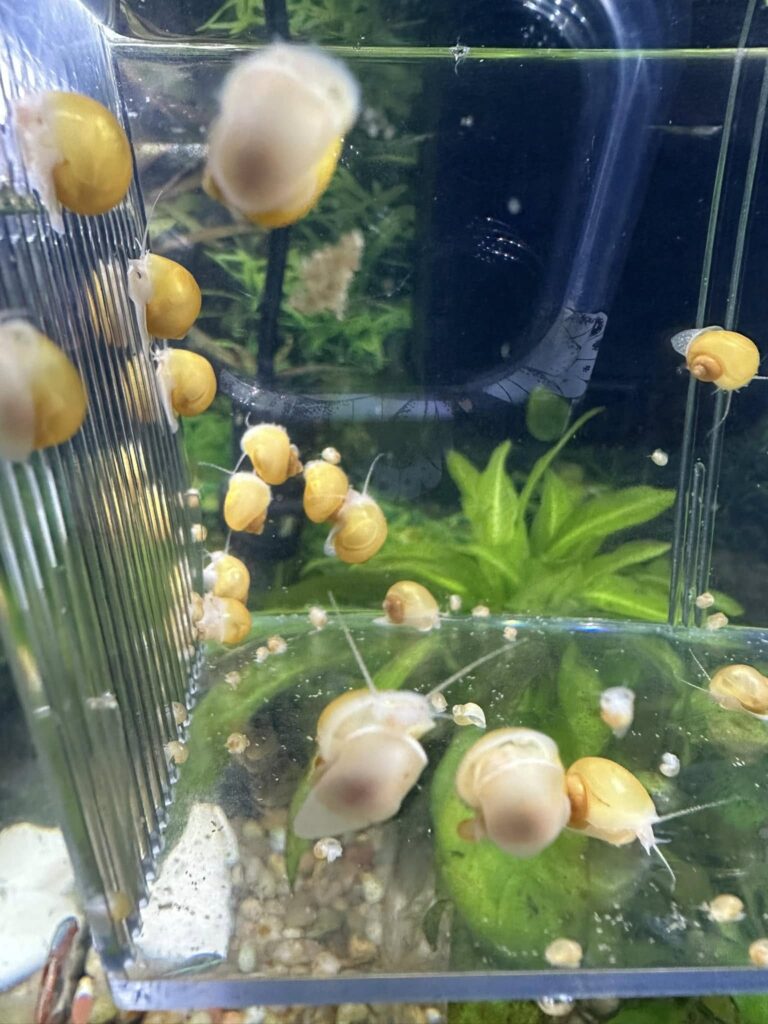
Choosing the Right Tank Size
Tank size matters a lot for the breeding of mystery snails. Adults produce waste, and babies need space to grow without crowding.
A 10-gallon tank works well as a starter breeding setup. It holds 5–8 adult snails comfortably. For larger groups or raising many babies, go for 20 gallons or more.
One guide explains: “Aquarium or food-safe storage tub with a volume of at least 10 gallons, with a hood or lid.” This prevents escapes—mystery snails are climbers and will explore any gap.
Use a secure lid or hood. Females often crawl high to lay eggs, sometimes 2–3 feet above water if possible, but in most tanks, they stick to the glass just above the surface.
Bare-bottom tanks make cleaning easy, especially with babies. Add some hiding spots like PVC pipes or smooth rocks.
ALSO READ: Mystery Snail Escaping Tank: Signs, Causes and How to Prevent
Essential Equipment in the Breeding Tank
Keep equipment simple but effective.
- Filter: A gentle sponge filter works best. It provides biological filtration without strong currents that stress snails or suck up babies.
- Heater: Maintain a steady temperature. Mystery snails breed best in warm water.
- Lighting: Moderate light supports plants and algae growth for food. No intense lighting needed.
- Lid: Essential—no exceptions. Snails escape otherwise.
Avoid strong power filters. Babies are tiny and vulnerable.
Water Parameters for Breeding Success
Stable water is key. Mystery snails need clean, slightly hard water. Here are the key parameters for successful breeding:
- Temperature: 72–82°F (22–28°C). Many breeders find 75–78°F ideal for encouraging mating and fast hatching. “If the water temperature is at the lower end… you could consider raising it a little to see if that gets them in the mood.”
- pH: 7.6–8.4. They prefer neutral to slightly alkaline. “Make sure the water has a pH 7.4 or above.”
- Hardness: High GH (8–12 dGH) and KH (12–18 dKH). Calcium supports shell growth, especially for growing babies.
- Ammonia/Nitrite: 0 ppm. Nitrate below 20–25 ppm.
- Water Changes: 20–30% weekly. Test often—adults create waste quickly.
Add a calcium source like cuttlebone or crushed coral to buffer hardness and provide extra minerals.
Selecting and Sexing Mystery Snails
You need both males and females for breeding. Mystery snails are not hermaphrodites.
To sex them, look at the right side of the body (when facing the shell opening). Males have a visible sheath for their reproductive organ. Females lack it.
Start with 5–6 snails to increase the chances of both sexes. Buy from reputable sources like pet stores or breeders. Healthy adults are active, have intact shells, and move confidently.
Setting Up the Breeding Tank
- Cycle the tank fully before adding snails.
- Add substrate if desired (sand or fine gravel), but bare bottom simplifies cleaning.
- Include live plants like java fern, anubias, or floating plants. They provide food and hiding spots.
- Add décor for climbing—driftwood, rocks.
- Fill water to leave 4–6 inches of air space above. Females need room to lay eggs.
- Acclimate snails slowly.
Once set up, introduce your group.
ALSO READ: Mystery Snail Tank Setup: Size and Compatible Tankmates
Encouraging Breeding
Mystery snails breed when content. Provide:
- Plenty of food (see below)
- Warm, stable water
- Space above waterline
Mating happens underwater. The male mounts the female. It can last hours.
After fertilization, the female climbs out at night to lay eggs. Clutches are pinkish, oval, and contain 50–200 eggs.
If no eggs appear after weeks, check the parameters or add more protein to the diet. Some experts suggest that slight temperature increases trigger breeding.
Handling Egg Clutches
Eggs need high humidity and warmth to develop. Leave them on the glass or move carefully to a humid spot if they risk falling.
Hatching time is 1–4 weeks, and faster in warmer spots. “At high temperatures… it may take a little more than a week.”
Do not submerge eggs—they drown. Many breeders let eggs hatch in the main tank, but for control, use a separate hatchery container above water. Babies drop into water after hatching and start eating algae or detritus.
ALSO READ: Mystery Snail Eggs Fell in Water? (What to Do)
Raising Baby Mystery Snails
This stage needs attention. Babies are tiny (rice-grain size) and grow fast with good care.
Feed them:
- Blanched veggies (zucchini, spinach)
- Algae wafers
- Crushed snail food or baby fish food
Water quality is critical. Do small, frequent water changes. Overfeeding causes spikes in ammonia. Additionally, provide calcium as babies need it for shells. Growth takes 2–3 months to reach adult size. I recommend you thin out if overcrowded.
Feeding Adult Mystery Snails
A varied diet supports breeding.
- Algae and biofilm
- Blanched vegetables (kale, cucumber)
- Algae wafers
- Protein sources (shrimp pellets, occasional fish food)
Calcium is essential, so add cuttlebone or supplements. Avoid copper-based meds; they’re toxic to snails.
ALSO READ: Understanding Mystery Snail Food.
Genetics and Color Variations
Mystery snails come in many colors due to selective breeding. Common types include gold, blue, ivory, black, purple, and jade. Breeding the same colors often produces similar offspring, but mixing can create surprises.
One genetics project notes the “rainbow of phenotypes” in Pomacea diffusa, suggesting simple inheritance for some traits. Experiment if you enjoy it, many find joy in producing rare colors.
ALSO READ: Types of Mystery Snail Colors (Based on Shell and Body Color)
Common Problems and Solutions
When breeding mystery snails, you may encounter a few challenges, including the following:
- No eggs: Check sex ratio, temperature, diet. Stress or low calcium stops breeding.
- Eggs fall/dry out: Lower water level or add humidity cover.
- Low hatch rate: Temperature too low/high or poor humidity.
- Babies die: Poor water quality, lack of food/calcium. “You’ll want to watch those (ammonia, nitrite, nitrate) very closely.”
- Overpopulation: Plan ahead—hatch partial clutches or rehome extras.
Monitor closely. Healthy snails are active and eat well.
Expert Insights
Experienced aquarists share valuable tips.
From a detailed care resource: “Mystery snails reach adulthood at around 2 cm standard shell length… They will not eat your aquarium plants.”
Another breeder emphasizes: “Adult mystery snails produce a lot of waste and you should really only stick to 1 snail per 5 gallons to keep everything stable.”
On breeding ease: “They breed readily in the aquarium, and if you learn a little about mystery snail genetics, you can produce snails in different colors of your choice.”
These quotes come from long-time hobbyists and breeders who have raised hundreds.
ALSO READ: Mystery Snail Poop (Identification and Cleanup)
Final Thoughts
Breeding mystery snails brings quiet excitement. Set up a proper tank, keep water stable, feed well, and let nature take its course. Soon you’ll have tiny snails exploring, growing into colorful adults. It’s a simple, rewarding project. If you face issues, adjust one parameter at a time. With patience, you’ll succeed.
Leave a Reply