Mystery Snail Tank Setup: Tank Size, Compatible Mates, and Care Tips
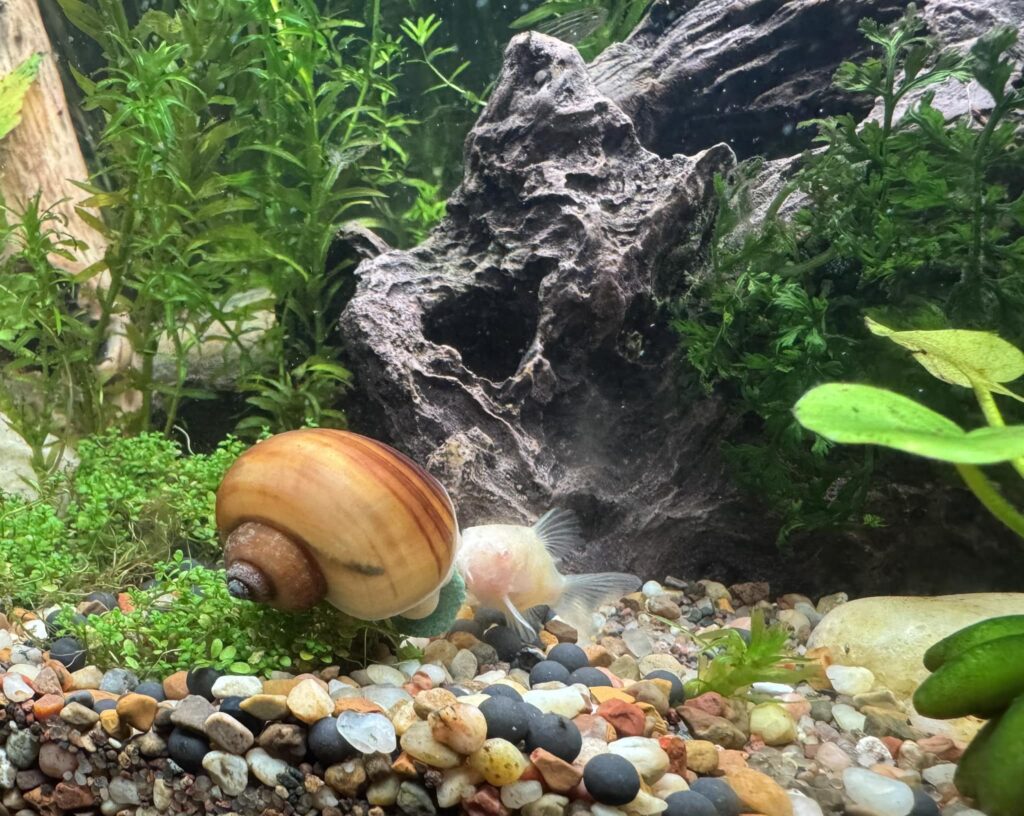
Mystery snails will always bring life to any aquarium. You will love how they glide across glass or explore plants. They also eat algae, keeping the tank cleaner without much effort. This article covers everything you need for a successful mystery snail tank setup.
It focuses on the right tank size, safe tank mates (companions), and other key factors like water needs, substrate, and avoiding problems.
Main Key Points
- Mystery snails thrive in tanks of at least 5-10 gallons per snail, with 10 gallons ideal for comfort and mates.
- They pair well with peaceful fish like tetras, rasboras, and corydoras, plus shrimp and other snails.
- Avoid aggressive or snail-eating species such as puffers, bettas, loaches, assassin snails, or large cichlids.
- Provide calcium-rich water, hiding spots, and a secure lid to prevent escapes.
- These snails help clean algae but need extra food if competition arises.
Tank Size Recommendations
Tank size matters a lot for mystery snails. These snails grow to about 1.5-2 inches in diameter. They move around a lot, climb walls, and explore every corner. A cramped tank stresses them and leads to poor health.
Most experts recommend a minimum of 5 gallons for one snail. This works for a small setup or nano tank. But for better results, go with 10 gallons or more. In a 10-gallon tank, you can keep 2-3 snails comfortably, plus some fish mates.
From community discussions on Reddit’s AquaticSnails forum, one aquarist shared: a 5-, 8-, or 10-gallon tank works fine for a single snail or small group, but “the 10 has a little more wiggle room for 3-4.” They noted the bio-load can be heavy, so cycle the tank well first.
Another guide suggests 5 gallons per snail as a rule, but 10 gallons is preferred for space and stability. Larger tanks (20 gallons+) open up more options for mates and plants. Always use a tight-fitting lid—mystery snails climb out if they can reach the top.
Water Parameters and Setup Basics
Mystery snails need stable conditions. Aim for:
- Temperature: 68-82°F (20-28°C)
- pH: 7.5-8.5 (alkaline side helps shell health)
- Hardness: Moderately hard water
Add calcium sources like cuttlebone or supplements during water changes. Soft, acidic water can erode shells over time.
Substrate can be sand, gravel, or pebbles—anything smooth so they move easily. Avoid sharp edges that damage their body. Plants like Java moss, Anubias, or Hornwort work great. Snails may nibble dying leaves, but rarely harm healthy ones.
A filter and heater keep things steady. Mystery snails produce waste, so good filtration helps. Weekly partial water changes maintain quality. Learn more about mystery poop identification and cleanup.
Tank Mates and Compatibility
Mystery snails are peaceful. They don’t bother others and retreat into their shell if threatened. But they’re slow and can’t fight back, so choose mates carefully.
Good companions include peaceful community fish. Neon tetras, rasboras, honey gouramis, and corydoras top many lists. These small, calm fish school nicely and ignore snails.
Shrimp like cherry, ghost, or Amano do well too. They share the cleanup role without issues.
Other snails—nerites, rabbit, or trumpet—coexist peacefully. A mix adds variety.
Bettas can work if gentle. Many keepers pair a calm male betta with mystery snails successfully. One aquarist on forums said they vibe perfectly with a betta and even ghost shrimp.
Avoid bad mates. Puffer fish, certain loaches, assassin snails, turtles, and large aggressive cichlids eat snails. Nippy fish like some barbs or danios may nip antennae. One expert warned: “I’d avoid assassin snails, because they will go after mystery snails even if they’re bigger.”
From experienced aquarists: “Mystery snails make excellent companions for betta fish, as long as the tank is large enough.” Another noted peaceful fish like tetras and corys keep everyone happy.
Food competition can happen with other scavengers. Feed extra algae wafers or veggies so snails get their share.
ALSO READ: Calcium For Mystery Snails: Benefits and Sources
Expert Insights from Aquarists
Experienced keepers praise these snails.
One said: “Mystery snails are really some of the best freshwater creatures around. Never get tired of watching these fascinating little ones!”
Another shared: “I’ve kept mystery snails for over a decade, and they’re still one of my favorite aquarium inhabitants. These peaceful gastropods bring personality, practical benefits, and a surprising amount of entertainment.”
On compatibility: “They will stay out of each other’s way and go about their business. The snail will gladly clean the tank while the betta enjoys the clear water!”
A forum user added: “In the past, we have kept them with dwarf shrimp, tetras, kuhli loaches, corydoras, calmer betta fish that aren’t as aggressive, and many other tank mates.”
These quotes show real joy in keeping them. They highlight how mystery snails fit into community tanks without drama.
ALSO READ: Mystery Snail Breeding Tank: Raising Healthy Snail Babies
Other Important Tips
Provide hiding spots with driftwood or caves. Mystery snails like to rest or hide sometimes.
Feed blanched veggies (zucchini, spinach), algae wafers, or fish food leftovers. They scavenge well but need variety.
Watch for floating too long—it can signal illness. If they flip over, help gently.
Breeding happens if males and females are present. Females lay eggs above water. To control, keep one sex or lower the water level.
Final thought
Mystery snails live 1-2 years with good care. Healthy ones stay active and climb eagerly.
Setting up for mystery snails is rewarding. Start small, choose peaceful mates, and watch your tank thrive. These little guys add charm and help keep things clean. Enjoy the process—it’s satisfying to see them explore happily.
Suggested For You:
Understanding Mystery Snail Food: What to Feed Pomacea bridgesii
Do Mystery Snails Eat Plants? What You Need to Know Before Adding Them to a Planted Tank
Understanding Mystery Snail Shell Growth: Key Indicator of Healthy Snail
Do Mystery Snails Eat Shrimp? The Truth About Keeping These Two Together
Mystery Snail vs Apple Snail: Key Differences Every Aquarist Should Know