8 Types of Mystery Snails (Based on Shell and Body Colors)
Mystery snails (Pomacea bridgesii), are popular freshwater aquarium inhabitants. They bring gentle movement, help clean up algae and debris, and add vibrant life with their colorful shells and bodies.
This article explores the types of mystery snails based on shell and body colors. It covers the most common and sought-after varieties, how colors appear, what influences them, and why aquarists love certain ones.
Key Points in This Article
- Mystery snails display a range of shell colors like gold, ivory, blue, purple, jade, magenta, chestnut, and olive, often with or without stripes.
- Body color varies from light (white, pinkish, or yellowish) to dark (gray, blue-black), and many have orange spots or accents.
- Shell patterns include solid hues or stripes in contrasting shades.
- Genetics play a big role: three main genes control stripes, body darkness, and shell pigment deposition.
- Aquarists prize rare colors like purple or jade for their striking beauty in planted tanks.
- Colors can shift slightly with age, lighting, or diet, but the base morph stays consistent.
- These snails are peaceful, easy to care for, and breed readily, making color variety a fun breeding project.
Mystery snails captivate hobbyists with their diversity. Unlike plain pond snails, these come in shades that rival tropical fish. Selective breeding over decades has produced this rainbow of options. Let’s dive into the main types, starting with the most common.
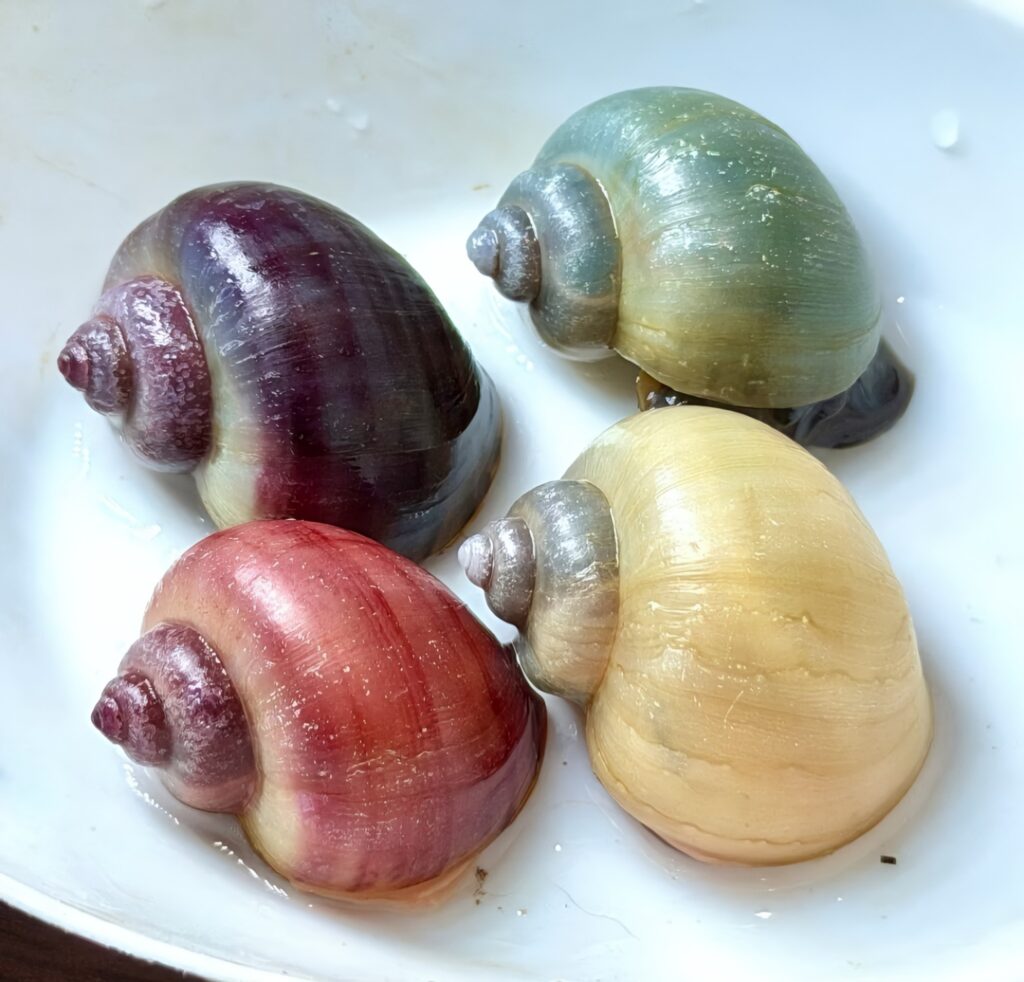
Common Mystery Snail Color Varieties
1. Gold (or Golden/Yellow) Mystery Snails
The gold mystery snail tops the list for popularity. Its shell glows in bright lemon-yellow to rich golden tones. The body is often light, with orange-red spots scattered across it. This variety feels cheerful and sunny in any tank.
Many aquarists start here because it’s easy to find and looks vibrant against green plants. The shell is usually solid, though some show faint stripes. Under good lighting, the gold shines like treasure.
One experienced aquarist notes, “Golden mysteries are the most commonly kept color morph… they make such fun breeding projects.” This reflects how reliable and rewarding they are for beginners.
2. Ivory (or Albino/White) Mystery Snails
Ivory mystery snails have creamy white or off-white shells. The body matches closely—light pinkish or yellowish—with those classic orange dots. Some call them albino due to the lack of strong pigment.
These snails offer subtle elegance. They stand out in darker substrates or planted setups without overwhelming the view. The shell can appear semi-transparent in young ones, revealing body hints beneath.
Aquarists appreciate their clean look. As one breeder shares on forums, “Ivory – light shell, light body… commonly called light stripe purple” when stripes appear, showing how patterns add surprise even in pale varieties.
3. Blue Mystery Snails
Blue mystery snails feature a soft steel-blue to grayish-blue shell. The body is dark—gray or blue-black, creating a sleek contrast. The shell often appears semi-transparent, allowing the dark body to show through for a mystical effect.
This variety ranks high for modern tanks. It pairs beautifully with minimalist aquascapes or black backgrounds. Bright LED lights make the blue pop vividly.
Experts love the contrast. One aquarist describes it as “essentially Ivory with a dark body… Shell is white, though may appear bluish-gray due to pigmented body showing through.” Many agree it’s one of the most elegant morphs.
4. Purple Mystery Snails
Purple mystery snails are prized for their regal deep violet to lavender shells. The body is usually dark, with black or purple stripes adding drama. Some have a pearlescent sheen that catches light beautifully.
These are rarer and more expensive, but worth it for the wow factor. They bring sophistication to community tanks.
From community discussions, aquarists rave about them. One says, “The purple dark footed with orange eyes… have not seen them in probably close to 8 years,” highlighting their allure and occasional scarcity.
5. Jade Mystery Snails
Jade mystery snails boast green shells ranging from light translucent to deep vibrant jade. The body is often dark, contrasting sharply with the semi-transparent shell for a glossy, jewel-like appearance.
This variety feels natural and exotic, blending well in planted tanks. The green tones echo aquatic plants, creating harmony.
Aquarists call it captivating. Descriptions note, “Jade mystery snails are a unique and captivating variety… Their shells are a beautiful shade of jade green… a favorite among aquarists who seek a touch of nature-inspired beauty.”
6. Magenta Mystery Snails
Magenta mystery snails shine with bold pinkish-magenta shells, often solid without heavy stripes. The body can be light or dark, but the bright shell steals the show. Tones range from vivid magenta to softer purplish-red.
These add energy and stand out dramatically. They’re less common but highly sought after for color pops.
Breeders share excitement: “I have a magenta boy that bred with a jade girl and the clutches have been a bouquet of varying colors,” showing how mixing produces surprises.
7. Chestnut (or Brown) Mystery Snails
Chestnut mystery snails have brown shells, sometimes with black, red, or yellow stripes. The body is light pinkish or white, dotted with orange or yellow spots.
This variety resembles wild types more closely. Stripes add pattern interest, making each snail unique.
Forum users mention, “Chestnut mystery snails have a brown shell, which can usually have black, red, or even yellow stripes… with yellow or orange dots all around it.” It’s valued forits natural charm.
8. Olive and Other Rare Variations
Olive mystery snails are rare, with greenish-brassy shells and light bodies. Other rarities include solid black-bodied types or unique stripe combos.
These emerge from selective breeding. Aquarists hunt them for collections. One notes olive as “very rare… greenish to brassy tint to their shell and a white body.”
Genetics Behind the Colors
Mystery snail colors stem from three main genes, according to breeding studies.
- Stripes: Dominant (B for banded, b for no stripes).
- Body color: Dark dominant (C for dark, c for light).
- Shell pigment: Dominant deposition (D for color, d for no color/ivory base).
Combinations create morphs. For example, ivory is recessive (bb + light body + dd). Gold mixes yellow base with possible dark body. Breeding two heterozygotes can yield surprises.
One genetics-focused aquarist explains, “Three of the eight varieties… demonstrate colorless bodies but colored shells,” referring to gold, chestnut, and magenta.
Another adds, “Foot color is completely dominant so if one parent has dark foot all the babies will.”
This makes breeding addictive. You can predict outcomes but still get exciting variations.
You may also like: Mystery snail water parameters
Why Aquarists Love Color Variety
Colors do more than look pretty. They enhance tank aesthetics. Gold or blue brightens planted setups. Purple or magenta adds drama to minimalist ones.
Experienced keepers say variety keeps things interesting. One breeder reflects, “I love golden mysteries, but honestly all mysteries are pretty imo.”
Another shares joy in surprises: “My magenta and ivory mystery snails have only had magenta babies, and I feel like I’m missing out on some other colors,” but celebrates the process.
Colors also tie to health. Good diet (calcium-rich) and lighting keep shells vibrant. Poor conditions dull them, so variety motivates better care.
ALSO READ:
Mystery snail poop: Identification and Cleanup
Mystery snail changing color (Shell Turning Pale or White)
Mystery Snail Food: What to Feed for Healthy Shell
Final Thoughts
Mystery snails offer endless fascination through their shell and body colors. From everyday gold to rare jade or purple, each type brings unique beauty and personality.
Whether you’re new or seasoned, adding different colors creates a lively, dynamic tank. Their gentle nature, algae-eating habits, and breeding ease make them ideal companions.
Next time you see a mystery snail, look closely. That swirl of color tells a story of genetics, care, and aquarist passion. Enjoy the discovery—it’s one of the joys of this hobby.