Mystery Snail Shell Cracked: What to Do
Mystery snails, also known as Pomacea bridgesii or diffusa, are popular freshwater aquarium pets. Many owners face a common worry: a cracked shell. This can happen from falls, poor water conditions, or low calcium. It often looks scary, but mystery snails are tough. They can heal with the right care.
This article covers everything you need to know about a cracked mystery snail shell. We explain causes, how snails repair damage naturally, steps to help them recover, when to try repairs like patching, prevention tips, and expert views from aquarists. By the end, you’ll feel confident to support your snail.
Main Key Points in This Article
- Cracked shells often come from accidents like falls or weak shells due to low calcium and soft water.
- Mystery snails repair cracks on their own using calcium from food and water, forming new layers over weeks.
- Boost calcium with supplements, cuttlebone, or foods like blanched veggies.
- For serious cracks or holes, some owners patch with eggshell and safe glue, but many experts say let nature handle it.
- Keep water parameters stable: pH 7-8, good GH/KH, temperature 65-80°F (18-27°C).
- Prevention beats cure—provide calcium always and secure tank lids to stop escapes.
- Quotes from experienced aquarists show real-world success stories and warnings.
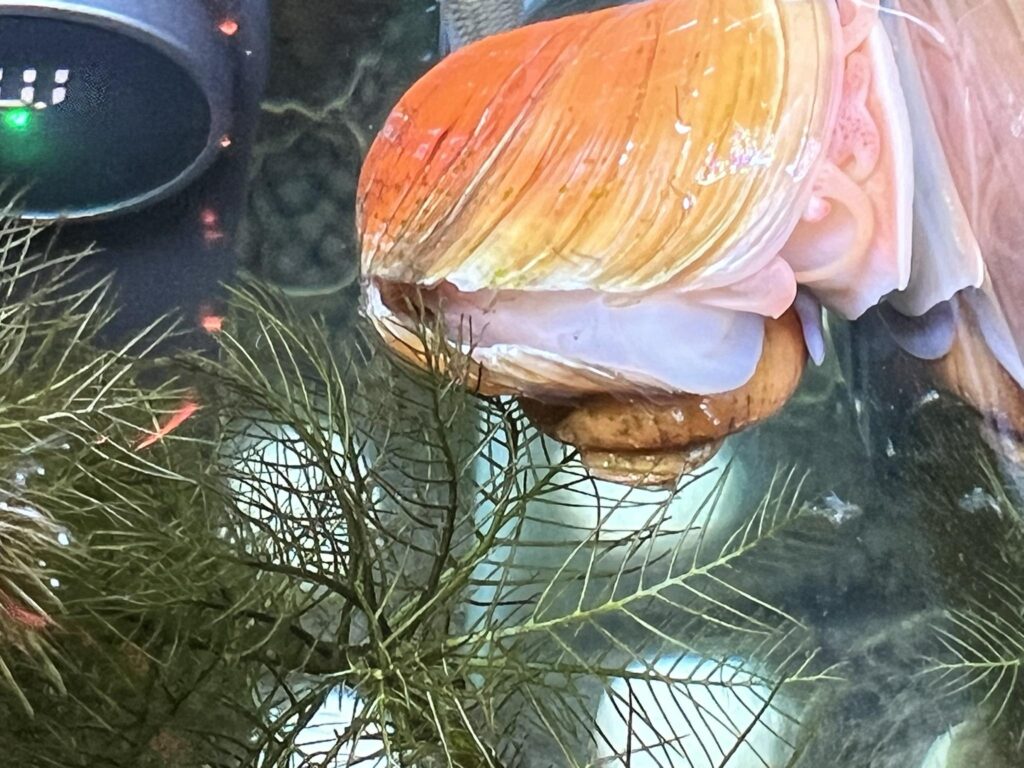
What Causes a Cracked Mystery Snail Shell?
A cracked shell shocks most owners. The good news? It’s rarely fatal if acted on quickly.
1. Injury or physical trauma
The top cause is physical trauma. Mystery snails love to climb. They explore glass, filters, and plants. Sometimes they lose grip and fall. Even a short drop from the tank edge or lid can crack the shell.
One owner shared how their snail escaped, fell from a counter, and cracked badly. It healed fully with time. Read more about: Mystery Snails Escaping Tank (Signs and What to Do)
2. weak shell structure
Another big reason is weak shell structure. This builds over time from incorrect water parameters or poor care. Low calcium makes shells thin and brittle. Soft water (low GH/KH) or acidic pH (below 7) dissolves shell material. The shell pits, flakes, or cracks easily—even without a fall.
3. Old age
Age also plays a role in the cracking of snail shells. Mystery snails live 1-2 years, sometimes longer. Older ones may show erosion, but cracks usually tie back to calcium or accidents.
4. Lack of calcium
Poor diet adds to the problem. Snails need calcium to sustain their shell structure. Without this mineral, it weakens and starts cracking. Read more about Calcium for Mystery Snails: Benefits and sources.
How Mystery Snails Naturally Repair Their Shells
Mystery snails have an amazing ability to fix damage. They use special cells in their mantle (the soft part under the shell). These cells make calcium carbonate. This seals cracks and builds new shell layers.
The process starts fast. A thin, papery cover forms over the crack. It hardens in days to weeks. Full repair takes 1-4 weeks, depending on damage and calcium supply.
One expert from aquarium forums explains it well: “They produce a substance called calcium carbonate which they use to repair small cracks and holes in their shells. However, this process is slow.”
Another aquarist notes: “It will heal itself. I had one do this a few weeks ago and it’s perfectly fine now. Just make sure you’re feeding enough calcium-rich foods, and it’ll take care of itself.”
If calcium is low, repair slows or stops. The snail may absorb calcium from other shell parts, causing more thinning.
ALSO READ: Mystery Snail Food (What to Feed for Healthy Shell)
Steps to Help Your Snail Recover from a Cracked Shell
First, stay calm. Most snails survive with basic help.
- Check the snail. Is it active? Does it move, eat, or retract into the shell? If it’s alive and responsive, that’s a great sign. If it floats or stays out, monitor closely.
- Improve water quality. Test pH, GH, KH. Aim for pH 7.0-8.0, GH 8-12 dGH, KH similar. Soft or acidic water stops healing.
- Add calcium sources. Place cuttlebone in the tank. It dissolves slowly and adds minerals. Use liquid supplements like Seachem Equilibrium or Kent’s calcium (safe for freshwater). Avoid copper-based products—they kill snails.
- Feed calcium-rich foods. Blanch zucchini, cucumber, spinach, or kale. Offer algae wafers or blanched veggies daily. Snello (a homemade snail food) works great too.
- Isolate if needed. Move the snail to a hospital tank if fish nip at exposed body parts. Keep it calm and clean.
- Watch for infection. A cracked shell exposes the body. Poor water can cause issues. Do regular water changes (20-30% weekly).
Many owners see full recovery this way. One said: “Don’t glue your snails shell back together. It will heal with time. Just make sure your feeding them lots of nutrient-dense foods and making sure your kH and gH are at least 7 or 8 degrees.”
ALSO READ: Signs of Unhealthy Mystery Snail (And What to Do)
When and How to Repair a Cracked Shell Manually
For small cracks, natural healing works best. But big holes, chips near the operculum (the door flap), or body exposure, and severe peeling may need help.
Some experienced keepers patch the shell. They use clean eggshell pieces and gel superglue (not liquid— it can leak and glue the body). The membrane on the eggshell helps.
Steps include:
- Dry the snail gently.
- File rough edges if needed.
- Cut the eggshell slightly larger than the hole.
- Apply tiny glue dots to eggshell edges only.
- Press on carefully—no glue on soft tissue.
- Let dry, then return to water.
A detailed guide notes: “You can make a patch out of a piece of eggshell and crazy glue… Be careful and do not get any on the snails soft body.”
But not all agree. Many experts warn against glue. It stresses the snail and risks toxins. One forum user said: “Snails are very resilient creatures and can recover from some pretty bad breaks… Just leave it to heal on its own.”
If the crack is minor, skip patching. Focus on calcium. The shell may heal with a ridge or scar, but the snail lives normally.
Also Read: Mystery Snail Changing Color (Shell Turning White)
Prevention: Keep Mystery Snail Shells Strong and Healthy
The best fix is avoiding cracks.
- Secure the lid. Mystery snails escape easily. Use a tight cover or mesh.
- Maintain hard water. Add crushed coral or mineral supplements.
- Feed a varied diet with calcium always available.
- Avoid sudden changes. Acclimate slowly.
- Monitor parameters weekly.
Healthy shells grow smooth and thick. Pits or erosion signal problems early.
One aquarist shared: “Once I increased my gH I never have had a snail’s shell crack. If you don’t provide them with enough calcium their shells become brittle and weak, and when they do their normal goofy play behaviors (dropping from the top of the tank, for example) it puts them at risk for injury.”
Final Thoughts
A cracked mystery snail shell feels worrying, but these snails are hardy. With good calcium, stable water, and patience, most recover well. Watch your snail closely, act on causes like low minerals, and prevent future issues with proper care.
Your mystery snail can bounce back and live a full, active life. Many owners see their snails heal completely and climb happily again. Give yours the support it needs—you’ll likely see positive changes soon.
References
- Cowie, R. H. (2002).Apple snails (Ampullariidae) as agricultural pests: their biology, impacts and management. In G. M. Barker (Ed.), Molluscs as Crop Pests (pp. 145–192). CAB International. University of Hawaii at Manoa, Pacific Biosciences Research Center.https://www.hawaii.edu
- Wilbur, K. M., & Saleuddin, A. S. M. (1983).Shell formation and the role of the mantle in calcium carbonate deposition in molluscs. In K. M. Wilbur (Ed.), The Mollusca, Volume 4: Physiology (pp. 235–287). Academic Press. Duke University, Department of Zoology.https://duke.edu
- Ramnarine, I. W. (2009).Calcium metabolism and shell mineralisation in freshwater gastropods under varying water hardness conditions. Department of Life Sciences, University of the West Indies, St. Augustine, Trinidad and Tobago. Faculty of Science and Agriculture Publication Series.https://sta.uwi.edu
- Marin, F., Le Roy, N., & Marie, B. (2012).The formation and mineralisation of mollusc shell. Frontiers in Bioscience (Scholar Edition), 4(3), 1099–1125. Université de Bourgogne, UMR CNRS 6282 Biogéosciences, Dijon, France.https://www.u-bourgogne.fr
- Hayes, K. A., Cowie, R. H., Thiengo, S. C., & Strong, E. E. (2012).Comparing apples with apples: clarifying the identities of two highly invasive Neotropical Ampullariidae (Caenogastropoda). Zoological Journal of the Linnean Society, 166(4), 723–753. Smithsonian Institution, National Museum of Natural History & University of Hawaii at Manoa.https://academic.oup.com/zoolinnean