10 Best Tank Mates for Platies: A Complete Compatibility Guide
One of the greatest pleasures of keeping platy fish is watching them thrive in a well-chosen community tank. Platys are social, peaceful, and active — qualities that make them excellent neighbors for a wide variety of other species.
But not every fish that looks harmless in a pet store will work well alongside your platys. The wrong tank mate can cause chronic stress, fin damage, competition for food, or worse.
Choosing the right companions requires more than just picking fish you like the look of. You need to consider water parameter compatibility, temperament, size, swimming level, and feeding behavior. Get these right, and your tank becomes a genuinely beautiful, balanced ecosystem. Get them wrong, and even peaceful species can make each other miserable.
This guide covers the best tank mates for platies — organized by type — along with the fish you should always avoid, and the principles that make a community tank work.
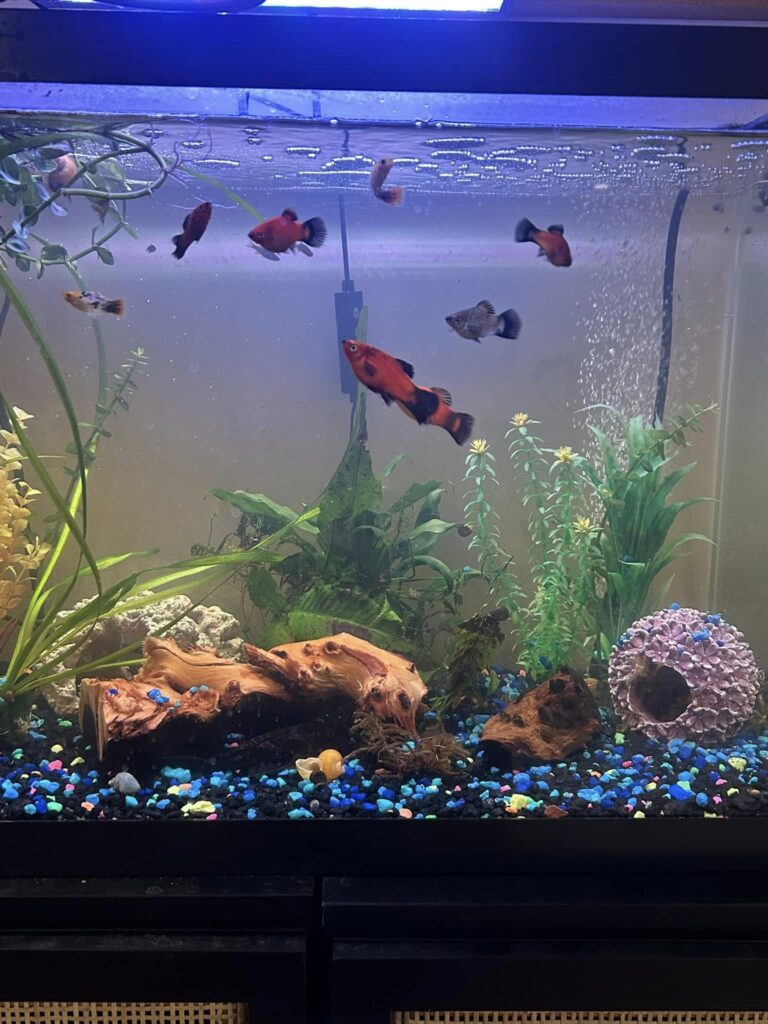
What Makes a Good Tank Mate for Platies?
Before exploring specific species, it helps to understand the criteria that determine compatibility.
Temperament
Platies are peaceful and non-aggressive. They do not nip fins, defend territory obsessively, or bully other fish. Any tank mate that is aggressive, highly territorial, or prone to fin nipping will cause stress and injury to your platys. The ideal companion shares the same calm, community-minded disposition.
Water parameters
Platies prefer a temperature of 70–82°F (21–28°C), a pH of 7.0–8.0, and moderately hard water. Any tank mate must be comfortable within this range — or at least within a range that overlaps enough to allow a workable compromise.
Size
Platys are small fish, reaching 1.5 to 2.5 inches (4–6 cm). They should not be housed with fish large enough to view them as food. As a general rule, avoid any species that grows significantly larger than a platy and is known to eat smaller fish.
Swimming level
A well-balanced community tank uses all three levels of the water column — top, middle, and bottom. Platys occupy mainly the middle and upper levels. Adding fish that occupy different levels reduces competition and creates a more dynamic, visually interesting tank.
Diet
Platys are omnivores. Most community fish share broadly similar dietary needs, but avoid species that require highly specialized feeding conditions that conflict with the general community feeding schedule.
Best Tank Mates for Platies
With the above principles in mind, here are the best tank mates for platies.
1. Guppies (Poecilia reticulata)
Guppies are perhaps the most natural choice of tank mate for platies. Both species are livebearers from the same family (Poeciliidae), share nearly identical water requirements, and are equally peaceful in temperament.
In a mixed platy and guppy tank, the two species interact comfortably and rarely interfere with each other. Males of each species may occasionally chase females of the other — guppies and platys can even hybridize in rare cases — so be mindful of this if you intend to breed either species selectively.
Guppies are hardy, colorful, and readily available. They occupy the upper water column, which complements the mid-water preference of platys. A tank containing both species is vibrant, active, and easy to care for.
Ideal tank size: 20 gallons for a mixed community
Temperature overlap: 72–82°F (22–28°C)
2. Mollies (Poecilia sphenops and related species)
Mollies are another livebearer species that coexists naturally with platys. They share Central American origins, similar water chemistry preferences, and peaceful dispositions. In a tank with both species, you will notice minimal conflict and easy, relaxed coexistence.
Mollies are slightly larger than platys — some varieties reach 3 to 4 inches (7–10 cm) — but they pose no threat to platies. They are omnivores with a strong preference for vegetable matter, which aligns well with the platy’s dietary habits.
One consideration: mollies benefit from slightly higher pH and hardness than platys strictly require. If your water leans harder and more alkaline, both species will feel at home. If your water is soft and neutral, mollies may be slightly less comfortable. A compromise within the overlapping range works well for both.
Ideal tank size: 20–30 gallons for a mixed group
Temperature overlap: 70–82°F (21–28°C)
3. Swordtails (Xiphophorus hellerii)
Swordtails are close relatives of platies — both belong to the genus Xiphophorus — which means they share nearly identical water requirements and temperament profiles. They are peaceful community fish that occupy the middle water column, feed on similar foods, and cause virtually no conflict with platys.
Male swordtails are recognizable by the elongated lower lobe of their caudal fin — the “sword” — which makes them one of the most visually distinctive fish in the hobby. They add striking visual contrast to a platy community tank.
Be aware that male swordtails can occasionally show mild aggression toward other males of their own species, particularly in smaller tanks. Keeping one male per group, or using a larger tank with good visual barriers, manages this effectively.
Ideal tank size: 20–30 gallons
Temperature overlap: 70–82°F (21–28°C)
4. Corydoras Catfish (Corydoras spp.)
Corydoras are small, armored, bottom-dwelling catfish that are among the most popular and widely kept community fish in the hobby — and for very good reason. They are completely peaceful, entirely harmless to other fish, and genuinely useful as part of a community setup.
Corydoras occupy the bottom of the tank, a level that platys rarely visit. This means the two species do not compete for the same space, food, or territory. Corydoras forage along the substrate, picking up leftover food that has sunk to the bottom and would otherwise decompose and raise ammonia levels.
They are schooling fish and must be kept in groups of at least six individuals of the same species to feel secure and display their natural behavior. Popular varieties compatible with platy water parameters include Corydoras paleatus (peppered cory), Corydoras sterbai, and Corydoras aeneus (bronze cory).
Ideal tank size: 20 gallons minimum for a cory group
Temperature overlap: 70–79°F (21–26°C) — note that some corydoras prefer cooler water, so check the specific species
5. Neon Tetras (Paracheirodon innesi) and Ember Tetras (Hyphessobrycon amandae)
Small, peaceful tetras are excellent companions for platies in a community tank. Their calm nature, small size, and schooling behavior complement the active, free-swimming style of platys without creating any conflict.
Neon tetras are one of the most recognizable freshwater fish in the world — their iridescent blue and red coloring adds a completely different visual dimension to a platy tank. They school in the middle and lower middle column, creating a beautiful layered effect alongside mid-swimming platys.
The one consideration with neon tetras is water parameter overlap. Neons naturally prefer slightly softer, more acidic water (pH 6.0–7.0) than platys, which prefer 7.0–8.0. A neutral pH of around 7.0 serves as a workable compromise for both species in a community setting, though neither will be at its absolute optimum.
Ember tetras are a smaller, hardier alternative. They tolerate a wider pH range, are equally peaceful, and their warm orange coloring pairs beautifully with the varied colors of platy fish.
Ideal tank size: 15–20 gallons for a tetra school alongside platys
Temperature overlap: 72–80°F (22–27°C)
6. Harlequin Rasboras (Trigonostigma heteromorpha)
Harlequin rasboras are calm, mid-water schooling fish that adapt well to the water parameters preferred by platys. They are recognizable by the distinctive black triangular patch on their bodies and their warm, coppery orange coloring.
Harlequins are active swimmers but entirely non-aggressive. They school tightly, which creates a visually captivating dynamic in the middle of the tank while platys swim freely around them. They feed on the same diet as platys — flakes, small live or frozen foods — and require no specialized care.
Keep harlequin rasboras in groups of at least eight to ten individuals for best results. Smaller groups tend to be shy and hide more frequently.
Ideal tank size: 20 gallons
Temperature overlap: 72–80°F (22–27°C)
7. Dwarf Gouramis (Trichogaster lalius)
Dwarf gouramis are peaceful, slow-moving fish that occupy the upper middle water column. Their calm temperament makes them compatible with platys, and their striking coloring — vivid blues, reds, and oranges — adds visual depth to a community setup.
A single male dwarf gourami works best in a platy community. Two males in the same tank can be territorial with each other, but a single male alongside platys and other community fish poses no issue.
Dwarf gouramis are labyrinth fish — they breathe atmospheric air directly from the surface. Ensure the tank has a gap between the water surface and the lid so the fish can access air freely without obstruction.
Ideal tank size: 20 gallons
Temperature overlap: 75–82°F (24–28°C)
8. Otocinclus Catfish (Otocinclus spp.)
Otocinclus — often called “otos” by fishkeepers — are small, gentle algae-eating catfish that serve a genuinely useful function in a platy community tank. They graze continuously on algae growing on glass, plants, and decor, keeping the tank looking clean without any harm to tank mates.
They are completely peaceful and so small (1–2 inches / 2.5–5 cm) that they pose no threat to any other inhabitant. They are schooling fish and do best in groups of four to six individuals. Unlike larger algae eaters such as common plecos, otocinclus do not grow large enough to become a space or behavioral problem.
One caveat: otocinclus can be sensitive during the acclimation period and may require a more established, well-planted tank with natural algae growth before they are introduced. Supplement their diet with blanched zucchini and cucumber if natural algae is insufficient.
Ideal tank size: 20 gallons
Temperature overlap: 72–79°F (22–26°C)
9. Zebra Danios (Danio rerio)
Zebra danios are energetic, hardy, and exceptionally peaceful. They are fast swimmers that occupy the upper water column and rarely interact negatively with slower-moving mid-level fish like platys. Their striped, silver-and-blue coloring adds movement and brightness to a community tank.
Danios are extremely tolerant of a wide range of water conditions and adapt easily to the parameters preferred by platys. They are schooling fish — keep a minimum of six to avoid stress and erratic individual behavior.
Their active swimming style can occasionally startle more timid species, but platys are confident and active themselves and are rarely bothered by the presence of danios.
Ideal tank size: 20 gallons
Temperature overlap: 70–78°F (21–26°C)
10. Bristlenose Plecos (Ancistrus spp.)
For a larger bottom-dwelling addition to a platy community tank, the bristlenose pleco is an excellent choice. Unlike the common pleco, which can grow to 18 inches (45 cm) and quickly overwhelms a standard aquarium, bristlenose plecos are small — typically 4 to 5 inches (10–13 cm) at full adult size — and entirely manageable in a 20- to 30-gallon tank.
Bristlenose plecos are herbivores that rasp algae from surfaces throughout the tank. They are peaceful, nocturnal, and largely invisible during the day when they rest under driftwood or inside caves. They cause no conflict with platys and provide useful algae control.
Supplement their diet with blanched vegetables — zucchini, cucumber, and spinach — along with sinking algae wafers. Provide at least one piece of driftwood, as many bristlenose plecos appear to benefit from grazing on the wood surface.
Ideal tank size: 25–30 gallons minimum with a bristlenose pleco included
Temperature overlap: 73–81°F (23–27°C)
Fish to Avoid Keeping with Platies
Knowing what to avoid is as important as knowing what works. The following species are commonly sold in pet stores but make poor or dangerous tank mates for platies.
Tiger Barbs (Puntigrus tetrazona)
Tiger barbs are notorious fin nippers. They actively target the flowing fins of slower-moving fish and will harass platies relentlessly, particularly males with prominent dorsal fins. Avoid this combination entirely.
Cichlids (most species)
The majority of cichlid species are territorial and aggressive. Even smaller cichlids like convicts or firemouths can seriously injure or kill platies. The few cichlid exceptions — such as German blue rams — are possible companions only in larger, well-structured tanks with experienced keepers.
Bettas (Betta splendens)
Betta fish are unpredictable in community settings. Some tolerate tank mates reasonably well; others attack immediately. Male platys with colorful fins and an active swimming style may trigger aggression from a betta. This pairing is best avoided unless you have a very large tank and extensive experience.
Goldfish (Carassius auratus)
Goldfish require cold water (60–72°F / 15–22°C), which is below the preferred temperature range of platies. Keeping them together forces both species to live outside their optimal conditions — weakening immune systems and shortening lifespans.
Large predatory fish
Any fish species that grows significantly larger than a platy and is known to eat smaller fish poses an obvious threat. This includes most large cichlids, oscars, and large catfish species like the red-tailed catfish.
Red-Tailed Sharks (Epalzeorhynchos bicolor)
These fish are territorial and aggressive toward other bottom and mid-water dwellers. They will chase and stress platys persistently, particularly in smaller tanks.
Building a Balanced Community Tank
A well-designed platy community tank uses all three levels of the water column and balances active and calm species. A sample stocking plan for a 30-gallon community tank might include:
- 6 platy fish (2:1 female-to-male ratio)
- 6 harlequin rasboras or ember tetras
- 6 corydoras catfish
- 1 bristlenose pleco or 4–6 otocinclus catfish
This combination covers the upper, middle, and bottom zones, creates visual interest at every level, and presents no compatibility concerns. The total bioload is appropriate for a 30-gallon tank with a good filter and weekly water changes.
Always introduce new fish gradually — adding all species at once overwhelms the biological filter and spikes ammonia. Add one group at a time, allow the tank to stabilize for one to two weeks, and test water parameters before the next addition.
Quarantine new fish in a separate tank for two to four weeks before introducing them to the main community. This prevents the introduction of disease and parasites that could affect all your existing fish.
Suggested For You:
Platy Fish Tank Setup: A Complete Step-by-Step Guide
Platy Fish Lifespan: How Long Do Platies Live and How to Help Them Live Longer
Types of Platy Fish: Variety Identification and Care
8 Common Platy Fish Diseases and Treatment: A Complete Guide
Platy Fish Breeding Tips: A Complete Guide to Successful Breeding
Frequently Asked Questions (FAQs)
1. Can platies live with goldfish?
No. Goldfish need cooler water (60–72°F / 15–22°C), while platys require warmer tropical temperatures (70–82°F / 21–28°C). Keeping them together forces both species outside their comfortable range, suppresses immune function, and shortens lifespan. They should always be kept in separate, appropriately configured tanks.
2. Can platies live with bettas?
In most cases, this combination is risky. Bettas can be aggressive toward colorful, active fish like platys. If attempted, use a tank of at least 20 gallons with dense planting and monitor closely for signs of aggression. Many experienced fishkeepers avoid this pairing altogether.
3. How many platies can I keep with other species in a 20-gallon tank?
A 20-gallon tank can support 4 to 6 platys alongside a small school of 6 to 8 tetras or rasboras and a group of 4 to 6 corydoras. Avoid adding more than two or three compatible species in a 20-gallon community to prevent overcrowding and water quality issues.
4. Do platies school with other fish?
Platys are not strict schooling fish, but they are social and feel more secure in groups of their own species. In a community tank, they tend to form loose groups and interact most with other platys. They do not school with other species but coexist comfortably alongside schooling fish.
5. Can I keep platies with shrimp?
Adult platys may occasionally show interest in large shrimp like cherry shrimp or amano shrimp, but they rarely pursue them aggressively in a well-planted tank. However, platys will actively eat small shrimp and shrimp fry. If you want to keep shrimp successfully alongside platys, provide very dense planting and accept that some losses among smaller shrimp may occur.
6. Can platies live with snails?
Yes. Snails such as mystery snails, nerite snails, and ramshorn snails are excellent tank mates for platys. They are completely peaceful, help clean algae and uneaten food from surfaces, and are large enough that platys generally ignore them. Nerite snails in particular are hardy, attractive, and will not overpopulate the tank.
7. What is the best single species to add to a platy tank for the first time?
Corydoras catfish are the best first addition to a platy tank. They occupy a completely different level of the tank, are entirely peaceful, share compatible water requirements, and serve a functional role in keeping the tank floor clean. A group of six corydoras in a 20-gallon platy tank creates an immediately balanced, visually dynamic community with zero compatibility risk.
References
- Fishkeeping World — Platy Fish Care Guide: Tank Mates, Compatibility and Community Setup. https://www.fishkeepingworld.com/platy-fish/
- University of Florida IFAS Extension — Community Aquarium Management and Fish Compatibility. https://edis.ifas.ufl.edu/topic_ornamental_fish
- Merck Veterinary Manual — Behavioral Disorders and Stress in Community Aquarium Fish. https://www.merckvetmanual.com/exotic-and-laboratory-animals/aquarium-fish/diseases-of-aquarium-fish
- The Spruce Pets — Best Community Fish for a Freshwater Aquarium. https://www.thesprucepets.com/community-aquarium-fish-1381042
- PubMed Central — Aggression, Social Hierarchy, and Space Use in Mixed-Species Freshwater Fish Communities. https://www.ncbi.nlm.nih.gov/pmc/