17 Stunning Types of Platy Fish: Variety Identification and Care
Walk into any aquarium store and the platy section is usually one of the most colorful displays in the building. Reds, blues, golds, blacks, sunsets, rainbows — the range of platy varieties available today is remarkable. For a beginner, it can feel overwhelming. For an experienced fishkeeper, it is simply one of the most enjoyable parts of the hobby.
What most people do not realize is that behind all these colors and patterns, there are only two true wild species of platy fish. Everything else — every color variety, every fin shape, every pattern — is the result of decades of selective breeding by hobbyists and commercial breeders. Understanding how this works helps you make better choices, appreciate what you are looking at, and care for your fish more effectively.
This guide covers the two base species, the major color and pattern varieties, the different fin-type varieties, and everything you need to know to choose the right type of platy for your tank.
The Two Base Species of Platy Fish
All platy fish kept in the aquarium hobby are descendants of just two wild species, both native to Central America and southern Mexico.
1. Southern Platy (Xiphophorus maculatus)
The southern platy is the more common of the two base species and the ancestral foundation of the vast majority of platy varieties available today. In the wild, it is found in rivers, streams, and ditches across Mexico, Belize, Guatemala, and Honduras.
Wild X. maculatus are modest-looking fish — mostly gray or olive-brown with a dark spot near the base of the tail fin called the “moon” marking. They are nothing like the vivid, heavily colored varieties sold in aquarium stores today. However, they are the genetic foundation upon which all those varieties were built.
X. maculatus is a robust, adaptable species that tolerates a wide range of water conditions. Its hardiness is one reason the platy became such a popular and widely distributed aquarium fish in the first place. That underlying hardiness is still present in most selectively bred varieties, though it varies depending on how intensively the fish has been bred.
Natural habitat parameters:
- Temperature: 64–77°F (18–25°C)
- pH: 7.0–8.0
- Hardness: Moderate to hard
2. Variable Platy (Xiphophorus variatus)
The variable platy is less commonly sold under its species name but is the second parent species behind many of today’s varieties. It is native to the Atlantic slope of Mexico, particularly in the states of Tamaulipas and Veracruz.
As the name suggests, X. variatus naturally displays considerable variation in coloration — even wild individuals show patches of yellow, orange, blue, and black. This natural variability made it an ideal candidate for selective breeding and is responsible for some of the most unusually colored platy varieties available today.
The variable platy is slightly more elongated in body shape than X. maculatus and tends to tolerate slightly cooler water. It is equally peaceful and adaptable, making it a natural community fish.
Natural habitat parameters:
- Temperature: 59–77°F (15–25°C)
- pH: 7.0–8.0
- Hardness: Moderate to hard
Hybridization
In the aquarium hobby, X. maculatus and X. variatus have been hybridized extensively over many generations. Most commercially available platy fish today are hybrids of both species, combining the color possibilities of X. variatus with the body type and hardiness of X. maculatus. Pure specimens of either species are rarely found in pet stores.
Platy Varieties by Color and Pattern
Color varieties in platy fish are the most visually diverse category. What follows are the most widely available and recognizable varieties found in the aquarium trade.
Red Platy
The red platy is one of the oldest and most recognizable varieties. The body is a solid, vivid red-orange, consistent across the entire fish including the fins. Some individuals display a slightly darker red than others depending on breeding line and diet.
Red platys are hardy, widely available, and make a striking visual impression in a planted tank. They are often one of the first varieties beginners encounter and choose — and for good reason. Their care requirements are identical to all other platy varieties.
Sunset Platy (also called Marigold Platy)
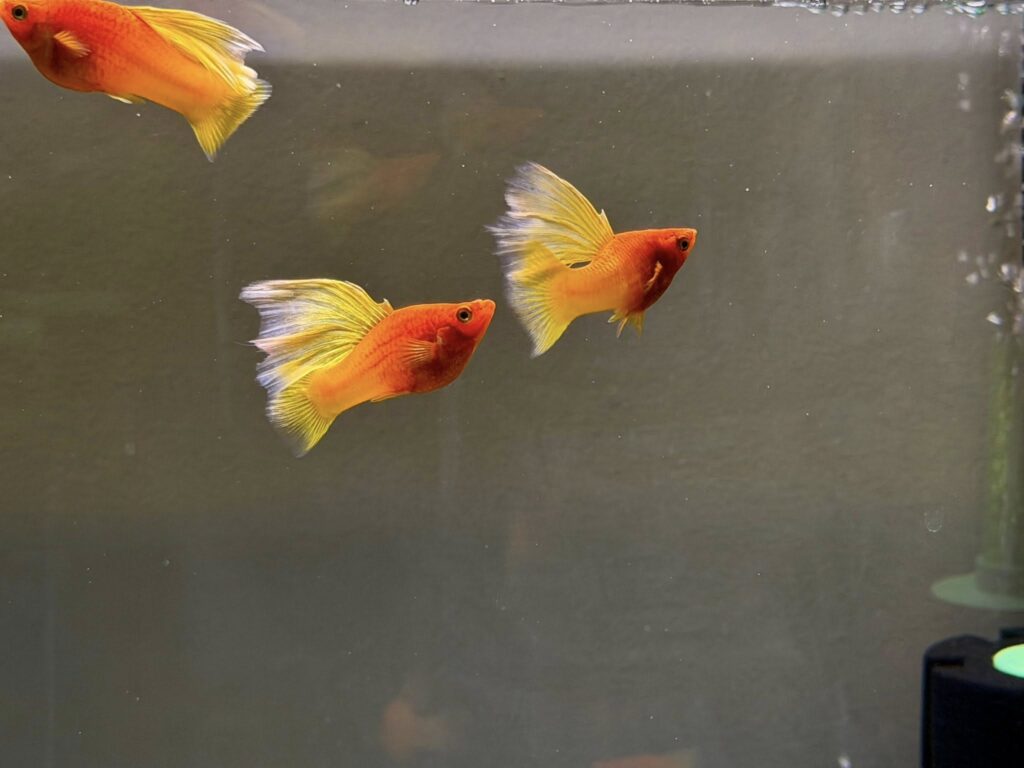
The sunset platy displays a warm gradient of yellow at the front of the body transitioning to deep orange or red toward the tail. The effect genuinely resembles a sunset when the fish moves through light — it is one of the most naturally beautiful color combinations in the platy family.
Sunset platys are extremely popular and widely bred. Their coloration is stable and consistent across most commercial breeding lines. The fins may display a slightly translucent orange hue, enhancing the overall warmth of the fish’s appearance.
Blue Platy (also called Blue Mirror Platy)
True blue platys are among the more unusual color forms in the hobby, because pure blue pigmentation is genuinely rare in freshwater fish. Most “blue” platys display a steel-blue or blue-gray body coloration, sometimes with a metallic or iridescent sheen.
The blue mirror platy is a specific variety characterized by a reflective, almost metallic blue body. Under good aquarium lighting, the iridescence is striking. Blue platys tend to be slightly less common in general pet stores than red or sunset varieties and may require visiting a specialist aquarium retailer or online breeder.
Gold Platy (also called Golden Platy)
The gold platy has a warm, solid golden-yellow body coloration throughout. It is bright, clean, and visually cheerful — a fish that catches the eye against green plant backgrounds and dark substrates. The fins are typically a slightly paler gold or transparent.
Gold platys are extremely hardy and breed very true to their coloration, meaning offspring reliably resemble the parents. They are an excellent choice for beginners who want a single-color variety with reliable genetics.
Black Platy (also called Midnight or Ink Platy)
The black platy is deeply pigmented, with a near-uniform dark black or dark gray body coloration. The depth of black varies between individuals and breeding lines — the best specimens are velvety and intense, while lesser-quality lines may produce fish that appear more dark gray than true black.
Black platys are visually dramatic, particularly in tanks with light-colored substrates or bright green planting. They are an excellent contrast species when kept alongside red, gold, or sunset varieties.
Mickey Mouse Platy
The Mickey Mouse platy is one of the most immediately recognizable varieties in the hobby, named for the pattern of spots near the base of the tail fin. Three dark spots — one large and two smaller ones arranged beside and below it — resemble the iconic silhouette of Mickey Mouse.
The body color of Mickey Mouse platys varies. Common versions include red-and-black, gold-and-black, and blue-and-black combinations, with the Mickey Mouse spot pattern appearing in black near the caudal peduncle. This variety is enormously popular with beginners and children, and is one of the most widely sold platy types worldwide.
Wagtail Platy
The wagtail platy is defined by its black fins against a contrasting body color. The body may be red, gold, blue, yellow, or any other color variety — but the fins are consistently and strikingly black. The name “wagtail” is thought to reference the visual effect of the dark tail moving as the fish swims.
Wagtail platys come in many sub-varieties: red wagtail, gold wagtail, blue wagtail, sunset wagtail, and more. The black finnage is a dominant trait, which means it is reliably passed to offspring and remains consistent across most breeding lines.
Red wagtail platys are among the most popular of all platy varieties, combining the vivid warmth of the red body with the bold contrast of fully black fins.
Rainbow Platy
The rainbow platy is a multi-colored variety that displays a combination of blue, green, yellow, and orange across the body — sometimes with a metallic or iridescent quality to the scales. No two rainbow platys are identical, and the variation from fish to fish is part of what makes them appealing.
The rainbow designation is somewhat loosely applied in the hobby, and what is sold as a “rainbow platy” can vary between suppliers. In general, the variety features multiple colors in a graduated or blended pattern rather than a single solid color.
Tuxedo Platy
The tuxedo platy displays a distinctive two-toned pattern: the front half of the body is a lighter color — often red, gold, or blue — while the rear half is dark or black, creating a sharp contrast at the midpoint of the body. The effect is clean and striking.
Tuxedo platys are available in several color combinations, including red tuxedo, gold tuxedo, and blue tuxedo. The tuxedo pattern is a stable genetic trait and breeds reliably. These fish are popular in community tanks where visual variety among the platy group is desired.
Panda Platy
The panda platy is characterized by a pale, often white or cream body with black markings concentrated around the eyes, dorsal fin, and tail area — a pattern loosely resembling the markings of a giant panda. The contrast between the pale body and dark markings is distinctive and appealing.
Panda platys are considered a specialty variety and may require visiting a dedicated aquarium store or online breeder rather than a general pet store. Their care requirements are identical to any other platy variety.
Salt and Pepper Platy
The salt and pepper platy has a speckled pattern of dark spots or flecks distributed across a lighter base color. The distribution of spots varies between individuals — some are densely spotted, others more lightly marked. The overall effect is textured and natural-looking, different from the solid-color or sharply patterned varieties.
Platy Varieties by Fin Type
Beyond color and pattern, platy fish have been selectively bred for different fin shapes. These fin-type varieties can be combined with any color or pattern, creating a very large number of possible combinations.
Standard Fin Platy
The standard fin platy has the natural, unmodified fin shape of the wild species — a rounded caudal fin, a moderate dorsal fin, and proportionate pectoral fins. This is the most common form and is what most people picture when they think of a platy fish.
Standard fin platys are the hardiest and most robust of all fin types. They are the best choice for beginners and for community tanks where ease of care is the priority.
Hi-Fin Platy (also called Lyretail Platy or Sail-Fin Platy)
The hi-fin platy has been selectively bred for a dramatically enlarged dorsal fin that stands tall and sail-like above the body. In well-bred specimens, the dorsal fin is noticeably larger than the body would suggest — it creates a striking, almost theatrical appearance in the tank.
Hi-fin platys are beautiful, but there are practical considerations. The enlarged fin is more vulnerable to fin nipping from tank mates and requires a tank stocked exclusively with peaceful species. Some hi-fin individuals have difficulty swimming in strong currents due to the fin’s surface area, so gentle water flow is important.
Hi-fin platys are also slightly more delicate than standard fin varieties, and their care requires slightly more attention. They are best suited to intermediate-level fishkeepers rather than absolute beginners.
Simpson Hi-Fin Platy
The Simpson hi-fin is an extreme version of the hi-fin variety, in which the dorsal fin is even more dramatically elongated — sometimes extending almost the entire length of the dorsal profile. The fin may also develop flowing, lacy edges in the best specimens.
This variety is named after the breeder who developed the extreme dorsal extension. Simpson hi-fins are specialty fish, less commonly available in standard pet stores, and require careful management of tank mates and water flow. They are sought after by dedicated platy enthusiasts rather than casual beginners.
Pintail and Swordtail Platy
Some platy varieties have been bred to develop an extended lower lobe on the caudal fin — a “sword” similar to that of their close relative, the swordtail (Xiphophorus hellerii). In males, this extension can be pronounced and visually distinctive.
The pintail platy has a shorter, more subtle pointed extension at the center or lower center of the tail. The swordtail platy variety has a longer, more defined lower extension approaching that of a true swordtail. Both are primarily found in males, as the trait is typically linked to the Y chromosome.
Caring for Different Platy Varieties
The good news for anyone choosing between varieties is that all platy types share the same fundamental care requirements. The species, color, and fin variety do not significantly alter the basic needs of the fish.
Water parameters for all platy varieties:
- Temperature: 70–82°F (21–28°C)
- pH: 7.0–8.0
- Ammonia: 0 ppm
- Nitrite: 0 ppm
- Nitrate: Below 20 ppm
Tank size: A minimum of 10 gallons for a small group, with 20 gallons preferred for a mixed-variety community.
Diet: All varieties are omnivores. High-quality flakes or pellets as a base, supplemented with frozen foods, live foods, and blanched vegetables.
The one meaningful exception is hi-fin and Simpson hi-fin varieties, which require gentler water flow and more careful tank mate selection due to their enlarged fins. Standard, wagtail, tuxedo, and all color varieties require no special adjustments beyond the general platy care guidelines.
Suggested For You:
Platy Fish Lifespan: How Long Do Platies Live and How to Help Them Live Longer
8 Common Platy Fish Diseases and Treatment: A Complete Guide
Platy Fish Breeding Tips: A Complete Guide to Successful Breeding
Platy Tank Size: How Many Platies in a 5, 20, 30, 40, 55 Gallon Tank?
Find Out: Do Platies Need a Heater?
Choosing the Right Platy Variety for Your Tank
With so many options, how do you choose? A few practical considerations help narrow it down.
- For beginners: Start with standard-fin varieties in solid colors — red, gold, sunset, or Mickey Mouse platys. These are the most widely available, hardiest, and easiest to care for.
- For visual contrast: Mix color varieties intentionally. A tank containing red, gold, and tuxedo platys creates a vivid, multi-colored display without requiring any additional species.
- For specialty appeal: Hi-fin and Simpson hi-fin varieties reward more experienced keepers who can manage tank mate selection and water flow carefully.
- For breeding projects: Choose varieties with stable, dominant genetic traits — wagtail finnage and Mickey Mouse patterns both breed reliably and make controlled breeding projects straightforward and predictable.
Whatever variety you choose, the same principles apply: clean water, a varied diet, appropriate stocking, and peaceful tank mates. Within those conditions, every platy variety can thrive and display its full beauty.
Quick Reference: Platy Variety Summary
| Variety | Key Feature | Best For |
| Red Platy | Solid red-orange body | Beginners, community tanks |
| Sunset / Marigold | Yellow-to-red gradient | Visual warmth, beginners |
| Blue / Blue Mirror | Steel-blue, iridescent | Contrast and specialty |
| Gold / Golden | Solid golden-yellow | Beginners, breeding |
| Black / Midnight | Deep black body | Contrast, specialty |
| Mickey Mouse | Tail-spot pattern | Beginners, visual interest |
| Wagtail | Black fins, any body color | Mixed-color displays |
| Rainbow | Multi-color iridescent | Visual variety |
| Tuxedo | Two-tone body | Bold contrast |
| Panda | Pale with dark markings | Specialty collectors |
| Hi-Fin / Simpson | Elongated dorsal fin | Intermediate keepers |
| Pintail / Sword | Extended tail lobe | Specialty, experienced |
Frequently Asked Questions (FAQs)
1. How many types of platy fish are there?
There are two true wild species — Xiphophorus maculatus (southern platy) and Xiphophorus variatus (variable platy). All other varieties are selectively bred forms. In the aquarium hobby, there are dozens of named color, pattern, and fin-type varieties, with new combinations regularly developed by breeders. Most commercially available platys are hybrids of both base species.
2. What is the rarest type of platy fish?
True rarity depends on the market and region, but some of the less commonly available varieties include the Simpson hi-fin platy, the panda platy, and some specialty color-and-fin combinations developed by private breeders. These are typically found through dedicated aquarium societies, specialty retailers, or online breeders rather than general pet stores.
3. Can different types of platy fish live together?
Yes, absolutely. All platy varieties — regardless of color, pattern, or fin type — are the same species (or closely related hybrids) and coexist perfectly well. In fact, keeping multiple color varieties together creates a vibrant, visually diverse tank. The only consideration is that hi-fin varieties should not be housed with fin-nipping tank mates.
4. Will different types of platy fish breed with each other?
Yes. Platys do not distinguish between varieties when mating. A red platy male will readily mate with a gold, sunset, or tuxedo female. The offspring may display a combination of both parents’ traits, which can produce interesting and unpredictable color results. If you want to maintain a specific variety, keep it in a separate, single-variety breeding tank.
5. Which type of platy fish is best for beginners?
Standard-fin solid-color varieties — particularly red, gold, and sunset platys — are the best starting point for beginners. They are the most widely available, the hardiest, and the least demanding in terms of tank mate selection and water flow management. Mickey Mouse platys are another excellent beginner choice due to their hardy nature and widespread availability.
6. Are hi-fin platy fish harder to keep than standard varieties?
Slightly, yes. Hi-fin platys are more vulnerable to fin nipping from aggressive tank mates, less tolerant of strong water currents, and occasionally display minor swimming difficulty in high-flow environments. They are not dramatically more demanding, but they do require more thought in tank mate selection and filter setup than standard fin varieties.
7. Do platy fish color varieties require different water parameters?
No. All platy varieties — regardless of color, pattern, or fin shape — share the same water parameter requirements: temperature 70–82°F (21–28°C), pH 7.0–8.0, ammonia and nitrite at 0 ppm, and nitrate below 20 ppm. Selective breeding for color and fin traits does not alter the species’ fundamental environmental needs.
References
- Fishkeeping World — Platy Fish: Care, Types, Feeding, Lifespan and More. https://www.fishkeepingworld.com/platy-fish/
- University of Florida IFAS Extension — Ornamental Fish Breeding and Selective Trait Development. https://edis.ifas.ufl.edu/topic_ornamental_fish
- Merck Veterinary Manual — Species Profiles and Care of Livebearer Aquarium Fish. https://www.merckvetmanual.com/exotic-and-laboratory-animals/aquarium-fish
- The Spruce Pets — Platy Fish Species Profile. https://www.thesprucepets.com/platy-fish-1381071
- PubMed Central — Color Genetics and Pigmentation Patterns in Xiphophorus Species.https://www.ncbi.nlm.nih.gov/pmc/