Baby Ramshorn Snail: Identification, Care, Growth, and Survival
Baby ramshorn snails are among the most frequently encountered creatures in the freshwater aquariums. They arrive unannounced, often hitchhiking as eggs on plant leaves or tucked invisibly into shipping water. Within weeks, what seemed like nothing became a population.
For some aquarists, this is an unwelcome surprise. For others — particularly those who keep pufferfish, breed them intentionally for food cultures, or simply find them charming — it is a welcome development.
Either way, understanding how baby ramshorn snails develop, what they need, and how they behave is essential for anyone who encounters them.
What Does a Baby Ramshorn Snail Look Like?
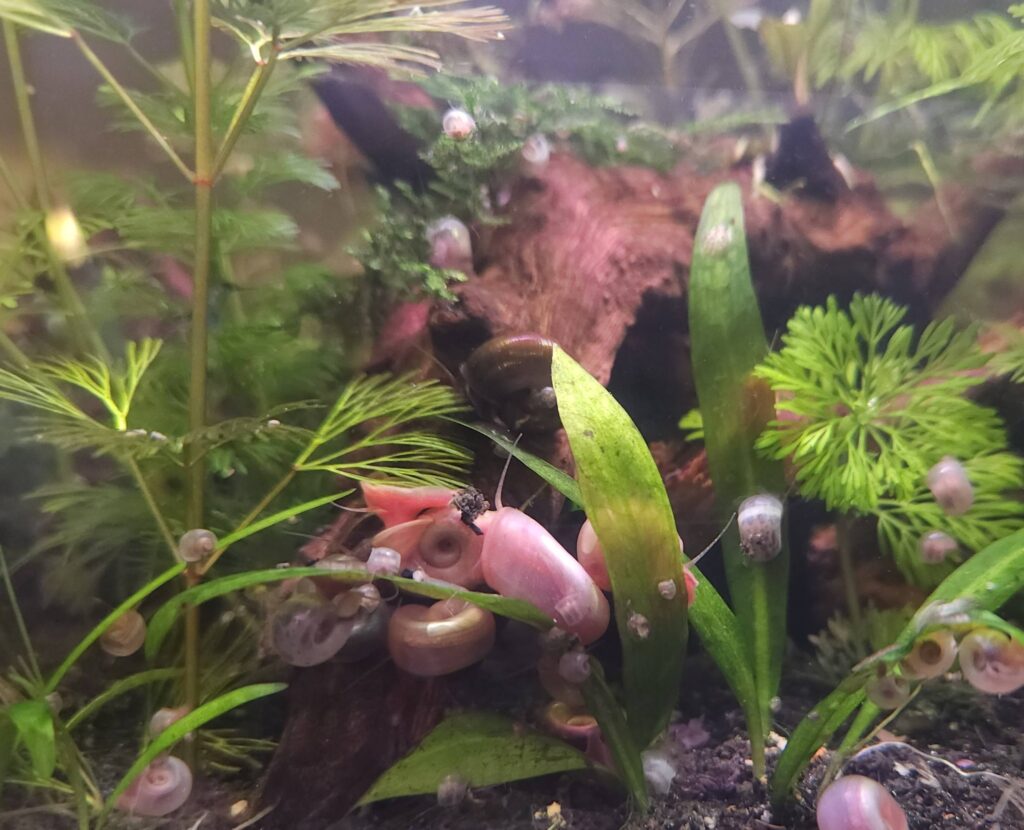
Unlike the larvae of many other invertebrates, which hatch in a rudimentary or worm-like form, baby ramshorn snails emerge as miniature, fully coiled gastropods.
At hatching, they typically measure 1 to 2 millimetres in diameter — about the size of a pinhead. The shell is already planispiral in shape, meaning it coils flat in a single plane rather than forming a pointed spire.
This distinctive flat coil is the defining feature of the entire Planorbidae family, and it is present and recognizable even in the smallest hatchlings.
The shell of a newly hatched ramshorn snail is extremely thin and largely translucent. In wild-type (brown) individuals, the shell appears glassy with a faint brownish or greenish tint.
In red or pink color morphs, the hemoglobin-based pigmentation is often already visible, giving the baby snail a distinctly pink or reddish hue even at this early stage.
Body and Soft Parts
The soft body of a baby ramshorn snail — the foot, mantle, and head — is proportionally large relative to the shell at hatching. The two sensory tentacles are visible and functional from day one.
The snail moves using muscular contractions of its broad, flat foot, leaving a thin mucus trail on surfaces as it travels.
The eyes, located at the base of the tentacles, are present but very small. Baby ramshorn snails respond to changes in light intensity and will typically retract their tentacles and withdraw into the shell when a shadow passes over the tank.
How to Spot Them
Finding baby ramshorn snails in an established tank can be surprisingly difficult in the early days.
Their translucent shells make them nearly invisible against glass, and their preference for biofilm-covered surfaces — often the underside of decorations, the back glass, and the underside of broad plant leaves — keeps them out of direct view.
The easiest time to spot juveniles is during a slow inspection of the tank glass using a flashlight or torch held at a low angle to the glass. The tiny coiled shells catch the light differently from the flat biofilm around them and become easier to see.
The Hatching Process
Baby ramshorn snails do not hatch just spontaneously. The process is quiet and gradual. In the final days of incubation, the developing snail inside the egg becomes increasingly active — visible as a tiny, moving shape within the translucent egg membrane.
When ready, the hatchling secretes enzymes that dissolve a small opening in the egg capsule and simply crawls out. It leaves behind the empty, collapsed egg membrane within the gel mass of the clutch.
In a clutch of 10 to 40 eggs, hatching is rarely simultaneous. Individual snails within the same clutch may hatch over a period of several days, with the most developed embryos emerging first.
Immediate Post-Hatch Behavior
Within minutes of hatching, the baby ramshorn snail begins moving and feeding. There is no period of inactivity or adjustment. It immediately starts grazing on biofilm using its radula in the same rasping motion that adult snails use.
This early independence is both a strength and a vulnerability. The strength is that the hatchling requires no parental care and can immediately sustain itself.
The vulnerability is that it is entirely on its own from the first moment, with no protection from predators, poor water conditions, or filtration hazards.
Growth and Development
Growth Rate
Baby ramshorn snails grow at a moderate pace, which varies depending on species, temperature, food availability, and water quality. Under optimal conditions:
- Week 1–2: Snail remains at 1–3 mm; barely visible
- Week 3–6: Shell expands to 3–6 mm; becoming noticeable on glass
- Month 2–3: Approaching 8–12 mm; clearly visible; behavior resembles adults
- Month 4–6: Reaching species-dependent adult size (1–3.5 cm)
Warmer water and abundant food accelerate growth significantly. A baby ramshorn snail raised at 27°C with consistent access to algae and blanched vegetables will reach adult size noticeably faster than one raised at 20°C in a less food-rich environment.
Shell Development
Shell growth in baby ramshorn snails is continuous and dependent on calcium availability. As the snail grows, it secretes new shell material at the growing edge of the aperture (the opening of the shell).
This new material is initially soft and pale before hardening and taking on the characteristic color of the species.
Calcium is the most critical nutrient for juvenile shell development. In water that is too soft or too acidic, young snails cannot build their shells properly. The shell may develop visible gaps, thin patches, or pitting — a condition that weakens the snail and leaves it vulnerable to injury and infection.
Ensuring adequate calcium in the water is the single most important care action for supporting baby ramshorn snail health.
Sexual Maturity
One of the most ecologically significant aspects of ramshorn snail biology is how quickly juveniles reach reproductive maturity.
Under warm conditions (25°C–27°C) with good nutrition, baby ramshorn snails can begin reproducing within 4 to 6 weeks of hatching.
This is extremely fast compared to most aquarium invertebrates. It is the primary reason ramshorn snail populations can grow from a few individuals to dozens within a single month.
What Do Baby Ramshorn Snails Eat?
The very first food source for newly hatched ramshorn snails is biofilm — the thin, invisible-to-the-naked-eye layer of bacteria, microalgae, and organic compounds that covers all submerged aquarium surfaces within days of setup.
Biofilm is nutritionally dense and perfectly sized for the tiny radula of a hatchling snail. A well-established aquarium with live plants and mature surfaces will have abundant biofilm, which provides a reliable and self-replenishing food source for young snails.
As the snails grow beyond the first two weeks, they begin consuming:
- Soft green algae on glass and plant leaves
- Brown diatom algae — particularly common in newer tanks
- Decaying plant matter — fallen leaves and dying stems
- Uneaten fish food that settles on surfaces
- Organic detritus in the substrate
Supplementary Feeding for Juvenile Ramshorn Snails
If you are intentionally raising baby ramshorn snails — for a live food culture, for a specific color breeding project, or simply because you want them to thrive — supplementary feeding makes a meaningful difference.
The best supplementary foods for juvenile ramshorn snails are:
- Blanched zucchini or cucumber — cut into very small pieces and weighted to the substrate; soft tissue is easy for small snails to rasp
- Blanched spinach or kale — high in calcium and soft enough for juvenile radulae
- Spirulina powder or tablets — crushed and scattered near the snail congregation areas
- Sinking algae wafers — break these into small fragments to prevent fouling the water
- Cuttlebone — not a food in the traditional sense, but it dissolves slowly and supplements both calcium intake and provides a rasping surface
Remove any uneaten vegetable matter after 24 hours to prevent ammonia spikes, which are particularly dangerous for young snails whose shells offer limited protection.
Calcium Supplementation
Beyond diet, direct calcium supplementation of the water is one of the most effective ways to support healthy shell growth in juveniles:
- Place a piece of cuttlebone in the tank — it dissolves gradually and releases calcium carbonate
- Add crushed coral to the filter media — raises both hardness and pH gently
- Use a commercial freshwater mineral supplement formulated for invertebrates
A good target water hardness for raising baby ramshorn snails is 8 to 12 dKH, combined with a pH of 7.2 to 7.8.
Care Requirements for Baby Ramshorn Snails
Young snails are more sensitive to water quality than adults. Their thin shells offer limited buffering against chemical stress, and their small body mass means they have less tolerance for ammonia, nitrite, or rapid pH swings.
The non-negotiable parameters for baby ramshorn snail health are:
- Ammonia: 0 ppm
- Nitrite: 0 ppm
- Nitrate: below 20 ppm (lower is better for juveniles)
- pH: 7.0 – 8.0
- Temperature: 22°C – 27°C
- Hardness: 8 – 15 dKH
Perform regular partial water changes — 20 to 25 percent weekly — to keep parameters stable. Use dechlorinated water that is pre-heated to match the tank temperature to avoid shocking the juveniles.
Filtration: The Biggest Physical Threat
Filter intake suction is the number one mechanical hazard for baby ramshorn snails. A standard hang-on-back or canister filter with an open intake tube will readily suck up snails smaller than 5 mm, killing them or trapping them in the filter media.
The solution is straightforward:
- Use a sponge filter as the primary filtration method — gentle, inexpensive, and impossible for small snails to enter
- Cover existing filter intakes with a sponge pre-filter sleeve — these are widely available and easy to fit onto standard intake tubes
- Regularly check sponge pre-filters for juvenile snails that may be clinging to the exterior
Sponge filters have the additional advantage of growing biofilm on their surface, which serves as a direct food source for baby ramshorn snails — a functional and nutritional benefit in one piece of equipment.
Tank Setup for Raising Juveniles
If you are raising baby ramshorn snails in a dedicated setup, the ideal tank is:
- Small to medium — 10 to 40 litres is practical; smaller volumes are easier to manage and concentrate food near the snails
- Heavily planted or heavily surfaced — plenty of plant leaves, rocks, and driftwood create biofilm-rich surfaces and hiding spots
- Sponge-filtered — as described above
- Stable temperature — use a reliable heater with a built-in thermostat
- Low flow — strong current exhausts small snails and can prevent them from reaching food
Avoid using sharp or coarse gravel near juvenile snails. Fine sand or smooth, rounded substrate is gentler on their delicate foot and allows them to move freely.
Common Threats and How to Address Them
Fish Predation
Most fish will eat baby ramshorn snails given the opportunity. Even species that would leave adult snails entirely alone will readily consume juveniles at 1 to 3 mm. This includes:
- Tetras and rasboras (will eat the smallest hatchlings)
- Guppies and livebearers
- Corydoras catfish (will consume hatchlings they encounter on the substrate)
- Goldfish (very effective snail predators at all stages)
- Loaches (will actively hunt snails of all sizes)
If you want your baby ramshorn snails to survive in a community tank, provide dense plant cover and hiding spaces. Java moss, hornwort thickets, and dense patches of floating plants give juvenile snails refuge from fish predation.
Alternatively, raise juveniles in a separate container or breeding tank until they are large enough (roughly 6 to 8 mm) to have a better survival rate in the community tank.
Low pH and Shell Dissolution
Acidic water is a silent but serious threat. At pH levels below 6.8, the calcium carbonate that makes up the snail’s shell begins to dissolve. This process is gradual but accelerating — the more acidic the water, the faster shell damage occurs.
Signs of pH-related shell damage in juveniles include:
- Pitting or small holes in the shell surface
- White or translucent patches where the shell has thinned
- Irregular shell edges at the growing aperture
- Snail appearing lethargic or reluctant to move
Address low pH by adding crushed coral, cuttlebone, or a commercial pH buffer appropriate for freshwater invertebrates. Act quickly — shell damage in juveniles can be fatal if left uncorrected.
Copper Contamination
Like all mollusks and invertebrates, baby ramshorn snails are acutely sensitive to copper. Even trace concentrations that would not affect fish can kill juvenile snails within hours.
Copper enters aquariums through:
- Some tap water supplies (especially in homes with older copper pipes)
- Copper-based fish medications and treatments
- Some fertilizers marketed for planted tanks
Always check medication labels before treating a tank that contains juvenile snails. Use invertebrate-safe alternatives wherever possible. If copper treatment is necessary for disease management, remove all snails to a separate tank first.
Overcrowding and Competition
Baby ramshorn snails that hatch in large numbers in a small tank will quickly compete for food and space. In severe overcrowding, juvenile growth slows, shell quality deteriorates, and mortality increases.
Manage juvenile populations by:
- Thinning numbers if they become excessive (offer surplus snails to other hobbyists or use as live food)
- Ensuring sufficient food and surface area for the number of snails present
- Performing more frequent water changes to manage the increased waste load
Baby Ramshorn Snails as Live Food
For aquarists who keep species that require live prey, baby ramshorn snails are an excellent and easily cultivated food source. Their small size at hatching makes them appropriate for:
- Dwarf pufferfish (Carinotetraodon travancoricus) — ideal prey size; snails support beak maintenance
- Assassin snails (Clea helena) — small hatchlings are suitable prey for assassin snails
- Small cichlids — apistogrammas and similar species relish small snails
- Axolotls — juveniles and adults both consume baby snails readily
Maintaining a dedicated ramshorn snail breeding container — a simple plastic tub, a small aquarium, or even a 5-litre container with a sponge filter and a piece of cuttlebone — provides a self-replenishing live food source with minimal maintenance.
Identifying a Healthy Baby Ramshorn Snail
Knowing what a thriving juvenile looks like helps you catch problems early.
Signs of a healthy baby ramshorn snail:
- Active and moving during feeding periods
- Smooth, continuous shell with no pitting or cracking
- Clear, consistent shell color for the morph (translucent brown, red, pink, or blue)
- Tentacles extended and responsive to stimulus
- Feeding visibly on surfaces — radula motion observable on glass
Signs of a struggling juvenile:
- Stationary for extended periods (more than 24–48 hours)
- Shell showing white patches, pitting, or thin spots
- Foot appears contracted or partially withdrawn
- Not responding to food placed nearby
- Floating (though brief floating can be normal; prolonged floating is not)
Intentional Breeding: Getting the Most from Baby Ramshorn Snails
If your goal is to produce baby ramshorn snails deliberately — for a specific color morph, a live food culture, or simply the pleasure of watching them develop — a few targeted strategies make a significant difference.
- Select healthy breeding adults. Choose snails with smooth, intact shells, vibrant color, and active behavior. Shell quality in parents often predicts shell quality in offspring.
- Maintain the upper range of the temperature window. At 26°C–27°C, egg development is faster, hatch rates are higher, and juveniles grow more quickly than at cooler temperatures.
- Feed adults well. A well-nourished adult produces more clutches, larger clutches, and eggs with higher hatch rates. Supplement with calcium-rich foods and maintain water hardness above 8 dKH.
- Keep the breeding setup simple. A bare-bottom container with a sponge filter, a piece of cuttlebone, and a small amount of java moss is all you need for a productive breeding setup. Simplicity makes cleaning easier and helps maintain water quality.
Frequently Asked Questions
Why are there suddenly tiny snails in my tank? Ramshorn snail eggs are commonly introduced on aquatic plants, in shipping water, or on decorations purchased from a pet store. The eggs are tiny and gel-like, and they hatch within 10 to 40 days — often before the aquarist notices them.
How do I raise baby ramshorn snails without losing them to my filter? Use a sponge filter or cover all intake tubes with a sponge pre-filter. Check these regularly for juveniles clinging to the exterior.
My baby ramshorn snails have white patches on their shells. What is wrong? This almost always indicates low calcium or low pH in the water. Test your water parameters immediately and address calcium deficiency with cuttlebone or crushed coral.
How long does it take baby ramshorn snails to grow to adult size? Between two and five months, depending on species, temperature, and food availability. Warmer water and good nutrition accelerate growth.
Can baby ramshorn snails survive in a community fish tank? Yes, but survival rates are low in tanks with active fish. Providing dense plant cover significantly improves juvenile survival.
Conclusion
The baby ramshorn snail hatches fully formed, feeds immediately, grows quickly, and reaches reproductive maturity faster than almost any other freshwater invertebrate kept in aquariums.
That efficiency is what makes it so successful — and so challenging to manage when it is not wanted.
Whether you are protecting them or managing their numbers, knowing the baby ramshorn snail well puts you in control of the outcome. And in this hobby, knowledge is always the most important tool.
References
- United States Geological Survey (USGS) — Nonindigenous Aquatic Species Database https://nas.er.usgs.gov
- University of Florida — IFAS Extension: Freshwater Invertebrate Biology and Management https://edis.ifas.ufl.edu
- Florida Museum of Natural History — Invertebrate Zoology Division https://www.floridamuseum.ufl.edu/iz/
- United States Environmental Protection Agency (EPA) — Wetlands and Aquatic Organism Protection https://www.epa.gov/wetlands
- Smithsonian Institution — National Museum of Natural History, Invertebrate Zoology https://naturalhistory.si.edu/research/invertebrate-zoology
- California Department of Fish and Wildlife — Aquatic Invasive Species Program https://wildlife.ca.gov/Conservation/Invasives
- National Oceanic and Atmospheric Administration (NOAA) — Freshwater Habitat Conservation https://www.fisheries.noaa.gov/topic/habitat-conservation