Understanding Goldfish Swim Bladder Disease: What Every Aquarist Should Know
Goldfish are among the most popular pet fish in the world, yet they are also among the most misunderstood when it comes to health care. One condition that worries fishkeepers more than most is swim bladder disease.
If you have ever watched your goldfish float sideways at the surface, sink to the bottom, or swim in an erratic, rolling motion, you have likely encountered this problem. This article explains what swim bladder disease is, why it happens, how to treat it, and — most importantly — how to prevent it.
What Is the Swim Bladder?
The swim bladder is an internal gas-filled organ that helps fish maintain their position in the water without having to swim constantly. Think of it as a built-in buoyancy device. By adjusting the volume of gas inside this organ, a healthy fish can hover at any depth with minimal effort.
In goldfish, the swim bladder consists of two connected chambers. This two-chambered design makes goldfish somewhat more vulnerable to buoyancy problems than other fish species, particularly the fancy varieties with their compressed, round body shapes.
What Is Swim Bladder Disease?
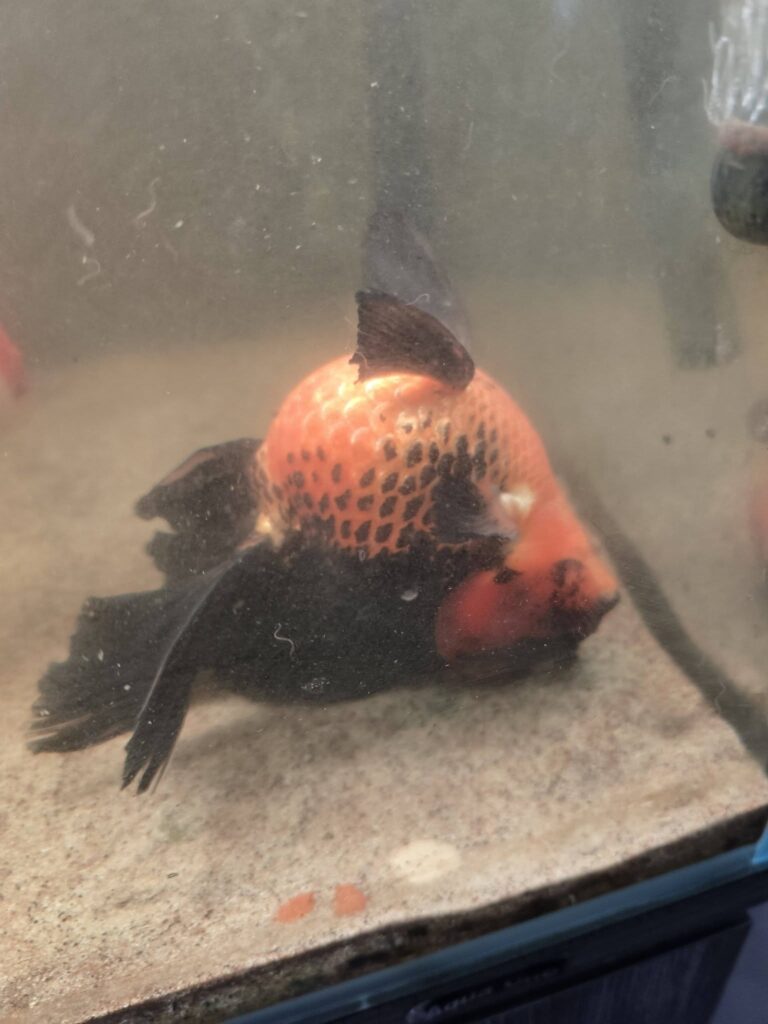
Despite its name, swim bladder disease is not a single disease. It is a clinical sign — a symptom — that points to an underlying problem affecting the swim bladder’s ability to function properly. Any condition that disrupts the normal inflation, deflation, or physical integrity of the swim bladder can result in buoyancy disorder.
This distinction matters because the right treatment depends entirely on identifying the root cause. Treating the symptom without addressing the cause will not resolve the problem.
Common Causes of Swim Bladder Disease in Goldfish
Research shows that swim bladder stems from several problems including the following:
1. Overfeeding and Constipation
This is by far the most frequent cause, and it is also the most preventable. When a goldfish eats too much — especially dry flake food or pellets that swell with water — the digestive tract becomes distended. The enlarged stomach or intestine then presses against the swim bladder, disrupting its function.
Goldfish are opportunistic feeders. They will eat whenever food is available, which makes it easy for owners to accidentally overfeed them. Many experienced fishkeepers consider constipation the number one cause of swim bladder problems in pet goldfish.
2. Gulping Air at the Surface
Goldfish that are fed floating food often rush to the surface and gulp air along with their meal. This excess air can enter the digestive system and create pressure on the swim bladder. Sinking pellets eliminate this risk almost entirely.
3. Bacterial and Parasitic Infections
Internal infections caused by bacteria such as Aeromonas species or parasites can cause inflammation of the swim bladder itself (a condition called swim bladder inflammation or cystitis). These infections are more serious and typically require antibiotic treatment.
4. Physical Injury or Cysts
A physical blow — from aggressive tank mates, a collision with décor, or rough handling — can damage the swim bladder directly. In older goldfish, benign cysts or fatty deposits can also develop on or near the organ, reducing its ability to expand and contract normally.
5. Genetics and Body Shape
Fancy goldfish breeds — such as Orandas, Ryukins, Ranchus, and Bubble Eyes — have been selectively bred for rounded, compressed body shapes. This unnatural body form leaves very little space between organs, making the swim bladder more likely to become compressed. These breeds are inherently more prone to buoyancy problems throughout their lives.
6. Water Temperature
Goldfish are cold-water fish, but very cold water slows their digestive processes considerably. When digestion slows, food sits in the gut longer, ferments, and produces gas — which can press against the swim bladder. Sudden temperature changes also stress the fish and can trigger buoyancy issues.
7. Polycystic Kidney Disease
In some cases, particularly in older goldfish, enlarged or cystic kidneys can exert pressure on the swim bladder. This is a structural problem that is generally not reversible, though supportive care can help manage the fish’s quality of life.
Symptoms to Watch For
Recognizing swim bladder disease early gives your fish the best chance of recovery. The most visible signs include:
- Floating upside down or sideways at the water’s surface
- Sinking to the bottom and being unable to rise
- Curved or bent body posture while swimming
- Erratic, spiralling, or rolling swimming motion
- Swollen or distended abdomen
- Loss of appetite or reduced activity
- Scales standing out from the body (in more severe, infection-related cases)
It is worth noting that a fish floating at the surface is not always a sign of swim bladder disease. Always check water quality first. Poor water conditions are a leading cause of general fish illness, and a sick fish may simply be struggling at the surface due to low oxygen or high ammonia levels.
Diagnosing the Cause
Before treating swim bladder disease, try to determine what is causing it. Ask yourself:
- Has the feeding routine changed recently?
- Is the fish constipated (no visible droppings, or stringy white droppings)?
- Are water parameters within acceptable ranges?
- Has the fish experienced any physical trauma?
- Is this a fancy goldfish breed that has always had mild balance issues?
For cases where infection is suspected — particularly if the fish shows additional signs such as red streaking, bloating, or scale lifting — consult an aquatic veterinarian for a proper diagnosis. Internal infections require targeted treatment and guesswork can do more harm than good.
Treatment Options
Swim bladder disease treatment depends on the cause.
Step 1: Fast the Fish
If overfeeding or constipation is the likely cause, the first step is to stop feeding entirely for 24 to 72 hours. This gives the digestive system a chance to clear. Many fishkeepers are surprised to find that this simple step resolves the problem on its own.
Step 2: Feed Cooked, Skinned Peas
After the fasting period, offer small pieces of cooked green peas with the outer skin removed. Green peas act as a natural laxative for goldfish and are highly effective at relieving constipation. Feed peas exclusively for two to three days and monitor the fish closely for improvement.
Step 3: Improve Water Conditions
Perform a partial water change of 25 to 30 percent. Test the water for ammonia, nitrite, nitrate, and pH. Goldfish thrive in water with a pH of 7.0 to 7.4 and a temperature between 18°C and 22°C (65°F to 72°F). Stable, clean water supports recovery and reduces additional stress on the fish.
Step 4: Adjust the Water Level
For fish that are floating at the surface and unable to dive, temporarily lowering the water level in the tank reduces the distance the fish must travel between the surface and the bottom. This small adjustment can meaningfully reduce physical strain while the fish recovers.
Step 5: Use Aquarium Salt
Adding aquarium salt at a concentration of one teaspoon per four litres (one gallon) of water can help reduce osmotic stress and support the fish’s immune function. Use plain, non-iodised aquarium salt — not table salt, which contains additives that are harmful to fish.
Step 6: Treat Infections With Antibiotics
If bacterial infection is confirmed or strongly suspected, antibiotic treatments such as Kanaplex or Maracyn are commonly used in aquariums. In some countries, prescription antibiotics from an aquatic veterinarian may be required. Always follow dosage instructions carefully and complete the full treatment course.
Step 7: Consider a Flotation Device (for Chronic Cases)
In cases where the swim bladder disorder is permanent — common in some fancy breeds with structural issues — a small foam or mesh sling can be placed in the tank to support the fish in an upright position. This allows the fish to feed and breathe comfortably, even without normal buoyancy control.
While this sounds unusual, it is a genuinely compassionate option that many dedicated fishkeepers have used successfully.
When to Seek Veterinary Help
Not every case of swim bladder disease resolves with home treatment. Seek professional guidance if:
- The fish does not improve after one to two weeks of conservative treatment
- There are signs of secondary infection such as red lesions, open sores, or fin damage
- The fish is unable to eat or is visibly deteriorating
- You suspect internal organ involvement such as cysts or kidney disease
Aquatic veterinary medicine has advanced considerably, and many vets who specialise in fish can perform examinations, run diagnostics, and prescribe targeted treatments that are simply not possible at home.
Prevention: The Best Treatment of All
Preventing swim bladder disease is far easier than treating it. The following practices, if followed consistently, will significantly reduce your goldfish’s risk:
Feed appropriately. Offer only what your goldfish can consume in two to three minutes, once or twice per day. Avoid overfeeding, and remove any uneaten food promptly.
Choose sinking pellets over floating food. Sinking food prevents surface gulping and is far gentler on the digestive system.
Soak dry food before feeding. If you use pellets, soaking them in tank water for a minute before feeding reduces their expansion inside the fish’s gut.
Maintain stable water temperature. Sudden temperature swings slow digestion and stress the immune system. Use a reliable thermometer and, if needed, a heater set to the lower end of the goldfish’s preferred range.
Keep the tank clean. Perform regular partial water changes — approximately 25 percent weekly for most goldfish tanks — and avoid overstocking. A good rule of thumb is 75 to 100 litres (20 to 25 gallons) of water per adult fancy goldfish.
Quarantine new fish. Introducing a new fish directly into an established tank is one of the most common ways disease spreads. Always quarantine new arrivals for at least two to four weeks before adding them to your main tank.
Choose breeds thoughtfully. If you are a new fishkeeper, consider starting with common or comet goldfish rather than extreme fancy varieties. The latter, while beautiful, require more careful husbandry and are inherently more prone to swim bladder issues.
Prognosis: Will My Goldfish Recover?
The outlook depends heavily on the cause. Goldfish with diet-related swim bladder disorder often recover fully within one to two weeks with proper care. Those with bacterial infections recover well if treatment begins promptly.
Structural causes related to genetics or advanced organ disease are generally not curable, but the fish’s quality of life can still be managed with thoughtful care.
It is worth remembering that goldfish, despite their reputation as beginner fish, can live 10 to 15 years or even longer with good care. A swim bladder problem caught early and treated properly does not have to be a death sentence.
Many fishkeepers have nursed goldfish through buoyancy disorders and gone on to enjoy years more with their pets.
Suggested For You:
How to Clean a Goldfish Tank: Step-by-Step Guide
Goldfish Tank Setup: A Complete Guide for Beginners
Why Is My Goldfish Turning Black? (Causes, Concerns, and What to Do)
Why Is My Goldfish Not Eating? (Causes, Solutions, and When to Worry)
How Often to Feed Goldfish: A Complete Feeding Guide for Healthy Fish
Final Thoughts
Swim bladder disease is one of the most common health problems in pet goldfish, but it is also one of the most manageable. The key is understanding that it is a symptom, not a single disease. By identifying the underlying cause and responding with appropriate treatment, you give your goldfish the best possible chance of recovery.
Good fishkeeping is built on consistency: clean water, appropriate feeding, and regular observation. A fishkeeper who knows what healthy behaviour looks like for their fish will almost always catch problems early, when they are easiest to treat. That attentiveness is, in the end, the most powerful tool available.
References
- Noga, E. J. (2010). Fish Disease: Diagnosis and Treatment (2nd ed.). Wiley-Blackwell. https://www.wiley.com/en-us/Fish+Disease%3A+Diagnosis+and+Treatment%2C+2nd+Edition-p-9780813806976
- Stoskopf, M. K. (1993). Fish Medicine. W.B. Saunders Company. https://www.sciencedirect.com/book/9780721627915/fish-medicine
- Yanong, R. P. E. (2009). Swim Bladder Disease in Fish. University of Florida IFAS Extension. https://edis.ifas.ufl.edu/publication/FA033
- Wildgoose, W. H. (Ed.). (2001). BSAVA Manual of Ornamental Fish (2nd ed.). British Small Animal Veterinary Association. https://www.bsava.com/Resources/Veterinary-resources/Manuals/BSAVA-Manual-of-Ornamental-Fish
- Roberts, H. E. (Ed.). (2010). Fundamentals of Ornamental Fish Health. Wiley-Blackwell. https://www.wiley.com/en-us/Fundamentals+of+Ornamental+Fish+Health-p-9780813810195