Why Is My Goldfish Turning White? Reasons and What to Do
If you have noticed your goldfish losing its bright orange or yellow colour and turning white, you are not alone. This is one of the most common concerns among goldfish owners — and understandably so. A colour change can feel alarming, especially when you are attached to your fish.
The good news is that not every case of colour loss signals a serious problem. This article explains the main reasons why goldfish turn white, how to identify what is happening in your tank, and what steps you can take to help your fish recover or maintain good health.
Understanding Goldfish Pigmentation
Before diving into causes, it helps to understand how goldfish get their colour in the first place.
Goldfish produce colour through specialised cells called chromatophores. These cells contain pigment compounds — primarily carotenoids — that create the orange, red, yellow, and black tones we associate with goldfish.
Chromatophores respond to a range of internal and external factors, including light exposure, diet, genetics, and health status. When something disrupts the normal function of these cells, the pigment fades or changes, and the fish begins to look pale or white.
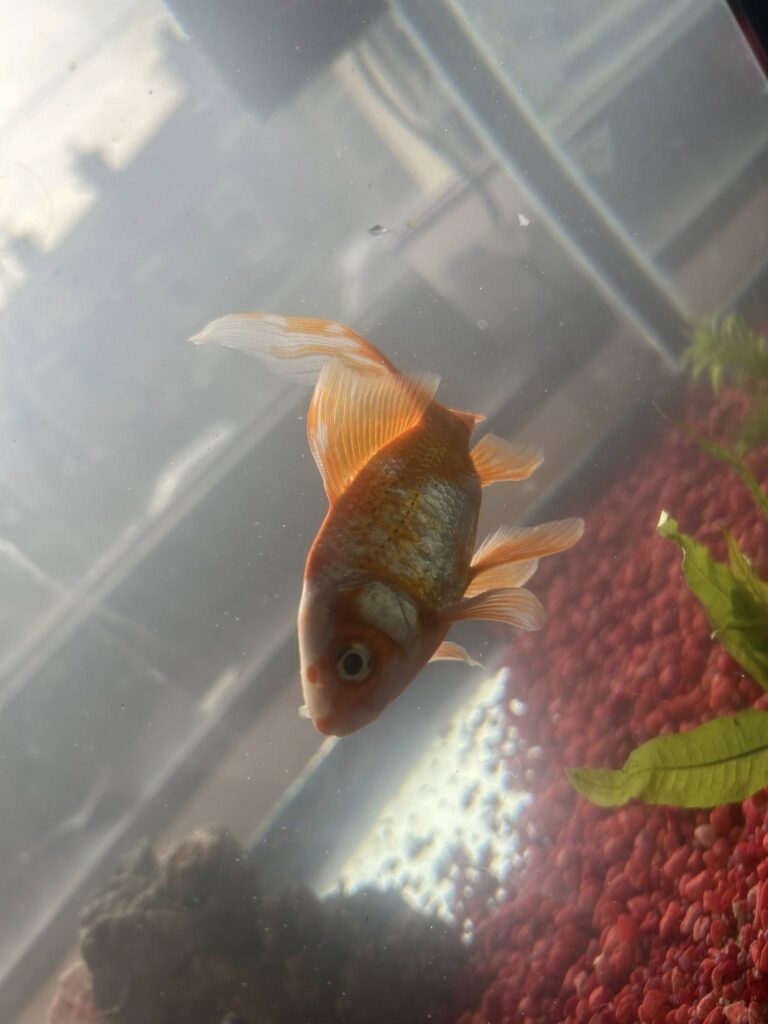
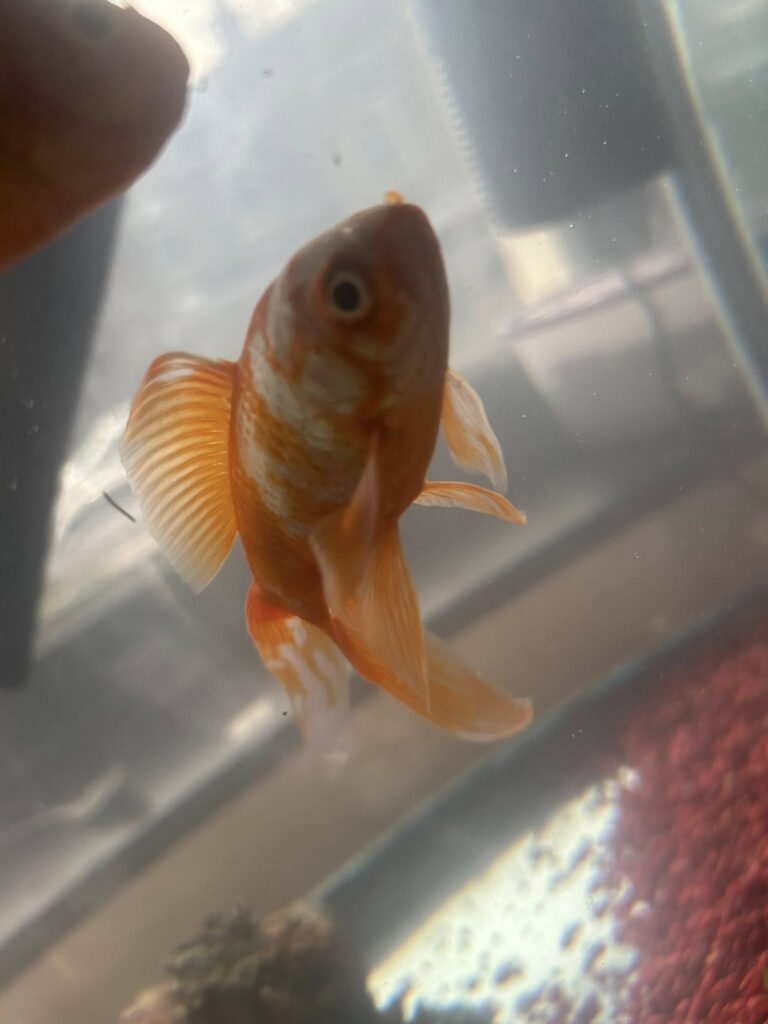
Common Reasons Why Goldfish Turn White
Based on research and my experience in fish keeping, here are the main culprits.
1. Lack of Light Exposure
One of the most straightforward reasons for colour loss is insufficient light. Goldfish need regular exposure to light — ideally natural sunlight or a full-spectrum aquarium light — to stimulate melanin and carotenoid production in their skin cells.
Fish kept in dim rooms or tanks without proper lighting often fade gradually over weeks or months. The colour change is usually even and does not come with other symptoms. If this is the case, adjusting the lighting schedule to 10–12 hours per day can help restore pigmentation over time.
This is a surprisingly common cause, and many fish owners are relieved to discover the fix is as simple as repositioning the tank or upgrading the aquarium light.
2. Poor Diet
Diet plays a significant role in goldfish colouration. Carotenoids — the pigments responsible for orange and red tones — are not produced by goldfish internally. They must be obtained from food.
A diet consisting only of low-quality flake food often lacks sufficient carotenoid content. Over time, this leads to a washed-out appearance. Feeding your goldfish a varied diet that includes:
- High-quality colour-enhancing pellets containing spirulina or astaxanthin
- Fresh or blanched vegetables such as spinach and peas
- Occasional treats like brine shrimp or daphnia
…can make a noticeable difference in pigmentation within a few weeks. Think of it this way: your fish is only as vibrant as what it eats.
3. Genetics and Natural Ageing
Sometimes, colour change is simply a matter of biology. Goldfish can change colour naturally as they mature. Many young goldfish are initially dark — almost black or bronze — before transitioning to their adult colouration. Some fish also continue to shift colour throughout their lives due to genetic expression.
If your goldfish is healthy, eating well, and living in good water conditions but still turning white or pale, genetics may be the explanation. This is especially common in certain fancy goldfish breeds such as Orandas and Ryukins.
Similarly, as goldfish age, pigment production can decline naturally, much like greying hair in humans. An elderly goldfish gradually turning white is not necessarily unwell — it may simply be showing its age.
4. Poor Water Quality
This is where the concern becomes more serious. Poor water quality is one of the leading causes of health problems in goldfish, and colour loss is often one of the first visible signs.
Key water parameters to check include:
- Ammonia and nitrite levels — Both should read 0 ppm. Even slight elevations cause cellular stress and affect pigmentation.
- Nitrate levels — Should remain below 20–40 ppm with regular water changes.
- pH — Goldfish prefer a pH between 7.0 and 7.4.
- Temperature — Ideal range is 65–72°F (18–22°C).
High ammonia, in particular, causes what is known as ammonia stress, which can bleach the skin and damage gill tissue. If your fish is pale and also gasping at the surface, hovering near the filter, or appearing lethargic, test your water immediately.
A 25–30% water change is often the first corrective step while you investigate further.
5. Ich (White Spot Disease)
Ichthyophthirius multifiliis, commonly called Ich or white spot disease, is a parasitic infection that causes white spots to appear on the skin and fins of affected fish. It is one of the most common freshwater fish diseases.
Unlike generalised colour fading, Ich presents as distinct white dots — roughly the size of salt grains — scattered across the body. Other signs include:
- Flashing (rubbing against tank surfaces)
- Clamped fins
- Rapid gill movement
- Loss of appetite
Ich is highly contagious. If you see these symptoms, quarantine the affected fish immediately and treat with an appropriate anti-parasitic medication. Raising the water temperature slowly to 82°F (28°C) speeds up the parasite’s life cycle and makes treatment more effective, though this should be done gradually and monitored carefully.
Catching Ich early gives your fish a strong chance of full recovery.
6. Fungal Infections
Fungal infections can cause patches of white, cotton-like growth on the skin, fins, or mouth. This is different from the even fading seen with light or diet issues — fungal patches tend to be localised and fluffy in texture.
Common fungal infections include Saprolegnia and Aphanomyces, both of which are opportunistic pathogens. They typically affect fish that are already weakened by stress, injury, or poor water quality.
Treatment involves antifungal medications specifically formulated for aquarium fish. Improving water conditions and addressing any wounds or injuries is equally important, as healthy fish resist fungal infection far more effectively.
7. Bacterial Infections
Bacterial diseases such as columnaris (sometimes called cotton-wool disease or saddleback disease) can also cause white or grey patches on goldfish. Columnaris often appears on the back, head, or fins, and may resemble a fungal infection at first glance.
Symptoms to watch for:
- White or grey lesions with frayed edges
- Ulcers or open sores on the skin
- Fin deterioration
- Pale gills
Bacterial infections in goldfish often require antibiotic treatment. A veterinarian with fish expertise — sometimes called an aquatic vet — can confirm the diagnosis and recommend the most appropriate treatment. Self-medicating without a clear diagnosis can sometimes cause more harm than good.
8. Stress
Chronic stress directly affects a goldfish’s immune system and its ability to maintain healthy pigmentation. Stressors in a home aquarium are more common than many owners realise. These include:
- Overcrowding — goldfish produce significant waste and require far more space than most beginners expect (at least 20 gallons for one fish, with 10 additional gallons per extra fish)
- Aggressive tankmates
- Sudden changes in water temperature or chemistry
- Loud noise and vibrations near the tank
- Overhandling or excessive netting
A stressed goldfish often becomes pale, loses appetite, and becomes more susceptible to disease. Addressing the source of stress — rather than just the symptoms — is essential for long-term recovery.
9. Anchor Worm or Other Parasites
External parasites such as anchor worm (Lernaea species) or fish lice (Argulus) can cause localised white or red irritated patches where they attach to the fish’s body. These are visible with the naked eye upon close inspection.
Treatment requires removing the parasites manually (using tweezers or a sterile instrument in the case of anchor worm) and following up with an antiparasitic treatment in the tank to eliminate larvae and eggs.
How to Diagnose the Problem
When you notice your goldfish turning white, work through the following checklist:
- Test the water — This is always the first step. Use a reliable liquid test kit to check ammonia, nitrite, nitrate, and pH. Strip tests are less accurate and best avoided.
- Observe the pattern of colour change — Is it even fading, or are there distinct spots or patches? Spots suggest parasites or infection. Even fading suggests diet, light, or genetics.
- Check for other symptoms — Behavioural changes, fin condition, body posture, and appetite all provide valuable clues.
- Review recent changes — Did you add new fish, change the filter, adjust the feeding routine, or alter the room temperature? Recent changes often point directly to the cause.
- Quarantine if infection is suspected — Isolating the affected fish protects others in the tank while you treat the issue.
Prevention and Long-Term Care
The healthiest goldfish are those kept in a stable, well-maintained environment. The following practices go a long way in preventing colour loss and broader health problems:
- Perform regular water changes — 25–30% weekly is a good general guideline.
- Use adequate filtration — Goldfish are messy fish. A filter rated for at least twice your tank volume is a sensible starting point.
- Provide consistent lighting — Use a timer to ensure your goldfish receives 10–12 hours of light daily.
- Feed a varied, quality diet — Rotate between pellets, vegetables, and live or frozen foods.
- Avoid overstocking — More fish means more waste and more stress on water quality.
- Quarantine new fish — Always quarantine new arrivals for 2–4 weeks before introducing them to your main tank.
- Schedule regular health checks — Observe your fish daily. Early detection of any problem significantly improves the outcome.
When to Consult a Veterinarian
Most cases of colour change in goldfish can be managed at home once the cause is identified. However, you should seek professional advice if:
- The fish is not eating and appears visibly weak
- You notice open sores, ulcers, or severe fin deterioration
- Symptoms worsen despite treatment
- You are unsure of the diagnosis
Aquatic veterinarians are trained to handle fish-specific conditions. While this may feel unusual to some pet owners, goldfish can live for 10–15 years or longer with proper care — they are long-term companions worth looking after properly.
Suggested for You:
Understanding Goldfish Popeye Disease: Symptoms and What to Do
Understanding Goldfish Swim Bladder Disease: Everything to Know
Goldfish Tank Setup: A Complete Guide for Beginners
Why Is My Goldfish Turning Black? (Causes, Concerns, and What to Do)
How Often to Feed Goldfish: A Complete Feeding Guide for Healthy Fish
Final Thoughts
A goldfish turning white is the fish’s way of telling you that something in its world has changed. Sometimes that change is harmless — a shift in genetics, natural ageing, or simply not enough light. Other times, it signals a water quality problem or an early-stage infection that needs your attention.
The key is to stay observant, test regularly, and act thoughtfully rather than reactively. With the right care, most goldfish can recover their colour and continue to thrive. And there is something genuinely satisfying about watching a pale, stressed fish gradually regain its vibrancy once you have identified and fixed the problem.
Your goldfish cannot ask for help. That steady observation — that daily check on how they are swimming and what colour they are — is the closest thing to a voice they have.
References
- Noga, E. J. (2010). Fish Disease: Diagnosis and Treatment (2nd ed.). Wiley-Blackwell. https://www.wiley.com/en-us/Fish+Disease%3A+Diagnosis+and+Treatment%2C+2nd+Edition-p-9780813806976
- Yanong, R. P. E. (2003). Nutritional Diseases of Fish. University of Florida IFAS Extension. https://edis.ifas.ufl.edu/publication/FA005
- Durborow, R. M., Crosby, D. M., & Brunson, M. W. (1997). Ammonia in Fish Ponds. Southern Regional Aquaculture Center. https://srac.tamu.edu/serveFactSheet/463
- Yanong, R. P. E. (2013). Ichthyophthirius multifiliis (White Spot) Infections in Fish. University of Florida IFAS Extension. https://edis.ifas.ufl.edu/publication/FA006
- Helfman, G. S., Collette, B. B., Facey, D. E., & Bowen, B. W. (2009). The Diversity of Fishes: Biology, Evolution, and Ecology (2nd ed.). Wiley-Blackwell. https://www.wiley.com/en-us/The+Diversity+of+Fishes%3A+Biology%2C+Evolution%2C+and+Ecology%2C+2nd+Edition-p-9781405124942