Male vs Female Platy Fish: How to Tell the Difference and Why It Matters
One of the first skills every platy keeper needs to develop is telling males from females apart. It sounds simple, but for a beginner staring into a tank full of similarly sized, brightly colored fish, it can feel genuinely confusing at first.
The good news is that once you know what to look for, the differences become obvious — and identifying the sex of a platy fish takes only a few seconds.
But this is not just about satisfying curiosity. Knowing whether your platys are male or female has real, practical consequences for how you set up your tank, how you manage the population, and how you protect the health and wellbeing of your fish.
A poorly balanced male-to-female ratio is one of the most common mistakes beginners make — and it leads directly to stressed, exhausted fish and an unmanageable population explosion.
This guide covers every difference between male and female platy fish — physical, behavioral, and reproductive — and explains what each difference means for the way you keep them.
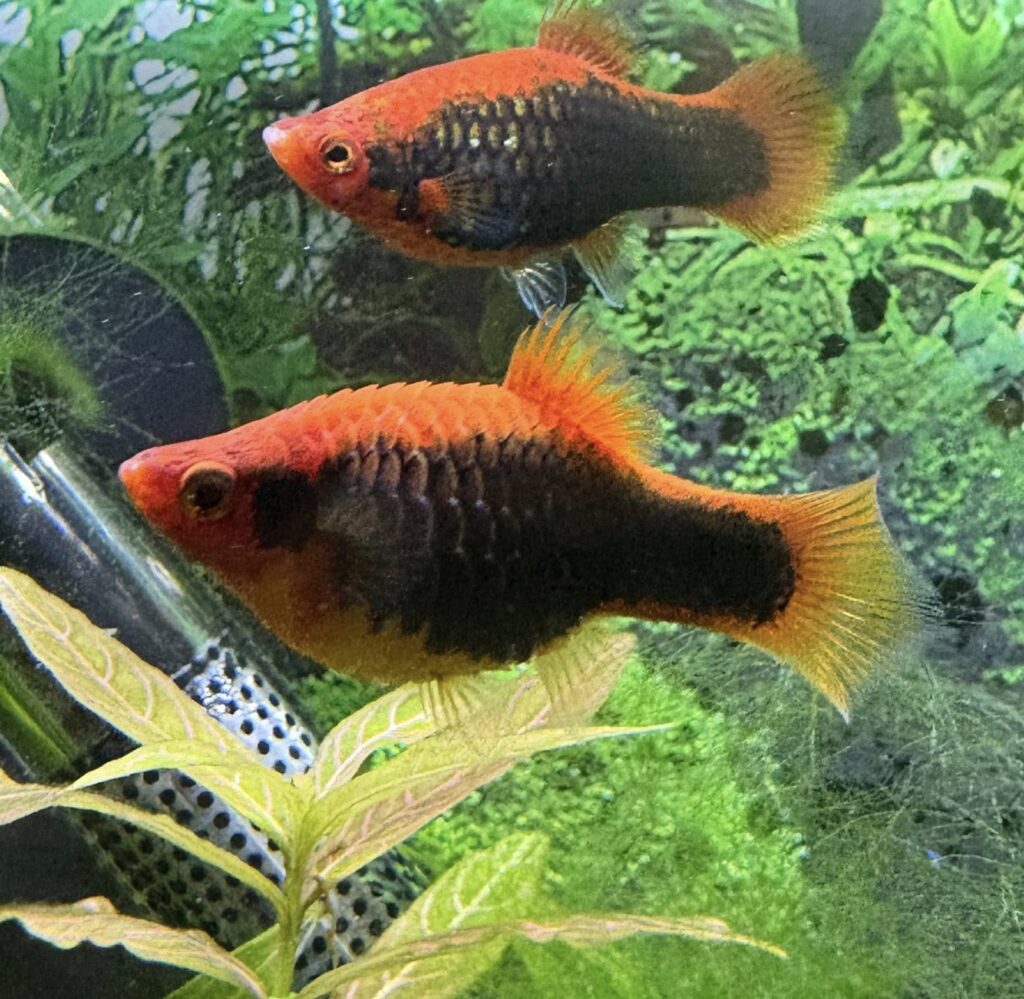
Why Sexing Platy Fish Matters
Before getting into the physical differences, it is worth understanding why this knowledge is so important in practice.
Platy fish breed readily and frequently. A female platy can give birth to 20 to 80 fry every four to six weeks, and she can store sperm from a single mating for several months — producing multiple litters without ever mating again.
In a mixed-sex tank with the wrong ratio, the female population can quickly become overwhelmed by persistent male attention, leading to chronic stress, reduced lifespan, and health problems.
On the other hand, keeping only males or only females gives you complete control over breeding. And if you do want to breed platys, knowing how to identify a gravid (pregnant) female and separate her at the right time is essential for protecting the fry.
Sexing your fish correctly from the start sets the foundation for a healthy, well-managed aquarium.
The Primary Difference: The Anal Fin
The most reliable way to distinguish a male platy from a female is to look at the anal fin — the small fin located on the underside of the fish, just behind the belly and before the tail.
In males, the anal fin is modified into a long, pointed, rod-like structure called the gonopodium. This is the male’s reproductive organ. It is used to deliver sperm internally to the female during mating.
The gonopodium points backward and is narrow, clearly elongated, and unmistakably different from the female’s fin once you know what to look for.
In females, the anal fin is fan-shaped — broad, rounded, and symmetrical. It resembles the anal fins of most other fish and bears no resemblance to the male’s gonopodium.
This single difference is definitive. If you can see the anal fin clearly, you can sex a platy fish with complete certainty. No other identification method is as reliable.
To see the anal fin, look at the fish from the side when it is relatively still — near the glass or resting near a plant. The fin is small, so good lighting helps. In young fish below four to six weeks of age, the gonopodium has not yet fully developed, making sexing more difficult. By eight weeks, the difference is usually clear.
Body Shape and Size
Beyond the anal fin, body shape is the next most useful indicator — though it requires more practice to read accurately, especially in younger fish.
Female Body Shape
Female platys have a noticeably rounder, fuller abdomen. Their body profile is wider and deeper, particularly in the midsection. When viewed from above, a healthy adult female has a distinctly oval silhouette. This fullness is partly due to their reproductive organs and the space required to carry developing fry.
A pregnant female is even more dramatically rounded — her belly becomes almost boxy or rectangular when viewed from the side, and the difference from a male becomes impossible to miss.
Male Body Shape
Males are slimmer and more streamlined. Their bodies are narrower from the side and more tapered from above. They are built for speed and agility — qualities that serve them in the constant pursuit of females during mating attempts.
Size
In most cases, females are slightly larger than males of the same age. Adult female platys typically reach 2 to 2.5 inches (5–6 cm) in length. Males usually reach 1.5 to 2 inches (4–5 cm). This size difference is not dramatic, particularly in young fish, but it becomes more apparent as the fish mature.
In a group of platys all purchased at the same time and raised together, females will often be the larger individuals in the tank.
Coloration and Fin Appearance
Coloration differences between male and female platys are less consistent than body shape or fin structure, but they are worth understanding.
Males
Male platys tend to be more vividly colored than females of the same variety. This is especially noticeable in color forms that show strong red, orange, or blue pigmentation. Brighter coloration in males serves an evolutionary purpose — it signals health and genetic fitness to potential mates.
Male platys may also display more pronounced fin extensions, particularly in fancy varieties. Some males develop elongated dorsal fins or more dramatically patterned caudal fins than females of the same type.
Females
Female platys are often slightly duller or less intensely colored than males, though this varies significantly by variety. In some color forms — particularly high-fin or mixed-variety platys — the difference in coloration between sexes is minimal or barely noticeable.
Coloration alone should never be used as the sole method of sexing a platy fish. Always verify by examining the anal fin.
The Gravid Spot
The gravid spot is a feature exclusive to female platys (and other livebearer females). It is a dark, triangular or oval-shaped marking located near the anal fin, toward the posterior of the abdomen.
In non-pregnant females, the gravid spot is present but may be pale or barely visible, particularly in dark-colored fish. As a female becomes pregnant and the fry develop, the gravid spot darkens progressively. By the final days of gestation, it is often very dark — almost black — and noticeably larger.
In the later stages of pregnancy, tiny dark dots may even be visible within the abdomen itself when the female is viewed in good light. These are the eyes of the developing fry, visible through the stretched, thin abdominal wall.
The gravid spot is not always visible in heavily pigmented females, but in lighter-colored varieties such as gold, sunset, or wagtail platys, it is easy to observe and a very useful indicator of both sex and reproductive status.
Behavioral Differences Between Males and Females
Physical differences are only part of the story. Males and females behave quite differently in the tank, and observing behavior is often the fastest way to sex a group of fish — particularly when you cannot see the anal fin clearly.
Male Behavior
Males are active, persistent pursuers. From the moment they reach sexual maturity at around four months of age, male platys dedicate a significant portion of their time to following and attempting to mate with females. This pursuit is constant and can be relentless.
A male platy will position himself beneath or alongside a female and nudge her repeatedly. He curves his body slightly and extends the gonopodium toward her. If the female is unreceptive — which she often is — she will swim away, and he will follow. This cycle repeats throughout the day.
Male platys are also more likely to be involved in dominance interactions with other males. Two males sharing a tank will occasionally chase each other, flare fins, and establish a loose pecking order. This behavior is generally not dangerous, but it contributes to a more active and sometimes restless tank dynamic.
Males tend to be faster swimmers and are more frequently seen in the open water column. Their slimmer bodies give them a speed advantage that they use both in pursuing females and in competing with rival males.
Female Behavior
Females are generally calmer and less driven by reproductive behavior. They spend more time foraging, resting near plants, and swimming at a relaxed pace. However, in a tank with an unbalanced male-to-female ratio, females are perpetually on the move — not by choice, but to escape constant male attention.
A female that is being over-pursued will hide frequently, eat less, and show signs of chronic stress. She may develop a weakened immune system over time and become more susceptible to disease. This is why the male-to-female ratio in any platy tank is not a minor detail — it is a fundamental aspect of responsible care.
A pregnant female in the final days before birth exhibits distinct behavioral changes. She will seek out dense planting, corners, or sheltered areas of the tank. She becomes less active, eats less, and may appear to be resting more than usual. In the final hours before birth, she may shiver or shimmy slightly and display visible contractions.
Sexual Maturity: When Does It Happen?
Understanding when platys reach sexual maturity is important for anyone managing a mixed-sex tank.
Males typically develop the gonopodium and reach sexual maturity at around four to six weeks of age, though it may take until eight weeks for the gonopodium to be fully developed and clearly visible. Young males begin making mating attempts very early, sometimes before the fin is fully formed.
Females reach sexual maturity at approximately three to four months of age, though they can become pregnant as young as two months if exposed to mature males. A very young female that becomes pregnant before her body is fully developed may experience a more difficult birth and produce a smaller, weaker litter.
This timing has a practical implication: if you are raising a batch of fry and you do not separate males and females early, the females may become pregnant at a very young age. For this reason, many experienced fishkeepers separate fry by sex as soon as the gonopodium becomes visible in males — typically at six to eight weeks.
Male-to-Female Ratio: Getting It Right
The recommended ratio for a platy tank is at least two females for every one male — and many experienced keepers prefer a ratio of three females per male to further reduce pressure on the females.
In a balanced tank, male pursuit is spread across multiple females, reducing the intensity each individual female experiences. Each female has time to rest, feed properly, and recover between mating interactions.
In an unbalanced tank — for example, two males and one female — the single female becomes the constant target of both males simultaneously. She will be exhausted, stressed, and unable to eat or rest properly. Her lifespan may be significantly shortened as a result.
If you are buying platys from a pet store where sexing can be difficult, or where fish are sold in mixed groups, it is worth taking extra time to select fish carefully. Ask store staff for help if needed, and if in doubt, buy more females than you think you need.
Keeping Only Males or Only females
Both single-sex setups work well for keepers who do not want to deal with breeding.
All-male tanks are lively and colorful. Males may chase each other occasionally, but in a well-decorated tank with plenty of visual barriers, this behavior remains manageable. A group of four to six males in a 20-gallon tank with good planting can coexist comfortably.
All-female tanks are typically calmer and more peaceful. Females are less driven by competitive behavior and spend most of their time foraging and socializing gently. The one caveat is that females purchased from a mixed-sex environment may already be pregnant or carrying stored sperm — so a “female-only” tank may still produce fry for several months after purchase.
Suggested For You:
Platy Fish Not Eating: Causes, Solutions, and When to Act
Platy Fish Tank Setup: A Complete Step-by-Step Guide
10 Best Tank Mates for Platies: A Complete Compatibility Guide
Platy Fish Lifespan: How Long Do Platies Live and How to Help Them Live Longer
Types of Platy Fish: Variety Identification and Care
Summary: Key Differences at a Glance
| Feature | Male | Female |
| Anal fin | Pointed gonopodium | Fan-shaped, rounded |
| Body shape | Slim and streamlined | Rounder and fuller |
| Size | Smaller (1.5–2 inches) | Larger (2–2.5 inches) |
| Coloration | Often more vivid | Often slightly duller |
| Gravid spot | Absent | Present (darkens with pregnancy) |
| Behavior | Pursues females actively | Calmer; hides if over-pursued |
| Sexual maturity | 4–6 weeks | 3–4 months |
| Reproductive role | Delivers sperm via gonopodium | Carries and births live fry |
Tips for Sexing Platy Fish at the Store
Buying the right mix of males and females before you bring them home is far easier than managing an unbalanced tank afterward. Here are some practical tips for sexing platys at a pet store:
- Ask to look at the fish from the side. Most store staff will use a net or container to isolate a fish briefly so you can examine it. The anal fin is easiest to see when the fish is viewed from the side.
- Look for body shape first. In a busy tank, the fuller-bodied, rounder fish are almost certainly females. Use this as a first pass, then confirm with the anal fin if possible.
- Avoid fish that are too small to sex reliably. Young fish below six to eight weeks old may be difficult or impossible to sex accurately. If the tank contains very small fish, ask when they were born or when they arrived at the store.
- Check for pregnant females. A very round belly and a dark gravid spot indicate an already-pregnant female. This is not necessarily a problem — but it is useful information to have before you decide how many fish to buy.
Frequently Asked Questions (FAQs)
1. What is the easiest way to tell a male platy from a female?
The easiest and most reliable method is to look at the anal fin. Males have a long, narrow, pointed fin called the gonopodium. Females have a short, wide, fan-shaped anal fin. This difference is definitive and visible in fish that are six weeks of age or older.
2. Can platy fish change sex?
No. Platy fish do not change sex. Unlike some species such as clownfish or wrasses, platys are not sequential hermaphrodites. A male is always a male, and a female is always a female. Occasionally, a young female with a slightly elongated anal fin may be mistaken for a male, but this is a misidentification, not a sex change.
3. Why is my female platy hiding from the male?
A female platy hides from a male when she is being pursued too persistently or aggressively. This is a stress response and a sign that the male-to-female ratio in the tank is unbalanced. Add more females to distribute the male’s attention, or add more plants and decor to give the female places to retreat and rest.
4. At what age can I tell if a platy is male or female?
The gonopodium — the pointed anal fin of the male — begins developing at around four to six weeks of age and is usually clearly visible by eight weeks. Before this age, reliable sexing is difficult. If you are raising fry, wait until at least six to eight weeks before attempting to separate by sex.
5. Can I keep platys without them breeding?
Yes. The simplest way is to keep only males or only females. Be aware that females purchased from mixed-sex environments may already be pregnant or carrying stored sperm, and can produce several litters after purchase even in a male-free tank. If you keep both sexes but do not want fry, you will need to remove or rehome fry as they are born.
6. Do male platies fight with each other?
Mild chasing and fin flaring between males is normal and rarely causes injury. However, in a small, bare tank with few hiding spots, persistent male-on-male aggression can cause stress. Provide plenty of plants and visual barriers to break up the space, and maintain a well-managed stocking level to minimize conflict.
7. Is it true that female platys can get pregnant without a male?
A female platy cannot produce fry from nothing — she must have mated with a male at some point. However, she can store sperm internally for several months after a single mating, producing multiple litters without any further contact with a male. So if you buy a female from a mixed tank, she may give birth several times even in a male-free aquarium.
References
- Fishkeeping World — Platy Fish: Care, Types, Feeding, Lifespan and More. https://www.fishkeepingworld.com/platy-fish/
- University of Florida IFAS Extension — Ornamental Livebearer Fish: Biology and Reproduction. https://edis.ifas.ufl.edu/topic_ornamental_fish
- Merck Veterinary Manual — Sexing and Reproduction in Aquarium Fish. https://www.merckvetmanual.com/exotic-and-laboratory-animals/aquarium-fish/reproduction-in-fish
- The Spruce Pets — Platy Fish Species Profile. https://www.thesprucepets.com/platy-fish-1381071
- PubMed Central — Sexual Selection, Coloration, and Reproductive Behavior in Xiphophorus Species. https://www.ncbi.nlm.nih.gov/pmc/