Platy Fish Not Eating: Causes, Solutions, and When to Act
There are few things more worrying for a fishkeeper than watching a fish refuse food. Platies are typically enthusiastic eaters. They rush to the surface at feeding time and compete eagerly for every flake.
So when a platy suddenly stops eating — or eats far less than usual — it is a clear signal that something has changed.
The good news is that loss of appetite in platy fish is almost always traceable to a specific cause. And once you identify that cause, there is usually a clear path to fixing it.
This guide walks you through every common reason a platy fish may stop eating, how to diagnose the problem, and what to do about it.
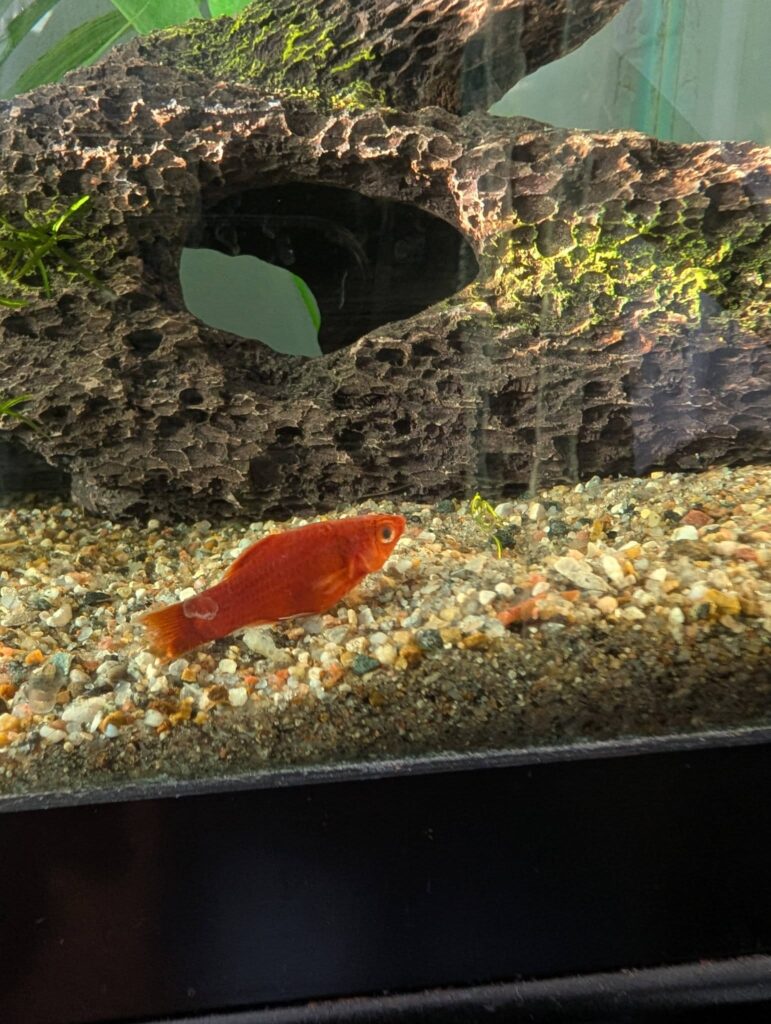
Is It Always Serious When a Platy Stops Eating?
Not always — but it should never be ignored. A platy that skips one meal after a water change or a stressful event may simply be adjusting. That is normal. However, a platy that refuses food for more than 48 hours, especially when paired with other behavioral or physical changes, is almost certainly dealing with an underlying problem.
The key is to observe the full picture. Is the fish hiding? Does it look physically different? Is it the only fish affected, or are others behaving the same way? These details help you narrow down the cause quickly and respond appropriately.
1. Poor Water Quality
Water quality is the first thing to investigate whenever a platy fish behaves abnormally — and loss of appetite is no exception. Platys stop eating when they are uncomfortable, and poor water quality is one of the most physically uncomfortable conditions a fish can experience.
Elevated ammonia is particularly damaging. Even at low concentrations, ammonia burns the gills and disrupts normal bodily functions. A fish dealing with ammonia poisoning will not eat. The same applies to elevated nitrite, which interferes with oxygen transport in the blood and causes the fish to feel constantly oxygen-deprived.
High nitrates — while less immediately toxic — cause chronic stress over time and gradually suppress appetite, especially in sensitive individuals.
Test for the following immediately:
| Parameter | Safe Level |
| Ammonia | 0 ppm |
| Nitrite | 0 ppm |
| Nitrate | Below 20 ppm |
| pH | 7.0–8.0 |
| Temperature | 70–82°F (21–28°C) |
Use a liquid test kit for accuracy. If any parameter is outside the safe range, perform a 25–30% water change right away. In cases of severe ammonia or nitrite spikes, a second partial water change the following day may also be necessary.
Once water quality improves, appetite typically returns within 24 to 48 hours. If it does not, continue investigating the other causes below.
2. Disease or Infection
A sick fish almost always stops eating. Loss of appetite is one of the earliest and most reliable indicators of illness in platy fish, often appearing before any visible physical symptoms develop.
Common diseases that cause appetite loss in platys include:
Ich (White Spot Disease)
Look for small white spots resembling grains of salt on the body and fins. The fish may scratch against surfaces, clamp its fins, and appear lethargic. Ich is highly contagious and spreads quickly in a tank, so early treatment is essential.
Velvet Disease
A fine, gold or rust-colored dusting on the skin. Affected fish often hide from light, breathe rapidly, and refuse food. Velvet can be difficult to spot — shine a flashlight at an angle across the fish’s body to see the shimmer.
Fin Rot
Fraying, discolored, or deteriorating fins caused by bacterial infection. While fin rot does not always suppress appetite immediately, a severe or advanced case will. The bacteria responsible for fin rot can spread internally if left untreated.
Internal Parasites
One of the trickier causes to diagnose. A fish with internal worms or parasites may appear thin despite eating (or appear to eat while actually spitting food back out), have a swollen or pinched abdomen, and produce white, stringy feces. If you notice these signs alongside appetite loss, internal parasites are worth suspecting.
Dropsy
A serious condition characterized by a bloated abdomen, raised scales that give a pinecone-like appearance, and complete loss of appetite. Dropsy is often a sign of organ failure or severe bacterial infection. It is difficult to treat successfully, but early intervention with antibiotics and Epsom salt baths gives the best chance.
When disease is suspected, quarantine the affected fish in a separate tank to prevent spread and to allow targeted treatment without affecting the main tank’s beneficial bacteria.
3. Stress
Stress suppresses appetite in fish just as it does in many other animals. A stressed platy diverts energy toward survival — not digestion. Chronic or acute stress will cause a fish to stop eating reliably, even when food is offered.
Common sources of stress in platy fish include:
- Aggressive tank mates: If a platy is being chased, nipped, or bullied, it will not feel safe enough to come out and eat. Watch feeding time carefully. A fish that darts away from food or never makes it to the surface during feeding is likely being intimidated.
- Overcrowding: Too many fish in too little space creates persistent stress. Competition for food, territory, and oxygen all contribute. Even if individual fish appear healthy, chronic crowding suppresses immune function and appetite over time.
- Sudden changes: A large water change with a slightly different temperature, a new decoration, rearranged plants, or the addition of new fish can all trigger a temporary stress response that temporarily reduces appetite.
- Loud or erratic environment: Tanks placed near televisions, speakers, or areas with frequent heavy foot traffic expose fish to constant vibration and noise, which causes chronic low-level stress.
Identifying and removing the stressor is the solution. Add more plants to provide visual barriers, adjust stocking levels if overcrowding is the problem, and give the fish time to settle after any significant tank changes.
4. Incorrect Water Temperature
Temperature has a direct effect on a platy’s metabolism. Platys are cold-blooded animals — their metabolic rate rises and falls with the water temperature around them.
In water that is too cold, the metabolism slows dramatically. A platy in water below 68°F (20°C) will become sluggish, lose interest in food, and may begin to struggle with immune function. In water that is too warm — above 84°F (29°C) — the fish becomes stressed and oxygen-depleted, which also suppresses appetite.
Always verify the temperature with a reliable separate thermometer, not solely the heater’s dial. Heater dials can be inaccurate, especially in older units. The ideal range for platys is 70–82°F (21–28°C), with 75–78°F (24–26°C) being the sweet spot for most situations.
If the temperature is outside the safe range, adjust the heater gradually — no more than 1–2°F per hour — to avoid thermal shock. Appetite typically returns within a day or two once the temperature is stable and correct.
5. Wrong or Unfamiliar Food
Platys are adaptable eaters, but they can occasionally refuse food they are unfamiliar with or find unpalatable. This is especially common when you switch food brands, change the food type, or offer a new food the fish has never encountered before.
A fish that was previously eating flakes but is now offered pellets, for example, may ignore the pellets entirely for several days until it recognizes them as food. The same can happen with frozen foods — some fish need time to associate thawed brine shrimp or bloodworms with a feeding response.
What to do:
- Continue offering the new food in small amounts at each feeding
- Mix the new food with the old food they already recognize to ease the transition
- Try offering the food at different times of day, as some fish are more active feeders in the morning
- Vary the diet — if flakes are refused, try a small amount of frozen brine shrimp or blanched zucchini. Platys are omnivores and something in a varied offering usually tempts them
Also check the food’s expiry date. Old, degraded flake food loses its nutritional value and its smell — which fish rely on to identify food. Stale food is often refused even by healthy, hungry fish.
6. New Tank Adjustment
A platy that has just been introduced to a new aquarium — whether it is a brand new setup or an established tank — may refuse food for the first few days. This is a normal stress response and one of the most common reasons beginner fishkeepers worry unnecessarily.
In an unfamiliar environment, a fish’s priority is safety, not feeding. It needs to map its surroundings, identify hiding spots, assess potential threats, and settle into a sense of security before it is willing to eat openly.
Most platys begin eating within 3 to 5 days of being introduced to a new tank. During this period, offer food normally but do not worry if it is ignored or only partially eaten. Avoid the temptation to overfeed in an attempt to entice the fish — uneaten food will only deteriorate the water quality and make the adjustment period harder.
If a newly introduced platy has not eaten after 7 days, begin investigating water quality and health more closely.
7. Overfeeding and Constipation
This cause is often overlooked. Platys that are fed too much or fed a diet too high in protein can become constipated. A constipated fish will be reluctant to eat because its digestive system is already backed up and uncomfortable.
Signs of constipation include a slightly bloated belly, inactivity, trailing feces, or feces that appear white, stringy, or segmented. The fish may show interest in food but spit it back out.
The remedy is simple:
Fast the fish for 2 to 3 days — offer no food at all. After the fasting period, offer a small amount of blanched, shelled pea. The soft fiber helps clear the digestive tract. Most constipated platys recover completely within a few days of this treatment and return to normal feeding.
Going forward, feed only what the fish can consume in two minutes, once or twice a day. Offer plant-based foods like blanched zucchini, cucumber, or spirulina flakes regularly to support healthy digestion.
8. Pregnancy
A pregnant female platy in the final days before giving birth may reduce her food intake significantly or stop eating altogether. This is normal behavior and not a cause for concern on its own.
As the fry take up increasing space inside the abdomen, the female’s stomach has less room. She may also be focused on finding a safe birthing location rather than feeding. In the 24 to 48 hours immediately before birth, many females refuse food entirely.
If the fish is visibly pregnant — round, boxy abdomen and a very dark gravid spot near the anal fin — appetite loss in the final days of gestation is expected. Return to normal feeding once the fry have been delivered.
9. Old Age
As platy fish reach the end of their natural lifespan — typically around 2 to 3 years — their appetite naturally decreases. An aging fish may eat less, move more slowly, and become less competitive during feeding. This is not illness; it is the natural process of aging.
If your platy is elderly, has been healthy throughout its life, and shows no other symptoms of disease or distress, a reduced appetite in its final months may simply be a sign that it is slowing down. Continue offering a varied diet in small amounts and maintain pristine water conditions to keep the fish as comfortable as possible.
How to Diagnose the Cause
When your platy stops eating, work through the following steps in order:
Step 1 — Test the water. Always start here. Ammonia, nitrite, nitrate, pH, and temperature should all be verified before assuming any other cause.
Step 2 — Observe the fish’s appearance. Look carefully for white spots, fin damage, abnormal coloring, swelling, raised scales, or unusual posture. These point directly to specific diseases.
Step 3 — Watch the fish during feeding. Does it come to the surface and then retreat? Is it being chased by other fish? Does it mouth the food but spit it out? Each behavior suggests a different underlying cause.
Step 4 — Consider recent changes. New fish added, food changed, temperature shifted, large water change performed — any recent change to the tank or routine could explain appetite loss.
Step 5 — Assess the fish’s body condition. Is it thin? Bloated? Are the fins clamped? A thin platy that has been off food for several days needs urgent attention. A slightly bloated one may be constipated or pregnant.
When to Act Urgently
Seek immediate action if:
- The fish has not eaten for more than 3 days and shows physical symptoms
- Multiple fish in the same tank are refusing food simultaneously
- The fish is losing visible weight or muscle mass
- Breathing is rapid or the fish is gasping at the surface
- The belly appears swollen and scales are raised (possible dropsy)
Multiple fish refusing food at the same time almost always indicates a water quality problem or a spreading disease. Test the water immediately.
Suggested For You:
How Long Are Platies Pregnant? Everything to Know
Male vs Female Platy Fish: How to Tell the Difference and Why It Matters
Platy Fish Tank Setup: A Complete Step-by-Step Guide
10 Best Tank Mates for Platies: A Complete Compatibility Guide
Platy Fish Lifespan: How Long Do Platies Live and How to Help Them Live Longer
Prevention: Keeping Platy Fish Eating Well
A consistent, varied diet and a well-maintained tank are the foundation of good appetite in platy fish. Feed a high-quality flake or pellet as the base diet, and supplement two to three times per week with frozen brine shrimp, daphnia, blanched vegetables, or micro-worms. Keep water parameters stable, avoid overcrowding, and perform weekly partial water changes.
A healthy platy in a well-kept tank should eat eagerly and consistently every day. That enthusiastic response at feeding time is one of the small but genuine joys of keeping these fish — and it is worth protecting.
Frequently Asked Questions (FAQs)
1. How long can a platy fish go without eating?
A healthy adult platy can survive without food for approximately 7 to 14 days, as they draw on stored energy reserves. However, a fish that refuses food for more than 3 days should be investigated for illness or environmental problems. Fry and juvenile fish are far less tolerant of fasting and need to eat daily.
2. Why is my platy spitting out food?
Spitting out food can indicate constipation, the food is too large for the fish to swallow comfortably, or the food is unfamiliar. It can also be a sign of internal parasites in some cases. Try offering finely crushed flake food and observe whether the behavior continues.
3. My platy was eating fine yesterday — why did it suddenly stop?
Sudden appetite loss points to a sudden change in environment — temperature drop, water quality spike, a new fish being added, or the early onset of illness. Test your water immediately and observe the fish closely for any physical symptoms.
4. Should I remove uneaten food from the tank?
Yes, always. Uneaten food decomposes quickly and raises ammonia levels, which compounds the problem if water quality is already a factor. Use a small net or turkey baster to remove uneaten food within a few minutes of feeding.
5. Can changing fish food brands cause a platy to stop eating?
Yes. Platys can be reluctant to accept a new food that looks, smells, or feels different from what they are used to. Mix the new food with the old food for a week or two to ease the transition. Most fish adapt within a few days.
6. Is it normal for a platy not to eat after a water change?
Briefly, yes. A water change temporarily changes the chemistry and temperature of the water, which can cause a short-term stress response. A healthy platy should resume eating within a few hours to a day after a routine water change. If the appetite does not return, check whether the water change caused a significant temperature or pH shift.
7. What foods are best for encouraging a platy to eat again?
Live or frozen foods tend to trigger a strong feeding response in fish that have become reluctant eaters. Baby brine shrimp, daphnia, and micro-worms are particularly effective. The movement of live food activates the predatory instinct and often encourages fish to feed even when they have been off dry food for several days.
References
- Fishkeeping World — Platy Fish Care Guide: Diet, Health and Behavior. https://www.fishkeepingworld.com/platy-fish/
- University of Florida IFAS Extension — Nutritional Disorders and Feeding Practices in Ornamental Fish. https://edis.ifas.ufl.edu/topic_ornamental_fish
- Merck Veterinary Manual — Anorexia and Nutritional Deficiencies in Aquarium Fish. https://www.merckvetmanual.com/exotic-and-laboratory-animals/aquarium-fish/diseases-of-aquarium-fish
- The Spruce Pets — Why Is My Fish Not Eating?. https://www.thesprucepets.com/why-is-my-fish-not-eating-1381295
- PubMed Central — Stress, Immunity, and Feeding Behavior in Freshwater Teleost Fish.https://www.ncbi.nlm.nih.gov/pmc/