Can Mystery Snails Live Out of Water? What Every Aquarist Needs to Know
Mystery snails are among the most beloved freshwater invertebrates in the hobby. Their calm temperament, striking appearance, and tank-cleaning habits make them a staple in community aquariums worldwide.
But a question that comes up often — from nervous beginners and curious enthusiasts alike — is this: can mystery snails live out of water?
The short answer is yes, briefly. But the full picture is far more important than a one-word answer. Understanding how long mystery snails can survive outside water, why they leave it in the first place, and what you should do when it happens could mean the difference between a healthy snail and a dead one.
This article covers everything you need to know.
What Are Mystery Snails?
Mystery snails (Pomacea bridgesii) are freshwater gastropods native to South America, particularly Bolivia, Brazil, and Paraguay. They are not marine snails and should never be placed in saltwater.
They breathe using a combination of a gill and a lung — which is actually the key to understanding their relationship with air. This dual respiratory system means they can extract oxygen both from water and from air, to a limited degree.
This is what gives them the ability to survive outside water temporarily. But temporary is the operative word.
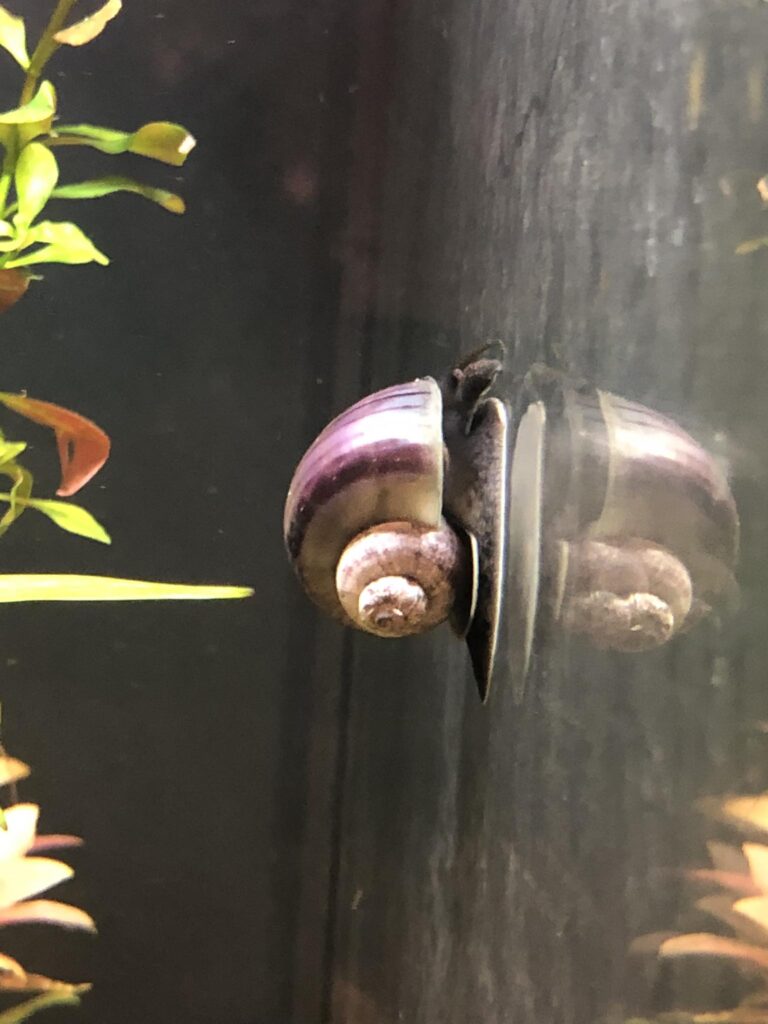
Can Mystery Snails Survive Out of Water?
Yes — but only for a short time. Mystery snails can survive out of water for roughly 24 to 48 hours under the right conditions. Some aquarists have reported snails surviving up to 72 hours outside the tank, but this is not the norm, and it comes with real risks.
Several factors determine how long a mystery snail survives outside water:
- Humidity: High humidity slows moisture loss from their body.
- Temperature: Cool environments help. Warm or hot conditions cause rapid dehydration.
- Shell seal: A healthy operculum (the hard “door” that seals the shell) helps retain moisture.
- Activity level: An active snail out of water loses moisture faster than one that has retreated into its shell.
Dehydration is the primary killer. A mystery snail out of water is slowly drying out, and once the desiccation becomes severe, the damage is irreversible.
Why Do Mystery Snails Leave the Water?
This is a question many new keepers ask with some panic when they find their snail on the floor. The truth is, mystery snails leave the water for entirely natural reasons.
1. Laying eggs
Female mystery snails lay their egg clutches above the waterline — often on the glass, hood, or rim of the tank. This is completely normal. The female may spend several hours or even a day partially out of the water during this process.
2. Poor water quality
If ammonia, nitrite, or nitrate levels are dangerously high, mystery snails will attempt to escape. This is essentially a survival response. If your snail is persistently trying to leave the tank, test your water immediately.
3. Low oxygen levels
Dissolved oxygen that is too low will send snails toward the surface or out of the water entirely. Adequate surface agitation and a working filter are essential.
4. Curiosity and exploration
Mystery snails are surprisingly active explorers. They will climb the glass, investigate the filter intake, and yes — sometimes wander over the edge if the tank lid is not secure. This is not always a sign of a problem.
5. Stress or aggression
In tanks with aggressive tankmates — such as pea puffers, cichlids, or goldfish — mystery snails may attempt to escape to avoid being harassed or eaten.
Expert Aquarists Weigh In
The aquarist community has long observed and documented mystery snail behavior. Here is what experienced keepers have said:
“Mystery snails leaving the water is one of the first signs I check when something is off in a tank. Nine times out of ten, it tells you to test the water before anything else.” — Marcus Leifield, aquarium hobbyist and freshwater invertebrate specialist with over 15 years of experience
“I’ve had mystery snails survive a full night on the floor — found them the next morning completely sealed in their shell and moving again once returned to the tank. But I wouldn’t push it past 24 hours. The humidity in most homes is simply too low.” — Carla Nguyen, aquatic biology enthusiast and moderator of a large online snail-keeping community
“People underestimate how sensitive mystery snails are to water chemistry. A snail trying to escape is almost always communicating something. Don’t just put it back — fix the environment.” — James Okoro, hobbyist aquarist and contributor to several freshwater invertebrate care guides
These voices reflect a consistent point: a mystery snail outside its tank is often a message, not just an accident.
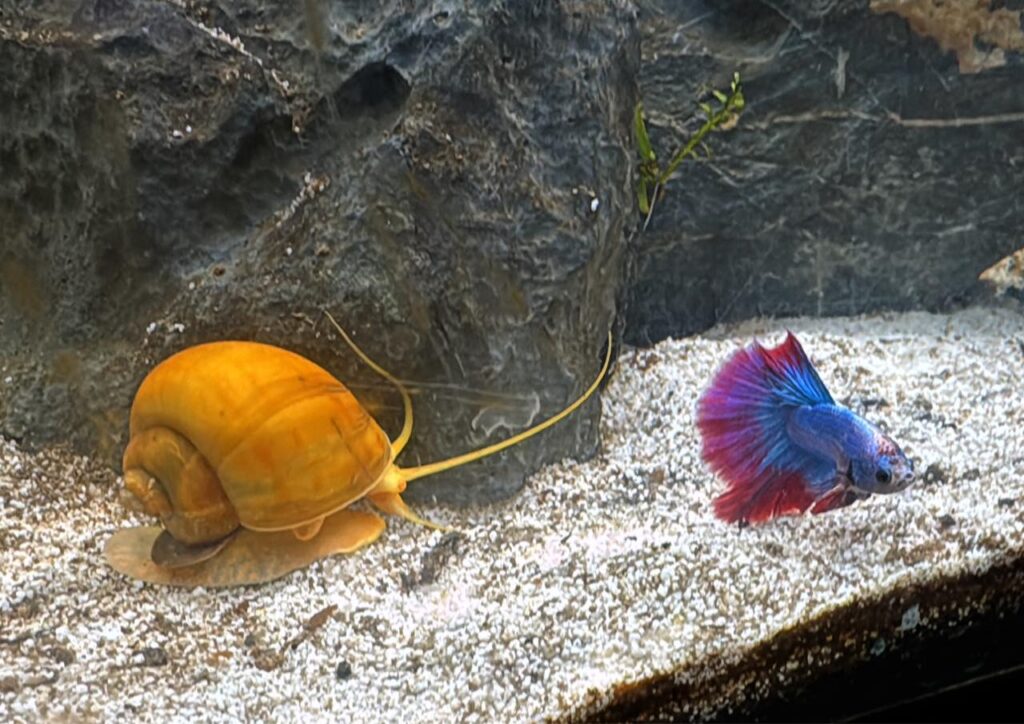
How to Safely Return a Mystery Snail to the Water
If you find your mystery snail outside the tank, stay calm. Here is what to do.
Step 1: Do not drop it in suddenly. A sudden return to water after being out for a while can stress the snail. Gently place it near the waterline or on a flat surface inside the tank so it can re-enter at its own pace.
Step 2: Check if the snail is alive. A healthy snail will retreat into its shell when touched, or will slowly begin to extend its body. A dead snail will smell strongly — an unmistakable, unpleasant odor. If it smells bad, the snail is likely deceased.
Step 3: Test your water. Before celebrating that the snail is back, run a full water test. Check ammonia, nitrite, nitrate, pH, and temperature. If parameters are off, address them right away.
Step 4: Check for injuries. Mystery snails that fall from elevated surfaces can crack or chip their shells. Small chips are often survivable. Large cracks can be life-threatening. Inspect the shell carefully.
Pro Tips for Mystery Snail Keepers
Here are practical tips to keep your mystery snails safe and healthy:
Always use a secure lid
Mystery snails are escape artists. A loose or open lid is an invitation for disaster. Even a small gap is enough for them to squeeze through. Use a tight-fitting lid or place mesh over any openings.
Keep the water level slightly below the rim
Leaving a few centimetres of space between the water surface and the lid gives females a place to lay eggs without fully exiting the tank environment. This reduces stress during the egg-laying process.
Maintain excellent water quality
The single best thing you can do for mystery snails is maintain clean, well-oxygenated water. Perform weekly partial water changes of 20 to 30 percent. Mystery snails thrive in water with a pH of 7.0 to 7.5 and temperatures between 68°F and 82°F (20°C to 28°C).
Provide calcium for shell health
A strong operculum and thick shell help mystery snails survive brief excursions out of water. Supplement their diet with calcium-rich foods such as cuttlebone, blanched kale, or crushed coral in the substrate. Soft shells are a silent warning that your water may be too acidic or lacking in minerals.
Avoid overcrowding
Overcrowded tanks lead to spikes in waste, reduced oxygen, and increased stress — all conditions that push mystery snails to escape. Follow general stocking guidelines and do not overfeed.
Check on them after water changes
Some mystery snails react to the shock of a large water change by retreating into their shell or attempting to leave the tank. Always match the temperature of new water to the tank temperature before adding it.
How Long Is Too Long Out of Water?
To be precise about timing:
| Time Out of Water | Risk Level | What to Expect |
| Under 1 hour | Low | Snail likely fine if returned promptly |
| 1 to 12 hours | Moderate | Monitor closely; check water quality |
| 12 to 24 hours | High | Dehydration begins; return immediately |
| 24 to 48 hours | Very High | Survival possible but not guaranteed |
| Over 48 hours | Critical | Survival unlikely in most conditions |
Humidity plays a major role. In a humid room — near a bathroom, kitchen, or in tropical climates — a snail may survive longer. In a dry, air-conditioned room, the same snail may not make it past 12 hours.
Signs That a Mystery Snail Is Stressed or Unwell After Being Out of Water
Once returned to the tank, watch your snail carefully for 24 to 48 hours. Signs of distress include:
- Remaining sealed in the shell for an unusually long time (more than 24 hours without any visible movement)
- Floating at the surface — this can indicate a serious internal issue or air trapped in the shell
- Foot or body tissue appearing pale or shrivelled
- Shell showing new cracks or chips
- A faint but detectable odour even while submerged
If you notice any of these signs, improve water conditions and observe closely. A snail that floats occasionally is not necessarily dying — mystery snails sometimes trap air in their shells and float for a short period before self-correcting.
However, a snail that floats, smells, and does not respond to touch is most likely deceased and should be removed from the tank promptly to avoid an ammonia spike.
The Role of the Operculum
The operculum is the hard, disc-shaped “trap door” that mystery snails use to seal the entrance of their shell. It is one of their most important survival tools — both in and out of water.
When a mystery snail leaves the water or senses danger, it pulls its body into the shell and seals itself in with the operculum. This seal helps lock in moisture and protect the soft body tissue from drying out.
A healthy operculum is firm, intact, and flush with the shell opening. If the operculum appears sunken, loose, or has fallen off entirely, the snail is either very sick or deceased. A snail with a damaged operculum is far more vulnerable when out of water.
Can Mystery Snails Breathe Air?
Yes — and this is a fascinating aspect of their biology. Mystery snails possess both a gill and a pulmonary sac (a primitive lung). The gill extracts oxygen from water, while the pulmonary sac allows the snail to breathe air directly.
This is why you may sometimes see your mystery snail rise to the water surface and extend a tube-like siphon (called the pneumostome) above the waterline. They are literally breathing air, just as a person might surface for a breath.
This adaptation is what makes brief survival outside water biologically possible. However, breathing air through a pulmonary sac is far less efficient than gill respiration in water. Extended time out of water puts enormous strain on the snail’s body, regardless of the lung.
Suggested For You:
Mystery Snail Escaping Tank: Signs, Causes, and How to Prevent
Best Tank Mates for Mystery Snails: Peaceful Companions That Won’t Stress Your Snails
Do Mystery Snails Eat Plants? What You Need to Know Before Adding Them to a Planted Tank
Signs of Unhealthy Mystery Snail Shell: Identification and Fixes
Mystery Snail Shell Cracked: What to Do
Final Thoughts
Mystery snails are resilient, charming, and surprisingly communicative creatures. When one leaves the water, it is not always an emergency — but it is always worth paying attention to.
The key takeaways are these:
- Mystery snails can survive out of water for up to 24 to 48 hours, depending on humidity and temperature.
- They leave the water for natural reasons or as a response to poor tank conditions.
- Return them gently and test your water when you find one outside the tank.
- Prevent escapes with a secure lid and maintain excellent water quality.
- A snail sealed in its shell is not necessarily dead — use smell as your guide.
The best aquarists are not the ones with the most expensive equipment. They are the ones who observe carefully and respond thoughtfully. Your mystery snail is trying to tell you something. It pays to listen.