20 Types of Guinea Pigs: (Breed Identification, With Pictures)
I’ll admit something. Before I actually researched guinea pig breeds properly, I assumed there were maybe three or four kinds. A short-haired one, a fluffy one, and that was about it.
I was wrong, and pleasantly so. Guinea pigs come in a remarkable range of coat types, textures, and even skin conditions, each with its own personality quirks and care needs.
This guide walks through 20 types of guinea pigs, covering officially recognized show breeds and popular pet varieties found around the world. Whether you’re choosing your first cavy or simply curious, you’ll leave knowing exactly what makes each one unique.
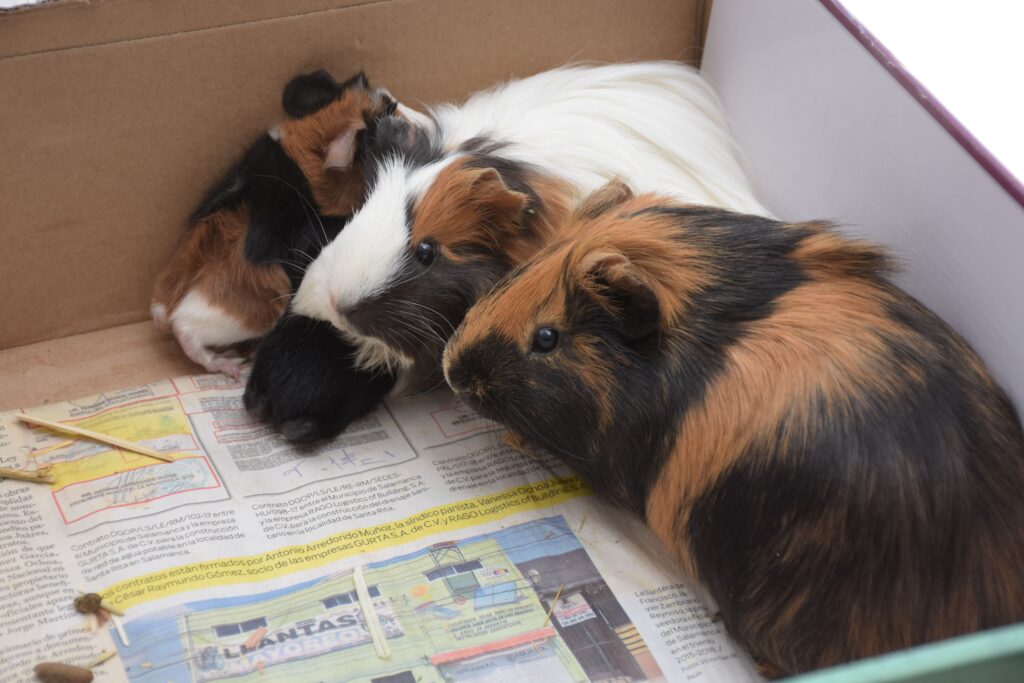
Who Actually Decides What Counts as a Breed?
In the United States and Canada, the American Cavy Breeders Association (ACBA) governs official breed recognition. It currently recognizes 13 distinct guinea pig breeds for showing.
In the United Kingdom, the British Cavy Council takes a broader approach, recognizing dozens of breeds and varieties, more than double the American count.
That gap explains why breed lists online vary so much. Where you live genuinely changes how many “official” guinea pig breeds exist. This guide includes both recognized show breeds and widely known pet varieties, so nothing important gets left out.
1. American
The American is widely considered the oldest and most recognizable guinea pig breed. It has a short, smooth coat and comes in more than 20 recognized colors.
This is likely the breed most people picture when they hear “guinea pig.” It is calm, hardy, and beginner-friendly.
Because grooming needs are minimal, the American is often recommended for first-time owners and families with children.
2. American Satin
The American Satin looks nearly identical to the standard American, but with one striking difference: a glossy, almost metallic shine caused by hollow hair shafts.
This shine becomes especially noticeable under direct light. It genuinely looks polished, even without extra grooming effort.
Some breed associations restrict showing satin varieties due to links with bone density issues, so this is worth discussing with a knowledgeable breeder.
3. Abyssinian
Abyssinians are instantly recognizable thanks to their rough coat arranged into rosettes, ideally six to eight, spaced evenly across the body.
Each rosette forms a small whorl, giving the guinea pig a slightly wild, tousled look. It is considered one of the “big three” foundational breeds.
Abyssinians need a bit more grooming attention than smooth-coated breeds, mainly to keep their rosettes tidy and free of tangles.
4. Abyssinian Satin
This variety carries all the same rosette patterning as the standard Abyssinian, plus the same hollow-hair-shaft shine seen in other satin breeds.
The result is a textured, glossy coat that catches light beautifully. It remains a favorite among cavy show enthusiasts.
As with other satins, prospective owners should ask about health screening related to bone density before committing to this variety.
5. Peruvian
The Peruvian is one of the most dramatic-looking guinea pig breeds, with long, silky hair that can trail along the ground if left ungroomed.
This breed requires daily brushing and often needs the coat trimmed or tied up to avoid matting, dirt buildup, and mobility issues.
Peruvians tend to suit owners who enjoy hands-on grooming routines and don’t mind the extra time commitment involved.
6. Peruvian Satin
This variety combines the flowing length of the Peruvian coat with an added satin sheen, making the long hair appear even more striking.
Grooming demands remain identical to the standard Peruvian. Daily brushing is essential to prevent painful tangles.
Many breeders consider this one of the most visually stunning guinea pig varieties, though it is far from the easiest to maintain.
7. Silkie (Also Called Sheltie)
The Silkie, known as the Sheltie in the UK, has long, smooth hair that flows backward from the face without forming a rosette on the head.
This creates a sleek, streamlined appearance, sometimes compared to a small mermaid due to the way the hair sweeps away from the face.
Regular grooming keeps the coat smooth and prevents matting, particularly around the hindquarters.
8. Silkie Satin
This breed pairs the smooth, backward-flowing Silkie coat with the glossy shine typical of all satin varieties.
The combination produces an especially eye-catching, almost liquid-looking coat under good lighting.
Like other satin breeds, care and monitoring around bone health is recommended, based on guidance from breed associations.
9. Teddy
Teddies have a short, dense, wiry coat that stands up from the body rather than lying flat, giving them a permanently fluffy, plush appearance.
Their coat texture resembles a stuffed toy, which explains the breed’s name. It requires far less grooming than long-haired breeds.
Teddies tend to have cheerful, curious personalities, making them popular among families and first-time owners alike.
10. Teddy Satin
This variety keeps the dense, upright Teddy texture while adding a subtle satin shine to each strand of hair.
The overall look remains plush and rounded, just with an extra gleam that becomes visible in bright light.
Grooming needs stay low, similar to the standard Teddy, making this a practical choice for less experienced owners.
11. Texel
The Texel is easily identified by its long, tightly curled coat that forms ringlets across the entire body.
Unlike the straight-haired Peruvian, every strand on a Texel curls naturally, creating a look often compared to a perm.
This breed needs frequent grooming to prevent curls from matting, especially around the belly and hindquarters.
12. White Crested
The White Crested closely resembles the American breed in body shape and short coat, with one key difference: a single white rosette on the forehead.
The rest of the coat can appear in any recognized color, making the white crest stand out clearly against darker fur.
This breed is relatively low-maintenance, requiring the same simple grooming routine as most short-haired varieties.
13. Coronet
The Coronet combines a long, flowing coat with a single rosette centered on the head, similar in placement to the White Crested’s marking.
This gives the breed a somewhat regal appearance, especially when the head rosette is neat and well-defined.
Because of its long body coat, the Coronet needs daily brushing, much like the Peruvian and Silkie breeds.
14. Rex
The Rex guinea pig has a short, dense, wiry coat along with distinctively curled whiskers, giving the whole animal a slightly fuzzy, textured look.
It is not currently recognized by the American Cavy Breeders Association, though the British Cavy Council does recognize it.
Rex guinea pigs are gaining popularity as pets, valued for their soft texture and relatively easy grooming needs.
15. Skinny Pig
The Skinny Pig is a hairless breed, though not entirely bald, often retaining small tufts of hair around the nose, feet, and legs.
Their exposed skin means they are more sensitive to temperature changes and sunburn than haired breeds, requiring extra environmental care.
Skinny Pigs also tend to eat more than haired guinea pigs, since maintaining body heat without fur burns additional calories.
16. Baldwin
Unlike the Skinny Pig, Baldwins are born with a full coat of hair, which they gradually shed within their first few months of life.
By adulthood, they end up almost completely hairless, with soft, wrinkled skin similar in feel to the Skinny Pig.
Baldwins share the same temperature sensitivity as other hairless breeds and need warm, draft-free housing.
17. Merino
The Merino combines a curly Texel-style coat with an added rosette on the head, similar to the Coronet’s crest placement.
This creates a distinctive, layered look: curls across the body topped with a single defined swirl on the forehead.
Grooming needs are high, given the combination of curl and length, so daily brushing is strongly recommended.
18. Alpaca
The Alpaca guinea pig features a long, coarser curled coat, often with two rosettes on the rear in addition to body-wide curls.
Its texture tends to feel slightly rougher than the Texel or Merino, though the overall curled effect looks similar at a glance.
This breed requires consistent grooming to prevent the coarser curls from tangling or matting over time.
19. Lunkarya
The Lunkarya is a rarer breed, recognized mainly in parts of Europe, featuring long, wiry, tightly curled hair that stands away from the body.
Its texture is often described as somewhere between wool and wire, giving it a uniquely tousled, voluminous appearance.
Because it is uncommon, finding a genuine Lunkarya outside specialized breeding circles can be genuinely difficult.
20. Himalayan
The Himalayan is technically a color and marking pattern rather than a coat-type breed, but it is widely treated as its own type by pet owners.
It has a short, white body coat with darker points on the nose, ears, and feet, resembling the classic Siamese cat pattern.
This pattern is genetically linked to temperature-sensitive pigmentation, similar to what produces color points in Siamese cats and Himalayan rabbits.
Where Guinea Pig Breeds Actually Came From
Guinea pigs weren’t always the fluffy, rosette-covered pets we know today. Their story starts thousands of years ago, in the mountains of South America.
Genetic research published through the National Institutes of Health indicates that guinea pigs were first domesticated somewhere between 6000 and 2000 BC, likely from the wild species Cavia tschudii. That’s a domestication timeline stretching back roughly 8,000 years.
Later archaeological work, also hosted through NIH’s research archive, points to an independent center of domestication in the eastern Colombian Highlands, suggesting guinea pigs may have been tamed in more than one location across South America.
Originally, guinea pigs were raised primarily as a food source and for ceremonial purposes among Andean communities, long before they became companion animals. Their transformation into decorative, multi-coated pets happened much later, largely after their export to Europe in the 15th and 16th centuries.
Once in Europe, breeders began selecting for appearance rather than meat yield or hardiness alone. This shift is exactly what produced the wide range of coat types, rosette patterns, and colors seen across the 20 varieties covered in this guide.
Chromosomal studies comparing wild and domestic guinea pigs have also found measurable genetic divergence between Cavia tschudii and today’s Cavia porcellus, reflecting how selective breeding reshaped the species over generations.
In other words, every rosette, curl, and satin sheen you see in a modern show guinea pig traces back to centuries of deliberate selection, layered on top of a much older domestication story rooted in the Andes.
How Many Guinea Pig Breeds Actually Exist?
The exact number depends entirely on which organization you ask. The American Cavy Breeders Association recognizes 13 official breeds for competitive showing in the United States and Canada.
The British Cavy Council recognizes a considerably larger number, often cited as more than 40 breeds and varieties, reflecting a broader, more inclusive classification system.
This means a guinea pig considered a distinct breed in the UK might simply be classified as an unofficial variety in the US show system, even though it’s the same animal.
For pet owners, this distinction rarely matters day to day. What matters more is understanding your specific guinea pig’s coat needs, temperament, and health considerations.
Choosing the Right Breed for Your Lifestyle
Coat length is the biggest practical factor when picking a breed. Long-haired breeds like the Peruvian, Texel, and Coronet require daily grooming, while short-haired breeds like the American and Teddy need very little.
Hairless breeds, including the Skinny Pig and Baldwin, need more attention to temperature control and skin protection, but skip brushing entirely.
First-time owners often do best with a low-maintenance short-haired breed. Experienced owners who enjoy grooming routines may find long-haired or curly breeds more rewarding.
Whatever you choose, remember that guinea pigs are highly social animals and generally thrive better in same-sex pairs or small groups rather than living alone.
Lifespan is another factor worth planning for. Most guinea pigs, regardless of breed, live between five and seven years with proper care, though some individuals live longer. This is a meaningfully longer commitment than many smaller rodent pets.
Housing size matters too. Long-haired breeds especially benefit from larger, cleaner enclosures, since trailing coats pick up bedding, food debris, and waste far more easily than short coats do.
A Note on Satin Coat Genetics
Nearly every core breed, American, Abyssinian, Peruvian, Silkie, and Teddy, has a corresponding satin variety. The satin gene creates hollow hair shafts, producing a glossy, almost metallic shine.
However, this same gene has been associated with osteodystrophy, a bone density disorder, in some research and breeding circles. Because of this, certain cavy associations restrict or discourage showing satin varieties.
If you’re drawn to a satin breed purely for its appearance, it’s worth asking breeders about health screening practices before bringing one home.
Frequently Asked Questions About Guinea Pig Types
What is the most popular guinea pig breed? The American is generally considered the most popular and widely kept guinea pig breed, thanks to its short coat and low grooming needs.
Which guinea pig breed needs the least grooming? Short-haired breeds like the American, Teddy, and White Crested require minimal grooming compared to long-haired or curly varieties.
Are hairless guinea pigs a separate species? No. Skinny Pigs and Baldwins are still Cavia porcellus, the same species as haired guinea pigs, just carrying genes that reduce or eliminate hair growth.
Is the Himalayan guinea pig a true breed? Not exactly. It’s a recognized color and marking pattern rather than a distinct coat-type breed, though it’s commonly discussed alongside true breeds.
Do all guinea pig breeds have the same temperament? Personality varies more by individual animal than by breed, though some owners report that certain breeds, like the American, tend to be especially calm and easygoing.
Can two different guinea pig breeds live together? Yes. Breed has little bearing on compatibility. Same-sex pairings or groups generally do well together regardless of coat type, as long as introductions are handled gradually and carefully.
Final Thoughts
Learning about these 20 types of guinea pigs genuinely changes how you see this small, often underestimated pet. There is far more variety here than most people expect.
I’ve grown fond of how differently each breed carries itself, from the sleek American to the almost regal Coronet. Even the hairless breeds have their own quiet charm.
Whichever type catches your eye, take time to research its specific grooming and care needs before bringing one home. A well-matched breed makes for a happier guinea pig, and a happier owner too.
References
- Oklahoma State University, Guinea Pigs as Pets: https://news.okstate.edu/articles/communications/2020/guinea-pigs-as-pets
- UC Davis School of Veterinary Medicine, Guinea Pig Care: https://healthtopics.vetmed.ucdavis.edu/health-topics/exotics/guinea-pig-care
- Harvard Medical School (Countway/Packer resource), 13 Guinea Pig Behavior Facts: https://packer.hms.harvard.edu/13-guinea-pig-behavior-facts-understand-pets
- National Institutes of Health, PMC, Ancient DNA of Guinea Pigs (Cavia spp.) Indicates a Probable New Center of Domestication and Pathways of Global Distribution: https://www.ncbi.nlm.nih.gov/pmc/articles/PMC7264122/
- National Institutes of Health, PMC, Similarities and Differences Among the Chromosomes of the Wild Guinea Pig Cavia tschudii and the Domestic Guinea Pig Cavia porcellus: https://www.ncbi.nlm.nih.gov/pmc/articles/PMC4137285/
- National Institutes of Health, PMC, Guinea Pig (Cavia porcellus) Welfare: Associations Between Husbandry Practices, Human–Animal Interactions, and Animal Behaviour: https://pmc.ncbi.nlm.nih.gov/articles/PMC12024334/
- National Institutes of Health, PMC, Review of Rat, Mouse, Guinea Pig, and Rabbit Indicators for Welfare Assessment: https://www.ncbi.nlm.nih.gov/pmc/articles/PMC10339950/