25 Types of Pet Frogs (Safe Species, With Pictures)
Frogs make wonderful pets. They are quiet, low-maintenance compared to many mammals, and endlessly fascinating to watch.
I have spent years around amphibian keepers, and one thing is always true: the right species makes all the difference. A frog that suits a beginner is not the same frog that suits an advanced hobbyist.
This guide covers 25 types of pet frogs, sorted by the traits that matter most: size, temperament, handling tolerance, and care difficulty. By the end, you will know exactly which frog fits your home and your experience level.
There are close to 8,900 amphibian species worldwide, and frogs make up the overwhelming majority of that number. Only a small slice of these are suited to captivity, so this list focuses on the ones actually worth keeping.
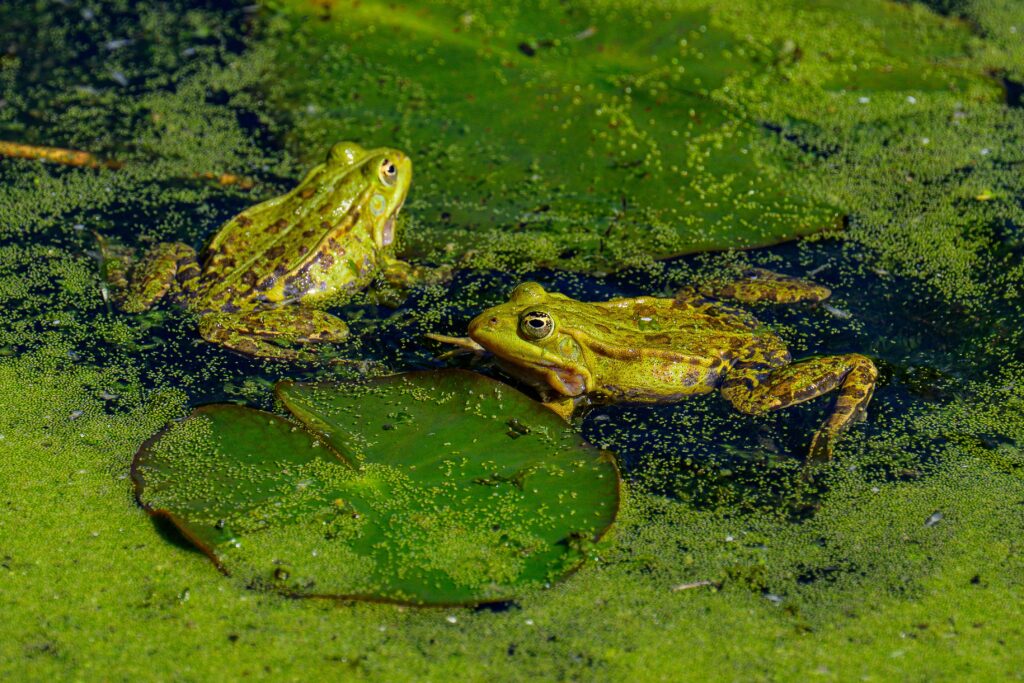
Why Frogs Make Great Pets
Frogs do not need daily walks. They do not bark. Many species live 10 to 20 years with proper care, which is longer than most people expect from a small pet.
They are also visually stunning. From neon-blue poison dart frogs to bulging-eyed tree frogs, few pets offer this much color and personality in such a small enclosure.
That said, frogs are not a “set it and forget it” pet. Humidity, temperature, and diet all need attention. Skipping this research is the number one reason new keepers struggle.
One more thing before we dive in: nearly all frogs and toads can carry Salmonella bacteria, even when they look perfectly healthy. The CDC recommends against keeping amphibians in homes with children under five, pregnant women, or anyone with a weakened immune system, and it advises washing hands thoroughly after handling any frog or its tank water.
Now, let’s get into the 25 species.
Beginner-Friendly Pet Frogs
These species tolerate small husbandry mistakes and are widely available from reputable breeders.
1. White’s Tree Frog
This is the classic starter frog, and for good reason. White’s tree frogs are chunky, calm, and famously easygoing.
They grow to about 4 to 5 inches and can live 15 to 20 years in captivity. Their thick, waxy skin resists dehydration better than most tree frogs.
They tolerate occasional gentle handling, which makes them a favorite among first-time owners.
2. Pacman Frog (Horned Frog)
Pacman frogs are round, stubby, and shaped almost like a mouth with legs. They spend most of their time sitting still, waiting for food to walk by.
They are ambush predators, so do not expect an active pet. Feeding is the highlight of their day, and honestly, watching one lunge at a cricket never gets old.
Adults reach 4 to 7 inches depending on sex, and they can live over 10 years.
3. American Green Tree Frog
A native North American species, the green tree frog is slender, bright green, and easy to house in a simple screen or glass terrarium.
They are more active at dusk and night. Their soft, repetitive call is one of the most recognizable frog sounds in the southeastern United States.
4. Fire-Bellied Toad
Small, aquatic-leaning, and social, fire-bellied toads do well in groups. Their bright orange-and-black belly is a warning signal to predators.
They only grow to about 2 inches, making them ideal for smaller setups. Avoid handling them often, since their skin secretions can irritate human eyes and mucous membranes.
5. Gray Tree Frog
Common across the eastern and central United States, gray tree frogs change color from gray to green depending on temperature and mood.
They are hardy, small, and simple to feed. Many keepers appreciate that this species can be legally collected in some states under local wildlife regulations, though checking your state’s rules first is essential.
6. Tomato Frog
Native to Madagascar, tomato frogs are named for their vivid red-orange color. Females are noticeably larger and more colorful than males.
They are burrowers and prefer a deep, moist substrate. They are not fond of handling and may release a sticky, mildly irritating secretion if stressed.
7. African Bullfrog (Pixie Frog)
This is one of the largest commonly kept frogs, with males reaching up to 9 inches and weighing over a pound.
African bullfrogs have a huge appetite and a surprisingly strong bite for a frog. They are best suited to keepers who want a bold, low-maintenance pet with real presence.
8. Budgett’s Frog
Nicknamed the “Freddy Krueger frog” for its odd claw-like toe projections, this South American species has a flat body and a wide, almost comical mouth.
Budgett’s frogs are aquatic and spend most of their time submerged. They can be surprisingly food-aggressive, so solo housing is usually best.
ALSO READ: Axolotl Tank Setup: Kit, Water Parameters, and Expert Ideas for Beginners
Tree Frogs and Arboreal Species
These frogs climb, cling, and often need taller enclosures with branches and foliage.
9. Red-Eyed Tree Frog
Perhaps the most photographed frog in the world, the red-eyed tree frog is bright green with orange feet and striking red eyes.
They are nocturnal and need consistently high humidity. They are delicate and better suited to keepers with some prior amphibian experience.
10. Amazon Milk Frog
Named for the milky secretion they release when threatened, this species has a mottled brown-and-gray pattern and large sticky toe pads.
They adapt well to tall, humid enclosures and are known for being relatively bold and active climbers compared to other tree frogs.
11. Cuban Tree Frog
This species grows large for a tree frog, reaching up to 5.5 inches. It is worth noting for a different reason: Cuban tree frogs are an invasive species across much of Florida and the Gulf Coast.
The U.S. Geological Survey reports that these frogs have spread into New Orleans and beyond, competing with and even preying on native treefrogs. If you keep one, never release it outdoors, and check whether your state restricts ownership.
12. Waxy Monkey Tree Frog
With a leathery, waxy coating and a slow, deliberate walking gait rather than hopping, this South American species looks almost sculptural.
It is one of the more unusual pet frogs in behavior. They rarely jump, preferring to climb hand-over-hand across branches.
13. Golden Tree Frog
A smaller Southeast Asian species with a bright golden-yellow hue, this frog is less common in the trade but prized by collectors for its color.
It needs a tightly controlled humid environment and is best for keepers who already understand tropical vivarium setups.
14. Mossy Frog (Vietnamese Mossy Frog)
This species is a master of disguise. Its bumpy, green-brown skin mimics moss so well that it can be nearly invisible against bark or stone.
Mossy frogs prefer a semi-aquatic, heavily planted terrarium. They are shy and rarely handled, but their camouflage makes them endlessly fun to observe.
15. Cuban Tree Frog’s cousin — Splendid Leaf Frog
A striking Central American species with a leaf-like body shape and vivid green-and-orange coloring on the flanks.
This is not a beginner frog. It requires stable humidity and temperature, and it is more sensitive to husbandry errors than most tree frogs on this list.
16. Solomon Island Leaf Frog
This species looks almost exactly like a dead leaf, right down to the texture and coloring. It is a terrestrial forest-floor dweller rather than a true climber.
It is a slow-moving, calm pet frog that thrives in a leaf-litter-heavy enclosure with filtered light.
ALSO READ: 9 Reasons Axolotl is Not Eating: What It Means and How to Fix
Aquatic and Semi-Aquatic Frogs
These species live mostly or entirely in water and need aquarium-style setups rather than traditional terrariums.
17. African Dwarf Frog
Small, fully aquatic, and social, African dwarf frogs are popular in community aquariums. They grow to only about 2 to 3 inches and are entirely harmless to fish.
Here is an important fact: the CDC investigated a 2011 multistate Salmonella outbreak linked to African dwarf frogs that sickened 241 people, with 69% of cases in children under 10. Careful hand hygiene after tank maintenance is non-negotiable with this species.
18. African Clawed Frog
This fully aquatic species is easy to care for, but it comes with a serious legal warning. African clawed frogs are classified as a high ecological risk species by the U.S. Fish and Wildlife Service, and some states restrict or ban ownership entirely.
They have established invasive populations in parts of the western United States after escaping or being released from homes and labs. Always check state law before buying one, and never release any pet frog into the wild.
19. Surinam Toad
One of the strangest amphibians in the pet trade, the Surinam toad is flat, angular, and almost leaf-shaped. Females carry fertilized eggs embedded in the skin of their backs until baby toads emerge directly from the mother.
This species is fully aquatic and best suited to experienced keepers with a dedicated aquatic setup.
20. Clawed Frog Relatives (Hymenochirus, Dwarf Clawed Frogs)
Sometimes confused with African dwarf frogs, this genus includes several small, fully aquatic species that spend their entire lives underwater.
They are peaceful, easy to feed, and well suited to a planted aquarium without fish that might outcompete them for food.
ALSO READ: 9 Best Axolotl Food Besides Pellets: Complete Feeding Guide With Expert Advice
Poison Dart Frogs and Colorful Display Species
These small, vividly colored frogs are kept for observation rather than handling.
21. Green and Black Poison Dart Frog
This is the most common poison dart frog in the hobby and a good entry point into the genus Dendrobatidis. It has a bold green-and-black pattern and stays under 2 inches.
Here is a fact that surprises new keepers: captive-bred poison dart frogs are not toxic at all. Research from Lake Forest College confirms that dart frogs only develop their alkaloid toxins by eating specific wild insects, like certain ants and mites, that are simply not part of a captive diet.
22. Blue Poison Dart Frog
Native to Suriname, this species has a solid, electric-blue body that looks almost artificial. It is a display animal best kept in bioactive, densely planted vivariums.
Like all captive-bred dart frogs, it poses no toxicity risk to keepers, though basic hygiene after handling any amphibian is still wise.
23. Strawberry Poison Dart Frog
Also called the “blue jeans” frog because of its red body and blue legs, this tiny Central American species rarely exceeds an inch in length.
It is known for complex parental care in the wild, where females carry tadpoles on their backs to individual water pools. This behavior alone makes it a favorite for dedicated dart frog breeders.
24. Ornate Horned Frog
Closely related to the Pacman frog but slightly smaller and more colorful, the ornate horned frog has striking green, red, and cream patterning.
It shares the same ambush-predator lifestyle and hearty appetite as its cousin. Handling should be minimal, since these frogs can deliver a firm bite when startled.
25. Amazonian Poison Frog (Ranitomeya species)
This genus includes some of the smallest dart frogs kept as pets, often under an inch long, with thin legs and highly detailed patterning.
They require a specialized, humid, well-ventilated enclosure with small feeder insects like fruit flies. This is an advanced-keeper species, not a starting point for someone new to amphibians.
ALSO READ: Copper Axolotl vs Golden Albino: Key Differences, Care, and Which One Is Right for You
Quick Comparison Table
| Frog Type | Adult Size | Handling | Difficulty |
| White’s Tree Frog | 4–5 in | Occasional | Beginner |
| Pacman Frog | 4–7 in | Minimal | Beginner |
| Fire-Bellied Toad | ~2 in | Avoid | Beginner |
| Red-Eyed Tree Frog | 2–3 in | Minimal | Intermediate |
| African Dwarf Frog | 2–3 in | None | Beginner |
| African Clawed Frog | 3–5 in | None | Restricted/Check laws |
| Poison Dart Frogs | Under 2 in | Avoid | Intermediate–Advanced |
| Surinam Toad | 6–8 in | None | Advanced |
Health and Safety: What Every Owner Should Know
Nearly all frogs can carry Salmonella, even ones that appear healthy and are kept in a spotless tank. This is not a myth; it is documented by the CDC across multiple outbreaks tied to pet amphibians.
Wash your hands with soap and water immediately after touching a frog, its tank, or its water. Keep amphibian equipment away from kitchen sinks and food-prep areas.
Never release a pet frog into local ponds or waterways. Species like the Cuban tree frog and African clawed frog have caused real ecological harm after escaping or being dumped by owners, according to USGS and U.S. Fish and Wildlife Service research.
Also check your state’s regulations before buying certain species. Some states restrict ownership of African clawed frogs and a handful of other amphibians due to invasive-species concerns.
Feeding Basics Across Species
Most pet frogs eat live insects: crickets, roaches, and fruit flies for smaller species. Larger frogs like Pacman frogs and African bullfrogs can also eat pinky mice occasionally.
Gut-loading feeder insects with nutritious food before offering them to your frog improves the frog’s overall nutrition. Dusting insects with calcium and vitamin D3 powder a few times a week prevents metabolic bone disease.
Aquatic species like African dwarf frogs eat sinking pellets, bloodworms, and brine shrimp. Never overfeed; obesity is a common and preventable problem in captive amphibians.
Choosing the Right Frog for You
If this is your first amphibian, start with a White’s tree frog, Pacman frog, or fire-bellied toad. All three forgive minor husbandry mistakes while you learn the basics.
If you want a colorful display animal and do not need to handle your pet, poison dart frogs are unmatched for visual impact, especially once you understand that captive-bred ones carry zero toxicity risk.
If you prefer an aquarium-style setup over a terrarium, African dwarf frogs are simple, social, and endlessly entertaining to watch glide through the water.
Whatever you choose, take time to research that specific species’ humidity, temperature, and feeding needs before bringing one home. A little preparation goes a long way toward a long, healthy life for your new frog.
Setting Up an Enclosure: The Basics
Every frog enclosure needs three things done right: humidity, temperature, and escape-proofing. Get these wrong, and even a hardy species will struggle.
Glass terrariums with screen tops work well for tree frogs and terrestrial species. Aquatic frogs like African dwarf frogs need a proper aquarium setup with a filter, since they live in water full-time.
Substrate matters more than most new keepers expect. Coconut fiber, sphagnum moss, and organic soil blends hold moisture without turning moldy, which keeps humidity-loving species like red-eyed tree frogs comfortable.
A digital hygrometer and thermometer are worth the small investment. Guessing humidity by eye is a common mistake, and low humidity is one of the fastest ways to stress a tropical frog.
Live plants, cork bark, and branches give arboreal species places to climb and hide. Ground-dwelling frogs like Pacman frogs and tomato frogs prefer a deep substrate layer they can burrow into instead.
Lighting does not need to be intense for most nocturnal frogs, but a low-level UVB bulb on a 12-hour cycle supports natural behavior and, in some species, better long-term health.
Common Mistakes New Frog Owners Make
Overhandling is the most frequent mistake. Frog skin is thin and absorbs substances easily, including oils, lotions, and soap residue left on human hands.
Tap water straight from the faucet often contains chlorine and chloramine, which can harm sensitive frog skin. Use a dechlorinator or aged water instead, especially for aquatic and semi-aquatic species.
Overcrowding is another issue, particularly with social species like fire-bellied toads and African dwarf frogs. Give each frog enough space to avoid stress-related illness and food competition.
Finally, many new owners underestimate humidity needs. A tropical species kept in a dry enclosure may survive for a while but rarely thrives, and shedding problems or lethargy are often the first warning signs.
Frequently Asked Questions
Are pet frogs safe to handle? Most frogs tolerate light, occasional handling, but frequent handling causes stress and can damage their sensitive skin. Poison dart frogs, mossy frogs, and tomato frogs are best left unhandled.
How long do pet frogs live? It varies widely by species. Fire-bellied toads may live 10 to 15 years, while White’s tree frogs can live 15 to 20 years with excellent care.
Do pet frogs need a heat lamp? Tropical species usually need a warm side of the enclosure, often achieved with a low-wattage heat lamp or under-tank heater, paired with a thermostat to prevent overheating.
Is it legal to own every frog on this list? No. Species such as the African clawed frog are restricted or banned in some U.S. states because of invasive-species risk. Always confirm local regulations before purchasing.
References
- Centers for Disease Control and Prevention. Reptiles and Amphibians – Healthy Pets, Healthy People. https://www.cdc.gov/healthy-pets/about/reptiles-and-amphibians.html
- Centers for Disease Control and Prevention. After You Touch Amphibians or Reptiles, Wash Your Hands. https://stacks.cdc.gov/view/cdc/44982/cdc_44982_DS1.pdf
- U.S. Geological Survey. Monitoring and Removal of Invasive Cuban Treefrogs on the Gulf Coast. https://www.usgs.gov/centers/wetland-and-aquatic-research-center/science/monitoring-and-removal-invasive-cuban-treefrogs
- U.S. Fish and Wildlife Service. African Clawed Frog (Xenopus laevis) Ecological Risk Screening Summary. https://www.fws.gov/media/ecological-risk-screening-summary-african-clawed-frog-xenopus-laevis-high-risk
- U.S. Fish and Wildlife Service. Understanding Injurious Wildlife Regulations. https://www.fws.gov/story/understanding-injurious-wildlife-regulations
- Virginia Cooperative Extension, Virginia Tech. Sustaining America’s Aquatic Biodiversity – Frog Biodiversity and Conservation. https://www.pubs.ext.vt.edu/420/420-527/420-527.html
- Lake Forest College. Effects of Dietary Specialization on Chemical Defense of Poison Dart Frogs. https://www.lakeforest.edu/news/effects-of-dietary-specialization-on-chemical-defense-of-poison-dart-frogs