15 Types of Tabby Cats (With Details, and Pictures)
Tabby isn’t a breed. It’s a pattern, and it’s the most common coat design found in domestic cats worldwide. Almost every cat carries the tabby gene somewhere in its ancestry, even if it doesn’t always show.
I’ve owned two tabbies in my life, and no two looked alike. One had bold stripes running down her sides, the other had soft, swirling patterns that looked hand-painted. That variety is exactly what makes this topic so interesting.
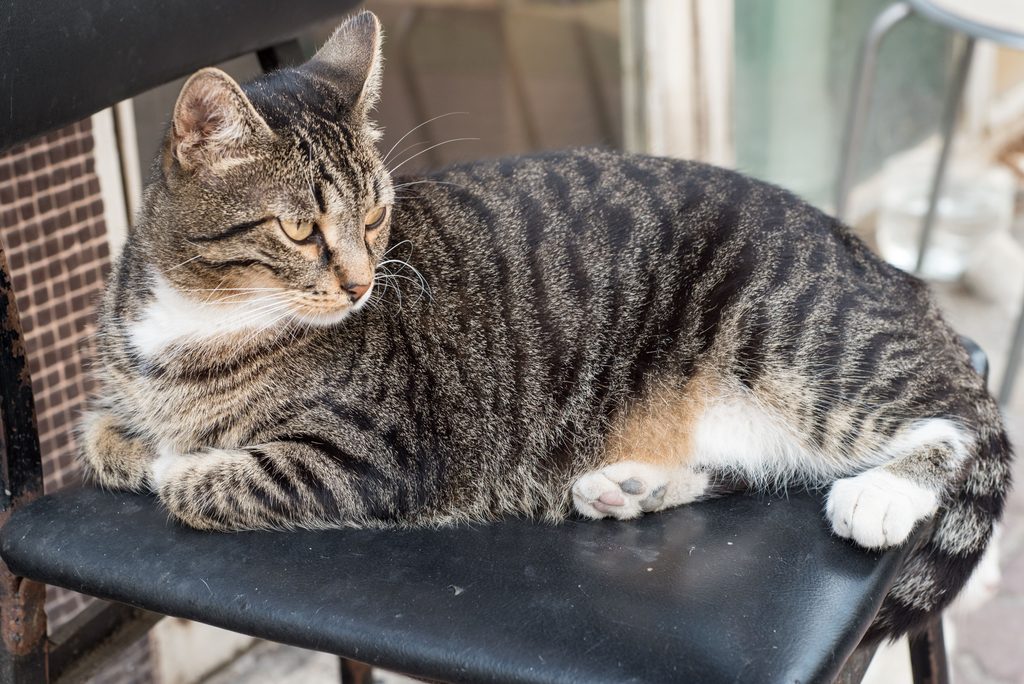
A quick fact worth knowing: according to genetic research published by the University of California, Davis, the tabby pattern is controlled by the Agouti gene, and it appears in nearly every cat breed recognized today.
This guide breaks down 15 distinct tabby types, covering both pattern variations and color variations, so you can identify exactly what kind of tabby you’re looking at.
1. Classic Tabby (Blotched Tabby)
The classic tabby is probably what most people picture when they hear the word “tabby.” It features bold, swirling patterns on the sides that resemble a marble cake or a bullseye target.
This pattern is caused by a recessive gene, meaning both parent cats need to carry it for kittens to display it. It’s one of the most common patterns found in shorthair breeds across North America and Europe.
I find this pattern oddly soothing to look at. The swirls seem to flow naturally across the body, almost like the fur was brushed into place by design rather than genetics.
2. Mackerel Tabby
Mackerel tabbies have narrow, parallel stripes running vertically down their sides, resembling the bones of a fish, which is exactly where the name comes from. This is actually the original, dominant tabby pattern in cats.
Genetically speaking, mackerel is the default tabby type. Any deviation, like the classic swirl pattern, requires a genetic mutation to override it. This makes mackerel tabbies genetically closer to wildcat ancestors.
There’s something wild and almost feral about this pattern. It reminds me of a small tiger pacing through the living room, especially when the stripes are dark and well-defined against a lighter background.
3. Spotted Tabby
Spotted tabbies display distinct spots instead of stripes, scattered across the body in irregular patterns. This variation is essentially a broken-up version of either the mackerel or classic tabby pattern.
Breeds like the Egyptian Mau and Bengal are famous for this pattern. Researchers believe the spotting occurs due to modifier genes that interrupt the continuous striping seen in other tabby types.
Watching a spotted tabby move, the pattern almost seems to shimmer. Each spot catches the light slightly differently, giving the coat a dynamic, textured appearance that plain stripes don’t quite achieve.
4. Ticked Tabby
Ticked tabbies don’t show obvious stripes or spots at all. Instead, each individual hair carries multiple bands of color, creating a subtle, speckled effect across the entire coat.
The Abyssinian is the best-known example of this pattern. This type is sometimes called “agouti” tabby, and faint markings usually remain visible only on the face, legs, and tail tip.
I always find ticked tabbies a bit sneaky in appearance. From a distance, they look like a solid color, but up close, that layered banding becomes obvious and surprisingly intricate.
5. Patched Tabby (Torbie)
A patched tabby, often called a torbie, combines tabby striping with patches of tortoiseshell coloring. This creates a coat that’s part organized stripe and part random color patch.
This pattern occurs almost exclusively in female cats, since it’s linked to the X chromosome, similar to standard tortoiseshell coloring. Male torbies do exist but are genetically rare.
There’s a chaotic beauty to this pattern that I really appreciate. It looks like two different coat designs collided, yet somehow the result still feels balanced and intentional.
6. Brown Tabby
Brown tabby refers to the color base rather than the stripe pattern itself, and it’s one of the most frequently seen combinations. The stripes here are usually black or dark brown against a warm, tan background.
This is considered the “wild-type” coloring, closely resembling the natural camouflage seen in wildcat ancestors. It’s common across nearly every tabby pattern, from mackerel to classic.
Brown tabbies have always struck me as the most “natural” looking cats. There’s an earthy, outdoorsy quality to their coloring that fits perfectly whether they’re lounging indoors or exploring a garden.
7. Grey Tabby (Silver Tabby)
Grey tabbies, also known as silver tabbies, have a cool-toned base coat with darker grey or black stripes layered on top. The contrast tends to be sharp and striking compared to warmer-toned tabbies.
Silver coloring results from a specific inhibitor gene that suppresses the warm pigment in each hair shaft, leaving behind a silvery-white base. This gene can pair with any tabby pattern type.
I think silver tabbies photograph beautifully, especially in natural light. The contrast between the pale base and dark stripes gives them an almost polished, professional appearance.
8. Orange Tabby (Red Tabby)
Orange tabbies, sometimes called red tabbies or ginger cats, are famous for their bright, warm coloring. Statistically, they’re also known for a strong tendency toward extroverted, friendly personalities, according to informal behavioral surveys from veterinary sources.
Around 80% of orange tabbies are male, a fact tied directly to how orange coloring is inherited on the X chromosome. Female orange tabbies do exist, but they’re noticeably rarer.
There’s a warmth to orange tabbies that goes beyond just their coloring. Maybe it’s a coincidence, but every ginger cat I’ve met has had a bold, almost dog-like personality.
9. Cream Tabby
Cream tabbies are essentially a diluted version of the orange tabby, carrying a softer, pastel-toned coat instead of bright ginger. The stripes remain visible but appear muted rather than bold.
This dilution happens due to a recessive gene that lightens pigment production in the fur. It’s the same gene responsible for turning black cats into blue-grey cats.
I find cream tabbies particularly photogenic in soft lighting. Their pale coloring gives them a gentle, almost pastel-drawing appearance that feels different from the sharper contrast of other tabby types.
10. Blue Tabby
Blue tabbies have a soft, blue-grey base coat with slightly darker blue-grey stripes layered on top. It’s a subtle, low-contrast look that’s become increasingly popular among cat enthusiasts in recent years.
“Blue” in cat genetics is simply a diluted black. The same dilution gene responsible for blue solid-colored cats also affects tabby patterns, softening the usual black stripe into a smoky grey tone.
There’s an elegant, almost moody quality to blue tabbies. The lack of harsh contrast gives them a calm, sophisticated look that feels quite different from bold brown or orange tabbies.
11. Chocolate Tabby
Chocolate tabbies are rarer, showing warm brown stripes against a lighter tan or cream background. This coloring is more commonly associated with specific breeds rather than random-bred cats.
Breeds like the Havana Brown and certain Oriental lines carry this gene. Chocolate coloring is recessive, meaning it requires careful breeding to appear consistently within a bloodline.
I’ve only seen a chocolate tabby in person once, and the warmth of the coloring genuinely surprised me. It looked richer and deeper than a standard brown tabby, almost like the fur had been dipped in coffee.
12. Cinnamon Tabby
Cinnamon tabbies carry an even lighter, reddish-brown coloring compared to chocolate tabbies. The stripes appear soft and warm, often described as a light rust or terracotta shade.
This coloring is extremely rare and mostly linked to specific pedigree breeds, particularly certain Oriental Shorthair and Abyssinian lines, where breeders have worked to preserve and refine the trait.
The warmth of a cinnamon tabby’s coat reminds me of autumn leaves. It’s a color that feels seasonal, almost like the cat was designed to blend perfectly into a pile of fallen foliage.
13. Tabby Point (Colorpoint Tabby)
Tabby point cats combine the classic Siamese “point” coloring with tabby striping on the face, ears, legs, and tail. The body usually stays pale, while the points show clear tabby markings.
This variation is sometimes called a “lynx point” due to the resemblance to wild lynx markings around the face. It commonly appears in Siamese and Balinese breed lines.
I think this combination creates one of the most striking faces in the cat world. The tabby stripes around the eyes give these cats an intense, focused expression that’s hard to look away from.
14. Silver Mackerel Tabby
This type combines the silver base coloring with the narrow, vertical mackerel stripe pattern, creating a sharp, high-contrast look. It’s often mistaken for a wild cat at first glance.
This combination is particularly common in the American Shorthair breed, where breeders have specifically worked to highlight the sharp contrast between the silver base and black striping.
There’s a crispness to this pattern that other tabby types don’t quite match. The stripes look almost hand-drawn, thin and precise, running cleanly down the entire length of the body.
15. Tabby and White (Caliby or Mackerel and White)
This type isn’t a separate pattern on its own, but rather any tabby pattern combined with patches of white fur, usually on the belly, chest, paws, or face. It’s an incredibly common combination.
White spotting is controlled by a completely separate gene from the tabby pattern itself, which is why it can appear alongside classic, mackerel, spotted, or ticked tabbies equally.
I’ve always liked how unpredictable this combination looks. No two tabby-and-white cats end up with quite the same white markings, which makes each one feel a little more individual.
ALSO READ: 15 Cat Breeds With Big Ears and Long Face (Details, With Pictures)
Why Tabby Patterns Vary So Much
The sheer diversity among tabby cats comes down to genetics stacking on top of each other. The base tabby pattern, the color, and any dilution or white spotting genes all combine independently, creating thousands of possible outcomes.
Veterinary geneticists note that this is part of why tabby cats remain the most common coat type globally. The pattern offers natural camouflage advantages, which likely helped it persist through generations of wild and semi-wild cat populations.
If you’re trying to identify your own cat’s tabby type, it helps to look at both the stripe shape and the base color separately. Combining those two observations usually narrows it down quickly.
Final Thoughts
Tabby cats prove that a single genetic trait can produce incredible variety. From the bold swirls of a classic tabby to the subtle speckling of a ticked coat, each type tells its own small genetic story.
I hope this guide helps you recognize and appreciate the tabby cats around you a little more. Whether you own one or simply admire them from afar, there’s clearly more going on beneath that fur than meets the eye.
References
- University of California, Davis, Veterinary Genetics Laboratory — https://vgl.ucdavis.edu/test/tabby
- Cornell University College of Veterinary Medicine, Cornell Feline Health Center — https://www.vet.cornell.edu/departments-centers-and-institutes/cornell-feline-health-center
- National Institutes of Health, National Human Genome Research Institute — https://www.genome.gov
- Washington State University, College of Veterinary Medicine — https://vetmed.wsu.edu
- The Ohio State University, Indoor Pet Initiative — https://indoorpet.osu.edu
- Texas A&M University, School of Veterinary Medicine, Pet Talk — https://vetmed.tamu.edu/pet-talk/
- USDA National Agricultural Library, Animal Welfare Information Center — https://www.nal.usda.gov/animal-health-and-welfare