15 Domestic Cat Breeds With Long Tails (With Details, and Pictures)
A cat’s tail says a lot about who they are. It balances them on narrow ledges, signals their mood, and honestly, it just looks beautiful when it flows behind them like a plume. Some breeds carry this feature to an extreme, growing tails that rival the length of their entire body.
I’ve always found long-tailed cats fascinating. There’s something almost regal about watching one stretch out, tail curling lazily behind. If you’re considering adopting a cat with this trait, or you’re simply curious, this guide walks through 15 breeds known for their impressively long tails.
A quick fact worth noting: according to Cornell University’s Feline Health Center, a cat’s tail contains nearly 10% of all the bones in its body, which explains why length and mobility vary so dramatically between breeds.
Let’s get into the list.
1. Maine Coon
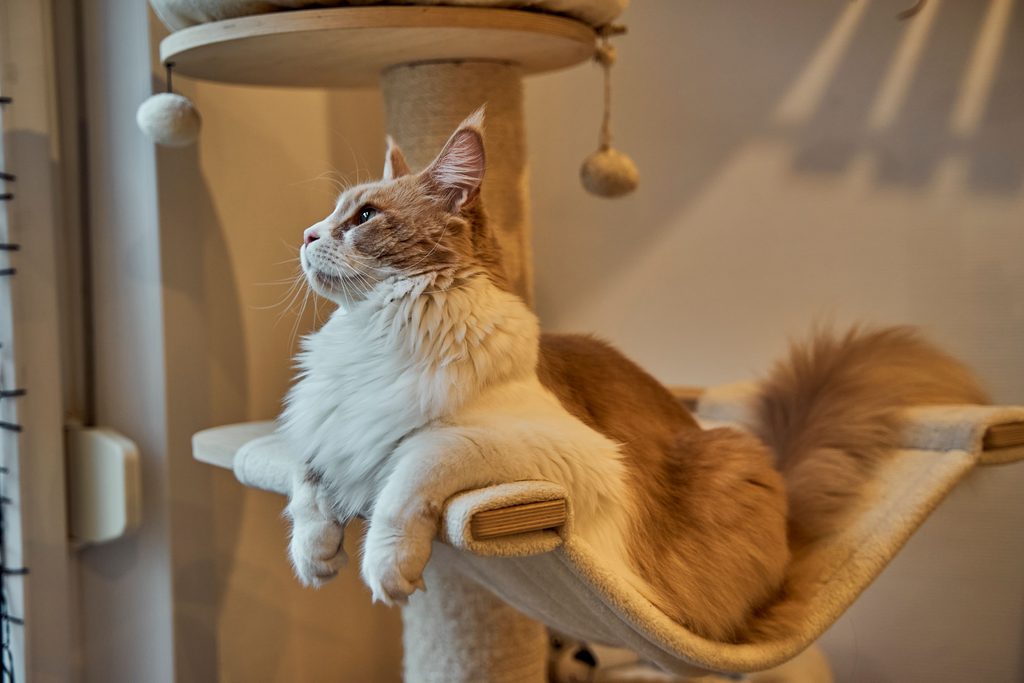
The Maine Coon is often the first breed people think of when long tails come up. Their tails can measure over 14 inches, sometimes reaching lengths close to their own body size. This isn’t just for show either.
These tails serve a real purpose. Maine Coons originated in the cold climate of New England, and their bushy, long tails act as a built-in scarf. They wrap it around themselves while sleeping to stay warm during harsh winters.
I’ve met a few Maine Coons in person, and their tails move with such grace it’s almost hypnotic. Owners often describe them as gentle giants, and that tail is part of what makes them feel so majestic up close.
2. Norwegian Forest Cat
Norwegian Forest Cats share a similar backstory to the Maine Coon. Bred to survive Scandinavian winters, their tails are thick, long, and covered in dense fur that sheds water and insulates against cold.
Their tail length typically falls between 12 and 14 inches. Combined with their sturdy build and water-resistant double coat, this breed looks like it walked straight out of a Norse legend, which honestly isn’t far from the truth.
What strikes me most about this breed is how the tail seems to have its own personality. It puffs up dramatically when they’re excited or startled, almost doubling in visual size within seconds.
3. Siberian Cat
Siberians hail from Russia, another region where a long, insulated tail was practically a survival requirement. Their tails are full-bodied, tapering gently, and often as long as their torso.
This breed is also known for producing less of the Fel d 1 protein, which triggers most cat allergies. That’s a detail backed by several veterinary allergy studies, making Siberians a popular pick among allergy-sensitive households.
Watching a Siberian move, the tail seems to lead the way. It’s expressive and constantly in motion, curling upward when they’re playful and dropping low when they’re focused on something across the room.
4. Turkish Angora
Turkish Angoras carry one of the most elegant tails in the cat world. Slender, silky, and long, it resembles a feather duster trailing gracefully behind a lean, athletic body.
This is one of the oldest natural cat breeds, with roots tracing back centuries in central Turkey. Their tails were historically prized in Ottoman-era artwork and writings, a small but telling sign of how long this trait has been admired.
I find their tail movement almost dance-like. It flicks and sways with an energy that matches their generally lively, attention-seeking personality. If you want a cat that performs, this breed rarely disappoints.
5. Turkish Van
Not to be confused with the Angora, the Turkish Van has its own long, bushy tail, often referred to as a “brush tail” among breed enthusiasts. It’s thick at the base and tapers toward a soft tip.
This breed is unusually fond of water, a trait rare among cats. Their tail even helps with balance while they play near or swim in shallow water, something researchers studying feline behavior have documented in breed profiles.
There’s something endearing about a cat that breaks the mold. Watching a Turkish Van dip a paw into water, tail swishing with curiosity, reminds me that not every feline stereotype holds true.
6. Abyssinian
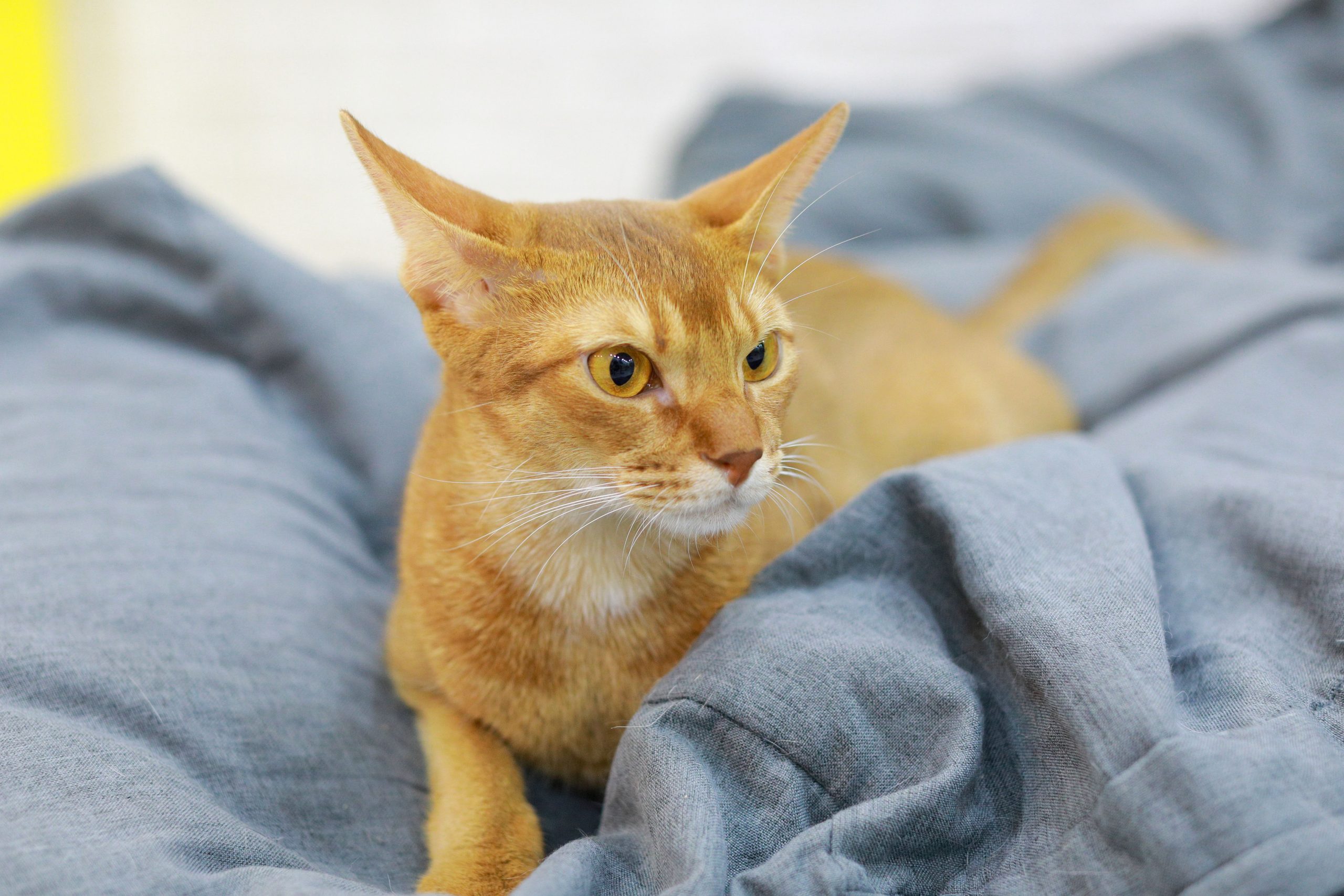
Abyssinians have a tail that matches their sleek, athletic frame: long, tapering, and always in motion. It complements their reputation as one of the most active and curious breeds around.
Their tail length is proportionate to their body, often extending 10 to 12 inches. This balance helps them navigate the high perches and quick movements they’re famous for, since Abyssinians rarely sit still for long.
I like to think of their tail as a barometer for their mood. A slow, gentle curl usually means they’re content, while quick flicks signal they’ve spotted something worth chasing.
7. Somali Cat
The Somali is essentially a long-haired cousin of the Abyssinian, and their tail reflects that heritage beautifully. It’s full, fox-like, and often the most eye-catching part of their appearance.
Breed standards describe the Somali’s tail as “brush-like,” with fur that flares out dramatically compared to the sleeker Abyssinian tail. This gives them a striking, almost wild appearance despite being fully domesticated.
Somalis carry themselves with confidence, and that tail practically announces their presence in a room. It’s one of those features that makes people stop and ask what breed they’re looking at.
ALSO READ: 15 Types of Tabby Cats (With Details, and Pictures)
8. Oriental Shorthair
Oriental Shorthairs have long, whip-like tails that taper to a fine point. Despite the short coat, the tail’s length is often just as striking as their large ears and slender body.
This breed shares ancestry with the Siamese, which explains the similar tail shape and body type. Both breeds were developed from the same foundational bloodlines in Southeast Asia centuries ago.
Their tail seems to move constantly, almost like it’s an extension of their curiosity. I’ve noticed these cats use their tails expressively, wrapping them around objects or people as a sign of affection.
9. Siamese
The Siamese is one of the most recognizable cat breeds globally, and its long, slender tail is part of that signature look. Historically, some Siamese cats had a natural kink near the tip, though modern breeding has largely selected against this trait.
Siamese cats originated in Thailand, where they were once kept exclusively by royalty. Old folklore claimed the kinked tail helped guard royal rings, though this is more legend than documented fact.
There’s a vocal, expressive quality to Siamese cats that extends right down to their tail. It swishes dramatically when they’re annoyed, something any Siamese owner will recognize instantly.
10. Balinese
Balinese cats are often called “long-haired Siamese,” and their tail is the clearest giveaway of that connection. It’s long, plumed, and flows elegantly with every movement.
This breed emerged from a natural genetic mutation in Siamese litters during the mid-20th century, later developed into its own recognized breed by dedicated cat fanciers in the United States.
Watching a Balinese walk is like watching silk ripple. The tail trails behind smoothly, and I imagine it must feel wonderful to run a hand along that soft, flowing fur.
11. Javanese
Javanese cats are closely related to Balinese cats, sharing the same long, silky tail. The main difference lies in coat color variety, but the tail’s elegant length and softness remain consistent.
This breed was developed in North America during the 1970s, combining Balinese cats with Colorpoint Shorthairs to expand the range of coat patterns available while preserving that signature tail shape.
I’ve always thought their tail looks like it belongs in slow motion. Every flick seems deliberate, almost theatrical, which fits a breed known for being sociable and quite vocal.
12. Egyptian Mau
The Egyptian Mau carries a tail that’s long, thick at the base, and ringed with distinct dark bands. It’s one of the more visually striking tails on this list, matching their naturally spotted coat.
This breed is considered one of the fastest domestic cats, with some sources citing speeds up to 30 miles per hour. Their tail plays a key role in balance during these bursts of speed.
There’s an athletic grace to how a Mau moves, tail extended straight behind for stability. It’s a small reminder that this feature isn’t purely decorative; it’s functional, built for agility.
13. Bengal Cat
Bengal cats have long, muscular tails that reflect their wild ancestry. Descended partly from the Asian leopard cat, their tail often carries the same spotted or marbled pattern seen across their coat.
This hybrid breed was developed starting in the 1960s, blending domestic cats with wild leopard cats to create a breed with a wild appearance but a domesticated temperament, according to breed history documented by feline genetics researchers.
Bengals move with a kind of restless energy, and their tail seems to be constantly working, whether it’s balancing a jump or expressing excitement. It’s easy to see the wild lineage in every motion.
14. Chausie
The Chausie is another breed with wild ancestry, this time linked to the jungle cat. Their tail is notably long, thick, and often carries a naturally ringed tip, giving them a striking, semi-wild appearance.
Chausies are large cats, often weighing between 15 and 25 pounds, and their tail proportions match this size, adding to their commanding presence compared to average domestic breeds.
I find something quietly impressive about this breed. The tail moves with confidence, rarely twitching nervously, which mirrors the calm, self-assured temperament many Chausie owners describe.
15. Ragdoll
Ragdolls round out this list with a long, full tail covered in soft, semi-long fur. It complements their large, plush body and famously relaxed temperament.
This breed is known for going limp when picked up, a trait that gives them their name. Their tail, despite its length, tends to hang loosely rather than flick with tension, matching their generally docile nature.
There’s something comforting about a Ragdoll’s tail draped over your lap. It rarely moves quickly, which somehow fits perfectly with a breed that seems permanently relaxed.
ALSO READ: 15 Cat Breeds With Big Ears and Long Face (Details, With Pictures)
Why Tail Length Matters in Cats
Tail length isn’t just an aesthetic detail. Cats use their tails for balance, communication, and temperature regulation. A longer tail generally provides better stability when jumping or walking along narrow surfaces.
Veterinary researchers have also noted that tail posture is one of the clearest indicators of feline mood. A raised tail typically signals confidence, while a tucked tail often points to fear or discomfort.
If you’re choosing a breed based on tail length alone, it helps to also consider grooming needs. Long, bushy tails like those on Maine Coons or Somalis require more regular brushing to prevent matting.
Final Thoughts
Long-tailed cat breeds bring a certain elegance that’s hard to ignore. Whether it’s the Maine Coon’s snow-ready plume or the Siamese’s sleek, expressive whip, each breed’s tail tells a story about its origins and lifestyle.
I hope this list helps if you’re picking a new companion or simply appreciating the diversity within the cat world. Every one of these breeds carries a tail that’s as functional as it is beautiful.
References
- Cornell University College of Veterinary Medicine, Cornell Feline Health Center — https://www.vet.cornell.edu/departments-centers-and-institutes/cornell-feline-health-center
- UC Davis School of Veterinary Medicine, Center for Companion Animal Health — https://www.vetmed.ucdavis.edu/ccah
- Centers for Disease Control and Prevention, Healthy Pets, Healthy People — https://www.cdc.gov/healthy-pets/about/index.html
- United States Department of Agriculture, Animal Welfare Information — https://www.aphis.usda.gov/animal-welfare
- The Ohio State University, Indoor Pet Initiative — https://indoorpet.osu.edu
- Washington State University, College of Veterinary Medicine — https://vetmed.wsu.edu
- Texas A&M University, School of Veterinary Medicine, Pet Talk — https://vetmed.tamu.edu/pet-talk/