Angelfish Clamped Fins Treatment: Causes, Diagnosis, and Recovery
Angelfish long, flowing fins are part of what makes them so beautiful to watch. So when those fins press close to the body and lose their natural spread, it is hard not to feel concerned.
Clamped fins are one of the most common distress signals angelfish display, and understanding how to treat the condition quickly can mean the difference between a full recovery and a serious decline.
With this condition, a fish holds its fins tightly folded against its body rather than spreading them out normally. In a healthy angelfish, the dorsal, pectoral, anal, and caudal fins are extended and relaxed.
When a fish clamps its fins, it is a behavioral and physical sign that something in its environment or body is wrong.
Clamped fins are not a disease on their own. They are a symptom — a distress signal — that tells you to investigate further. The cause could be environmental stress, a bacterial infection, parasites, or poor water quality.
Treating clamped fins successfully means finding and addressing that underlying cause.
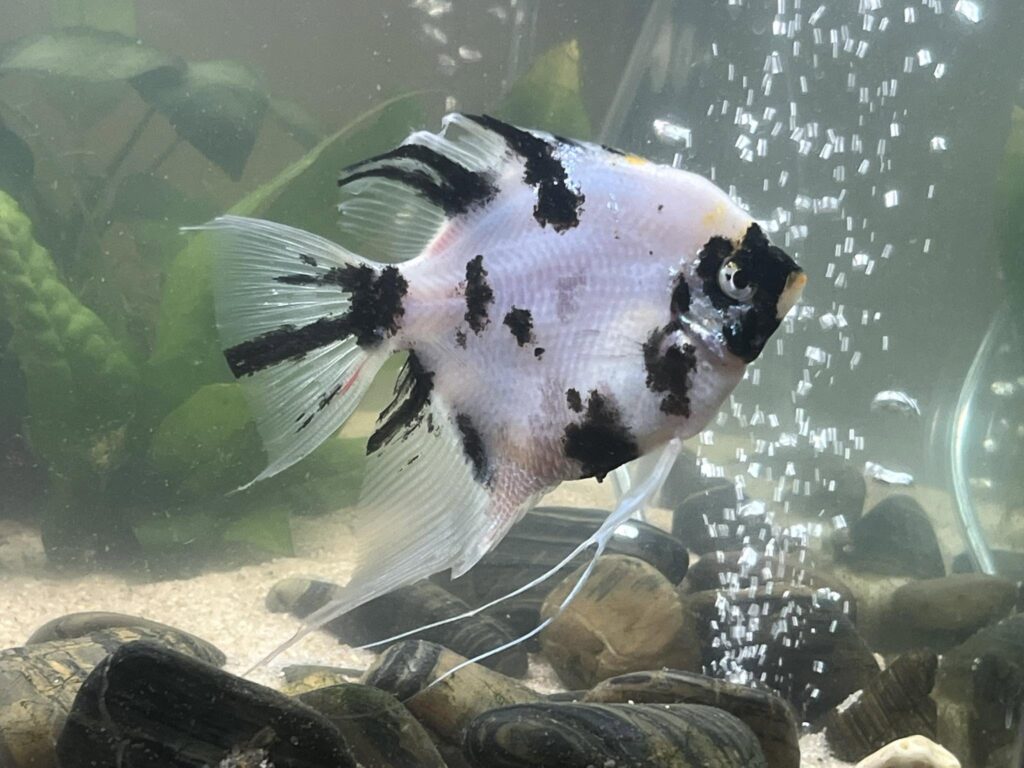
Common Causes of Clamped Fins in Angelfish
Main reasons for clamped fins in your pet fish include the following:
1. Poor Water Quality
This is the most frequent cause. Angelfish are sensitive fish. High levels of ammonia, nitrite, or nitrate irritate their skin and gills, prompting them to clamp their fins as a stress response.
- Ammonia should be at 0 ppm
- Nitrite should be at 0 ppm
- Nitrate should stay below 20–40 ppm
- pH should remain between 6.5 and 7.5
- Temperature should stay between 76°F and 82°F (24°C–28°C)
Even a small spike in ammonia can trigger clamped fins within hours.
2. Parasitic Infections
Two parasites are especially associated with clamped fins in angelfish:
- Ich (White Spot Disease) — Ichthyophthirius multifiliis is a protozoan parasite that attaches to the skin and fins. Look for small white dots resembling grains of salt alongside clamped fins.
- Velvet Disease — Oodinium is a harder-to-see parasite that causes a gold or rust-colored dust on the body. Fish with velvet often clamp their fins and flash (rub) against surfaces.
- Gill Flukes — Dactylogyrus species attach to the gills and cause labored breathing, flashing, and clamped fins.
3. Bacterial Infections
Bacterial infections, including Aeromonas and Pseudomonas species, can cause fin rot alongside clamped fins. The fin edges may appear ragged, red, or discolored. In advanced cases, the fins begin to erode.
4. Fungal Infections
Fungal growth, often secondary to injury or poor water conditions, appears as white or gray cottony patches on the fins or body. Affected angelfish typically clamp their fins and show reduced activity.
5. Stress and Environmental Issues
Stress from overcrowding, aggressive tank mates, sudden temperature changes, or incorrect lighting cycles can cause clamped fins without any infectious cause. Angelfish are somewhat territorial and do not thrive in chaotic environments.
6. Internal Issues and Systemic Disease
Occasionally, clamped fins result from internal organ problems or systemic illness. These cases are harder to diagnose visually and may require more aggressive treatment.
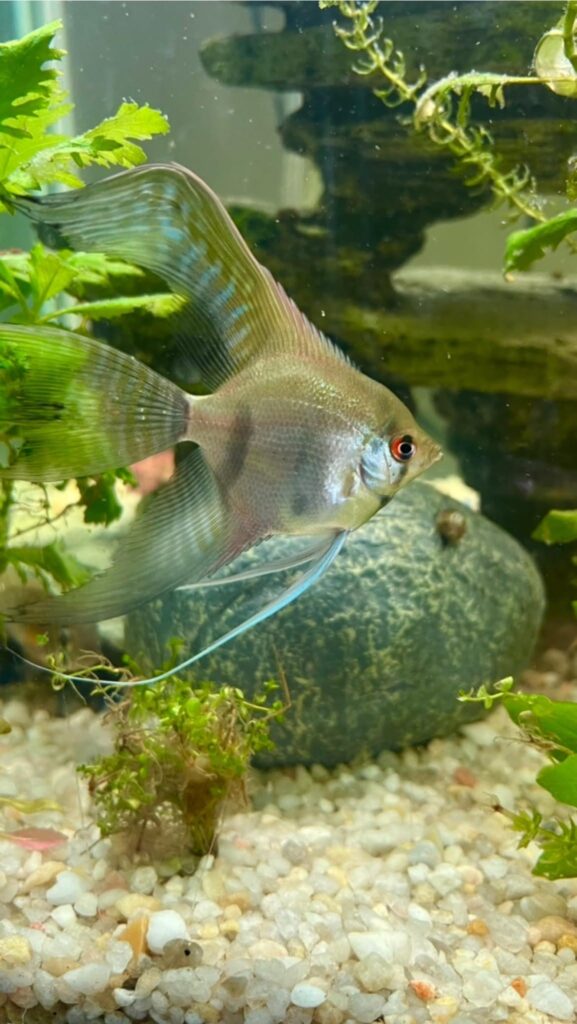
How to Diagnose the Cause
Before treating, observe your fish carefully. Ask yourself:
- Are there white spots on the body? → Ich is likely.
- Is there a gold dust appearance? → Consider velvet.
- Are the fin edges ragged or red? → Look for fin rot or bacterial infection.
- Is there white fuzz on the fins or body? → Fungal infection possible.
- Is the fish gasping at the surface or breathing rapidly? → Check for gill parasites or low oxygen.
- Is only one fish affected, while others are fine? → Stress or injury may be the cause.
- Are multiple fish clamping fins suddenly? → Water quality problem is most likely.
Always test your water first. This single step will rule out or confirm the most common cause and should never be skipped.
Step-by-Step Angelfish Clamped Fins Treatment
Here is what you should do to save your fish:
Step 1: Test and Correct Water Parameters
Purchase a reliable liquid test kit (API Freshwater Master Test Kit is widely recommended) and check ammonia, nitrite, nitrate, and pH.
If parameters are off:
- Perform a 25–30% water change immediately using dechlorinated water at the same temperature as the tank.
- Do not change more than 50% at once, as large water changes can shock the fish.
- Add a water conditioner that neutralizes chlorine and chloramine (e.g., Seachem Prime).
- Check your filter. A failing or clogged filter is often behind ammonia or nitrite spikes.
- Continue daily or every-other-day water changes until parameters stabilize.
Good water quality alone resolves clamped fins in many cases, especially when the cause is stress or mild irritation.
Step 2: Quarantine the Affected Fish
If only one or a few fish show symptoms, move them to a quarantine tank. A 10–20 gallon hospital tank with a sponge filter, heater, and bare bottom works well. This protects healthy fish and allows you to treat the sick ones without medicating the entire display tank.
Step 3: Treat for Parasites If Suspected
For Ich:
- Raise the water temperature gradually (by 1–2°F per hour) to 82–86°F (28–30°C). Higher temperatures speed up the parasite’s life cycle, making it vulnerable to treatment sooner.
- Add aquarium salt at 1 tablespoon per 5 gallons as a supportive measure.
- Use a medication containing malachite green or formalin (e.g., Ich-X, Kordon Rid-Ich+). Follow package instructions carefully.
- Treat for at least 7–10 days even if white spots disappear earlier, as parasites in earlier life stages are invisible.
For Velvet:
- Dim or turn off aquarium lights, as Oodinium is partially photosynthetic.
- Use copper-based medications (e.g., Seachem Cupramine) with care — monitor copper levels, as excess copper is toxic.
- Formalin-based treatments are also effective.
For Gill Flukes:
- Use praziquantel-based medications (e.g., PraziPro) for 5–7 days.
- This medication is generally safe for angelfish and effective against gill and skin flukes.
Step 4: Treat for Bacterial or Fungal Infections
For Fin Rot (Bacterial):
- Keep water exceptionally clean, as bacteria thrive in poor conditions.
- Use an antibiotic such as kanamycin, erythromycin, or a broad-spectrum medication like API Fin & Body Cure or Seachem NeoPlex.
- Treat the quarantine tank for the full recommended course — usually 5–10 days.
- Never stop early, even if improvement is visible, to prevent resistance.
For Fungal Infections:
- Use antifungal medications such as methylene blue, Pimafix (for mild cases), or API Fungus Cure containing acriflavine.
- Methylene blue is also gentle enough to be used as a dip for stressed fish.
Step 5: Add Aquarium Salt as Supportive Care
Aquarium salt (sodium chloride — not table salt or iodized salt) reduces osmotic stress on sick fish, promotes slime coat recovery, and provides mild antibacterial support. For angelfish in treatment, use 1 tablespoon per 5 gallons unless you are also using copper-based medication, in which case follow professional guidance on combining treatments.
Do not use salt in planted tanks or with scaleless fish.
Step 6: Improve Nutrition
A sick fish needs energy to fight infection and repair tissue. Offer high-quality foods such as:
- Frozen bloodworms or brine shrimp — these stimulate appetite even in lethargic fish.
- High-protein pellets or flakes formulated for cichlids or tropical fish.
- Feed small amounts twice daily. Remove uneaten food within a few minutes to avoid fouling the water in the quarantine tank.
Step 7: Reduce Stress
While treatment is ongoing, keep the environment calm:
- Maintain a consistent temperature and lighting schedule.
- Minimize sudden movements near the tank.
- Ensure the quarantine tank has gentle filtration and adequate hiding spots (a PVC pipe or a simple cave works well).
- Avoid adding new fish to the main tank during recovery.
How Long Does Recovery Take?
With prompt and correct treatment, angelfish with clamped fins typically show improvement within 48–72 hours when the cause is environmental stress or mild infection. Parasitic and bacterial infections may take 7–14 days of full treatment before fins begin to open up and the fish returns to normal behavior.
Fin tissue that has been damaged by rot may regrow over several weeks, provided water quality remains high and infection is fully cleared. Fins rarely regrow to their original length if the damage was severe, but partial and even full regrowth is possible in young or mildly affected fish.
Prevention: Keeping Fins Open and Healthy
The best treatment is prevention. A few consistent habits make a meaningful difference:
- Test water weekly and perform regular partial water changes (25–30% every 7–10 days).
- Quarantine new fish for at least 3–4 weeks before introducing them to an established tank.
- Avoid overcrowding — angelfish need adequate space, especially as they grow. A single adult pair does well in a 29–55 gallon tank.
- Feed quality food and avoid overfeeding.
- Observe your fish daily. Early detection of clamped fins or any abnormal behavior makes treatment far easier.
- Keep equipment clean — sponge filters, sponges, and substrate should be maintained regularly.
When to Seek Professional Help
Most cases of clamped fins in angelfish can be managed at home with careful observation and the right medication. However, if your fish shows no improvement after 7–10 days of proper treatment, develops new symptoms (such as dropsy, pop-eye, or severe hemorrhaging), or continues to decline despite clean water and medication, consult a veterinarian with experience in aquatic animals. Aquatic vets can perform diagnostic tests such as skin scrapes and cultures to identify resistant or unusual infections.
Suggested For You:
Angelfish Not Eating for Days: Reasons, Solutions, and When to Worry
Why Is My Angelfish Hiding All the Time? (Reasons and What to Do)
Why is My Angelfish Swimming Sideways? (Causes and Treatment)
Angelfish with Red Eyes: Causes, Diagnosis, and What You Should Do
Angelfish Tank Size: Minimum Gallons and Everything You Need to Know
Final Thoughts
Noticing clamped fins on your angelfish can be unsettling, particularly if you have spent time building a healthy tank. But the condition is manageable in most cases. The key is to act quickly, test your water first, identify the cause accurately, and provide targeted treatment.
Angelfish are resilient when given the right environment and care, and watching a fish recover — fins fanning out wide once again — is one of the more rewarding experiences in the hobby.
Stay observant, stay patient, and your fish stand a strong chance of making a full recovery.
References
- University of Florida IFAS Extension — Common Diseases of Ornamental Fish Florida Fish and Wildlife Conservation. (n.d.). Common Diseases of Ornamental Fish. https://edis.ifas.ufl.edu/publication/FA005
- Purdue University Extension — Recognizing and Treating Common Fish Diseases Purdue University. (n.d.). Recognizing and Treating Sick Fish. https://www.extension.purdue.edu/extmedia/AS/AS-658-W.pdf
- Virginia Tech — Freshwater Fish Health Management Virginia Cooperative Extension. Fish Health Management Considerations in Recirculating Aquaculture Systems. https://www.pubs.ext.vt.edu/content/dam/pubs_ext_vt_edu/FST/FST-26/FST-26-PDF.pdf
- University of Georgia Extension — Aquarium Fish: Preventing and Treating Diseases University of Georgia Extension. (2020). Aquarium Fish: Preventing and Treating Disease. https://extension.uga.edu/publications/detail.html?number=B1345
- Southern Regional Aquaculture Center (SRAC) — Use of Chemicals in Aquaculture Southern Regional Aquaculture Center. (2001). Use of Chemicals in Aquaculture in the United States. https://www.srac.tamu.edu/wp-content/uploads/2019/06/SRAC0410.pdf