Angelfish with Red Eyes: Causes, Diagnosis, and What You Should Do
Angelfish are among the most cherished freshwater fish in the aquarium hobby. Their flowing fins, striking patterns, and calm temperament make them a favourite for both beginners and seasoned aquarists.
But when those normally clear or dark eyes turn red, or develop a reddish tinge, it signals that something is wrong. Red eyes in angelfish are not a cosmetic issue. They are a warning sign that deserves prompt attention.
This guide explains the main causes of red eyes in angelfish, how each condition develops, what symptoms accompany it, and the steps you can take to help your fish recover.
What Does It Mean When an Angelfish Has Red Eyes?
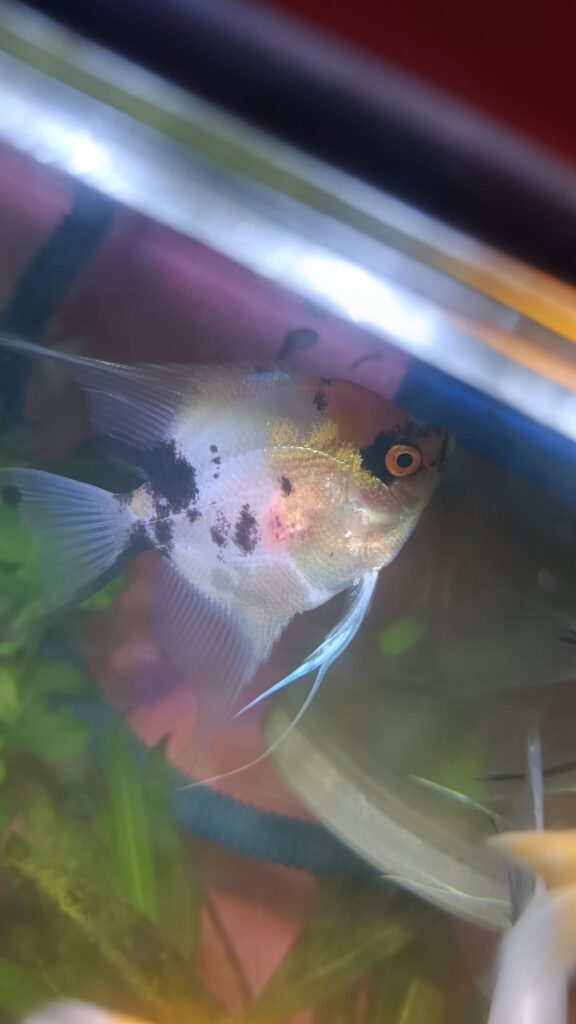
Red or reddish eyes in angelfish typically indicate inflammation, infection, or injury affecting the eye tissue. In healthy angelfish, the eyes appear dark, clear, and proportional to the head.
Any unusual colour, swelling, cloudiness, or protrusion in the eye area is a sign that the fish is under stress or experiencing a health problem.
The redness you see is usually caused by blood vessel inflammation, haemorrhaging (bleeding) within or around the eye, or bacterial and parasitic invasion of the ocular tissue. Identifying the root cause early improves the fish’s chance of recovery significantly.
Common Causes of Red Eyes in Angelfish
The main reasons for red eyes in your pet fish include the following:
1. Bacterial Infection (Most Common Cause)
Bacterial infections are the leading cause of red eyes in freshwater angelfish. The condition is often linked to opportunistic bacteria such as Aeromonas, Pseudomonas, and Flavobacterium, which thrive in poor water conditions.
When water quality deteriorates — through a spike in ammonia, high nitrite levels, or infrequent water changes — the fish’s immune system weakens. Bacteria that are normally present in the tank at low levels begin to multiply and infect vulnerable tissue, including the eyes.
Red eyes from bacterial infection are often accompanied by other visible signs: lethargy, loss of appetite, frayed fins, or redness along the body and near the gills. In advanced cases, the condition may progress to a more serious disorder known as popeye (exophthalmia), where the eye visibly bulges outward due to fluid accumulation behind it.
What to do
Improve water quality immediately. Perform a 25–30% water change, check ammonia and nitrite levels, and consider a course of broad-spectrum antibiotics such as kanamycin or tetracycline, following appropriate dosage guidelines.
2. Parasitic Infestation
Parasites, both internal and external, can cause significant eye irritation and redness in angelfish. One of the most well-documented parasites affecting the eyes of freshwater fish is Diplostomum (eye fluke), a trematode parasite that migrates into the lens of the eye and causes inflammation, cloudiness, and reddening of the surrounding tissue.
Other external parasites, including Ichthyophthirius multifiliis (white spot disease or Ich) and anchor worms, can irritate the area around the eye and cause localised redness and swelling, even if the primary infestation is elsewhere on the body.
Parasitic infections are more common in newly acquired fish, in tanks with live food sources, or in aquariums that have been exposed to wild-caught specimens without proper quarantine.
What to do
Quarantine the affected fish immediately. Use a dedicated antiparasitic medication appropriate for the suspected organism. Salt baths (1–3 teaspoons of aquarium salt per litre, used with caution) can help with some external parasites, but always confirm the cause before treatment.
3. Poor Water Quality and Ammonia Poisoning
This cause is deceptively simple but extremely common. Many aquarists overlook water chemistry until a fish shows symptoms. High ammonia or nitrite levels are chemically toxic to fish tissue. The eyes, being sensitive mucous-membrane organs, are often among the first to show visible signs of chemical stress.
Ammonia poisoning causes haemorrhaging in the gills, skin, and eyes. Redness appears as tiny burst capillaries or widespread inflammation. The fish may gasp at the surface, display erratic swimming, or become unusually still.
High nitrate levels, even when ammonia and nitrite are at zero, can cause chronic stress over time, weakening immune function and making the fish susceptible to secondary infections that further affect the eyes.
What to do
Test the water thoroughly using a reliable liquid test kit. Address ammonia spikes with immediate partial water changes and review your filtration capacity. Ensure the tank is not overstocked and that feeding amounts are appropriate.
4. Physical Injury or Trauma
Angelfish can sustain eye injuries from tank decorations with sharp edges, aggressive tankmates, or collisions during feeding frenzies. A minor scratch to the eye’s surface (the cornea) can become red and inflamed quickly.
Trauma-related redness is usually localised to one eye, while systemic infections or water quality issues tend to affect both eyes. If only one eye is red and swollen while the other appears normal, injury is a likely cause.
What to do
Remove any sharp or abrasive decorations from the tank. Separate the injured fish if aggression from tankmates is suspected. Keep the water exceptionally clean to prevent secondary bacterial infection from entering the wound.
5. Viral Infections
Though less common than bacterial causes, viral infections can also lead to eye redness in angelfish. Lymphocystis, caused by an iridovirus, primarily affects the skin and fins but can spread to surrounding facial tissue including the eye area. The disease causes white or greyish nodular growths, and inflammation near the eye may appear as redness.
Viral infections in fish generally have no direct cure. Management focuses on reducing stress, maintaining pristine water conditions, and allowing the fish’s immune system to manage the infection over time.
6. Nutritional Deficiency
A less frequently discussed cause of red or irritated eyes is nutritional deficiency, particularly a lack of vitamin A. Vitamin A plays a critical role in maintaining healthy eye tissue in fish. Chronic feeding with low-quality, nutrient-poor foods, or relying on a single food type, can lead to deficiency-related eye problems over time.
Fish deficient in essential nutrients may show pale, hazy, or reddened eyes alongside other symptoms such as poor growth, colour loss, and weakened immunity.
What to do
Diversify your angelfish’s diet. Offer a rotation of high-quality flake or pellet food, frozen bloodworms, brine shrimp, and blanched vegetables. Vitamin-enriched foods or supplements designed for tropical fish can also help restore nutritional balance.
7. Stress-Related Redness
Chronic or acute stress is an often-underestimated cause of red eyes. Stress in fish elevates cortisol levels, suppresses immune function, and increases susceptibility to infection. Common stressors include:
- Sudden temperature fluctuations
- Overcrowding in the tank
- Constant harassment from aggressive tankmates
- Loud vibrations near the aquarium
- Frequent, unnecessary handling or net use
When stress is the primary factor, the fish may not show clear signs of infection or injury — but the eyes may appear persistently red or irritated. Addressing the environmental stressors often resolves the issue without medication.
How to Diagnose the Cause
Accurate diagnosis is essential before beginning any treatment. Treating the wrong cause — for example, using antibiotics for a parasitic infection — can delay recovery and cause additional harm.
Follow this approach:
Step 1 — Test your water. Check ammonia, nitrite, nitrate, pH, and temperature. This rules out or confirms environmental causes immediately.
Step 2 — Observe the fish carefully. Is it one eye or both? Is there swelling or bulging? Are there other visible symptoms like white spots, fin damage, or behavioural changes?
Step 3 — Review recent tank changes. Did you add new fish, plants, or decorations? Did you change food recently? Any new element can introduce pathogens or stressors.
Step 4 — Consult a vet if in doubt. An aquatic veterinarian can perform a proper examination and, if needed, culture a sample to identify the specific pathogen involved. This is particularly worthwhile for expensive or prized specimens.
Prevention: Keeping Angelfish Eyes Healthy
Prevention is always more effective than treatment. The following practices reduce the risk of eye problems significantly:
- Maintain consistent water quality. Perform weekly partial water changes of 20–25%. Test water parameters regularly and keep ammonia and nitrite at zero.
- Quarantine new fish. Always quarantine new arrivals for at least two to four weeks before adding them to your main tank.
- Provide a balanced diet. Feed a varied, high-quality diet and avoid overfeeding, which contributes to water quality decline.
- Choose compatible tankmates. Angelfish are semi-aggressive but can be bullied by faster or more aggressive species. Research compatibility carefully.
- Avoid sharp decorations. Opt for smooth rocks, soft plants, and decorations without protruding edges that could scratch the eyes.
- Reduce stressors. Keep the tank in a quiet location, maintain a stable temperature (ideally 24–28°C / 75–82°F for angelfish), and avoid sudden light changes.
When to Seek Immediate Help
Seek urgent care — either from an aquatic vet or a knowledgeable fish store professional — if your angelfish shows any of the following alongside red eyes:
- Severe eye protrusion (classic popeye)
- Loss of an eye or visible eye tissue damage
- Rapid deterioration over 24–48 hours
- No response to initial treatment after several days
- Multiple fish in the tank showing symptoms simultaneously
The last point is particularly serious, as it suggests a tank-wide infection or water quality crisis rather than an isolated case.
Suggested For You:
Angelfish Not Eating for Days: Reasons, Solutions, and When to Worry
Angelfish Clamped Fins Treatment: Causes, Diagnosis, and Recovery
Why Is My Angelfish Hiding All the Time? (Reasons and What to Do)
Why is My Angelfish Swimming Sideways? (Causes and Treatment)
Angelfish Tank Size: Minimum Gallons and Everything You Need to Know
Angelfish Breeding Pair Signs: Identifying Mating Behavior
Final Thoughts
Red eyes in angelfish are a clear signal that your fish needs attention. The cause could be as simple as a water quality issue that resolves with a single water change, or it could indicate a bacterial infection requiring targeted medication. The key is not to ignore the symptom or assume it will resolve on its own.
Observe carefully, act promptly, and maintain the conditions your angelfish needs to thrive. These beautiful fish are more resilient than they look — and with the right care, most eye-related conditions are entirely treatable.
References
- Noga, E. J. (2010). Fish Disease: Diagnosis and Treatment (2nd ed.). Wiley-Blackwell. https://www.wiley.com/en-us/Fish+Disease%3A+Diagnosis+and+Treatment%2C+2nd+Edition-p-9780813806570
- Stoskopf, M. K. (1993). Fish Medicine. W.B. Saunders. https://www.elsevier.com/books/fish-medicine/stoskopf/978-0-7216-2629-2
- Yanong, R. P. E. (2003). Fungal Diseases of Fish. University of Florida IFAS Extension. https://edis.ifas.ufl.edu/publication/FA088
- Shinn, A. P., & Costello, M. J. (2019). Parasite infections in freshwater fish: Current status and future challenges. Parasitology Research. https://link.springer.com/journal/436
- Roberts, R. J. (2012). Fish Pathology (4th ed.). Wiley-Blackwell. https://www.wiley.com/en-us/Fish+Pathology%2C+4th+Edition-p-9781444322576