How Big Can Mystery Snails Get? Size Guide, Growth Factors, and Expert Insights
Mystery snails have a way of surprising people. You bring home what looks like a small, coin-sized creature, drop it into your tank, and within a few months, you are staring at something considerably larger than you expected.
For many aquarists — beginners especially — this raises an obvious question: how big can mystery snails actually get?
It is a fair and important question. Understanding the size potential of mystery snails helps you plan tank space, choose compatible tankmates, and provide the right conditions for healthy growth. It also helps you know when something might be wrong if your snail is not growing as expected.
This guide gives you a thorough, honest, and practical answer — backed by biology, expert experience, and real aquarist observations.
The Average Size of a Mystery Snail
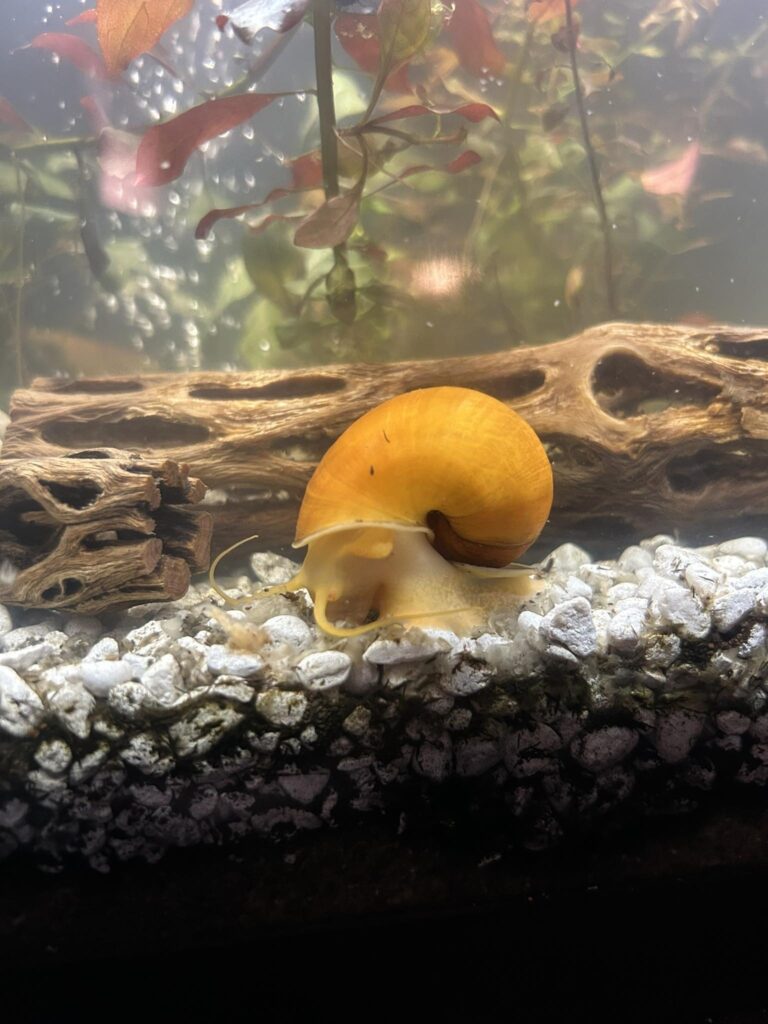
Mystery snails (Pomacea bridgesii) typically reach a shell diameter of 1.5 to 2 inches (approximately 3.8 to 5 centimetres) when fully grown. This is the size range you will encounter most often in healthy, well-kept aquariums.
However, some individuals grow larger. Under optimal conditions, mystery snails have been documented reaching up to 2.5 inches (about 6.3 centimetres) in shell diameter. Occasional reports from dedicated keepers describe snails approaching 3 inches, though this is uncommon and typically dependent on exceptional care and genetics.
To put it in perspective, a fully grown mystery snail is roughly the size of a golf ball. Some reach the size of a large walnut. A rare few grow as large as a small apple.
Size is not just cosmetic. A well-grown snail is generally a healthy snail. If your mystery snail remains unusually small after several months, it is worth investigating the conditions in your tank.
Mystery Snail Size at Different Life Stages
Understanding growth across a snail’s life cycle helps you set realistic expectations.
At hatching: Mystery snail eggs hatch into juveniles measuring approximately 2 to 3 millimetres in diameter. They are tiny, fragile, and easy to miss in a well-planted tank.
At 4 to 6 weeks: Juveniles grow rapidly in their first weeks of life, often reaching 5 to 8 millimetres if fed adequately.
At 3 months: A well-fed juvenile can reach 1 to 1.5 centimetres by this stage, depending on water quality and diet.
At 6 months: This is where significant variation begins to appear. Snails with access to calcium-rich food and clean water may reach 1.5 to 2 centimetres, while underfed or stressed snails may lag behind noticeably.
At 12 months and beyond: Most mystery snails reach their near-maximum size by the end of their first year. Full adult size is generally achieved between 12 and 18 months, though minor growth can continue.
What Determines How Big a Mystery Snail Gets?
This is where it gets genuinely interesting. Mystery snail size is not fixed. It is deeply influenced by environment, diet, genetics, and care. Several key factors determine whether a snail reaches its full potential or stays small.
1. Calcium Availability
Calcium is arguably the most critical factor in mystery snail growth. The shell is made primarily of calcium carbonate. Without a consistent supply of dietary and environmental calcium, the snail cannot build a thick, healthy shell — and growth slows or stops.
Signs of calcium deficiency include pitting, cracking, thinning at the shell edges, and a dull or chalky appearance. These are not cosmetic issues. They indicate that the snail is struggling.
Sources of calcium for mystery snails include:
- Cuttlebone (placed directly in the tank)
- Crushed coral added to the substrate or filter
- Calcium-rich vegetables such as kale, spinach, and broccoli
- Blanched zucchini with the skin on
- Mineral-rich hard water
Soft water, in particular, can severely limit shell development. If your tap water is very soft, supplementing calcium becomes even more important.
2. Water Parameters
Water quality affects nearly every aspect of mystery snail health, including size. The ideal parameters for maximum growth are:
- Temperature: 68°F to 82°F (20°C to 28°C) — warmer water generally accelerates metabolism and growth
- pH: 7.0 to 7.5 — slightly alkaline water supports calcium uptake
- Ammonia and nitrite: 0 ppm — any detectable level stresses the snail and diverts energy away from growth
- Nitrate: Below 20 ppm where possible
- Hardness (GH): 8 to 18 dGH — harder water is generally better for shell formation
Poor water quality is a hidden cause of stunted growth in many aquariums. A snail living in marginal conditions will survive, but it will not thrive or grow to its natural size.
3. Diet and Feeding Frequency
Mystery snails are not picky eaters, but a varied, calcium-rich diet makes a measurable difference in their growth rate and final size.
In addition to the algae, biofilm, and detritus they naturally graze on, mystery snails benefit from supplemental feeding with:
- Blanched vegetables (zucchini, cucumber, spinach, kale, broccoli)
- High-quality sinking pellets or wafers
- Algae wafers
- Occasional pieces of blanched sweet potato or pumpkin
- Protein sources such as blanched shrimp or bloodworms (in moderation)
Underfeeding is one of the most common reasons mystery snails fail to reach full size, especially in tanks that appear clean. A sparkling tank may actually mean there is not enough food available for grazing. Do not rely solely on algae growth to feed your snails.
4. Tank Size and Stocking Density
A larger tank with lower stocking density tends to produce larger snails. This is partly due to better water quality in larger volumes, and partly due to reduced competition for food.
A mystery snail kept in a heavily overstocked 5-gallon tank will face poorer water conditions and more competition than one in a lightly stocked 20-gallon tank. The difference in final size can be noticeable.
The general recommendation is a minimum of 5 gallons per mystery snail, though 10 gallons or more per snail is better for optimal growth.
5. Genetics
Not all mystery snails are equal at the genetic level. Just as with any animal, some individuals are genetically predisposed to larger size. If your snail comes from a line of large parents, it is more likely to grow large itself.
This is why purchasing snails from reputable breeders — rather than mass-produced pet store stock — can result in noticeably more robust individuals. Responsible breeders often select for size, shell integrity, and overall vitality.
6. Stress Levels
Chronic stress suppresses growth. A mystery snail that is constantly harassed by tankmates, exposed to poor water quality, or handled too frequently will direct its energy toward survival rather than growth.
Keep mystery snails with peaceful tankmates — nerite snails, freshwater shrimp, small tetras, rasboras, and corydoras are all compatible. Avoid goldfish, bettas, pea puffers, and loaches, all of which are known to bite, harass, or consume mystery snails.
Expert Aquarists on Mystery Snail Size
Experienced aquarists have spent years observing mystery snail growth, and their insights go beyond what any care sheet can capture.
“The biggest mystery snails I have ever kept were in a heavily planted 40-gallon breeder with hard water and regular cuttlebone supplementation. They hit nearly 2.5 inches in under a year. It is almost entirely down to calcium and water hardness.” — Theresa Baumgartner, freshwater invertebrate breeder and aquarium hobbyist of 18 years
“I always tell new keepers — if your mystery snail looks small after six months, look at your water first, then your feeding routine. Nine times out of ten, one of those two things is the answer.” — David Akin, aquatic hobbyist and author of several online guides to freshwater invertebrate keeping
“People ask me why their mystery snail shell looks paper-thin or cracked. It is almost always a calcium issue. A cuttlebone in the tank costs almost nothing and it makes an enormous difference. I have seen shells transform within weeks of adding one.” — Yuki Tanaka, aquarium biology enthusiast and long-time contributor to freshwater invertebrate forums
“Genetics matter more than most people acknowledge. I have had snails from the same clutch, raised in identical conditions, where one reached 2.2 inches and another stopped at 1.4. You can optimise everything and still see variation. That is just nature.” — Priya Mehta, hobbyist aquarist specialising in Pomacea species with over a decade of selective breeding experience
These observations point to a consistent theme: environment and diet are the primary levers for influencing mystery snail size, but genetics will always introduce some natural variation.
Tips for Maximising Mystery Snail Growth
If you want your mystery snails to grow to their full potential, these tips will help significantly.
1. Add a cuttlebone to the tank immediately. This is the single most impactful thing you can do. Cuttlebone dissolves slowly, releasing calcium directly into the water. It benefits not just the shell structure but the snail’s overall health. Replace it when fully dissolved. It is inexpensive and widely available.
2. Use hard water or supplement mineral content. If your local tap water is soft, add crushed coral to your filter or substrate. This raises both GH (general hardness) and KH (carbonate hardness), creating conditions that support strong shell growth. You can also use commercially available mineral supplements designed for freshwater invertebrates.
3. Feed blanched vegetables three to four times per week. Do not rely on algae alone. Blanched zucchini, spinach, and kale are calcium-rich, readily accepted, and easy to prepare. Remove uneaten food after 24 hours to avoid ammonia spikes.
4. Keep the tank temperature in the upper range of comfort. Temperatures closer to 78°F to 80°F (25°C to 27°C) accelerate the metabolism of mystery snails and promote faster growth — provided water quality is maintained. Do not overheat the tank; beyond 82°F, stress becomes a factor.
5. Do not overcrowd the tank. Each additional snail and fish increases the biological load on the tank and creates competition for food. Fewer, well-fed snails in clean water will consistently outgrow overstocked tanks. Quality of environment matters more than quantity of inhabitants.
6. Perform consistent water changes. A 20 to 25 percent water change every week removes accumulated nitrates, replenishes minerals, and maintains the stable chemistry mystery snails need for healthy growth. Irregular or infrequent changes allow conditions to deteriorate slowly — and the snail may be struggling before you notice any visible signs.
How Mystery Snail Size Compares to Other Freshwater Snails
It helps to understand where mystery snails sit in the broader world of freshwater snail sizes.
| Species | Common Size | Max Recorded |
| Mystery snail (Pomacea bridgesii) | 1.5 – 2 inches | ~2.5 – 3 inches |
| Nerite snail (Neritina spp.) | 0.5 – 1 inch | ~1.25 inches |
| Malaysian trumpet snail (Melanoides tuberculata) | 0.5 – 1 inch | ~1.5 inches |
| Ramshorn snail (Planorbarius corneus) | 0.5 – 1 inch | ~1.5 inches |
| Giant apple snail (Pomacea canaliculata) | 2 – 3 inches | ~6 inches |
| Channeled apple snail (Pomacea insularum) | 3 – 4 inches | ~6+ inches |
Mystery snails are meaningfully larger than most hobby freshwater snails but considerably smaller than their giant apple snail cousins. This makes them ideal for community tanks — large enough to be visible and interesting, small enough not to dominate the tank.
One important distinction: mystery snails (Pomacea bridgesii) are sometimes confused with channeled apple snails (Pomacea canaliculata), which are a different, more destructive species that grows much larger and consumes live plants aggressively. Always verify the species when purchasing.
Is a Large Mystery Snail a Healthy Mystery Snail?
Largely, yes — but size alone is not the only measure of health. A snail can be large and still have shell problems, parasites, or internal issues. Conversely, a slightly smaller snail can be perfectly healthy.
What you want to see in a truly healthy mystery snail of any size:
- A smooth, crack-free shell with defined whorls and a solid operculum
- An intact body — no visible damage to the foot or mantle
- Active movement — a healthy snail explores its tank regularly
- Good appetite — it responds to food within a reasonable timeframe
- No floating or extended periods of inactivity beyond normal rest
Size is a useful indicator but not a standalone diagnostic. Always assess the snail as a whole.
Mystery Snail Lifespan and Its Relationship to Size
Mystery snails typically live for 1 to 3 years, with most living approximately 1 to 2 years in captivity. Lifespan and maximum size are connected in that both are supported by the same conditions: clean water, adequate calcium, good nutrition, and low stress.
Interestingly, warmer water accelerates growth but shortens lifespan by increasing the pace of the snail’s metabolism. A snail kept at 80°F may grow larger faster but may not live as long as one kept at 72°F. This is a tradeoff worth understanding if longevity is your priority.
Snails raised in cooler, mineral-rich water with abundant food tend to show the best balance of size and longevity.
Why Is My Mystery Snail Not Growing?
This is one of the most common concerns among mystery snail keepers. If your snail has been in the tank for several months and remains noticeably small, consider the following:
- Calcium deficiency: Check for shell pitting or thinning. Add cuttlebone or crushed coral.
- Soft or acidic water: Test pH and GH. Adjust if below the recommended range.
- Insufficient food: Are you supplementing beyond algae? Begin a regular vegetable feeding schedule.
- Poor water quality: Test ammonia, nitrite, and nitrate. Perform a water change if any parameters are elevated.
- Stress from tankmates: Observe whether other fish or invertebrates are harassing the snail. Remove aggressive tankmates if necessary.
- Genetics: If all other factors are optimal, the snail may simply have a genetic predisposition toward a smaller size. This is less common but entirely possible.
Frequently Asked Questions
Do mystery snails ever stop growing? Yes. Mystery snails reach their maximum size between 12 and 18 months of age. Minor shell thickening may continue, but significant size increases stop after this point.
Can two mystery snails from the same clutch be very different in size? Yes, absolutely. Genetic variation within a single clutch is normal. Environmental factors after hatching compound these differences.
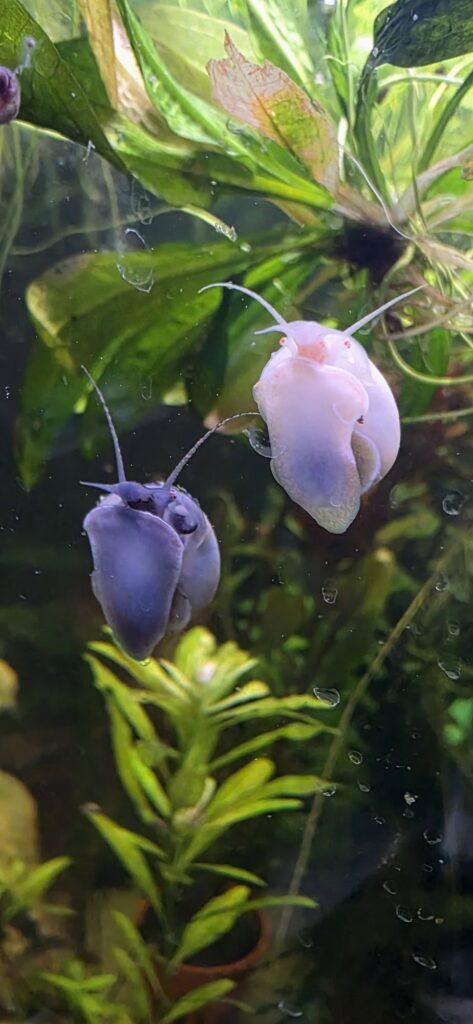
Does shell colour affect size? No. Shell and body colour in mystery snails are purely cosmetic traits. Colour morphs — golden, ivory, blue, purple, brown — do not affect growth potential.
Is a bigger mystery snail always older? Not necessarily. A well-fed, calcium-supplemented juvenile can reach adult size faster than a neglected snail of the same age. Age and size are not perfectly correlated in mystery snails.
Suggested For You:
Mystery Snail Tank Setup: Tank Size, Compatible Mates, and Care Tips
Why Is My Snail Not Moving and Won’t Come Out of Shell?
Understanding Mystery Snail Water Parameters: Beginners Guide
8 Types of Mystery Snails (Based on Shell and Body Colors)
Understanding Mystery Snail Food: What to Feed Pomacea bridgesii
Final Thoughts
Mystery snails are genuinely impressive animals for their size. Watching one grow from a tiny, translucent hatchling into a full, firm-shelled adult is one of the quiet pleasures of freshwater aquarium keeping. There is something satisfying — even a little proud — about knowing that your care directly shaped that outcome.
The key points to remember:
- Mystery snails typically reach 1.5 to 2 inches, with exceptional individuals reaching 2.5 inches or more.
- Calcium, water hardness, diet, and water quality are the primary drivers of size.
- Full growth is usually achieved by 12 to 18 months.
- Stunted growth is almost always addressable — and usually comes down to calcium deficiency or water quality.
- Genetics play a role, but environment plays a larger one.
Give your mystery snails what they need, and they will give you a visually striking, active, and rewarding presence in your aquarium for years to come.
References
- Cowie, R. H. (2002). Apple snails (Ampullariidae) as agricultural pests: their biology, impacts and management. CAB International — Molluscs as Crop Pests, 145–192. University of Hawaii at Manoa, Department of Zoology. https://www.hawaii.edu
- Rawlings, T. A., MacInnis, M. J., Bieler, R., Boore, J. L., & Collins, T. M. (2010). Sessile snails, dynamic genomes: gene rearrangements within the mitochondrial genome of a family of caenogastropod molluscs. BMC Evolutionary Biology, 10(1), 1–25. University of Miami. https://bmcevolbiol.biomedcentral.com
- Ramnarine, I. W. (2009). Calcium and shell formation in freshwater gastropods. Department of Life Sciences, University of the West Indies, St. Augustine, Trinidad. Faculty of Science and Agriculture Publication Series. https://sta.uwi.edu
- Hayes, K. A., Cowie, R. H., & Thiengo, S. C. (2009). A global phylogeny of apple snails: Gondwanan origin, generic relationships, and the influence of outgroup choice. Biological Journal of the Linnean Society, 98(1), 61–76. Smithsonian Tropical Research Institute & University of Hawaii. https://academic.oup.com/biolinnean
- Schultz, E. T., & McCormick, S. D. (2013). Euryhalinity in an evolutionary context: aquatic animal osmoregulation and the influence of environmental calcium on freshwater invertebrates. Fish Physiology, 32, 477–533. University of Connecticut, Department of Ecology and Evolutionary Biology. https://uconn.edu