How Long Are Platies Pregnant? Everything to Know
If you have noticed your female platy growing rounder by the day, you are probably wondering how long this is going to last — and what to expect when the time comes. It is one of the most exciting parts of keeping platy fish, and also one of the most common sources of questions for beginners.
The short answer is that platy fish are pregnant for 24 to 30 days. But the full picture is more nuanced than that. Gestation length can vary depending on the fish’s age, water temperature, stress levels, and overall health.
Understanding the complete pregnancy process will help you care for your female platy properly, protect the fry, and know exactly when to expect the birth.This guide covers every stage of platy pregnancy — from conception to birth — with practical advice at each step.
How Platy Fish Reproduce
Platys are livebearers. Unlike egg-laying fish, they fertilize eggs internally and give birth to fully formed, free-swimming fry. This makes them fascinating to observe and relatively easy to breed, even for beginners.
The male platy uses a modified anal fin called the gonopodium to deliver sperm directly to the female during mating. Fertilization happens internally, and the female then carries the developing fry inside her body until they are ready to be born.
One of the most remarkable things about female platys is their ability to store sperm. A single mating can result in multiple batches of fry — sometimes three or four successive pregnancies — without the female needing to mate again.
This is worth knowing, because a female platy you just bought from a pet store may already be pregnant or carrying stored sperm, even if she has been separated from males.
How Long Is a Platy Fish Pregnant?
The typical gestation period for a platy fish is 24 to 30 days. Most births occur within this window, though individual fish can vary slightly.
Several factors influence where on that timeline a particular female falls:
Temperature
Water temperature plays one of the most significant roles. Warmer water (closer to 80°F/27°C) tends to shorten the gestation period slightly. Cooler water (around 70–72°F/21–22°C) can extend it toward the 30-day end or beyond. Keeping your tank within the recommended range of 70–82°F (21–28°C) supports healthy development and a predictable timeline.
Platy Fish age
Age and experience also matter. Younger females giving birth for the first time may carry their fry a little longer, and their litters tend to be smaller. Mature females with multiple pregnancies behind them often follow a more consistent schedule.
Stress level
Stress levels can delay birth. A female in poor water conditions, a crowded tank, or a tank with aggressive tank mates may hold her fry longer than expected. In some cases, prolonged stress can even cause a female to reabsorb or miscarry fry — a sad but not uncommon outcome in suboptimal environments.
Heath status
Health status is another factor. A well-nourished, healthy female will generally carry and deliver fry on schedule. A malnourished or sick female may have a disrupted gestation cycle.
Stages of Platy Pregnancy
Understanding what happens at each stage helps you monitor your fish and intervene appropriately if needed.
Early Stage (Days 1–10)
In the first week or so, there are few visible signs of pregnancy. The female may look slightly fuller than usual, but the change is subtle. Internally, fertilized eggs are developing rapidly. During this stage, the female behaves largely as normal — eating well, swimming actively, and interacting with tank mates.
Your primary job at this stage is to maintain excellent water quality and a stress-free environment. The early days of fry development are critical, and any significant stressor can interfere with healthy gestation.
Middle Stage (Days 11–20)
By the second week, the belly becomes noticeably rounder. The female’s abdomen will look boxy or squared off when viewed from above, rather than streamlined. This is a reliable sign that pregnancy is progressing well.
The gravid spot — a dark triangular area near the anal fin — begins to darken during this stage. In lighter-colored females, you may even be able to see the eyes of the developing fry as small dark dots within the abdomen if you look carefully in good lighting.
The female may start spending slightly more time near plants or in quieter areas of the tank. Appetite generally remains strong during this stage.
Late Stage (Days 21–30)
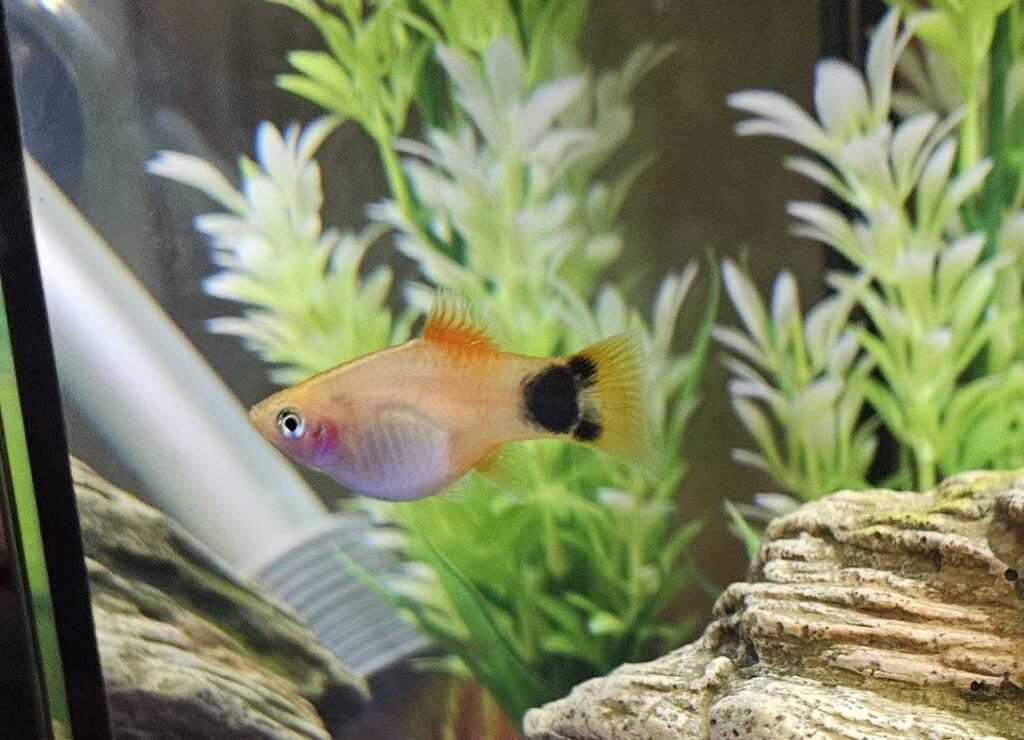
This is when the changes become most dramatic. The belly is now very swollen and almost square in profile. The gravid spot is very dark — nearly black in many females. The female may become less active and spend more time resting near the bottom or among plants.
In the final few days before birth, she will often seek out sheltered spots and may become less interested in food. You may notice her breathing more rapidly or shimmying slightly — signs that birth is very close.
This is the stage where you need to decide how you want to handle the birth, particularly if you intend to save the fry.
Signs That a Platy Is About to Give Birth
Knowing the signs of imminent birth gives you time to prepare. Watch for:
- Very swollen, boxy abdomen — almost rectangular when viewed from the side
- Very dark gravid spot — nearly black, and large in area
- Seeking shelter — spending most of her time near plants, caves, or corners
- Reduced appetite — eating little or refusing food in the final 24 hours
- Rapid breathing or shimmying — subtle but visible movement near the tail
- Resting near the bottom — less active than usual, hovering close to the substrate
- Visible contractions — a slight pulsing or tightening of the abdomen in the final hours
When you observe several of these signs together, birth is typically within 12 to 24 hours. Some females give birth very quickly, delivering the entire litter within an hour. Others deliver fry over several hours with breaks in between. Both are normal.
How Many Fry Do Platies Have?
The size of a platy’s litter depends primarily on the female’s age, size, and reproductive experience. A young female giving birth for the first time may produce as few as 10 to 20 fry. An older, larger female can deliver 40 to 80 fry, and in exceptional cases, even more.
The average litter for a healthy adult female platy falls somewhere between 20 and 50 fry. This number can feel overwhelming when you first witness it — dozens of tiny, darting fish appearing in what seems like moments. If you are keeping a mixed-sex tank, plan ahead for what you will do with the fry.
Will Adult Platys Eat the Fry?
Unfortunately, yes — adult platys, including the mother, will eat their own fry if given the opportunity. This is not malicious behavior; it is simply instinct. In the wild, fry scatter immediately after birth and use dense vegetation to hide. In the confined space of an aquarium, they have nowhere to go unless you provide cover or separation.
You have three main options for protecting the fry:
Dense planting: Java moss, hornwort, and floating plants like frogbit create a refuge where fry can hide from adults. Some fry will survive this way even without intervention, especially in a well-planted tank.
Breeding box: A mesh or plastic breeding box can be placed inside the main tank to isolate the pregnant female before birth. The fry fall through small openings into a protected lower compartment, away from the mother. However, keep her in the box for as short a time as possible — prolonged confinement causes significant stress.
Separate breeding tank: The most effective method is to move the pregnant female to a dedicated 5- to 10-gallon breeding tank a few days before the expected birth. After she delivers, return her to the main tank promptly. The fry can then grow safely in the breeding tank without competition or predation from adults.
Caring for Platy Fry
Platy fry are born fully formed and capable of swimming immediately. They are remarkably independent from their very first moments. That said, they are tiny and vulnerable, and they need appropriate conditions to thrive.
Water quality
Fry are more sensitive to ammonia and poor water quality than adults. In a small breeding tank, water quality can deteriorate quickly, especially with frequent feeding. Perform small, gentle water changes — no more than 10–15% at a time — every two to three days, using water that has been temperature-matched to avoid shock.
Feeding: Fry need to eat several times a day to grow well. Feed them:
- Baby brine shrimp (live or frozen) — the best early food for growth
- Micro-worms
- Finely crushed flake food or purpose-made fry food
- Liquid fry food for the first few days if other options are unavailable
Remove uneaten food after each feeding to protect water quality.
Temperature: Maintain the same temperature range as the main tank — 70–82°F (21–28°C). Stability is especially important for fry, which are less able to cope with fluctuations.
Growth rate
Platy fry grow quickly under good conditions. They typically reach 0.5 to 0.75 inches within the first four weeks and can be introduced to the main tank once they are too large to fit in the mouths of adult fish — usually at around 4 to 6 weeks of age.
How Often Do Platies Get Pregnant?
Once a female platy begins reproducing, she can deliver a new litter approximately every 4 to 6 weeks. Given that she can store sperm from a single mating for several months, this cycle can continue without any additional contact with a male.
In practical terms, this means a single female in a well-maintained tank can produce hundreds of fry in a single year. If you keep both males and females together, population growth can happen faster than expected. Plan accordingly — whether that means setting up grow-out tanks, finding homes for surplus fry, or, if necessary, keeping only males or only females to prevent breeding.
Suggested For You:
Why Is My Platy Fish Hiding? Causes, Solutions, and When to Worry
Platy Fish Not Eating: Causes, Solutions, and When to Act
Male vs Female Platy Fish: How to Tell the Difference and Why It Matters
Platy Fish Tank Setup: A Complete Step-by-Step Guide
10 Best Tank Mates for Platies: A Complete Compatibility Guide
When to Be Concerned During Pregnancy
Most platy pregnancies proceed without complication. However, there are situations that warrant closer attention:
Labor lasting more than 12 hours with few fry delivered may indicate the female is struggling. Ensure the water temperature is within range and that she is not being stressed by tank mates.
A swollen belly that does not result in birth after 35 or more days may suggest a condition called dropsy (if accompanied by raised scales and lethargy) or internal infection. Consult an aquatic veterinarian or experienced fishkeeper.
A noticeably thin female who appears to lose her pregnancy may have experienced fry reabsorption, often caused by chronic stress or poor nutrition. Improving tank conditions and diet is the primary response.
Stillborn or underdeveloped fry occasionally occur, particularly in a first pregnancy or under stressful conditions. A few undeveloped fry in an otherwise healthy litter is not unusual. A consistently poor birth outcome suggests an underlying problem with water quality, nutrition, or the female’s health.
Quick Reference: Platy Pregnancy at a Glance
| Feature | Detail |
| Gestation period | 24–30 days |
| Average litter size | 20–50 fry |
| Breeding frequency | Every 4–6 weeks |
| Age at sexual maturity | Around 4 months |
| Sperm storage | Yes — multiple litters from one mating |
| Fry independence | Immediate — born fully formed |
| Safe age to move fry to main tank | 4–6 weeks |
Frequently Asked Questions (FAQs)
1. How do I know exactly when my platy will give birth?
There is no way to know the exact hour, but a very dark gravid spot, boxy abdomen, hiding behavior, and loss of appetite together signal birth within 12 to 24 hours. Monitor closely during this window.
2. Can a platy be pregnant without a male in the tank?
Yes. Female platys can store sperm from previous mating for several months and continue producing litters without any male present. If you bought your female from a mixed-sex tank, she may already be carrying stored sperm.
3. How long after giving birth will my platy get pregnant again?
A female can become pregnant almost immediately after giving birth if a male is present. The next litter typically arrives 4 to 6 weeks later. Separating males and females is the only reliable way to prevent continuous breeding.
4. Should I remove the male when my platy is about to give birth?
Removing the male before birth is a good idea if space allows, primarily because males will readily eat newborn fry. The female herself also poses a risk to the fry, so the safest approach is a dedicated breeding setup.
5. My platy looks pregnant but has been that way for over 35 days — what is wrong?
Extended pregnancy beyond 30 days can result from low water temperature, chronic stress, or illness. Check water parameters and temperature first. If the belly is very swollen and the scales appear raised, consult a veterinarian, as this may indicate dropsy rather than pregnancy.
6. How many times can a platy get pregnant in a year?
A female platy can theoretically produce 8 to 10 litters per year, giving birth approximately every 4 to 6 weeks. With average litter sizes of 20 to 50 fry, the population potential is significant. Plan ahead if you keep mixed-sex tanks.
7. Do platy fish need special care when pregnant?
Not dramatically different care, but extra attention is beneficial. Keep water conditions pristine, offer a varied and nutritious diet, minimize stress by avoiding overcrowding and aggressive tank mates, and provide plenty of plant cover. These steps support a healthy pregnancy and a strong litter.
References
- Fishkeeping World — Platy Fish Care Guide: Lifespan, Tank Mates, Diet and Health. https://www.fishkeepingworld.com/platy-fish/
- University of Florida IFAS Extension — Reproduction in Ornamental Livebearing Fish . https://edis.ifas.ufl.edu/topic_ornamental_fish
- Merck Veterinary Manual — Reproduction in Fish. https://www.merckvetmanual.com/exotic-and-laboratory-animals/aquarium-fish/reproduction-in-fish
- The Spruce Pets — Breeding Platy Fish. https://www.thesprucepets.com/breeding-platy-fish-1381073
- PubMed Central — Sperm Storage and Sequential Polyandry in Livebearing Fish (Poeciliidae).https://www.ncbi.nlm.nih.gov/pmc/