15 Good Reptiles to Have as Pets (Best Species for Beginners)
I still remember the first time I held a leopard gecko. It sat calmly in my palm, blinking slowly, and I understood right away why so many people fall for reptiles. They are quiet. They are clean in their own way. And they do not need daily walks.
Reptile-keeping has grown into a serious hobby across the world. If you are thinking about joining in, this guide will help you pick a species that actually fits your lifestyle, not just your Instagram feed.
Below are 15 good reptiles to have as pets, chosen for their manageable size, calm temperament, and beginner-friendly care needs. I have also added real statistics and safety notes, because owning a reptile is a serious commitment, not a passing trend.
Why People Choose Reptiles as Pets
Reptiles appeal to a specific kind of pet owner. They are not cuddly in the traditional sense, but they offer something else: a small, self-contained world you get to build and observe.
Here is why reptiles have become so popular:
- They generally do not trigger fur or dander allergies.
- Many species live in a single enclosure, which suits small apartments.
- Feeding schedules are often just a few times a week.
- Watching a reptile hunt, bask, or shed is genuinely fascinating.
That said, reptiles are not “easy” pets in the way people assume. Most need specific heat, lighting, and humidity levels to stay healthy. Skipping this step is the number one reason reptiles get sick in captivity.
A Quick Word on Safety Before You Choose
Before we get to the list, I want to flag something important. Reptiles can carry Salmonella, even when they look perfectly healthy.
According to the U.S. Centers for Disease Control and Prevention, reptiles and amphibians are more likely than other pets to carry germs that make people sick, even when they appear clean and healthy, with Salmonella being the most common of these germs.
This is not a reason to avoid reptiles altogether. It is a reason to wash your hands after handling them and to supervise young children closely. The CDC specifically advises that reptiles and amphibians can pass Salmonella through contact with the animal, its tank, or its water.
One more fact worth knowing: it is estimated that around 7% of Salmonella infections in the United States are linked to contact with pet reptiles or amphibians each year. Good hygiene habits reduce this risk dramatically.
With that out of the way, let’s get into the list.
1. Leopard Gecko
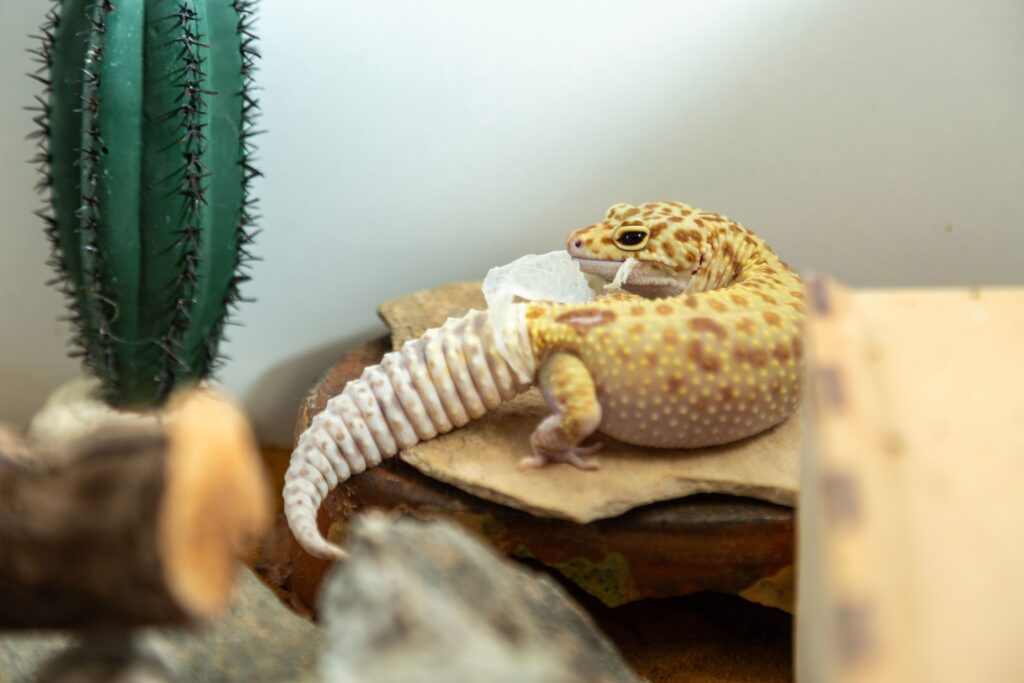
Leopard geckos are often the first reptile people ever own, and for good reason. They are patient, easy to handle, and do not grow very large.
Why they make a great pet:
- They do not require UVB lighting, which simplifies setup.
- Adults reach only 7 to 10 inches long.
- Their diet is simple: gappers and mealworms, dusted with calcium.
According to a University of Florida IFAS Extension buyers’ guide, leopard geckos, bearded dragons, and blue-tongued skinks are usually good species to keep as pets, and leopard geckos are especially easy to care for because, unlike other lizards, they do not require UV lights.
I find their personality genuinely endearing. They chirp, they tilt their heads, and they seem to actually notice you.
ALSO READ: 30 Best Lizard Pets (Species Info, With Pictures)
2. Bearded Dragon
If leopard geckos are the beginner’s first choice, bearded dragons are a close second. They are famously social for a reptile.
Key facts:
- Adults grow to roughly 18 to 24 inches.
- They live a long time with proper husbandry.
- They are diurnal, meaning they are awake and active during the day, like us.
The UC Davis School of Veterinary Medicine notes that bearded dragons can live 7 to 10 years with proper care, become sexually mature between 10 and 18 months, and reach a total length of 15 to 20 inches as adults.
What I love most is how expressive they are. Head-bobbing, arm-waving, and beard-puffing all mean something, and learning to read those signals feels like building a real relationship.
3. Ball Python
Snakes intimidate a lot of first-time owners, but ball pythons are consistently recommended for beginners. They stay small compared to other pythons and rarely bite.
Why they suit a first-time snake owner:
- Adults average 3 to 5 feet long.
- They eat just once every 1 to 2 weeks as adults.
- Their calm, docile nature has made them one of the most popular pet snakes in the world.
Ball pythons are known to curl into a tight ball when stressed, which is exactly where the name comes from. It is a defensive habit, not a trick, so give a new ball python space to settle in before handling it too much.
4. Corn Snake
Corn snakes are another excellent starter snake. They come in a wide range of colors, thanks to decades of captive breeding.
Standout traits:
- They rarely grow past 5 feet.
- They tolerate handling well once accustomed to their owner.
- They are strong escape artists, so a secure lid is non-negotiable.
I always tell new owners: corn snakes are hardy, but that does not mean careless. A loose enclosure lid is the fastest way to lose one behind a wall.
5. Blue-Tongued Skink
Blue-tongued skinks are a bit less common but deserve far more attention. They are chunky, ground-dwelling lizards with a surprisingly dog-like personality.
Why owners love them:
- They are omnivores, so feeding is varied and interesting.
- They tolerate handling extremely well.
- Their flashy blue tongue is a striking defense display, not a health issue.
The same UF/IFAS guide lists them directly alongside leopard geckos and bearded dragons as species with good temperaments and basic care requirements. That recommendation carries real weight.
6. Crested Gecko
Crested geckos went nearly extinct in the wild, believed lost until they were rediscovered in New Caledonia in 1994. Today, they thrive in captivity.
What makes them beginner-friendly:
- They do well at room temperature, so heating needs are minimal.
- They eat commercial fruit-based gecko diets, which simplifies feeding.
- Their sticky toe pads let them climb glass, which is fun to watch.
Crested geckos are also forgiving of small husbandry mistakes, which makes them a smart pick for someone easing into reptile keeping.
7. Russian Tortoise
Not every reptile lover wants something fast or scaly in a snake-like way. Tortoises offer a slower, longer-term companion, and Russian tortoises are one of the most practical.
Practical advantages:
- They stay small, usually under 8 inches.
- They are cold-hardy compared to many other tortoise species.
- They can live for decades with consistent care.
Tortoises are a real commitment. Some species can outlive their owners, so this is a pet you plan for, not one you pick up on impulse.
8. Red-Footed Tortoise
Red-footed tortoises are another solid choice for people drawn to tortoises but wanting a bit more personality and color.
According to UF/IFAS Extension, red-footed and yellow-footed tortoises are two of the better species to keep as pets, since they are readily available, have great temperaments, and remain relatively small.
Care basics:
- They need warm, humid conditions, closer to tropical than desert.
- Their diet is largely fruits and vegetables.
- They tend to be curious and food-motivated, which makes interaction easy.
9. King Snake
King snakes are famous for one particular trait: they eat other snakes, including venomous ones, in the wild. As pets, they are calm and manageable.
Why they are recommended:
- They handle well and rarely strike.
- They come in many color morphs, similar to corn snakes.
- Their care requirements mirror those of corn snakes, so information is easy to find.
A note of caution: never house king snakes with other snakes. Their instinct to eat fellow snakes does not switch off in captivity.
10. African Fat-Tailed Gecko
Closely related to leopard geckos, fat-tailed geckos share many of the same appealing traits while adding a bit more personality.
Highlights:
- They store fat in their tails, giving them a distinctive look.
- They need slightly higher humidity than leopard geckos.
- They tend to be calm and easy to handle once settled in.
If you liked the idea of a leopard gecko but want something a touch different, this species is worth researching.
11. Hognose Snake
Hognose snakes are known for dramatic, theatrical behavior. When threatened, some will flatten their necks like a cobra or dramatically play dead.
Why owners enjoy them:
- They stay small, typically under 3 feet.
- Their personality is genuinely entertaining to watch.
- They are generally calm once they get used to handling.
I mention this species because it shows how varied “beginner-friendly” reptiles can be. Even a snake with a dramatic flair can still be manageable for a new owner.
12. Uromastyx
Uromastyx, sometimes called spiny-tailed lizards, are desert dwellers that thrive on heat. If you want a lizard that basks like it means it, this is the one.
Why they stand out:
- They are almost entirely herbivorous as adults, which simplifies feeding.
- They need very high basking temperatures, so a strong heat setup matters.
- They can become quite tame with regular, gentle handling.
They are not the most common pet reptile, but keepers who choose them tend to become lifelong fans.
13. Green Anole
Green anoles are small, active lizards that suit anyone wanting a naturalistic terrarium over a hands-on pet. They are not big on handling, but they are captivating to watch.
Appeal factors:
- They are inexpensive and widely available.
- They thrive in planted, humid enclosures.
- Males display a colorful throat fan called a dewlap, especially during territorial displays.
This species is better suited to observation than cuddling, and that is perfectly fine. Not every good pet needs to sit in your hand.
14. Rankin’s Dragon
Rankin’s dragons are a smaller cousin of the bearded dragon, sometimes called the black-throated monitor’s tiny, friendlier relative in casual conversation (though they are not monitors at all).
Why beginners like them:
- They stay smaller than bearded dragons, around 10 to 12 inches.
- Their care mirrors bearded dragon husbandry, so resources are easy to find.
- They are known for a calm, easygoing temperament.
If a full-sized bearded dragon enclosure feels like too much space commitment, this species offers a similar experience at a smaller scale.
15. Milk Snake
Milk snakes round out this list as another color-morph-rich, manageable species. Some subspecies wear a black, red, and white or yellow banding that closely resembles venomous coral snakes, though milk snakes themselves are harmless.
Why they work well as pets:
- They stay a manageable 2 to 4 feet depending on subspecies.
- They are generally calm, though some individuals are more skittish than corn snakes.
- Their striking colors make them popular among snake collectors.
Because of their resemblance to venomous species, always know exactly what subspecies you are handling before purchase.
Comparing These Reptiles at a Glance
| Reptile | Typical Adult Size | Handling Level | Best For |
| Leopard Gecko | 7–10 in | Easy | Total beginners |
| Bearded Dragon | 18–24 in | Very Easy | Interactive owners |
| Ball Python | 3–5 ft | Easy | First-time snake owners |
| Corn Snake | up to 5 ft | Easy | Colorful, hardy snake fans |
| Blue-Tongued Skink | 18–24 in | Very Easy | Dog-like personality seekers |
| Crested Gecko | 6–9 in | Moderate | Low-heat setups |
| Russian Tortoise | up to 8 in | Low | Long-term commitment |
| Red-Footed Tortoise | up to 14 in | Low | Tropical setups |
| King Snake | 3–4 ft | Easy | Corn snake fans wanting variety |
| Fat-Tailed Gecko | 7–9 in | Easy | Leopard gecko fans |
| Hognose Snake | 2–3 ft | Moderate | Personality-driven owners |
| Uromastyx | 10–16 in | Moderate | Desert-setup enthusiasts |
| Green Anole | 5–8 in | Low | Terrarium display |
| Rankin’s Dragon | 10–12 in | Easy | Small-space bearded dragon fans |
| Milk Snake | 2–4 ft | Easy | Color-morph collectors |
Before You Bring One Home: Care Essentials
Every reptile on this list still needs a few non-negotiables. Skipping these is where most beginner mistakes happen.
Heating and lighting
Most reptiles are ectothermic, meaning they rely on their environment for body heat. A thermal gradient, with a warm basking side and a cooler side, is essential.
Many species also need UVB lighting to process calcium correctly. The bearded dragon care guide from ReptiDirect explains this clearly: without UVB, bearded dragons cannot synthesize vitamin D3, which prevents calcium absorption and leads to metabolic bone disease.
Humidity
Desert species like leopard geckos need low humidity. Tropical species like crested geckos or red-footed tortoises need it much higher. Mixing these up leads to shedding problems or respiratory issues.
Diet
Insects for insectivores, greens for herbivores, and a mix for omnivores. Whatever the species, dust feeder insects with calcium powder regularly.
Enclosure size
Bigger is almost always better. A cramped enclosure limits natural behavior and can cause stress, which weakens the immune system over time.
ALSO READ: 25 Types of Pet Frogs (Safe Species, With Pictures)
Health and Hygiene: What the Research Shows
I want to return to the safety point, because it matters more than most first-time owners realize.
The CDC has documented multiple Salmonella outbreaks tied to pet reptiles in recent years. In one recent multistate investigation, a total of 113 people infected with outbreak strains linked to pet geckos were reported across 36 states, with 31% of those with information available requiring hospitalization.
This risk is not limited to any single species. As the CDC states plainly, even healthy-looking reptiles and amphibians can carry Salmonella bacteria in their digestive tracts.
There is also a specific, long-standing federal rule around turtles. The FDA explains that since 1975, it has banned the sale of small turtles with a shell less than 4 inches long, because turtles can carry Salmonella germs even when they appear healthy and clean.
This rule exists because small turtles were once genuinely dangerous to public health. The FDA notes that in the early 1970s, pet turtles, particularly red-eared sliders, were responsible for an estimated 280,000 cases of salmonellosis each year in the United States.
None of this means reptiles are bad pets. It means basic hygiene is part of responsible ownership, just like it is with any animal. The CDC’s core advice is simple: wash your hands after handling reptiles, their droppings, or anything in their environment, and keep them away from very young children and people with weakened immune systems.
Who Should Not Get a Reptile Right Now
I say this with genuine care, not to discourage anyone. Reptiles are not the right fit for every household at every stage of life.
Consider waiting if:
- You have children under 5 years old in the home. The CDC specifically recommends this age group avoid handling reptiles directly.
- You are pregnant or immunocompromised, given the added Salmonella risk.
- You cannot commit to years, sometimes decades, of consistent husbandry.
- Your living space cannot maintain a stable temperature range.
None of these are permanent barriers. They are simply timing considerations worth respecting.
Final Thoughts
Reptiles reward patience. They are not going to greet you at the door, but they offer something quieter: a small ecosystem you build, tend, and slowly get to understand.
Out of everything on this list, my honest advice for a true beginner is still the leopard gecko or the bearded dragon. Both are forgiving, well-documented, and genuinely enjoyable to raise.
Whichever species you choose, take the setup seriously before the animal arrives. Good husbandry is not optional, it is the entire foundation of a healthy, long-lived pet.
References
- Centers for Disease Control and Prevention. Investigation Update: Salmonella Outbreaks Linked to Pet Geckos, March 2025. https://www.cdc.gov/salmonella/outbreaks/muenchen-03-25/investigation.html
- Centers for Disease Control and Prevention. Reptiles and Amphibians — Healthy Pets, Healthy People. https://www.cdc.gov/healthy-pets/about/reptiles-and-amphibians.html
- Centers for Disease Control and Prevention. Reptile-Associated Salmonellosis — Selected States, 1996–1998. MMWR Weekly. https://www.cdc.gov/mmwr/PDF/wk/mm4844.pdf
- U.S. Food and Drug Administration. Pet Turtles: A Source of Germs. https://www.fda.gov/animal-veterinary/animal-health-literacy/pet-turtles-source-germs
- U.S. Food and Drug Administration. Salmonella and Turtle Safety. https://www.fda.gov/animal-veterinary/animal-health-literacy/salmonella-and-turtle-safety
- University of Florida IFAS Extension. WEC312/UW357: Buyers’ Guide to Pet Reptiles. https://edis.ifas.ufl.edu/uw357
- University of California, Davis, School of Veterinary Medicine. Bearded Dragon Care — Animal Health Topics. https://healthtopics.vetmed.ucdavis.edu/health-topics/exotics/bearded-dragon-care
This article is for general informational purposes and is not a substitute for veterinary guidance. Always consult a qualified veterinarian before bringing home a new reptile.