15 Types of Flying Ants (Identification, With Pictures)
Seeing a cloud of winged insects near your home can be alarming. Many people assume the worst and think of termites right away. I have felt that same jolt of worry myself.
The truth is calmer. “Flying ants” are not a separate species. They are the winged reproductive members of normal ant colonies, and almost every ant species produces them.
This guide explains what flying ants are and why they appear. It also covers 15 common types you may meet. Each entry shows how to recognize the ant and whether it is a real problem.
What Are Flying Ants?
Flying ants are young queens and males that leave the nest to mate. Scientists call them alates or swarmers. Their one job is to start new colonies.
Most colonies release them only when conditions are right. That usually means warm, humid weather, often after rain. Because the flight is timed together, many ants appear at once.
After mating, the males die. For example, Connecticut’s agricultural station notes that male carpenter ants die shortly after they mate. The fertilized queen drops her wings and looks for a place to nest.
Most swarms last only a short time. Often the ants vanish within a day or two. That is why a sudden swarm is rarely a sign of a lasting invasion.
Flying Ants vs. Termites: A Quick Check
Winged termites look similar at first glance. The difference matters because termites can damage a building. Ants usually do not.
University of Maryland Extension lists clear markers. Ants have elbowed antennae, a pinched waist, and front wings longer than the hind wings. Termites have straight antennae and no pinched waist, and their wings are equal in size.
Remember three checks: waist, antennae, wings. A thin waist, bent antennae, and uneven wings all point to an ant. Do not rely on color, because both insects vary.
Not sure? Catch one in a clear jar or tape it to paper. Then take it to your local extension office or a pest professional.
15 Types of Flying Ants
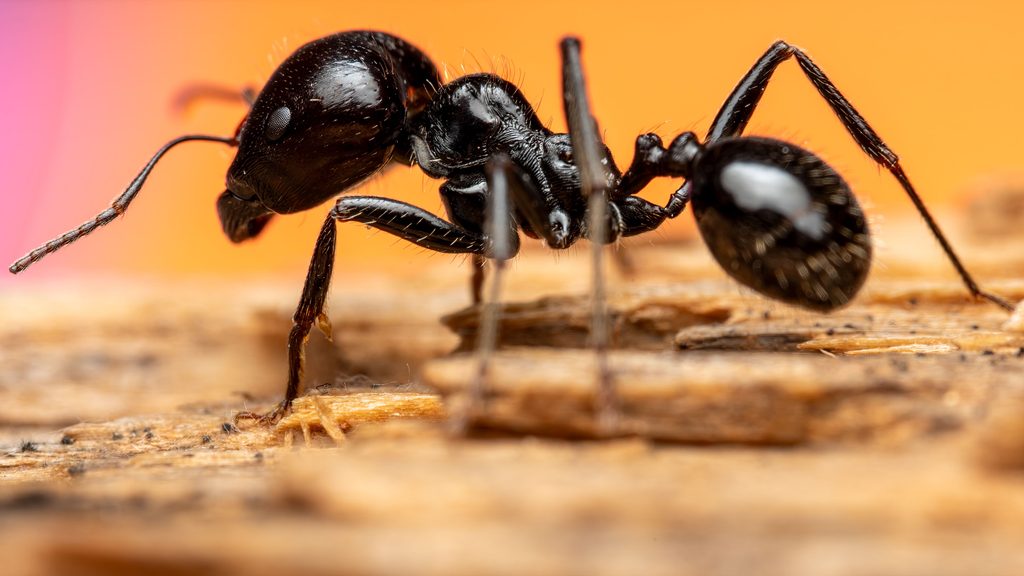
1. Black Carpenter Ant
The black carpenter ant is one of the largest ants in North America. Workers are mostly black and can reach about half an inch long. Swarmers are bigger still.
Ohio State University Extension reports that carpenter ant swarmers usually emerge from mature colonies between March and July. Their forewings are much larger than the hind wings. This ant does not eat wood.
It does, however, hollow it out to make nests, usually in damp or rotting wood. Rutgers researchers say a new colony needs three to six years to mature and then produces 200 to 400 swarmers each year. Swarmers inside your house point to a nest indoors, so inspect carefully.
2. Florida Carpenter Ant
The Florida carpenter ant is a southern relative of the black carpenter ant. It is common in Florida and nearby states. Its workers have a reddish-brown body with a dark abdomen.
University of Florida experts note that it often nests in voids, damp wood, and even soil beneath objects. It is mostly nocturnal, so you may notice it only at night.
Swarmers appear during the warm season. They often fly toward lights. Fix leaks and trim branches that touch your roof, because moisture invites this ant.
3. Red Imported Fire Ant
The red imported fire ant is one of the best-known stinging ants in the United States. It came from South America. The USDA notes that it arrived in the late 1930s.
Colonies are enormous. Texas A&M researchers say an average colony holds 100,000 to 500,000 workers. Winged forms leave the mound in the afternoon, usually soon after rain.
Spread by flight is usually short. Oklahoma State University Extension says it is typically one mile or less, though flights of up to 12 miles have been recorded. Please avoid disturbing the mounds, because the sting is painful.
4. Pavement Ant
The pavement ant is small, dark brown to black, and has faint lines on its head and thorax. Workers are about one-eighth of an inch long. They are common across much of the country.
They nest under sidewalks, driveways, and slabs. You may see little piles of sand along cracks. That is a handy clue.
Swarmers often appear indoors in spring or summer, near windows and floor cracks. They do not damage wood and rarely sting. Sealing gaps and keeping food stored will reduce visits.
5. Argentine Ant
The Argentine ant is a small, light-to-dark brown ant. It forms very large supercolonies, with many queens and countless workers. These networks can stretch for miles.
This ant is common in California and the Southeast. It loves sweet foods and honeydew from garden insects. Trails of workers often march up walls and across kitchen counters.
Because the colonies have many queens, winged forms are less central to its spread. They still appear at times. People often mistake the swarm for a big problem, and with this ant, it often is a persistent one.
6. Odorous House Ant
The odorous house ant is brown to black and about one-eighth of an inch long. Its name comes from the smell. Crush one and you will notice a scent like rotten coconut.
It nests in many places. Outdoors, it uses soil, mulch, and wall cracks. Indoors, it moves into wall voids and around water pipes.
Winged forms emerge in the warmer months. They are a nuisance, not a danger. Wipe up sweet spills and seal entry points to keep them out.
7. Acrobat Ant
The acrobat ant gets its name from a funny habit. When disturbed, it raises its heart-shaped abdomen over its body. It looks like a tiny circus act.
Colors range from light brown to black, and some species are two-toned. They nest in rotting wood, stumps, and wall voids. They also like foam insulation.
Swarmers appear in warmer months. They may bite, but they are not a serious threat. Their nests often signal moisture trouble, so check roofs and pipes.
8. Little Black Ant
The little black ant is tiny and shiny black. Workers are only about one-sixteenth of an inch long. They live in soil, rotting wood, and under stones.
This ant is common across North America. It enters homes looking for grease, sweets, and protein. Trails of workers can be long and steady.
Winged reproductives emerge in summer. They may gather near windows. These ants do not sting in a way that matters to people, so vacuuming is a calm solution.
9. Black Garden Ant
The black garden ant (Lasius niger) is the star of “Flying Ant Day” in the United Kingdom and much of Europe. Workers are dark brown to black and about 4 to 5 mm long.
On certain warm, humid days in mid-summer, thousands of winged ants take off at once. The timing is shared across nearby colonies. This synchronization helps queens from different nests find mates.
They nest in lawns, paths, and garden beds. The swarm also draws birds and gulls, which feast on the insects. I find that sight oddly impressive. For homeowners, the event passes quickly.
10. Citronella Ant
The citronella ant is a yellow to light orange ant. It smells like lemon or citronella when crushed. That unusual scent makes it easy to identify.
It lives in moist soil and rotting wood. It also tends root-feeding insects, which supply sweet honeydew. Colonies grow in damp spots near foundations.
Swarmers often appear in late summer or fall. They are harmless but can scare people because they look so pale. Many mistake them for termites, so check the waist and antennae.
11. Field Ant
Field ants belong to the genus Formica. They are medium to large, and colors range from black to red. Some nest in open ground and build raised mounds.
They are common in meadows, lawns, and woodland edges. They sting rarely, but they spray formic acid when threatened. That acid can sting if it touches small cuts.
Winged queens and males emerge in summer. Colonies may be large and long-lived. Field ants are usually outdoor insects, so swarms near the house are short-lived.
12. Western Harvester Ant
The western harvester ant is a large, red to reddish-brown ant of dry western regions. It collects seeds and stores them underground. The colony clears a bare disc around the nest entrance.
Its sting is among the more painful of North American ants. Pain can last for hours. For safety, avoid walking over active mounds.
Winged forms leave the nest after summer rains. The mass takeoff can look dramatic. This ant is a real part of its ecosystem, so no action is needed unless a nest is near children or pets.
13. Texas Leafcutter Ant
The Texas leafcutter ant is a reddish-brown ant found in Texas and Louisiana. Workers carry cut pieces of leaves back to the nest. They do not eat the leaves. They use them to grow a fungus, which is their food.
This farming habit is remarkable. Colonies can be large and may strip garden plants and young trees overnight. Gardeners often notice long, busy trails of leaf pieces.
Winged queens and males emerge in spring, often after warm rain. A queen carries a bit of fungus with her to start a new garden. That detail never fails to amaze me.
14. Big-Headed Ant
The big-headed ant is small to medium and yellow-brown to dark brown. Its name comes from the soldier caste. Soldiers have disproportionately large heads that power strong jaws.
It nests in soil, under stones, and in landscaping. It also enters buildings through cracks. It tends to push out other ants in the area.
Winged reproductives appear in warm weather. Big-headed ants can damage lawns and plantings in some regions. Look for the odd, oversized heads, which make identification easy.
15. Allegheny Mound Ant
The Allegheny mound ant is a reddish-brown and dark ant that builds big dome-shaped mounds. Some mounds are two feet high or more. They are found in eastern and central North America.
Colonies are large and contain many queens. Mounds usually sit in sunny, open areas and clearings. You may spot them along forest edges or fields.
Swarmers fly during summer. The ants bite and spray acid when disturbed. They rarely come indoors, so most issues concern lawns and pastures.
When Flying Ants Are a Problem
A swarm outdoors is natural and usually harmless. Leave it alone and it will pass. Most flying ants die within hours or days.
A swarm inside your home deserves more attention. It often means a nest is nearby, sometimes in a wall or floor. The Illinois Department of Public Health notes that a mature carpenter ant colony can contain as many as 10,000 individuals.
That is why indoor swarmers should not be ignored. Look for wood shavings, rustling sounds in walls, and damp wood. Contact a licensed pest professional if you find signs.
How to Prevent Flying Ants
Prevention is simple and works best when done early. A few habits go a long way.
- Fix leaks and dry damp areas. Many ants love moisture.
- Seal cracks around doors, windows, and pipes.
- Store food in sealed containers and clean crumbs quickly.
- Trim branches and move firewood away from the house.
- Turn off outdoor lights at night during swarm season, since winged ants fly toward them.
For a swarm that has already entered, use a vacuum cleaner. Illinois Extension suggests that winged ants kept out of their natural setting rarely last long. Empty the bag outdoors afterward.
Final Thoughts
Flying ants can look frightening, yet they are a normal part of ant life. Knowing the type tells you whether to relax or act. A little knowledge removes much of the worry.
Remember the quick check: narrow waist, bent antennae, uneven wings. If you see those, you are almost certainly looking at an ant, not a termite.
Most swarms are brief and harmless. Persistent indoor swarms, however, are worth a closer look. When in doubt, ask an expert. It is the safest way to protect your home.
References
- Ohio State University Extension. Carpenter Ants (HYG-2063). https://ohioline.osu.edu/factsheet/hyg-2063
- Rutgers New Jersey Agricultural Experiment Station. Carpenter Ants and Their Control (FS1101). https://njaes.rutgers.edu/FS1101
- University of Maryland Extension. Ants and Termites: How to Tell the Difference. https://extension.umd.edu/resource/ants-and-termites-how-tell-difference
- University of Florida IFAS Extension. Red Imported Fire Ant, Solenopsis invicta Buren (IN352). https://edis.ifas.ufl.edu/publication/IN352/pdf
- University of California Statewide IPM Program. Key to Identifying Common Household Ants: Red Imported Fire Ant. https://ipm.ucanr.edu/TOOLS/ANTKEY/rifabio.html
- Illinois Department of Public Health. Carpenter Ants. https://dph.illinois.gov/topics-services/environmental-health-protection/structural-pest-control/carpenter-ants
- Nevada Department of Agriculture. Imported Fire Ants Fact Sheet. https://agri.nv.gov/uploadedFiles/agrinvgov/Content/Plant/Entomology/Imported%20Fire%20Ant%20Factsheet.pdf