50 Birds Native to North Carolina (Identification, With Pictures)
North Carolina is one of the best places in the eastern United States to watch birds. The state stretches from the Atlantic coast to the Blue Ridge Mountains, and that range of habitats supports a remarkable number of species.
The North Carolina Birding Trail reports that the state provides breeding and wintering grounds for more than 466 bird species. That is a big number, so I have narrowed it to 50 native birds you are most likely to see, hear, or want to find.
Mountain parks add to the variety. Great Smoky Mountains National Park alone has documented more than 240 bird species. Even a local game land can surprise you: biologists logged 134 species at South Mountains Game Land.
Backyard and Woodland Songbirds
1. Northern Cardinal
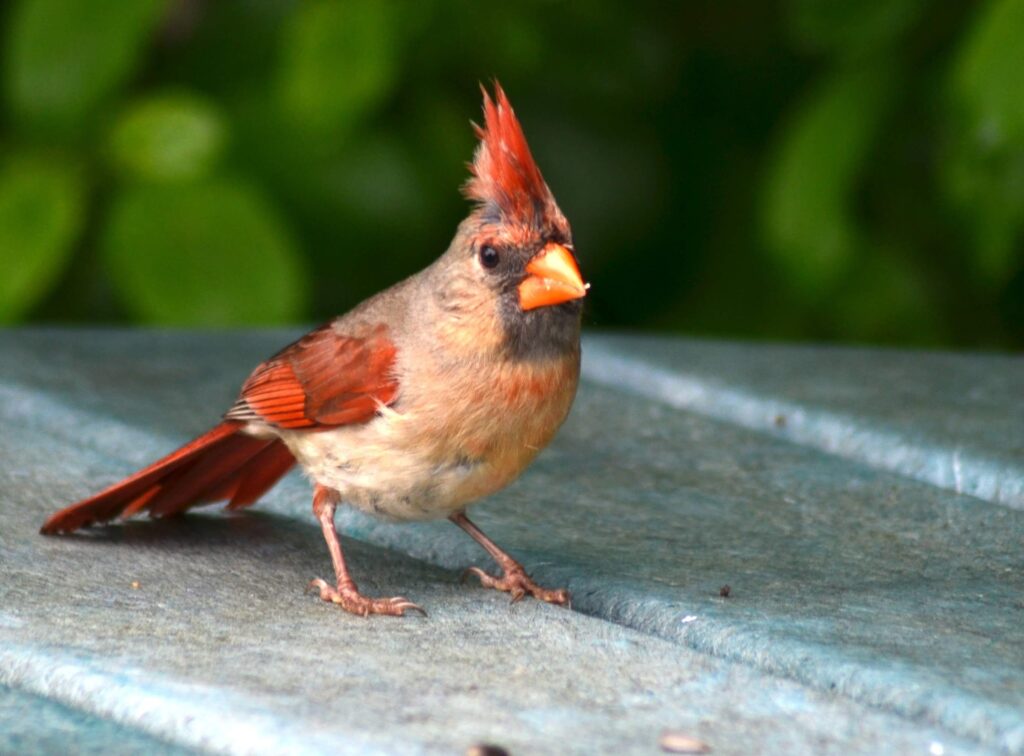
The Northern Cardinal is North Carolina’s state bird, and it has held that title since 1943. Males are bright red with a black face. Females are warm brown with red touches on the wings and tail.
Cardinals stay in the state all year. You will see them at feeders, in hedges, and along woodland edges. They love sunflower seeds.
I always notice cardinals first on gray winter mornings. Against bare branches or snow, that red looks almost unreal. Listen for their clear, whistled “cheer-cheer” song.
2. Carolina Chickadee
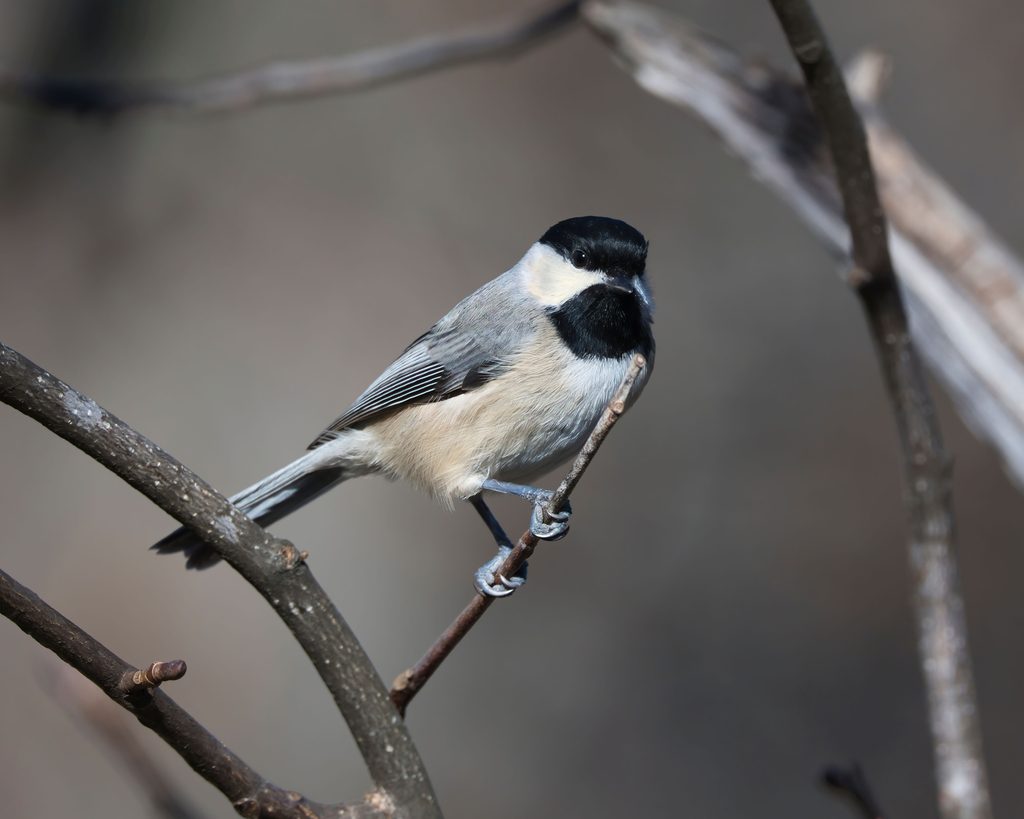
The Carolina Chickadee is a tiny, active bird with a black cap and bib and white cheeks. It is only about four inches long. Its call sounds like a quick “chick-a-dee-dee.”
This bird lives in forests, parks, and suburbs across most of the state. At high mountain elevations, its close relative, the Black-capped Chickadee, takes over.
Chickadees are curious and bold. They will take seeds from a hand that stays still. They nest in tree cavities and readily use nest boxes.
3. Carolina Wren
The Carolina Wren is small, rusty brown, and marked by a bold white stripe above the eye. It holds its tail upright. Its voice is far bigger than its body.
The song is a loud, rolling “teakettle-teakettle-teakettle.” Both males and females sing. You can hear it in every season.
This wren builds nests in odd places. I have seen them in flowerpots, mailboxes, and garages. Keep an eye out for them in your own yard.
4. Tufted Titmouse
The Tufted Titmouse is a soft gray bird with a pointed crest, large dark eyes, and a rusty patch on each flank. It is common in hardwood forests and neighborhoods.
Titmice visit feeders often. They grab one seed, fly off, and hammer it open on a branch. Their song is a whistled “peter-peter-peter.”
They stay in North Carolina all year and often travel with chickadees. A mixed flock in winter is a pleasure to watch.
5. Eastern Bluebird
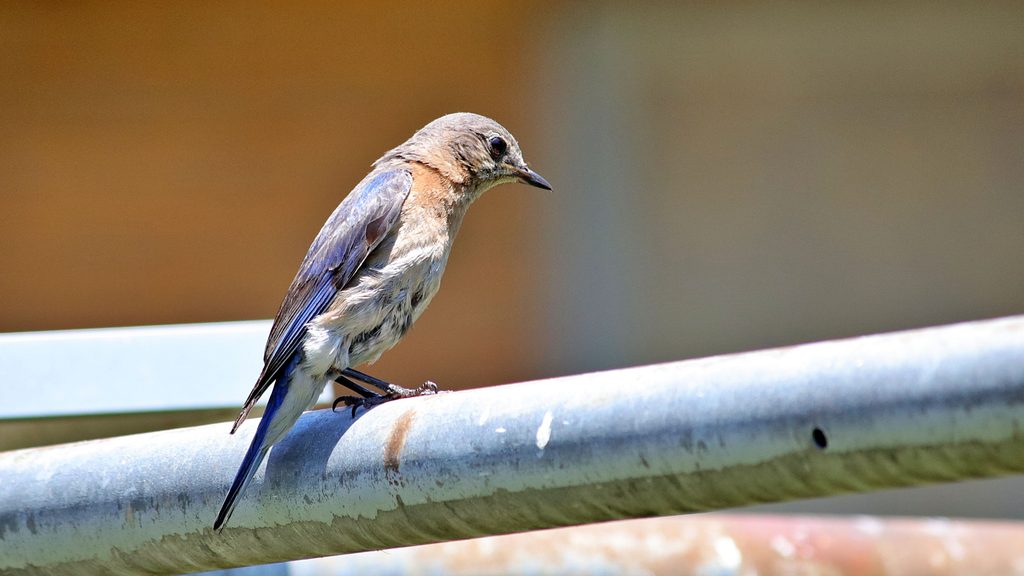
The Eastern Bluebird has a deep blue back and a rusty orange chest. Females are paler but still lovely. Many people consider this the friendliest sight of spring.
Bluebirds like open fields, farms, and golf courses with scattered trees. They nest in cavities. Nest boxes placed by volunteers have helped their numbers recover.
Look for them perched on fence posts or wires. They drop to the ground to catch insects. In winter, they eat berries.
6. Northern Mockingbird
The Northern Mockingbird is gray with white wing patches that flash in flight. It is slim and long-tailed. You will often see it on lawns, rooftops, and utility wires.
This bird is a master mimic. It copies other birds, frogs, and even car alarms. Males may sing through the night in spring.
Mockingbirds guard their nests fiercely. They will dive at cats, dogs, and people who come too close. I have been dive-bombed myself, and I respect their courage.
7. Blue Jay
The Blue Jay is a bold, noisy bird with a blue crest, white chest, and black necklace. Its harsh “jay-jay” call carries through the woods. It is hard to miss.
Blue Jays eat acorns, nuts, seeds, and insects. They hide acorns in the ground, which helps oak trees spread. They can also copy the cry of a hawk.
They live in the state year-round. Some jays migrate, but many stay in the same area. They are smart and social birds.
8. American Robin
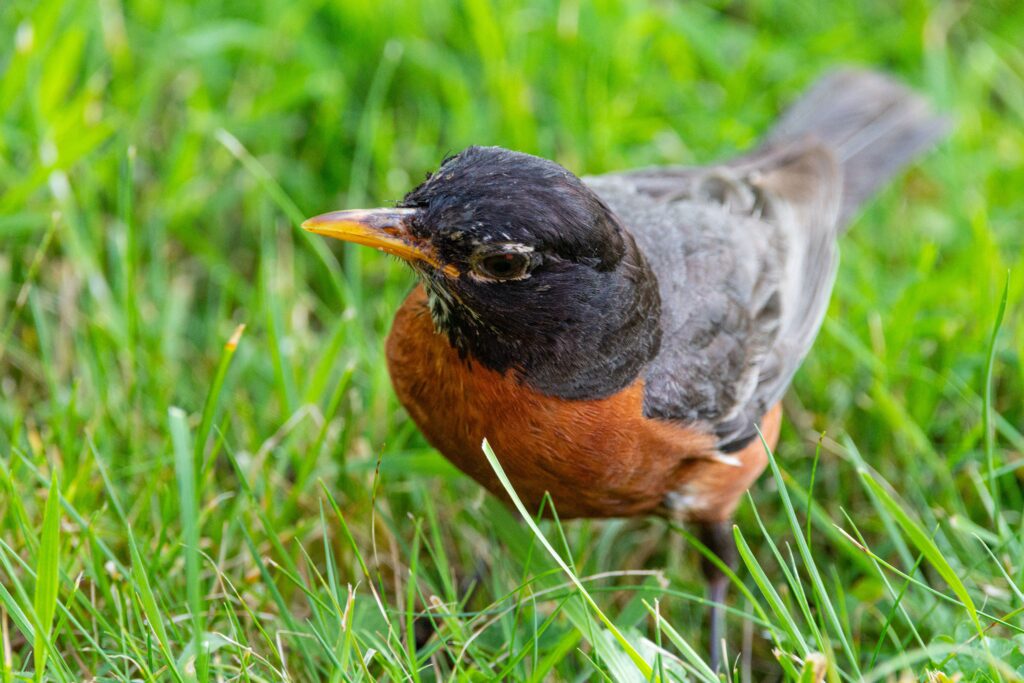
The American Robin has a brick-orange chest, gray-brown back, and yellow bill. Many people think of robins as a sign of spring, but in North Carolina they appear in winter too.
Robins hop across lawns and pause to tilt their heads. They are listening and watching for earthworms. In cold months they switch to berries and fruit.
Winter flocks can number in the hundreds. They move through holly and cedar trees, stripping the berries. Their song is a cheerful, rising and falling whistle.
9. Brown Thrasher
The Brown Thrasher is a long-tailed bird with a rusty back, streaked chest, and bright yellow eyes. It stays low in thickets and dense brush. It often hides well.
Its song is remarkable. Cornell researchers describe a repertoire of more than 1,000 song types. Each phrase is usually repeated twice.
Thrashers toss leaves aside to find insects. They live in the state year-round, though they are easier to hear than to see.
ALSO READ: 55 Birds Native to Florida (Identification, With Pictures)
10. Gray Catbird
The Gray Catbird is slate gray with a black cap and a rusty patch under the tail. It is slim and shy. It prefers dense shrubs and tangled edges.
Its name comes from its call, which sounds like a cat’s soft “mew.” It also sings a long, jumbled song of squeaks and whistles.
Catbirds are common in summer and breed in much of the state. Many winter along the coast. A brushy corner of a yard can attract them.
11. Mourning Dove
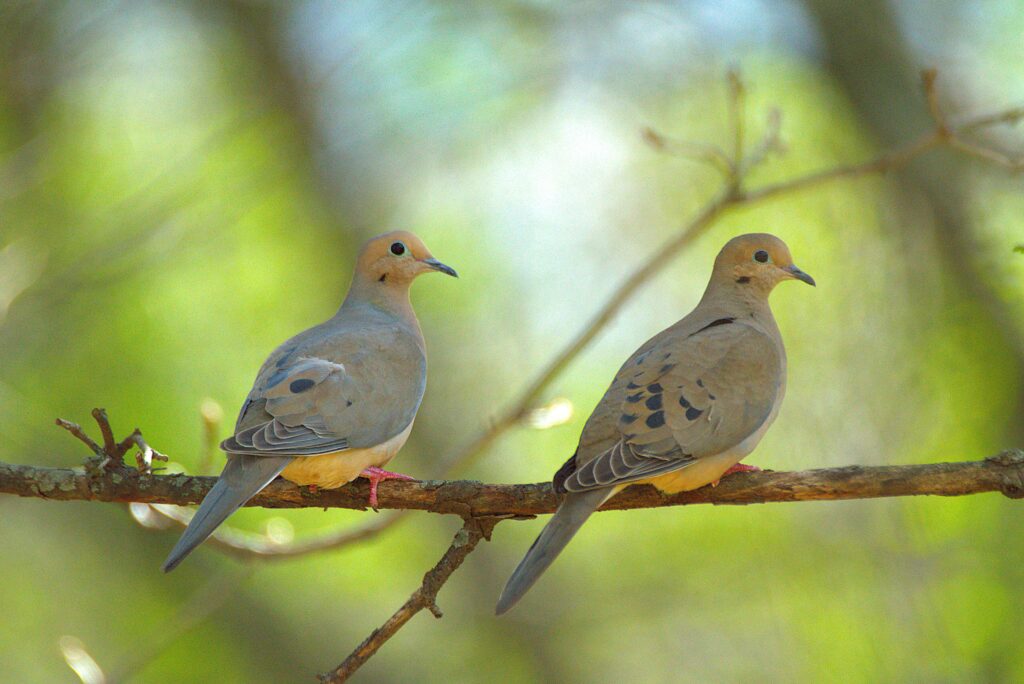
The Mourning Dove is soft tan-gray with black spots on the wings. It has a small head and a long, pointed tail. Its wings make a whistling sound on takeoff.
The song is a gentle, sad “coo-OO-oo-oo.” That sound gave the bird its name. It is one of the most common birds in the state.
Doves feed on seeds on the ground and near feeders. They can nest several times a year. A pair raises one or two young each time.
12. American Goldfinch
The American Goldfinch is a small finch. In summer, males are bright yellow with a black forehead and black wings. In winter they turn a dull olive-brown.
Goldfinches love thistle and sunflower seeds. They cling to feeders and hang from seed heads. They fly in a bouncing, wave-like pattern.
They nest late, in July or August, when thistle seeds are plentiful. Look for them in meadows, roadsides, and gardens.
Sparrows, Buntings, and Open-Country Birds
13. Chipping Sparrow
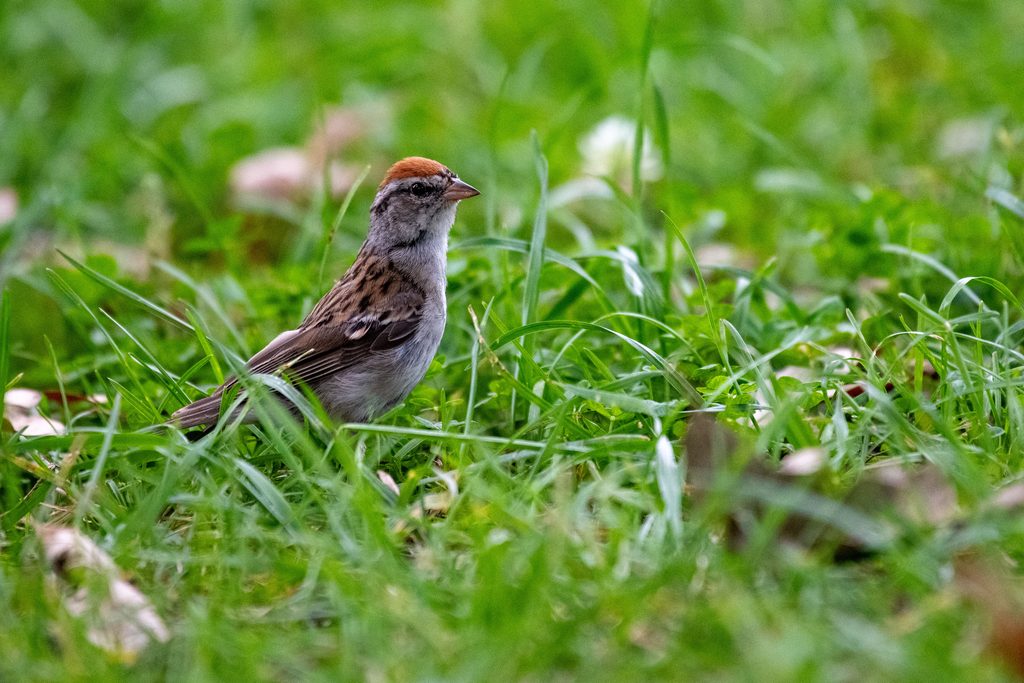
The Chipping Sparrow is a neat little bird with a rusty cap, a black line through the eye, and a clean gray chest. It is common on lawns and in open woods.
Its song is a fast, dry trill on one pitch. It sounds a bit like a tiny sewing machine. Chipping Sparrows nest in shrubs and low trees.
They spend summers across the state. Many move south in winter, though some stay. Look for them feeding on grass seed.
14. Eastern Towhee
The Eastern Towhee is a large sparrow. Males are black above with a white belly and rusty sides. Females are brown where males are black. Both have red eyes.
Towhees feed on the ground and scratch noisily through dead leaves. Their song is often written as “drink-your-tea.” Their call is a sharp “chewink.”
They live in thickets, forest edges, and overgrown fields. They are present in North Carolina all year.
15. Dark-eyed Junco
The Dark-eyed Junco is a small gray bird with a white belly and bright white outer tail feathers. Those white flashes show when it flies. The pink bill is a nice detail.
In the mountains, juncos breed in cool forests. In winter, many more arrive and spread across the entire state. People sometimes call them “snowbirds.”
Watch for them on the ground beneath feeders. They hop and scratch in small flocks. They are a reliable sign of cold weather.
ALSO READ: 40 Birds Native to North Dakota (Identification, With Pictures)
16. Song Sparrow
The Song Sparrow is a streaky brown bird with a dark central spot on the chest. It looks plain at first, but its song is rich and clear. It often begins with three bright notes.
It lives near water, in brush, and along field edges. It stays in the state all year, and winter brings extra birds from the north.
Each male has several song variations. Listen on a calm spring morning and you may hear him cycle through them.
17. Indigo Bunting
The Indigo Bunting is a small songbird. The male is a vivid blue that seems to glow in sunlight. The female is plain brown.
Here is a surprise: the blue is not a pigment. Feather structure scatters light to create it. In shade, the male can look nearly black.
Buntings arrive in April and nest in brushy fields and woodland edges. They fly to Central America and the Caribbean for winter. They migrate at night.
18. Painted Bunting
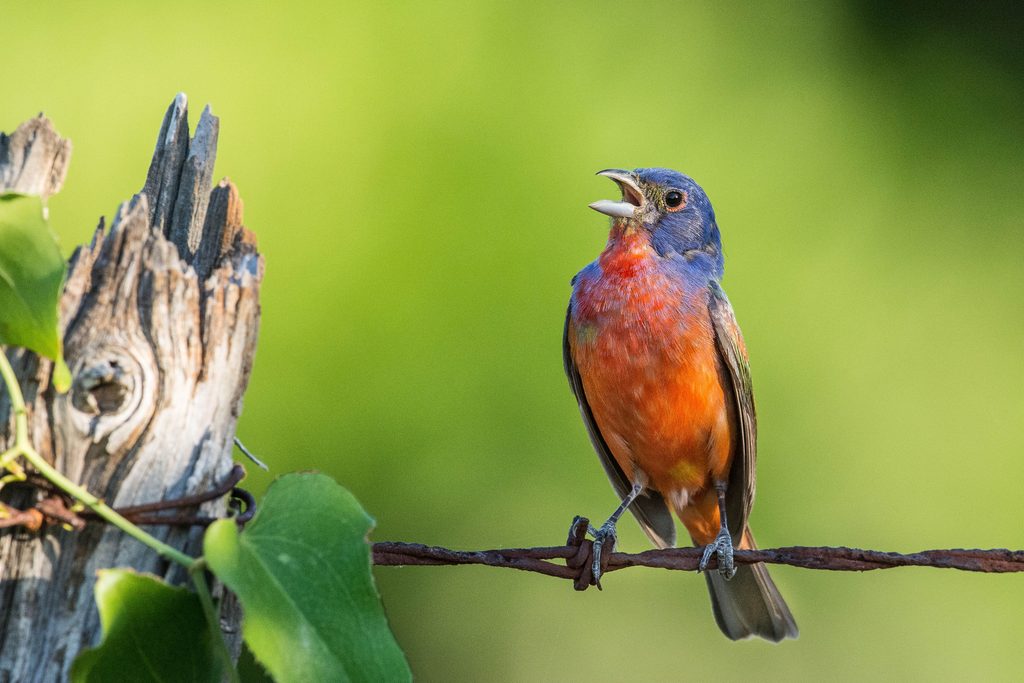
The Painted Bunting may be the most colorful bird in North America. Males show a blue head, green back, and red underside. Females are a bright lime green.
In North Carolina, it breeds mainly along the southern coast. It likes thickets, scrub, and the edges of maritime forest. It can be shy and hard to spot.
I would rank this bird near the top of any list. Seeing one for the first time is something you remember. Habitat loss along the coast remains a concern.
19. Red-winged Blackbird
The Red-winged Blackbird is a glossy black bird. The male has red and yellow shoulder patches that he flashes when displaying. Females are streaky brown.
You will find them in marshes, ditches, and wet fields. Males sit on cattails and sing a gurgling “conk-la-ree.” They defend territories boldly.
In winter, they gather in huge mixed flocks. These can include thousands of birds. They are among the most abundant birds in the state.
20. Eastern Meadowlark
The Eastern Meadowlark has a bright yellow chest with a black V-shaped band. Its back is streaked brown. White outer tail feathers flash in flight.
It lives in open grassland, pastures, and hayfields. The song is a clear, sweet whistle that carries across a field. Males sing from fence posts.
Grassland birds have declined across the country as farmland changes. Habitat protection matters for this species. Delayed mowing helps nesting birds.
21. Baltimore Oriole
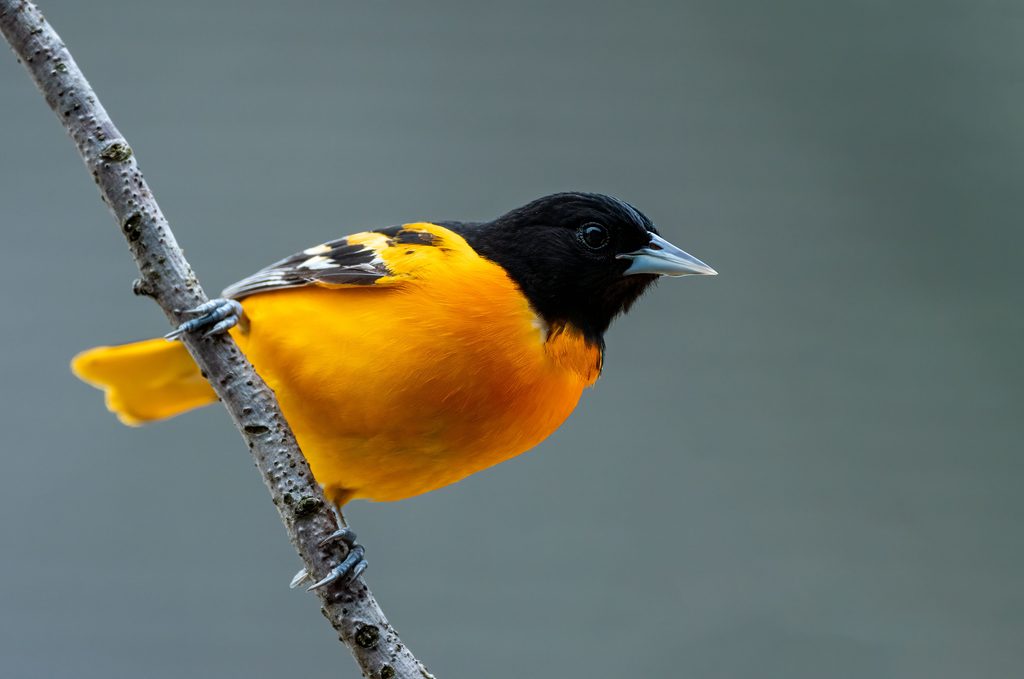
The Baltimore Oriole is a bright orange and black bird. Males have a solid black head. Females are a softer yellow-orange. Both have white wing bars.
In North Carolina, this oriole is mostly a migrant. It passes through in spring and fall, and a few breed in the mountains. It loves ripe fruit.
Orange halves and grape jelly at feeders can attract them. The woven, hanging nest is a work of art. It dangles from the tips of tall trees.
Hummingbirds and Woodpeckers
22. Ruby-throated Hummingbird
The Ruby-throated Hummingbird is the only hummingbird that regularly breeds in the eastern United States. It weighs about three grams, roughly the weight of a penny.
Males show a glittering red throat. Females have a white throat and green back. Wings beat about 50 times per second. They hover to sip nectar.
They arrive in spring and leave by early fall. Many fly across the Gulf of Mexico on migration. Plant tubular flowers like trumpet vine to attract them.
23. Downy Woodpecker
The Downy Woodpecker is the smallest woodpecker in North America. It has a black and white pattern with a white stripe down the back. Males have a red patch on the head.
It is common at feeders, especially those with suet. It also visits parks, orchards, and wooded neighborhoods. It stays in the state all year.
Its bill is short and delicate. Do not confuse it with the Hairy Woodpecker, which is larger and has a much longer bill.
ALSO READ: 35 Birds Native to Czech Republic (Identification, With Pictures)
24. Red-bellied Woodpecker
The Red-bellied Woodpecker has a black-and-white barred back and a red cap. The pale belly has only a faint reddish tinge. The name always confuses beginners.
It is common in forests, suburbs, and backyards across the state. It eats insects, nuts, fruit, and seeds. It will visit feeders for suet and peanuts.
The call is a rolling, churring “churr.” Listen for it in mature woods. This species has expanded its range northward in recent decades.
25. Pileated Woodpecker
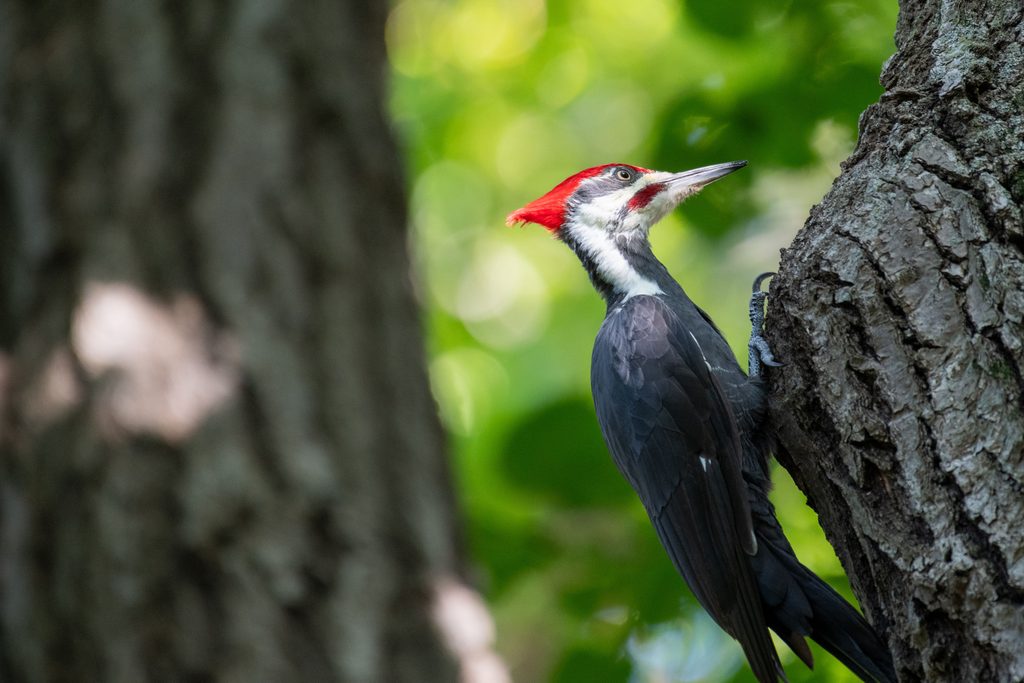
The Pileated Woodpecker is about the size of a crow. It is black with white stripes on the face and a flaming red crest. It is one of the most striking birds in the state.
It chisels large, rectangular holes in dead trees to find carpenter ants. Look for fresh wood chips at the base of a tree. Many other animals use its old cavities.
It prefers mature forest and swampy woods. The call is a loud, wild laugh that rings through the trees. I never tire of hearing it.
26. Red-cockaded Woodpecker
The Red-cockaded Woodpecker is a small black-and-white woodpecker. The tiny red streak on a male is rarely visible. It is closely tied to mature pine forests.
It is unusual because it is the only woodpecker that carves its cavities in living pine trees, and one of eight woodpecker species in North Carolina. That habit makes it dependent on old longleaf pines.
The species was first listed as endangered in 1973 and was later downlisted to threatened. The Sandhills region is a stronghold. Prescribed fire helps keep its habitat open.
27. Northern Flicker
The Northern Flicker is a large, brown woodpecker with black spots and a black crescent on the chest. In flight, you will see a bright white rump and yellow under the wings.
Unlike most woodpeckers, flickers feed on the ground. They probe for ants and beetles. You may see them hopping across a lawn.
They live in the state year-round. Their call is a loud “wick-wick-wick.” Males also drum on trees and even metal to attract mates.
28. Yellow-bellied Sapsucker
The Yellow-bellied Sapsucker is a medium woodpecker with a red forehead, black-and-white face, and pale yellow belly. It has a long white wing patch.
In North Carolina it is mostly a winter visitor. It drills neat rows of small holes in tree bark. Then it returns to drink the sap and eat the insects drawn to it.
Check orchard trees and birches for those telltale rows. Hummingbirds and other birds also use these sap wells. Sapsuckers are quiet and easy to miss.
Owls, Hawks, and Birds of Prey
29. Barred Owl
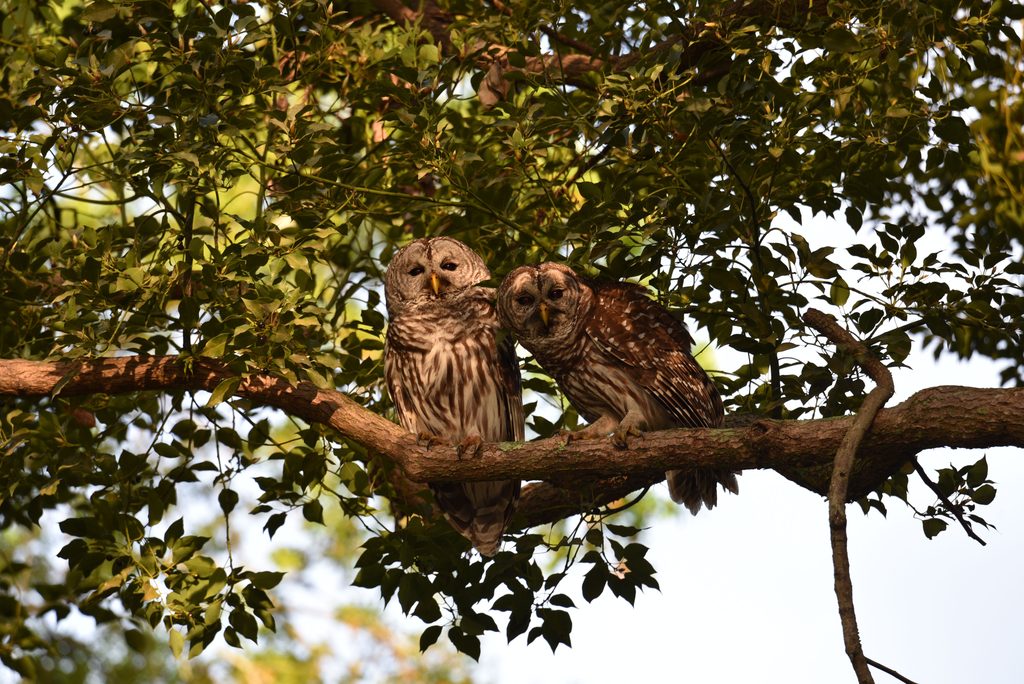
The Barred Owl is a large, round-headed owl with dark eyes and brown-and-white streaking. It is common in wooded swamps, river bottoms, and mature forests.
Its call is famous: “Who cooks for you? Who cooks for you-all?” It hoots at night, but you may also hear it by day. Pairs often call back and forth.
It eats mice, frogs, snakes, and small birds. In my experience, a night walk near a creek is the best way to meet one.
30. Eastern Screech-Owl
The Eastern Screech-Owl is small and stocky, with ear tufts. It comes in two color forms, gray and reddish-brown. Both blend in with tree bark.
Despite the name, it does not truly screech. It gives a soft, whinnying trill and a long, even whistle. It lives in woods, parks, and yards.
It nests in tree cavities and accepts nest boxes. A box placed on a mature tree may attract a pair. During the day, owls often doze in the entrance hole.
ALSO READ: 35 Animals Native to Hawaii (Identification, With Pictures)
31. Great Horned Owl
The Great Horned Owl is a powerful, large owl with prominent ear tufts and yellow eyes. Its deep, steady hooting is a classic winter-night sound.
This owl nests earlier than almost any other bird. Eggs can be laid in midwinter. It often takes over an old hawk or crow nest.
It hunts rabbits, skunks, rodents, and even other owls. It lives in forests, farmland, and cities. It is one of the most adaptable owls in North America.
32. Red-tailed Hawk
The Red-tailed Hawk is a large, broad-winged hawk. Adults have a rusty-red tail and a pale chest with a dark band across the belly. It is the hawk you will see most often.
Watch for it perched on highway poles or soaring over open fields. Its call is a raspy scream. Film and television often use this sound for any eagle or hawk.
It hunts rodents, rabbits, and snakes. It lives across North Carolina all year. In winter, northern birds join the local population.
33. Red-shouldered Hawk
The Red-shouldered Hawk is a medium-sized hawk with rusty barred underparts and a checkered black-and-white back. Its tail has narrow white bands.
It prefers moist woods, swamps, and river floodplains. It is noisy. Its repeated “kee-yar, kee-yar” call echoes through the forest, especially in spring.
It eats frogs, snakes, small mammals, and crayfish. Blue Jays copy its call, so double-check before you get excited. A clear view will settle it.
34. Cooper’s Hawk
The Cooper’s Hawk is a crow-sized hawk with blue-gray upperparts, a rusty-barred chest, and a long, rounded tail. It flies with quick, flapping wingbeats and short glides.
It hunts other birds. It darts through trees and surprises prey at bird feeders. If your feeder suddenly empties, a Cooper’s Hawk may be nearby.
It is a natural part of the food web, so try not to worry. It lives in woods and suburbs across the state. Many now nest in towns.
35. Bald Eagle
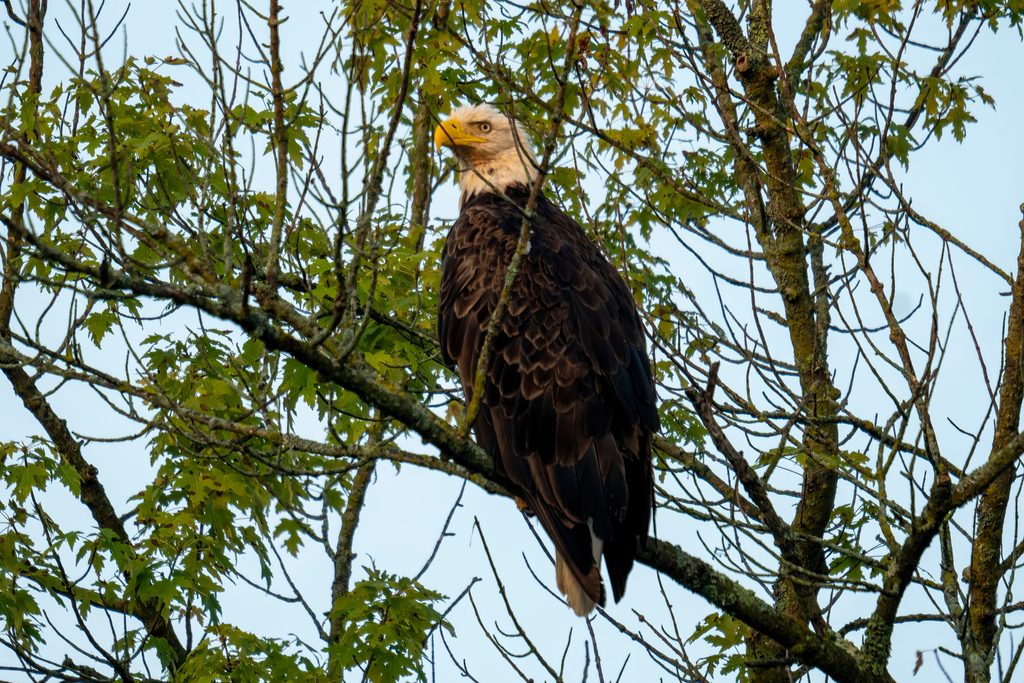
The Bald Eagle is the national bird of the United States. Adults have a white head and tail with a dark brown body. Young birds are mottled brown and take about five years to mature.
Eagles nest near large lakes, rivers, and coastal areas in North Carolina. Look around Jordan Lake and Lake Mattamuskeet. They build huge stick nests that grow bigger each year.
The species has made a strong comeback since the 1960s. It was removed from the federal endangered list in 2007. Seeing one soar is always moving.
36. Osprey
The Osprey is a large raptor with a white chest, dark back, and a dark stripe through the eye. It feeds almost entirely on fish.
Ospreys hover over the water and then plunge feet-first. They carry the catch with the head pointing forward. Look for them along the coast, lakes, and large rivers.
They build bulky nests on platforms, channel markers, and poles. They spend winter in Central and South America. Their return in March is a welcome sign of spring.
ALSO READ: 25 Common Types of Parrots (Species Traits, With Pictures Explained )
37. American Kestrel
The American Kestrel is the smallest falcon in North America. Males have blue-gray wings and a rusty back. Females are warm brown with barring. Both have two black face stripes.
You will often see kestrels perched on wires along open fields. They hover while hunting grasshoppers, mice, and small birds. Their call is a rapid “killy-killy-killy.”
Kestrel numbers have declined in parts of the country. Nest boxes can help them. They are most common in winter in North Carolina.
38. Turkey Vulture
The Turkey Vulture is a large, dark bird with a bare red head. In flight, its wings form a shallow V. It rocks gently from side to side as it glides.
It feeds on carrion and rarely kills prey. It has a strong sense of smell, which is unusual among birds. This helps it find food beneath forest cover.
Vultures play a useful role by cleaning up dead animals. They roost in groups and soar on rising warm air. They are common across the state.
Game Birds, Waterbirds, and Coastal Species
39. Wild Turkey
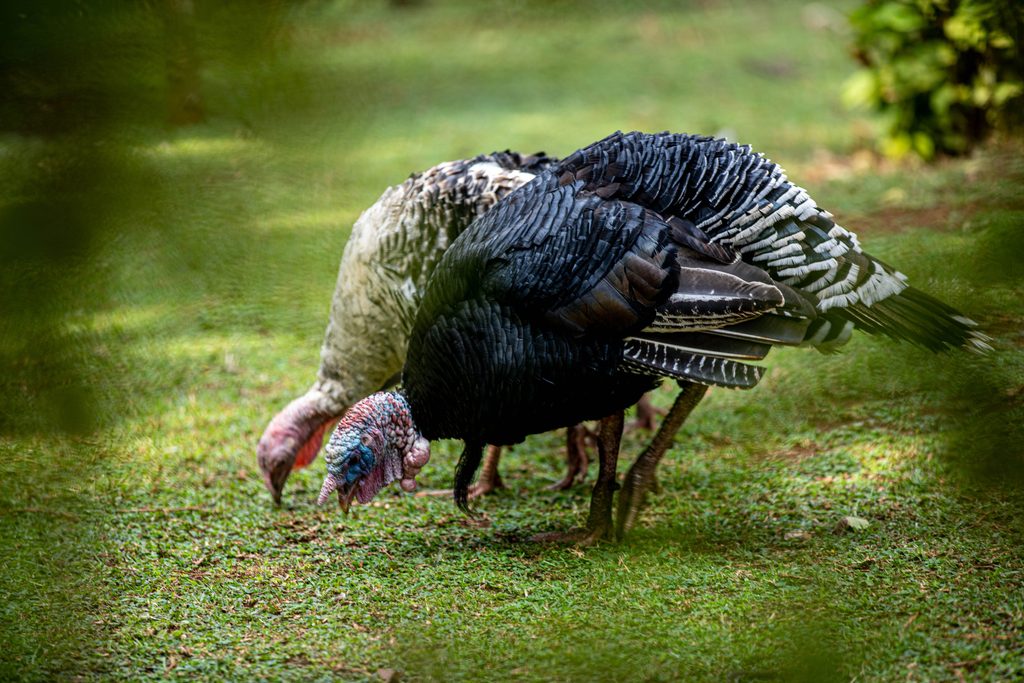
The Wild Turkey is a large, dark bird with bronze feathers and a bare blue-gray head. Males, called toms, fan their tails and puff up their bodies during courtship.
Turkeys were once scarce in North Carolina because of hunting and habitat loss. Restoration efforts brought them back, and they now live in all 100 counties.
You can see them in forests, farm edges, and even suburban fields. They roost in trees at night. They spend the day scratching for acorns and insects.
40. Northern Bobwhite
The Northern Bobwhite is a small, round quail with a mottled brown body. Males have a bold white throat and eyebrow stripe. Females look similar but have buff patches.
Its name comes from its whistled call: “bob-WHITE!” Males sing it in spring and summer. Bobwhites live in grassy fields with brushy cover.
Their numbers have dropped sharply across the Southeast. Cleared hedgerows and intensive farming are major causes. Habitat management is helping in some areas.
41. Wood Duck
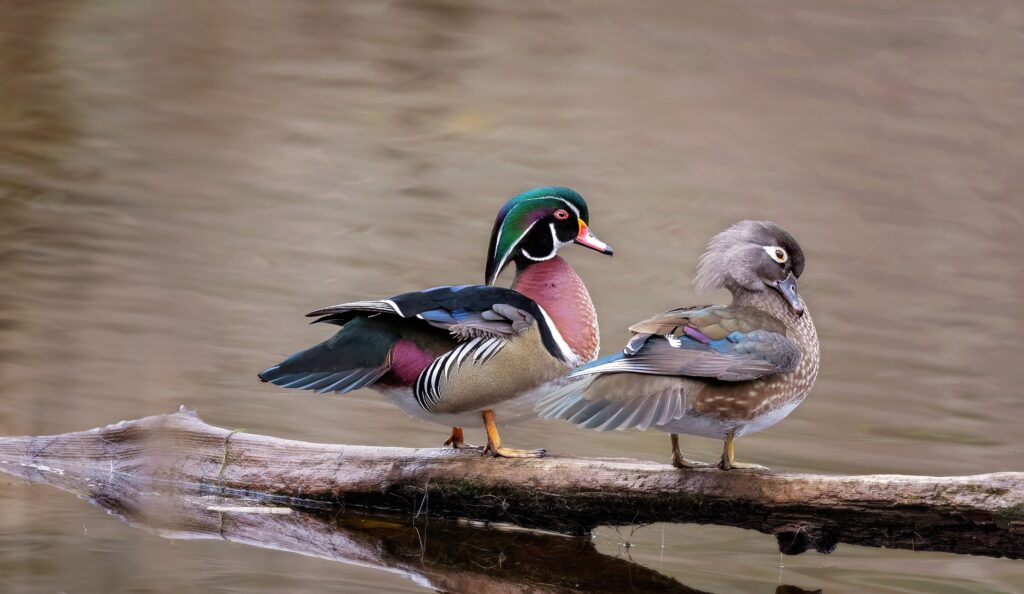
The Wood Duck is one of the most beautiful ducks in the world. Males are iridescent green, purple, and chestnut with a swept-back crest. Females are subtler, with a white eye patch.
It lives in wooded swamps, ponds, and slow rivers. It nests in tree cavities high above the ground and also uses nest boxes.
Here is my favorite fact: a day after hatching, ducklings leap from the nest. They tumble to the ground unharmed. Then they follow their mother to the water.
42. Great Blue Heron
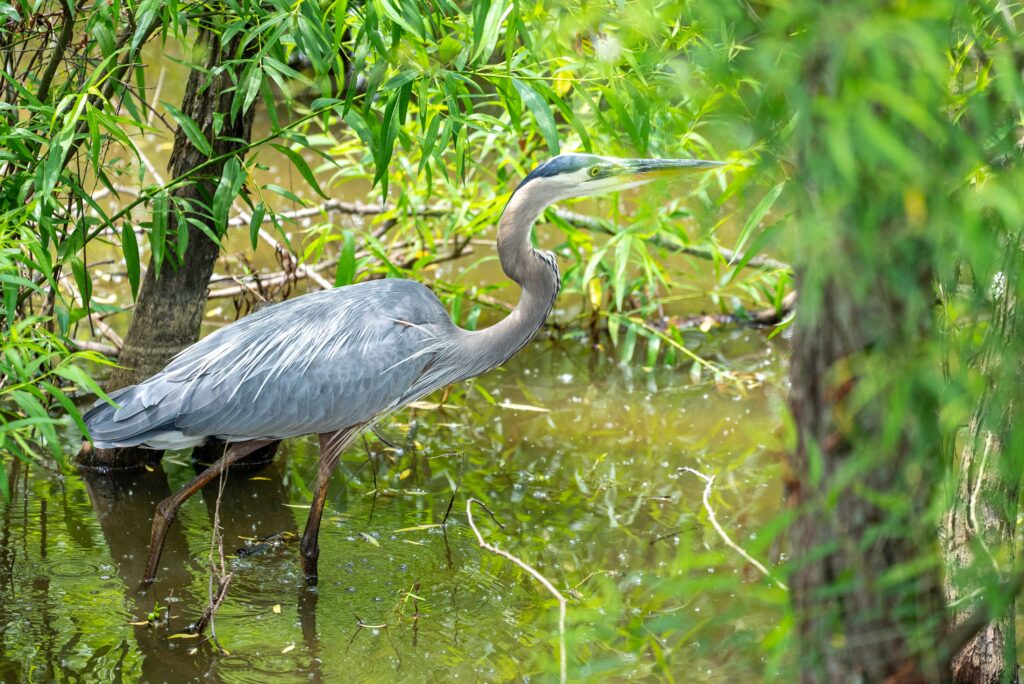
The Great Blue Heron stands about four feet tall. It has blue-gray feathers, a long neck, and a dagger-like bill. Its wingspan can reach about six feet.
It wades slowly in shallow water and strikes at fish and frogs. It also hunts mice in fields. You can find it in marshes, ponds, and tidal flats.
It lives in the state all year. Herons nest in colonies called rookeries, usually high in trees. In flight, the neck folds into an S-shape.
43. Brown Pelican
The Brown Pelican is a large coastal bird with a long bill and a throat pouch. Adults have a white head and a dark brown body. Their wingspan can exceed six feet.
It dives from the air to catch fish. It glides low over waves in single-file lines. You can see it from the Outer Banks to the southern beaches.
The species suffered badly from DDT in the 20th century. It has since made a strong recovery. Pelicans now nest on coastal islands in North Carolina.
44. Piping Plover
The Piping Plover is a small, sand-colored shorebird with a short orange bill and a black band on the neck. It blends perfectly with sandy beaches.
It is a threatened species. Small numbers nest on North Carolina beaches, and more pass through in migration. Beach nests are easily crushed by people and dogs.
Please give these birds space. Keep dogs leashed and respect posted nesting areas. Their soft, whistled “peep-lo” call is a lovely sound.
45. American Oystercatcher
The American Oystercatcher is a striking, black-and-white shorebird with a long, bright orange-red bill. It has pink legs and a yellow eye with a red ring.
Its bill is built to pry open oysters, clams, and mussels. It lives on beaches, sandbars, and oyster reefs. It is a species of concern because beach nesting is risky.
North Carolina’s coast is important for the species. It nests and winters here. Listen for its loud, piping “wheep” call over the tidal flats.
46. Laughing Gull
The Laughing Gull has a black hood in summer, a white body, and a dark gray back. In winter, the hood fades to a smudgy gray patch. It is the common gull of the coast.
Its call is a long series of laughing “ha-ha-ha” notes. Flocks gather on beaches, piers, and parking lots. They happily steal french fries from tourists.
They nest in coastal marshes and islands. Many head south for winter, though some stay. They are fun to watch and an easy species for beginners.
47. Belted Kingfisher
The Belted Kingfisher is a stocky, blue-gray bird with a shaggy crest and a heavy bill. It has a white collar and a blue band across the chest.
Here is an odd detail: the female is more colorful. She has a rusty band across the belly in addition to the blue one. This is unusual among birds.
It perches over streams and ponds. Then it dives headfirst for small fish. You will often hear its dry, rattling call before you see it.
Flycatchers and Forest Songbirds
48. Eastern Phoebe
The Eastern Phoebe is a plain, gray-brown flycatcher with a pale belly and a dark head. It wags its tail constantly while perched. That habit helps identify it.
It is one of the first spring migrants to return. Some even stay through winter in North Carolina. Its song is a raspy “fee-bee.”
Phoebes build mud-and-moss nests under bridges, eaves, and porches. They catch insects in midair. They are calm, friendly neighbors.
49. Scarlet Tanager
The Scarlet Tanager is a medium-sized songbird. Breeding males are a brilliant red with jet-black wings and tail. Females and fall males are olive-yellow.
It stays high in the canopy of mature hardwood forests, so it can be hard to find. Its song sounds like a robin with a sore throat. Listen for the hoarse “chick-burr” call.
It breeds in the mountains and Piedmont forests. In winter, it flies all the way to South America. Spotting one is a real highlight.
50. Wood Thrush
The Wood Thrush is a medium-sized, brown thrush with a white chest covered in bold black spots. It prefers shady, moist forests with thick undergrowth.
Its song is one of the most beautiful in North America. The bird sings a flute-like, echoing melody. It can produce two notes at once, thanks to its two-part voice box.
Wood Thrush populations have fallen over the past decades. Forest loss and fragmentation are the main reasons. Protecting woodlands helps this songbird and many others.
Tips for Finding These Birds in North Carolina
Start with your own yard. A simple feeder, a bird bath, and some native shrubs will bring in many of the birds above. Place feeders near cover so birds feel safe.
Visit different habitats. The mountains offer warblers, juncos, and tanagers. The Piedmont is good for woodpeckers and sparrows. The coast gives you pelicans, gulls, and shorebirds.
Go early. Most birds are most active in the first few hours after sunrise. Bring binoculars and a field guide or a free bird app. Report your sightings to community science projects like eBird.
Finally, be patient and respectful. Keep your distance from nests. Never use recorded calls in sensitive areas. Good birding is quiet, slow, and kind to wildlife.
Final Thoughts
North Carolina is a true haven for bird lovers. These 50 species give you a strong starting point, whether you are a beginner or an experienced birder.
Some, like the Northern Cardinal, are as close as your window. Others, like the Painted Bunting or the Piping Plover, take effort and luck. Each one is worth the search.
Protecting these birds depends on protecting their habitat: pine forests, wetlands, grasslands, and beaches. Every feeder, nest box, and native plant helps. Grab your binoculars and get outside.
References
- North Carolina Wildlife Resources Commission. Red-cockaded Woodpecker Safe Harbor Program: Questions and Answers. https://ncwildlife.gov/rcwsafeharborqapdf/open
- North Carolina Wildlife Resources Commission. Birds of South Mountains Game Land (checklist). https://www.ncwildlife.gov/media/2100/download
- National Park Service. Birds – Great Smoky Mountains National Park. https://www.nps.gov/grsm/learn/nature/birds.htm
- U.S. Fish and Wildlife Service. Red-cockaded Woodpecker Project Review, Sandhills of North Carolina. https://www.fws.gov/office/eastern-north-carolina/sandhills-rcw-safe-harbor
- U.S. Fish and Wildlife Service. Environmental Conservation Online System: Red-cockaded Woodpecker. https://ecos.fws.gov/ecp/species/7614
- North Carolina State University Extension. Wildlife Perspective (Red-cockaded Woodpecker and prescribed fire). https://efire.ces.ncsu.edu/why-burn/wildlife-perspective/
- Cornell Lab of Ornithology, Cornell University. Bird research and species resources. https://www.birds.cornell.edu/home/