Angelfish Tank Temperature Range: The Complete Guide for Healthy Fish
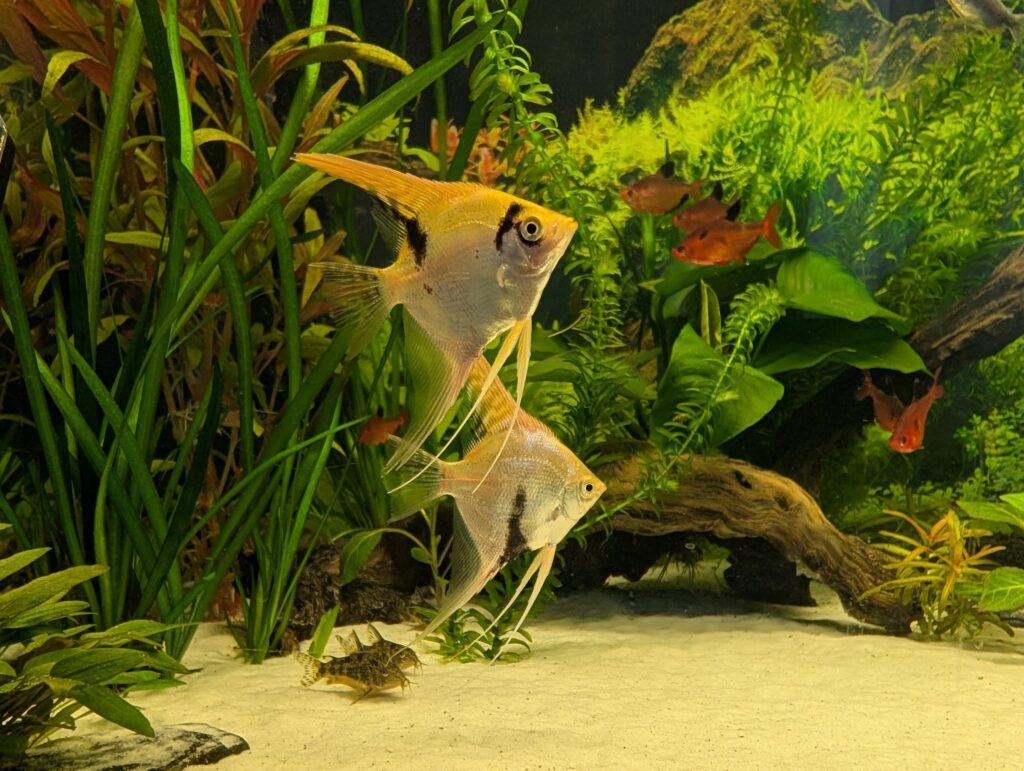
Angelfish are among the most graceful freshwater fish in the hobby. Their flowing fins and calm presence make them a favourite for many aquarists — beginners and experienced keepers alike. Yet, for all their beauty, they are surprisingly sensitive to water conditions.
Of all the parameters that affect their health, temperature is arguably the most important. Get it right, and your angelfish will thrive. Get it wrong consistently, and the consequences can be serious.
This guide covers everything you need to know about angelfish tank temperature — the ideal range, the risks of extremes, how to maintain stability, and what signs to watch for when something goes wrong.
Here is a quick summary for angelfish temperature needs.
| Condition | Temperature Range |
| Minimum safe temperature | 74°F / 23°C |
| General community tank ideal | 76°F – 82°F / 24°C – 28°C |
| Optimal sweet spot | 78°F – 80°F / 25.5°C – 26.7°C |
| Breeding encouragement | 80°F – 84°F / 26.7°C – 28.9°C |
| Maximum safe temperature | 86°F / 30°C |
What Is the Ideal Angelfish Tank Temperature?
The ideal temperature range for angelfish (Pterophyllum scalare) in a home aquarium is 76°F to 84°F (24°C to 29°C). Within this range, most aquarists and fishkeeping authorities agree that 78°F to 80°F (25.5°C to 26.7°C) represents the sweet spot for general community tanks.
These numbers are not arbitrary. They reflect the natural habitat of wild angelfish — the slow-moving rivers, flooded forests, and tributaries of the Amazon Basin in South America. These waters are warm year-round, rarely dropping below 75°F or climbing above 86°F in most regions. Replicating that thermal environment in captivity is the goal.
For breeding purposes, many experienced aquarists slightly raise the temperature to 80°F to 84°F (26.7°C to 28.9°C). Warmer water stimulates spawning behaviour and increases the activity of the fish.
However, sustained temperatures at the higher end of the range can accelerate metabolism and reduce dissolved oxygen, so this requires additional attention to aeration.
Why Temperature Matters So Much for Angelfish
Fish are ectothermic, meaning they cannot regulate their own body temperature. They depend entirely on the surrounding water to maintain their internal processes. This makes temperature not just a comfort factor but a biological necessity.
Here is why it matters so much for angelfish specifically:
Immune System Function
Angelfish kept in water that is too cold experience a suppressed immune response. Their white blood cells become less effective, leaving them vulnerable to bacterial infections, parasitic infestations like ich (Ichthyophthirius multifiliis), and fungal diseases.
Many cases of sudden illness in angelfish tanks trace back to a drop in temperature that went unnoticed for days.
Digestion and Metabolism
Temperature directly influences how efficiently angelfish digest food. In colder water, their metabolism slows considerably. Food can sit undigested in their gut longer than it should, leading to bloating, constipation, or general lethargy.
In warmer water, metabolism speeds up — which sounds positive, but excessive heat also means the fish burn through energy reserves faster and require more frequent feeding to compensate.
Oxygen Levels
Warm water holds less dissolved oxygen than cool water. At the upper end of the angelfish temperature range, maintaining adequate aeration becomes essential. Angelfish do not tolerate low oxygen well, and inadequate aeration in a warm tank can cause stress, surface gasping, and in severe cases, death.
Breeding and Reproduction
Temperature cues play a direct role in the angelfish reproductive cycle. Fluctuations in temperature — even moderate ones — can disrupt spawning or cause a breeding pair to abandon their eggs. Stability matters just as much as the actual number on the thermometer.
The Danger of Temperature Extremes
Temperature extremes can affect your fish in many ways.
Too Cold: Below 74°F (23°C)
When tank temperature falls below 74°F, you will start to see visible changes in your fish relatively quickly. Angelfish become less active. They may hover near the bottom, eat less, and lose some of their colour intensity.
Prolonged exposure below 70°F (21°C) places them under severe physiological stress and can be fatal within days.
In practice, cold temperatures tend to result from heater failure, power outages, or placing a tank near a drafty window or air conditioning vent. These are controllable factors — and worth paying close attention to, especially during winter months.
Too Hot: Above 86°F (30°C)
High temperatures present a different set of problems. As water warms, oxygen concentration drops. The fish become restless, swimming erratically or rushing to the surface. Their gills work harder to extract enough oxygen from the water.
The beneficial bacteria in your biological filter — the ones responsible for breaking down toxic ammonia and nitrite — also begin to struggle above certain temperatures, which can destabilise water quality quickly.
Sustained exposure above 88°F (31°C) can cause organ damage and death. This is a risk during summer heat waves, particularly in tanks without chillers or adequate ventilation.
Temperature Stability: Often More Important Than the Number Itself
One point that many beginner aquarists overlook is that consistency is as critical as accuracy. A tank that fluctuates between 74°F in the morning and 82°F in the afternoon creates chronic stress in angelfish, even though both temperatures fall within the acceptable range when considered individually.
Sudden swings of even 4°F to 5°F within a 24-hour period can trigger stress responses, weaken the immune system, and leave fish vulnerable to disease. This is why aquarium thermometers are not optional equipment — they are essential. Check the temperature at least twice daily if you do not have a thermometer with continuous monitoring.
Temperature fluctuations are often caused by:
- Aquarium lights generating heat over the course of the day
- Room temperature changes between day and night
- Water top-offs using water at a different temperature than the tank
- Inadequate or failing heaters
Addressing these factors proactively protects your fish far better than any medication or supplement can.
How to Maintain the Right Temperature
Angelfish need consistency in their optimum temperature. Here is how to maintain the right temperature:
Choosing the Right Heater
For angelfish tanks, a reliable submersible heater is essential. The general recommendation is 5 watts of heating capacity per gallon of water for most average home environments. A 55-gallon tank, for instance, should have at least a 250-watt heater — or preferably two smaller heaters placed at opposite ends of the tank.
Using two heaters adds a safety margin: if one fails, the other prevents the tank from becoming dangerously cold before you notice.
Look for heaters with accurate thermostats and glass or titanium construction. Titanium heaters are more durable and resist corrosion, though they carry a higher upfront cost.
Placement Matters
Place the heater near a filter intake or outlet so that warm water circulates throughout the tank. A heater positioned poorly — for example, behind a decoration with no water flow — creates hot and cold zones in the same tank. Angelfish are perceptive to temperature gradients and will avoid areas that feel too warm or too cold, leading to stress.
Using a Separate Thermometer
Never rely solely on the dial or digital reading built into your heater. Many cheap heaters are notoriously inaccurate. Use a separate aquarium thermometer — either a digital probe thermometer or a liquid crystal strip — to verify actual water temperature independently.
Aquarium Chillers for Hot Climates
In regions where ambient room temperature regularly exceeds 82°F (28°C) during summer, an aquarium chiller may be a worthwhile investment. Alternatively, floating a sealed bag of ice in the sump or using a fan to evaporate water from the surface can reduce temperature temporarily — though neither approach offers the precision or consistency of a purpose-built chiller.
Suggested For You:
Angelfish Tank Size: Minimum Gallons and Everything You Need to Know
Angelfish Water pH Requirements: The Complete Guide for Healthy Fish
Best Tank Mates for Angelfish: A Complete Community Tank Guide
Black Veil Angelfish for Sale: What to Know Before You Buy
How to Set Up an Angelfish Breeding Tank: A Complete Guide
Angelfish Stocking: How Many in 75, 55, 29, 25 Gallon Tank
Angelfish Temperature Compatibility with Tank Mates
If you keep angelfish in a community tank, the temperature requirements of all species must overlap. Fortunately, many popular tropical fish thrive in a similar range.
Good companions that share the 76°F to 82°F (24°C to 28°C) sweet spot include cardinal tetras, rummy-nose tetras, corydoras catfish, dwarf gouramis, and discus (though discus often prefer slightly warmer water toward 82°F to 86°F).
Avoid pairing angelfish with fish that require significantly cooler water, such as goldfish (which prefer 65°F to 72°F). The temperature compromise needed would harm one species or the other.
Warning Signs of Temperature Problems
Watch for these behavioural and physical signs that may indicate the water temperature is off:
- Clamped fins — often one of the first visible signs of thermal stress or disease triggered by cold water
- Hovering near the surface — can indicate oxygen depletion from water that is too warm
- Rapid gill movement — a sign the fish is struggling to extract enough oxygen
- Loss of appetite — common in both cold and very hot conditions
- Faded colouration — often accompanies stress of any kind, including thermal
- White spots or patches — ich outbreaks are commonly triggered by sudden temperature drops
If you observe any of these signs, check the thermometer immediately. In many cases, addressing a temperature problem early is enough to prevent more serious illness from developing.
Final Thoughts
Maintaining the correct angelfish tank temperature is not complicated — but it does require consistent attention. A reliable heater, an accurate thermometer, and a habit of checking conditions regularly are all it takes to keep the thermal environment stable.
That stability, more than almost any other factor, sets the foundation for healthy, long-lived, and beautifully coloured fish.
Angelfish can live for ten years or more in well-maintained aquariums. Temperature management is one of the most significant contributions you can make toward that outcome.
References
- Fisheries and Wildlife Sciences – Missouri State University Aquatic Animal Physiology and Environmental Temperature https://fisheries.missouristate.edu/
- Smithsonian Tropical Research Institute Amazon River Basin Ecology and Thermal Characteristics https://stri.si.edu/
- University of Florida IFAS Extension – Fisheries and Aquatic Sciences Tropical Fish Culture and Water Quality Management https://edis.ifas.ufl.edu/topic_tropical_fish
- North Carolina State University – College of Agriculture and Life Sciences Aquaculture Water Quality: Temperature and Dissolved Oxygen https://content.ces.ncsu.edu/aquaculture
- The Ohio State University Extension – Aquatic Ecosystem Management Thermal Biology of Freshwater Fish and Optimal Holding Conditions https://ohioline.osu.edu/factsheet/A-9