Black Veil Angelfish for Sale: What to Know Before You Buy
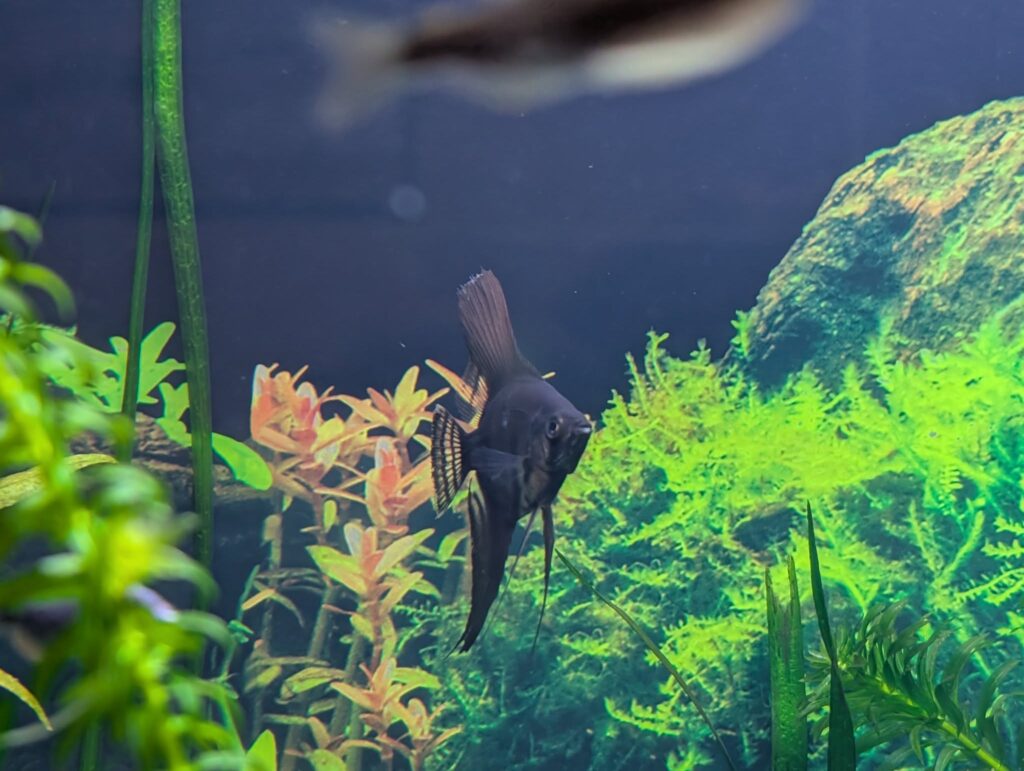
Black veil angelfish are one of the most striking freshwater fish available in the aquarium hobby. Their deep, uniform coloration and long, flowing fins make them a standout choice for any community tank.
If you are searching for black veil angelfish for sale, this guide will help you understand what to look for, where to find healthy specimens, how to care for them, and what to expect in terms of pricing and compatibility.
What Is a Black Veil Angelfish?
The black veil angelfish is a selectively bred variant of Pterophyllum scalare, the common freshwater angelfish native to the Amazon River basin in South America. Two traits define this variety.
First, the “black” refers to its deep, solid dark coloration — ideally, a rich charcoal or near-black tone across the entire body. Second, the “veil” refers to its extended finnage: the dorsal, anal, and caudal fins are significantly longer than those of standard angelfish, giving the fish a dramatic, flowing appearance.
This combination of color and form has made the black veil angelfish a highly desirable breed among aquarists of all experience levels. It is worth noting that some individuals display a slightly marbled pattern rather than a fully solid black, depending on the quality of the breeding line.
Why People Seek Black Veil Angelfish for Sale
The demand for black veil angelfish is driven by more than just aesthetics. These fish have a calm but confident presence in the aquarium. Watching them glide through a planted tank brings a sense of stillness that many aquarists find genuinely satisfying.
Beyond appearance, they are:
- Relatively hardy compared to some other fancy angelfish strains
- Long-lived, with a lifespan of 8 to 12 years under proper care
- Personable, often recognizing their owner and approaching the front of the tank at feeding time
- Adaptable, able to thrive in a range of water conditions within reasonable limits
These qualities justify the slightly higher price that black veil angelfish typically carry compared to standard angelfish strains.
Where to Find Black Veil Angelfish for Sale
Local Fish Stores (LFS)
A good local fish store remains one of the best places to buy black veil angelfish. You can observe the fish directly, check for signs of good health, and ask staff questions about the fish’s diet, age, and tank history. Call ahead, as not every store carries veil variants consistently.
Online Fish Retailers and Breeders
The online market for freshwater angelfish has grown significantly. Reputable online sellers ship fish overnight with heat or cold packs depending on the season. When buying online, prioritize sellers who:
- Offer live arrival guarantees
- Provide clear, recent photos of the actual fish
- List their water parameters so you can match conditions during acclimation
- Have verifiable customer reviews
Some well-known online platforms where black veil angelfish appear regularly include Aquatic Arts, Imperial Tropicals, and dedicated angelfish breeder websites. Independent breeders often produce higher-quality fish with better color depth than mass-produced wholesale specimens.
Aquarium Clubs and Fish Auctions
Joining a local or online aquarium club is a great way to source fish from experienced hobbyists. These sellers are usually careful about the fish they part with and transparent about care history. Auctions through clubs like the American Cichlid Association or regional aquarium societies frequently feature quality angelfish strains.
How to Identify a Healthy Black Veil Angelfish Before Buying
Purchasing a healthy fish matters far more than getting the lowest price. Here is what to check:
Body condition: The fish should appear full-bodied and symmetrical. Avoid fish with sunken bellies, which indicate parasites or malnutrition.
Fin quality: Veil fins are delicate. Look for fins that are intact, without tears, white edges, or signs of fin rot. Minor nicks can heal, but severe damage to the fins often compromises the fish’s overall appearance permanently.
Coloration: The black coloration should appear consistent and rich. A pale or faded fish may be stressed — which is normal for fish recently transported — but extreme paleness or blotchy coloring can indicate illness or poor genetics.
Behavior: A healthy angelfish swims with slow, controlled movements. It should be alert and responsive to stimuli. Avoid fish that hide constantly, list to one side, gasp at the surface, or show rapid, erratic movement.
Gills: Red, inflamed, or visibly laboring gills are warning signs. Healthy gills move at a steady, calm rate.
Tank conditions: Observe the tank the fish is kept in. If other fish in the same tank appear sick, do not purchase from that batch, regardless of how good the individual fish looks.
Pricing: What to Expect
Prices for black veil angelfish vary based on size, coloration quality, and source:
- Juvenile (1–2 inches body size): $5 to $15 per fish from most retailers
- Sub-adult (2–3 inches): $10 to $25
- Adult or show-quality specimens: $25 to $60 or more, especially for fish with excellent fin development and deep solid coloration
Shipping costs, when buying online, typically add $20 to $50 depending on the retailer and method used. Factor this into your budget, particularly if you are only buying one or two fish. Ordering a small group of four to six fish often brings the shipping cost per fish to a more reasonable level.
Breeder-sourced fish from reputable lines tend to cost more but deliver better long-term satisfaction in terms of health and coloration.
Setting Up a Tank for Black Veil Angelfish
Before your fish arrive, the tank should already be cycled and stable. Rushing this step is one of the most common mistakes new aquarists make, and it costs lives.
Tank Size
A minimum of 29 gallons is recommended for a pair of adult angelfish, though 55 gallons is a far more practical choice for a small group. Because angelfish are tall fish — particularly veil varieties with extended dorsal fins — tank height matters. A tank that is at least 18 inches tall is ideal. Standard 55-gallon tanks (48 inches long, 21 inches tall) work very well.
Water Parameters
Black veil angelfish thrive in:
- Temperature: 76°F to 84°F (24°C to 29°C)
- pH: 6.5 to 7.5 (slightly acidic to neutral)
- Hardness: 3 to 8 dKH (soft to moderately hard)
- Ammonia and Nitrite: 0 ppm at all times
- Nitrate: Below 20 ppm with regular water changes
Weekly water changes of 25 to 30% help maintain stable parameters and dilute waste accumulation.
Filtration and Flow
Angelfish prefer calm or moderate water flow. High flow can stress veil varieties because their extended fins create more drag. Sponge filters or canister filters with a spray bar to disperse the outlet work well. Aim for a turnover rate of 5 to 8 times the tank volume per hour.
Décor and Plants
A planted tank with tall background plants like Amazon swords, vallisneria, or java fern complements the natural habitat of angelfish beautifully. Driftwood adds tannins that slightly acidify the water and provides visual cover that reduces stress. Avoid sharp decorations that could snag or tear the veil fins.
Feeding Black Veil Angelfish
Angelfish are omnivores. In the wild, they consume small invertebrates, insect larvae, and plant material. In the aquarium, a varied diet supports good health and color development.
Good staple foods include high-quality flake or pellet foods formulated for cichlids. Supplement these regularly with:
- Frozen bloodworms — a strong favorite
- Frozen brine shrimp
- Daphnia
- Micro-pellets for juvenile fish
Feed once or twice daily, offering only what the fish can consume within two to three minutes. Overfeeding is a leading cause of poor water quality and related health problems.
Compatible Tank Mates
Black veil angelfish are peaceful as adults but can be slow to accept new tank mates once territory is established. Good choices include:
- Corydoras catfish (excellent bottom dwellers that ignore angelfish entirely)
- Tetras of moderate size (small tetras like neon tetras may be eaten by adult angelfish)
- Larger tetras such as black skirt, Buenos Aires, or rummy-nose tetras
- Dwarf gouramis
- Peaceful rasboras
- Bolivian rams or German blue rams (with caution, as rams share similar water preferences)
Avoid housing black veil angelfish with fin nippers like tiger barbs or serpae tetras. The long veil fins are an irresistible target and can be reduced to shreds within hours.
Breeding Black Veil Angelfish
Breeding angelfish is rewarding and entirely achievable in a home aquarium. A mated pair will clean a flat surface — often a broad leaf, slate tile, or the aquarium glass — and lay eggs in neat rows. The eggs hatch within 48 to 60 hours, and the fry become free-swimming within about five days.
Parents typically guard the eggs and fry attentively, though first-time parents may eat the eggs. Many breeders move eggs to a separate hatching tank to improve survival rates. Fry can be fed freshly hatched brine shrimp nauplii and finely crushed flake food.
Suggested For You:
Angelfish Tank Size: Minimum Gallons and Everything You Need to Know
Angelfish Water pH Requirements: The Complete Guide for Healthy Fish
Best Tank Mates for Angelfish: A Complete Community Tank Guide
Angelfish Tank Temperature Range: The Complete Guide for Healthy Fish
How to Set Up an Angelfish Breeding Tank: A Complete Guide
Angelfish Stocking: How Many in 75, 55, 29, 25 Gallon Tank
Common Health Issues to Watch For
Black veil angelfish, like all freshwater fish, can develop health problems if water quality declines or stress levels rise. The most common issues include:
Ich (White Spot Disease): Presents as white specks resembling grains of salt across the body and fins. Treat with aquarium salt and raised temperature or a commercial ich medication.
Fin Rot: Progressive deterioration of the fins, often beginning at the edges. Caused by bacterial infection, usually triggered by poor water quality. Improve conditions and treat with an antibacterial medication.
Hole-in-the-Head Disease (HITH): Appears as pitting or lesions on the head, linked to Hexamita parasites and poor diet. Treat with metronidazole and improve nutritional variety.
Internal Parasites: Indicated by weight loss despite normal eating, or white stringy feces. Treat with antiparasitic medication under veterinary guidance when possible.
Final Thoughts
Finding black veil angelfish for sale is not difficult, but finding the right fish from the right source takes a little patience. The best specimens come from breeders who prioritize color quality and fin integrity over volume production.
Once you bring a healthy black veil angelfish home into a properly prepared tank, the reward is genuine — these fish have a quiet elegance that few freshwater species can match.
Give them clean water, a spacious tank, a varied diet, and compatible company. In return, they will live long, breed readily, and become one of the most memorable fish you have ever kept.
References
- Axelrod, H. R., & Schultz, L. P. — Handbook of Tropical Aquarium Fishes Smithsonian Institution / McGraw-Hill. https://repository.si.edu
- University of Florida IFAS Extension — Freshwater Ornamental Fish Production Covers angelfish biology, breeding systems, and water quality management for aquaculture. https://edis.ifas.ufl.edu/fa027
- Froese, R. & Pauly, D. (Eds.) — FishBase: Pterophyllum scalare A global reference database for fish biology, taxonomy, and distribution. https://www.fishbase.se/summary/Pterophyllum-scalare.html
- Yanong, R. P. E. — Fish Health Management Considerations in Recirculating Aquaculture Systems University of Florida IFAS Extension, FA120. https://edis.ifas.ufl.edu/fa120
- USDA Agricultural Research Service — Ornamental Fish Aquaculture Research Research into ornamental fish health, nutrition, and sustainable production practices. https://www.ars.usda.gov/research/project/?accnNo=440964