Why Is My Platy Fish Hiding? Causes, Solutions, and When to Worry
It can be unsettling to look at your tank and not see your platy swimming around as usual. One moment they are active and colorful, and the next they are tucked behind a plant or pressed into a corner. Before you panic, know this — hiding in fish is not always a sign of danger. But it is always a sign worth paying attention to.
This guide explains every common reason why platy fish hide, how to identify what is causing it, and what you can do to fix it. Whether you are a complete beginner or have kept fish for a while, this will help you understand your fish better and act with confidence.
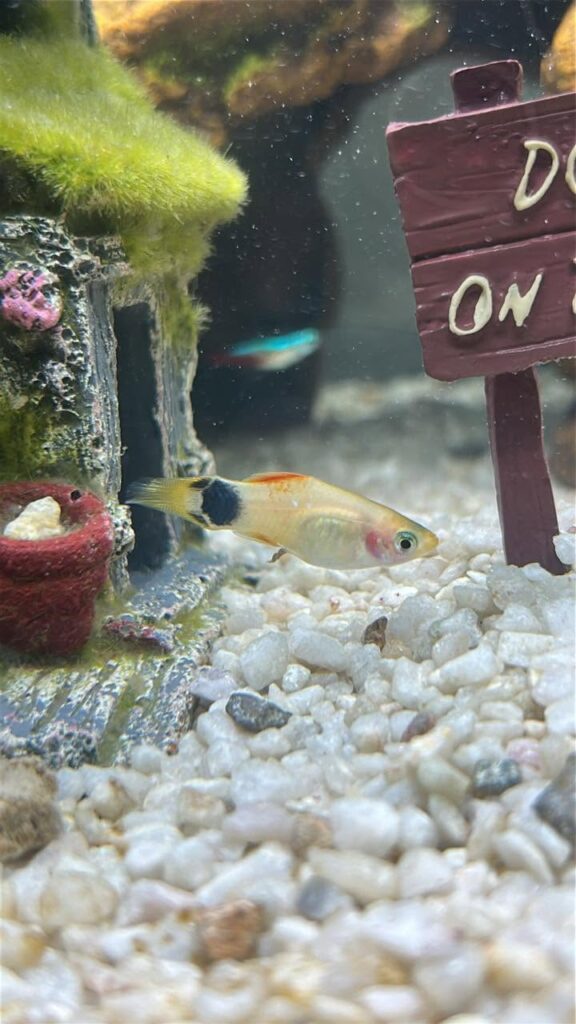
Is Hiding Always a Problem?
Not necessarily. Platy fish are naturally curious and active. They spend most of their time in the middle and upper levels of the tank, swimming freely and exploring. When they start hiding consistently — especially during feeding time — something has changed in their environment or health.
Occasional hiding is normal. A fish that briefly retreats after a water change, a new addition to the tank, or a sudden noise is simply responding to a perceived threat. That kind of hiding resolves quickly.
The kind that lasts for hours, repeats daily, or is paired with other symptoms is what you need to investigate.
1. Poor Water Quality
This is the single most common reason platy fish hide. And it is often the first place you should look.
Bad water quality causes physical discomfort. Fish experience it much like we might experience breathing poor air — it is stressful, irritating, and impossible to ignore. When ammonia or nitrite levels rise, or when nitrates accumulate beyond safe levels, fish instinctively retreat and become less active.
What to check:
- Ammonia: Should be 0 ppm at all times. Even 0.25 ppm causes stress and gill damage.
- Nitrite: Also 0 ppm. Nitrite interferes with oxygen transport in the blood.
- Nitrate: Keep below 20 ppm with regular water changes.
- pH: Platys prefer 7.0–8.0. A sudden pH crash can trigger hiding immediately.
Use a liquid test kit — not paper strips — for accurate readings. If any parameter is off, perform a 25–30% water change right away and retest after 24 hours.
Overfeeding, an uncycled tank, or skipping water changes are the most frequent causes of water quality problems. If your tank is newly set up, it may still be cycling, and adding fish too early often leads to this exact situation.
2. Illness or Disease
A sick platy often hides before showing any visible symptoms. Fish instinctively isolate themselves when they are unwell — it is a survival behavior inherited from their wild ancestors, where a weak fish is an easy target.
If your platy is hiding, look closely for these accompanying signs:
| Symptom | Possible Condition |
| White spots on body or fins | Ich (White Spot Disease) |
| Gold or rust-colored dust on skin | Velvet Disease |
| Frayed or discolored fins | Fin Rot |
| Bloated belly, raised scales | Dropsy |
| Floating at surface or sinking | Swim Bladder Disorder |
| Clamped fins, lethargy | General infection or stress |
Even if you cannot see a clear symptom yet, a platy that hides, refuses food, and appears lethargic is almost certainly unwell. Quarantine the fish in a separate tank as a precaution and monitor closely. Early action greatly improves recovery chances.
Treatment depends on the specific condition. Ich responds well to elevated temperature (82°F/28°C) and aquarium salt or commercial ich treatments. Fin rot requires clean water and antibacterial medication. Dropsy is more serious and often difficult to reverse, but early treatment with Epsom salt and antibiotics is the standard approach.
3. Stress from Tank Mates
Platy fish are peaceful by nature. They do not defend territory aggressively and are not built for confrontation. When they share a tank with aggressive, fin-nipping, or overly dominant fish, hiding becomes a coping mechanism.
Common culprits include tiger bargers, serpae tetras, red-tailed sharks, large cichlids, and even dominant male platys harassing females. If the ratio of males to females is unbalanced — too many males chasing too few females — females will hide almost constantly to escape unwanted attention.
Signs that stress from tank mates is the issue:
- The hiding fish appears healthy otherwise
- You observe chasing, nipping, or dominant behavior from other fish
- The hiding happens most often during feeding, when competition increases
- Multiple females are affected while males swim freely
The solution is to adjust the ratio — aim for at least two females per male. Remove or rehome incompatible species. Add more plants and decor to break lines of sight and give subordinate fish safe zones to rest in.
4. New Tank Syndrome or Environmental Change
If your platy just started hiding after being moved to a new tank, introduced to a new environment, or exposed to a significant change in the existing tank, this is likely the cause.
New tank syndrome refers to the stress response fish experience when placed in an unfamiliar environment. The water chemistry is different, there are new sounds and movements, and there is no established sense of safety. It typically takes 1 to 2 weeks for fish to settle in and feel comfortable.
Similarly, any sudden change — rearranging decorations, adding new fish, changing the light schedule, or performing a very large water change — can trigger a temporary hiding response.
What to do
Give the fish time. Keep the tank quiet, maintain consistent lighting hours (8–10 hours of light per day), and avoid making additional changes while the fish adjust. Ensure water parameters are stable and correct. In most cases, the fish will come out on their own within a few days.
5. Pregnancy
A pregnant female platy will often hide in the days leading up to giving birth. This is completely natural behavior and not a cause for concern — it is actually a sign that birth is imminent.
As her belly becomes very round and the gravid spot (a dark triangle near the anal fin) darkens significantly, she will seek out quiet, sheltered areas of the tank. Dense plant growth, caves, and low-lit corners become her chosen refuge.
How to tell if hiding is pregnancy-related:
- The hiding fish is female
- Her belly is noticeably swollen and round
- The gravid spot is very dark
- She is eating normally (or slightly less than usual near birth)
- No other symptoms of illness are present
If you want to protect the fry, move her to a separate breeding tank or add dense plants like java moss and hornwort to give newborns somewhere to hide. Remove her from any breeding box promptly after she gives birth, as prolonged confinement causes stress.
6. Bullying from Other Platys
Even within their own species, platys can develop a pecking order. Dominant males may chase and harass less dominant males or females. In a small or bare tank with few hiding spots, the subordinate fish has nowhere to go except to find a corner and stay there.
This becomes especially visible in tanks that are overstocked or lack adequate decoration. The dominant fish effectively claims the open swimming area, leaving others to hover near the substrate or behind plants.
Adding more visual barriers — plants, driftwood, rock formations — breaks up the tank into smaller zones. This reduces the dominant fish’s ability to control the entire space and gives other fish room to swim without constant confrontation.
7. Lighting Issues
Bright, harsh, or constantly changing light conditions can cause platy fish to hide. While platys are not especially light-sensitive, they do benefit from a consistent light cycle and moderate intensity.
A tank placed near a window may receive irregular bursts of direct sunlight, which can stress fish and cause erratic behavior. Overhead room lights flickering on and off without warning can also startle fish repeatedly throughout the day.
Best practice: Use a timer to set a consistent 8-to-10-hour light cycle. Avoid positioning the tank in direct sunlight. If the tank light is very bright with no plants or shaded areas, add floating plants like frogbit or hornwort to diffuse the light naturally.
8. Temperature Fluctuations
Platys are tropical fish that need stable temperatures between 70 and 82°F (21–28°C). When the water temperature drops below or rises above this range — even gradually — they become sluggish and withdrawn.
This is more common than many beginners realize. Faulty heaters, tanks near air conditioning vents, or drafty room positions can all cause temperature instability. Check the tank temperature with a separate thermometer rather than relying solely on the heater’s dial, which may not always be accurate.
If the temperature is the problem, the fix is straightforward: replace or recalibrate the heater and monitor for stability over 24 to 48 hours. Fish typically become more active again within a day or two of the temperature returning to the correct range.
9. Overcrowding
Too many fish in too little space creates chronic stress. Platys in an overcrowded tank have less oxygen, poorer water quality, and higher competition for food and territory. Hiding becomes a survival strategy.
As a rule of thumb, allow 5 gallons of water per platy. A 10-gallon tank can hold 4 to 5 fish comfortably. Going beyond that without excellent filtration and very frequent water changes will almost always result in stressed, hiding fish — and eventually sick ones.
If overcrowding is the issue, rehoming some fish or upgrading to a larger tank are the only real solutions.
How to Diagnose the Cause: A Step-by-Step Approach
When your platy fish is hiding, work through the following steps in order:
Step 1 — Test the water. Check ammonia, nitrite, nitrate, and pH immediately. Address any parameter that is out of range before investigating other causes.
Step 2 — Observe the fish closely. Look for visible symptoms of disease — spots, fin damage, abnormal coloring, swelling, or unusual posture.
Step 3 — Check the tank population. Watch for chasing, nipping, or aggressive behavior from other tank mates, including other platys.
Step 4 — Review recent changes. Think about what changed in or around the tank in the past 48 hours — new fish, rearranged decor, temperature shifts, water changes.
Step 5 — Consider gender and reproductive status. If the hiding fish is female and appears swollen, pregnancy may be the explanation.
Working through these steps methodically helps you avoid guessing and treat the right problem.
When Should You Be Seriously Concerned?
Seek urgent action if:
- The fish is hiding for more than 48 hours with no improvement
- You observe multiple fish hiding at the same time
- The fish shows clear disease symptoms alongside hiding
- The fish refuses food for more than two days
- You notice rapid breathing, swimming at the surface, or erratic movement
Multiple fish hiding simultaneously almost always points to a water quality issue or disease spreading through the tank. Test the water immediately and act on the results.
Suggested For You:
Platy Fish Care for Beginners: Parameters, Diet, Problems and More
How Long Are Platies Pregnant? Everything to Know
Platy Fish Not Eating: Causes, Solutions, and When to Act
Male vs Female Platy Fish: How to Tell the Difference and Why It Matters
Platy Fish Tank Setup: A Complete Step-by-Step Guide
Prevention: Creating a Tank Where Platys Feel Safe
The best way to avoid future hiding issues is to create a stable, well-maintained environment:
- Maintain consistent water parameters with weekly 25–30% water changes
- Keep the temperature steady within the recommended range
- Stock the tank appropriately — do not overcrowd
- Add plants, caves, and driftwood for natural hiding spots and visual breaks
- Maintain a 2:1 female-to-male ratio
- Quarantine new fish for 2 to 4 weeks before introducing them to the main tank
- Feed small, appropriate amounts and remove uneaten food promptly
A well-kept tank gives platys no reason to hide. When they feel safe, well-fed, and comfortable, they are among the most active and engaging fish you can keep.
Frequently Asked Questions (FAQs)
1. Is it normal for a platy to hide after a water change?
Yes, brief hiding after a water change is common. The change in water chemistry, temperature, or the disturbance of the tank can temporarily stress the fish. If they return to normal within a few hours, there is no cause for concern.
2. Why is my platy hiding at the bottom of the tank?
A platy sitting or hovering near the bottom is often a sign of illness, temperature issues, or very poor water quality. This is a more serious symptom than hiding behind a plant. Test the water immediately and look for signs of disease.
3. Why is my new platy hiding?
New fish almost always hide for the first few days as they adjust to an unfamiliar environment. This is normal behavior. As long as the fish comes out to eat and shows no symptoms of illness, give it time to settle in.
4. Can too much light cause a platy to hide?
Yes. Overly bright or inconsistent lighting can cause stress and trigger hiding. Use a timer to maintain a consistent 8-to-10-hour light cycle, and consider adding floating plants to reduce light intensity.
5. My platy is hiding but still eating — should I worry?
A fish that hides but still eats is generally a better sign than one that refuses food entirely. It may be adjusting to a change, experiencing mild stress, or is pregnant. Monitor closely for any additional symptoms developing over the next few days.
6. Why is only one platy hiding while the others are fine?
When only one fish is affected, the cause is more likely individual — illness in that particular fish, bullying directed at it, or pregnancy. Observe that fish closely and check whether other tank mates are behaving aggressively toward it.
7. How long does hiding behavior last in platy fish?
Temporary hiding from stress or adjustment usually resolves within 1 to 3 days. If the behavior continues beyond 48 to 72 hours or is paired with other symptoms, it requires investigation and likely treatment.
References
- Fishkeeping World — Platy Fish: Care, Types, Feeding, Lifespan and More. https://www.fishkeepingworld.com/platy-fish/
- University of Florida IFAS Extension — Stress in Fish: Causes and Effects. https://edis.ifas.ufl.edu/topic_ornamental_fish
- Merck Veterinary Manual — Aquarium Fish Diseases and Conditions. https://www.merckvetmanual.com/exotic-and-laboratory-animals/aquarium-fish/diseases-of-aquarium-fish
- The Spruce Pets — Why Fish Hide and What It Means. https://www.thesprucepets.com/why-is-my-fish-hiding-1381165
- PubMed Central — Behavioral Indicators of Stress and Disease in Freshwater Fish.https://www.ncbi.nlm.nih.gov/pmc/