25 Dog Breeds With Curly Tails (With Pictures, and Care Tips)
That little spiral over a dog’s back is one of the most charming things in the animal kingdom. I have always found myself smiling at a Pomeranian’s plumed curl or a Shiba Inu’s tight sickle tail before I even notice the dog’s face.
Curly tails are not random. They are written into a dog’s genes, and in some breeds, into the very shape of their tailbones. This guide walks through 25 dog breeds with curly tails, the science behind the curl, and what it means for a dog’s health and care.
1. Pug
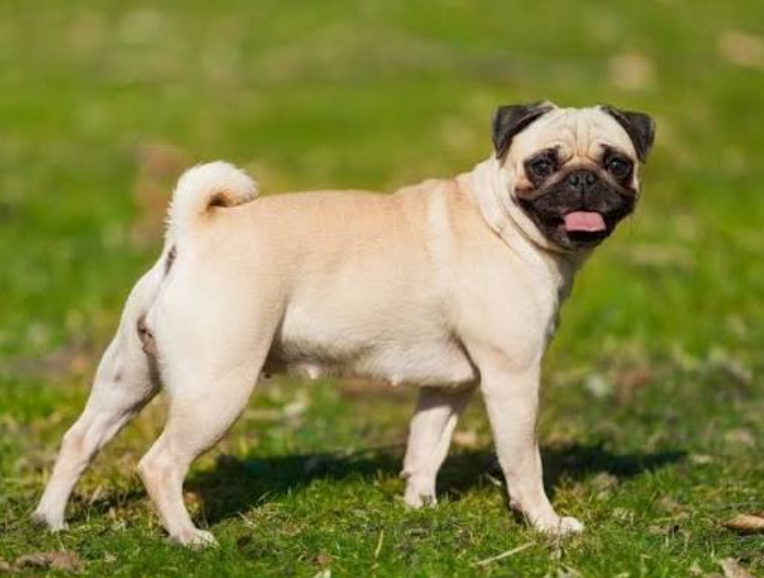
The Pug’s tight double-curl tail sits right above its hips like a tiny cinnamon roll. It is one of the most iconic screw tails in the dog world.
Fun fact: Some Pugs carry a single curl, while others have the more prized double curl, though both are considered normal for the breed.
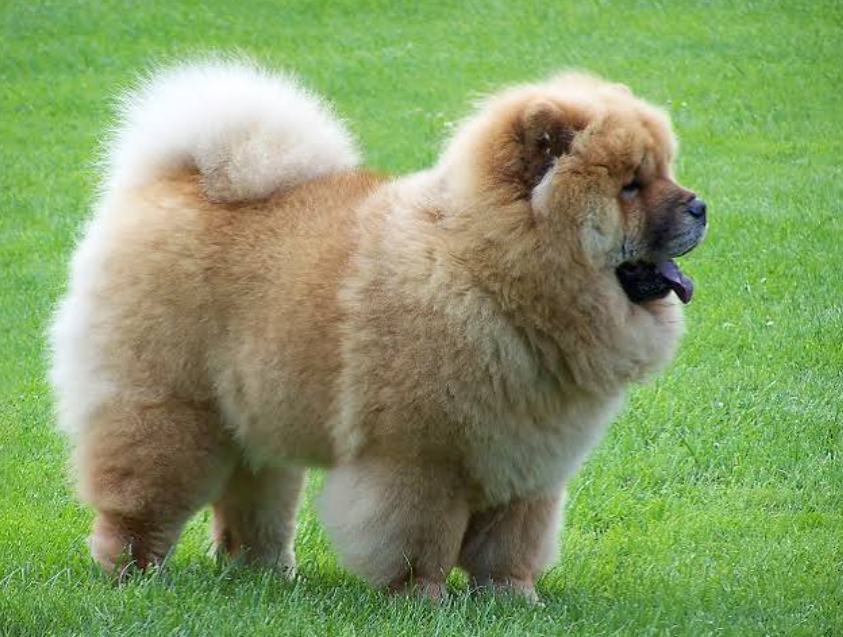
2. Chow Chow
This ancient Chinese breed carries a thick, fluffy tail curled tightly over its back. Paired with its blue-black tongue and lion-like mane, the Chow Chow has one of the most distinctive silhouettes in the canine world.
I think the tail almost looks like an extension of its ruff, blending seamlessly into that lush coat.
3. Akita
Bold, dignified, and fiercely loyal, the Akita carries a large, curled tail that balances its powerful frame. In Japan, the breed is considered a symbol of good health and protection.
The tail typically curls in a sickle or double-sickle shape, resting against the dog’s back or flank.
4. Shiba Inu
Small, fox-faced, and famously independent, the Shiba Inu carries a tight, single-curl tail over its back. This breed is the most popular companion dog in Japan today.
Shiba owners often describe their dogs as cat-like, and that tightly curled tail somehow adds to the impression of quiet self-confidence.
5. Samoyed
Nicknamed the “Sammie smile” for its upturned mouth, this fluffy white breed also carries a heavily plumed tail that curls over its back, often flopping to one side while resting.
Bred originally by Siberian herders to sleep curled against their humans for warmth, the Samoyed’s tail curl seems almost designed for cozying up.
Even when a Samoyed is fully relaxed, the tail rarely drops flat, which makes it easy to spot this breed from a distance.
6. Alaskan Malamute
This large, powerful sled dog carries a plumed tail that curls up and over its back, a trait shared with many arctic spitz breeds. The curl helps protect the dog’s nose from frostbite while sleeping in snow.
Malamutes are built for strength and endurance, and that tail curl is functional, not just decorative.
Sled dog teams historically relied on this trait, since a warm nose meant a healthier, more productive working dog on long winter routes.
7. Basenji
Known as the “barkless dog,” the Basenji instead communicates with yodels and howls. Its tail sits tightly curled against its back, and this breed hails from Central Africa, making it one of the oldest dog lineages still around.
Basenjis are energetic, alert, and famously cat-like in their grooming habits.
Their short coat and tight curl make them low-maintenance in terms of grooming, though their independent streak means training takes patience.
8. Finnish Spitz
Finland’s national dog carries a bushy, curled, fox-red tail and is nicknamed the “Barking Bird Dog” for its hunting role. Finnish Spitz owners even hold barking contests to crown the loudest “King Barker.”
Its tail curls in a loose plume, resting gracefully over its back.
ALSO READ: 25 Dog Breeds With Curly Hair: (With Pictures, and Care Tips)
9. Pomeranian
This tiny companion breed carries a heavily plumed, flat-lying curled tail, a signature feature descended from its larger German Spitz ancestors. Pomeranians were shrunk down in size over generations, but the tail curl stayed just as prominent.
Despite their small stature, Poms carry themselves with big personalities.
10. Keeshond
With a thick, silver-tipped double coat and a curled plume tail, the Keeshond is an outgoing spitz breed once used as a watchdog on Dutch barges. Their tails curl tightly and rest along their backs, matching their cheerful expressions.
Keeshonden are famous for their “spectacle” markings around the eyes, giving every dog a slightly different, expressive look.
11. American Eskimo Dog
Despite the name, this fluffy white breed actually descends from the German Spitz and was renamed during a period of anti-German sentiment in the United States. Its curled, plumed tail is a defining spitz trait.
American Eskimo Dogs come in toy, miniature, and standard sizes, but the curled tail stays consistent across all three.
12. Norwegian Elkhound
Bred to hunt elk and other large game in Scandinavia, this sturdy gray breed carries a tightly curled tail set high over its back. It is one of the oldest Nordic breeds still recognized today.
The tail curl on an Elkhound tends to be especially tight and compact compared to other spitz breeds.
Despite hunting animals many times its size, the Norwegian Elkhound remains a loyal, affectionate family companion once past puppyhood.
13. Swedish Vallhund
Sometimes called the “Viking dog,” this short-legged herding breed carries a naturally curled or bobbed tail, depending on genetics. Some Vallhunds are born with a natural bobtail, while others show the classic spitz curl.
14. Norwegian Buhund
A medium-sized farm and herding dog from Norway, the Buhund carries a tightly curled tail typical of spitz breeds. It is an agile, alert dog still used for herding sheep and cattle in its native country.
15. German Spitz
The German Spitz comes in several sizes, from miniature to giant, but every version carries the same curled, plumed tail. This breed is considered an ancestor of both the Pomeranian and the American Eskimo Dog.
16. Eurasier
A relatively modern breed developed in Germany during the 1960s, the Eurasier combines Chow Chow, Wolfspitz, and Samoyed ancestry. Its heavily plumed tail curls gently over its back, and the breed is known for its calm, family-friendly temperament.
17. Finnish Lapphund
Originally bred by the Sami people to herd reindeer, this thick-coated breed carries a curled, bushy tail well-suited to arctic conditions. Finnish Lapphunds are gentle, easygoing dogs despite their working heritage.
18. Swedish Lapphund
One of Sweden’s oldest breeds, this all-black or brown-and-white dog carries a tightly curled tail and a dense double coat built for extreme cold. It shares much of its ancestry with the Finnish Lapphund.
19. Norwegian Lundehund
This rare and unusual breed has an extraordinary skeletal structure, including extra toes and joints that let it squeeze into tight puffin burrows. Its curled tail matches its spitz ancestry, and the breed remains one of the rarest in the world.
20. Schipperke
This small, fox-faced Belgian breed is naturally tailless or docked in many countries, but where the tail is left intact, it curls tightly over the back in classic spitz fashion. Nicknamed “Little Captain,” Schipperkes were traditionally kept on barges as watchdogs.
21. Boston Terrier
This American breed carries a short, kinked screw tail caused by the same hemivertebrae pattern found in Bulldogs. Genetic testing shows the DVL2 variant linked to this tail shape appears in roughly 94% of Boston Terriers studied.²
Boston Terriers are often considered one of the healthier screw-tailed breeds, though ongoing research is tracking their respiratory health closely.⁵
22. French Bulldog
Recognized instantly by its bat ears and stocky build, the French Bulldog carries a short, corkscrew tail fixed by the DVL2 gene mutation.² This breed has become one of the most popular in the world in recent years, and its tail is part of what makes it so recognizable.
ALSO READ: 30 Small Dog Breeds That Don’t Shed Much (With Pictures, and Care Tips)
23. English Bulldog
The classic Bulldog carries a low-set, tightly curled screw tail, a defining breed trait for centuries. This tail shape comes from congenital hemivertebrae, the same wedge-shaped vertebrae found in French Bulldogs and Boston Terriers.²
24. Chinese Shar-Pei
Famous for its deep wrinkles and blue-black tongue, the Shar-Pei also carries a tightly curled, high-set tail. This ancient Chinese breed was originally used for guarding, herding, and hunting before becoming a beloved companion.
25. Siberian Husky
Not every Husky’s tail forms a tight curl, but many carry a “sickle tail” that arches gently over the back, especially when the dog is alert or excited. At rest, the tail often hangs low with just a soft upward curve.
Huskies are technically a sled-dog breed rather than a strict spitz, but they share the same northern ancestry that produced so many curled-tail dogs on this list.
What Actually Causes a Curly Tail?
Dog tails curl for two very different reasons, and the distinction matters.
Type 1: The “sickle” or “plumed” curl. This is a soft-tissue curve seen in most spitz-type breeds. The tail muscles and ligaments simply pull the tail up and over the back. It can be loosened by hand and does not involve bone deformity.
Type 2: The “screw” or “corkscrew” tail. This is caused by malformed tailbones called hemivertebrae. Instead of stacking like cylinders, the vertebrae grow wedge-shaped, forcing the tail into a tight spiral that cannot fully straighten.
Researchers at the University of California, Davis identified two gene variants in the KRT71 keratin gene that control curl and wave patterns in a dog’s coat, and this same gene family influences hair texture across many curly-coated breeds.¹
A 2018 genome study from UC Davis found something more striking. Scientists sequenced the DNA of 100 dogs across 21 breeds and located a frameshift mutation in the DVL2 gene in Bulldogs, French Bulldogs, and Boston Terriers.² This mutation was fixed in Bulldogs and French Bulldogs, and present in 94% of Boston Terriers tested, explaining why the “screw tail” trait is so consistent in these breeds.
I find that fact genuinely fascinating. A single gene glitch, shared with a human condition called Robinow syndrome, gave us some of the world’s most recognizable tails.
A separate 2021 follow-up study on the same gene, involving nearly 2,000 dogs across 15 breeds, confirmed that this variant is also linked to the flat-faced, “brachycephalic” skull shape seen in these same breeds.³ In other words, the curly tail and the pushed-in face often come from the same genetic root.
Are Curly Tails Ever a Health Concern?
Usually, no. A curved sickle tail in a Husky or Akita is just soft tissue, and it causes no discomfort whatsoever.
Screw tails are a different story, though most cases remain harmless. Since there is no spinal cord tissue in the lower tail, hemivertebrae there rarely cause problems on their own.
The concern arises when the same genetic tendency shows up further up the spine, near the chest, where the spinal cord actually runs. A veterinary review published through the National Library of Medicine notes that tail docking and screw-tail traits have long raised welfare debates among veterinarians and breed clubs.⁴
Recent research on Boston Terriers, a “healthier” screw-tailed breed compared to Bulldogs, still linked the same DVL2 variant to a higher risk of breathing issues tied to their flattened face.⁵ If you own or plan to adopt a screw-tailed breed, regular veterinary checkups matter more than they might for a straight-tailed dog.
Which Curly-Tailed Breed Fits Your Lifestyle?
Choosing based on tail shape alone is fun, but daily life with a dog depends on far more than looks.
- Small apartments: Pug, Pomeranian, Shiba Inu, and Schipperke tend to adapt well to smaller living spaces, though Shibas still need daily exercise.
- Cold climates: Samoyed, Alaskan Malamute, Finnish Lapphund, Swedish Lapphund, and Norwegian Elkhound were literally built for snow and harsh winters.
- Active families: Akita, Norwegian Buhund, Swedish Vallhund, and Siberian Husky thrive with owners who enjoy hiking, running, or working farmland.
- First-time owners: Keeshond, American Eskimo Dog, and Eurasier are generally easier to train than more independent breeds like the Basenji or Akita.
- Allergy-conscious households: No breed is fully hypoallergenic, but the Basenji’s short coat sheds less dander than the double-coated spitz breeds on this list.
Curly Tails and Grooming: What Owners Should Know
Curly tails, especially the plumed types on Pomeranians and Samoyeds, need regular brushing to prevent matting underneath the curl.
Screw-tailed breeds like Pugs, Bulldogs, and Boston Terriers need a different kind of care. The skin fold beneath a tightly coiled tail can trap moisture and bacteria.
Cleaning and drying under a screw tail regularly helps prevent skin fold infections, a fairly common issue in these breeds. Penn State Extension’s canine health resources recommend routine skin and coat checks as part of general preventive care for all dog breeds.⁶
A Quick Word on Tail Docking
Some naturally curly- or kinked-tailed breeds are unrelated to tail docking, which is the surgical shortening of a tail, usually performed on breeds like Dobermans or Spaniels for cosmetic or working reasons.
Tail docking remains a contested welfare topic among veterinarians, breeders, and legislators. A widely cited veterinary review describes the practice as one that continues to divide professional and public opinion.⁴
None of the 25 breeds above rely on docking for their curl. Every tail on this list forms naturally, whether through soft tissue or through hemivertebrae, without any surgical involvement.
Frequently Asked Questions
Do all spitz breeds have curly tails? Nearly all of them do. A tail that curves over the back is one of the defining features of the spitz type, alongside pointed ears and a thick double coat.
Can a curly tail straighten out? Sickle-shaped curls, like those on a Husky or Akita, can often be gently straightened by hand since they are soft tissue. Screw tails, caused by hemivertebrae, usually cannot be fully straightened because the bone itself is shaped that way.
Is a curly tail a sign of a happy dog? Not exactly. A curled tail is a fixed physical trait, not a mood indicator. However, dogs of all tail shapes tend to raise or wag their tails higher when excited or alert, and lower them when anxious or unwell.
Are curly tails painful for dogs? In most cases, no. The majority of curly and screw-tailed dogs live comfortably. Problems are more likely when hemivertebrae also appear higher up the spine, which is why veterinary monitoring is worthwhile for screw-tailed breeds.
What is the rarest curly-tailed breed? Among the breeds on this list, the Norwegian Lundehund is considered the rarest, with a global population estimated in the low thousands.
Why do so many arctic breeds have curly tails? A curled tail lets a sleeping dog tuck its nose underneath for warmth, an advantage in the freezing climates where most spitz breeds originated. This is why sled dogs, herders, and hunting breeds from Scandinavia and Japan share the same tail shape despite having no close genetic relation.
Do screw-tailed breeds need special veterinary care? Routine checkups are wise, since the same gene variant behind the screw tail is also tied to skeletal and respiratory traits in Bulldogs, French Bulldogs, and Boston Terriers.² A vet can monitor for any related issues before they become serious.
Final Thoughts
Twenty-five breeds, and not one identical tail among them. Some curl from soft ligament and muscle, built for warmth and communication in freezing climates. Others curl because of a single gene mutation shared, oddly enough, with a human medical condition.
I like knowing the “why” behind something so simple-looking. A tail is never just decoration in the dog world. It is history, genetics, and function, all wrapped into one small curl.
If you are choosing a breed based on that curl alone, remember to look past appearance and consider temperament, exercise needs, and grooming demands too. A curly tail is a lovely bonus, not a personality trait.
References
- University of California, Davis, Veterinary Genetics Laboratory. “Curl (C1, C2).” https://vgl.ucdavis.edu/test/curl
- Mansour, T.A., et al. “Whole genome variant association across 100 dogs identifies a frame shift mutation in DISHEVELLED 2 which contributes to Robinow-like syndrome in Bulldogs and related screw tail dog breeds.” National Library of Medicine, PMC. https://pmc.ncbi.nlm.nih.gov/articles/PMC6303079
- Niskanen, J.E., et al. “Canine DVL2 variant contributes to brachycephalic phenotype and caudal vertebral anomalies.” National Library of Medicine, PMC. https://pmc.ncbi.nlm.nih.gov/articles/PMC8519842
- “Tail docking in dogs: a review of the issues.” National Library of Medicine, PubMed. https://pubmed.ncbi.nlm.nih.gov/15080444/
- “BOAS in the Boston Terrier: A healthier screw-tailed breed?” National Library of Medicine, PMC. https://pmc.ncbi.nlm.nih.gov/articles/PMC11687697/
- Penn State Extension. “Canine – Animals and Livestock.” https://extension.psu.edu/animals-and-livestock/canine
- Cornell University College of Veterinary Medicine, Riney Canine Health Center. “Limber tail in dogs (acute caudal myopathy).” https://www.vet.cornell.edu/departments-centers-and-institutes/riney-canine-health-center/canine-health-information/Limber-tail-in-dogs