How Many Platies in a 10 Gallon Tank?
The number of platies to rear in a ten-gallon tank depends on their behavior and size. A tank can support more platy fries than adult platies because the competition for food and oxygen in the aquarium is greater among adult platyfish than in fries.
So, how many platy fish should you keep in a 10-gallon aquarium?
An adult platyfish requires approximately 2.5 inches of freshwater. Therefore, you can keep 8 to 10 adult platies in a 10-gallon tank. Increase the tank size as the number of fish increases. It is advisable to keep young fries in a separate tank because adult platies can feed on them.
Platyfish are pretty easy to care for because they don’t need a lot of attention. In a 10-gallon tank, have at least one male platyfish for every three females. If you do that, your platies will breed in a short period.
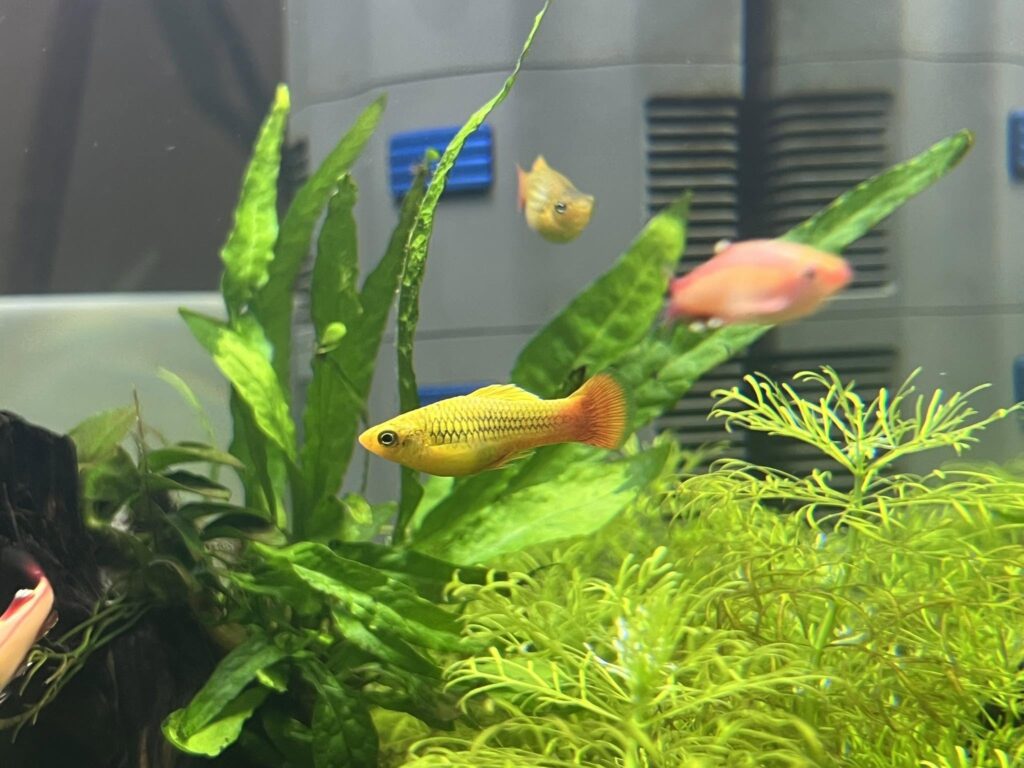
How many platies to keep in a 10-gallon tank?
A ten-gallon tank does not provide enough room for variety and the social needs of platyfish. Therefore, keep six or nine adult platies in a ten-gallon tank. Ensure there are two male platyfish in the school.
Most importantly, keep the water stable and within the ideal parameters for your platies. Under normal conditions, change 25% of the water every two to four weeks.
Although you can keep up to ten platies in a ten-gallon tank, I recommend adding only three platyfish at a time. Fishkeeping experts say that adding too many platies to the tank at once could destabilize the water chemistry and stall the nitrogen cycle.
Putting many platies at once can alter the pH levels of the water and sicken or kill your fish.
It takes between six and eight weeks for platyfish to give birth. And they can give birth to eight or as many as 40 fries at once.
Unless you are breeding the platies, ensure that males are more than the females in the ratio of 2:1. Otherwise, more females than male platies would dramatically increase their numbers in the tank.
But don’t worry. You can always increase the tank size. Although you can use a five-gallon tank for platyfish, I prefer using a tank that’s at least 10 gallons. A bigger tank is essential for protecting the fry from hungry adult platies. For example, a 40-gallon tank gives the fries adequate space to hide and flourish.
A larger tank means happy platies since water chemistry and temperature are more stable than in a smaller ecosystem.
Here is a summary of the ideal number of platies for various tank sizes:
| Tank size | Ideal number of platies |
| 5 gallons | 6 |
| 10 gallons | 9 |
| 20 gallons | 21 |
| 30 gallons | 30 |
| 40 gallons | 42 |
Pro tip: Supplement your platy fish diet with Omega One flakes or pellets, brine shrimp, and bloodworms to keep them healthy in a small tank.
How many platies with tank mates in a 10-gallon tank?
Using the ratio of 2:1, keep six males and three female platies in a ten-gallon water tank. This reduces the chances of aggression between the male platies and does not stress the females. If you keep them in optimal conditions, platyfish will take about four months to reach full size and can live between three and five years.
Not only are platies beautiful and low maintenance, but observing them is also fun and calming. However, platyfish like residing around their kind, so avoid introducing mates of a different species to your platies. It can make your platies shy and anxious. But if you want to, then prioritize mates with peaceful demeanors over aggressive species.
Here are some platyfish tank mates I’d recommend introducing in the tank:
- Cardinal Tetra
- Celestial Pearl Diano
- Cory catfish
- Guppies
- Molly Fish
- Rainbowfish
- Swordtail
Considerations
Several vital factors determine the number of platies you can keep in a tank at a time. To decide the best tank size, consider the size and number of the platyfish, their activity level, social behavior, and the number of hiding spots.
Here is an in-depth look at those considerations when determining the number of platies to keep in your aquarium:
Size and number of platies
Platies grow to about three inches. The fish are so small that it is easy to overcrowd them in a tank. However, do not be deceived by their size because adult platies require significant space to remain happy.
The rule of thumb is that the more the platies you add, the bigger the tank you need.
Platy fish activity level
Platies are highly active. They explore the middle and top parts of the tank and hide among plants. Platyfish are nonviolent but have a ravenous appetite.
Overcrowding platies in a tank could create significant competition and stress for the fish beyond what they can endure. To reduce aggression, put more males than female platies in a spacious tank.
Platy’s social behavior
It is also essential to consider the social behavior of platyfish. Peaceful and friendly fish like platies enjoy living in groups. That means you should not keep one platyfish in a tank. As I said before, grouping the fish in multiples of three is very effective. The smallest number of platies to keep is three to four. That means you need a tank that is at least five gallons.
The number of hiding spots
Create hiding spots for platyfish using aquarium plants, rocks, and ornaments such as pipe ornaments. It is challenging to create many hiding crevices in small tanks because the materials themselves consume significant space in the tank. If you have many platies, say 30, you’d need more hiding spots for the fish in a 30-gallon tank.
As such, you want to consider a larger tank with more hiding spots.
Platy’s feeding habits
Various fish species have different feeding habits. Platies, for instance, are omnivores with broad nutrition. They can feed on algae, plants, and small crustaceans like brine shrimp. Feed the juveniles two or three times a day, and the adult platies only once a day
A larger tank is appropriate to reduce the concentration of fish poop that may cause ammonia poisoning and stress.
Problems with overcrowding platies in a small tank
An overcrowded fish tank can lead to severe problems for your platies. For example, more than ten platies in a ten-gallon tank can make the fish aggressive, overly territorial, and nip each other’s fins. That could cause stress and infections that could spread in a closed environment like an aquarium.
Too many platies can also overload the tank with lethal levels of toxic fish waste. The major problems with overcrowding platies in a small tank are ammonia poisoning, stunted growth, foul-smelling water, and discolored water.
- Ammonia poisoning: The ideal water tank for your platies should not have ammonia. You will know your platies have ammonia poisoning if you notice purple or red gills or symptoms such as gasping for air at the tank’s surface. Ammonia poisoning occurs when pH rises, offsetting the nitrogen cycle due to algal activity and the accumulation of platyfish waste.
- Foul-smelling water: Although bad-smelling water is attributed to excess fish waste and food, overcrowding also causes it. If you have many platies in a small tank, the chances are that you drop lots of food, and the fish poop more often. Avoid changing the water at once. Change 50% of the bad-smelling water and 25% the next day.
- Stunted growth: Overcrowding also causes stress and competition for food and resources for platies in a small tank. Stress lowers the immunity of the platies, but it also stunts their growth. Feed your fish adequately and increase the size of the tank or reduce the number of platies to promote healthy growth and lifespan of your platies.
- Discolored water: Overcrowded platies eat a lot, reproduce a lot, and excrete a lot. It also results in significant competition and overfeeding. Disturbing the chemistry and nitrogen cycle promotes algae and causes cloudy or green water. Cut back on feeding your platies and change 50% of the water.
Suggested For You:
Platy Fish Care for Beginners: Parameters, Diet, Problems and More
Why Is My Platy Fish Hiding? Causes, Solutions, and When to Worry
How Long Are Platies Pregnant? Everything to Know
Platy Fish Not Eating: Causes, Solutions, and When to Act
References
- Hamilton, T. R. (1981). Platyfish: Versatile Animals for the Laboratory and Classroom. The American Biology Teacher, 426-472.
- Hill, J. E., & Yanong, R. P. (2002). Freshwater ornamental fish commonly cultured in Florida. Circular 54, Institute of Food and Agriculture Sciences, University of Florida, USA, 6.