15 Types of Aquarium Snails (With Pictures and Care Tips)
Snails often get overlooked when people plan a fish tank. That’s a shame, because the right snail can clean algae, aerate substrate, and add real personality to your aquarium.
I have kept freshwater tanks for years, and snails are usually the quiet workers nobody thanks. This guide covers 15 types of aquarium snails, what each one needs, and which ones you should avoid mixing together.
Whether you want an algae cleaner, a live-bearing companion, or a snail-eating predator, you will find a clear match here. Let’s get into it.
Why Keep Snails in Your Aquarium?
Snails are not just decoration. They clean leftover food, graze algae films, and stir the substrate, which helps beneficial bacteria do their job.
A tank without any cleanup crew tends to build up soft algae films faster, and leftover food sinks into gravel where it rots unseen. Snails work through that mess quietly, day and night, without needing extra attention from you.
Some snails also breed fast and become pests. Others stay small, shy, and manageable for years. Knowing the difference before you buy saves a lot of frustration later.
I have made the mistake of dropping a single “mystery” plant snail into a shrimp tank and watching it multiply into dozens within two months. That experience is exactly why this guide separates the calm, predictable species from the fast breeders.
Below is a quick summary table, followed by a detailed look at each species.
| Snail Type | Adult Size | Diet | Breeding | Best For |
| Nerite Snail | 1–2.5 cm | Algae grazer | Cannot breed in freshwater | Beginners, algae control |
| Zebra Nerite Snail | 1–2 cm | Algae grazer | Cannot breed in freshwater | Glass and rock cleaning |
| Mystery Snail | 4–6 cm | Omnivore/scavenger | Prolific, lays eggs above water | Community tanks, color variety |
| Ivory Snail | 4–5 cm | Omnivore/scavenger | Prolific | Bright, visible tank accent |
| Golden Inca Snail | 3–4 cm | Algae and biofilm | Moderate | Planted tanks |
| Ramshorn Snail | 1–2.5 cm | Omnivore, detritus | Very fast, hermaphrodite | Cleanup crews, breeder tanks |
| Malaysian Trumpet Snail | 1–3 cm | Detritus, leftover food | Extremely fast, live-bearing | Substrate turnover |
| Assassin Snail | 2–2.5 cm | Carnivore, eats other snails | Slow, lays single eggs | Pest snail control |
| Rabbit Snail | 5–9 cm | Algae, biofilm, plant matter | Slow, live-bearing | Large planted tanks |
| Japanese Trapdoor Snail | 3–6 cm | Algae grazer | Live-bearing, slow | Cold-water and pond tanks |
| Pond Snail | 1–2.5 cm | Omnivore, plant eater | Extremely fast, hermaphrodite | Not usually kept on purpose |
| Bladder Snail | 0.6–1.2 cm | Detritus, algae | Extremely fast, hermaphrodite | Fry and shrimp tank cleanup |
| Turret/Thorn Snail | 2–4 cm | Detritus, sand sifting | Slow to moderate | Sand-bed aeration |
| Spixi Snail | 2–4 cm | Algae, soft plant matter | Moderate, egg clutches | Algae control without plant damage |
| Black Devil Snail | 4–6 cm | Algae, biofilm | Slow | Unique, hardy display piece |
Now let’s look at each type in more detail.
1. Nerite Snail
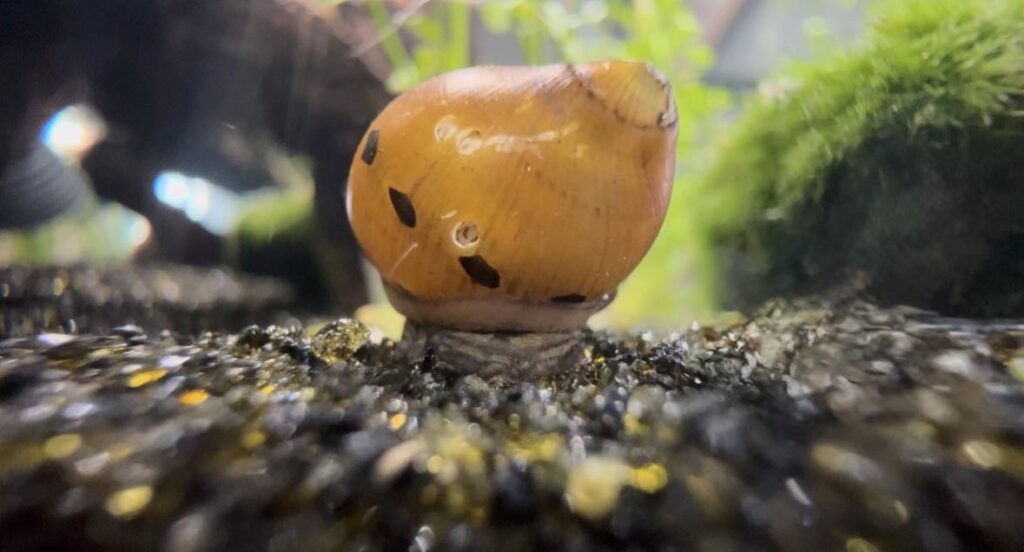
Nerite snails are the gold standard for algae control. They scrub glass, rocks, and driftwood clean without touching your live plants.
Their shells come in patterns like tiger stripes, zebra bands, and horned ridges. I always recommend them to beginners because they are hardy and forgiving of minor water mistakes.
They cannot reproduce in freshwater, since their larvae need brackish water to develop. This means you get algae control without a population explosion.
They do best in tanks with stable, cycled water and a pH close to neutral. Keep the lid on tight, because nerites are known escape artists.
I have found nerites wandering across the carpet more than once after a lid was left slightly open. A snug-fitting cover is not optional with this species. Aim for a tank that has already completed its nitrogen cycle, since sudden ammonia spikes hit nerites harder than most other snails on this list.
2. Zebra Nerite Snail
The zebra nerite is a smaller, striped cousin of the standard nerite. Its shell shows fine yellow-and-black bands that look almost hand-painted.
This snail sticks close to hard surfaces and glass, so it works well in tanks with algae buildup on decorations. It rarely bothers live plants, unlike some other grazing species.
Like other nerites, it needs full saltwater or brackish conditions to hatch eggs, so it stays at a fixed population in a freshwater setup.
It is a calm tankmate for shrimp, small fish, and other peaceful invertebrates.
3. Mystery Snail
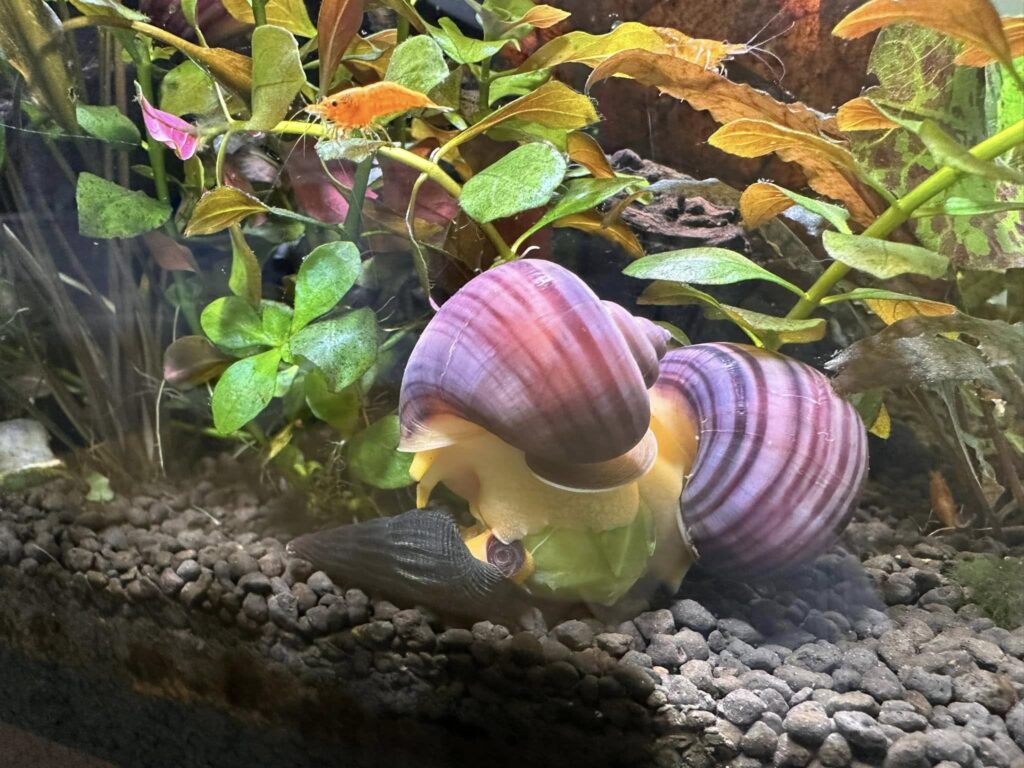
Mystery snails are large, colorful, and easy to spot gliding across the glass. Colors range from deep gold to blue, ivory, and jet black.
They are not picky eaters. Mystery snails happily take leftover fish food, blanched vegetables, and algae wafers.
Unlike nerites, they reproduce readily in freshwater. Females lay clutches of eggs just above the waterline, so you will need a tight lid and some airspace if you want to avoid surprise babies.
Give them calcium-rich water, since a soft or acidic environment can pit and crack their shells over time.
Mystery snails also need room to surface, since they breathe partly through a siphon tube extended to the air. A tank with too little airspace near the waterline can leave them stressed, so avoid filling the aquarium to the very brim.
4. Ivory Snail
The ivory snail is simply a color variant of the mystery snail, bred for its pale, cream-white shell. It shares the same size, care needs, and breeding pattern.
Its light color makes it easy to see against dark substrate, which is why many aquascapers choose it for visual contrast.
Feed it the same way you would a standard mystery snail: leftover food, soft vegetables, and calcium supplements for shell strength.
Watch calcium levels closely, since pale shells show thinning and pitting faster than darker ones.
5. Golden Inca Snail
Golden Inca snails carry a bright yellow-gold shell and a slightly flattened, spiral shape. They are close relatives of the apple snail family.
They graze algae and soft biofilm from leaves, glass, and hardscape. They are gentler on live plants than some mystery snail lines, which makes them popular in planted tanks.
Breeding is moderate. Clutches are smaller than typical mystery snail broods, so populations grow at a manageable pace.
They prefer warmer water, generally between 22 and 28°C, and benefit from occasional calcium supplements.
6. Ramshorn Snail
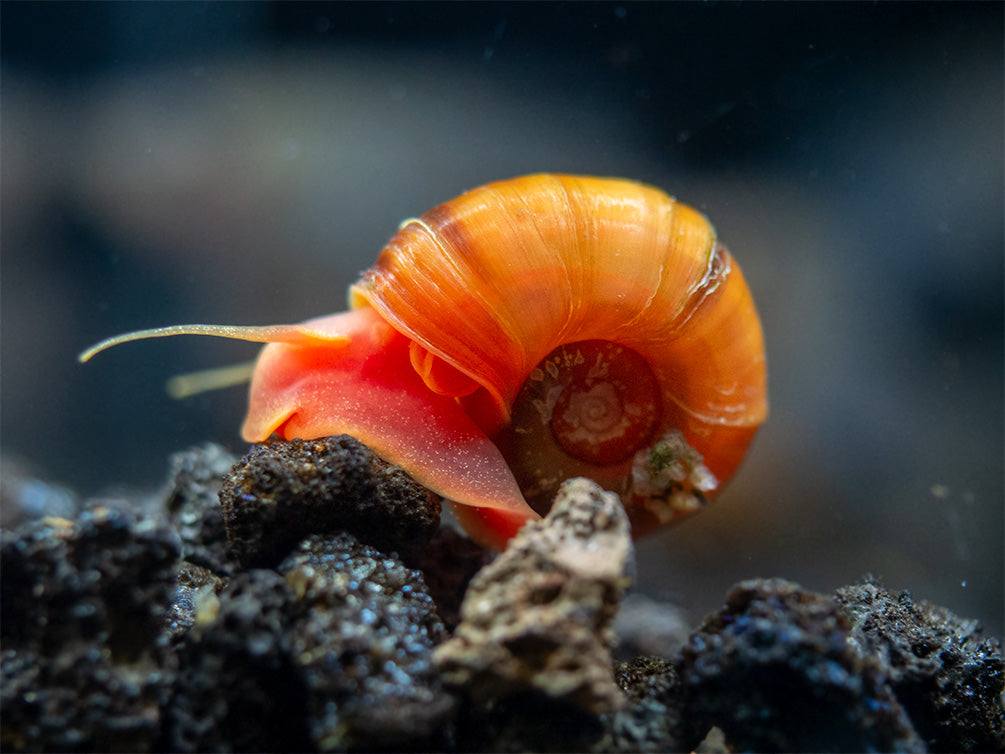
Ramshorn snails get a bad reputation, but that is mostly about numbers, not behavior. Their flat, coiled shells resemble a ram’s horn, hence the name.
They are hermaphrodites and breed extremely fast. A few snails can turn into dozens within weeks if food is abundant.
On the positive side, they eat leftover food, soft algae, and decaying plant matter, which keeps water quality cleaner between changes.
If their numbers get out of hand, reduce feeding and manually remove excess snails or egg clusters from glass and leaves.
Ramshorn snails also come in selectively bred colors, including pink, blue, and red varieties that hobbyists prize for their visual appeal. These color morphs behave exactly like the wild type, so the same population controls apply regardless of shell shade.
7. Malaysian Trumpet Snail
This cone-shaped snail spends most daylight hours buried in the substrate. At night, it comes out to feed on leftover food and organic waste.
Its burrowing habit aerates the substrate, which reduces the buildup of harmful anaerobic pockets in gravel or sand.
Malaysian trumpet snails are live-bearers and reproduce quickly, similar to ramshorn and bladder snails. A single snail can start a self-sustaining colony.
They rarely damage healthy plants and are considered useful workers rather than pests by most experienced keepers.
8. Assassin Snail
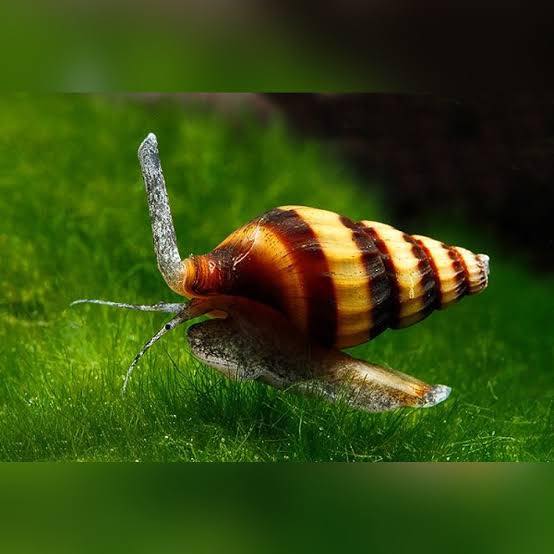
If your tank has a pond snail or bladder snail outbreak, the assassin snail is the fix. This species is a natural predator of other small snails.
Its shell shows a striking brown-and-yellow spiral pattern, and it moves faster than most snail species when hunting prey.
Assassin snails reproduce far more slowly than the pest species they eat, laying single eggs rather than large clutches. This keeps their own population in check.
They also accept meaty foods like bloodworms and pellets when snail prey runs low, so they will not starve in a clean tank.
Keep in mind that assassin snails will not distinguish between “pest” and “purchased” species. They will hunt nerite, mystery, and rabbit snail young just as readily, so avoid mixing them into a tank where you are deliberately breeding other snails.
9. Rabbit Snail
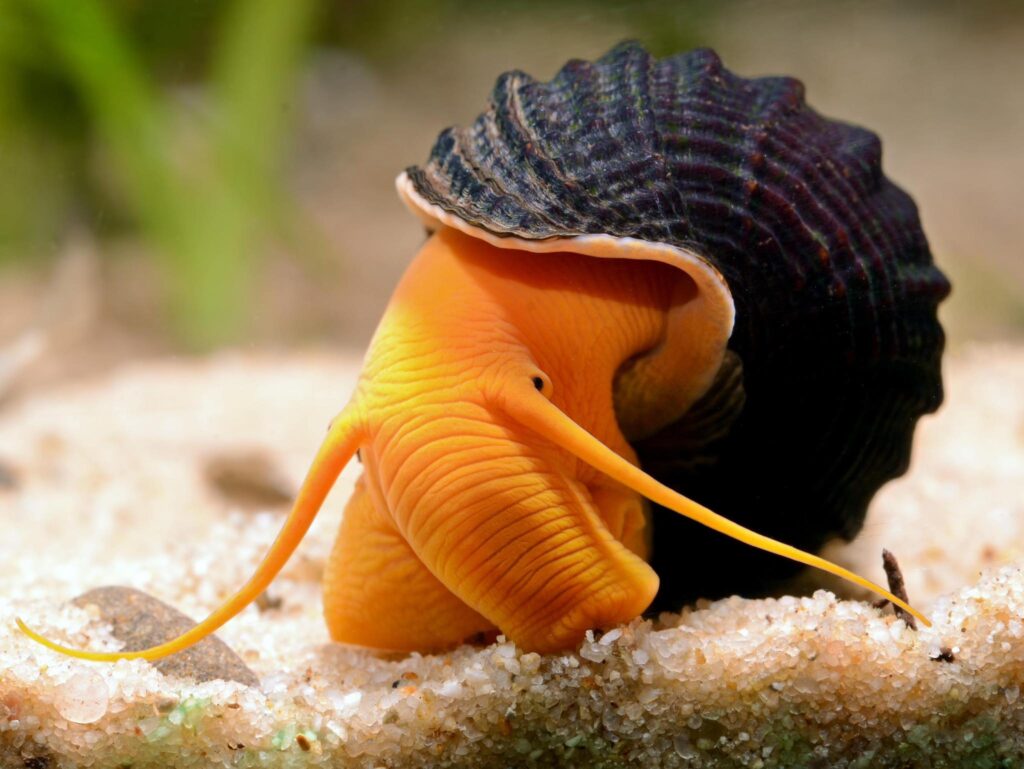
Rabbit snails get their name from the rabbit-like antennae on their head. They are one of the larger species on this list, with some varieties reaching close to 9 cm.
Shell colors vary widely, including golden, chocolate, and spotted patterns depending on the specific Tylomelania species.
They are peaceful and slow-breeding, giving birth to fully formed young rather than laying eggs. This makes population control much easier than with ramshorn or pond snails.
Rabbit snails prefer warm, stable water and benefit from a mineral-rich substrate and calcium supplementation for strong shell growth.
They are also sensitive to copper-based medications, which many fish treatments contain. Always check the label before dosing a tank that houses rabbit snails, since copper exposure can be fatal to them even at low concentrations.
10. Japanese Trapdoor Snail
The trapdoor snail carries an operculum, a hard plate that seals the shell opening when the snail withdraws. This protects it from predators and short dry spells.
It tolerates cold water better than most tropical snail species, which makes it a strong choice for outdoor ponds and unheated tanks.
Trapdoor snails give live birth and reproduce slowly compared to prolific pond and bladder snails, so populations stay easy to manage.
According to state wildlife records, related trapdoor and mystery-type snails have become established outside home aquariums after being released into ponds and waterways, so responsible keepers never release them into the wild.
11. Pond Snail
Pond snails usually arrive as uninvited hitchhikers on new plants rather than as a deliberate purchase. Their shell is tall, thin, and pointed.
They breed at an extremely fast rate, since a single snail carries both male and female reproductive organs and can self-fertilize.
They do eat algae and decaying plant matter, which offers some cleanup benefit, but their numbers can spiral out of control quickly in a nutrient-rich tank.
Quarantining new plants before adding them to your display tank is the most reliable way to keep pond snails out.
12. Bladder Snail
Bladder snails are tiny, usually under 1.2 cm, with a thin, almost transparent shell. They often show up the same way pond snails do, hitchhiking on plants.
They feed on algae, biofilm, and leftover food, making them a minor but real contributor to tank cleanliness.
Like pond snails, they are hermaphrodites and multiply fast. Overfeeding your fish is usually the biggest driver behind a sudden bladder snail boom.
Some shrimp keepers tolerate small bladder snail populations on purpose, since they compete for the same detritus that would otherwise foul the water.
13. Turret Snail (Thorn Snail)
Turret snails have a long, tightly spiraled shell that tapers to a fine point, resembling a small drill bit or thorn. They spend much of their time under the sand.
Their sand-sifting behavior keeps the substrate loose and oxygenated, which benefits root growth in planted tanks and prevents compacted, foul-smelling patches.
They reproduce at a moderate pace and rarely reach nuisance numbers compared to pond or bladder snails.
Feed them sinking wafers or let them forage on natural detritus, since they rarely compete well for food at the surface.
14. Spixi Snail
The Spixi snail, sometimes called the Brazilian apple snail, has a rounded shell in shades of brown, gold, or olive. It is closely related to the larger apple snail family.
It eats algae and soft decaying matter without shredding healthy plant leaves, which sets it apart from some other apple snail relatives known for chewing plants.
Breeding is moderate. Females lay egg clutches above the waterline, similar to mystery snails, so a tight-fitting lid helps control numbers.
Spixi snails appreciate calcium-rich water and a varied diet that includes blanched vegetables and algae wafers.
15. Black Devil Snail
The black devil snail, sometimes called the spiny black devil, has a dark, elongated shell with a hardy, adaptable nature. It is less common in the hobby than the other snails on this list.
It grazes algae and biofilm steadily but slowly, making it a low-maintenance addition rather than a fast algae solution.
Breeding is uncommon in home aquariums, so keepers rarely deal with unwanted population booms from this species.
It adapts well to a range of water parameters, though it appreciates driftwood and rockwork to graze on.
How to Choose the Right Snail for Your Tank
Match the snail to your goal rather than picking one because it looks nice. Algae control, population control, and pest control each call for a different species.
If you want algae cleanup without any risk of a population explosion, nerite snails and zebra nerites are the safest bet.
If you already have a pond snail or bladder snail outbreak, an assassin snail colony will bring the numbers back down over a few weeks.
For a display centerpiece, mystery snails, ivory snails, and rabbit snails offer color and size without extreme breeding speed.
Common Mistakes to Avoid
Overfeeding is the single biggest cause of snail population explosions. Extra food that fish don’t eat becomes a feast for fast breeders like ramshorn, pond, and bladder snails.
Skipping quarantine for new plants is another common slip. Pond snail and bladder snail eggs travel easily on leaves and stems.
Ignoring calcium levels causes shell pitting and cracking in species like mystery, ivory, and Spixi snails. A mineral supplement or crushed coral in the filter helps.
Finally, never release aquarium snails into local ponds, lakes, or rivers. Several species on this list, including apple snails and trapdoor-type snails, have established damaging wild populations after aquarium releases, according to federal wildlife records.
Frequently Asked Questions
Do aquarium snails need a filter or heater? Most tropical snails on this list, including mystery, nerite, and rabbit snails, need stable warm water and clean conditions. A filter and heater are not optional extras for these species, even though snails tolerate a wider range than most fish.
Can I keep different snail types together? Many species coexist peacefully, but predator species like the assassin snail will hunt smaller snails on sight. Fast breeders like ramshorn, pond, and bladder snails can also outcompete slower species for food if kept in the same small tank.
Why do my snails keep dying? Sudden death across a snail population usually points to unstable water chemistry, low calcium levels, or exposure to copper-based medication. Test your water parameters first, since snails are more sensitive to fluctuations than many fish species.
How do I stop a snail population explosion? Cut back on feeding, since leftover food is the main driver behind rapid breeding in ramshorn, pond, and bladder snails. Manual removal of adults and egg clusters, combined with an assassin snail or two, brings numbers under control within a few weeks.
Are aquarium snails safe to release into local ponds? No. Never release aquarium snails into natural waterways. Several species covered in this guide, including apple snails and mystery-type snails, have established damaging invasive populations after being released from home aquariums, according to federal and state wildlife agencies.
Final Thoughts
Snails deserve more credit than they usually get. The right species keeps your tank cleaner, more balanced, and genuinely more interesting to watch.
Start with one or two nerite snails if you are new to the hobby. Add livelier options like mystery or rabbit snails once you understand your tank’s rhythm.
Whatever you choose, keep an eye on feeding habits and breeding speed, and your snail colony will stay a benefit rather than a burden.
References
- U.S. Geological Survey, Nonindigenous Aquatic Species Database. Pomacea maculata (Giant Applesnail) Species Profile. https://nas.er.usgs.gov/queries/FactSheet.aspx?SpeciesID=2633
- U.S. Geological Survey, Nonindigenous Aquatic Species Database. Pomacea diffusa (Spike-topped Applesnail) Species Profile. https://nas.er.usgs.gov/queries/factsheet.aspx?SpeciesID=2662
- U.S. Geological Survey, Nonindigenous Aquatic Species Database. Chinese Mysterysnail (Cipangopaludina chinensis) Species Profile. https://nas.er.usgs.gov/queries/FactSheet.aspx?speciesID=1044
- University of Florida, Institute of Food and Agricultural Sciences (UF/IFAS), Ask IFAS. Applesnails of Florida, Pomacea spp. (Gastropoda: Ampullariidae). https://ask.ifas.ufl.edu/publication/IN598
- Florida Museum of Natural History, University of Florida. Freshwater Snails of Florida Identification Guide. https://www.floridamuseum.ufl.edu/iz/resources/florida-snails/
- U.S. Fish and Wildlife Service. Ecological Risk Screening Summary: Chinese Mystery Snail. https://www.fws.gov/sites/default/files/documents/Ecological-Risk-Screening-Summary-Chinese-Mystery-Snail.pdf
- Missouri Department of Conservation. Chinese Mysterysnail Field Guide. https://mdc.mo.gov/discover-nature/field-guide/chinese-mysterysnail