Understanding Rabbit Snail: Types, Size, Diet, and Tank Setup
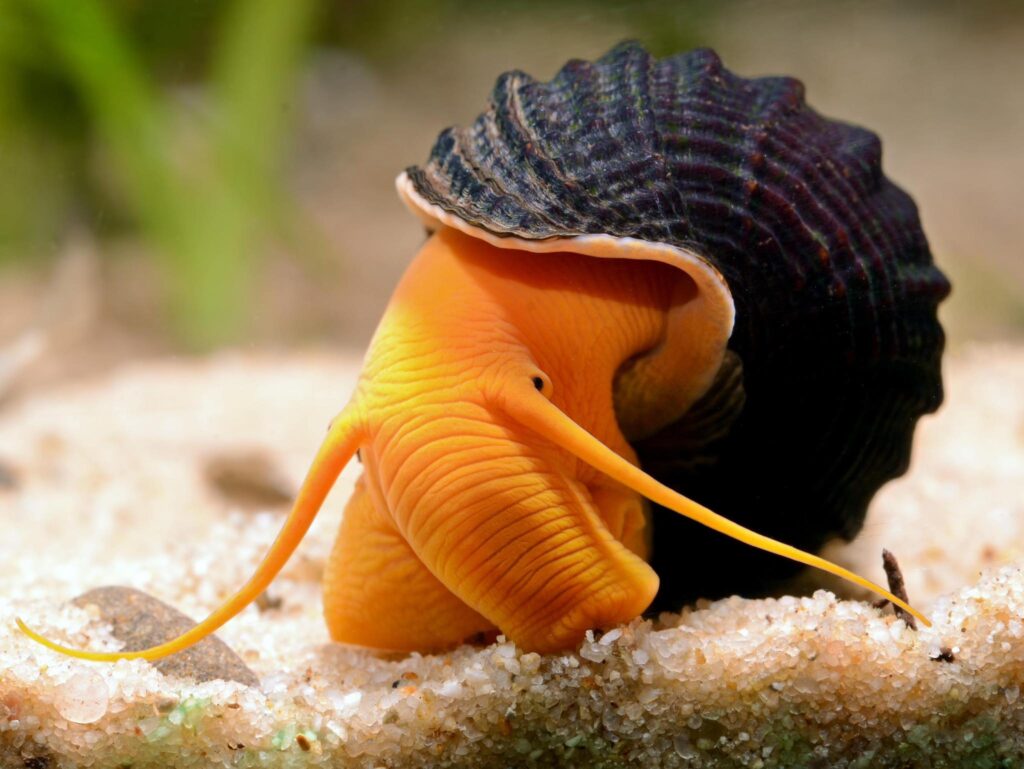
If you have ever come across a snail with a long, twisting shell and a face that genuinely resembles a rabbit — complete with floppy antennae and a wrinkled snout — then you have already met the Tylomelania, more popularly known as the rabbit snail.
I remember the first time I saw one slowly making its way across a planted aquarium. It moved with calm, almost deliberate purpose, and I found myself watching it far longer than I expected. There is something oddly captivating about these animals.
Rabbit snails are not your typical aquarium snail. They are larger, more distinctive, and more intelligent in behavior than most species commonly found in fish tanks. They come from the ancient lake systems of Sulawesi, Indonesia — one of the most biodiverse freshwater ecosystems on Earth.
Because of their unique origin, they require specific water conditions to thrive. This guide covers everything you need to know: their biology, natural habitat, tank requirements, feeding habits, breeding behavior, common health issues, and how to choose the right tank mates.
Rabbit Snail at a Glance
| Common Name | Rabbit Snail |
| Scientific Name | Tylomelania spp. |
| Family | Pachychilidae |
| Origin | Sulawesi, Indonesia (Malili Lake System) |
| Size | 3 to 5 inches (7.5 to 13 cm) |
| Lifespan | 1 to 3 years (sometimes longer) |
| Tank Size | Minimum 20 gallons |
| Water Temperature | 76°F to 84°F (24°C to 29°C) |
| pH Range | 7.5 to 8.5 |
| Water Hardness | Moderately hard to hard (8–18 dGH) |
| Diet | Omnivore — algae, detritus, vegetables |
| Temperament | Peaceful, slow-moving |
| Reproduction | Livebearer — one offspring at a time |
| Care Level | Moderate |
| Common Varieties | Yellow, Orange, White, Black, Chocolate |
Taxonomy and Classification
Rabbit snails belong to the genus Tylomelania, which sits within the family Pachychilidae — a group of freshwater snails found across Southeast Asia. The genus contains dozens of described species, and new ones continue to be documented by researchers.
The name Tylomelania comes from the Greek words tylos (lump or knot) and melania (dark or black), which refers to the dark, knobbly surface of the shell in many species. However, captive-bred individuals appear in many color variations.
Common synonyms and trade names include:
- Elephant snail
- Sulawesi snail
- Poso snail (for Tylomelania zemis, found in Lake Poso)
In scientific literature, the genus is sometimes grouped under the broader family Thiaridae, but current taxonomy places most Sulawesi species firmly in Pachychilidae.
It is worth noting that the taxonomy within this genus is still evolving, with molecular studies regularly revising species boundaries.
Natural Habitat: The Ancient Lakes of Sulawesi
To understand rabbit snails, you have to understand where they come from. Their native home is the Malili Lake System of Central Sulawesi, Indonesia — a network of interconnected ancient lakes that includes:
- Lake Matano (the deepest lake in Southeast Asia)
- Lake Towuti
- Lake Mahalona
- Lake Lontoa
- Lake Masapi
These lakes are millions of years old, and because of their isolation, they have developed an extraordinary level of endemism. Many species found here — fish, shrimp, and snails alike — exist nowhere else on Earth. This is part of what makes rabbit snails so fascinating from a biological standpoint.
The water in these lakes is warm, mineral-rich, and highly stable in chemistry. It has high carbonate hardness, a mildly alkaline pH, and consistent temperatures throughout the year.
This stability means that rabbit snails have not evolved mechanisms to tolerate dramatic changes in water conditions. In captivity, sudden shifts in temperature, pH, or hardness can be fatal to them.
The lake floors are typically covered in leaf litter, sandy substrate, and decaying organic matter — all of which rabbit snails feed on naturally.
Physical Appearance: How to Identify a Rabbit Snail
The rabbit snail has a very recognizable appearance that sets it apart from almost every other common aquarium snail.
Shell
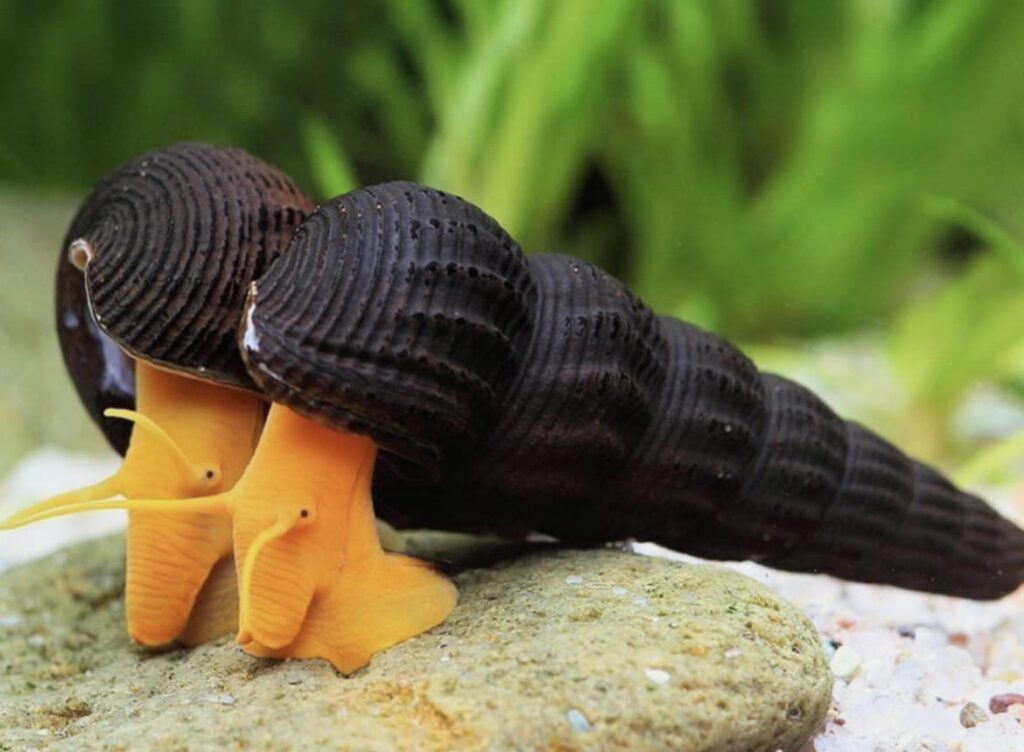
The shell is long, conical, and tightly spiraled, somewhat resembling a cone or a unicorn’s horn. Unlike the round, globular shells of apple snails or the flat discs of nerite snails, the rabbit snail’s shell is distinctly elongated.
It can reach up to 5 inches in length in larger species, though most aquarium specimens average between 3 and 4 inches.
The shell’s surface may be smooth, ridged, or slightly knobbly depending on the species. Colors range from dark brown and black to cream, orange, and yellow.
Body and Face
The body is soft, often appearing dark grey, cream, orange, or a combination. The head is the most distinctive feature. The snail’s face genuinely resembles a rabbit, which is how it earned its common name. It has:
- Long, drooping antennae (reminiscent of rabbit ears)
- A wrinkled, elongated snout
- Small eyes at the base of the antennae
This face is unmistakable. Once you have seen a rabbit snail up close, you will never confuse it with another species.
Foot
The muscular foot is broad and used to glide across surfaces. The movement is notably slow — even for a snail — and deliberate. Rabbit snails are not quick animals, but they are steady.
Common Varieties and Color Morphs
There are many Tylomelania species in the hobby, and they have been selectively bred to produce several popular color morphs. Here are the most commonly kept types:
1. Yellow Rabbit Snail (Tylomelania sp. “Yellow”)
One of the most popular variants. The body is bright yellow or golden, and the shell is typically dark brown to black. The contrast is striking against planted aquarium backgrounds.
2. Orange Rabbit Snail (Tylomelania sp. “Orange”)
Similar to the yellow variant but with a warm orange body. The shell is also usually dark, creating an attractive two-tone appearance.
3. White Spotted Rabbit Snail (Tylomelania sp. “White Spotted”)
This variety features a cream or white body covered in small dark spots. The shell can range from dark brown to golden. It is one of the more unusual-looking types.
4. Black Rabbit Snail (Tylomelania sp. “Black”)
A sleek, almost monochromatic snail with a very dark body and shell. It has a quiet, elegant look that works well in minimalist aquascapes.
5. Chocolate Rabbit Snail (Tylomelania sp. “Chocolate”)
A rich, brown-toned variety with a warm body color. Less flashy than the yellow or orange types, but still popular with enthusiasts who prefer natural, earthy palettes.
6. Poso Orange Rabbit Snail (Tylomelania zemis)
Native to Lake Poso rather than the Malili system, this species has been documented scientifically and is occasionally found in the hobby. It shares many care requirements with other Tylomelania.
Tank Requirements: Getting the Setup Right
Rabbit snails have specific needs, and getting the tank conditions right is the single most important factor in keeping them healthy. This is not a snail you can drop into any aquarium without preparation.
Tank Size
A minimum of 20 gallons is recommended for a small group of rabbit snails. They need space to roam, and they also benefit from a larger water volume, which helps stabilize water chemistry. If you plan to keep multiple snails or combine them with fish, a 30-gallon or larger tank is ideal.
Water Temperature
This is critical. Rabbit snails require warm water between 76°F and 84°F (24°C to 29°C). They come from lake environments where temperatures are consistently warm year-round.
In cooler water, their metabolism slows dramatically, they stop feeding, and they become vulnerable to illness. Most aquarists use a reliable aquarium heater and thermometer to maintain this range.
pH Level
The ideal pH range is 7.5 to 8.5, which is slightly to moderately alkaline. This reflects the mineral-rich chemistry of their native Sulawesi lakes. Rabbit snails do not tolerate acidic water well. A pH below 7.0 will begin to dissolve their shell and cause significant health problems over time.
Water Hardness
Moderately hard to hard water is essential, with a general hardness (GH) of 8 to 18 dGH. The carbonate hardness (KH) should also be maintained above 4 to help stabilize pH. The calcium in hard water is important for shell development.
If your tap water is soft, you can increase hardness by adding crushed coral, limestone, or specific mineral supplements.
Filtration and Water Flow
Rabbit snails do not like strong currents. A gentle but efficient filtration system works best. Sponge filters are a popular choice because they provide biological filtration without creating powerful flow. The water should be well-oxygenated but calm.
Substrate
The substrate matters more than most people realize. A soft, sandy substrate is ideal, as it allows the snails to dig and forage naturally. Coarse gravel can trap their foot and cause irritation. Fine sand or a mix of sand and small-grained soil works well.
Avoid sharp or abrasive materials, as these can damage the snail’s soft body.
Lighting
Rabbit snails do not have strong lighting requirements. Moderate, indirect lighting works fine. They are somewhat more active in dimmer conditions, so you do not need to invest in high-intensity lighting for a snail-focused setup.
Diet and Feeding
Rabbit snails are omnivores with a strong preference for plant-based matter. In the wild, they feed on:
- Decaying plant material and leaf litter
- Algae growing on rocks and substrate
- Biofilm — the thin microbial layer on tank surfaces
- Detritus (organic waste matter)
In captivity, they accept a wide variety of foods. A varied diet keeps them healthy and their shells strong.
Good Food Choices
- Blanched vegetables — zucchini (courgette), cucumber, spinach, kale, and sweet potato are all accepted
- Commercial sinking wafers — algae wafers and bottom-feeder pellets work well
- Calcium-rich foods — cuttlebone or calcium-supplemented foods help maintain shell health
- Live or dried algae — if algae grow naturally in your tank, they will graze on it regularly
- Leaf litter — Indian almond leaves and dried oak leaves not only serve as food but also enrich the tank environment
One important note: rabbit snails are slow eaters. Do not assume they are not eating just because food disappears slowly. It is also good practice to remove uneaten food after 24 to 48 hours to prevent water quality issues.
Foods to Avoid
- Salty or processed foods — harmful to freshwater invertebrates
- Copper-containing products — copper is toxic to snails and shrimp at even low concentrations. Always check fish medications and fertilizers for copper content before using them in a snail tank.
Behavior and Activity Patterns
One of the most enjoyable aspects of keeping rabbit snails is observing their behavior. They are peaceful, slow-moving, and surprisingly engaging to watch.
Activity Level
Rabbit snails are not particularly active animals. They spend much of their time moving slowly across the substrate, climbing tank walls, or grazing on surfaces. Some individuals will bury themselves partially in the substrate for periods of time, which is completely normal.
They are more active during the evening and early night hours, which matches their natural behavior in the dimly lit lake depths.
Social Behavior
Rabbit snails are not aggressive toward each other or toward other tank inhabitants. They coexist peacefully with other snails, fish, and shrimp. Occasionally, two snails may briefly interact — touching antennae or climbing over one another — but there is no territorial behavior.
Substrate Interaction
They regularly plow through the substrate while feeding, which inadvertently aerates the soil and is beneficial for planted tanks. If you have a planted aquarium, rabbit snails can help prevent anaerobic pockets from forming in the substrate.
Tank Mates: Who Can Live with Rabbit Snails?
Rabbit snails are peaceful and relatively large, which means they are safe from many of the threats that endanger smaller snails. However, there are still some compatibility concerns to keep in mind.
Good Tank Mates
- Small, peaceful fish — Tetras, rasboras, small danios, and similar community fish are excellent companions. They will not disturb the snails.
- Dwarf shrimp — Neocaridina and Caridina shrimp species coexist well with rabbit snails, and they share similar tank parameters in some cases. (Note: Caridina shrimp from Sulawesi require very similar water chemistry to rabbit snails.)
- Other snails — Nerite snails, mystery snails, and Malaysian trumpet snails are all compatible.
- Corydoras catfish — Bottom dwellers that are peaceful and unlikely to bother snails.
- Otocinclus catfish — Small, gentle algae eaters that share a peaceful temperament.
Tank Mates to Avoid
- Pufferfish — These are dedicated snail hunters and will quickly eat rabbit snails.
- Large cichlids — Many cichlids will attempt to crack open snail shells, especially when hungry.
- Loaches (some species) — Clown loaches and yoyo loaches are known to eat snails, including rabbit snails.
- Assassin snails — While assassin snails typically prey on smaller snails, they may target rabbit snails in large numbers.
Breeding: The Fascinating World of Rabbit Snail Reproduction
Rabbit snails have one of the most interesting reproductive strategies in the aquarium hobby. Unlike many snails that lay large clutches of eggs, rabbit snails are livebearers — they give birth to live young.
How It Works
After internal fertilization, the female rabbit snail carries the developing embryo inside her body. The gestation period is long — typically 4 to 6 weeks or more. At the end of this period, she gives birth to a single, fully-formed juvenile snail.
The baby snail is born with a small but fully developed shell. It is miniature in size — usually only 2 to 5 millimeters long — but it is otherwise a perfect, functional snail from the moment of birth.
This is why rabbit snails rarely overpopulate a tank. With only one offspring produced per birth event, population growth is slow and manageable. This makes them much easier to control than prolific egg-laying species like pond snails or bladder snails.
Sexing Rabbit Snails
Unfortunately, it is very difficult to distinguish male from female rabbit snails by external appearance alone. They do not show obvious external sexual dimorphism. Some experienced keepers claim that females may be slightly larger, but this is not a reliable method of identification.
In practice, most aquarists simply keep a small group (4 to 6 individuals) and allow natural pairing to occur.
Breeding Conditions
To encourage breeding, maintain water quality, temperature, and nutrition at optimal levels. Regular feeding, stable warm water, and adequate calcium in the diet all support reproductive activity.
Do not attempt to breed rabbit snails in acidic or soft water, as this will compromise both adult health and the development of juvenile shells.
Raising Juveniles
Newborn rabbit snails can be left in the main tank safely. They are too large to be eaten by most fish and immediately begin feeding on biofilm and soft organic matter. Growth is slow — juveniles may take a year or more to reach adult size.
Common Health Problems and How to Address Them
1. Shell Erosion and Pitting
This is one of the most common issues and is almost always caused by acidic or soft water. If the pH drops below 7.0 or the water lacks sufficient calcium, the shell begins to dissolve from the outside. You will notice white patches, pitting, or a chalky texture on the shell surface.
Solution: Raise the pH to the appropriate range, increase water hardness, and supplement with calcium-rich foods or a cuttlebone in the tank.
2. Lethargy and Loss of Appetite
Rabbit snails are naturally slow, but if a snail is completely motionless for extended periods or refuses food entirely, something is wrong. Common causes include:
- Temperature too low — check the heater
- Poor water quality — test ammonia, nitrite, nitrate, and pH
- Copper contamination — even trace amounts are toxic
Solution: Test water parameters immediately and make appropriate corrections.
3. Staying Hidden or Retracted
While it is normal for rabbit snails to retract into their shell occasionally, prolonged retraction (more than 24 to 48 hours) may indicate stress or illness.
Check all water parameters. If the snail does not respond to food placed nearby within a day or two, investigate further.
4. Copper Poisoning
This is a serious and often fatal issue. Copper is found in some fish medications, fertilizers, and even some tap water supplies. Always test for copper before adding new water or products to a snail tank. If poisoning is suspected, perform a large water change immediately with conditioned, copper-free water.
Tips for Buying Healthy Rabbit Snails
When purchasing rabbit snails from a store or online vendor, there are a few things to check:
- Shell condition — Look for smooth, intact shells without cracks, pitting, or unusual white patches.
- Body activity — A healthy snail should be moving or respond when touched. A snail that hangs limply out of its shell or does not react may be sick.
- Source transparency — Buy from reputable vendors who can confirm the snails are from captive-bred stock or from responsible importers. Wild-caught snails may carry pathogens and may be harder to acclimate.
- Size consistency — Avoid very small juveniles from unknown sources, as they may be harder to acclimate.
Quarantine new snails for at least two weeks before introducing them to an established tank, just as you would with new fish.
Why Aquarists Love Rabbit Snails: The Appeal
There is a reason rabbit snails have built a dedicated following in the aquarium hobby.
First, they are genuinely beautiful animals. The elongated shell, the vivid body colors, and that remarkable rabbit-like face make them visually unlike anything else in a community tank.
Second, they are beneficial to the aquarium ecosystem. They clean up leftover food, consume algae, and aerate the substrate without harming live plants (unlike some other snail species that will devour aquatic plants).
Third, their slow reproductive rate makes them practical. You will not wake up one morning to hundreds of snails all over your tank. Rabbit snails are controllable, which gives aquarists peace of mind.
Finally, they are simply enjoyable to observe. There is something meditative about watching a rabbit snail steadily navigate its environment. Many aquarists report that snails in general — and rabbit snails in particular — help make an aquarium feel complete and alive in a way that fish alone sometimes do not.
Conservation Considerations
It is important to briefly address the conservation context of rabbit snails. The Malili Lake System in Sulawesi, where most Tylomelania species originate, is under increasing pressure from:
- Nickel mining activities in the region
- Deforestation of watershed areas
- Introduction of invasive species
Several Tylomelania species are considered endemic and potentially vulnerable. While the aquarium trade provides an alternative to wild collection through captive breeding, responsible sourcing still matters.
When possible, choose captive-bred specimens from reputable breeders rather than wild-caught imports.
Supporting sustainable aquarium practices is a small but meaningful way to reduce pressure on these remarkable freshwater habitats.
Frequently Asked Questions
Will rabbit snails eat my live aquarium plants? Generally, no. Rabbit snails are not known to damage healthy, established aquarium plants. They may occasionally nibble on very soft, thin-leaved plants if they are very hungry, but this is uncommon. They strongly prefer algae, biofilm, and decaying matter.
How many rabbit snails can I keep together? A group of 3 to 6 is ideal for a 30-gallon tank. They are social enough to coexist well in groups but do not require companions to thrive.
Can rabbit snails live with shrimp? Yes. They are excellent tank mates for most dwarf shrimp. They do not prey on shrimp, and they compete for different food sources for the most part.
Why is my rabbit snail always hiding? Hiding occasionally is normal, especially during the day. If the snail hides consistently and refuses food, check water temperature and parameters immediately.
How do I know if my rabbit snail is dead? A living snail will retract into its shell when disturbed. A dead snail will hang limply out of its shell, often with a noticeable odor. If you are unsure, gently remove the snail from the water and see if it responds — a healthy snail will retract quickly.
Final Thoughts
The rabbit snail is one of the most rewarding freshwater invertebrates you can add to an aquarium. It combines striking appearance with practical benefits, manageable reproduction, and peaceful behavior. The care requirements, while more specific than some beginner snails, are entirely achievable with the right setup.
If you are willing to meet their water chemistry needs — warm temperature, alkaline pH, and hard water — rabbit snails will repay you with years of fascinating behavior and effortless beauty in your tank.
They are not the easiest snail to keep, but they are among the most worthwhile. And once you have watched one slowly inch its way across your tank floor, waving those unmistakable rabbit-ear antennae, you will understand why so many aquarists consider them essential to their setup.
References and Further Reading
- USGS Nonindigenous Aquatic Species (NAS) Database https://nas.er.usgs.gov
- Integrated Taxonomic Information System (ITIS) https://www.itis.gov
- Animal Diversity Web — University of Michigan Museum of Zoology https://animaldiversity.org
- University of Florida IFAS Extension — Freshwater Mollusks and Aquatic Ecosystems https://edis.ifas.ufl.edu
- U.S. Environmental Protection Agency (EPA) — Aquatic Ecosystems and Wetlands https://www.epa.gov/wetlands