25 Birds With Colorful Beaks (Identification, With Pictures)
I still remember the first photo I saw of a toco toucan. I genuinely thought someone had edited the colors, that no beak in nature could look that bright. It turns out plenty of birds carry beaks just as bold.
This guide walks through 25 birds with colorful beaks. By the end, you will know why beak color matters, which birds carry the boldest bills, and where you might actually spot one. Let’s get into it.
Why Do Some Birds Have Colorful Beaks?
A bright beak is rarely just decoration. In most species, color signals health, age, or readiness to breed.
Diet plays a direct role too. Birds like flamingos and puffins get their color from pigments called carotenoids, found in the shrimp, algae, or fish they eat.
The U.S. Fish and Wildlife Service notes that Atlantic puffins develop a beak that becomes laterally flattened and brightly colored specifically during breeding season, with distinctive fleshy rosettes forming at the base of the bill.
That same source confirms the color fades once breeding ends. The bright outer layer is shed, revealing a smaller, duller bill underneath until the next season begins.
This pattern repeats across many species on this list. Bright color often means “breeding season is here,” both to mates and to rival birds.
Now, let’s meet the 25 species that wear this signal best.
1. Atlantic Puffin
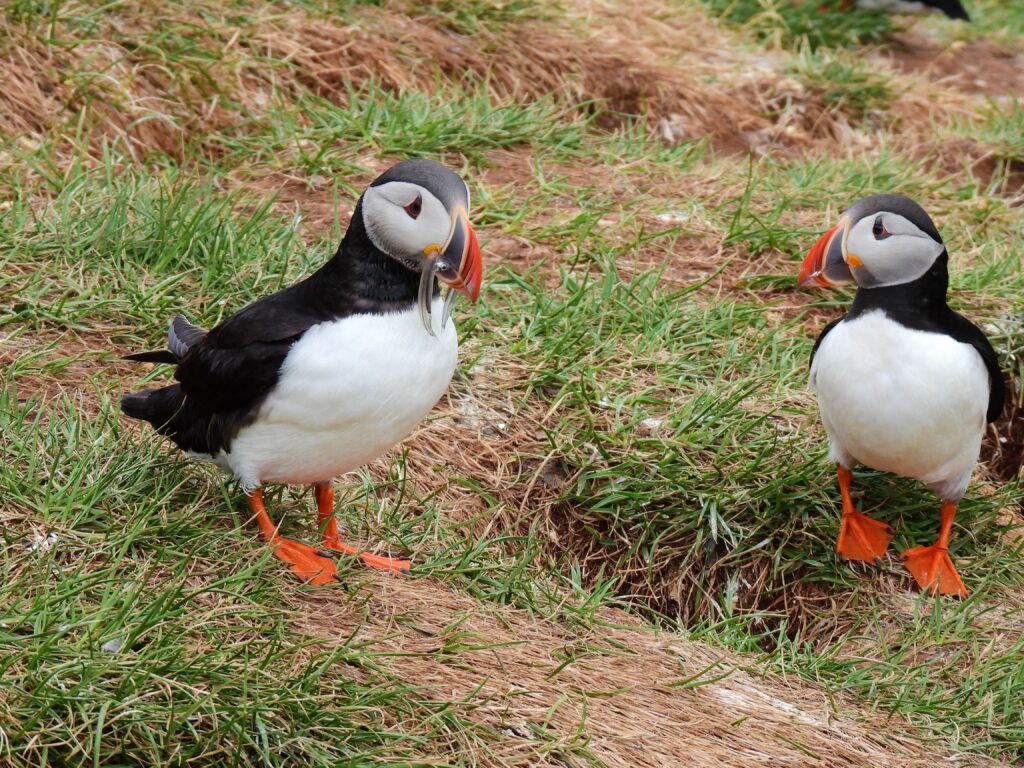
This seabird might be the single best-known example of a seasonal color-changing beak. Its bill turns a vivid mix of orange, yellow, and gray-blue only during breeding months.
The Smithsonian’s Ocean Portal describes puffins as colonial breeders that dig nesting burrows on coastal cliffs, and their bright bills play a direct role in courtship displays during this period.
Fun fact: According to Massachusetts state wildlife records, puffins develop distinctive grayish face patches and fleshy rosettes at the base of the bill only while breeding, then lose this coloring entirely once the season ends.
I find this transformation genuinely remarkable. A puffin in winter looks almost like a completely different bird, its face duller and its beak noticeably smaller once the colorful outer sheath has been shed.
Puffins also use their hinged bill structure to carry multiple small fish at once, sometimes over a dozen, crosswise in a single beak load back to their chick.
2. Tufted Puffin
This Pacific relative of the Atlantic puffin carries an equally bold orange bill, paired with pale yellow head tufts during breeding season. It nests in burrows along cliffs from Alaska down through the northeastern Pacific.
Its beak color intensifies just before breeding begins, then fades to a smaller, grayer bill through the winter months at sea.
Unlike its Atlantic cousin, the tufted puffin can dig burrows considerably deeper, sometimes stretching several feet into a cliffside, giving chicks extra protection from predators and weather.
3. Horned Puffin
Named for the small, dark fleshy “horn” above each eye, this puffin carries a bright yellow-and-orange bill similar in structure to its relatives. It breeds along the Alaskan coast and into the Russian Far East.
Like other puffins, its colorful bill sheds its outer layer after breeding season, leaving behind a duller, smaller beak for the rest of the year.
Horned puffins often nest among rocky crevices rather than digging burrows, a habitat difference that separates them from the soil-burrowing habits of their close relatives.
4. American Oystercatcher
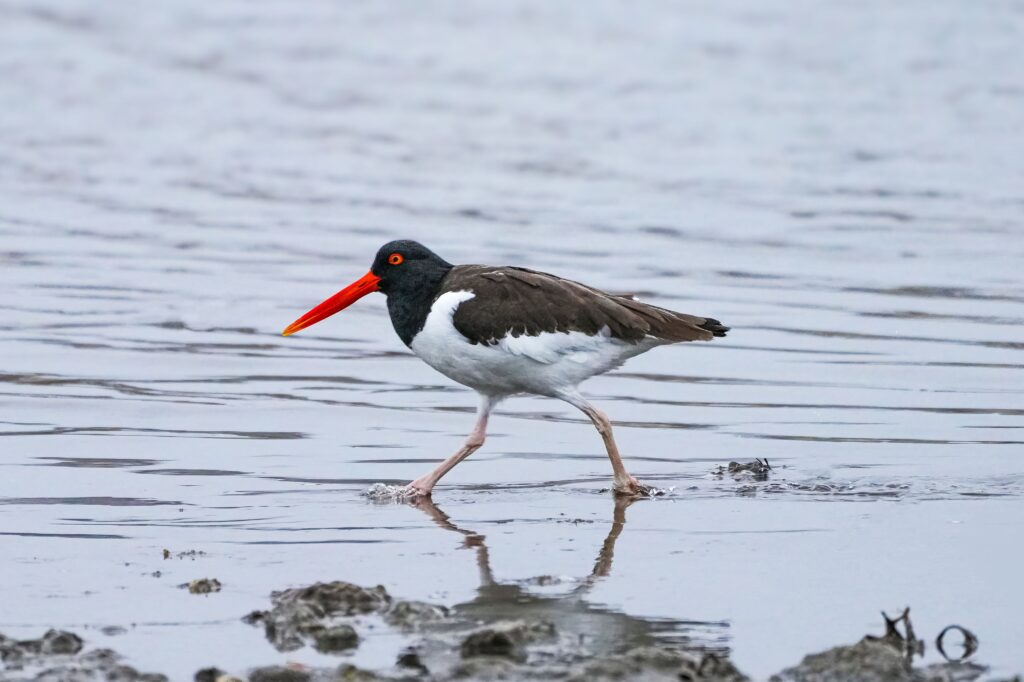
This large, unmistakable shorebird carries one of the most vivid orange bills on any North American coastline. The National Park Service describes it as having a long, distinct red-orange bill paired with striking yellow eyes.
That bill is not just colorful, it is a precision tool. According to the National Park Service, the bird uses its knife-like bill to quickly stab open oyster and clam shells, or to hammer prey loose from clumps of sand before prying it open.
Risk factor: The same source notes that oysters have occasionally trapped an oystercatcher’s bill shut, holding the bird underwater, a rare but real hazard of this specialized feeding style.
Because it depends on undeveloped beaches and healthy shellfish beds, this bird also serves as a useful indicator species for coastal habitat health, according to National Park Service records at Cape Lookout National Seashore.
5. American Flamingo
Few birds pair a colorful beak with such an equally colorful body. Its bill is a soft pink at the base, fading to a sharp black tip, an unmistakable two-tone design.
That pink coloring comes directly from carotenoid pigments in the shrimp and algae the bird filters from shallow water, the same pigments responsible for its rosy feathers.
The black tip serves a functional purpose too. It contains the strongest filtering structures in the bill, used to strain food from muddy or salty water before swallowing.
Young flamingos hatch with gray, straight bills that only develop the curved shape and pink coloring as they mature over their first year or two of life.
6. Roseate Spoonbill
This bright pink wading bird carries a long, gray, spoon-shaped bill that stands out against its vivid plumage. The bill itself is not brightly colored, but its unusual shape and the surrounding bare, greenish head skin make it instantly recognizable.
Like flamingos, its pink feathers come from pigments in the crustaceans it eats, and that same diet subtly tints the skin around its bill during breeding season.
Spoonbills sweep their open bill side to side through shallow water, relying on touch-sensitive nerve endings to detect prey rather than sight alone.
7. Toco Toucan
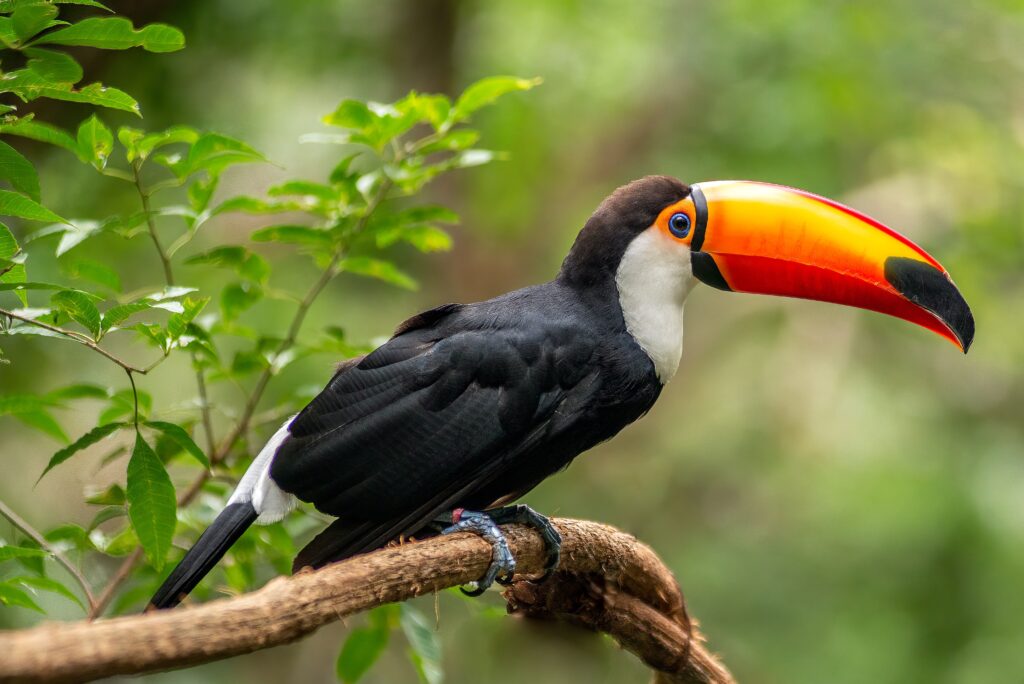
This is the bird that started my own fascination with colorful beaks. Its enormous orange bill, tipped in black and yellow, can measure nearly a third of the bird’s total body length.
Despite its size, the beak is surprisingly lightweight. It is built from a honeycomb-like keratin structure over a bony core, keeping the toucan light enough to fly comfortably through dense forest canopy.
Researchers have also found that toucans use their oversized bill to regulate body temperature, releasing heat through blood vessels near the surface on hot days.
Diet note: While famous for eating fruit, toco toucans also eat insects, eggs, and small reptiles, using that long bill to reach food other birds cannot access.
8. Keel-Billed Toucan
Central America’s national bird of Belize carries perhaps the most colorful beak of any bird on this list, blending green, orange, red, and blue in bold bands across its length.
Like the toco toucan, this beak is mostly hollow and lightweight, a trait that allows the bird to carry such a large structure without straining its flight muscles.
Keel-billed toucans often travel in small, noisy flocks, using loud croaking calls that carry through the rainforest canopy well before the birds themselves come into view.
9. Rainbow Lorikeet
This small, brilliantly colored parrot has an orange-red bill that matches its rainbow-toned feathers. Unlike seed-eating parrots, its bill is adapted for a nectar-based diet rather than cracking hard shells.
Its brush-tipped tongue works alongside the curved bill to reach deep into flowers, letting it feed efficiently on nectar and pollen across Australia and parts of Southeast Asia.
Rainbow lorikeets are highly social, often gathering in noisy, colorful flocks at flowering trees, their bright bills flashing as they jostle for feeding position.
10. Scarlet Macaw
This large parrot carries a powerful, curved black-and-gray bill set against brilliant red, yellow, and blue plumage. The bill’s strength allows it to crack open extremely hard nuts and seeds most birds cannot access.
Its bite force is considerable, strong enough to crush shells that would be nearly impossible for smaller-billed birds to open.
Scarlet macaws mate for life and often travel in pairs, their loud calls and bold coloring making them one of the most recognizable parrots in the Americas.
11. Hyacinth Macaw
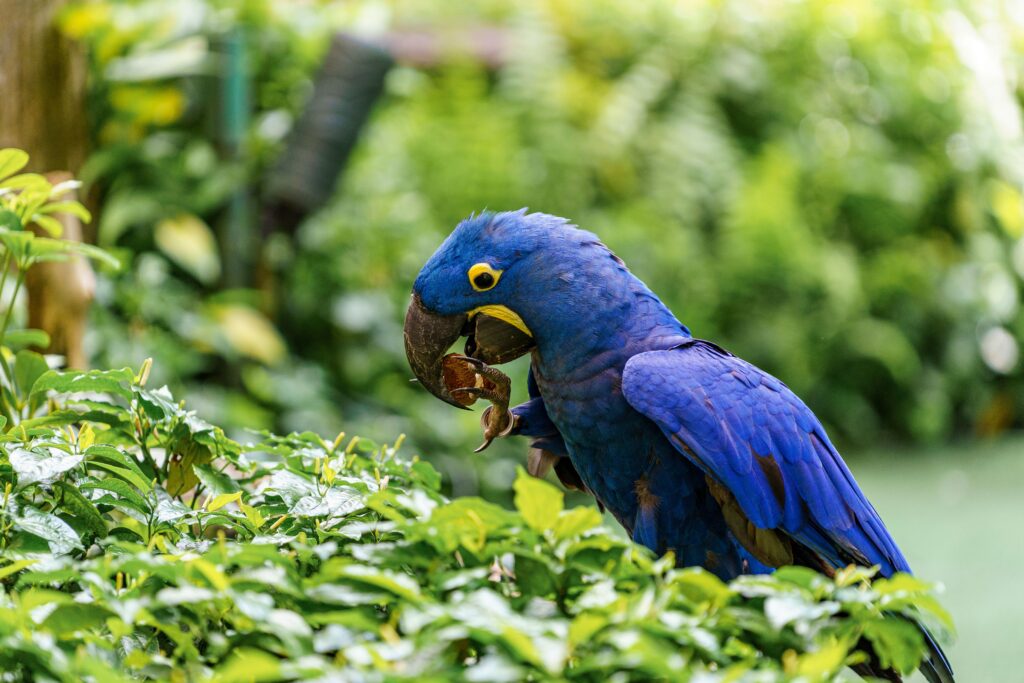
The largest flying parrot species carries an enormous curved black bill, contrasting sharply with its deep blue feathers. That bill is powerful enough to crack coconuts and palm nuts other birds cannot break into.
A patch of bright yellow skin surrounds the base of the bill and eye, adding a splash of color against the otherwise dark beak and blue plumage.
This species has faced serious population pressure from habitat loss and the illegal pet trade, making protected reserves across Brazil especially important for its survival.
12. Sun Conure
This small, vividly colored parrot carries a dark gray-black bill that stands out against bright yellow and orange feathers. Native to northeastern South America, it is popular in aviculture for both its color and social nature.
Its bill, while not brightly colored itself, is strong enough to crack seeds and nuts that make up the bulk of its natural diet.
Sun conures are highly vocal, often calling loudly in flight, a trait that has made wild populations easier to track despite their declining numbers in parts of their native range.
13. Rainbow-Billed Aracari
A smaller relative of the keel-billed toucan, this bird carries a beak striped in black, yellow, and red, almost like a smaller version of its more famous cousin’s rainbow bill.
It moves through the forest canopy in small family groups, an unusual social structure among toucans, often roosting together in tree cavities at night.
Its diet mirrors that of larger toucans, favoring fruit but supplementing with insects, small lizards, and occasionally the eggs of other birds.
14. Green Aracari
This smaller toucan relative carries a duller but still distinctly patterned bill, mixing black, cream, and reddish tones. It favors lowland forest across the Amazon basin.
Like other aracaris, it nests in tree cavities and often roosts in small groups, several birds packed into a single hollow for warmth and safety overnight.
Its more muted coloring compared to larger toucans may help it stay less visible to predators while foraging in dense understory vegetation.
15. Puffin-Billed Parrotfinch
While technically a finch rather than a parrot, this small tropical bird carries a bold red bill that gives it its common name. It favors dense forest edges across parts of the western Pacific.
Its bright bill contrasts against green body plumage, making it a favorite subject for birdwatchers visiting remote island forests.
Little detailed population data exists for this species, though habitat loss across its island range remains a general concern for many similarly range-restricted forest birds.
16. Grey Crowned Crane
This African crane carries a beak that shifts from gray to a paler tone near the tip, framed by a striking red throat wattle and golden crest. The overall face pattern makes it one of the most photogenic cranes in the world.
Its varied coloring extends beyond the bill into bare facial skin, which can flush a brighter red during courtship displays.
This species forages across both wetlands and open grassland, giving it a varied diet that includes insects, seeds, and small reptiles.
17. Saddle-Billed Stork
Few birds combine as many colors into one beak as this African stork. Its bill mixes red, black, and yellow bands, with a distinctive yellow “saddle” shield at the base near the forehead.
Males and females share this same bold coloring, though they can be distinguished by eye color, with females showing pale yellow irises and males darker brown ones.
This stork typically hunts alone or in pairs, using its long legs and colorful bill together while patrolling rivers and marshland across sub-Saharan Africa.
18. Southern Ground Hornbill
This large African bird carries a thick, curved black bill accented by bright red patches of bare skin around the throat and face. Females typically show a small patch of dark blue skin within the red, a useful way to tell the sexes apart.
That vivid red skin becomes more intense during breeding season, a signal used in courtship and territorial displays among group members.
Ground hornbills live in cooperative family groups, with several birds helping raise a single chick, an unusual social structure for a bird this size.
19. Rhinoceros Hornbill
Named for the large, curved casque above its bill, this Southeast Asian hornbill displays a striking mix of yellow, orange, and red across both the bill and casque structure.
The casque itself is hollow and made of keratin, similar in construction to a toucan’s bill, keeping the structure lightweight despite its dramatic size.
This species plays an important role in seed dispersal across Southeast Asian rainforests, swallowing large fruits whole and distributing seeds widely as it travels.
20. Great Hornbill
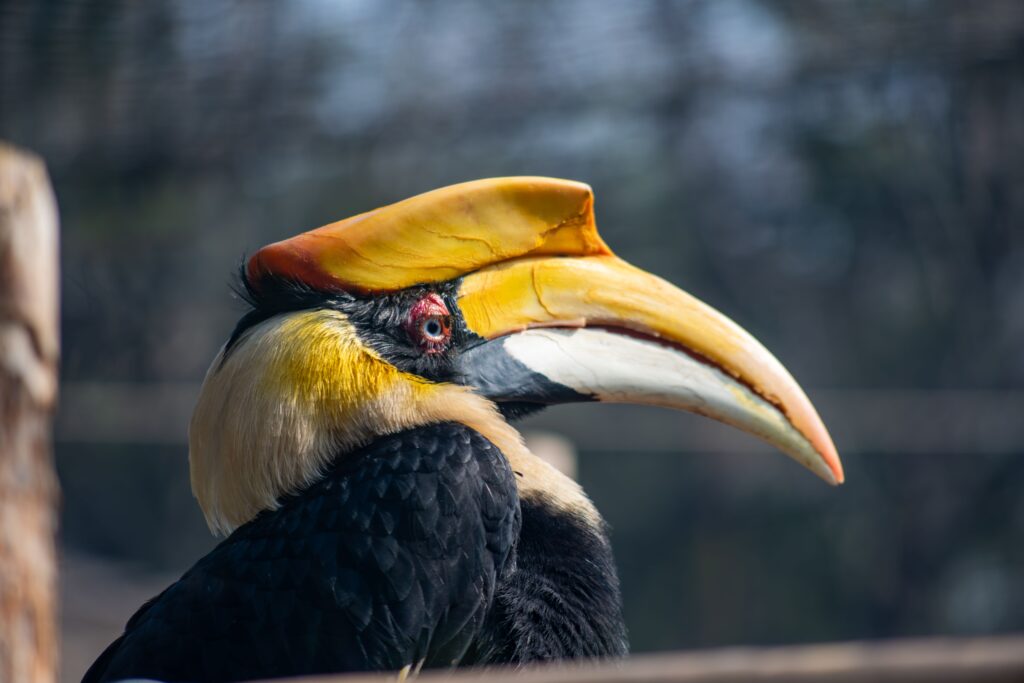
One of the largest hornbill species, this bird carries a bright yellow bill and casque, often stained slightly orange from preening oil secreted by a gland near its tail.
That staining is not natural pigment at all. Researchers have found the bird intentionally rubs oil from its uropygial gland onto its bill, deepening the yellow into a richer orange tone over time.
Great hornbills mate for life, and the female seals herself inside a tree cavity during nesting, relying on the male to deliver food through a narrow slit for weeks at a time.
21. Northern Cardinal
This familiar backyard bird carries a bright reddish-orange, cone-shaped bill built for cracking seeds. Its color contrasts sharply against deep red plumage in males and warmer brown tones in females.
That bill color often signals overall health and diet quality, with brighter-billed males frequently attracting more mating attention during courtship season.
Northern cardinals are non-migratory, meaning that same colorful bill remains visible through all four seasons across much of the eastern and central United States.
22. American White Ibis
This coastal wading bird carries a long, curved, reddish-pink bill that matches its bright pink legs. It probes soft mud for crayfish and small aquatic prey using that same curved bill.
Bill color deepens noticeably during breeding season, alongside a patch of bare, brightly colored skin that appears around the eyes and face.
White ibises often forage in large mixed flocks alongside herons and egrets, their pink bills easily visible even from a distance across open marshland.
23. Black Skimmer
This coastal bird carries an unusual two-tone bill, black above and bright orange-red below, with the lower half noticeably longer than the upper. That mismatch is not a defect. It is a precise hunting tool.
The bird flies low over calm water, slicing its longer lower bill through the surface to snap up fish by touch alone, often at dusk or after dark.
Its orange base fades toward a black tip, a color pattern that stays consistent through most of the year rather than shifting with the seasons like a puffin’s bill.
24. Wilson’s Bird-of-Paradise
This small, spectacularly colored bird from New Guinea carries a bright turquoise-blue bill that matches patches of bare skin on its head. Males use this coloring during elaborate courtship dances performed on the forest floor.
The blue skin around the bill can shift in intensity depending on the angle of light, adding to the dramatic effect during these display rituals.
Females, by comparison, show far duller coloring throughout, a common pattern among birds-of-paradise where males carry nearly all the visual display responsibility.
25. Violet Turaco
This large African forest bird carries a short, thick red bill set against deep violet-blue plumage and a bright crimson crest. Its coloring ranks among the most vivid of any bird found across central Africa.
Unusually, turacos produce their red and green pigments through unique copper-based compounds found in almost no other bird family, rather than through diet-based carotenoids.
This bird feeds mainly on fruit, and its strong legs let it move through tree canopy with agile, almost squirrel-like hops between branches.
ALSO READ: 30 Stunning Birds With Long Beaks (Species Identification, With Pictures)
Quick Comparison Table
| Bird | Beak Color | Color Source |
| Atlantic Puffin | Orange, yellow, gray-blue | Seasonal breeding change |
| American Flamingo | Pink with black tip | Diet-based carotenoids |
| Toco Toucan | Orange, black, yellow | Structural and pigment-based |
| Keel-Billed Toucan | Green, orange, red, blue | Structural and pigment-based |
| Northern Cardinal | Reddish-orange | Diet and health indicator |
| Violet Turaco | Red | Unique copper-based pigment |
How Beak Color Connects to Bird Biology
Seasonal color change, like the puffin’s, usually signals breeding readiness. The brighter the bill, the more attractive the bird appears to potential mates.
Diet-based color, seen in flamingos and ibises, reflects what the bird has been eating recently. A duller bill can sometimes hint at poor feeding conditions.
Structural color, found in toucans and hornbills, comes from the physical makeup of the bill itself rather than pigment alone, though some pigment still plays a role.
My own takeaway: A bird’s beak color is rarely random. It almost always tells you something true about the bird’s age, health, diet, or place in the breeding calendar.
Frequently Asked Questions
Which bird has the most colorful beak in the world? The keel-billed toucan is widely regarded as having one of the most colorful beaks, blending green, orange, red, and blue in bold bands.
Why do puffin beaks change color? Puffins grow a brighter, larger outer bill layer specifically for breeding season, then shed it once the season ends, according to U.S. Fish and Wildlife Service records.
Do all colorful beaks come from diet? No. Some, like the flamingo’s, are diet-based. Others, like the turaco’s, come from unique pigments the bird produces internally rather than from food.
Are colorful beaks a sign of a healthy bird? Often, yes. Brighter beak color frequently signals good nutrition and overall health, which is one reason it plays such a strong role in mate selection.
Final Thoughts
Twenty-five birds, and every single beak tells its own story of diet, biology, or breeding season. None of this color exists purely by chance.
I hope this list gives you a new appreciation the next time you spot a cardinal at a feeder or a toucan in a photograph. That color is doing real biological work.
References
- U.S. Fish & Wildlife Service. “Atlantic Puffin (Fratercula arctica) Species Profile.” https://www.fws.gov/species/atlantic-puffin-fratercula-arctica
- Smithsonian’s Ocean Portal, National Museum of Natural History. “Atlantic Puffin.” https://www.ocean.si.edu/node/109685
- National Park Service. “American Oystercatcher — Gulf Islands National Seashore.” https://www.nps.gov/guis/learn/nature/american-oystercatcher.htm
- National Park Service. “American Oystercatcher — Cape Lookout National Seashore.” https://home.nps.gov/calo/learn/nature/american-oystercatcher.htm
- National Park Service. “2014 American Oystercatcher Annual Report — Cape Hatteras National Seashore.” https://www.nps.gov/articles/caha_amoy2014.htm
- Commonwealth of Massachusetts. “Atlantic Puffin — Mass.gov.” https://www.mass.gov/info-details/atlantic-puffin
- National Center for Biotechnology Information, U.S. National Library of Medicine (PubMed). “Energetic costs of bill heat exchange demonstrate contributions to thermoregulation at high temperatures in toco toucans (Ramphastos toco).” https://pubmed.ncbi.nlm.nih.gov/36752123/