30 Stunning Birds With Long Beaks (Species Identification, With Pictures)
I still remember the first time I watched a great blue heron spear a fish in one clean strike. That long, dagger-like bill did all the work. It made me curious about every other bird that carries a beak far bigger than its head.
This guide answers that curiosity in full. Below, you will find 30 types of birds with long beaks, grouped by how they use that bill in daily life.
Each bird here has a real purpose behind its beak shape. Nothing in nature is decorative for no reason. A long beak usually means a very specific way of finding food.
By the end, you will know why beak length matters, how to identify these birds in the wild, and where to see them. Let’s get into it.
Why Do Some Birds Have Long Beaks?
A bird’s beak is a survival tool, not just a facial feature. Length, curve, and thickness all point to a specific diet.
Long, thin beaks are usually built for probing. They reach into mud, sand, tree bark, or flowers where food hides out of sight.
According to the Cornell Lab of Ornithology’s All About Birds resource, a bird such as the Long-billed Curlew forages for earthworms and other deep-burrowing prey such as shrimp and crabs in soft muddy substrates using its long, curved bill. That single sentence explains most of this list.
Short, thick beaks crack seeds. Hooked beaks tear meat. Long beaks, on the other hand, almost always mean the bird is chasing something hidden.
Now, let’s meet the birds themselves.
1. Great Blue Heron
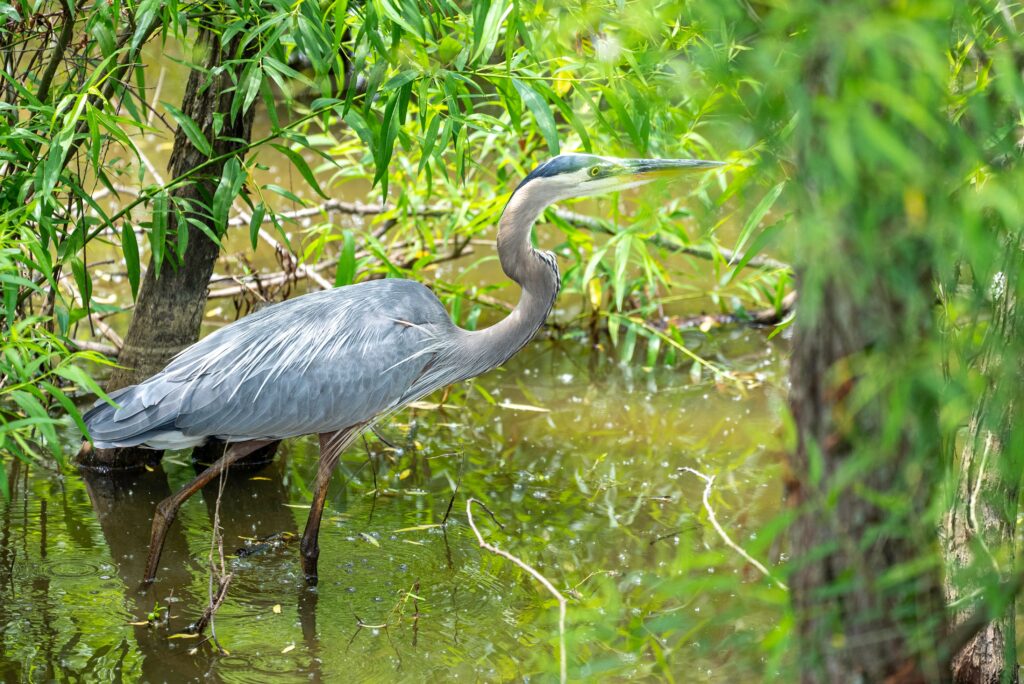
This is the bird that started my own fascination with long beaks. It stands still for minutes, then strikes like a spear.
Its beak is long, straight, and dagger-shaped. That shape lets it pierce fish, frogs, and even small mammals in a single jab.
Habitat: Marshes, riverbanks, and lake shores across North America.
You will often see this heron standing alone. It is not shy, but it is patient, almost meditative in how it waits.
2. Whooping Crane
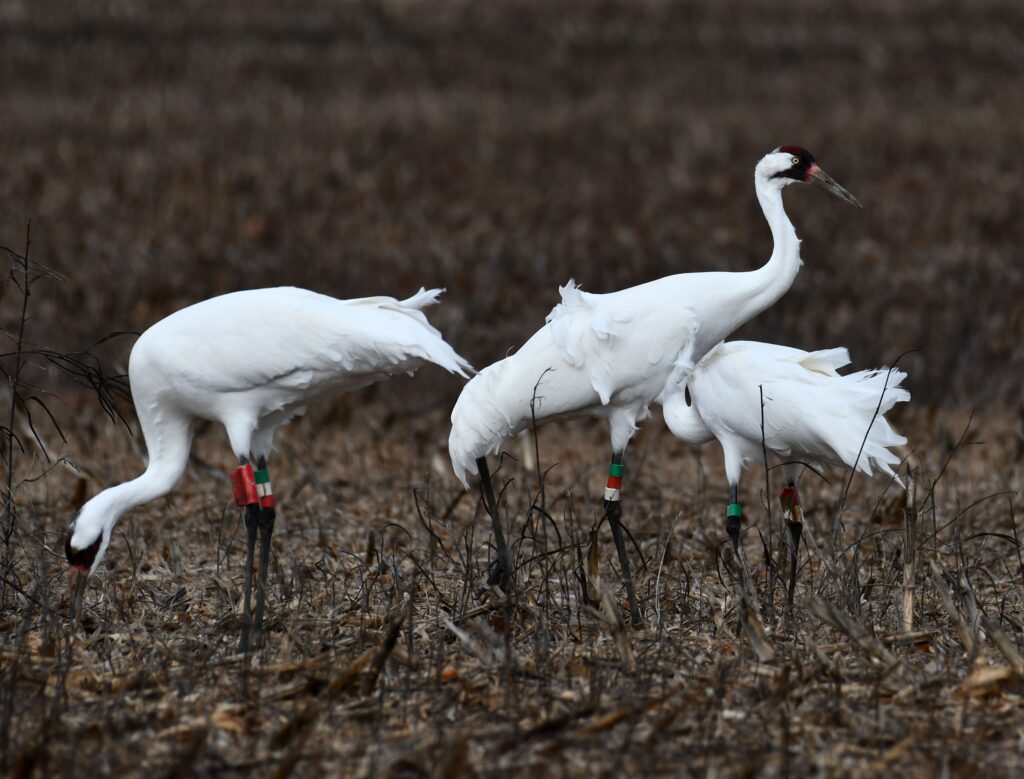
North America’s tallest bird also carries one of its most impressive bills. It uses this long, pointed beak to probe wetlands for crabs, clams, and insects.
This species nearly vanished completely. The U.S. Fish and Wildlife Service’s whooping crane recovery program confirms that the wild population once numbered only around 21 individuals before recovery efforts began, down from more than 10,000 birds that historically populated North America.
The recovery since then has been remarkable. Recent survey data shows the population exceeded 550 individuals for the first time during the 2024-2025 wintering grounds survey, a milestone worth celebrating.
Fun fact: I find it moving that a bird once reduced to a few dozen survivors is now a genuine conservation success story.
3. American White Pelican
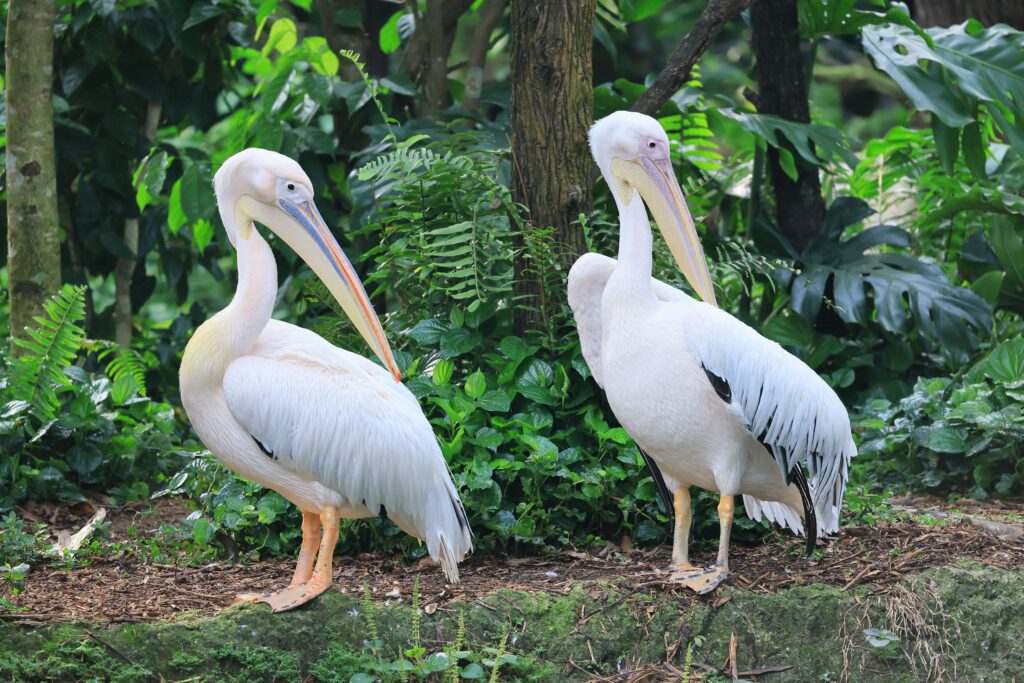
This pelican’s beak is impossible to miss. It stretches long and flat, ending in a pouch that looks almost too big for the bird’s own body.
That pouch is not just for show. Field reports and refuge biologists note the pouch can hold up to 3 gallons of water while the bird scoops up fish in shallow water.
Feeding style: These pelicans often fish in teams, herding fish into shallow water before scooping them up together.
4. Brown Pelican
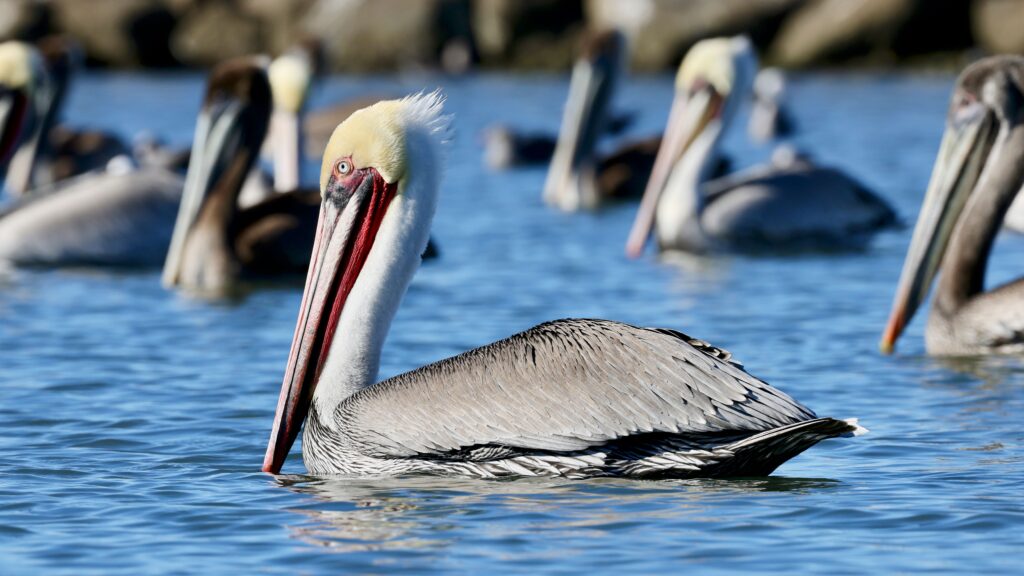
Unlike its white cousin, the brown pelican dives from the air to catch fish. Its long beak and stretchy pouch absorb the impact of a dive from real height.
According to the National Park Service, brown pelicans can grow upwards of 50 inches in length, weigh around nine pounds, and sport an impressive seven-foot wingspan. Their pouches hold roughly the same volume as their white relatives.
Interestingly, these elastic pouches can hold up to three gallons of water, three times as much liquid as their stomachs can contain. That is a serious storage tank for a single meal.
ALSO READ: 45 Birds With Colorful Feathers (Species Identification, With Pictures)
5. Roseate Spoonbill
This bright pink wader has one of the strangest beaks on this list. It is flat and rounded at the tip, shaped almost like a kitchen spoon.
The Smithsonian’s National Zoo describes how the bird uses its spoon-like bill to scoop prey from shallow water, feeding on minnows, small crustaceans, insects, and bits of plants.
Why it matters: The spoon shape lets this bird filter-feed by swinging its head side to side through muddy water, sensing prey through touch rather than sight.
6. Sword-Billed Hummingbird
Here is a beak that breaks every rule of proportion. This Andean hummingbird’s bill is longer than its own body.
Research compiled through the Cornell Lab notes the bill alone measures roughly 8 to 12 cm, longer than the bird’s body of about 13 to 14 cm measured without the bill. It exists purely to reach deep, tubular flowers other birds cannot access.
I find this one genuinely astonishing. The bird cannot even preen with that bill; it scratches its feathers clean with its feet instead, and holds the bill angled upward while perched to balance the weight.
7. Toco Toucan
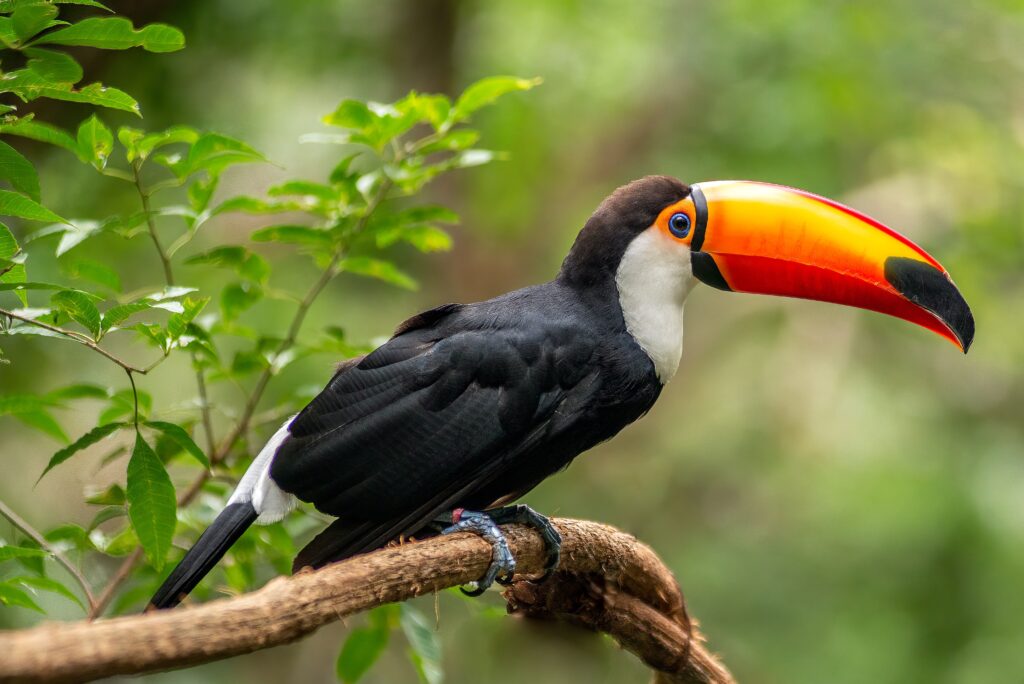
The most recognizable tropical beak in the world belongs here. Bright orange, curved, and enormous compared to the bird’s small body.
Despite its size, the beak is surprisingly light. It is made of a honeycomb-like keratin structure, which keeps the bird able to fly with ease.
Diet: Fruit mainly, though toucans also eat insects, eggs, and small reptiles when the chance arises.
8. Long-Billed Curlew
This shorebird holds the record for the longest beak, relative to body size, among North American shorebirds. Its curved bill can be longer than the rest of its body combined.
Cornell Lab field data describes it as a large, long-legged shorebird with a very long, thin curved bill, a heavy football-shaped body, a long neck, and a small round head.
It also switches feeding tactics by habitat. On drier grassland habitats, it pecks at insects instead of probing mud.
ALSO READ: 25 Birds That Sing at Night (Species Names, With Pictures)
9. Marabou Stork
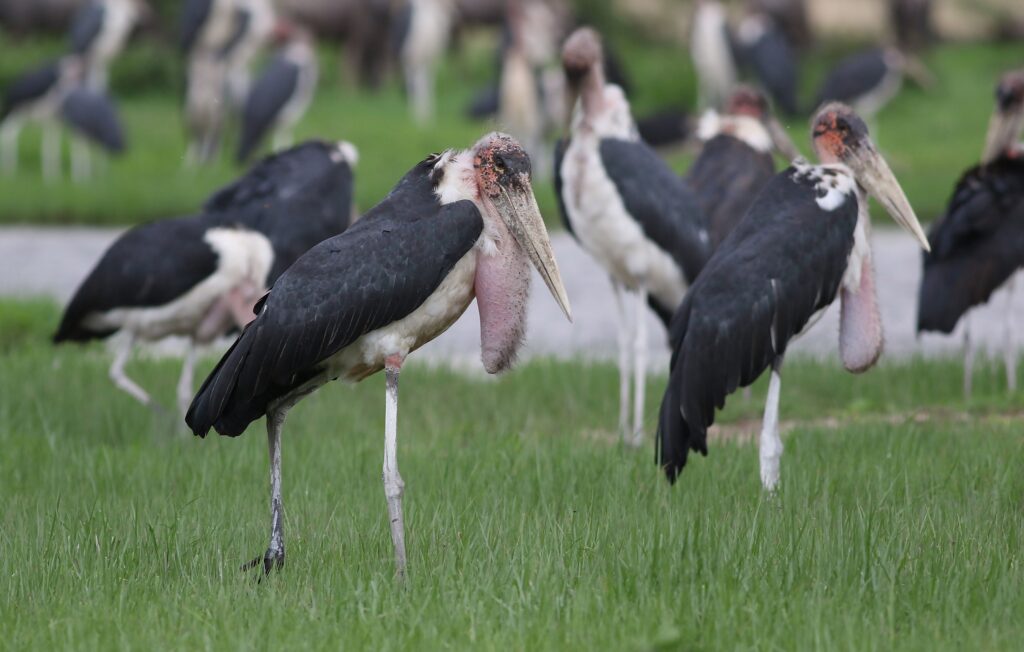
This African stork has an oversized, wedge-shaped beak built for scavenging. It uses it to tear into carrion alongside vultures at kills.
Wingspan note: Marabou storks have one of the largest wingspans of any land bird, giving them an almost prehistoric presence when seen up close.
Their bald head and long neck help them reach deep into carcasses without soiling feathers, a practical adaptation for a messy diet.
10. Black Skimmer
This coastal bird has an unusual trick. Its lower beak is noticeably longer than its upper one.
It flies just above the water’s surface, slicing the lower bill through the water to snap up fish by feel alone, often at dusk or after dark.
Where to spot it: Beaches and estuaries along the Atlantic and Gulf coasts of the Americas.
11. Wood Stork
North America’s only native stork carries a long, thick, downward-curving beak. It uses touch, not sight, to hunt in murky water.
The bird sweeps its open beak side to side until it contacts prey, then snaps shut in under 25 milliseconds, one of the fastest reflexes in the animal kingdom.
This speed matters because it hunts blind, relying entirely on that reflex to catch fast-moving fish.
12. Sandhill Crane
Slightly shorter than the whooping crane’s, this bill is still long and built for a varied diet. Sandhill cranes probe soil for grubs, roots, and grains.
Behavior tip: These cranes often forage in farm fields during migration, making them easy to spot in open agricultural land across the central United States.
Their long neck and beak work together, letting them reach both ground level and shallow water with equal ease.
13. Ibis (White Ibis)
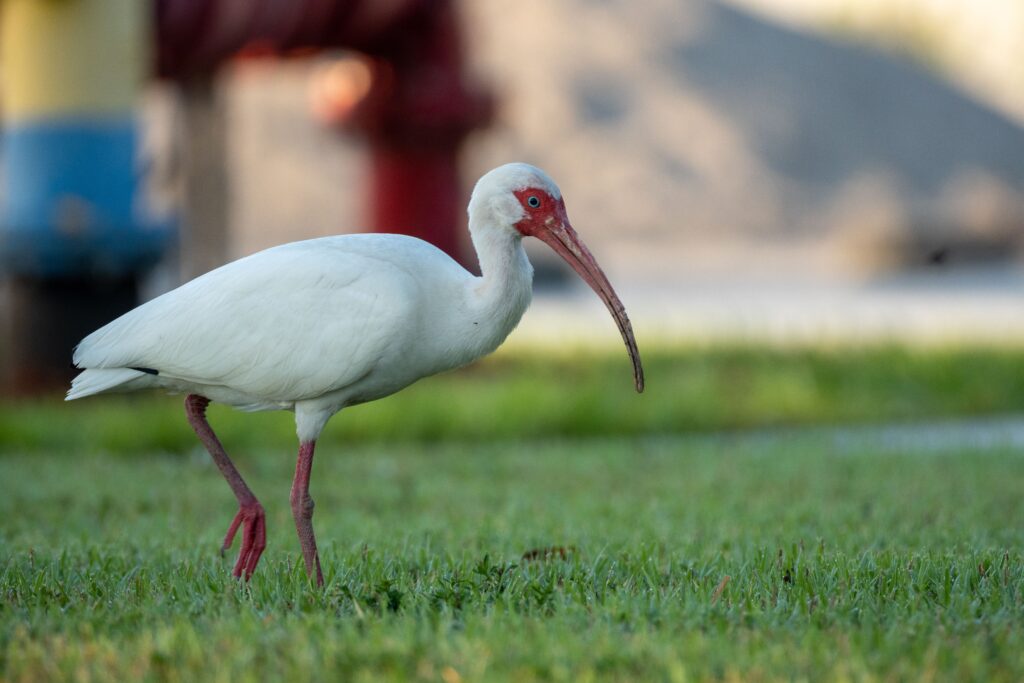
Curved, thin, and reddish-pink, the white ibis’s bill looks almost delicate. It probes soft mud for crayfish, insects, and small fish.
I like watching these birds work in groups. Dozens will wade together, each one dipping its curved bill into the same shallow pool.
Range: Common across the southeastern United States, especially Florida wetlands.
14. Scarlet Ibis
A close relative of the white ibis, this bird shares the same curved bill shape but wears far brighter feathers. Native to South America and the Caribbean, it feeds the same way, probing mud for crustaceans.
Its bright red color, much like the roseate spoonbill’s pink, comes directly from pigments in the crustaceans it eats.
15. Woodcock (American Woodcock)
This plump little bird has a beak built like a tool, not just a mouth. The tip is flexible and can open independently while the rest of the bill stays closed in the soil.
That flexible tip lets it grab earthworms deep underground without pulling its whole head out first. Few birds have this level of specialized engineering in a beak.
Fun fact: Its eyes sit far back on its head, giving it near 360-degree vision while its beak stays buried in the dirt.
16. Avocet (American Avocet)
This elegant shorebird carries a thin, upward-curving beak, the opposite curve from a curlew’s. It sweeps this bill side to side through shallow water to stir up small invertebrates.
Identification tip: Look for a black-and-white body with a cinnamon-colored head during breeding season.
The upward curve is rare among birds and makes the avocet easy to identify even from a distance.
17. Godwit (Bar-Tailed Godwit)
This long-distance migrant has a long, slightly upturned bill suited for probing mudflats. It is famous for one of the longest nonstop migratory flights of any bird.
Its beak lets it dig deep for marine worms and mollusks buried in tidal flats, fueling flights that can stretch thousands of miles without rest.
ALSO READ: 50 Types of Birds With Long Legs (Species Identification, With Pictures)
18. Dowitcher (Long-Billed Dowitcher)
As the name suggests, this shorebird’s defining feature is its beak. It feeds with a rapid up-and-down motion, often called “stitching,” as it probes mud for insect larvae.
Look-alike warning: It closely resembles the short-billed dowitcher, so beak length and habitat both matter for correct identification.
19. Snipe (Wilson’s Snipe)
This secretive marsh bird has a long, straight bill packed with nerve endings at the tip. That sensitivity lets it feel prey underground before it even sees anything.
Its cryptic brown feathers make it almost invisible in tall grass, so most birders hear its distinctive winnowing sound before they ever spot the bird itself.
20. Kiwi (Brown Kiwi)
New Zealand’s flightless icon has a long beak with nostrils at the very tip, a trait almost no other bird shares. It uses smell, not sight, to locate worms underground.
This is one of the only birds on Earth that hunts primarily by scent. Its beak essentially doubles as a nose.
21. Hoopoe
This striking bird has a long, thin, curved bill built for probing soil and bark. Its black-and-white crest and cinnamon body make it one of the more photogenic birds on this list.
Range: Found across Europe, Asia, and Africa, often in open woodland and farmland.
It uses its beak like a pair of tweezers, plucking grubs and insects from tight cracks with real precision.
22. Kingfisher (Belted Kingfisher)
This bird’s beak is long, thick, and dagger-shaped, built for diving straight into water after fish. It hovers briefly before plunging headfirst.
Behavior note: Kingfishers often perch on branches above water, scanning for movement before committing to a dive.
The heavy, pointed beak also doubles as a tool for excavating nesting burrows in riverbanks.
23. Jabiru Stork
One of the largest flying birds in the Americas, the jabiru carries a massive, slightly upturned black bill. It wades through wetlands hunting fish, amphibians, and reptiles.
Its size alone makes it unmistakable. Combined with a bald black head and a red neck pouch, this bird looks almost dinosaur-like up close.
24. Shoebill
Few birds look as unusual as the shoebill. Its beak is broad, hooked at the tip, and shaped almost like a wooden clog.
This bill is powerful enough to catch lungfish, baby crocodiles, and even small turtles in African swamps. It strikes with a sudden lunge called “collapsing,” dropping its whole body onto prey at once.
25. Flamingo (American Flamingo)
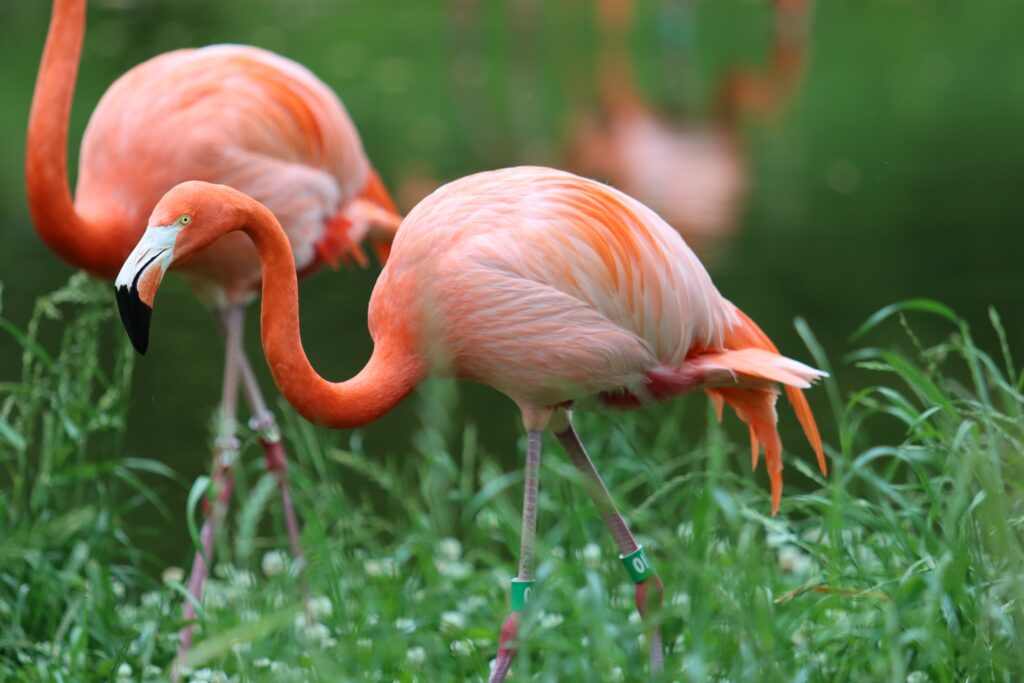
The flamingo’s downward-bent beak is a filter-feeding marvel. It holds its head upside down in water, using its tongue to pump water through comb-like structures in the bill.
Those structures trap tiny shrimp and algae, the same pigments responsible for the bird’s famous pink color.
Interesting detail: Flamingos are born gray. The pink appears only after months of feeding on pigment-rich food.
ALSO READ: 25 Birds With Colorful Beaks (Identification, With Pictures)
26. Common Snipe
Closely related to Wilson’s snipe, this Old World species shares the same long, sensitive bill. It probes soft mud and wet grasslands for worms and insect larvae.
Its zigzagging flight pattern, paired with that long beak, makes it a favorite challenge for wildlife photographers across Europe and Asia.
27. Curlew Sandpiper
A smaller cousin of the long-billed curlew, this sandpiper has a gently downcurved bill suited to probing soft mud. It breeds in the Arctic and migrates enormous distances to reach wintering grounds.
Identification tip: The slight downward curve, paired with a smaller body size, separates it from true curlews.
28. Violet Sabrewing
Another Andean hummingbird with an oversized bill, the violet sabrewing carries a large, gently curved beak built for deep tropical flowers. It is one of the largest hummingbirds in the Western Hemisphere.
Its size and beak length let it access nectar sources smaller hummingbirds simply cannot reach.
29. Great Egret
Similar in build to the great blue heron, the great egret carries a long, straight yellow bill. It hunts the same way, standing motionless before striking fish or frogs in shallow water.
Conservation note: This bird’s plumes were once hunted heavily for the fashion trade, a practice that helped spark early bird protection laws in the United States.
30. Goliath Heron
The largest heron species on Earth belongs on this list for good reason. Its beak is thick, long, and powerful enough to spear fish nearly a foot long.
Found across sub-Saharan Africa, this heron stands over four feet tall and hunts with the same patient stillness as its smaller North American cousins.
Quick Comparison Table
| Bird | Beak Shape | Primary Use |
| Whooping Crane | Long, straight | Probing wetlands |
| American White Pelican | Long, pouched | Scooping fish |
| Sword-Billed Hummingbird | Extremely long, thin | Deep nectar feeding |
| Roseate Spoonbill | Flat, spoon-shaped | Filter feeding |
| Shoebill | Broad, hooked | Ambush hunting |
| Flamingo | Downward-bent | Filter feeding |
How to Identify Long-Beaked Birds in the Field
Start with the curve. Downward curves usually mean probing in mud; upward curves usually mean sweeping through shallow water.
Next, check the thickness. A thick bill often means larger prey, like fish or crabs, while a thin bill usually targets insects and worms.
Finally, watch the behavior. A bird that stands still is likely a spear-hunter, while one that sweeps its head side to side is a filter or touch feeder.
I have found that patience pays off here. Watching a bird feed for even two or three minutes tells you more than any photo ever could.
Frequently Asked Questions
What is the bird with the longest beak relative to its body? The sword-billed hummingbird holds this title, with a bill longer than its own body length.
Why do some birds have curved beaks? Curved beaks help birds reach into tight spaces, whether that is deep mud, tree bark, or tubular flowers, depending on the species.
Are long-beaked birds endangered? Some are. The whooping crane remains one of North America’s rarest birds, though recent survey counts show real recovery progress.
Do long beaks affect how birds sound? Yes, in some cases. Bill shape can influence how sound resonates, which is one reason species like the shoebill produce unusual bill-clattering calls.
Final Thoughts
Writing this list reminded me how much variety exists in something as simple as a beak. Thirty species, thirty completely different survival strategies, all built around one basic body part.
If you ever get the chance to watch a heron fish or a hummingbird hover at a deep flower, take a moment. That beak took millions of years to get exactly right.
References
- U.S. Fish & Wildlife Service. “Whooping Crane (Grus americana) Species Profile.” https://www.fws.gov/species/whooping-crane-grus-americana
- U.S. Fish & Wildlife Service. “2025 Wintering Whooping Crane Count.” https://www.fws.gov/press-release/2025-06/2025-wintering-whooping-crane-count
- U.S. Fish & Wildlife Service. “Service Estimates 540 Whooping Cranes Wintered on Texas Coast in 2025-2026.” https://www.fws.gov/press-release/2026-06/service-estimates-540-whooping-cranes-wintered-texas-coast-2025-2026
- National Park Service. “Pelican — Fort Matanzas National Monument.” https://home.nps.gov/foma/learn/nature/pelican.htm
- National Park Service. “Roseate Spoonbill: Species Profile — Everglades National Park.” https://www.nps.gov/ever/learn/nature/roseatespoonbill.htm
- Smithsonian’s National Zoo and Conservation Biology Institute. “Roseate Spoonbill.” https://nationalzoo.si.edu/node/6946
- Cornell Lab of Ornithology. “Long-billed Curlew Identification — All About Birds.” https://www.allaboutbirds.org/guide/Long-billed_Curlew/id