55 Birds Native to Florida (Identification, With Pictures)
Florida is a paradise for birdwatchers. Warm weather, long coastlines, wide wetlands, and old pine forests all attract wildlife. Some birds live here all year, while others stop by in winter or on migration.
According to the Florida Fish and Wildlife Conservation Commission (FWC), more than 500 native bird species or naturally occurring strays have been recorded in the state. Only one species is found nowhere else in the world: the Florida scrub-jay.
This guide covers 55 birds native to Florida, focused on species you can realistically see, along with a few rare ones worth knowing.
Native Florida Wading Birds and Waterbirds
Florida’s wetlands are famous around the world. These birds are the stars of the Everglades and many other marshes.
1. Roseate Spoonbill
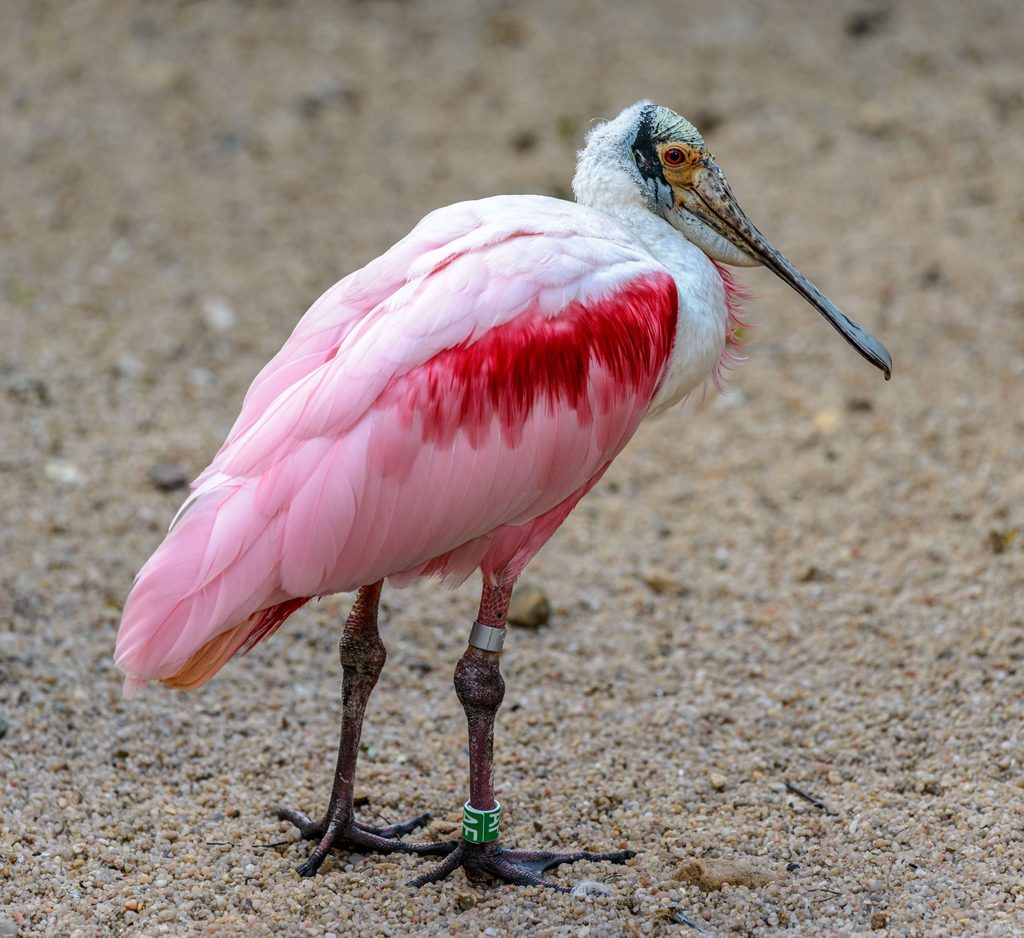
The roseate spoonbill is Florida’s pink showstopper. Its flat, spoon-shaped bill sweeps through shallow water to catch small fish and shrimp.
The pink color comes from its food. Pigments in crustaceans tint the feathers. Without that diet, the bird would look pale.
Everglades National Park staff note that spoonbills nest earlier than other wading birds, often starting in winter. Mrazek Pond is a good place to look.
2. Wood Stork
The wood stork is a large, white wading bird with a bald, gray head. It looks a bit prehistoric. It feeds by feeling for fish with its bill in murky water.
It was once listed as endangered. The U.S. Fish and Wildlife Service later moved it to threatened after about three decades of recovery work. That is a real success story.
In Everglades National Park, Paurotis Pond has hosted roughly 400 nesting pairs in recent years. The area is closed seasonally to protect the nests.
3. Great Blue Heron
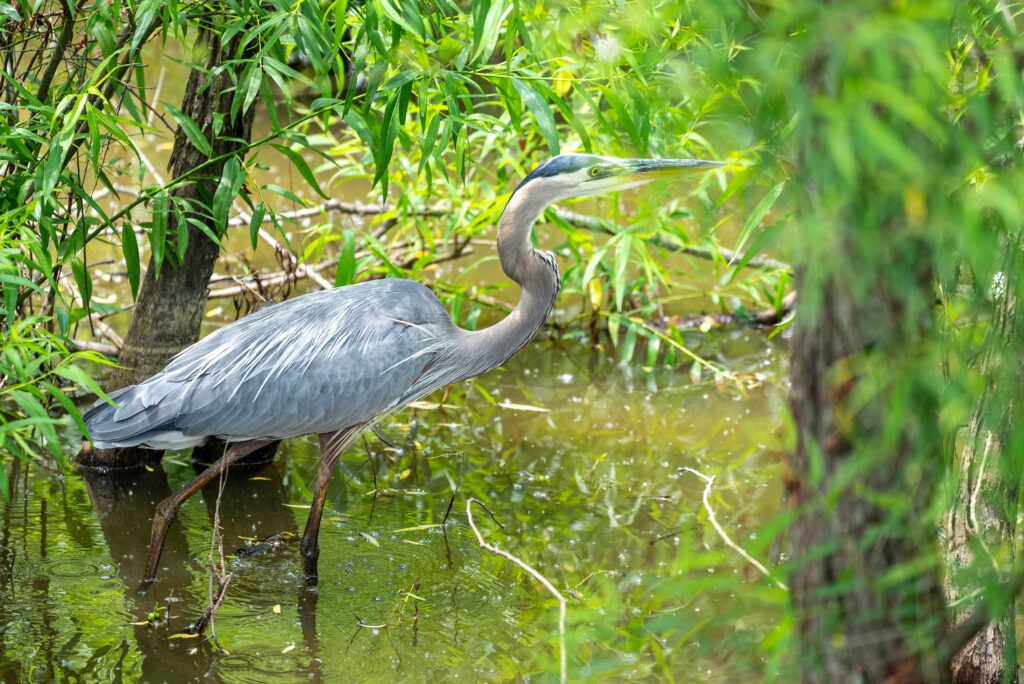
The great blue heron is Florida’s tallest and most widespread heron. It stands about four feet high. It hunts patiently, then strikes with a fast stab.
Its range covers almost every freshwater and coastal habitat. Audubon’s Christmas Bird Count found it on all 79 counts in Florida one season. Few birds are that widespread.
Look for it on lake edges, ditches, and mangrove shores. A rare white form, the “Great White Heron,” lives in the Keys.
4. Great Egret
The great egret is a tall, elegant white bird with a yellow bill. It moves slowly and hunts with deadly precision. In breeding season, it grows long, lacy plumes.
Those plumes nearly caused its extinction. Hunters killed huge numbers of wading birds for the hat trade. The National Park Service says this slaughter left today’s numbers as only a small fraction of the past.
Seeing a great egret now is a quiet reminder that protection works.
ALSO READ: 40 Birds Native to North Dakota (Identification, With Pictures)
5. Snowy Egret
The snowy egret is smaller than the great egret. It has a black bill and bright yellow feet, often called “golden slippers.” The feet are easy to spot.
It stirs up prey with its feet. Then it darts after the fish. It is playful and active when hunting.
You can see it in marshes, lagoons, and beaches. It often feeds beside other wading birds.
6. Little Blue Heron
The little blue heron is a slate-blue bird with a maroon neck. It is smaller and slimmer than the great blue heron. It is calm and stealthy.
Young birds are pure white, which confuses many beginners. They gradually turn patchy before becoming blue. This change takes about a year.
It prefers shallow ponds and wet fields. Everglades birdwatchers often see it along walking trails.
7. Tricolored Heron
The tricolored heron is a slim bird with a long neck and bill. It has a blue-gray back, white belly, and purple-tinged neck. The three colors give it its name.
It is very active when hunting. It often runs, spreads its wings, and lunges at fish. It looks almost like a dancer.
The Everglades nesting colonies include this species. It favors coastal and freshwater wetlands.
8. Reddish Egret
The reddish egret is one of North America’s rarest herons. It has a shaggy neck and a pink bill with a dark tip. Its dancing hunt is unforgettable.
It sprints, spins, and flaps its wings to flush fish. Its shadow also helps it see prey. No other heron moves quite like this.
Christmas Bird Counts record only about a couple of hundred each year in Florida. Look for it on shallow coastal flats.
9. Green Heron
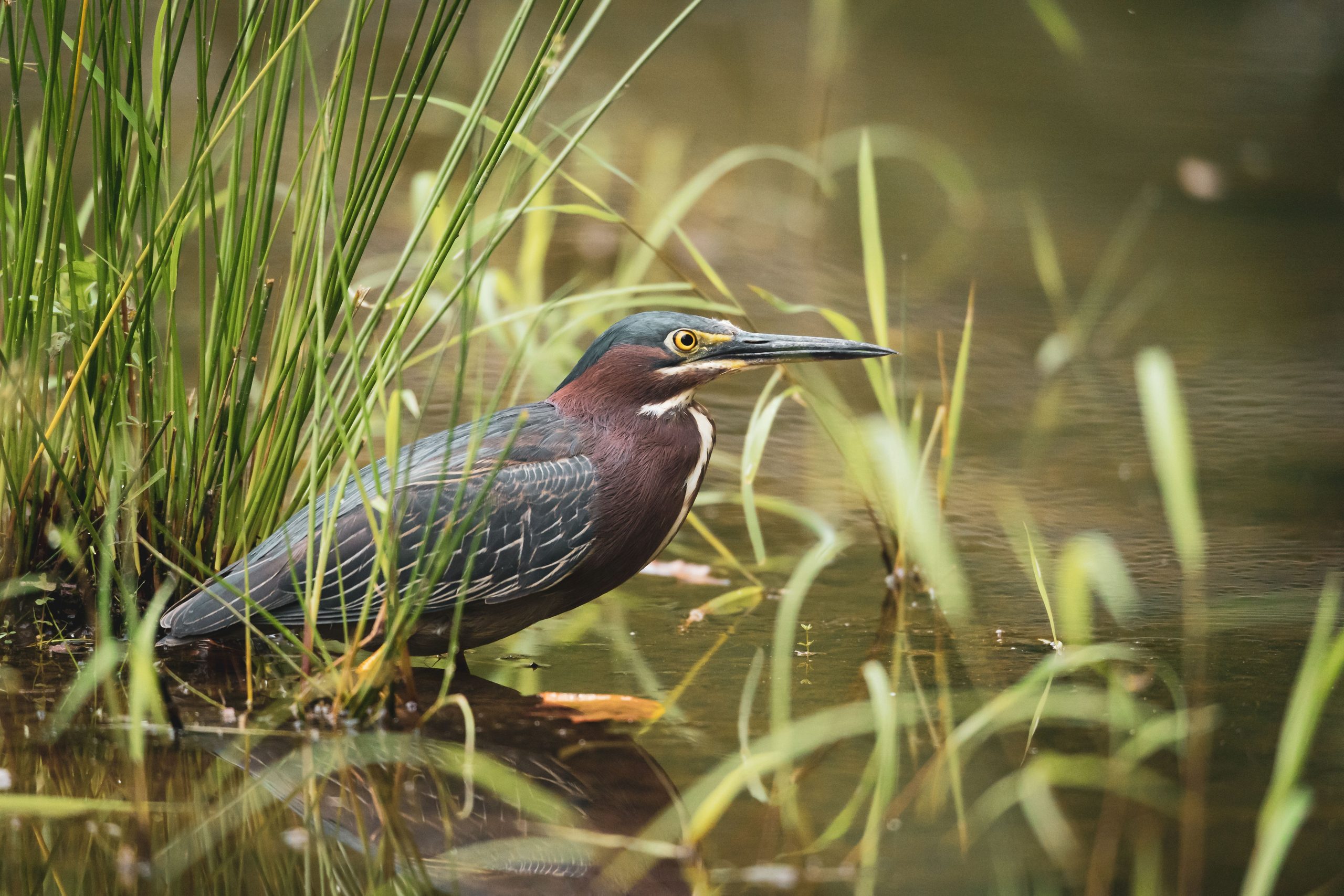
The green heron is small and stocky. Its back is dark green and its neck is chestnut. It often hides in vegetation at the water’s edge.
This bird is a clever hunter. It sometimes drops bait, such as a feather or insect, onto the water. Then it grabs the fish that come to investigate.
Watch the edges of ponds and canals. It often freezes before it strikes.
10. Black-Crowned Night-Heron
The black-crowned night-heron is a chunky, short-necked heron with red eyes. It has a black cap and back, with a pale gray body. Many people overlook it.
As its name suggests, it feeds mostly at dusk and night. During the day, it rests quietly in trees. It often roosts in groups.
It nests in colonies with other herons. Everglades wetlands support such colonies.
ALSO READ: 25 Birds That Swim Underwater to Catch Fish (With Pictures, and Info)
11. White Ibis
The white ibis is a common sight on Florida lawns and marshes. It has a long, curved orange-red bill and white feathers. Its legs are red.
It probes soft ground for insects and crustaceans. In Audubon’s 118th Christmas Bird Count, the state total reached 64,573, which made it one of Florida’s most abundant counted birds.
It nests in large colonies. You may spot it even in city parks.
12. Limpkin
The limpkin is a brown, streaked, long-legged bird. It lives in freshwater swamps and springs. Its eerie, wailing call is hard to forget.
It feeds mostly on apple snails. It carries the snail to land, then extracts the meat with its slightly twisted bill.
Look for it near slow rivers and wetlands. Wild springs in North and Central Florida are good places.
13. Anhinga
The anhinga is also called the “snakebird.” It swims with only its long neck and head above water. Its body is mostly submerged.
Its feathers are not fully waterproof. After fishing, it perches and spreads its wings to dry. This pose is a classic Florida sight.
The Anhinga Trail in Everglades National Park is named after it. It is one of the best places to watch it up close.
14. Double-Crested Cormorant
The double-crested cormorant is a dark, long-necked diver. It has an orange-yellow throat patch. It chases fish underwater with great speed.
Like the anhinga, it dries its wings in the sun. You will often see it on pilings and buoys. It can live on both fresh and salt water.
Large flocks gather in winter. Its hooked bill helps grip slippery fish.
15. Brown Pelican
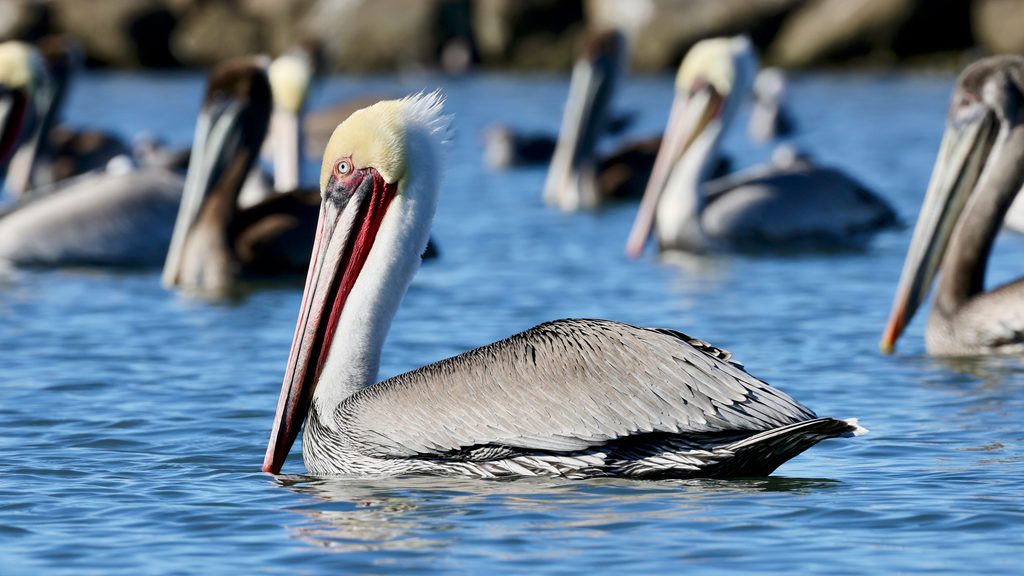
The brown pelican is a coastal icon. It folds its wings and plunges headfirst into the sea to catch fish. The throat pouch then drains water before the bird swallows.
Pelican Island, near Sebastian, became the first National Wildlife Refuge in 1903. It was created to protect birds like this one. That makes Florida a birthplace of American bird conservation.
You can see it along nearly every Florida coast. Keep fishing line out of the water to keep it safe.
16. Sandhill Crane
The sandhill crane is a tall, gray bird with a red patch on its head. Its wingspan can reach about seven feet. Its rattling call carries far.
Florida has a resident subspecies, the Florida sandhill crane. The FWC lists it as threatened. It lives on prairies, pastures, and in wet fields.
Pairs often walk with their colt-like chicks. Please give them space. Never feed them.
ALSO READ: 30 Stunning Birds With Long Beaks (Species Identification, With Pictures)
17. Purple Gallinule
The purple gallinule is a bright, colorful marsh bird. It has a purple-blue body, green back, and a red-and-yellow bill. A pale blue shield sits above the bill.
Its very long toes let it walk over floating plants. It often seems to be strolling on water. The sight is surprisingly graceful.
Look for it in freshwater marshes. Lily pads are its favorite stage.
18. Black-Bellied Whistling-Duck
This long-legged duck has a bright pink bill and a black belly. Its call is a thin, musical whistle. It even perches in trees, which is unusual for ducks.
It has become far more common in Florida over recent decades. Audubon counted 13,325 on one Christmas Bird Count season. They gather in ponds, fields, and golf courses.
Flocks often fly overhead in loose lines. Their whistling announces them before you see them.
19. Wood Duck
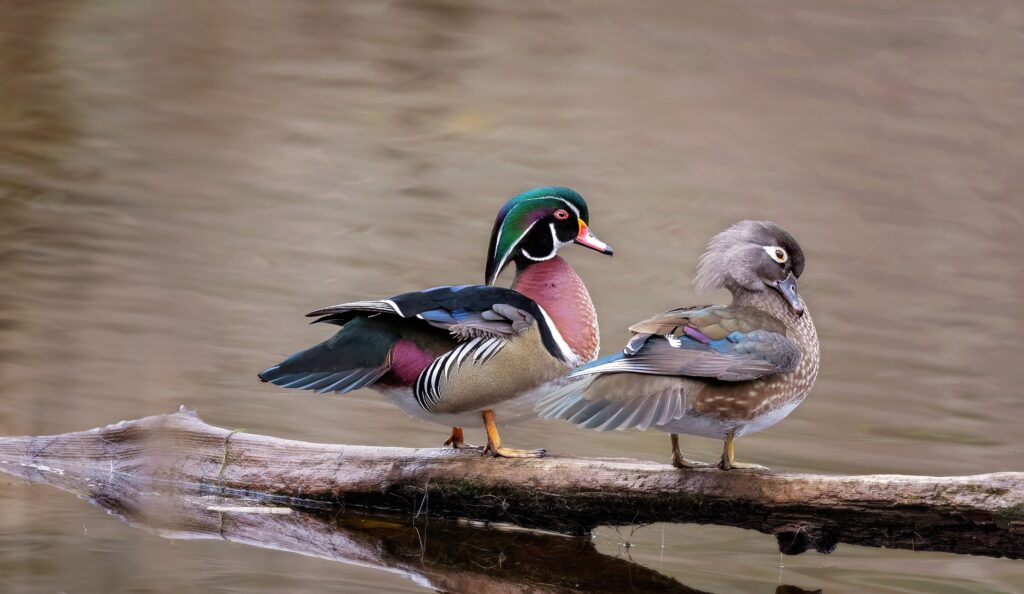
The male wood duck is one of the most colorful ducks in North America. It has a crested green head and swirling patterns. The female is plainer but still lovely.
It nests in tree cavities. It will also use nest boxes near water. Ducklings leap from the nest soon after hatching.
Look for it in wooded swamps and quiet streams. It is shy and flies off quickly when startled.
20. Mottled Duck
The mottled duck is Florida’s resident dabbling duck. It looks like a darker female mallard, with a plain buff face. Males and females look similar.
It stays in the state all year. Unfortunately, it hybridizes with released mallards. Audubon’s Christmas Bird Count compilers call this identification pitfall one of birders’ biggest challenges.
Keeping domestic mallards out of wild wetlands helps protect the native duck.
Native Florida Birds of Prey
Florida’s raptors range from massive eagles to graceful kites. Many depend on healthy wetlands and forests.
21. Bald Eagle
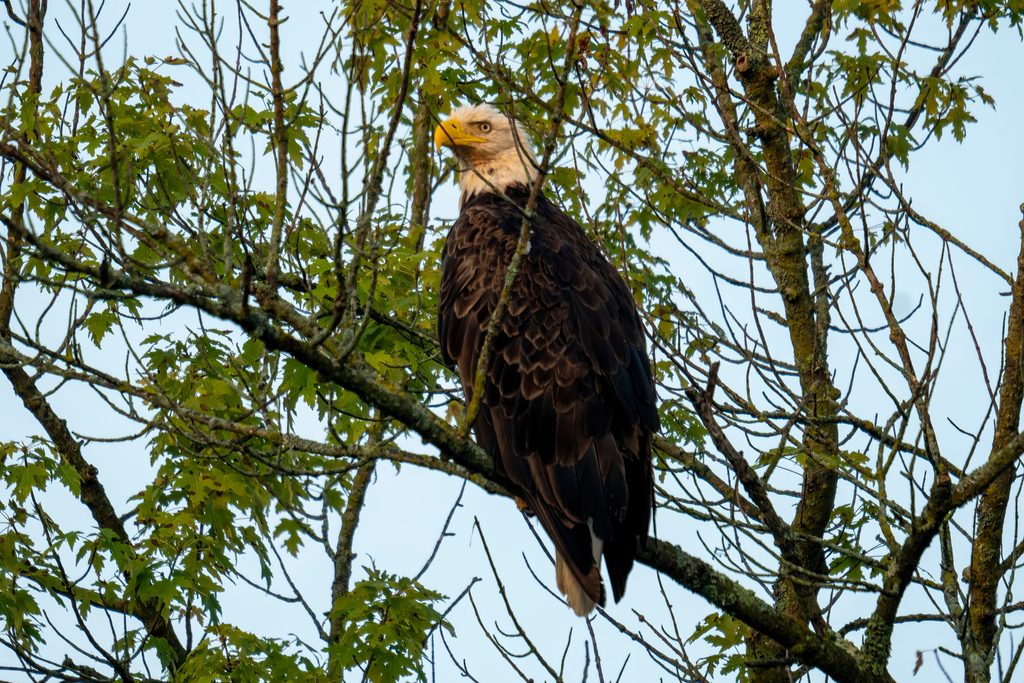
The bald eagle is America’s national bird. Florida has one of the largest nesting populations in the lower 48 states. Its nests can weigh well over a ton.
It nests from fall into spring. That is the opposite of many northern birds. Look for nests in tall pines near lakes and coasts.
Please stay far away from nests. Disturbance can make adults abandon eggs.
22. Osprey
The osprey is a fish-eating hawk. It hovers over water, then dives feet-first to grab its meal. It rotates the fish headfirst to reduce drag.
It builds large stick nests on poles, towers, and channel markers. Many Floridians live near one. The birds’ constant whistling is a coastal soundtrack.
It is a conservation success. It rebounded after harmful pesticides were banned.
23. Snail Kite
The snail kite, also called the Everglade kite, is a specialist. It feeds almost exclusively on apple snails. Its thin, hooked bill is perfect for removing the snail from its shell.
The FWC lists this bird as federally endangered. Its survival depends on the health of freshwater marshes. Changes in water levels affect the snails it needs.
Seeing one gliding low over a marsh is a privilege. It is a bird tied closely to the Everglades.
ALSO READ: 25 Birds With Colorful Beaks (Identification, With Pictures)
24. Swallow-Tailed Kite
The swallow-tailed kite is one of the most beautiful raptors. It has a deeply forked tail, black wings, and a white body. It flies with astonishing grace.
It arrives in Florida in late winter. After nesting, it migrates to South America. It spends only part of the year here.
It eats insects, lizards, and tree-dwelling frogs on the wing. Look for it over cypress swamps and river forests.
25. Red-Shouldered Hawk
The red-shouldered hawk is common in Florida’s woodlands and suburbs. It has a reddish chest and barred wings. Its loud, repeated “kee-yer” call gives it away.
It hunts small mammals, snakes, and frogs. It often perches on utility lines and fences. It adapts well to neighborhoods.
Nesting pairs can be bold. They may defend their territory against intruders.
26. Crested Caracara
The crested caracara is a striking, long-legged raptor. It has a black cap, white neck, and orange-red face. It walks on the ground more than most hawks.
In Florida, it lives on open prairies and ranchlands in the central part of the state. The federal government lists it as threatened. Habitat conversion is the main risk.
It scavenges and also hunts small animals. Cattle country is a good place to look.
27. Turkey Vulture
The turkey vulture is a large, dark scavenger with a bare red head. It soars with wings held in a shallow “V.” It rocks side to side in flight.
It has an excellent sense of smell. This helps it find carrion hidden under trees. Few birds can do this.
In a single-day count at Everglades National Park, volunteers recorded 102 turkey vultures. They are valuable cleanup crews.
28. Black Vulture
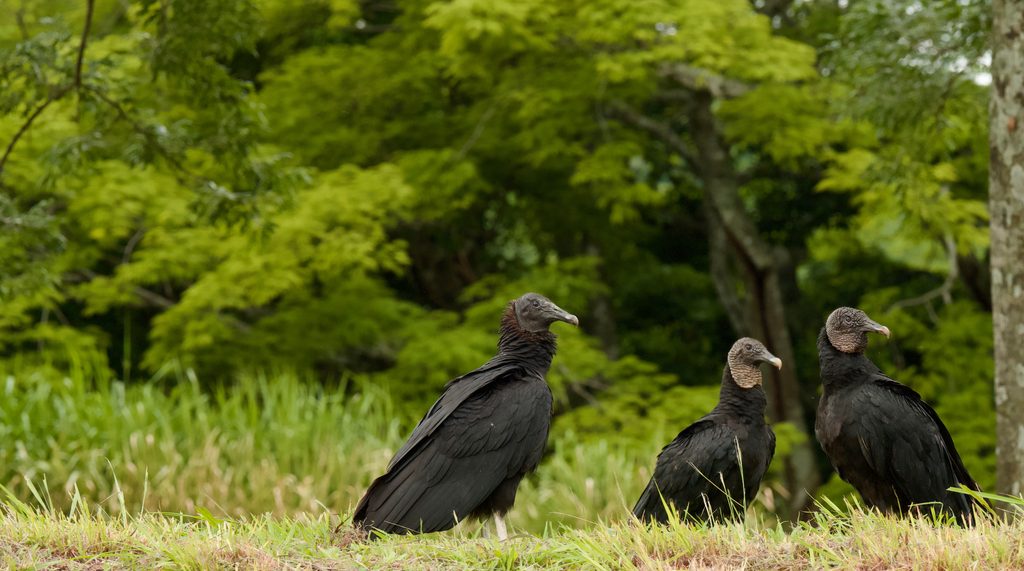
The black vulture is smaller and blacker than the turkey vulture. It has a short tail and white patches at the wingtips. It flaps more and glides less.
The same Everglades count tallied 205 black vultures. They often gather in large groups. They roost together at night.
They help clean up dead animals. Livestock owners sometimes find them a nuisance.
Native Florida Owls
Owls are most active at night. Their calls are some of the best sounds in Florida’s forests.
29. Burrowing Owl
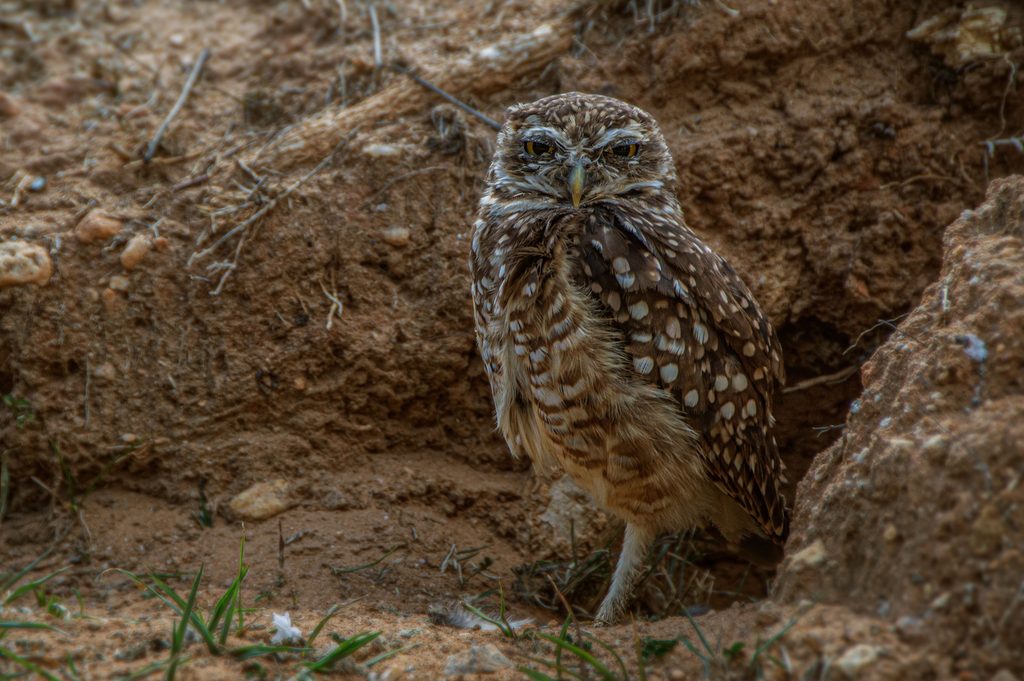
The burrowing owl is a small, long-legged owl. It lives in underground burrows on open, sandy land. It often stands on the mound and bobs its head.
The state lists it as threatened. In Audubon’s Christmas Bird Count, Fort Myers alone accounted for 120 of Florida’s 142 counted burrowing owls. That shows how concentrated the species is.
Harassing it is illegal. You can report problems to the FWC at 1-888-404-FWCC.
30. Barred Owl
The barred owl is a large, round-faced owl with dark eyes. Its call is famous. It sounds like “who cooks for you, who cooks for you-all.”
It lives in swamps and mature woods. It hunts rodents, frogs, and even crayfish. It sometimes calls during the day.
Pairs often call back and forth in a wild duet. It is a classic sound of a Florida night.
31. Eastern Screech-Owl
The eastern screech-owl is a small, tufted owl. It comes in gray and red forms. Both can occur in the same family.
Its call is not a screech. It is a soft, wavering trill. Many people hear it without knowing what it is.
It nests in tree holes and nest boxes. A box in a quiet backyard may attract one.
ALSO READ: 50 Types of Birds With Long Legs (Species Identification, With Pictures)
Native Florida Woodpeckers
Woodpeckers shape forests. Their holes become homes for many other animals.
32. Pileated Woodpecker
The pileated woodpecker is nearly as big as a crow. It has a flaming red crest and bold black-and-white face. Its loud call echoes through woods.
It chisels large rectangular holes in dead trees. These help it reach carpenter ants. The holes also benefit other wildlife.
It lives in mature forests and swamps. Dead trees are valuable to it.
33. Red-Bellied Woodpecker
The red-bellied woodpecker is a common backyard bird. It has a zebra-barred back and a red cap and nape. The red belly is faint and hard to see.
It eats insects, fruit, and seeds. It also visits feeders. Suet is a favorite.
Its rolling “churr” call is easy to learn. It is one of the first woodpeckers beginners meet.
34. Red-Cockaded Woodpecker
The red-cockaded woodpecker is a small, rare woodpecker. It lives in old longleaf pine forests. It is unusual because it drills nests in living pine trees.
It has long been listed as endangered. It lives in family groups, with helpers raising the young. Habitat loss is the greatest threat.
Prescribed fire keeps pine forests open and healthy. This helps the woodpecker and many other species.
Native Florida Ground Birds
35. Wild Turkey
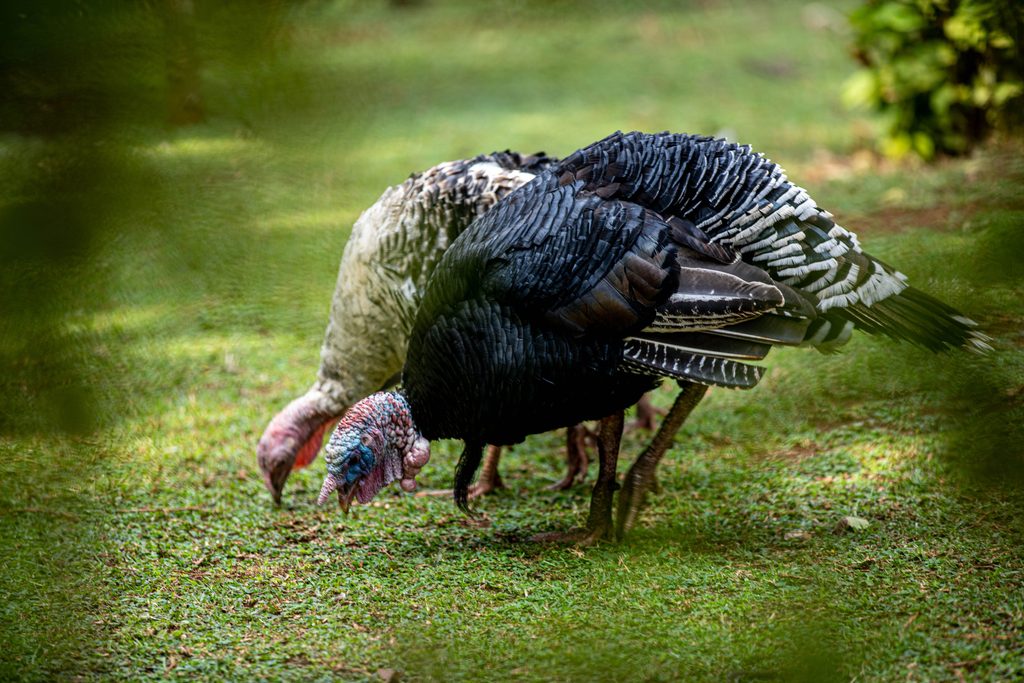
The wild turkey is a large, powerful ground bird. Florida has its own subspecies, the Osceola turkey. It lives only on the peninsula.
Males puff up and fan their tails in spring. They gobble to attract mates. It is a spectacular display.
You can see it in open woods and fields. Despite its size, it can fly short distances and roost in trees.
36. Northern Bobwhite
The northern bobwhite is a small, round quail. Its whistled “bob-white” call gave it its name. It lives in grassy fields and open pine woods.
It is declining across the Southeast. Audubon’s Christmas Bird Count found only 189 individuals on 26 counts in one Florida season. That is a small number.
Healthy grasslands and prescribed burning help bobwhites. They need cover and open ground.
37. Mourning Dove
The mourning dove is a slender, soft-gray bird. It has a long, pointed tail. Its sad cooing gives it its name.
It is common in towns, farms, and fields. Its wings make a whistling sound when it takes off. It eats seeds on the ground.
It is one of the most widespread birds in North America. Many people hear it every morning.
ALSO READ: 25 Birds That Sing at Night (Species Names, With Pictures)
Native Florida Songbirds and Backyard Birds
38. Florida Scrub-Jay
The Florida scrub-jay is the only bird found nowhere else but Florida. It is blue and gray, with no crest. It lives only in oak scrub.
Its numbers have fallen by as much as 90% since the early 1900s. Development, citrus farming, and fire suppression are to blame. It is listed as threatened.
Family groups use young helpers to raise chicks. If you ever see one, you are looking at a true Florida original.
39. Northern Cardinal
The male northern cardinal is bright red with a black mask. The female is warm brown with red touches. Both have a thick, orange-red bill.
It stays in one area all year. It visits feeders for sunflower seeds. Its clear whistles ring out early in the morning.
It is a loyal bird that is easy to attract. Dense shrubs make it feel safe.
40. Northern Mockingbird
The northern mockingbird is Florida’s state bird. It is gray, with white wing patches. It is bold and loud.
It can mimic dozens of other birds and even car alarms. Males sing through spring nights. This can keep neighbors awake.
It defends its nest fiercely. Do not be surprised if one dive-bombs you.
41. Blue Jay
The blue jay is a bold, crested bird. Its blue, white, and black pattern is striking. It is intelligent and noisy.
It loves acorns and often stores them. It can mimic hawk calls. Some people think it does this to scare other birds.
It is common in oak forests and neighborhoods. Do not confuse it with the Florida scrub-jay, which has no crest.
42. Carolina Wren
The Carolina wren is small, rusty, and loud. It has a white eyebrow stripe and a cocked tail. Its song sounds like “teakettle, teakettle.”
It is famous for nesting in odd places. Flower pots, mailboxes, and boots have all been used. It makes itself at home.
It stays year-round and eats insects. A brush pile in the garden suits it well.
43. Tufted Titmouse
The tufted titmouse is a small gray bird with a pointed crest. It has large, dark eyes and a rusty flank. It is curious and friendly.
It comes to feeders for seeds and suet. It often carries seeds away to hide them. Its song is a clear “peter-peter-peter.”
It nests in tree holes and boxes. It often joins mixed flocks in winter.
44. Eastern Bluebird
The eastern bluebird is a small thrush. The male’s brilliant blue back and orange chest are lovely. Females are softer in color.
It perches on wires and fence posts. It drops to the ground to catch insects. In winter, it eats berries.
Nest boxes have helped its recovery across the country. A well-placed box can bring a family to a yard.
45. Painted Bunting
The male painted bunting is among the most colorful birds in North America. It has a blue head, red underparts, and green back. It looks hand-painted.
Some breed along Florida’s Atlantic coast. Others spend winter in the southern part of the state. Males are very shy and often stay hidden.
Feeders with millet attract them. They are a joy for patient watchers.
46. Brown Thrasher
The brown thrasher is a long-tailed, rusty-brown bird. It has a streaked chest and bright yellow eyes. It often scratches in leaf litter.
It sings a huge variety of phrases. Reports suggest its repertoire exceeds 1,000 song types. Each phrase is usually repeated twice.
Look for it in thickets and brushy edges. It is wary but loud.
47. Loggerhead Shrike
The loggerhead shrike is a small gray, black, and white predator. It has a hooked bill and a black mask. It looks sweet but acts fierce.
It catches insects, lizards, and small birds. Then it impales them on thorns or barbed wire. This holds the prey while it eats.
Its numbers are falling in many areas. Open fields with scattered shrubs are its habitat.
48. Red-Winged Blackbird
The male red-winged blackbird is black with bright red-and-yellow shoulder patches. Females are streaky brown. They sing from cattails and reeds.
It lives in marshes and wet fields. Males defend their territory loudly. Their song is a bubbly “conk-la-ree.”
It is one of the most abundant birds in the country. Florida wetlands hold many.
49. Eastern Meadowlark
The eastern meadowlark is a plump, ground-dwelling bird. It has a bright yellow chest with a black V. Its flute-like song is beautiful.
It lives in grasslands and pastures. It nests on the ground, hidden by grass. This makes it vulnerable to mowing and predators.
Its numbers have declined as grasslands vanish. Preserving open fields helps it.
Native Florida Coastal and Seabirds
50. Black Skimmer
The black skimmer is a dramatic seabird. Its lower bill is longer than the upper bill. It flies low and slices the water to catch fish.
It nests on open beaches in colonies. These nests are tiny scrapes in the sand. People walking too close can cause chicks to die.
Please respect posted nesting areas. A few steps can protect a whole colony.
51. American Oystercatcher
The American oystercatcher is a large black-and-white shorebird. Its bill is long and bright orange. It uses it to pry open shellfish.
It nests on beaches and shell islands. Its eggs blend into the sand. This makes them easy to step on.
It is a species of conservation concern. Quiet beaches help it succeed.
52. Least Tern
The least tern is the smallest tern in North America. It is pale gray and white, with a yellow bill and a black cap. It hovers before diving.
It nests on beaches. When beaches get crowded, it may nest on flat gravel rooftops. This is a clever workaround.
It is considered threatened in Florida. Its colonies need protection from disturbance.
53. Royal Tern
The royal tern is a large, orange-billed tern with a shaggy black crest. It plunges into the sea for fish. It is common on Florida beaches.
Large colonies nest on sandy islands. The chicks gather in nursery groups called creches. Parents recognize their own by voice.
It is a familiar sight from the shore. Winter flocks often rest on beaches.
54. Magnificent Frigatebird
The magnificent frigatebird is a huge, black seabird. Its wingspan can reach about seven and a half feet. It soars effortlessly for hours.
Males inflate a bright red throat pouch to attract mates. It is one of the most dramatic displays in nature. The Dry Tortugas are a famous place to see them.
It cannot swim well. Instead, it snatches fish from the surface or steals food from other birds.
55. Laughing Gull
The laughing gull is a familiar beach bird. It has a black hood in summer and a loud, laughing call. It often steals fries from tourists.
It is extremely common in Florida. Audubon’s Christmas Bird Count has tallied more than 78,000 to 129,000 in a single season. Few counted birds are as abundant.
Please do not feed it. Human food harms it and makes it bold.
Why Florida’s Native Birds Matter
Birds are a sign of a healthy environment. They control insects, spread seeds, and clean up carrion. They also bring huge benefits to tourism and local economies.
Habitat loss remains the largest threat. The FWC states that habitat loss and degradation continue to be the major threats to Florida’s birds. All native birds are also protected under the federal Migratory Bird Treaty Act.
The good news is that action works. The wood stork recovered, and the brown pelican found a refuge. Local choices can still help.
How to Help Florida’s Birds
You do not need to be an expert to make a difference. Small actions add up quickly. Here are some simple steps:
- Keep distance from nests, chicks, and posted beach areas.
- Never feed wild birds that are not meant to be fed, such as cranes and gulls.
- Pick up fishing line and hooks.
- Keep cats indoors to protect ground-nesters and songbirds.
- Plant native shrubs and trees to supply food and cover.
- Report harassment of protected species to the FWC.
Final Thoughts
Florida’s birdlife is rich, colorful, and fragile. From the spoonbill’s pink plumage to the scrub-jay’s quiet loyalty, every species adds to a living landscape.
I have been struck by how many of these birds came back from the brink. They remind us that conservation can succeed. Next time you walk a boardwalk, beach, or backyard, pause and look up. A new favorite may be nearby.
References
- Florida Fish and Wildlife Conservation Commission. Birds (Florida’s Wildlife and Conservation). https://myfwc.com/conservation/value/fwcg/wildlife/birds/
- Florida Fish and Wildlife Conservation Commission. Florida Scrub-Jay Species Profile. https://myfwc.com/wildlifehabitats/profiles/birds/songbirds/florida-scrub-jay/
- U.S. Fish and Wildlife Service. Florida Scrub-Jay (Aphelocoma coerulescens), ECOS Species Profile. https://ecos.fws.gov/ecp/species/B082
- National Park Service, Everglades National Park. Birdwatching. https://www.nps.gov/ever/planyourvisit/birdwatching.htm
- National Park Service, Everglades National Park. Paurotis Pond Opened Following Nesting Season (2014). https://www.nps.gov/ever/learn/news/paurotis-pond-opened-following-nesting-season-2014.htm
- University of Florida, IFAS Extension. Wildlife of Florida Factsheet: Burrowing Owl. https://edis.ifas.ufl.edu/publication/UW446/pdf
- Florida Museum, University of Florida. Tell Me About Burrowing Owls. https://www.floridamuseum.ufl.edu/earth-systems/blog/tell-me-about-burrowing-owls