15 Breeds of Chicken With Feathers on Feet: (With Pictures, and Care Tips)
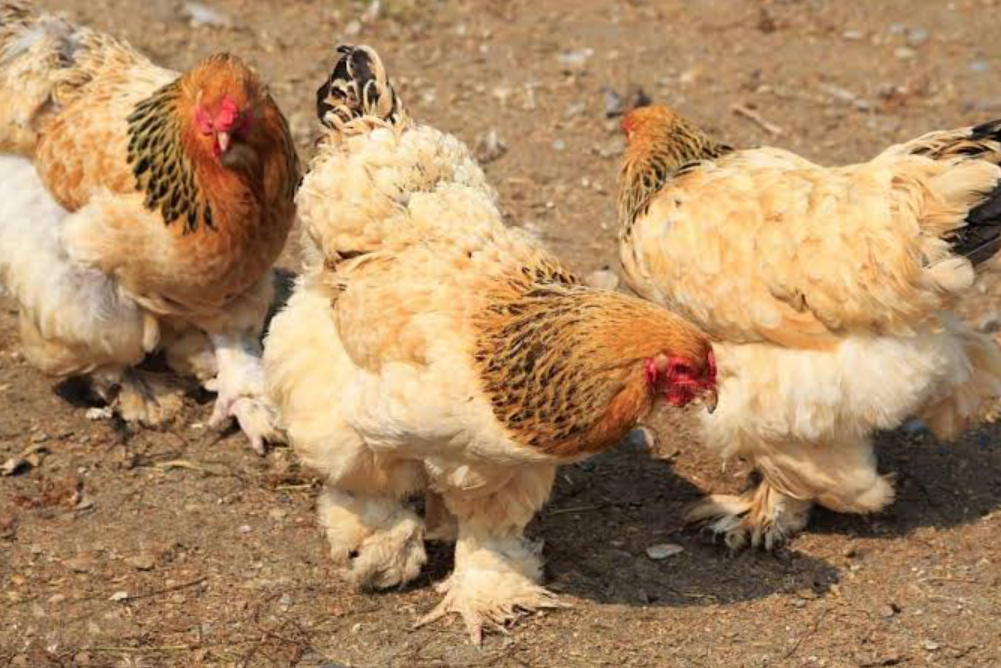
I still remember the first time I saw a Brahma rooster strut across a friend’s yard. It looked like it was wearing fluffy slippers.
That’s the charm of feather-footed chickens. Their legs and toes are covered in soft plumage instead of bare scales.
This trait has a real scientific name: ptilopody. It comes from a single dominant gene that pushes feather growth down the shank and onto the toes.
Most of these breeds trace back to Asia, where farmers prized the trait for centuries. Cold climates and long feathers simply went hand in hand.
Today, backyard keepers love these breeds for looks, personality, and their surprising cold hardiness. Let’s walk through 15 of the best.
Quick Facts Before We Start
- Ptilopody is controlled by the PTIL gene, first mapped by poultry geneticists studying Silkies and Cochins.
- Feathered legs can act as natural insulation, similar to how down feathers trap warm air, according to down clusters trap more air for their weight than any synthetic material, a principle poultry scientists apply to cold-hardy breed design. Poultry Extension
- Backyard flocks typically produce 200–240 eggs per hen each year, per University of Florida IFAS Extension.
- Commercial layer breeds can reach 260 eggs annually, according to Penn State Extension data.
- Many feather-footed breeds fall under the “Asiatic Class” in the American Standard of Perfection.
Now, on to the breeds.
1. Brahma
The Brahma is often called the “King of Poultry.” It’s one of the largest chicken breeds alive today.
Roosters can weigh up to 12 pounds, with hens close behind at 9-10 pounds. That size alone turns heads.
Despite their bulk, Brahmas are famously gentle giants. They rarely bully other birds, even the roosters behave well.
They lay brown eggs at a modest but steady pace. Their heavy foot feathering also makes them one of the most cold-hardy breeds available.
I always recommend Brahmas to first-time keepers with kids. Their calm nature makes handling easy and safe.
2. Cochin
Few breeds are as fluffy from head to toe as the Cochin. Their feathers cover everything, including thick foot furnishings.
Cochins originated in China and became a sensation in Victorian England during the 1840s. People called it “hen fever.”
They’re excellent broody mothers and will happily sit on eggs from other hens. This makes them useful in mixed flocks.
Egg production is moderate, but their meat quality and calm temperament make up for it. They’re a true dual-purpose bird.
Their feet feathers are so dense, owners often need to check for mud or debris buildup after rain.
3. Silkie
The Silkie looks unlike any other chicken. Its feathers lack barbicels, giving it a fur-like, fluffy texture.
Silkies have five toes instead of the usual four, and their legs are covered in soft down all the way to the toe tips.
Their skin, and even their bones, carry a blue-black pigmentation called fibromelanosis. That’s a genuinely rare trait in poultry.
They’re known as excellent brooders and gentle companions. Many owners keep them purely as pets rather than layers.
Egg output is low, usually around 100-120 small cream eggs per year. But their personality more than compensates.
4. Salmon Faverolles
This French breed brings a beard, muffs, and feathered feet all in one striking package.
Faverolles were developed in the 1860s near the village of Faverolles, France, for meat and winter egg laying.
Hens have a sweet, docile temperament and tend to get along with almost every other breed in the coop.
They lay light brown eggs fairly consistently, even through colder months when other breeds slow down.
Their five toes and fluffy shanks give them a slightly comical waddle that I find genuinely endearing to watch.
5. Sultan
The Sultan is a rare, ornamental Turkish breed with an almost regal appearance.
It has a large crest, a full beard, feathered legs, and five toes on each foot, just like the Silkie and Faverolles.
Sultans were reportedly kept in the gardens of Ottoman sultans purely for their beauty, not for production.
Egg laying is minimal, so this breed suits hobbyists and exhibitors more than anyone chasing daily eggs.
They’re calm birds but need protected housing, since their crest can block their vision and leave them vulnerable to predators.
6. Croad Langshan
The Langshan hails from China and reached England in 1872, later spreading to the United States.
It stands tall with an upright posture and glossy black-blue feathers, plus moderately feathered shanks and toes.
Langshans are known for laying eggs with a distinctive plum-colored tint, which is unusual among brown-egg breeds.
They’re hardy, active foragers that still tolerate confinement reasonably well.
Breed clubs list the Croad Langshan as a heritage breed under conservation watch, since numbers have declined over the decades.
7. Booted Bantam (Sablepoot)
Also called the Sablepoot, this Dutch bantam breed is prized for its dramatic foot feathering.
Its most distinctive trait is the vulture hocks, long stiff feathers that project backward from the hock joint.
Sablepoots are small, friendly, and easy to house even in limited backyard space.
They come in dozens of color varieties, making them a favorite among poultry show exhibitors in Europe and North America.
Because of their tiny size, they need extra protection from larger, more assertive flock mates.
8. Belgian d’Uccle
Bred in the town of Uccle, near Brussels, in the early 1900s, this bantam breed combines a beard with feathered legs.
The Belgian d’Uccle, or Barbu d’Uccle, is thought to be a cross between the Sablepoot and the Barbu d’Anvers.
It carries the same vulture hocks as the Booted Bantam, along with muffs and a full beard framing its face.
These birds are affectionate, curious, and often described as one of the friendliest bantam breeds around.
Standard weights are tiny, around 20-22 ounces, according to American poultry standard guidelines.
9. French (Feather-Legged) Marans
Marans chickens are best known for their dark chocolate-brown eggs, among the darkest of any breed.
The French line of Marans typically carries feathered shanks, while English lines are usually clean-legged.
This distinction matters if you specifically want the feathered-foot look alongside those famous dark eggs.
They’re calm, hardy birds that do well in mixed flocks and cooler climates.
Marans eggs are so prized that some bakeries and chefs specifically request them for visual presentation.
10. Pekin Bantam (Cochin Bantam)
Not to be confused with Pekin ducks, this miniature Cochin carries all the fluff of its larger cousin.
It has the same dense foot feathering, round body shape, and calm disposition, just packed into a smaller frame.
Pekin Bantams are popular in the UK and often used for children’s poultry projects because of their gentle nature.
Egg production is light, but owners rarely keep this breed for eggs anyway.
Their round, almost ball-like shape makes them one of the most recognizable bantam breeds worldwide.
11. Frizzle Cochin
The Frizzle trait causes each feather to curl outward and upward instead of lying flat.
When bred into Cochin stock, you get a bird with curled feathers plus feathered feet, a truly unusual combination.
This look isn’t a separate breed technically, but a feather-type variation recognized within several breed standards.
Frizzled birds need extra shelter from rain and wind since their curled feathers offer less waterproofing.
Despite the odd look, temperament stays true to Cochin roots: calm, friendly, and easy to handle.
12. Silkie Bantam
Some registries classify Silkies as a true bantam breed on their own, given how few large “standard” Silkies exist commercially.
They share every feathered-foot trait of the standard Silkie, including five toes and down-like plumage.
Silkie Bantams are a top pick for therapy and educational programs, thanks to their calm and approachable nature.
They handle heat poorly because their fluffy feathers trap warmth, so shade and ventilation matter in summer.
Broodiness runs strong in this breed, and many keepers use Silkie hens to hatch eggs from other breeds entirely.
13. Sizzle
A Sizzle is a cross between a Silkie and a Frizzle-feathered bird, combining both unusual traits.
The result is a chicken with curled, fur-like feathers and fully feathered feet, often in striking color patterns.
Sizzles aren’t recognized in every official breed standard, but they’re extremely popular in the pet and exhibition poultry world.
Their friendly, low-key temperament mirrors the Silkie side of their heritage.
Because of the double feather mutation, they need dry, sheltered housing to stay comfortable in wet weather.
14. Showgirl
The Showgirl is essentially a naked-neck Silkie, created by crossing Silkies with Turken (naked neck) chickens.
It keeps the fully feathered legs and five toes of the Silkie while losing feathers around the neck entirely.
This gives the bird a striking, almost prehistoric appearance that stands out in any flock.
Showgirls retain the same gentle, docile Silkie temperament, making them a favorite for hands-on keepers.
They’re still considered a developing breed, so consistency in appearance can vary between hatcheries.
15. Barbu de Watermael
This is one of the rarer Belgian bantam breeds, developed alongside the d’Uccle and d’Anvers varieties.
It carries feathered legs, a rose comb, and a full beard, giving it a distinctly ornamental appearance.
Because of its rarity, finding breeding stock can be genuinely difficult outside specialist poultry clubs in Europe.
Temperament tends to be calm, though slightly more reserved than its d’Uccle cousin.
If you’re building a collector’s flock of unusual bantams, this breed is worth the search.
ALSO READ: 15 Breeds of Chicken With No Feathers on the Neck (With Pictures, and Care Tips)
What All These Breeds Have in Common
Every breed above shares that dominant ptilopody gene. It’s the reason feathers grow past the hock and down to the toes.
Most also share calm, docile temperaments. Heavy, slow-moving birds tend to avoid conflict rather than start it.
Many originated in Asia or Europe, regions with cold winters where extra leg insulation offered a real survival advantage.
Several, including the Silkie, Sultan, and Faverolles, also carry the five-toe trait, separate from the feathering gene itself.
Caring for Feather-Footed Chickens
Feathered feet look beautiful, but they do need a bit of extra attention.
- Keep bedding dry. Wet mud clumps in foot feathers and can lead to bumblefoot or frostbite in freezing weather.
- Use flat, wide roosts. This lets birds rest their feathered feet flat instead of gripping a narrow bar all night.
- Check for mites regularly. Dense feathering can hide parasites longer than it would on a clean-legged bird.
- Trim only when necessary. Feathers rarely need cutting, but tangled or caked feathers may require a gentle tidy.
Are Feather-Footed Chickens Good for Beginners?
In most cases, yes. These breeds tend to be docile, easy to handle, and forgiving of new owners’ mistakes.
They’re not ideal, however, for muddy, wet climates without covered runs. Their foot feathers pick up dirt fast.
If you live somewhere cold, breeds like the Brahma, Cochin, and Croad Langshan genuinely shine. Their insulation is a real asset there.
Frequently Asked Questions
Do feathered feet affect egg production?
Not directly. Egg output depends on breed lineage, not foot feathering itself. Backyard hens average 200-240 eggs yearly, per University of Florida IFAS Extension research.
Can feather-footed chickens fly?
Rarely, and not far. Their body weight and feather density make sustained flight nearly impossible for most listed breeds.
Do these breeds need special coop setups?
Mainly just dry bedding and low, flat roosts. Standard coop designs work fine otherwise.
Which breed has the most feathering?
Cochins and Silkies typically show the heaviest, most complete foot and leg feathering among common breeds.
Are feather-footed chickens more prone to frostbite?
Feathering helps insulate, but wet, matted feathers can actually increase frostbite risk. Dry housing matters more than the feathers themselves.
Final Thoughts
I’ve kept a few of these breeds myself, and there’s something quietly satisfying about watching a Brahma or Silkie waddle across the yard.
Their feathered feet aren’t just decoration. They reflect generations of careful breeding for cold hardiness, temperament, and beauty.
Whether you want a gentle giant or a tiny ornamental bantam, this list gives you fifteen genuinely solid starting points.
References
- Purdue University Cooperative Extension Service – Choosing a Chicken Breed: Eggs, Meat, or Exhibition (AS-518-W)
https://www.extension.purdue.edu/extmedia/as/as-518.pdf - Mississippi State University Extension – Breeds and Varieties of Chickens
https://extension.msstate.edu/agriculture/livestock/poultry/breeds-and-varieties-chickens - Mississippi State University Extension – Choosing the Right Breed for Your Backyard Flock
https://extension.msstate.edu/publications/choosing-the-right-breed-for-your-backyard-flock - University of Florida IFAS Extension – Raising Backyard Chickens for Eggs (AN239)
https://ask.ifas.ufl.edu/publication/AN239 - Penn State Extension – Poultry and Chicken Farming
https://extension.psu.edu/animals-and-livestock/poultry - NC State Extension, Prestage Department of Poultry Science – Breeds Resource Page
https://poultry.ces.ncsu.edu/breeds/ - USDA Animal and Plant Health Inspection Service – Defend the Flock Program
https://www.aphis.usda.gov/livestock-poultry-disease/avian/defend-the-flock