35 Birds Native to Czech Republic (Identification, With Pictures)
The Czech Republic is a landlocked country in the heart of Europe. Even so, it has a rich and varied bird life. Ancient fishponds, deep forests, river valleys, and mountain ridges all give birds a home.
Here are the numbers. The third national breeding bird atlas, based on fieldwork in 2001–2003, confirmed about 200 breeding bird species. It covered 628 mapping squares and relied on 540 volunteer collaborators. More than 400 species have been recorded in total, counting rare visitors.
This guide covers 35 birds native to the Czech Republic, explaining what the bird looks like, where it lives, and why it matters.
Native Czech Birds of Prey and Owls
Raptors and owls sit at the top of the food chain. Their numbers tell us much about the health of the countryside. Several of these birds almost vanished, then returned.
1. White-Tailed Eagle (Orel mořský)
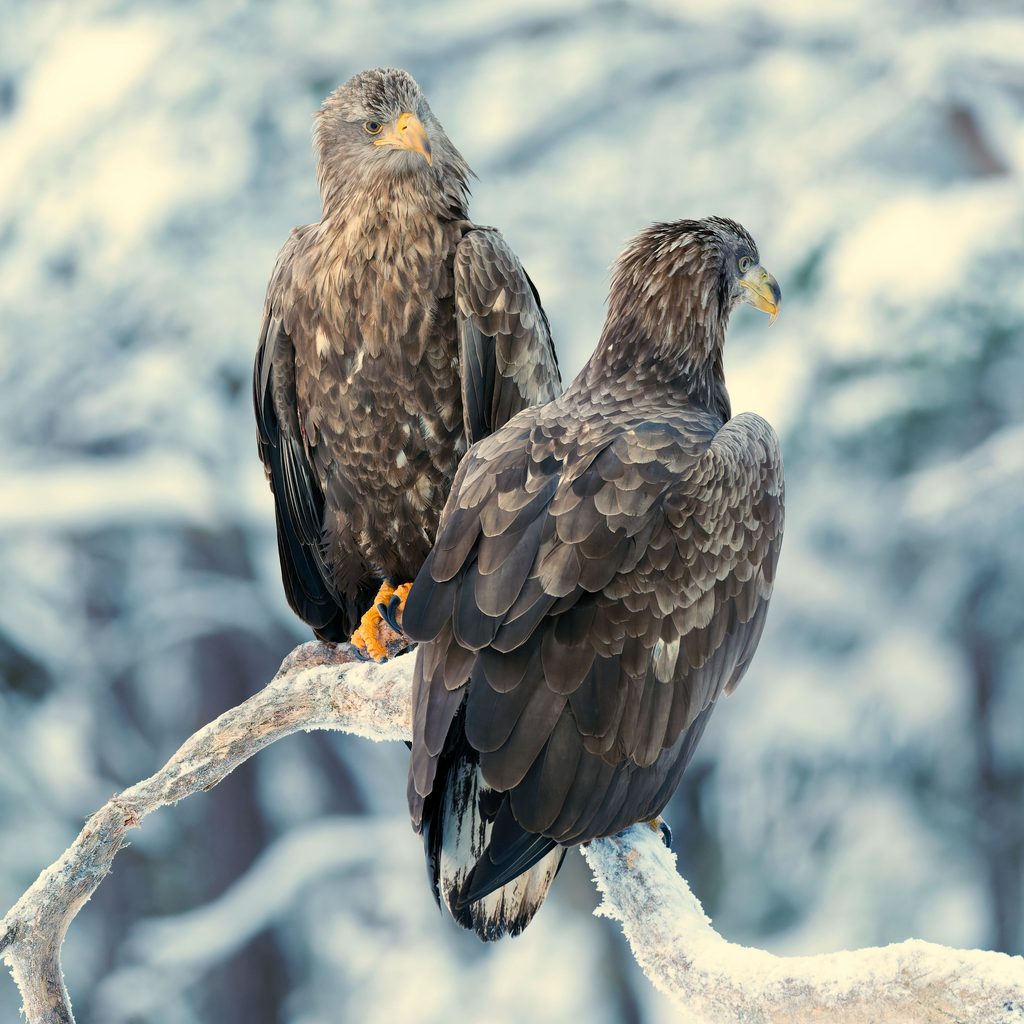
The white-tailed eagle is one of Europe’s largest birds of prey. Its wingspan can reach about 2.4 meters. Adults have a pale head and a short white tail.
The bird disappeared as a breeder in the Czech lands for decades during the 20th century. A reintroduction program and natural recolonization from neighboring countries brought it back. Research from Masaryk University estimated 25–30 breeding pairs in the mid-2000s, and later monitoring reported well over 100.
Look for it near big fishponds in South Bohemia and South Moravia. It often hunts fish and waterfowl.
2. Common Buzzard (Káně lesní)
The common buzzard is the raptor you will most likely see. It often sits on fence posts and roadside poles. In flight, it soars in wide circles, with broad wings and a short tail.
Its colors vary a lot, from dark brown to nearly white. This can confuse new birdwatchers. The cat-like, mewing call helps identify it.
It hunts mainly small mammals such as voles. Farmers value it for controlling rodents.
3. Eurasian Sparrowhawk (Krahujec obecný)
The sparrowhawk is a small, fast hunter. It has short, rounded wings and a long tail. It is built for sudden dashes through trees and gardens.
Females are noticeably larger than males. They hunt songbirds, often surprising them at feeders. Watching one strike is thrilling, though a bit sad for the prey.
You can see it in woodlands, parks, and even towns. It usually appears and disappears in seconds.
ALSO READ: 25 Birds That Swim Underwater to Catch Fish (With Pictures, and Info)
4. Common Kestrel (Poštolka obecná)
The kestrel is famous for hovering in place while it scans the ground. It uses the wind to hold perfectly still. Then it dives onto small mammals or large insects.
It is a small falcon with a rusty-brown back. Males have a gray head and tail. It is happy near people.
Kestrels often nest on church towers and old buildings. In Czech cities, you may spot one above a motorway verge.
5. Peregrine Falcon (Sokol stěhovavý)
The peregrine is the fastest animal on Earth. In a hunting dive, it can exceed 300 kilometers per hour. It strikes birds in mid-air with remarkable precision.
Its numbers crashed in the mid-20th century because of pesticides. Bans on harmful chemicals and active protection helped it recover. Today, it nests on rock faces, quarries, and even tall buildings.
It is still a rare and thrilling sight. Cliffs in river valleys are good places to look.
6. Red Kite (Luňák červený)
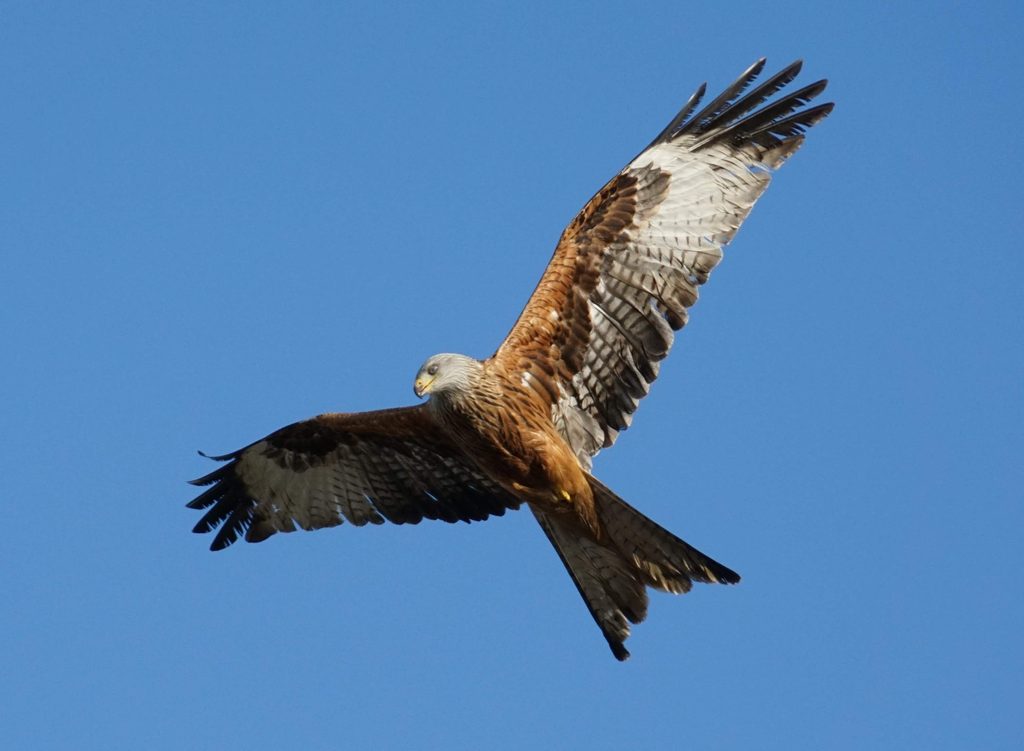
The red kite is elegant and easy to recognize. It has a deeply forked tail and long, angled wings. Its rusty-red body shines in sunlight.
It feeds on small animals and carrion. It often glides slowly over open farmland. The Czech Republic holds a small but important part of the European population.
Hunting and poisoning have harmed kites in the past. Protecting them means keeping illegal poison out of the countryside.
7. Eurasian Eagle-Owl (Výr velký)
The eagle-owl is Europe’s largest owl. It has orange eyes and prominent ear tufts. Its wingspan can reach about 1.7 meters.
It hunts at night and takes a wide range of prey. These include hares, hedgehogs, and other birds. During the day, it rests quietly on cliffs or in dense trees.
Quarries and rocky valleys are favorite nesting places. Its deep “oo-hu” call carries far across the dark.
8. Tawny Owl (Puštík obecný)
The tawny owl is the classic woodland owl. It has a round face, dark eyes, and mottled brown feathers. It stays in one territory all year.
Its famous call is a long “hoo-hoo-hoooo.” Males and females often answer each other at night. On a quiet evening, I find this one of the most atmospheric sounds in any forest.
It nests in tree holes and old buildings. It also uses nest boxes.
ALSO READ: 25 Types of Penguins (Different Species, With Pictures Explained)
9. Ural Owl (Puštík bělavý)
The Ural owl is a large, pale, long-tailed owl. It lives in mountain and foothill forests. It is calm but very defensive near its nest.
It was reintroduced to the Šumava forests, after it had disappeared as a regular breeder. Scientists now consider it a re-established part of the Czech fauna. This is a rare success story.
Never approach a nest. Ural owls can attack intruders.
10. Tengmalm’s Owl (Kulíšek nejmenší)
Tengmalm’s owl is a small owl with a large, flat, startled-looking face. It lives in old coniferous forests. It is a bird of mountain regions like Šumava.
It nests in holes made by black woodpeckers. That means it depends on mature, undisturbed forest. Without old trees, it has nowhere to go.
Its soft, rapid whistles are heard in late winter. Seeing it is difficult and takes patience.
Native Czech Forest and Mountain Birds
Forests cover about a third of the country. Mountain areas such as Šumava and Krkonoše hold some of its rarest species. The Šumava National Park, founded in 1991, is the largest in the Czech Republic.
11. Western Capercaillie (Tetřev hlušec)
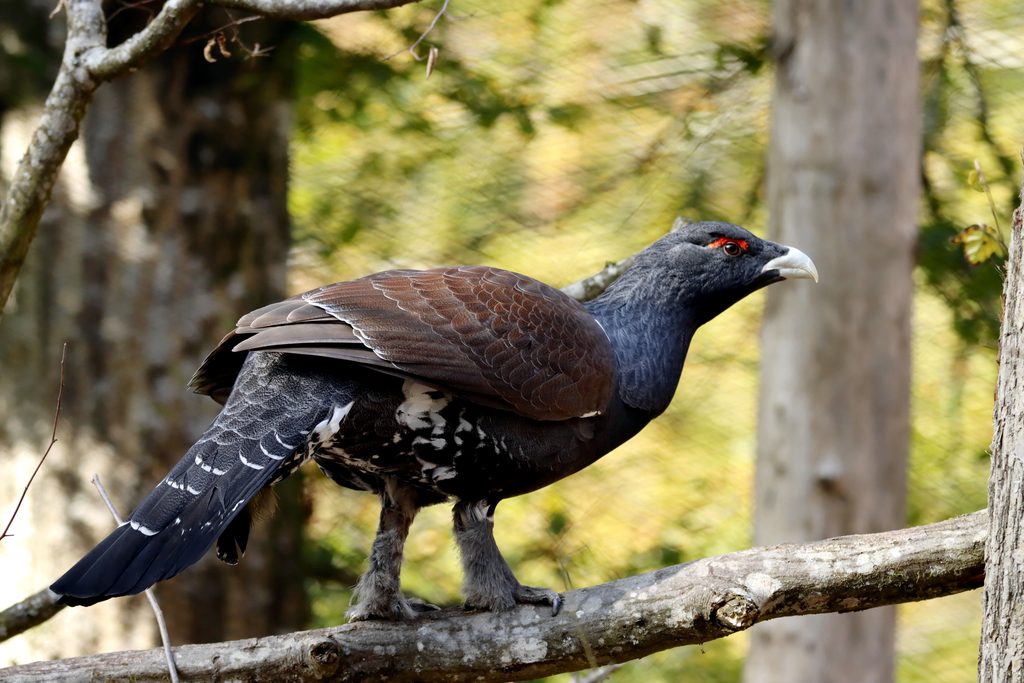
The capercaillie is a huge, turkey-sized forest grouse. Males perform a dramatic courtship display in spring. They fan their tails and make clicking and popping sounds.
It is the Czech Republic’s most threatened grouse. The Nature Conservation Agency states that more than 90% of the national population lives in Šumava. The rest are scattered and fragmented.
Only a few hundred birds remain. Quiet forests and careful management decide its future.
12. Hazel Grouse (Jeřábek lesní)
The hazel grouse is a small, secretive forest grouse. Its gray-brown, speckled plumage makes it nearly invisible among branches. It prefers dense, varied woodland.
A study in the Bohemian Forest tracked it for 48 years, from 1972 to 2019. This is the longest monitoring period for the species in Central Europe. It is also listed in Annex I of the EU Birds Directive.
It is hard to see. Listening for its high, thin whistle works better.
13. Black Grouse (Tetřívek obecný)
The black grouse is a dark, glossy bird with a lyre-shaped tail. Males gather at traditional display grounds, called leks. They spar and call at dawn.
It needs open moorland and forest edges. This habitat has shrunk across Europe. In the Czech Republic, the bird survives mainly in mountain regions.
Its decline is a warning about habitat loss. Careful management of open mountain meadows helps it.
14. Black Woodpecker (Datel černý)
The black woodpecker is the largest woodpecker in Europe. It is about the size of a crow. Its glossy black body and red crown make it unmistakable.
It chisels large, oval nest holes in old beech and pine trees. Other species later use those holes. Owls, bats, and martens all benefit.
That is why it is called a keystone species. Its loud, ringing call is easy to learn.
15. Three-Toed Woodpecker (Datlík tříprstý)
The three-toed woodpecker is a mountain specialist. As its name says, it has only three toes. It is a rare bird in the Czech Republic.
It lives in spruce forests with dead and dying trees. These supply the insects it eats. It peels bark off trees in search of beetle larvae.
It occurs in Šumava, according to the Nature Conservation Agency. Dead wood in a forest is not waste. It is a food store.
ALSO READ: 25 Best Birds to Have as Pets (Species Identification, With Pictures)
16. Great Spotted Woodpecker (Strakapoud velký)
The great spotted woodpecker is the common woodpecker you will meet most often. It has a black-and-white pattern with a red patch under the tail. Males have a red spot on the back of the head.
In spring, it drums loudly on dead branches. This is a signal to rivals, not a search for food. The sound travels far through woods and parks.
It visits garden feeders in winter. It loves peanuts and fat balls.
Native Czech Waterbirds and Wetland Birds
The Czech Republic has a long fishpond tradition that dates back to the Middle Ages. Famous ponds, such as Rožmberk Pond, were built in the 16th century. Today these man-made wetlands are valuable bird habitats.
17. Common Kingfisher (Ledňáček říční)
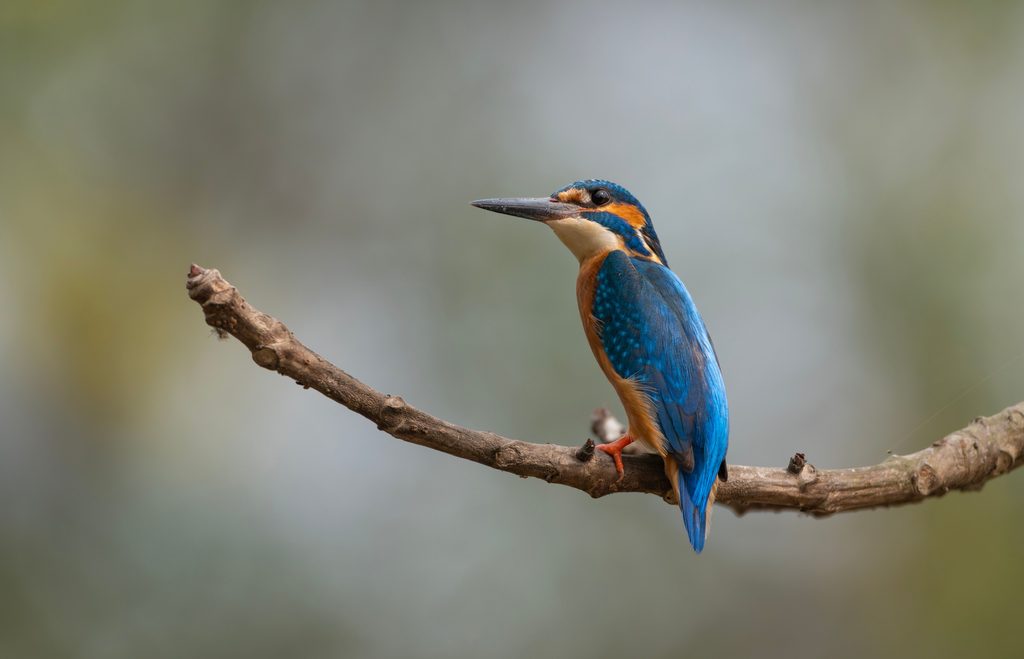
The kingfisher is a tiny, dazzling bird. Its electric-blue back and orange chest flash along clear streams. Most people see only a blue streak.
It dives headfirst to catch small fish. Then it returns to a perch and beats the fish against a branch. It nests in burrows dug into riverbanks.
Clean water is essential. A kingfisher is a sign that a river is healthy.
18. White Stork (Čáp bílý)
The white stork is a beloved village bird. It builds huge nests on rooftops, chimneys, and poles. Many people see it as a sign of spring and good luck.
It migrates thousands of kilometers to Africa each year. Pairs often return to the same nest year after year. The nest grows bigger each season.
You can see storks in meadows and wet fields. They hunt frogs, insects, and small mammals.
19. Black Stork (Čáp černý)
The black stork is the shy, forest-dwelling cousin of the white stork. Its dark plumage has a green and purple gloss. It has a bright red bill and legs.
Unlike the white stork, it avoids people. It nests in old trees deep in quiet forests. It feeds in small streams and wet meadows.
Watching one is a rare privilege. Disturbing a nest can make the birds abandon it.
20. Grey Heron (Volavka popelavá)
The grey heron is a tall, patient fisher. It stands motionless in shallow water. Then it strikes with lightning speed.
Herons nest in colonies high in trees. The big stick nests are easy to see in winter. The young make loud, croaking noises.
Fishponds and rivers across the country attract them. They stay in the Czech Republic through mild winters.
21. Great Crested Grebe (Potápka roháč)
The great crested grebe is a graceful diving bird. Its long neck and head crests make it look elegant. In spring, pairs perform a famous “weed dance.”
They build floating nests on lakes and ponds. The striped chicks often ride on a parent’s back. It is one of the most charming sights in nature.
Look for them on larger ponds and reservoirs. Clean, fish-rich water suits them.
ALSO READ: 25 Common Types of Parrots (Species Traits, With Pictures Explained )
22. Mallard (Kachna divoká)
The mallard is the most familiar duck in Europe. Males have a glossy green head and a yellow bill. Females are mottled brown.
It lives almost anywhere there is water. This includes city rivers such as the Vltava in Prague. It is a good bird for beginners.
Please do not feed bread to ducks. It is poor food and pollutes the water. Oats or peas are better.
23. Eurasian Coot (Lyska černá)
The coot is a dark, round waterbird with a white face shield. Its feet have lobed toes that help it swim and walk on mud. It is noisy and often quarrelsome.
It lives on lakes, ponds, and slow rivers. It dives for water plants. In winter, large flocks gather on open water.
Because it is so common, people ignore it. Yet its busy behavior is worth watching.
Native Czech Songbirds and Garden Birds
Songbirds are the birds most people actually meet. Many are residents. Others arrive each spring from Africa.
24. European Robin (Červenka obecná)
The robin has an orange-red face and chest. It is bold, curious, and often follows gardeners to catch exposed worms. It sings nearly all year.
It is fiercely territorial. Robins will fight rivals, sometimes with fatal results. The cute image hides a feisty nature.
You can attract robins with a bird table. They love mealworms and soft fruit.
25. Common Nightingale (Slavík obecný)
The nightingale is a plain brown bird with an extraordinary voice. Males sing rich, powerful songs, even at night. The song is loud, varied, and full of whistles.
It arrives from Africa in April. It prefers dense bushes near water. Czech culture honors it. The country’s best-known pop music award is called the Golden Nightingale.
Hearing one on a spring night is unforgettable. You rarely see it, but you will certainly hear it.
26. Great Tit (Sýkora koňadra)
The great tit is a bold, adaptable songbird. It has a black head, white cheeks, and a yellow chest with a black stripe. Males have a wider stripe.
It lives in gardens, parks, and forests. It uses nest boxes readily. Its two-note “tea-cher” song is a sign of spring.
It is a clever bird. In winter, it learns to use feeders quickly.
27. Eurasian Blue Tit (Sýkora modřinka)
The blue tit is small and colorful. It has a blue cap, white face, and yellow underparts. It is acrobatic and often hangs upside down.
It feeds on insects and caterpillars. This helps protect trees and crops. In winter, it comes to feeders for seeds and fat.
A nest box in a garden is a simple way to help. Place it away from cats and strong sun.
ALSO READ: 50 Different Types of Doves (With Pictures, and Species Info)
28. Eurasian Blackbird (Kos černý)
The male blackbird is jet black with a bright orange bill. The female is dark brown. Both are common in cities and woods.
The blackbird sings a rich, flute-like song, often at dusk. It is one of the loveliest sounds of a Czech spring evening. It often sings from a rooftop.
It forages on lawns for worms and berries. It is a familiar garden companion.
29. Song Thrush (Drozd zpěvný)
The song thrush has a warm brown back and a speckled chest. It is smaller than a blackbird. It sings short phrases, repeated two or three times.
It eats snails. It cracks the shells on a favorite stone, known as an “anvil.” Piles of broken shells show where it has been feeding.
It lives in woods, gardens, and parks. Many northern birds migrate south in winter.
30. Barn Swallow (Vlaštovka obecná)
The barn swallow is the classic symbol of summer. It has a deeply forked tail, a blue back, and a rusty throat. It catches insects in flight.
It spends winter in Africa, including southern parts of the continent. Then it returns to the same barn or porch each spring. A mud nest is built under a roof.
Modern buildings offer fewer nesting places. Leaving old barn doors open can help.
31. Common Swift (Rorýs obecný)
The swift is a superb flyer. It spends almost its entire life in the air. It eats, drinks, and even sleeps on the wing.
It has long, scythe-shaped wings and screams loudly in groups. It nests in cracks under roofs and in old buildings. It stays only about three months in the country.
Renovation can block its nest sites. Special swift bricks and nest boxes are a good solution.
32. Eurasian Jay (Sojka obecná)
The jay is a colorful member of the crow family. It has a pinkish-brown body and a bright blue wing patch. Its harsh, screeching call is easy to recognize.
It buries acorns in autumn. Many are forgotten and grow into oak trees. In this way, the jay is a quiet forest planter.
It is wary and often hard to approach. Walk slowly through an oak wood to see one.
33. Common Starling (Špaček obecný)
The starling is a glossy bird with a purple-green sheen. In winter, it is covered in pale spots. It has a long, pointed bill.
It is a talented mimic. It copies sounds such as phones and other birds. Large flocks create dramatic murmurations before roosting at dusk.
Its numbers have fallen in parts of Europe. Fewer insects and fewer nesting holes are partly to blame.
34. Common Chaffinch (Pěnkava obecná)
The chaffinch is one of the most widespread birds in the country. Males have a pinkish chest, blue-gray cap, and two white wing bars. Females are olive-brown.
Its song is a cheerful, descending rattle that ends in a flourish. It lives in woods, parks, and gardens. In winter, flocks feed on the ground.
It is a good first bird for learning songs. You will hear it in almost any forest.
35. White Wagtail (Konipas bílý)
The white wagtail is a slim, black, white, and gray bird. It constantly bobs its long tail as it walks. Its flight is deep and bouncing.
It is common near water, but also in villages and car parks. It eats flies and other small insects. It nests in cracks, walls, and piles of stones.
Its sharp “tchizzik” call is a clue to its presence. It is cheerful and easy to watch.
Why Czech Birds Matter
Birds are a living measure of the health of the land. A falling number of farmland birds points to losses in insects and hedgerows. A rising number of eagles suggests cleaner rivers and better protection.
The Czech Republic also protects many sites under the EU’s Natura 2000 network. The Šumava has this status because of its rare mountain birds. Strong laws help, but public care matters just as much.
Not every bird seen in the country is native. Researchers recorded 94 non-native bird species up to 2018, according to the Czech Academy of Sciences. Only a few, such as the feral pigeon, became firmly established. That is why this list focuses on native species.
How to Watch and Protect Czech Birds
You do not need expensive gear to start. Patience and a pair of binoculars are enough. These simple habits make a real difference:
- Visit at dawn. Most birds are most active in the early morning.
- Keep your distance from nests, especially in spring.
- Stay on marked trails in national parks and reserves.
- Install nest boxes for tits, swifts, and owls.
- Keep cats indoors during nesting season.
- Join a local bird survey run by ornithological volunteers.
Final Thoughts
The Czech Republic proves that a small, inland country can hold a great deal of birdlife. From the roar of a capercaillie to the quiet song of a robin, each bird tells part of the story.
I hope this guide helps you notice more of them. Next time you walk by a pond or through a forest, stop and listen. The birds are already there, and they have waited a long time to be noticed.
References
- Technology Agency of the Czech Republic (TA ČR). Atlas of Breeding Birds in the Czech Republic 2001–2003. https://starfos.tacr.cz/en/vysledky-vyzkumu/RIV%2F60460709%3A41410%2F04%3A9100
- Nature Conservation Agency of the Czech Republic (Nature Conservation journal). Why the Western Capercaillie Has Been Declared in the Czech Republic as the Bird of the Year 2012? https://www.casopis.ochranaprirody.cz/en/focusing-on-the-public/why-the-western-capercaillie-has-been-declared-in-the-czech-republic-as-the-bird-of-the-year-2012/
- Nature Conservation Agency of the Czech Republic (Nature Conservation journal). The Šumava/Bohemian Forest National Park. https://www.casopis.ochranaprirody.cz/en/on-nature-in-the-czech-republic/the-sumava-bohemian-forest-national-park/
- Masaryk University. Origin and Genetic Structure of White-Tailed Sea Eagles (Haliaeetus albicilla) in the Czech Republic. https://muni.cz/en/research/publications/1203460
- Czech Academy of Sciences (Živa). Non-native Birds in the Fauna of the Czech Republic (2018). https://ziva.avcr.cz/2018-5/nepuvodni-ptaci-ve-faune-ceske-republiky.html
- European Commission (CIRCABC). National Summary 2008–2012, Czech Republic, Birds Directive Article 12. https://circabc.europa.eu/sd/a/f82d8271-5132-4eb7-bdca-14951d723e34/CZ_A12NatSum_20141031.pdf
- Institute of Vertebrate Biology, Czech Academy of Sciences (NUSL repository). Development of Abundance of Hazel Grouse in the Šumava Mts. https://invenio.nusl.cz/record/24855