15 Breeds of Chicken With No Feathers on the Neck (With Pictures, and Care Tips)
The first time I saw a Turken, I honestly thought someone had crossed a chicken with a vulture. That bare, red skin around the neck looks startling at first.
But it’s not a mistake or a disease. It’s a genetic trait passed down by a single dominant gene called Na.
This gene reduces feather coverage across the whole body, not just the neck. Research shows it cuts plumage by about 20% in birds with one copy of the gene and up to 40% in birds with two copies.
Farmers around the world have used this trait for centuries. Fewer feathers mean easier plucking, better heat tolerance, and lower processing costs.
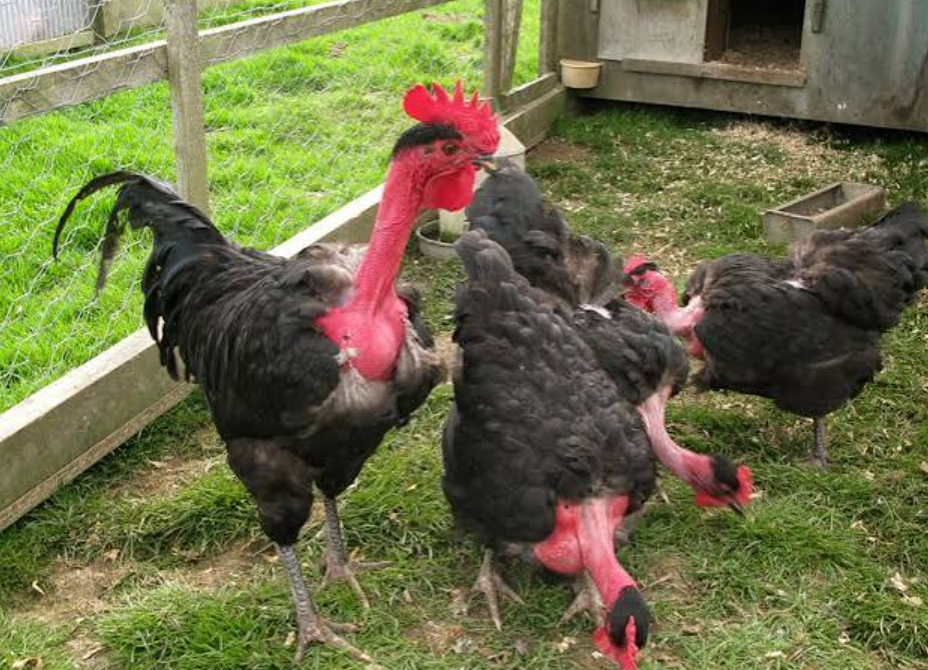
Let’s look at 15 breeds and named varieties built around this fascinating gene.
1. Transylvanian Naked Neck (Black)
This is the original recognized breed, often nicknamed the Turken because of its turkey-like bare neck.
It likely developed in the Carpathian region of Romania, though Germany refined the standard we recognize today.
Black is the most common and oldest color variety, giving the bird a striking contrast against its red, featherless skin.
They’re dual-purpose birds, valued for both brown eggs and decent meat yield.
Temperament stays calm and docile, making this a solid choice for mixed backyard flocks.
2. Naked Neck (Red)
The Red variety carries the same bare-neck genetics but in a warm, reddish-brown plumage.
It was developed largely for exhibition purposes, giving breeders more color diversity within the same standard.
Like all Naked Necks, this variety has roughly half the total feather count of a normally feathered bird its size.
That makes it noticeably easier to pluck, a trait valued by small-scale meat producers.
Cold tolerance is lower than fully feathered breeds, so shelter matters in harsh winters.
3. Naked Neck (White)
The White Naked Neck is popular in French and German commercial lines, partly because white feathers leave a cleaner-looking carcass after plucking.
France officially recognizes only the white variety for its naked neck meat breeds.
This variety shares the same friendly, easygoing temperament typical of the breed overall.
It handles heat noticeably better than darker-feathered relatives, since white plumage also reflects more sunlight.
Egg production sits in the moderate range, similar to other standard Naked Neck lines.
4. Naked Neck (Buff)
The Buff variety offers a soft golden-tan plumage color, popular among exhibition breeders.
It follows the same body type and bare-neck standard as other recognized colors.
Buff Naked Necks tend to be calm and easy to handle, even for first-time keepers.
Because buff feathering is a modifier gene, breeding true buff naked-neck lines takes careful selection.
They remain rarer than black or red varieties in most hatchery catalogs.
5. Naked Neck (Cuckoo)
The Cuckoo variety carries the same barred pattern seen in breeds like Plymouth Rock, layered onto naked neck genetics.
This creates a distinctive look: barred body feathers paired with a completely bare neck.
Cuckoo Naked Necks are popular among hobby breeders who enjoy combining unusual traits.
They share the breed’s general hardiness and calm nature.
Bantam versions of this color also exist, appealing to smaller-space keepers.
6. Naked Neck Bantam
The Bantam Naked Neck is a miniaturized version of the standard breed, carrying the same bare-neck gene in a smaller frame.
Roosters typically weigh under 1 kg, making them suitable for keepers with limited space.
They retain the full range of standard colors, including black, white, red, and cuckoo.
Bantams are especially popular in Europe, where breed clubs actively support the naked neck standard.
Despite their small size, their temperament remains just as gentle as the full-sized version.
7. Showgirl (Naked Neck Silkie)
The Showgirl combines Silkie genetics with the naked neck gene, creating a truly unusual-looking bird.
It keeps the Silkie’s fluffy, fur-like body feathers and feathered legs, but loses feathering entirely around the neck.
This contrast, fluffy body against bare neck, makes the Showgirl a favorite in poultry exhibitions.
Temperament mirrors the Silkie side of its heritage: quiet, docile, and easy to handle.
It remains a developing breed, so appearance can vary between different breeding lines.
8. Ake Chicken
The Ake chicken is China’s only recognized indigenous naked-neck breed, studied extensively by researchers at China Agricultural University.
It represents a genetically distinct population, separate from the European Transylvanian lineage.
Researchers use Ake chickens to study the naked neck mutation’s origins and its link to heat adaptation.
This breed remains rare outside China and is mostly kept for research and conservation purposes.
Its existence shows the naked neck trait arose independently in different parts of the world.
9. Banatski Golosijan
This is the Serbian name for the Naked Neck breed, reflecting how widely the trait spread across the Balkans.
Local farmers in Serbia have kept naked-neck birds for generations, valuing their heat tolerance during hot summers.
Physically, it closely resembles the Transylvanian standard, since both likely share common regional ancestry.
It remains an important genetic reservoir for breed diversity in Eastern Europe.
Few Western hatcheries carry this exact regional strain, making it a rarity outside the Balkans.
10. Cou Nu du Forez
Developed in France’s Forez region during the late 1940s, this breed was created specifically for easier plucking in commercial meat production.
Unlike the fully bare Transylvanian Naked Neck, this variety keeps a small tuft of feathers, called a “jabot,” at the base of the neck.
Breeders value it for reducing feather count by roughly 30%, saving real time and labor during processing.
Genetically, it’s heterozygous for the trait, meaning offspring can show varied neck feathering patterns.
It remains one of France’s most commercially important heritage poultry breeds today.
11. Poulet Rouge Fermier (Label Rouge Naked Neck Line)
This breed traces back to France’s government-supported Label Rouge program, which promotes heritage-quality poultry farming.
American producers imported this naked-neck genetic line in 2003, adapting it for U.S. pasture-based farming.
It’s prized for a lean breast, tall stature, and superior meat flavor compared to standard commercial broilers.
The bare neck trait helps these birds tolerate outdoor pasture conditions in warmer climates.
It represents a rare successful transplant of French heritage poultry genetics into American farming.
12. Naked Neck Fayoumi Cross
Egyptian researchers have crossed the naked neck gene into Fayoumi chickens, a breed already known for disease resistance and heat hardiness.
This cross specifically targets improved performance in hot, humid climates across North Africa.
Studies from Ain Shams University in Cairo highlight measurable gains in growth and egg output under heat stress.
It’s mostly used in research and development programs rather than commercial hatcheries.
The cross demonstrates how the naked neck gene combines well with other heat-tolerance traits.
13. Naked Neck Frizzle
This variety combines two separate feather-reducing genes: the naked neck trait and the frizzle curling mutation.
The result is a bird with curled body feathers and a completely bare neck, an unusual double mutation.
Poultry scientists have specifically studied combining these two genes to maximize heat tolerance in tropical broiler production.
It’s rarely bred for commercial use, appearing mostly in research settings and specialty poultry collections.
Owners need to provide extra shelter, since both mutations reduce natural weatherproofing.
14. Tropical Research Naked Neck Broiler
Across parts of Africa and Southeast Asia, researchers have bred the naked neck gene into local broiler populations to combat heat stress.
Studies from institutions in Cameroon and Chad have measured how this gene affects growth under both moderate and extreme heat.
These crosses often combine naked neck genetics with local, hardy indigenous breeds already suited to tropical conditions.
The goal is practical: keep birds productive without expensive cooling infrastructure.
This approach has become a low-cost solution for smallholder poultry farmers in developing regions.
15. Naked Neck Commercial Layer Hybrid
Some commercial layer strains have incorporated the naked neck gene specifically to maintain egg production during heat waves.
Poultry scientists found that naked-neck layers keep laying more consistently when temperatures climb, compared to fully feathered hybrids.
This makes the trait genuinely valuable for large-scale egg operations in warmer countries.
These hybrids aren’t sold as backyard breeds, but they show how far the naked neck gene has traveled from its Transylvanian roots.
It’s a strong example of a heritage trait finding modern industrial purpose.
ALSO READ: 15 Breeds of Chicken With Feathers on Feet: (With Pictures, and Care Tips)
What Ties These Breeds Together
Every entry above shares the same Na gene, first documented in Eastern Europe but now spread worldwide.
Most naked neck birds share a calm, docile temperament, regardless of where they were developed.
Many were bred specifically to solve practical problems: heat stress, difficult plucking, or feed efficiency.
The trait’s spread from Romania to China, France, Egypt, and beyond shows just how useful one simple mutation can be.
Caring for Naked Neck Chickens
These birds need specific care adjustments because of their reduced feather coverage.
Protect them in cold weather. Bare necks and thinner plumage mean less natural insulation against frost and wind.
Watch for sunburn. Exposed neck skin can actually burn in intense summer sun, especially on lighter-skinned birds.
Provide good ventilation in heat. This is where naked neck birds genuinely shine compared to fully feathered breeds.
Monitor for pecking. Bare skin is more visible to flockmates and can occasionally attract unwanted pecking in a bored flock.
Are Naked Neck Chickens Good for Beginners?
Generally, yes. Most varieties are friendly, hardy, and productive layers, suitable for first-time keepers.
They’re best suited to warm or moderate climates. Extreme cold regions require extra coop insulation and draft protection.
If you live somewhere hot and humid, a naked neck breed may genuinely outperform fully feathered birds in comfort and productivity.
Frequently Asked Questions
Do naked neck chickens lay fewer eggs because of their bare skin?
No. Egg production depends on breed lineage, not neck feathering. Standard layers still produce 200-240 eggs yearly under normal backyard conditions, per University of Florida IFAS Extension data.
Is the naked neck trait harmful to the bird?
No. It’s a natural mutation, not a disease or deformity. Birds with the gene live full, healthy lives.
Can naked neck chickens survive winter?
Yes, with proper shelter. Their reduced feathering means they need more protection than fully feathered breeds during cold snaps.
Why do naked neck chickens matter for global agriculture?
Researchers use the gene to improve heat tolerance in commercial poultry, particularly in tropical and subtropical farming regions.
Are all naked neck chickens the same breed?
No. While the Transylvanian Naked Neck is the original recognized breed, the gene has been bred into many distinct lines, colors, and crosses worldwide.
Final Thoughts
I’ll admit, naked neck chickens took some getting used to visually. But once you understand the genetics behind them, that bare neck starts looking less strange and more remarkable.
From a Romanian farmyard mutation to modern heat-tolerant layer hybrids, this single gene has quietly shaped poultry farming across continents.
Whether you want a classic Turken or a rare regional variety, these 15 breeds show just how far one simple trait can travel.
References
- Oklahoma State University, Department of Animal Science – Naked Neck (Turken) Breed Profile
https://breeds.okstate.edu/poultry/chickens/naked-neck-turkens - University of Wisconsin-Madison Extension – Chicken Breeds and Varieties (A2880)
https://learningstore.extension.wisc.edu/products/chicken-breeds-and-varieties-p698 - National Library of Medicine (NIH), PMC – The Naked Neck Gene in the Domestic Chicken: A Genetic Strategy to Mitigate the Impact of Heat Stress in Poultry Production
https://pmc.ncbi.nlm.nih.gov/articles/PMC10044606/ - National Library of Medicine (NIH), PMC – Naked Neck Gene and Intermittent Thermal Manipulations During Embryogenesis Improve Posthatch Performance and Thermotolerance
https://pmc.ncbi.nlm.nih.gov/articles/PMC10393816/ - National Library of Medicine (NIH), PMC – Genetic and Evolutionary Analysis of Ake Chicken: China’s Sole Indigenous Naked-Neck Chicken Breed
https://www.ncbi.nlm.nih.gov/pmc/articles/PMC12072286/ - Mississippi State University Extension – Breeds and Varieties of Chickens
https://extension.msstate.edu/agriculture/livestock/poultry/breeds-and-varieties-chickens - University of Florida IFAS Extension – Raising Backyard Chickens for Eggs (AN239)
https://ask.ifas.ufl.edu/publication/AN239