25 Birds That Eat Dead Animals (Names, With Pictures)
Birds that eat dead animals are called scavengers. Their food is known as carrion. It may sound unpleasant, but this job is vital for healthy nature.
So, which birds eat dead animals? The best-known are vultures and condors. Many eagles, kites, caracaras, storks, ravens and even seabirds also feed on carrion.
Scavengers work as a natural cleanup crew. They remove carcasses quickly, and this helps limit the spread of disease. In many places, they do this for free, every single day.
Yet many of these birds are in trouble. According to the International Union for Conservation of Nature, 16 of the world’s 23 vulture species are threatened with extinction. That number worries me.
In this guide, I cover 25 birds that eat dead animals.
Some numbers will surprise you. The California condor has a wingspan of about 9.5 feet, according to the U.S. Fish and Wildlife Service. Only 23 were left in the world in 1982.
Let us begin with the New World vultures.
New World Vultures and Condors
1. Turkey Vulture (Cathartes aura)
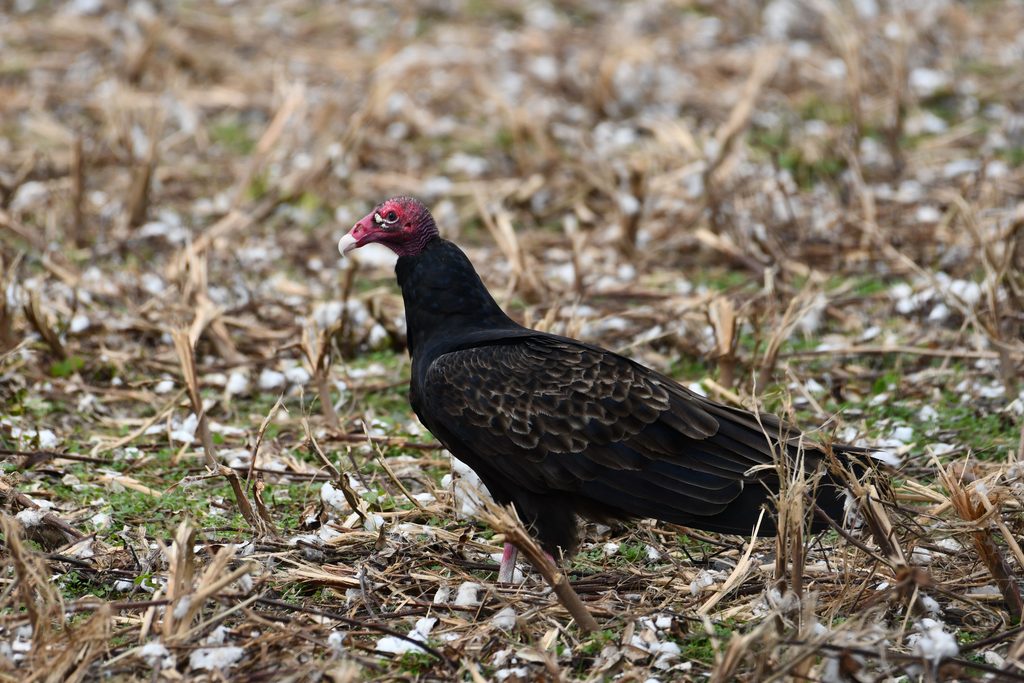
The turkey vulture is a large dark bird with a bare red head. Its wingspan is about 6 feet. It lives across much of North and South America.
It has a rare gift among birds: a strong sense of smell. It can find hidden carcasses under forest cover by detecting gases from decay.
You often see it soaring with wings held in a shallow V. It rocks gently on the wind and rarely flaps.
Because it feeds on fresh carcasses, it rarely harms living animals. Farmers often value it for quietly removing dead livestock.
2. Black Vulture (Coragyps atratus)
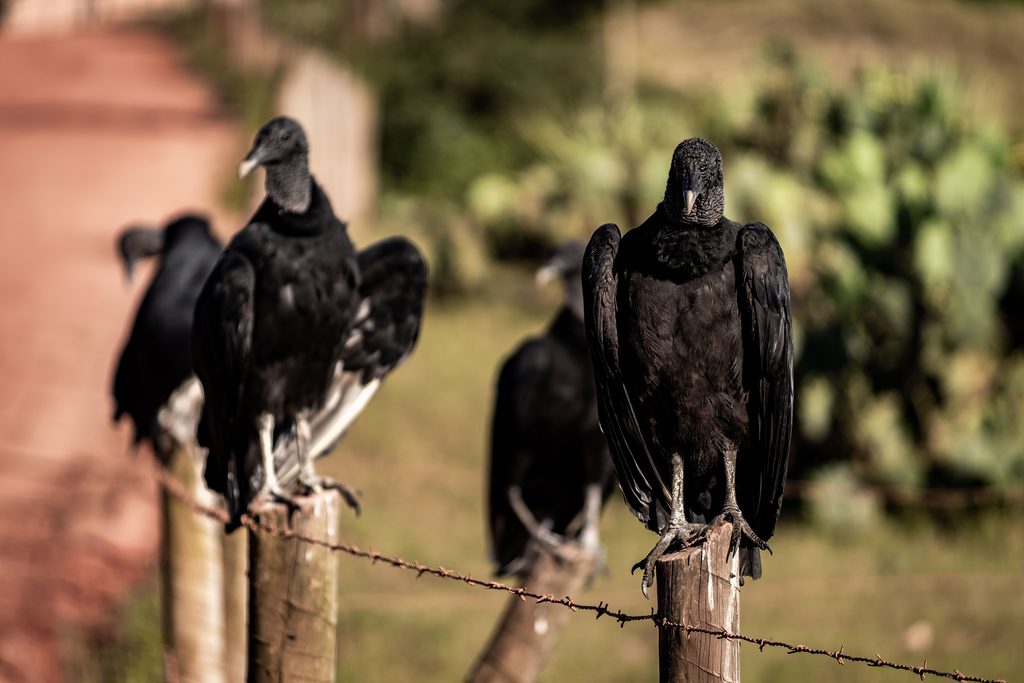
The black vulture is smaller and more compact than the turkey vulture. Its wingspan is about 5 feet, and its head is grey and wrinkled.
It relies more on sight than on smell. For this reason, it often follows turkey vultures to find food.
It lives in family groups and has spread northward in the United States. In some areas, it can cause trouble for farmers with newborn livestock.
Its numbers have grown in many southern regions. Warm winters and steady food supplies have helped it expand its range.
3. California Condor (Gymnogyps californianus)
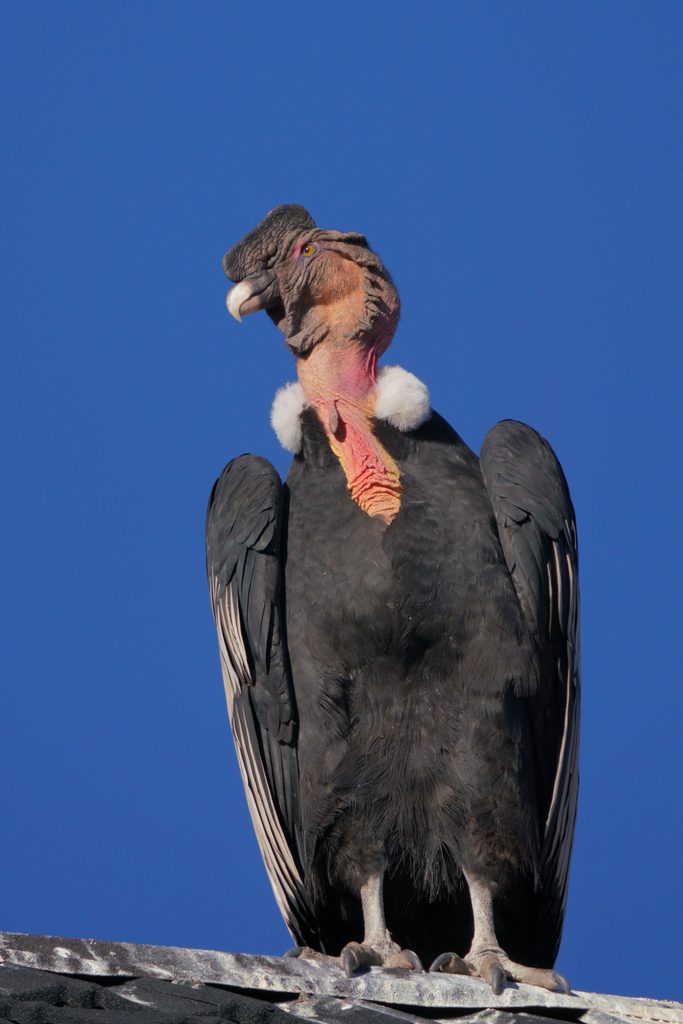
The California condor is North America’s largest land bird. Its wingspan is about 9.5 feet (2.9 m), and adults weigh 17 to 25 pounds.
It feeds only on carrion, such as deer, cattle and even dead marine mammals. It can eat 3 to 4 pounds in one meal.
Only 23 survived in 1982. Today, partners of the U.S. Fish and Wildlife Service report more than 500 condors, wild and captive. Lead poisoning from ammunition fragments is the leading known cause of death.
4. Andean Condor (Vultur gryphus)
The Andean condor is one of the largest flying birds on Earth. Its wingspan can reach about 10 feet (3 m), and big males weigh around 30 pounds.
It soars over the Andes mountains and nearby coasts. It searches for dead llamas, cattle and sea lions.
It is a national symbol in several South American countries. The species is listed as Near Threatened, and poisoning and persecution remain problems.
A pair can glide for hours without a single wingbeat. I can only imagine how it feels to watch one rise over the Andes at dawn.
5. King Vulture (Sarcoramphus papa)
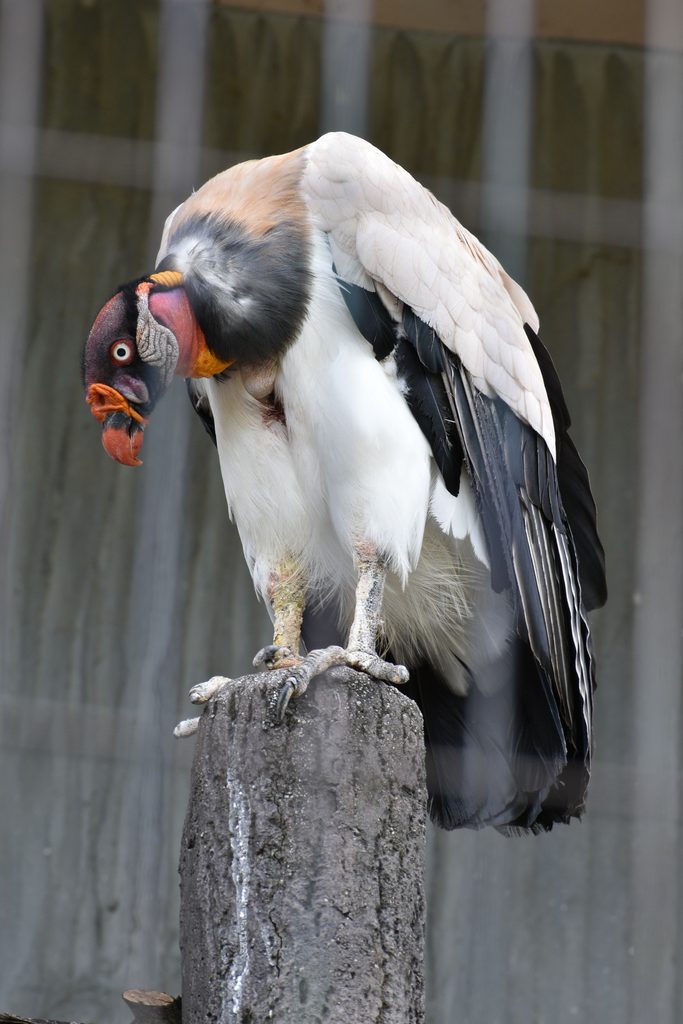
The king vulture is a colorful bird of tropical forests. It has a white body, black wings and a head painted in orange, yellow and purple.
It stands about 2.5 feet tall and weighs up to 8 pounds, according to the Smithsonian’s National Zoo. It ranges from Mexico to Argentina.
This bird often waits while stronger-beaked scavengers open a carcass. In the meantime, it may eat the eyes.
Its bright face is among the most colorful of any vulture. It lives deep in forests, so sightings are special and rare.
ALSO READ: 45 Birds with Long Legs (Names, With Photos)
Old World Vultures
6. Griffon Vulture (Gyps fulvus)
The griffon vulture is a large, pale vulture of Europe, Africa and Asia. Its wingspan is about 8 to 9 feet.
It nests in colonies on cliffs and feeds in flocks. A group can strip a large carcass in a short time.
Spain holds most of Europe’s griffons. I find it moving that this species came back strongly after years of decline.
Griffons depend on traditional farming, where dead animals are left in the field. Rules that require removal of carcasses have hurt them in some regions.
7. Cinereous Vulture (Aegypius monachus)
The cinereous vulture is one of the heaviest flying birds. Big individuals can weigh about 30 pounds, and the wingspan can reach 10 feet.
It lives from Spain to Mongolia and eats carrion of all sizes. Its strong bill can tear through tough skin.
The species is Near Threatened. Poisoned bait and loss of habitat are major reasons.
Its dark plumage and huge size make it look almost like a small plane. It is often the dominant bird at a carcass.
8. Lappet-faced Vulture (Torgos tracheliotos)
The lappet-faced vulture is a powerful African giant. It has a wingspan of about 9 feet and a bare pink head with folds of skin.
It can open tough hides that smaller vultures cannot. Other scavengers often wait for it to start the meal.
This bird is listed as Endangered. Poisoning, often aimed at predators, kills many vultures that feed on the bait.
Because it is so strong, it plays a special role. By opening a carcass, it gives smaller vultures access to the meat.
ALSO READ: 50 Birds with Long Necks (Names, With Photos)
9. White-backed Vulture (Gyps africanus)
The white-backed vulture was once one of Africa’s most common vultures. It is medium-sized, with a pale back and a dark body.
It feeds in large groups at kills made by lions and other predators. Its long neck helps it reach inside a carcass.
This bird is now Critically Endangered. Poisoning and the trade in vulture parts have caused steep declines.
Vultures in this group can arrive within minutes of a kill. They watch each other from the sky, which spreads news of food quickly.
10. Rüppell’s Griffon Vulture (Gyps rueppelli)
Rüppell’s griffon lives in the dry regions of Africa south of the Sahara. It has a brown body with pale scale-like feathers.
It holds a famous record. One was struck by a plane at about 37,000 feet (11,300 m) over West Africa in 1973.
This bird is Critically Endangered. Loss of habitat and poisoning are cutting its numbers.
It travels long distances each day to find food. Such wide movements make it harder to protect.
11. Bearded Vulture (Gypaetus barbatus)
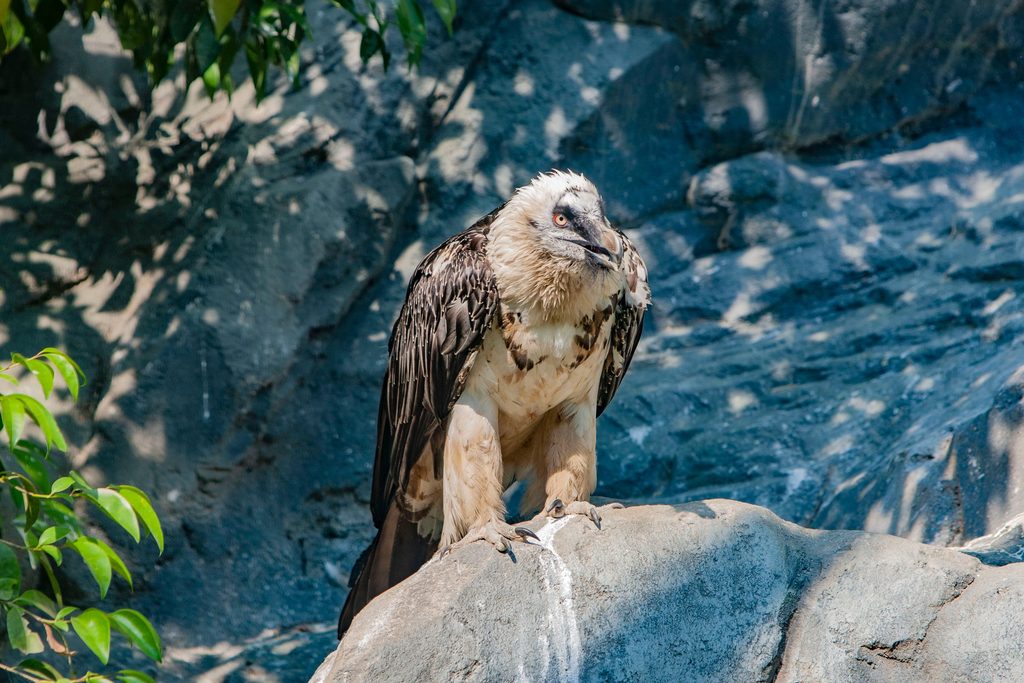
The bearded vulture, or lammergeier, is truly unusual. It feeds mostly on bones. Its wingspan is about 9 feet.
It carries large bones high into the air and drops them on rocks. When they break, it swallows the pieces. Its strong stomach acid does the rest.
This bird lives in high mountains from Spain to Asia. It is Near Threatened, and the Alps have seen successful reintroductions.
Bones are rich in fat and marrow. This high-energy food suits a bird that lives in cold, harsh mountains.
12. Egyptian Vulture (Neophron percnopterus)
The Egyptian vulture is small, white and yellow-faced. It is sometimes called the “pharaoh’s chicken” because of its ancient link to Egypt.
It is one of the few birds that uses tools. It throws stones at ostrich eggs to crack them.
This bird is listed as Endangered. Poisoning, power lines and food shortages all play a role.
It also eats small animals and scraps near villages. Its habit of using tools shows real intelligence.
13. Himalayan Griffon (Gyps himalayensis)
The Himalayan griffon is a huge pale vulture of high mountains. Its wingspan can reach about 9 feet.
It lives across the Himalayas and the Tibetan Plateau. It feeds on dead wild and domestic animals.
The species is Near Threatened. In some Tibetan areas, it plays a role in traditional funeral customs known as sky burial.
At high altitude, thin air makes flight harder. Its huge wings help it soar on mountain winds with little effort.
14. Hooded Vulture (Necrosyrtes monachus)
The hooded vulture is small and often lives close to people. It scavenges around towns, markets and slaughterhouses across Africa.
It has a thin bill and a pinkish, downy head. It picks up scraps that larger vultures leave behind.
This bird species is Critically Endangered. Poisoning and the trade in its body parts are major threats.
It is common near human settlements, so it faces many human threats. Protecting it means working with local communities.
Eagles That Also Eat Carrion
15. Bald Eagle (Haliaeetus leucocephalus)
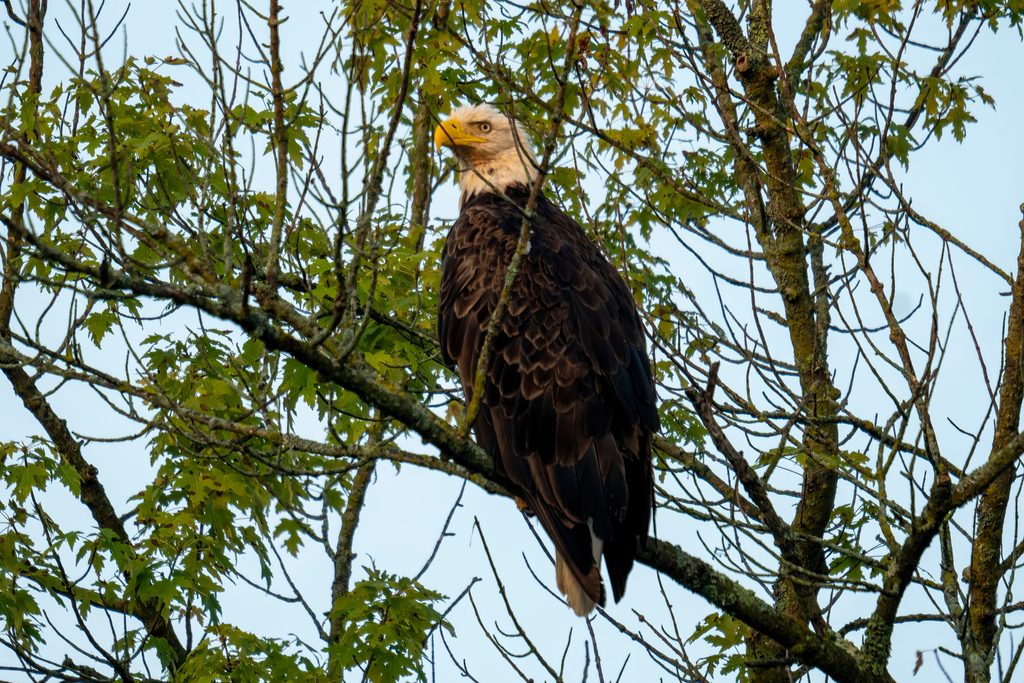
The bald eagle is the national bird of the United States. Fish is its main food, but the U.S. Fish and Wildlife Service notes that it also scavenges dead fish and animals.
It is an opportunistic feeder. It may also steal prey from other birds and mammals.
Winter carrion is a lifeline when fish are hard to catch. Its wingspan is about 7 feet.
Its recovery is a famous conservation story. The species was removed from the U.S. endangered species list in 2007.
16. Golden Eagle (Aquila chrysaetos)
The golden eagle is a powerful hunter with a wingspan of 6 to 7.5 feet. It lives across the Northern Hemisphere.
In winter, it often feeds on carcasses of deer, sheep and other animals. This helps it survive when live prey is scarce.
Its golden-brown neck feathers give it a regal look. It is one of the most admired birds of mountains and moors.
It nests on cliffs and in tall trees. Pairs often return to the same site year after year.
ALSO READ: 25 Birds That Can’t Fly (Identification, With Pictures)
17. White-tailed Eagle (Haliaeetus albicilla)
The white-tailed eagle is among the largest eagles in Europe. Its wingspan can reach about 8 feet.
It hunts fish and waterbirds, but it also feeds on carrion. It can be found at coasts, lakes and big rivers.
Reintroduction projects, such as those in Scotland, have helped it return. It is a real conservation success.
Large numbers gather at coasts in winter. They feed on fish remains and dead seabirds along the shore.
18. Steller’s Sea Eagle (Haliaeetus pelagicus)
Steller’s sea eagle is a massive bird with a huge yellow bill and white shoulders. It breeds in far-eastern Russia.
In winter, many move to Japan’s Hokkaido. There they feed on fish and on carcasses left on the shore and ice.
The species is listed as Vulnerable. Habitat change and lead poisoning are concerns.
19. Wedge-tailed Eagle (Aquila audax)
The wedge-tailed eagle is Australia’s largest bird of prey. Its wingspan can reach about 7.5 feet.
It often feeds on roadkill, especially kangaroo carcasses. Sadly, this brings it close to traffic, and many are hit by vehicles.
It is a good example of how wild birds adapt to human landscapes. It also shows the risks of doing so.
Pairs often work together to feed. Their huge nests may be used for many years and grow very large.
Kites, Caracaras and Other Scavengers
20. Black Kite (Milvus migrans)
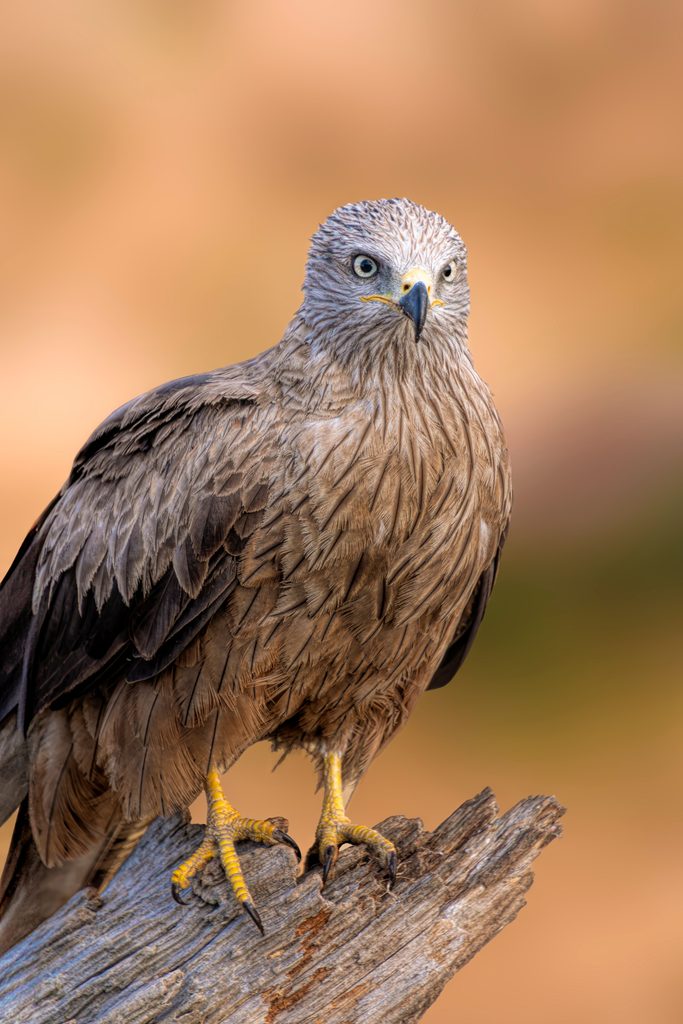
The black kite is one of the most widespread raptors on Earth. It lives across Europe, Asia, Africa and Australia.
It is a bold scavenger. In many cities, it picks up scraps, dead fish and roadkill, and it will snatch food from people.
I find its confidence fascinating. It glides on forked wings and watches every market stall.
Large flocks sometimes gather over rubbish tips and fields. Together they look like a swirling cloud.
21. Red Kite (Milvus milvus)
The red kite is a graceful raptor with a deeply forked tail. It lives mainly in Europe.
It eats carrion, small mammals and worms. Its light build lets it glide for long periods.
This bird nearly disappeared in Britain, with only a few pairs left in Wales. Careful protection and reintroduction have brought it back across many regions.
ALSO READ: 15 Birds That Look Like Dinosaurs (Identification, With Pictures)
22. Crested Caracara (Caracara plancus)
The crested caracara is a bird of prey from the falcon family. Unlike most falcons, it often walks on the ground.
It lives from the southern United States to South America. It eats carrion and also hunts small animals.
It often joins vultures at carcasses. Its black cap and bare orange face make it easy to spot.
It will also steal food from other birds. This habit shows how clever and flexible it is.
23. Marabou Stork (Leptoptilos crumenifer)
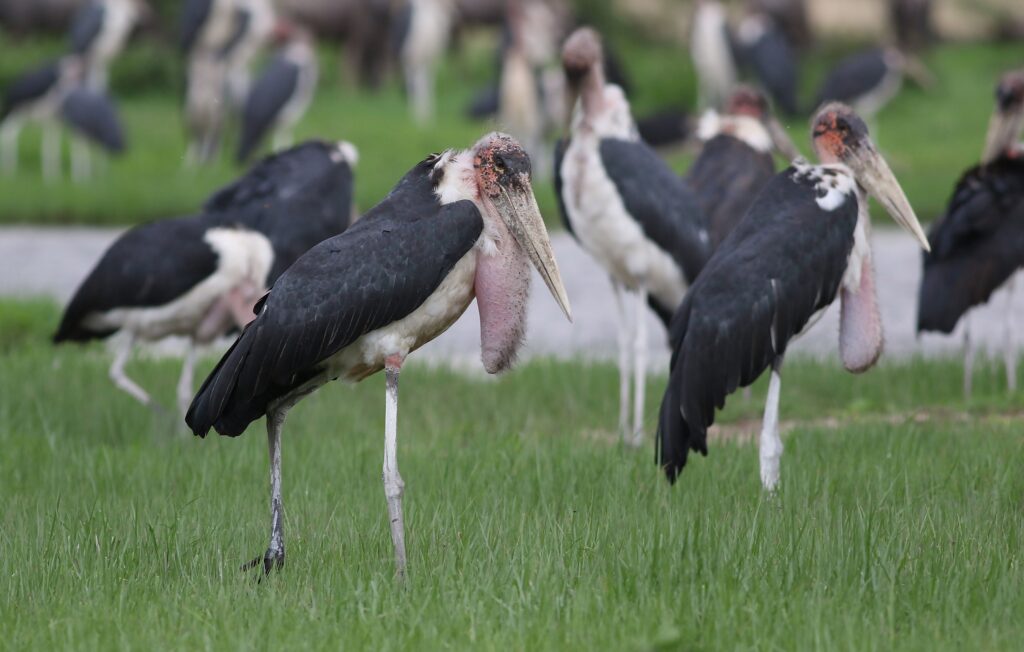
The marabou stork is a giant of Africa, standing up to 5 feet tall. Its wingspan can approach 10 feet.
It has a bare head and a hanging throat pouch. This look suits a scavenger that feeds on carcasses and waste.
Its nickname is the “undertaker bird.” It often feeds next to vultures at kills.
Its large bill and bare neck help it feed in messy carcasses. At night, it roosts in tall trees in groups.
24. Common Raven (Corvus corax)
The common raven is one of the smartest birds in the world. It lives across the Northern Hemisphere, from deserts to Arctic coasts.
Carrion is a key food, especially in winter. Ravens are known to follow wolves and other predators to find kills.
It will eat almost anything, so it is not a pure scavenger. Still, its role at carcasses is very important.
Scientists have also seen ravens solve puzzles and use tools. They are truly remarkable birds.
25. Southern Giant Petrel (Macronectes giganteus)
The southern giant petrel is a large seabird of the Southern Ocean. Its wingspan is about 7 feet.
It scavenges seal and penguin carcasses along sub-Antarctic coasts. It also follows ships and eats fish scraps.
Its strong bill and tube nose suit life on stormy seas. It reminds us that scavengers live in every habitat.
Fishing boats can be risky for it. Hooks and nets are a real danger for seabirds in the Southern Ocean.
How Do Scavenging Birds Find and Eat Dead Animals?
Most scavengers use sharp eyesight. Soaring birds can spot a carcass from high above. Others watch for the movement of vultures.
A few species, such as the turkey vulture, also use smell. This helps them find food hidden under trees.
Many vultures have bare heads. This keeps feathers clean while they feed inside a carcass. Strong stomach acid also kills many harmful germs.
Why Scavenging Birds Matter
Scavengers remove carcasses fast. This limits the spread of disease and keeps the environment cleaner.
When vultures disappear, other animals take over. One study of India’s vulture collapse linked the loss to more feral dogs and a higher health risk for people.
In India, three vulture species fell by more than 90 percent after a veterinary drug called diclofenac entered livestock. The drug is toxic to vultures that eat treated animals.
Threats and How We Can Help
The biggest threats are poisoning, lead ammunition, power lines and habitat loss. Illegal bait kills many scavengers at once.
You can help in simple ways. Support lead-free ammunition, avoid harmful veterinary drugs, and back local conservation groups. Small actions add up.
If you find a sick or injured wild bird, call a licensed wildlife rehabilitator. Do not handle it without advice.
Where Can You See Scavenging Birds?
Many scavengers are easy to find if you know where to look. Open country, cliffs, coasts and rubbish tips are good places to start.
In the United States, national parks and wildlife refuges are great places to watch vultures, eagles and condors. The National Park Service lists many parks that are good for bird watching.
Use binoculars and keep a safe distance. Never feed wild scavengers, because it can change their behavior and put them at risk.
Common Myths About Birds That Eat Dead Animals
Myth 1: Vultures kill healthy animals. In almost all cases, they do not. Most vultures have weak feet and cannot grip live prey. They wait for animals to die.
Myth 2: Scavengers spread disease. The opposite is closer to the truth. Their strong stomach acid destroys many germs, including those that cause anthrax and botulism. This helps stop outbreaks.
Myth 3: Scavengers are lazy. I disagree. Many fly over 100 miles in a day to find food. Soaring on warm air currents lets them do it with little energy.
Scavenger Facts at a Glance
Here are a few quick facts to remember:
- The California condor has a wingspan of about 9.5 feet and was down to 23 birds in 1982.
- The king vulture weighs up to 8 pounds and ranges from Mexico to Argentina.
- The bald eagle scavenges dead fish and animals, especially in winter.
- Lead ammunition is the leading known cause of death for California condors.
- 16 of 23 vulture species are threatened with extinction.
Quick FAQ
Which bird eats the most carrion? Vultures are the most dedicated scavengers, and some species eat almost nothing else.
Is the bald eagle a scavenger? Yes. The U.S. Fish and Wildlife Service notes that it scavenges dead fish and animals.
Which vulture eats bones? The bearded vulture. It drops bones from heights to break them.
Can vultures get sick from rotten meat? They have very strong stomach acid, which kills many germs.
Final Thoughts
These 25 birds prove that scavenging takes many forms. Some glide for hours, some walk the ground, and some break bones from the sky.
I hope this guide gives you new respect for them. Next time you see a vulture circling, remember the work it does for all of us.
References
- U.S. Fish and Wildlife Service. “California Condor (Gymnogyps californianus).” https://www.fws.gov/species/california-condor-gymnogyps-californianus
- U.S. Fish and Wildlife Service. “Bald Eagle (Haliaeetus leucocephalus).” https://www.fws.gov/species/bald-eagle-haliaeetus-leucocephalus
- U.S. Fish and Wildlife Service. “Turkey Vulture (Cathartes aura).” https://www.fws.gov/species/turkey-vulture-cathartes-aura
- U.S. Fish and Wildlife Service. “Black Vulture (Coragyps atratus).” https://www.fws.gov/species/black-vulture-coragyps-atratus
- Smithsonian’s National Zoo and Conservation Biology Institute. “King Vulture.” https://nationalzoo.si.edu/animals/king-vulture
- National Park Service. “Birds & Birding.” https://www.nps.gov/subjects/birds/index.htm
- Cornell Lab of Ornithology, Cornell University. Home page. https://www.birds.cornell.edu/home/