15 Birds That Look Like Dinosaurs (Identification, With Pictures)
Birds do not just look like dinosaurs. They are dinosaurs. Scientists classify birds as avian dinosaurs, a surviving branch of the theropod family that includes Velociraptor. Some species still show this ancestry more clearly than others.
I have always found this idea thrilling. A dinosaur may be walking through your garden right now. Still, some birds make the link impossible to miss. They have scaly legs, sharp claws, hard stares and prehistoric bodies.
Here are 15 birds that look most like dinosaurs, with real facts, numbers and the science behind them.
Why Do Some Birds Look So Much Like Dinosaurs?
Birds belong to a group called the coelurosaurs. The University of California Museum of Paleontology lists many shared features. These include hollow bones, a wishbone, three-fingered hands and an S-shaped neck.
Birds also lay eggs with a similar structure to those of their dinosaur relatives. Their legs still carry scales. As the Smithsonian puts it, even a turkey’s hollow bones, feathers and stiff wrists come from non-avian dinosaur ancestors.
Birds and the other coelurosaurian dinosaurs separated roughly 150 million years ago, according to Berkeley paleontologists. That is a long time to evolve apart. Yet some birds kept the old look. Let us meet them.
The 15 Birds That Look Like Dinosaurs
1. Southern Cassowary
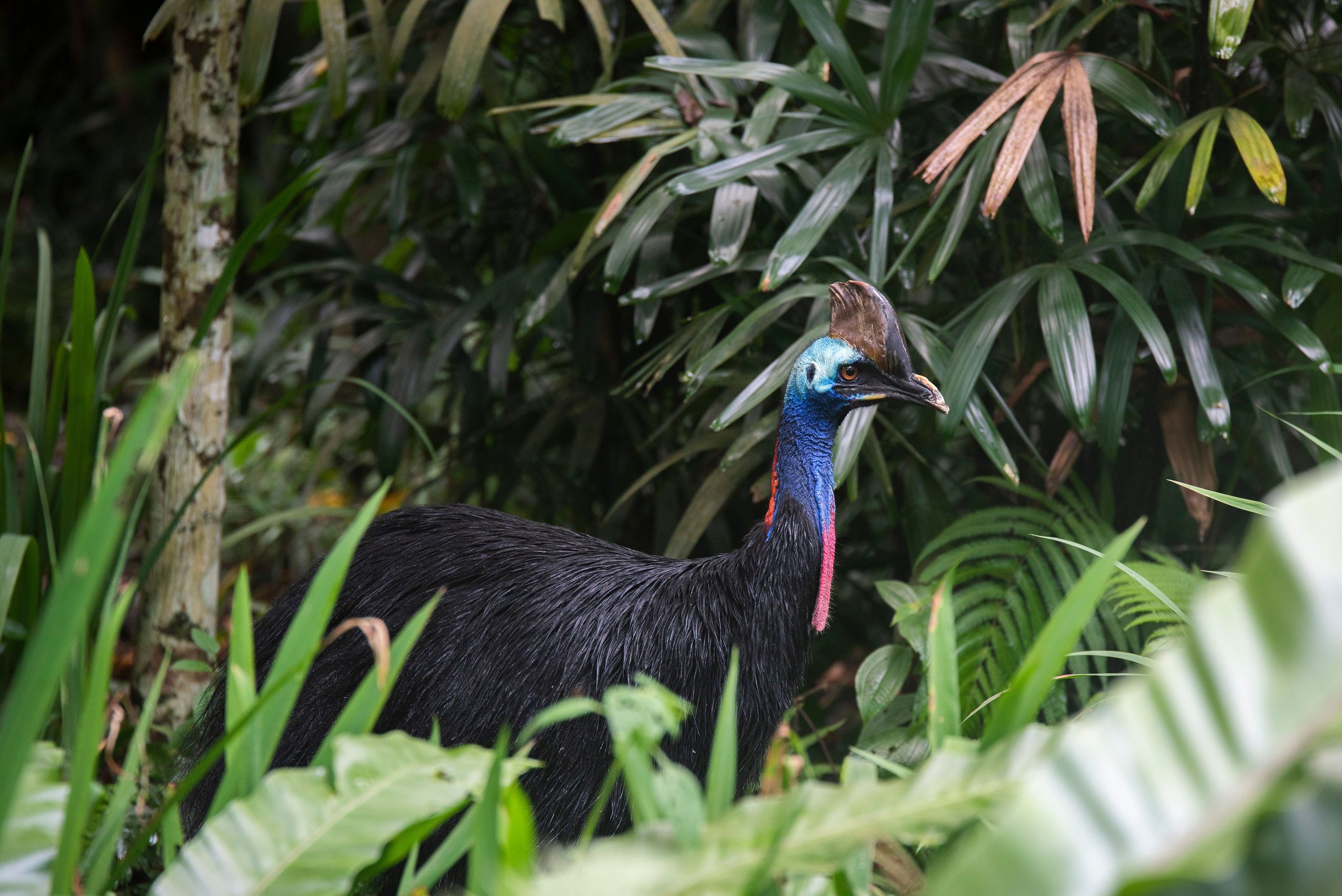
If one bird deserves the title “most dinosaur-like,” it is the southern cassowary. Smithsonian’s National Zoo notes that these birds are often said to resemble dinosaurs. I agree. Seeing one in a photograph already makes me uneasy.
The cassowary wears a hollow, helmet-like casque made of keratin, the same material as our hair and nails. Its neck is bright blue, with red wattles hanging below. Recent studies suggest the casque works as a thermal window that releases body heat.
The danger is real. Each foot carries a 5-inch razor-sharp claw, and females can weigh up to 175 pounds. Despite this, cassowaries mostly eat fruit. They also spread seeds, and hundreds of plant species germinate only after passing through their gut. Fewer than 1,500 survive in Australia, so this giant needs our protection.
2. Ostrich
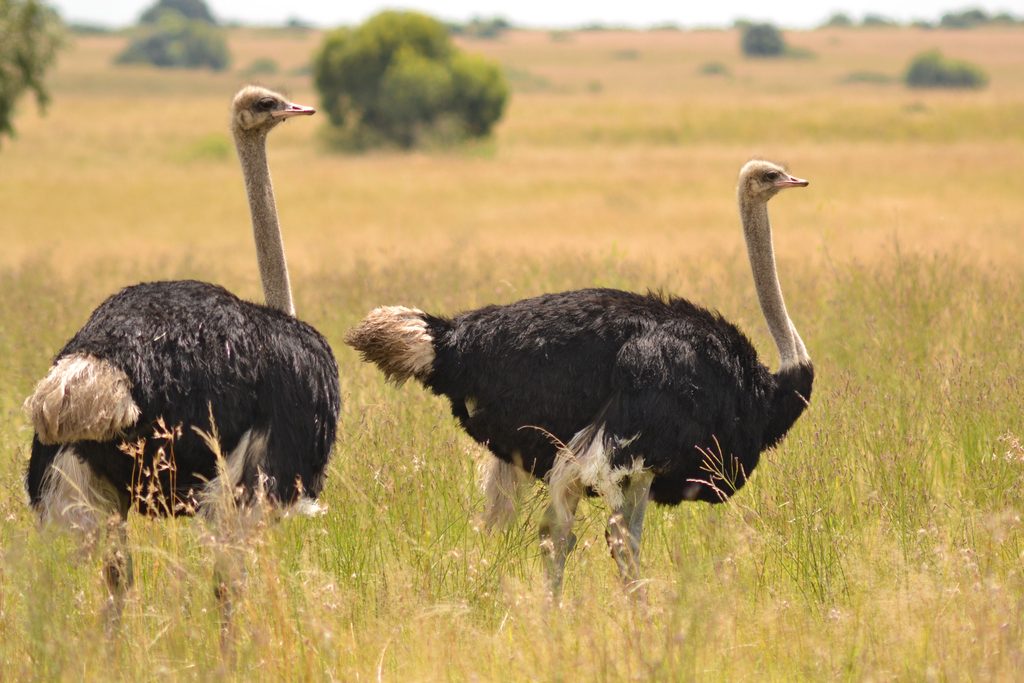
The ostrich is the tallest and heaviest bird alive. Adults can reach 9 feet in height and weigh 200 to 300 pounds. Their long legs, small heads and powerful stride look very much like those of fast, two-legged theropods.
Speed is their greatest gift. Ostriches have been seen running continuously at 30 to 37 miles per hour. Short sprints can reach 43 miles per hour, which makes them the fastest two-legged animals on Earth. That is faster than most cars in a city centre.
Their feet are also special. Each foot has only two toes, and each toe ends in a long, sharp claw. An ostrich egg is about 6 inches long and weighs up to 3 pounds. I cannot picture a more dinosaur-like nest.
ALSO READ: 25 Birds That Swim Underwater to Catch Fish (With Pictures, and Info)
3. Emu
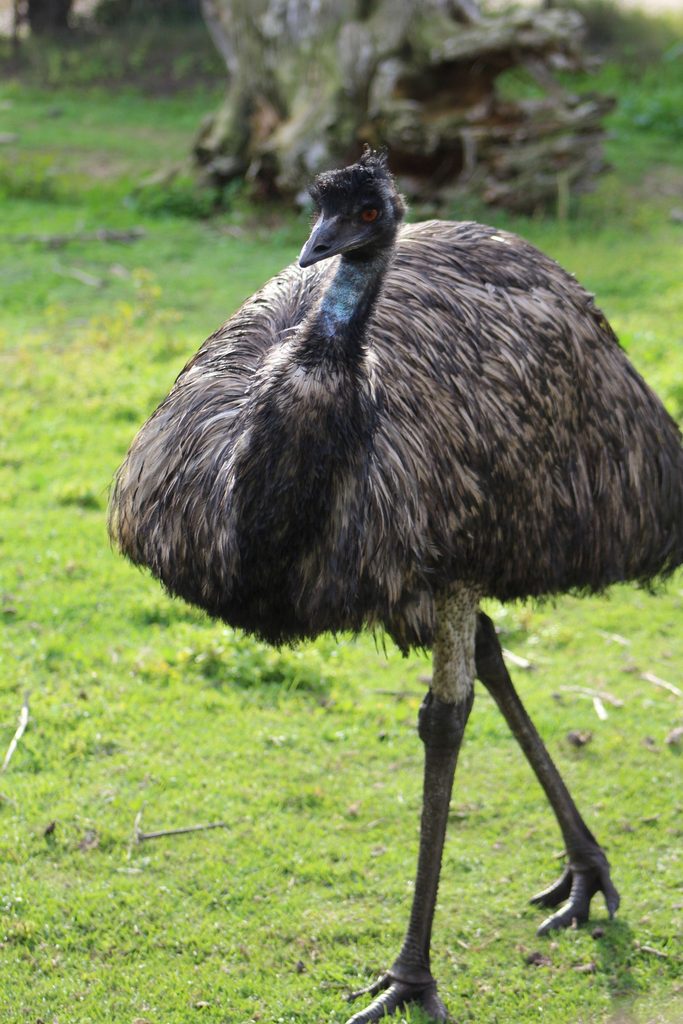
The emu is the second-largest living bird, after the ostrich. It stands about 5.7 feet tall on average. Males weigh between 110 and 121 pounds, and females are slightly heavier.
Look closely at its body. The wings are tiny, shorter than 8 inches, and the neck is long and flexible. Emus have three toes on each foot, much like many theropod dinosaurs. They can run up to 31 miles per hour.
Emus also show dinosaur-style parenting. The male incubates the eggs alone for 56 days and does not eat, drink or defecate during this time. Australia even fought the “Emu War” in 1932. Reports say only 12 emus were killed. I find that story both funny and humbling.
4. Greater Rhea
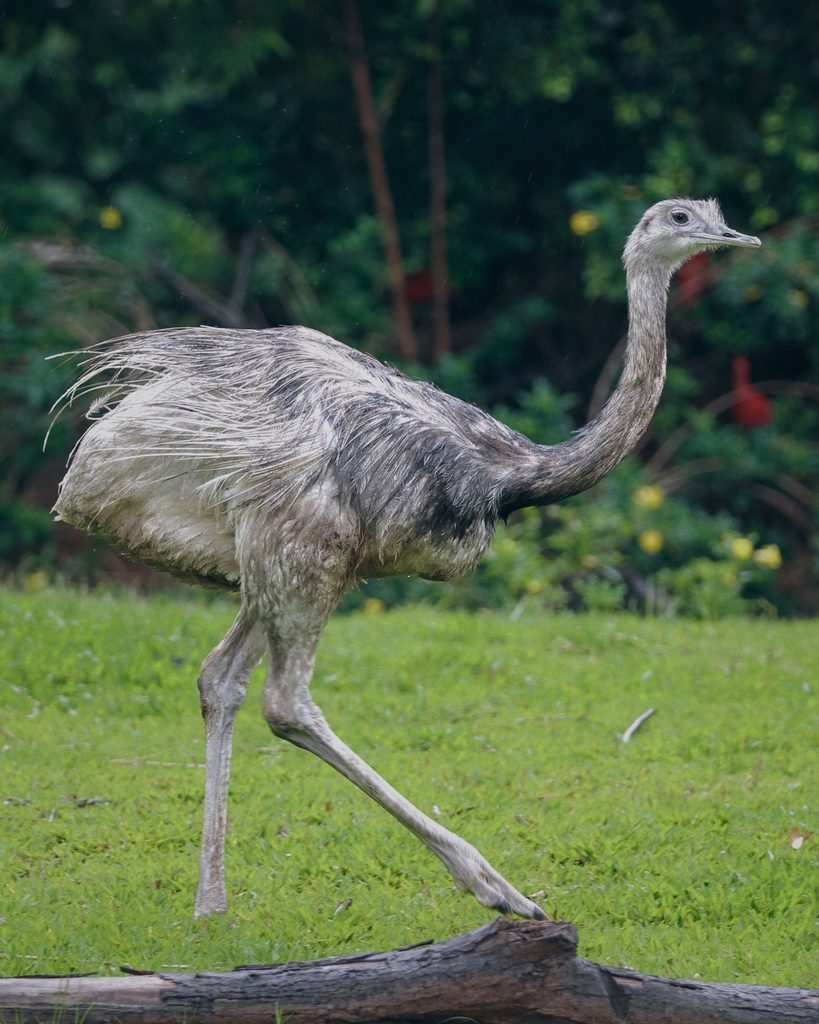
The greater rhea is South America’s largest bird. It stands 3 to 5 feet tall and weighs 33 to 66 pounds. It looks like a smaller ostrich, but it has three toes on each foot instead of two.
Its wings are unusually long for a flightless bird. A rhea uses them like a ship’s rudder to dodge predators and keep its balance while running. Watching one change direction at speed feels like watching a small raptor in a chase.
Rhea males do most of the family work. A male courts several females, builds the nest and incubates the eggs for about six weeks. He then raises the chicks alone. Many ratites follow this pattern, and it may echo the nesting habits of their ancient ancestors.
5. Shoebill
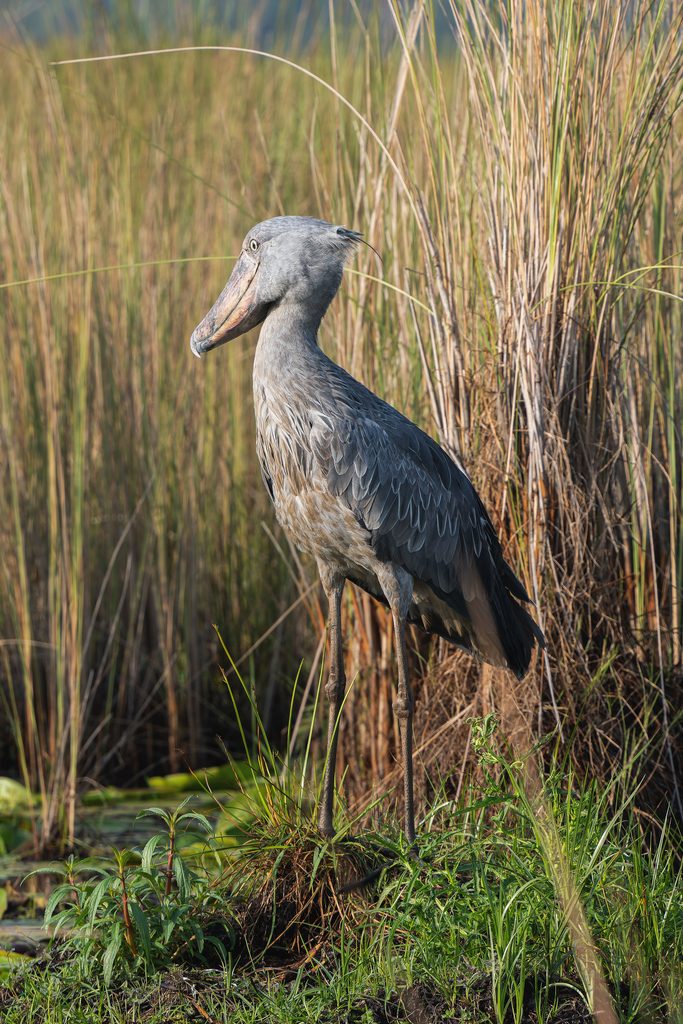
The shoebill looks like it stepped out of a fossil bed. This tall wading bird lives in the swamps of central and eastern Africa. Its huge, clog-shaped bill is the first thing you notice, and its cold, fixed stare comes second.
Adults stand about 4 feet tall. The bill can reach roughly 9 inches in length, and it ends in a sharp hook. Shoebills hunt lungfish and other large prey. They stand almost motionless for hours, then strike with sudden force.
Their numbers are small. Wildlife experts estimate only a few thousand remain in the wild. Wetland loss is the main threat. I find the shoebill one of the most striking birds in the world, and it deserves far more attention.
ALSO READ: 45 Birds With Colorful Feathers (Species Identification, With Pictures)
6. Secretarybird
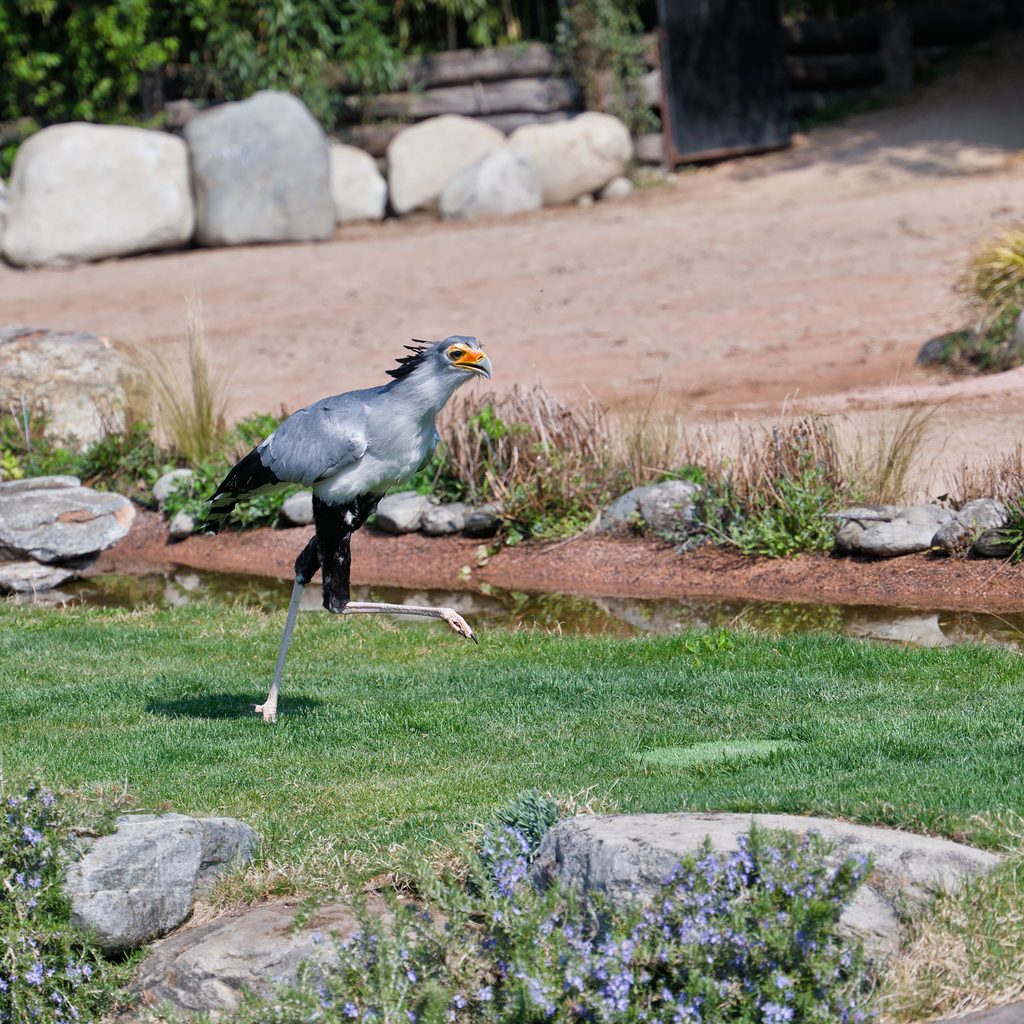
The secretarybird is a bird of prey that behaves like a ground-dwelling theropod. It has an eagle’s hooked beak and a crane’s very long legs. It spends most of its day walking across African grasslands.
Its hunting style is unique. The bird stalks through the grass and stamps on snakes, lizards and small mammals with its powerful feet. A stomp can kill prey in a moment. This is pure predator behavior, built on speed and accuracy.
Sadly, this bird is now classed as Endangered by the IUCN. Habitat loss is the main reason. Seeing a secretarybird on a Kenyan plain is a treat I recommend to every nature lover. Its long black “quill” crest is a quirky bonus.
7. Kori Bustard
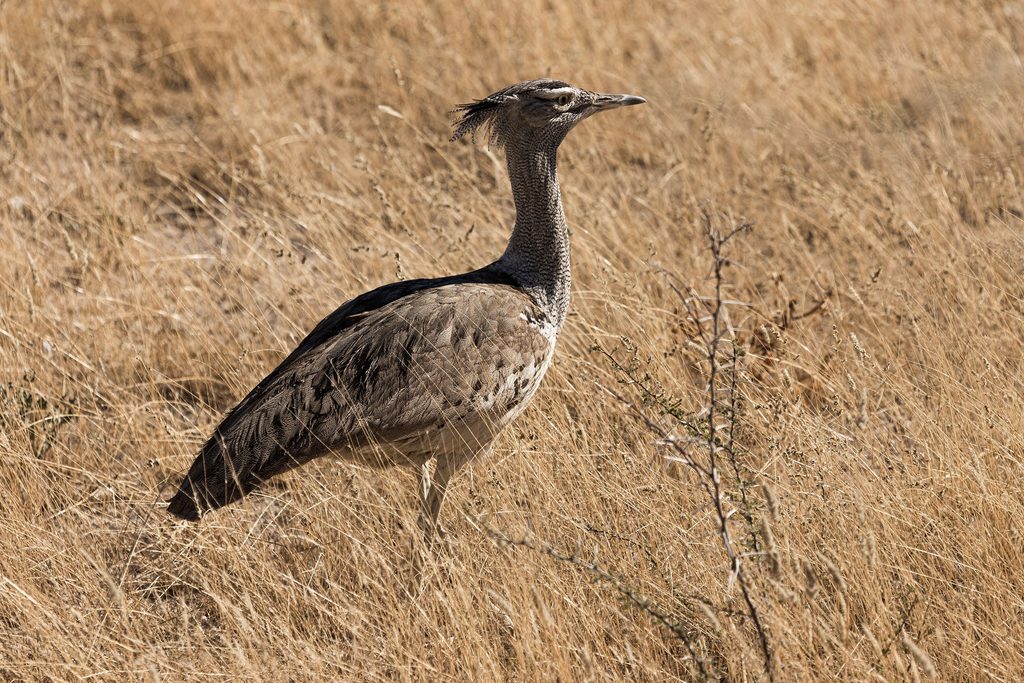
The kori bustard is the world’s heaviest flying bird. Males weigh 24 to 42 pounds and stand about 5 feet tall. Yet it prefers to live on the ground and flies only when in serious danger.
It has a very dinosaur-like way of moving. Its feet have only three short, broad toes, well suited to running. During courtship, the male inflates his esophagus to four times its normal size, fans his tail and booms at females. It is a strange and wonderful display.
Kori bustards also eat like small theropods. They take insects, lizards, snakes, seeds and even carrion. Their range has shrunk by more than 20 percent in East Africa since 1970. Hunting and farming are the main pressures.
8. Hoatzin
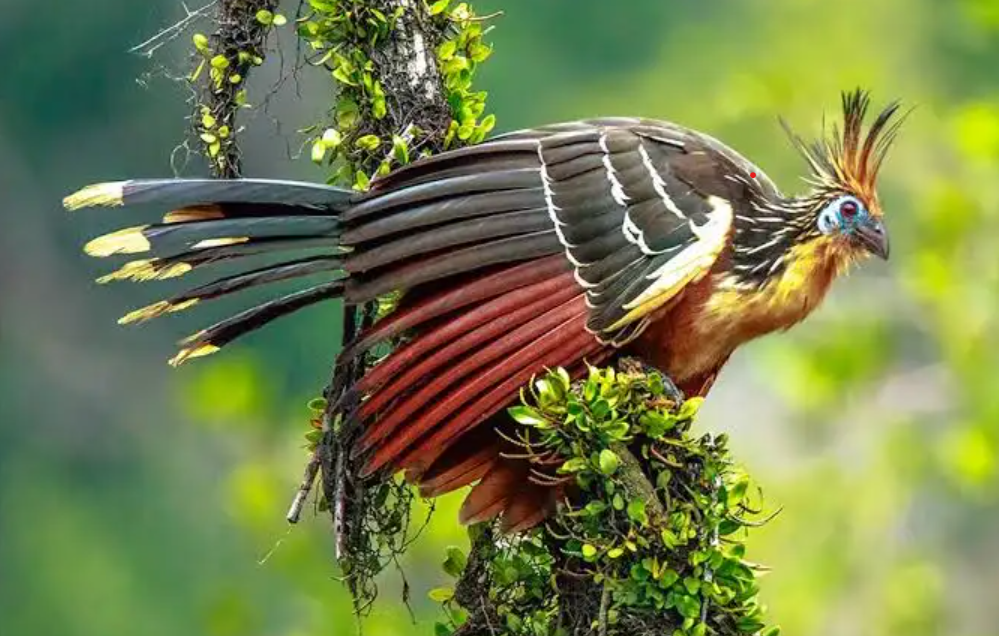
The hoatzin may be the most “Jurassic” bird in the Amazon. It has a spiky crest, a blue face and a clumsy, ungainly flight. Locals call it the “stinkbird” because its plant-heavy diet gives it a strong odor.
The real surprise is in the chicks. A young hoatzin has claws on two of its wing digits. It uses them to climb through branches. These claws disappear as the bird grows up.
Scientists find this feature fascinating. It reminds us of early birds like Archaeopteryx, which also had clawed wings. I cannot look at a baby hoatzin without thinking of a miniature dinosaur learning to climb.
ALSO READ: 50 Types of Birds With Long Legs (Species Identification, With Pictures)
9. Marabou Stork
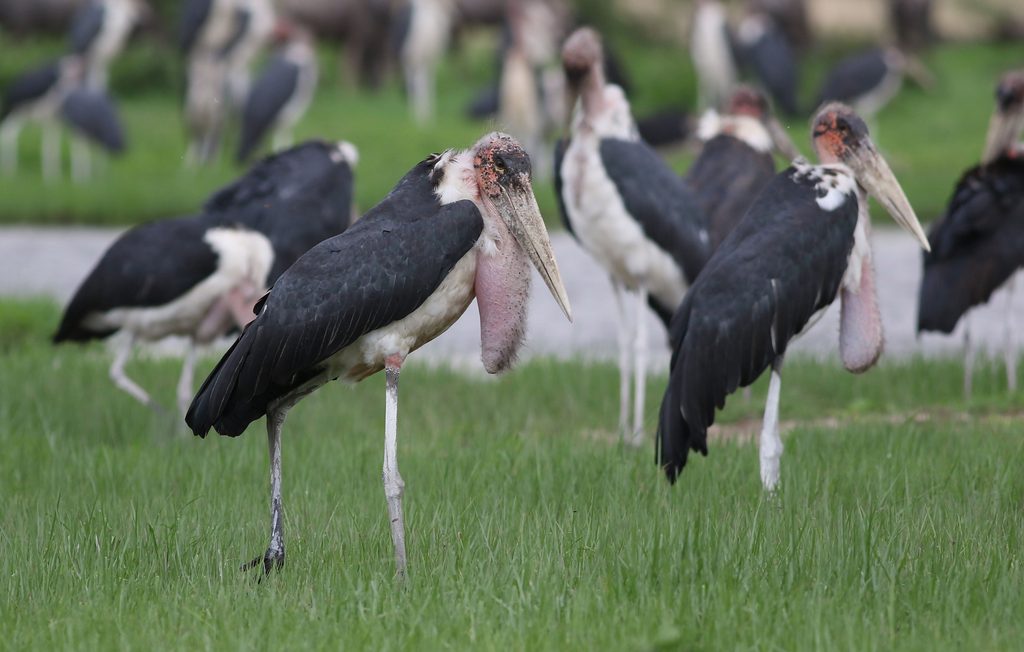
The marabou stork is a scavenger with a bald, wrinkled head and a long, pink throat sac. At a distance, it resembles a pterosaur, though that group was not strictly dinosaur. Its hunched posture adds to the prehistoric look.
Its wingspan can reach about 10 feet. On the ground, it walks with slow, deliberate steps. In flight, it stretches its neck back, unlike most storks. The shape against the sky is unforgettable.
Marabous clean up carcasses and waste across Africa. Their bare heads help them stay clean while feeding inside carcasses. Many people find the bird ugly. I think it is magnificent, a real survivor from a harder age.
10. Southern Ground Hornbill
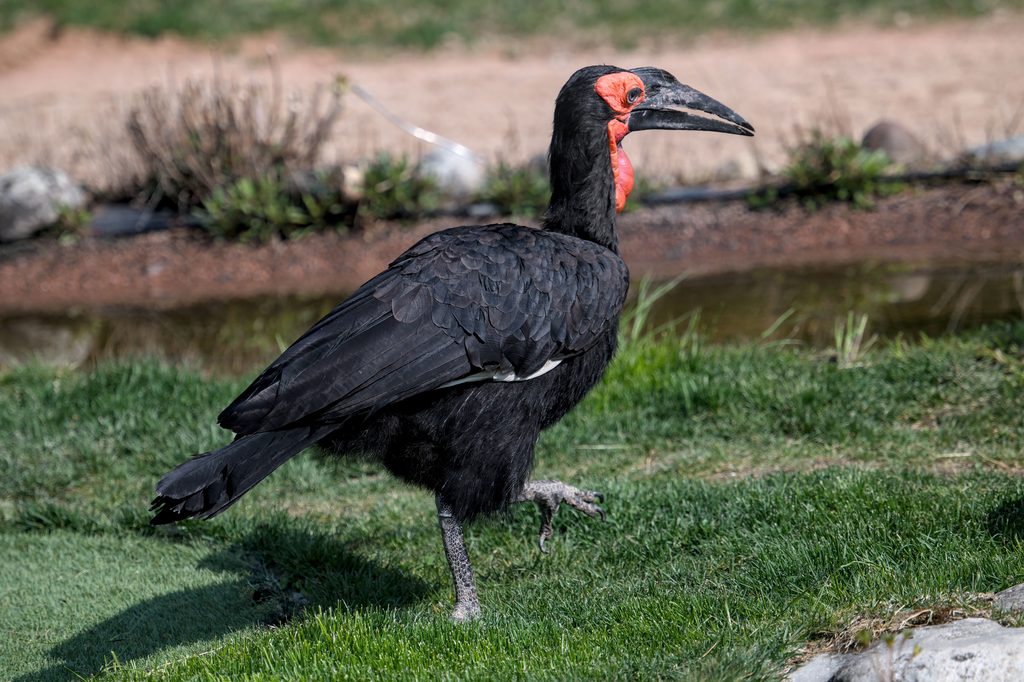
The southern ground hornbill is a large, black, turkey-sized bird with bright red skin on its face and throat. It walks across African savannas in family groups. Its heavy, curved bill and long eyelashes give it a stern look.
Unlike most hornbills, it lives mainly on the ground. It hunts insects, snakes, frogs and small mammals by walking long distances every day. It strides with a confident, upright gait that reminds me of a small theropod patrolling its territory.
Its deep, booming call carries for miles. Family groups defend territory together. Sadly, this species is now threatened in parts of its range. It breeds slowly, and habitat loss is a serious problem.
11. Harpy Eagle
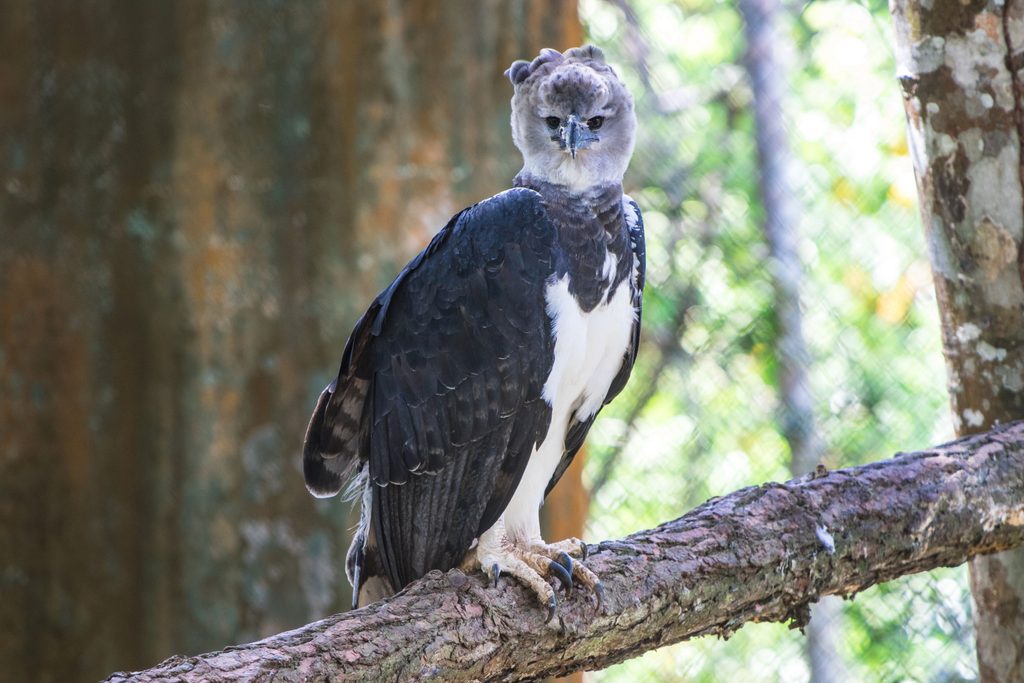
The harpy eagle is one of the most powerful raptors on Earth. It lives in the rainforests of Central and South America. A double crest of feathers stands up on its head and gives it a fierce, almost mythical look.
Its talons can measure about 5 inches, as long as the claws of a large predator. It uses them to grab sloths and monkeys from the treetops. Its broad wings let it twist through dense forest at speed.
For me, the harpy eagle is the closest thing to a feathered Velociraptor in the sky. The bird is Near Threatened because of deforestation. Protecting its forest home also protects countless other species.
ALSO READ: 25 Birds With Colorful Beaks (Identification, With Pictures)
12. Andean Condor
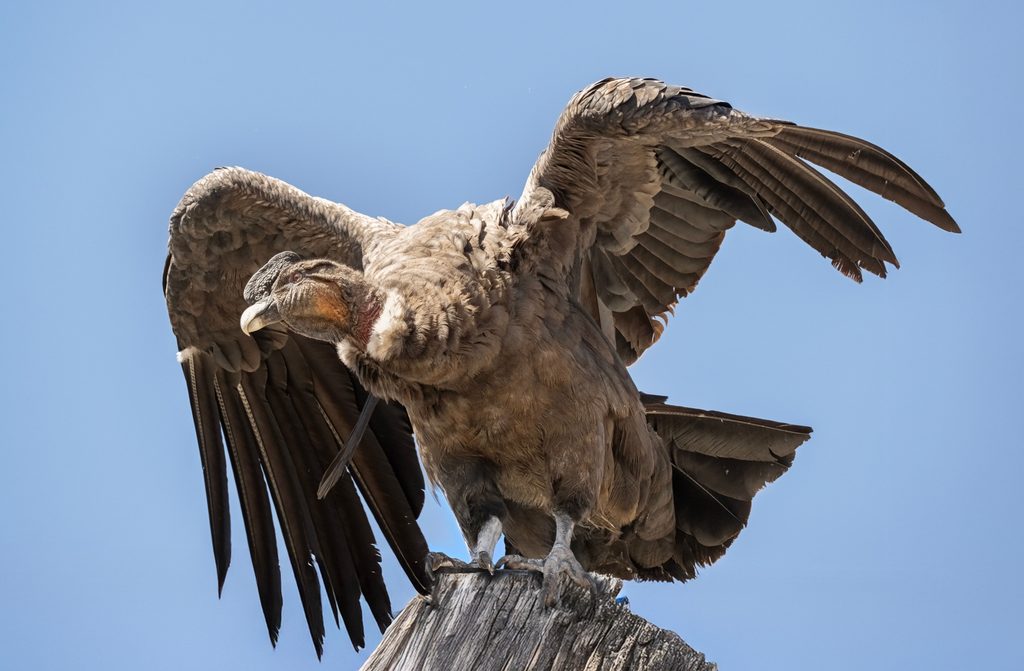
The Andean condor is a giant of the sky. Its wingspan can reach roughly 10.8 feet, one of the largest of any land bird. It glides on mountain winds for hours, rarely flapping.
Its bare head and neck, and the white ruff around its shoulders, add to the ancient look. Males also have a fleshy comb on top of the head. In flight, the bird looks like a pterosaur or a gliding dinosaur from a distant age.
Condors feed on carrion and are vital to healthy ecosystems. They are also long-lived and slow to breed. That makes them vulnerable to poisoning and habitat loss. They remain a proud symbol of the Andes.
13. Wild Turkey
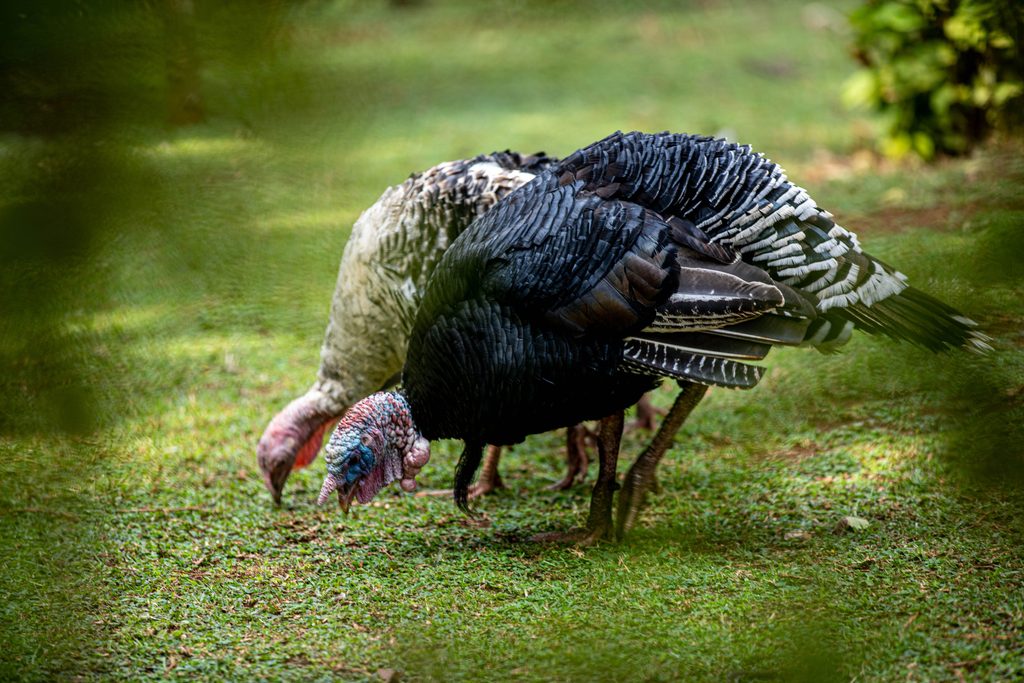
You may not expect to see a turkey on this list. Yet the Smithsonian says plainly that if your Thanksgiving meal includes turkey, you are serving up some dinosaur. The bird’s hollow bones, feathers and stiff wrists all come from non-avian dinosaur ancestors.
A wild turkey in the woods is a convincing sight. It has scaly legs, a bald, wrinkled head and fleshy wattles. The male’s strut and display look like something from a prehistoric courtship ritual. Wild turkeys can run at about 25 miles per hour and fly short distances at speed.
I enjoy this example because it is so ordinary. You do not need a rainforest or a safari. A farm, a forest edge or a holiday table is enough to meet a living dinosaur.
14. Vulturine Guineafowl
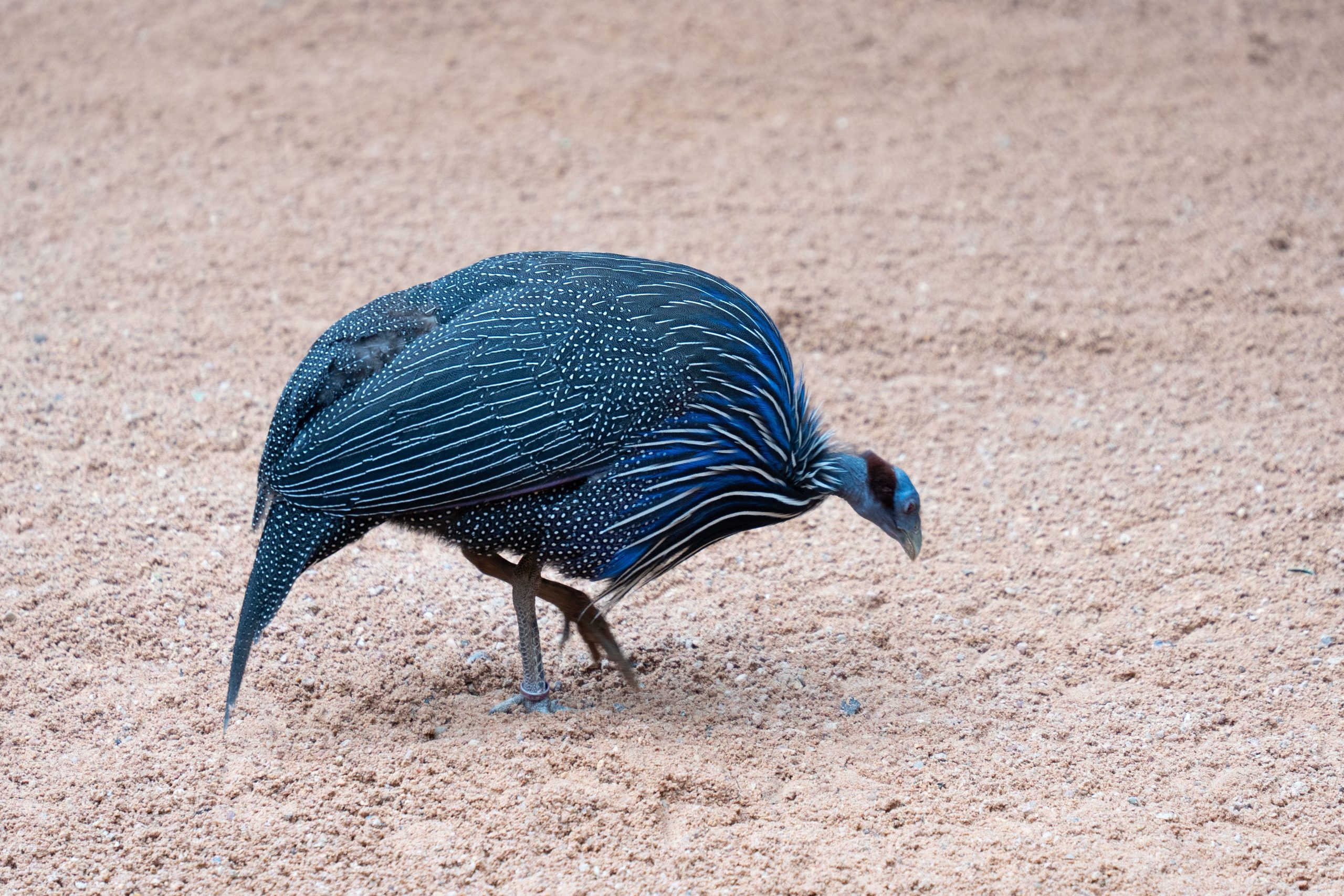
The vulturine guineafowl is a spectacular bird of the dry savannas of eastern Africa, including Kenya. It has a bare blue-grey head and neck, a bright blue breast and long, flowing cape feathers. Its small, bald head sits on a long, graceful neck.
It moves in large flocks and spends most of its day walking and foraging. It rarely flies unless threatened. The body shape, with its small head and upright carriage, recalls the feathered dinosaurs reconstructed by artists today.
In the early morning, a flock marching across red soil is a wonderful sight. I find the colors almost too bright to believe. Few birds combine such beauty with such an ancient posture.
ALSO READ: 30 Stunning Birds With Long Beaks (Species Identification, With Pictures)
15. Greater Roadrunner
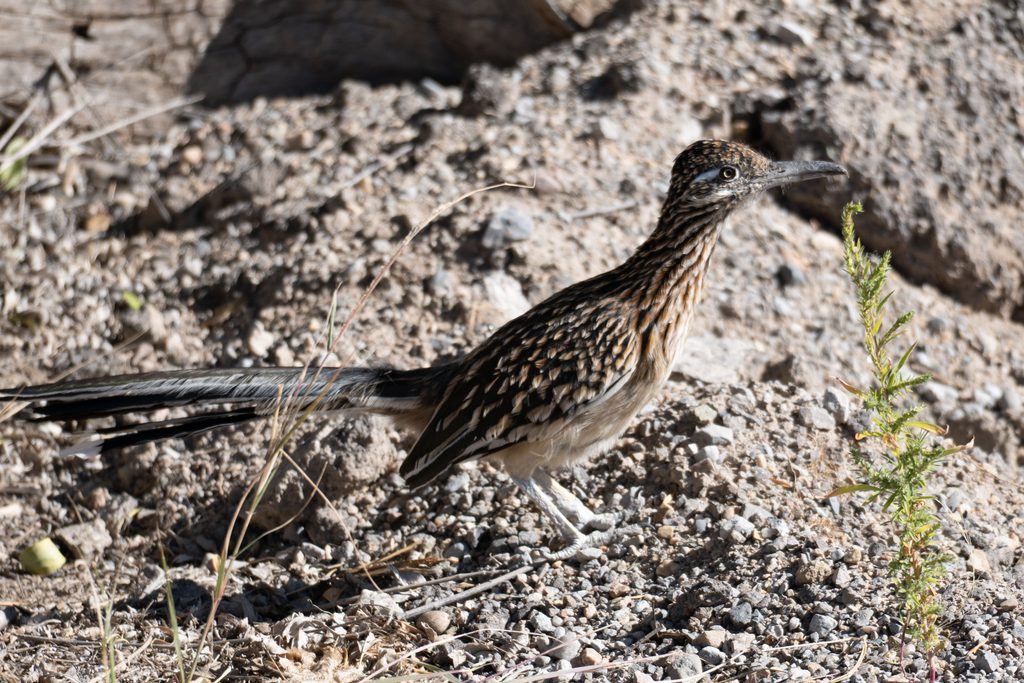
The greater roadrunner is a long-tailed bird of the American Southwest. It prefers running to flying. It can reach about 20 miles per hour on open ground. A shaggy crest, a long beak and slim body give it a lean, predatory look.
It hunts like a small theropod. The bird chases lizards, insects and even rattlesnakes. It uses quick, jabbing strikes and sometimes hits prey against rocks. Its habits fit the picture of a small, fast dinosaur hunting in dry country.
The roadrunner’s feet are also unusual. Two toes point forward and two point back, leaving an X-shaped track. I love this detail. It shows how nature can make a small, speedy hunter in a very different way.
What These Birds Teach Us About Dinosaurs
Looking at these birds changes how we picture dinosaurs. Many were not slow, scaly monsters. Some were feathered, fast and attentive parents, much like the emu and rhea.
Scientists also stress an important point. Living birds are not identical to extinct dinosaurs. They have changed over 150 million years. Still, when you watch a hawk dive or an ostrich sprint across the savanna, you gain real insight into what dinosaurs were like.
There are about 10,000 bird species in the world today, which makes birds the most diverse group of land vertebrates. Every one of them is a dinosaur.
Frequently Asked Questions
Are birds really dinosaurs?
Yes. Paleontologists classify birds as avian dinosaurs, a surviving branch of theropods. Evidence from fossils, anatomy and eggshells supports this.
Which bird looks most like a dinosaur?
The southern cassowary is the usual answer. Its casque, claws and powerful legs make it the closest match.
What is the fastest dinosaur-like bird?
The ostrich. It can sprint up to 43 miles per hour.
Can any of these birds be dangerous?
Yes. The cassowary is the best example. Its 5-inch claw can cause serious injury, so keep a respectful distance.
Final Thoughts
Dinosaurs never truly vanished. They changed shape, shrank in size and learned to fly. These 15 birds keep the old look alive in the wild.
I hope this list makes you look at birds differently. Next time you see a turkey, a roadrunner or a distant stork, remember that you are looking at a living dinosaur. Visit a zoo, a park or a nature reserve and see one for yourself.
References
- UC Museum of Paleontology, University of California, Berkeley. “Are Birds Really Dinosaurs?” https://ucmp.berkeley.edu/diapsids/avians.html
- Smithsonian’s National Zoo and Conservation Biology Institute. “Southern Cassowary.” https://nationalzoo.si.edu/animals/southern-cassowary
- Smithsonian’s National Zoo and Conservation Biology Institute. “Ostrich.” https://nationalzoo.si.edu/animals/ostrich
- Smithsonian’s National Zoo and Conservation Biology Institute. “Emu.” https://nationalzoo.si.edu/animals/emu
- Smithsonian’s National Zoo and Conservation Biology Institute. “Greater Rhea.” https://nationalzoo.si.edu/animals/greater-rhea
- Smithsonian’s National Zoo and Conservation Biology Institute. “Kori Bustard.” https://nationalzoo.si.edu/animals/kori-bustard
- Smithsonian Institution. “This Thanksgiving, Try the Fossil Turducken.” https://dashboard.si.edu/stories/thanksgiving-try-fossil-turducken