50 Birds with Long Necks (Names, With Photos)
A long neck makes a bird unforgettable. You notice it at once, whether it rises above a reed bed or curves over a quiet lake.
So, which bird has the longest neck? The common ostrich takes first place. It stands up to 9 feet (2.7 m) tall, according to the Smithsonian’s National Zoo, and much of that height is neck.
Long necks are not just for show. They help birds spot danger early, reach food in deep water, and strike fast at prey. Each species uses this tool in its own way.
In this guide, I cover 50 birds with long necks. You will meet giant runners, elegant swans, tall cranes, patient herons and odd storks.
Some numbers will surprise you. The whooping crane, for example, once dropped to only 15 wintering birds in 1941, according to the U.S. Fish and Wildlife Service. Today the species is still rare, but it survives.
Let us begin with the largest birds on Earth.
Ostriches and Other Giant Walkers
1. Common Ostrich (Struthio camelus)
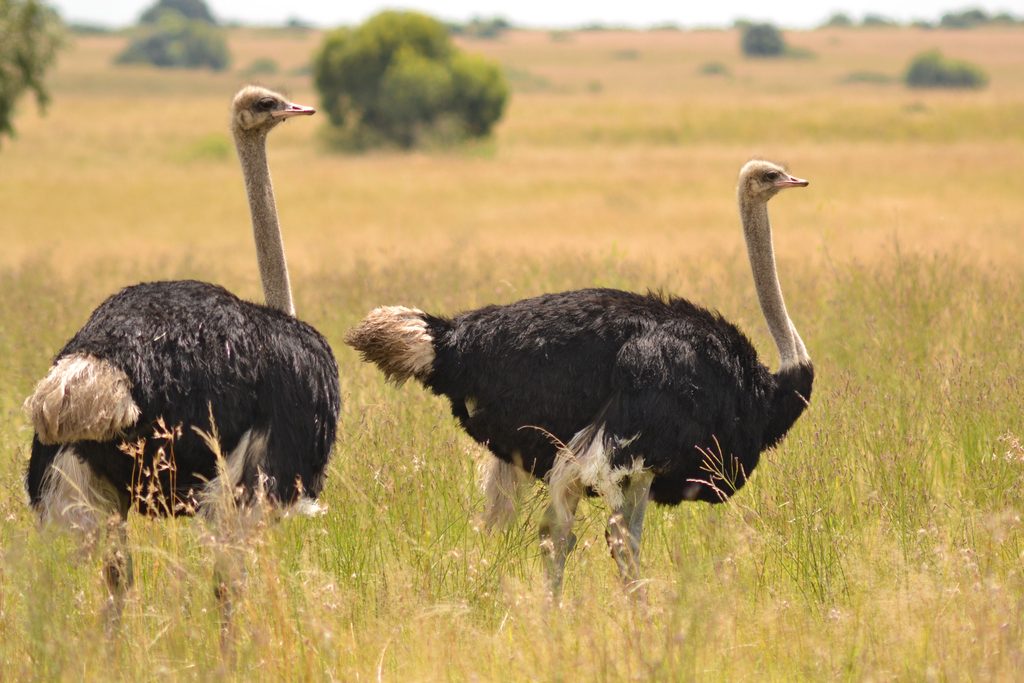
The common ostrich is the tallest and heaviest bird alive. Adults weigh 200 to 300 pounds (90–136 kg) and can reach 9 feet in height.
The neck is bare and slim, with fine feathers. It lets the bird scan the African savanna for lions and cheetahs from far away.
An ostrich cannot fly, but it can run. It sprints up to 43 mph (69 km/h), making it the fastest two-legged animal on land.
2. Somali Ostrich (Struthio molybdophanes)
The Somali ostrich looks much like its cousin. However, males show a blue-grey neck and thighs, while the common ostrich has a pinkish one.
Many experts now treat it as a separate species. It lives in the dry scrublands of the Horn of Africa, including parts of Kenya and Ethiopia.
I find this bird a good reminder that even famous animals still hold surprises. Its range overlaps little with the common ostrich, which helps keep the two apart.
3. Emu (Dromaius novaehollandiae)
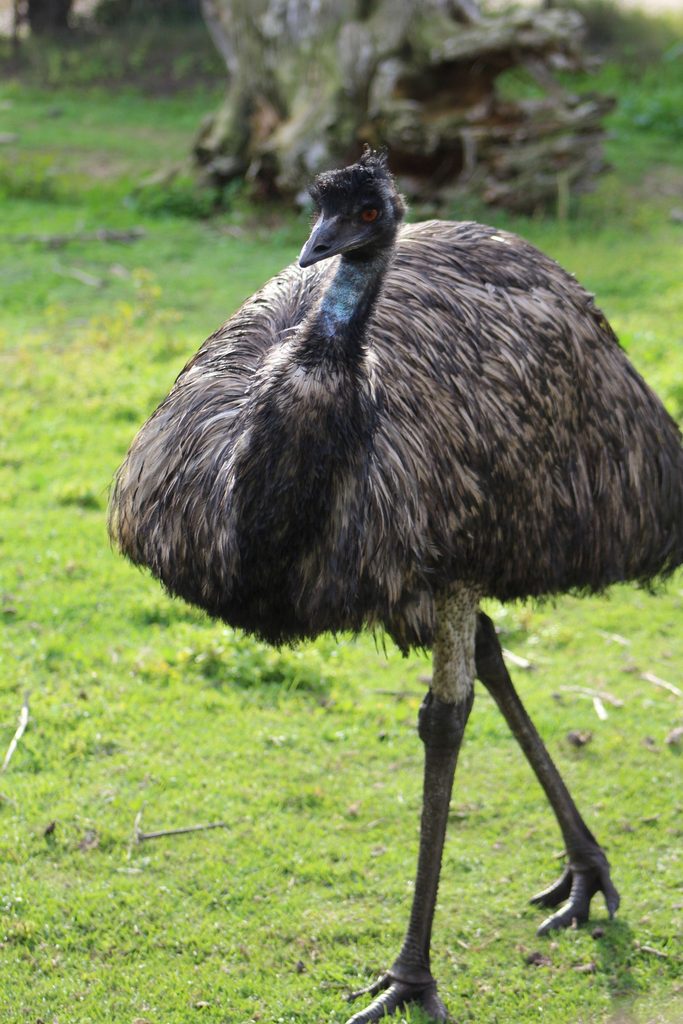
The emu is Australia’s largest bird and the second-tallest living bird. It stands about 6 feet (1.9 m) high.
Its neck is long and covered with loose, shaggy feathers. The bird holds it upright as it strides across open plains.
Emus can run near 30 mph (50 km/h). Males also sit on the eggs and raise the chicks alone, which is quite unusual.
4. Southern Cassowary (Casuarius casuarius)
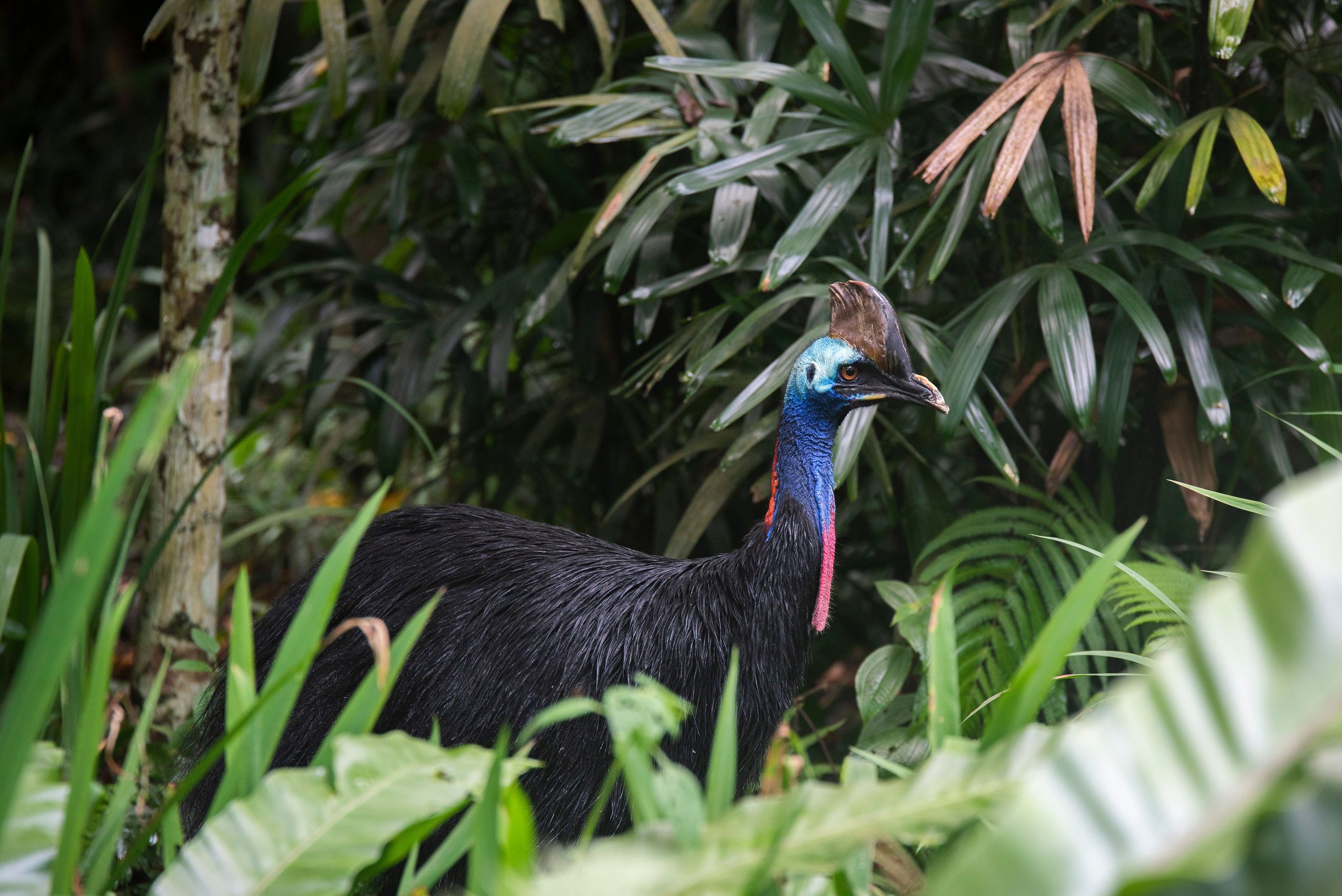
The southern cassowary lives in the rainforests of northern Queensland and New Guinea. It stands up to about 6 feet tall.
Its neck is bright blue with red wattles, and a horn-like casque crowns its head. The look is striking and slightly prehistoric.
This bird is shy, but it can be dangerous when cornered. It plays a key role in forests by spreading the seeds of large fruits.
5. Greater Rhea (Rhea americana)
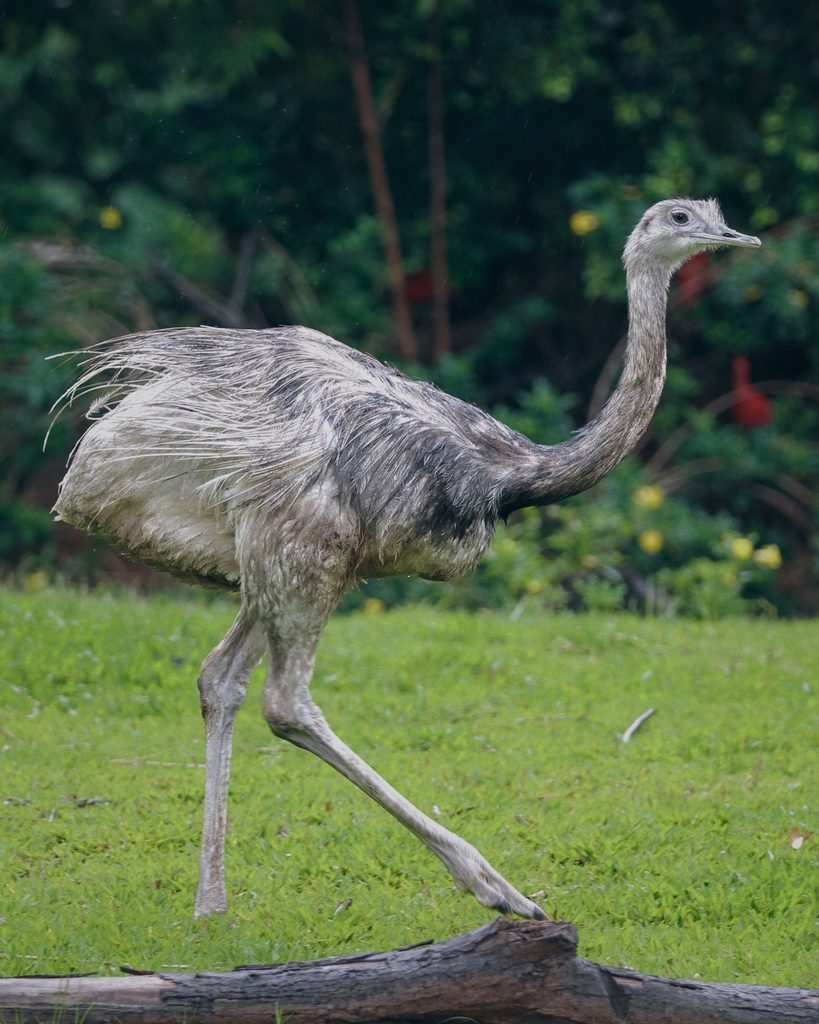
The greater rhea is South America’s largest bird. It stands roughly 5 feet (1.5 m) tall and roams the pampas and open grasslands.
Its long grey neck helps it watch for predators above the tall grass. Like the ostrich, it relies on speed instead of flight.
Males build the nest and care for the young. Several females may lay eggs in one nest, so a single male can guard dozens.
Flamingos: Pink Birds on Slender Necks
6. Greater Flamingo (Phoenicopterus roseus)
The greater flamingo is the tallest flamingo, standing up to roughly 5 feet. It lives across Africa, southern Europe and South Asia.
Its neck is long and curves in a graceful S-shape. The bird bends it low to filter small shrimp and algae from shallow water.
The pink color comes from carotenoid pigments in its food. Without them, the feathers turn pale.
ALSO READ: 25 Birds That Can’t Fly (Identification, With Pictures)
7. Chilean Flamingo (Phoenicopterus chilensis)
The Chilean flamingo stands about 3.5 feet tall. It has grey-pink legs with bright pink joints, which makes it easy to tell apart.
You can find it in lakes and lagoons from central Chile to Argentina. Its neck is thinner than that of the greater flamingo.
The species is listed as Near Threatened. Mining and water use are drying some of its high-altitude wetlands.
8. Lesser Flamingo (Phoeniconaias minor)
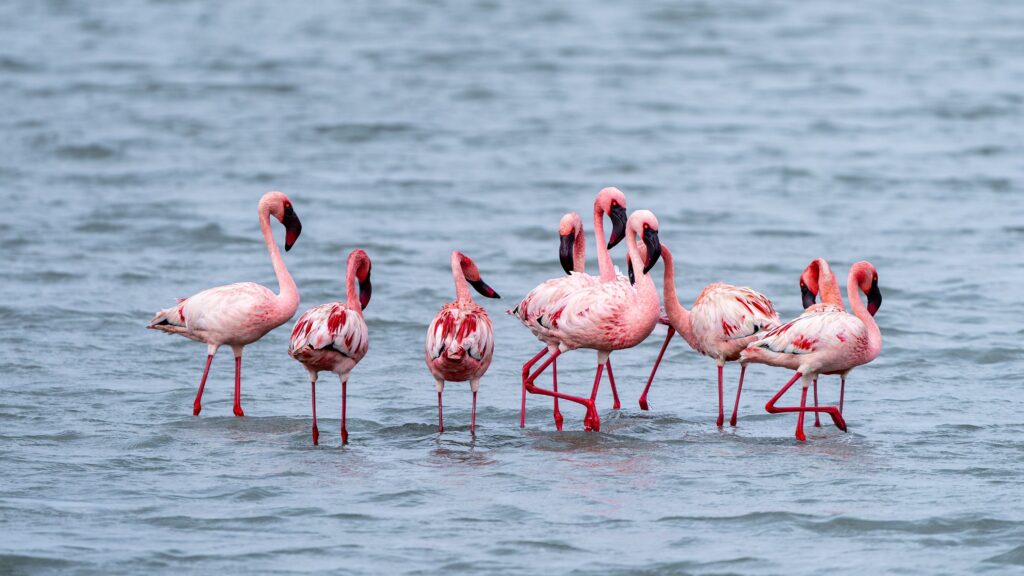
The lesser flamingo is the smallest flamingo, about 3 feet tall. Yet its long neck and dark bill still give it a refined look.
It forms some of the largest bird flocks on Earth on East Africa’s Rift Valley soda lakes. Seen from a distance, the shoreline looks pink.
It is also Near Threatened. Changing lake conditions and pollution can disrupt the algae it depends on.
9. American Flamingo (Phoenicopterus ruber)
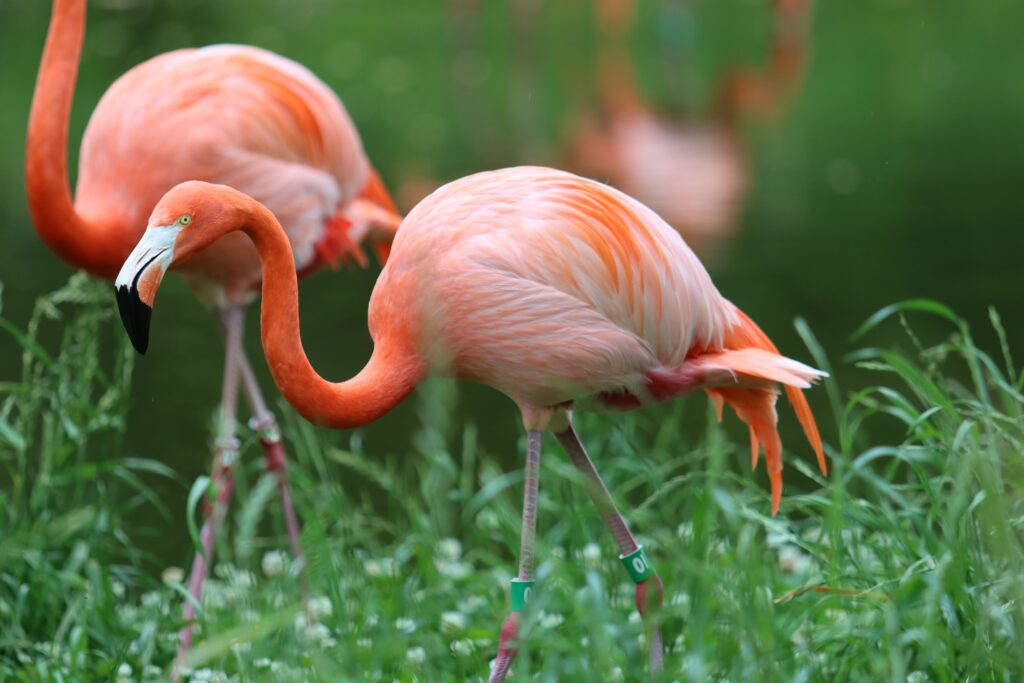
The American flamingo is the most vividly colored of the group. It lives in the Caribbean, the Yucatán and the Galápagos, with strays reaching Florida.
It stands about 4 feet tall. The neck bends sharply when it feeds with its head upside down.
Flamingos often stand on one leg for long periods. Scientists think this may help them save body heat.
10. Andean Flamingo (Phoenicoparrus andinus)
The Andean flamingo is a high-mountain specialist. It feeds on salt lakes more than 13,000 feet (4,000 m) above sea level.
Its legs are yellow, and its neck is long and pale pink. The bill has a bold black tip.
The species is listed as Vulnerable. Mining and water diversion remain real threats in the Andes.
Swans: The Classic Long-Necked Birds
11. Mute Swan (Cygnus olor)
The mute swan is the swan most people picture. It has a white body, an orange bill with a black knob, and a curved neck.
Large males weigh around 25 pounds. They hold the neck in a graceful S-curve while swimming.
Despite the name, it is not silent. It hisses, snorts and grunts, especially when defending its nest.
12. Trumpeter Swan (Cygnus buccinator)
The trumpeter is the largest bird native to North America, says the U.S. Fish and Wildlife Service. It measures 54 to 62 inches long.
Its wingspan averages 8 feet, and big males can reach nearly 10 feet. The neck is long, straight and strong.
Hunting for feathers once pushed it close to extinction. Careful protection has helped it return to many northern lakes.
13. Whooper Swan (Cygnus cygnus)
The whooper swan breeds in northern Europe and Asia and winters farther south. It is the national bird of Finland.
Its yellow-and-black bill makes it easy to spot. The neck is held straight and upright, often with little curve.
Its loud, bugle-like call carries far over lakes. On a still winter morning, it is a sound I would not forget.
14. Tundra Swan (Cygnus columbianus)
The tundra swan breeds in the Arctic and winters in milder regions. It weighs about 15 pounds, roughly half the weight of a trumpeter.
Its neck is slim and long, and the bill often shows a small yellow spot. The call is a high, soft whistle.
It makes very long migrations between summer and winter ranges. Some flocks cross much of a continent each year.
ALSO READ: 15 Birds That Look Like Dinosaurs (Identification, With Pictures)
15. Black Swan (Cygnus atratus)
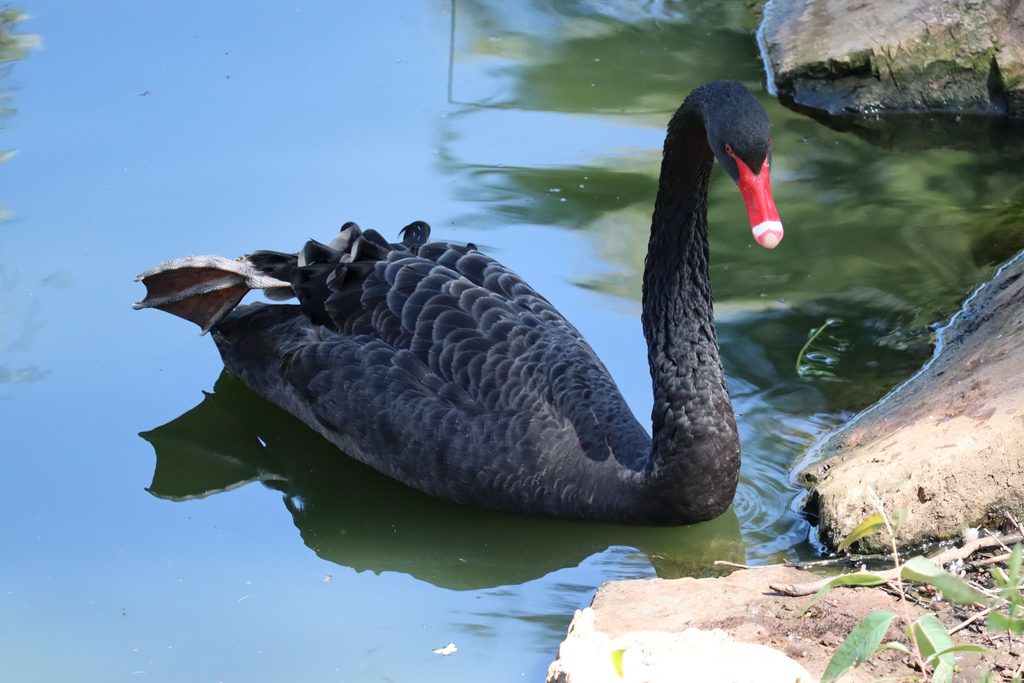
The black swan is native to Australia. Its feathers are black, but the flight feathers are white, which you see only when it spreads its wings.
The bill is bright red with a pale band near the tip. The neck is longer than that of most other swans, in proportion to the body.
Early European explorers were amazed by it. Before that, many people in Europe believed all swans were white.
16. Black-necked Swan (Cygnus melancoryphus)
This swan lives in southern South America. It has a white body and a black neck, plus a red knob at the base of the bill.
It is the largest waterbird of that region. The long neck helps it reach plants growing deep in shallow lakes.
Parents often carry the cygnets on their backs. It is a charming sight, and one of the best-known habits of this species.
17. Coscoroba Swan (Coscoroba coscoroba)
The coscoroba is the smallest swan and has a bright red bill. It also has a slim neck and a goose-like shape.
It lives in southern South America, in marshes and lakes. Its call sounds like its name, “cos-co-ro-ba.”
Scientists once debated its place in the family tree. Today it is placed in its own genus, which shows how unique it is.
Cranes: Tall, Loud and Graceful
18. Whooping Crane (Grus americana)
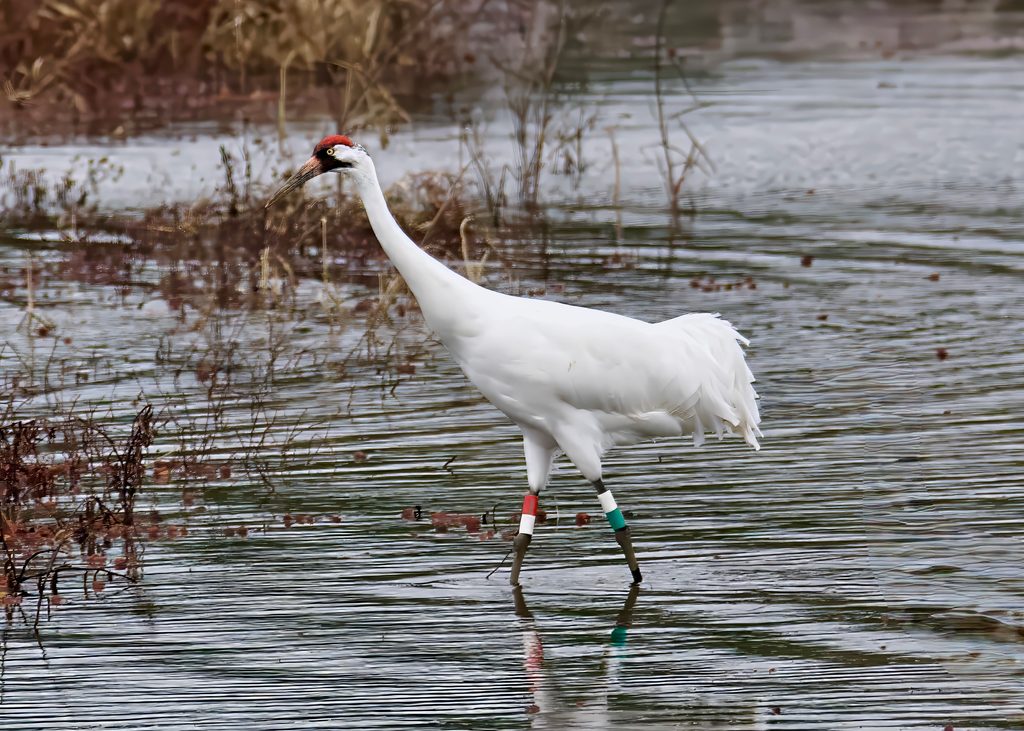
The whooping crane is North America’s tallest bird, standing about 5 feet (1.5 m). Its neck is long, white and very elegant.
More than 10,000 once lived across the continent. By 1941, only 15 wintered at Aransas in Texas, according to the U.S. Fish and Wildlife Service.
Careful conservation has brought the number back, but the species remains endangered. Its loud call gives it its name.
19. Sandhill Crane (Antigone canadensis)
The sandhill crane stands 3 to 4 feet tall and has a wingspan of 6 to 7 feet. Its neck is grey and slender.
Each spring, hundreds of thousands gather along Nebraska’s Platte River. It is one of the great bird spectacles in North America.
The species is very old. Fossils show cranes much like it lived millions of years ago.
20. Sarus Crane (Antigone antigone)
The sarus crane is the tallest flying bird in the world, reaching up to about 6 feet. It has a grey body and a red head and upper neck.
It lives in India, Southeast Asia and northern Australia. In India it is often seen in farmland and is treated with respect.
The species is Vulnerable. Wetland loss is its main threat, and pairs are known for their strong, lifelong bonds.
21. Red-crowned Crane (Grus japonensis)
The red-crowned crane is famous in East Asian art. It stands about 5 feet tall, with a white body, black neck and a red patch on its head.
In Japan it is a symbol of long life and good luck. Its courtship dance is one of the most graceful displays in the bird world.
It is Endangered, with only a few thousand left. Hokkaido is the best place to see it in winter.
22. Grey Crowned Crane (Balearica regulorum)
This crane wears a golden crown of stiff feathers. It is about 3.5 feet tall and has a slim, grey neck.
It is the national bird of Uganda and appears on that country’s flag. Eastern and southern Africa hold most of its population.
Sadly, it is Endangered. Drained wetlands and the pet trade have cut its numbers.
23. Blue Crane (Grus paradisea)
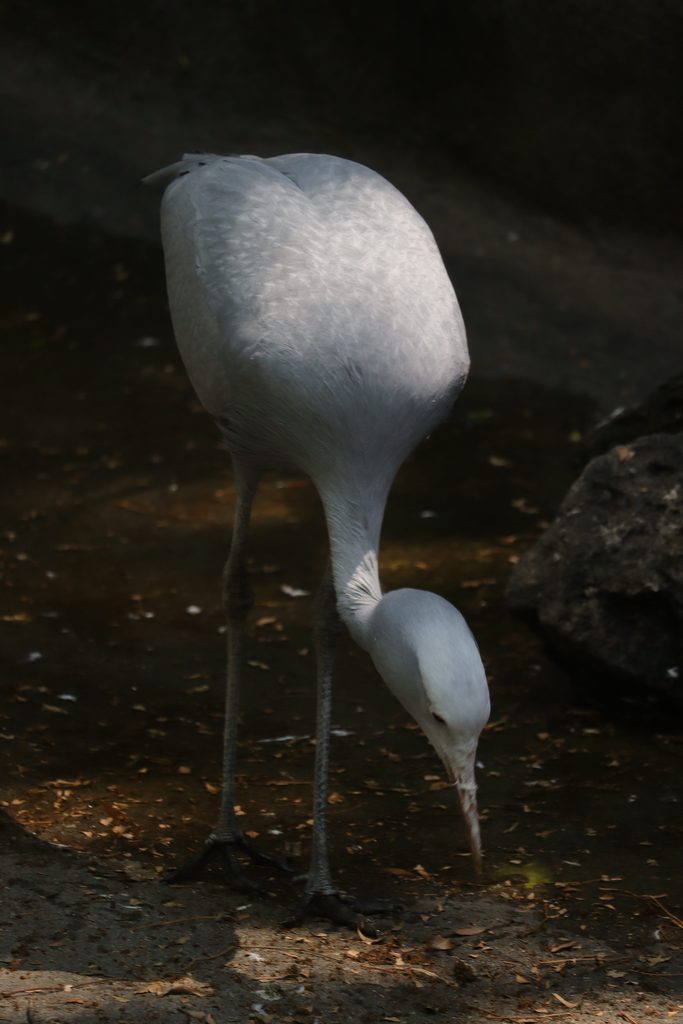
The blue crane is the national bird of South Africa. Its soft blue-grey plumage and long, drooping wing feathers give it a regal look.
Its neck is thick at the base and tapers toward the head. It feeds in grasslands and farm fields.
The species is Vulnerable. Power-line collisions and poisoning are major problems.
24. Demoiselle Crane (Anthropoides virgo)
The demoiselle is the smallest crane, about 3 feet tall. A white tuft behind each eye adds a refined touch.
Its neck is black in front, and it ends in a soft plume on the chest. The name comes from the French word for a young lady.
It breeds across Central Asia and winters in India and Africa. The route takes it over the high Himalayas, which is a remarkable feat.
25. Common Crane (Grus grus)
The common crane, or Eurasian crane, stands about 4 feet tall. Its grey body and black-and-white neck make it easy to know.
Flocks cross Europe and Asia each year in V-shaped lines. Their trumpeting calls are heard long before the birds appear.
Wetland protection has helped numbers recover in many areas. I always enjoy how loud these flocks are on a quiet autumn day.
26. Siberian Crane (Leucogeranus leucogeranus)
The Siberian crane is almost pure white, with black wingtips and a red face. It stands around 4 feet tall.
It is Critically Endangered. Nearly all of the eastern population winters at China’s Poyang Lake, which makes it very vulnerable.
It also has one of the longest migrations of any crane. Habitat loss along the way is a serious threat.
27. Wattled Crane (Bugeranus carunculatus)
The wattled crane is Africa’s tallest crane, at about 5 feet. Long white wattles hang from its chin.
It depends on large, healthy wetlands such as the Okavango Delta. Its slim white neck stands out against the green sedges.
The species is Vulnerable. Dams and drained floodplains have shrunk its habitat.
Herons and Egrets: Patient Hunters
28. Great Blue Heron (Ardea herodias)
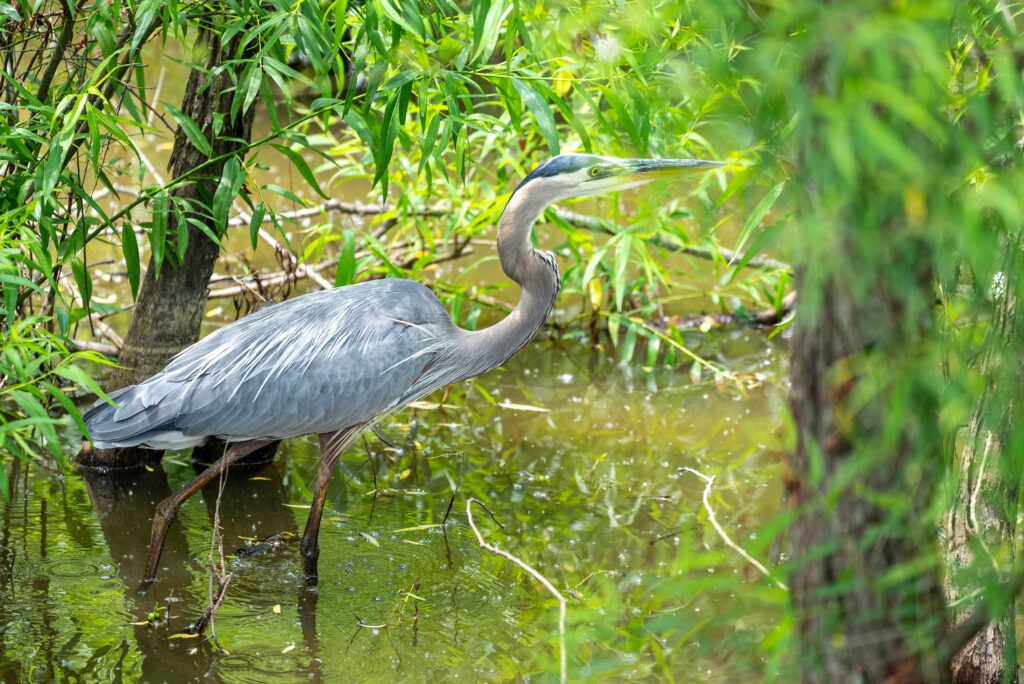
The great blue heron is North America’s largest common heron. It stands 3 to 4.5 feet tall, with a wingspan of up to about 6.5 feet.
Its neck folds into an S-shape in flight and in rest. Then it shoots out in a flash to snatch a fish.
You can see it in almost any wetland, from city ponds to coastal marshes. It is a bird I never tire of watching.
29. Grey Heron (Ardea cinerea)
The grey heron is the great blue heron’s cousin in Europe, Asia and Africa. It stands near 3 feet tall.
It waits motionless for fish and frogs. Its long neck then strikes forward at high speed.
It often nests in colonies high in trees. Many cities now host small groups on park lakes.
30. Goliath Heron (Ardea goliath)
The goliath heron is the largest living heron, reaching about 5 feet (1.5 m). It has a rich chestnut neck and a heavy bill.
It lives in African wetlands and parts of South Asia. It can take fish weighing several pounds.
Its deep, hoarse call sounds more like a bark than a heron’s usual croak. Seeing one in the wild is a real treat.
31. Purple Heron (Ardea purpurea)
The purple heron is slimmer than the grey heron. It has a thin, snake-like neck with dark stripes and reddish tones.
It hides in dense reed beds. It is shy and easy to miss until it stretches up to look around.
Many birds migrate between Europe and Africa each year. Reed bed loss is the main threat they face.
32. Great Egret (Ardea alba)
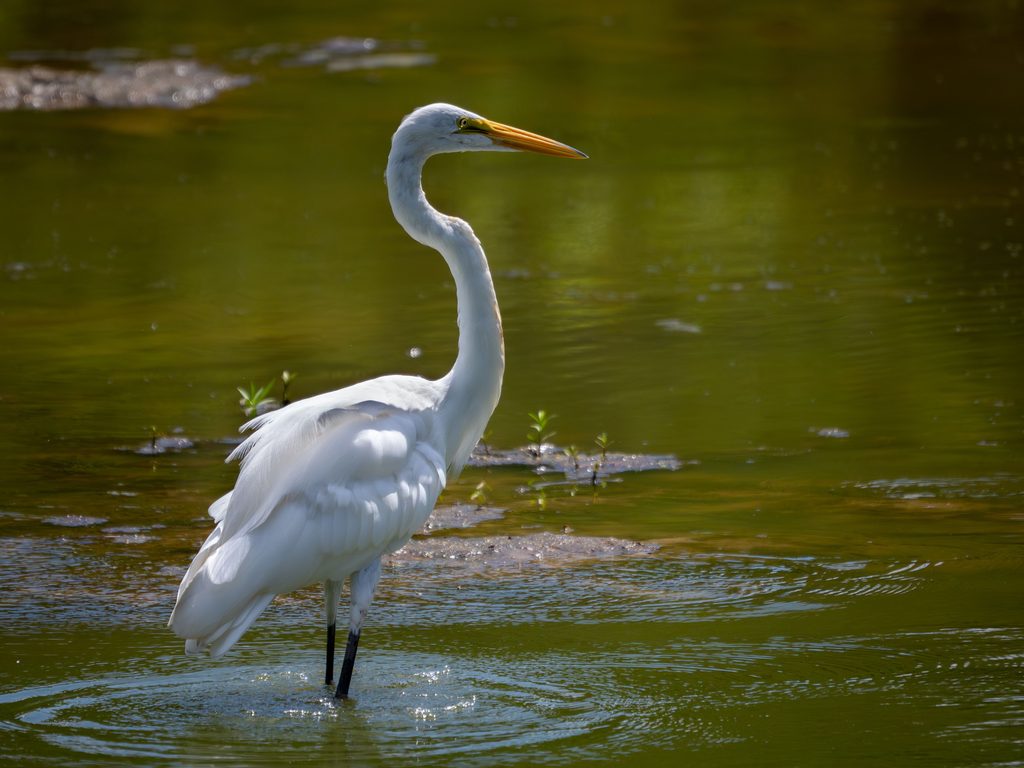
The great egret stands about 3 feet tall. It is all white, with a long yellow bill and a graceful neck.
In the late 1800s, hunters killed huge numbers for their plumes. This crisis helped spark the early bird protection movement in the United States.
Laws such as the Migratory Bird Treaty Act helped it recover. Today it is a common and welcome sight.
ALSO READ: 50 Different Types of Doves (With Pictures, and Species Info)
33. Black-headed Heron (Ardea melanocephala)
The black-headed heron lives across sub-Saharan Africa. It has a black crown and back of the neck, with a white throat.
Unlike most herons, it often hunts on dry land. It eats rodents, insects and lizards in open fields.
Its long neck lets it stalk prey in tall grass. It often follows farm work to catch disturbed animals.
34. Cocoi Heron (Ardea cocoi)
The cocoi heron, also called the white-necked heron, is South America’s largest heron. It stands about 3.5 to 4 feet tall.
Its neck is white with fine dark streaks, and its crown is black. It looks much like the grey heron.
It lives along rivers, lakes and coasts. It hunts patiently from the shallows.
35. Tricolored Heron (Egretta tricolor)
The tricolored heron is slim and slate-blue, with a white belly. Its neck is very long and thin for its body size.
It lives in coastal marshes in the southern United States and Latin America. It runs and dashes through the water in pursuit of fish.
I like how lively it is compared with other herons. It rarely stands still for long.
36. Intermediate Egret (Ardea intermedia)
The intermediate egret falls between the great and little egrets in size. It has a shorter bill and a more S-shaped neck than the great egret.
It lives in wetlands across Africa, Asia and Australia. It often feeds in rice fields.
Its plumes grow longer in the breeding season. They look like soft lace along the back and chest.
37. Reddish Egret (Egretta rufescens)
The reddish egret is one of North America’s rarest herons. It has a shaggy, rust-colored neck and head, and a pink bill with a dark tip.
It is famous for its “dancing” hunt. It sprints, spins and flaps to flush small fish.
The species is Near Threatened. Coastal development along the Gulf of Mexico limits its habitat.
ALSO READ: 25 Common Types of Parrots (Species Traits, With Pictures Explained )
Storks, Ibises and Other Tall Waders
38. White Stork (Ciconia ciconia)
The white stork stands about 3.5 feet tall. It has white plumage, black flight feathers and a red bill and legs.
Each year it migrates thousands of miles between Europe and Africa. Many nest on rooftops and church towers.
Folklore says storks deliver babies. This story may explain why many people treat the bird with warmth.
39. Black Stork (Ciconia nigra)
The black stork is shy and secretive. Its dark feathers shine with green and purple in good light.
It nests in quiet forests, far from people. Its neck is long and slim, and its legs are red.
It feeds in streams and forest ponds. Because it avoids humans, I would count a sighting as something special.
40. Marabou Stork (Leptoptilos crumenifer)
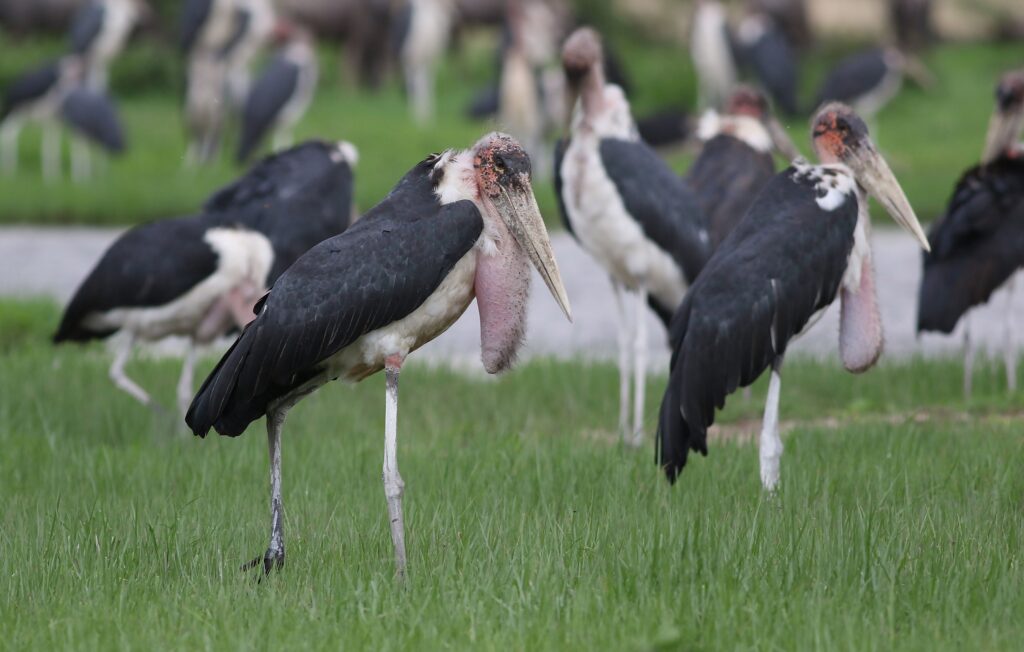
The marabou stork is a giant of Africa, standing up to 5 feet tall. Its wingspan can approach 10 feet.
It has a bare head and a hanging throat pouch. This look is odd, but it suits a scavenger that feeds on carcasses.
Its nickname is the “undertaker bird.” It also helps keep cities and farms cleaner by eating waste.
41. Saddle-billed Stork (Ephippiorhynchus senegalensis)
The saddle-billed stork is one of the tallest storks, standing close to 5 feet. Its bill is red, black and yellow, which is hard to forget.
It lives in African wetlands. Its long neck and legs let it wade for fish, frogs and crabs.
This bird is not common. It needs large, quiet wetlands to feed and breed.
42. Jabiru (Jabiru mycteria)
The jabiru is the tallest flying bird of South and Central America. It stands around 4.5 to 5 feet tall, with a wingspan of about 8 feet.
Its neck is bare and black, with a bright red band at the base. The bill is long and slightly upturned.
The Pantanal in Brazil is one of the best places to see it. It builds very large stick nests in tall trees.
43. Wood Stork (Mycteria americana)
The wood stork is the only stork that breeds in the United States. It stands about 3.3 feet tall and has a bare, grey head and neck.
It hunts by feeling for fish with its bill in muddy water. The bill snaps shut in a fraction of a second.
It was once listed as endangered. The U.S. Fish and Wildlife Service later moved it to threatened as its numbers improved.
44. Black-necked Stork (Ephippiorhynchus asiaticus)
The black-necked stork lives in South Asia and Australia, where it is called the jabiru. It is among the tallest storks, near 4.5 feet.
It has a black neck with a green-blue shine and a white body. The bill is heavy and straight.
It needs wetlands to survive. The species is Near Threatened because those wetlands are disappearing.
ALSO READ: 25 Best Birds to Have as Pets (Species Identification, With Pictures)
45. Shoebill (Balaeniceps rex)
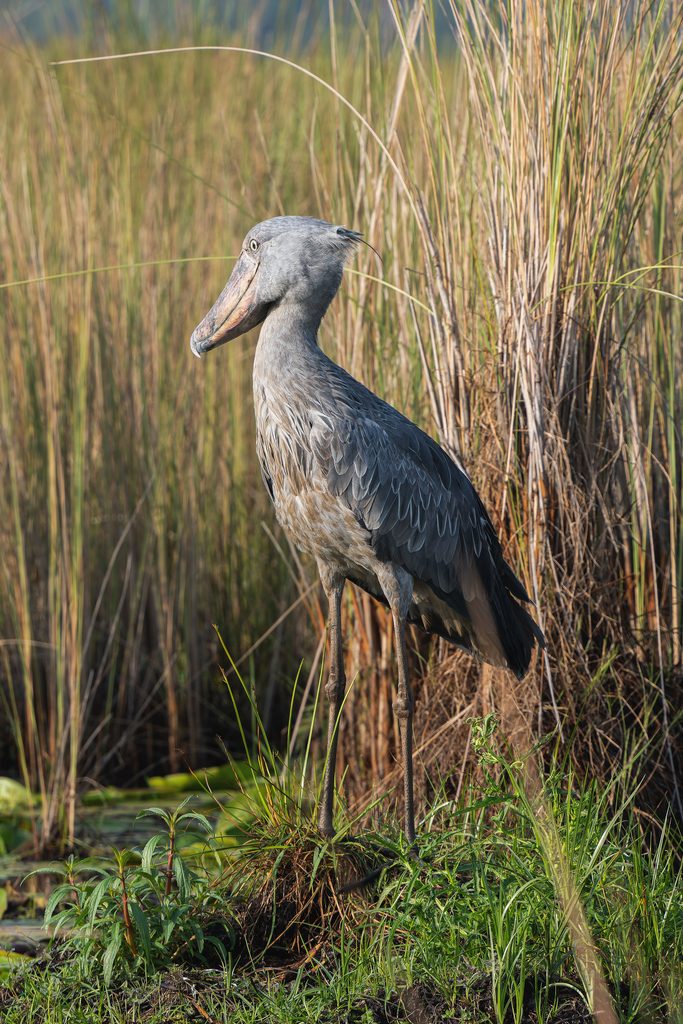
The shoebill is one of the strangest birds on Earth. It stands up to 4.5 feet tall and has a huge, shoe-shaped bill.
It lives in the swamps of East and Central Africa, including Uganda and South Sudan. It stays still for long periods, waiting for lungfish.
The shoebill is Vulnerable, with only a few thousand left. Its stare is unforgettable.
46. Secretary Bird (Sagittarius serpentarius)
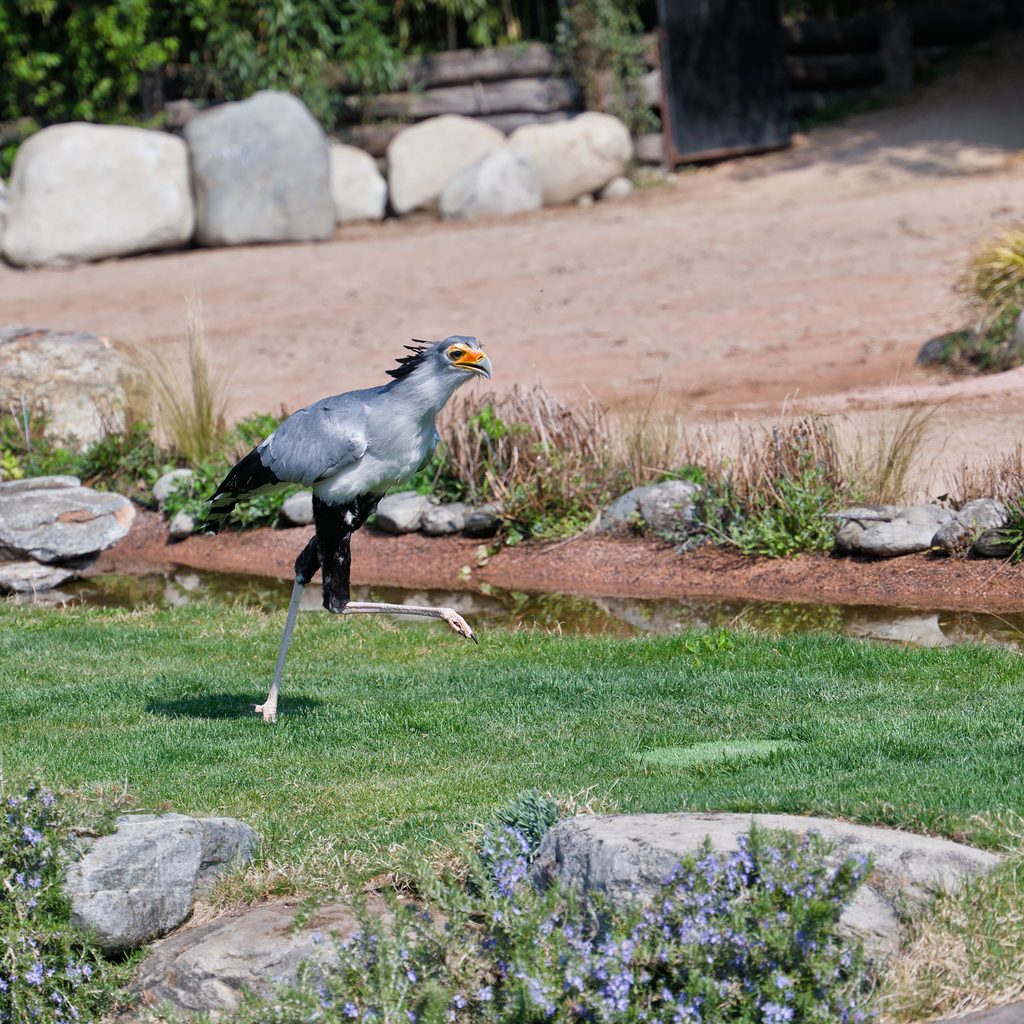
The secretary bird is a bird of prey that walks instead of flies. It stands about 4 feet tall on long legs, with a slim neck.
It hunts snakes by stomping on them with strong feet. It can cover many miles on foot each day.
The species is now Endangered. Grassland loss across Africa is the main reason.
47. Anhinga (Anhinga anhinga)
The anhinga is also called the snakebird. It swims with its body underwater and only the long, thin neck above the surface.
Its feathers soak up water, so it must dry its wings in the sun. You often see it with wings spread wide.
It lives in warm swamps, such as Florida’s Everglades. Its neck can strike like a spear to catch fish.
48. Great Cormorant (Phalacrocorax carbo)

The great cormorant is a strong diver. Its neck is long and sinuous, and its body is dark and sleek.
It lives on coasts, lakes and rivers around much of the world. It catches fish underwater with a hooked bill.
In parts of Asia, fishers have trained cormorants to fish for them. This tradition goes back many centuries.
49. Sacred Ibis (Threskiornis aethiopicus)
The sacred ibis has a white body, a bare black head and neck, and a long, curved bill. The neck is slender and flexible.
It was honored in ancient Egypt and linked to the god Thoth. Many mummified ibises have been found in tombs.
Today it lives across sub-Saharan Africa. It feeds in wetlands and farmland alike.
50. Great White Pelican (Pelecanus onocrotalus)
The great white pelican is among the largest flying birds. Its wingspan can reach about 10 feet.
Its neck is long and folds into a deep S-curve in flight. The huge bill carries a stretchy pouch.
Flocks often fish together in a line to herd fish. It is a wonderful example of teamwork in the bird world.
Why Do Birds Have Long Necks?
Long necks serve several jobs. Most birds use them for feeding, watching for danger, or showing off in courtship.
A bird’s neck has many bones. Most birds have 13 to 25 neck vertebrae, while humans have only seven. This gives them great flexibility.
Waders use the neck as a spear. Swans use it to reach plants underwater. Ostriches use it as a lookout tower.
Long-Necked Birds That Need Our Help
Several birds on this list are at risk. The Siberian crane is Critically Endangered. The red-crowned crane, grey crowned crane and secretary bird are Endangered.
Wetlands are the biggest issue. Drained marshes, dams and farming leave birds with less space.
You can help in simple ways. Support wetland protection, avoid disturbing nests, and join local bird counts. Small actions add up.
Quick FAQ
Which bird has the longest neck? The common ostrich, which can stand 9 feet tall.
Which long-necked bird is the tallest that can fly? The sarus crane, at up to about 6 feet.
Why do herons fold their necks in flight? The S-shape keeps the head close to the body and helps balance the heavy bill.
Are flamingos long-necked birds? Yes. Their necks are among the most flexible of any wading bird.
Final Thoughts
These 50 birds show how one feature can take so many forms. A neck can be a lookout, a spear, a signal or a tool for filter-feeding.
I hope this list helps you spot more of them. Next time you visit a lake or a wetland, look up and watch the necks. You may see something remarkable.
References
- Smithsonian’s National Zoo and Conservation Biology Institute. “Ostrich.” https://nationalzoo.si.edu/animals/ostrich
- U.S. Fish and Wildlife Service. “Whooping Crane (Grus americana).” https://www.fws.gov/species/whooping-crane-grus-americana
- U.S. Fish and Wildlife Service. “Trumpeter Swan (Cygnus buccinator).” https://www.fws.gov/species/trumpeter-swan-cygnus-buccinator
- U.S. Fish and Wildlife Service. “Great Blue Heron (Ardea herodias).” https://www.fws.gov/species/great-blue-heron-ardea-herodias
- Cornell Lab of Ornithology, Cornell University. Home page. https://www.birds.cornell.edu/home/
- National Park Service. “Birds & Birding.” https://www.nps.gov/subjects/birds/index.htm
- U.S. Geological Survey. “Northern Prairie Wildlife Research Center.” https://www.usgs.gov/centers/northern-prairie-wildlife-research-center