25 Birds That Can’t Fly (Identification, With Pictures)
Birds are famous for flight. Yet more than 60 living bird species cannot leave the ground. Some run faster than a racehorse. Others swim like torpedoes. A few have almost vanished from the planet.
Why would a bird give up flight? In most cases, the answer is safety and efficiency. On islands with no ground predators, flying was a costly habit. Wings shrank over thousands of generations, and bodies grew heavier.
Smithsonian zoologists make this point about New Zealand, where birds evolved without large predators and some lost the power of flight.
This guide covers 25 birds that can’t fly, from ostriches and emperor penguins to kiwis and kakapos.
Large Runners: The Ratites
1. Ostrich (Struthio camelus)
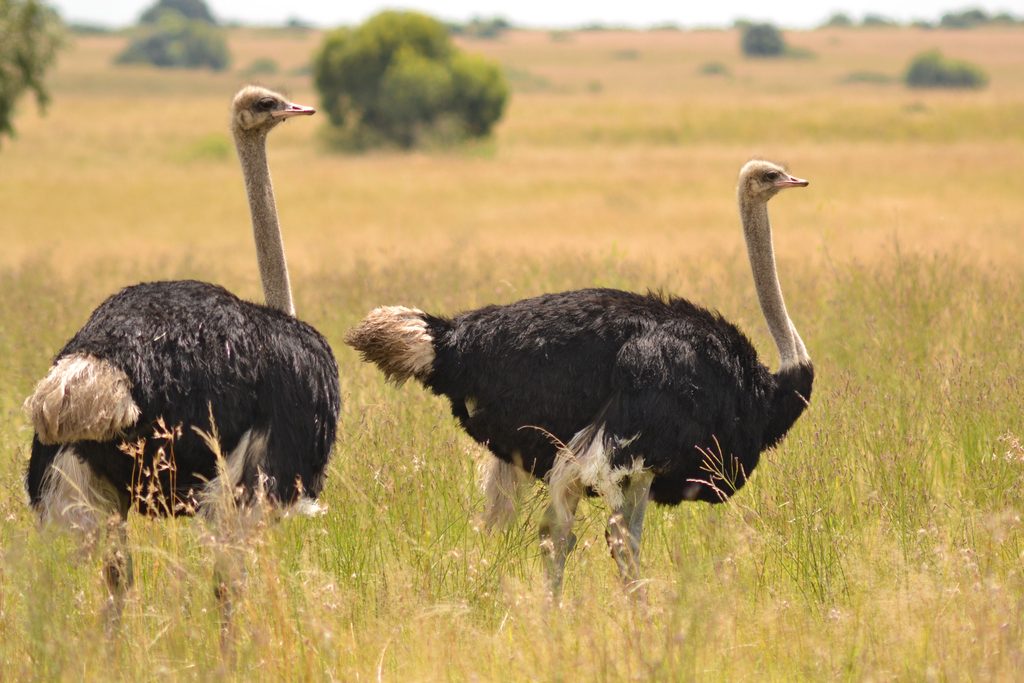
The ostrich is the world’s tallest and heaviest bird. A grown adult can reach 9 feet (2.7 m) and weigh 200 to 300 pounds (90–136 kg). It lives in the savannas and grasslands of Africa.
Speed is its best defense. Scientists have recorded sprints of up to 43 miles per hour (69 km/h). That makes it the fastest two-legged animal on Earth. Its two-toed feet carry a sharp claw, and a kick can injure a lion.
The ostrich also holds a few surprises. Its eyes are about 2 inches wide, the largest of any bird. Its egg weighs around 3 pounds, about the same as two dozen chicken eggs. And no, it does not bury its head in the sand.
2. Emu (Dromaius novaehollandiae)
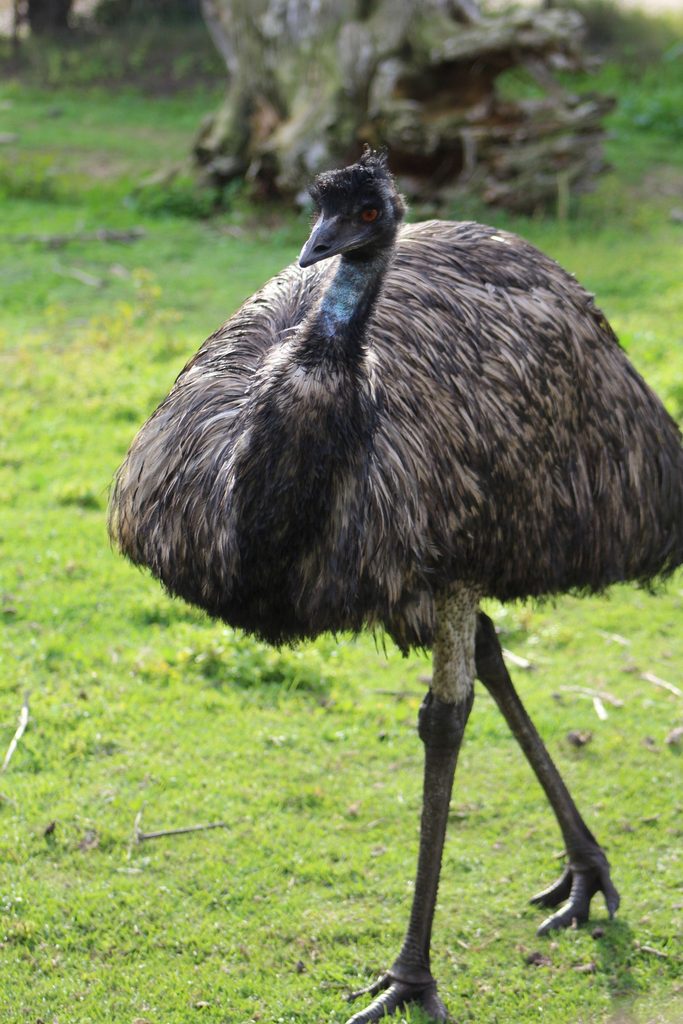
The emu is Australia’s largest bird and the second largest living bird in the world. It stands about 5.7 feet (1.75 m) tall on average. Its wings are tiny, less than 8 inches long.
Emus can run at about 31 miles per hour (50 km/h). They also swim well. Interestingly, the male does the parenting. He sits on 15 to 25 eggs for about 56 days and does not eat, drink, or defecate during that time.
Emus once fought a famous “war.” In 1932, the Australian government sent soldiers with machine guns to cull them in farmland. Only about 12 emus were reportedly killed. The birds won that round.
3. Southern Cassowary (Casuarius casuarius)
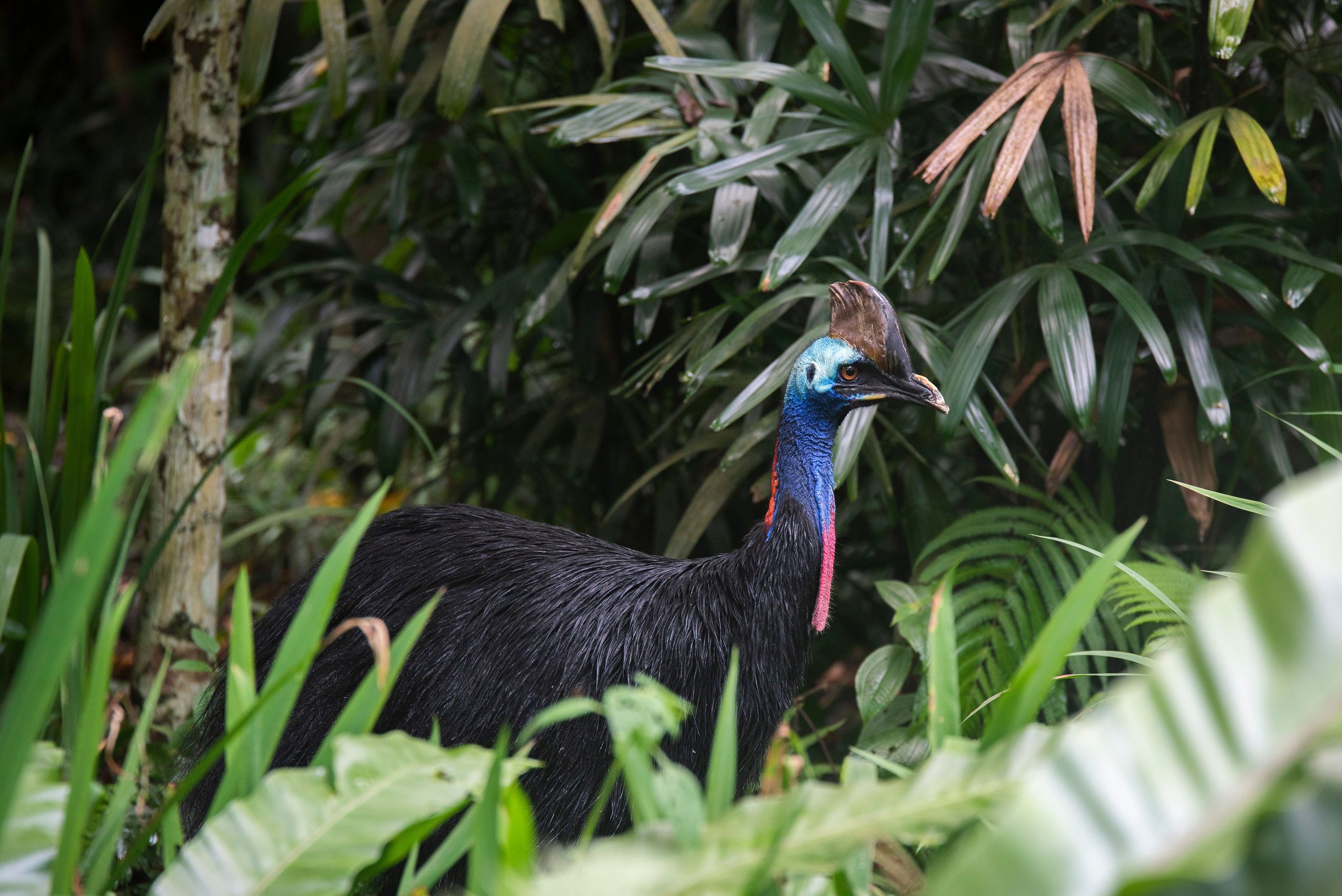
The cassowary looks like a living dinosaur. It has a glossy black body, a bright blue neck, and a helmet-like casque on its head. It is the third largest bird in the world. Females can reach 175 pounds (80 kg).
I find this bird both frightening and fascinating. Each foot carries a razor-sharp claw about 5 inches long. Cassowaries can also leap up to 7 feet off the ground. Despite this, they mostly eat fruit.
The cassowary plays a vital role in the rainforest. Hundreds of plant species germinate only after passing through its gut. Yet fewer than 1,500 survive in Australia, according to the Smithsonian’s National Zoo. Habitat loss, vehicle strikes, and feral pigs are the main threats.
ALSO READ: 15 Birds That Look Like Dinosaurs (Identification, With Pictures)
4. Dwarf Cassowary (Casuarius bennetti)
The dwarf cassowary is the smallest of the three cassowary species. It lives in the mountain forests of New Guinea and nearby islands. It often stays at higher elevations than its larger cousins.
Like all cassowaries, it is shy and solitary. It moves quietly through dense undergrowth and relies on camouflage. Its dark plumage helps it vanish into shadow.
Local communities have long hunted this bird for its meat and feathers. Forest clearing adds more pressure. Because the birds live in remote areas, we still have much to learn about them.
5. Greater Rhea (Rhea americana)
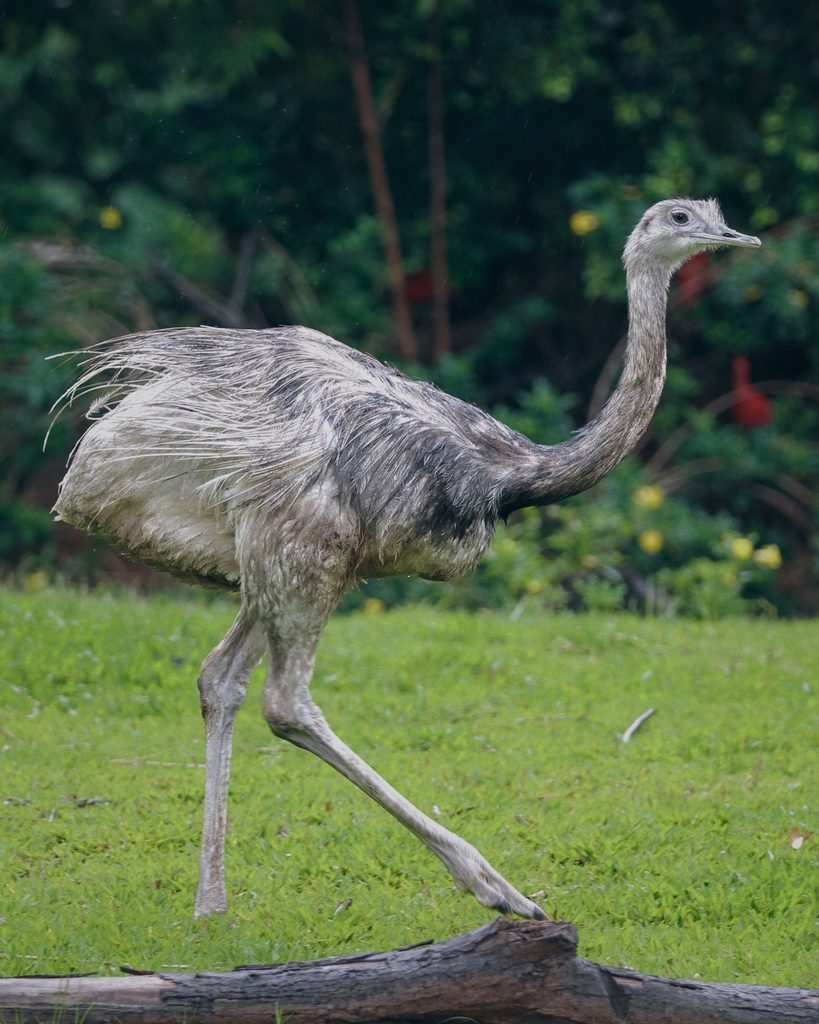
The greater rhea is South America’s largest bird. It weighs 33 to 66 pounds (15–30 kg) and stands 3 to 5 feet tall. It looks like a small ostrich but has three toes on each foot, not two.
Its wings are unusually long for a flightless bird. A rhea uses them like a rudder to turn sharply while running. This trick helps it dodge predators on open grassland.
Males run the family. They court two to 12 females, build the nest, and incubate the eggs for about six weeks. A single nest can hold up to 60 eggs. Rheas are still fairly common, but hunting and habitat loss have reduced their numbers.
6. Lesser Rhea (Rhea pennata)
Also called Darwin’s rhea, this bird lives in Patagonia and the high Andes. It is smaller than the greater rhea and wears a speckled gray-brown coat. Charles Darwin helped bring it to scientific attention during his South American voyage.
It prefers cold, windy grasslands and scrub. Groups travel together and feed on plants, seeds, and insects. Their camouflage works well against the pale, dry landscape.
The species is listed as Near Threatened. Egg collection, hunting, and farming all play a part. Their slow decline shows that even tough birds need protected land.
7. Brown Kiwi (Apteryx mantelli)
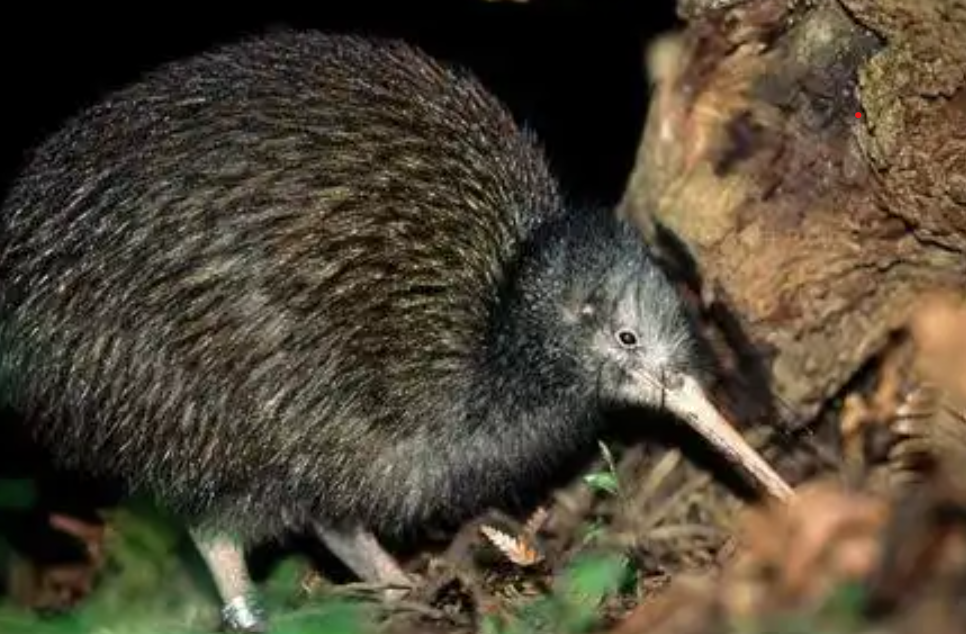
The kiwi is New Zealand’s national symbol. It is the smallest of the ratites. It stands only 1.5 to 2 feet tall and has shaggy, hair-like feathers. It is also nocturnal.
Its bill is truly unique. The nostrils sit near the tip, so the kiwi can sniff out worms in the soil. Then there is the egg. A female lays a single egg that is about 15% of her body weight. For comparison, an ostrich egg is only 2% of its mother’s weight.
Kiwi numbers are falling by about six percent each year, according to the Smithsonian. Rats, stoats, cats, and dogs prey on eggs and chicks. Predator control programs in New Zealand are now the best hope for these birds.
Rare Island Birds
8. Kakapo (Strigops habroptila)
The kakapo is a flightless parrot. It is also the world’s heaviest parrot. It is nocturnal, green, and covered in moss-like feathers. It smells sweet, which unfortunately helps predators find it.
Its story is both sad and hopeful. By 1995, only 51 kakapo were known to remain. Conservationists moved the survivors to predator-free islands. Every bird now wears a tracker and has a name.
Kakapo breed only in years when certain native trees produce heavy fruit. That can mean gaps of two to four years. Each chick is a major event. I think it is one of the most moving conservation stories anywhere.
ALSO RED: 50 Birds Native to North Carolina (Identification, With Pictures)
9. Takahe (Porphyrio hochstetteri)
The takahe is a plump, blue-green bird with a thick red beak. It also lives in New Zealand. For decades, scientists believed it was extinct. Then, in 1948, a small group was found in the Murchison Mountains.
Takahe are related to the swamphen, a bird that can fly. Their ancestors lost the ability once they settled in a land without ground predators. Today they eat tussock grass and live in mountain valleys.
Only a few hundred remain. Stoats are a major threat, along with competition from red deer. Careful breeding and island sanctuaries have helped the species slowly recover.
10. Weka (Gallirallus australis)
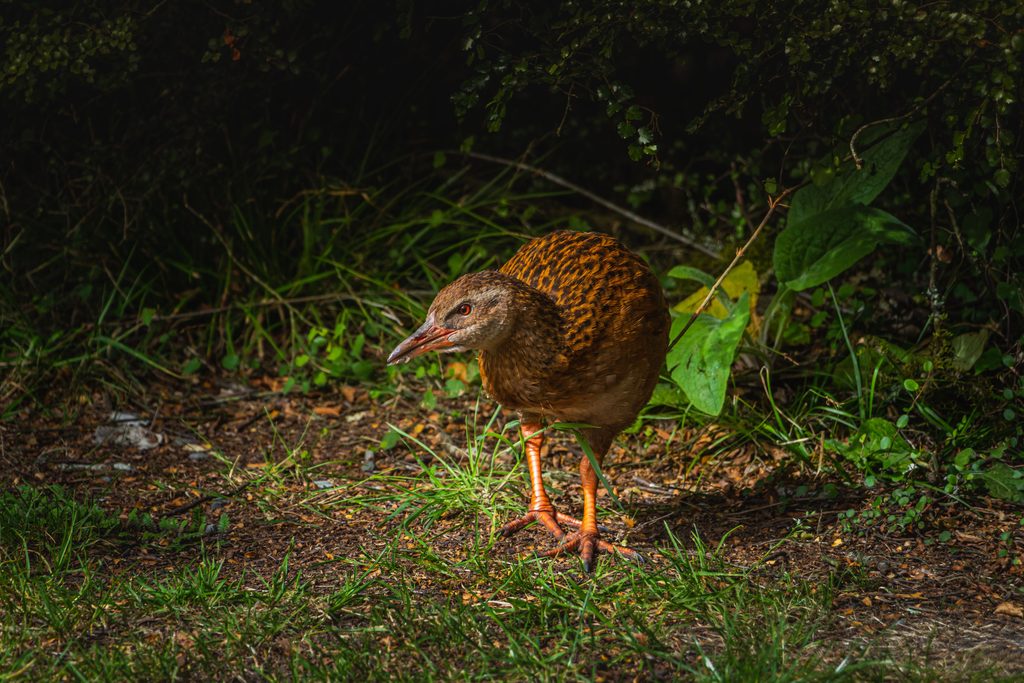
The weka is a brown, chicken-sized rail from New Zealand. It is bold and curious, and it will steal food from campsites. Some hikers also report lost shoes and keys.
Despite its cheeky habits, the weka is a skilled survivor. It eats insects, seeds, fruit, and even eggs. It runs fast and can swim across rivers.
The weka is culturally important to Māori. It has long featured in food, feathers, and stories. Some populations are healthy, while others have declined sharply.
11. Inaccessible Island Rail (Atlantisia rogersi)
This bird is the smallest flightless bird alive. It measures only about 5 inches (12.5 cm) long. It weighs about as much as a small apple, and it lives on one remote island in the South Atlantic.
Inaccessible Island is part of the Tristan da Cunha group. It covers only about 5 square miles. The rail hides in tussock grass and rocky crevices. It is more mouse-like than bird-like.
Its tiny range could be a risk. A single invasive predator, such as a rat, could threaten the whole species. For now, the island’s remoteness protects it.
12. Guam Rail (Hypotaenidia owstoni)
The Guam rail once roamed freely across the island of Guam. Then the brown tree snake arrived, probably as a stowaway on military cargo in the mid-20th century. Within a few decades, the rail had vanished from the wild.
A handful of birds were saved and bred in zoos. The species was classified as Extinct in the Wild. Later, conservationists released birds on the nearby island of Cocos, which has no snakes.
This species shows how fast a flightless bird can disappear when a new predator arrives. It also shows that rescue is possible. The Guam rail is now listed as Endangered rather than Extinct in the Wild.
13. Okinawa Rail (Hypotaenidia okinawae)
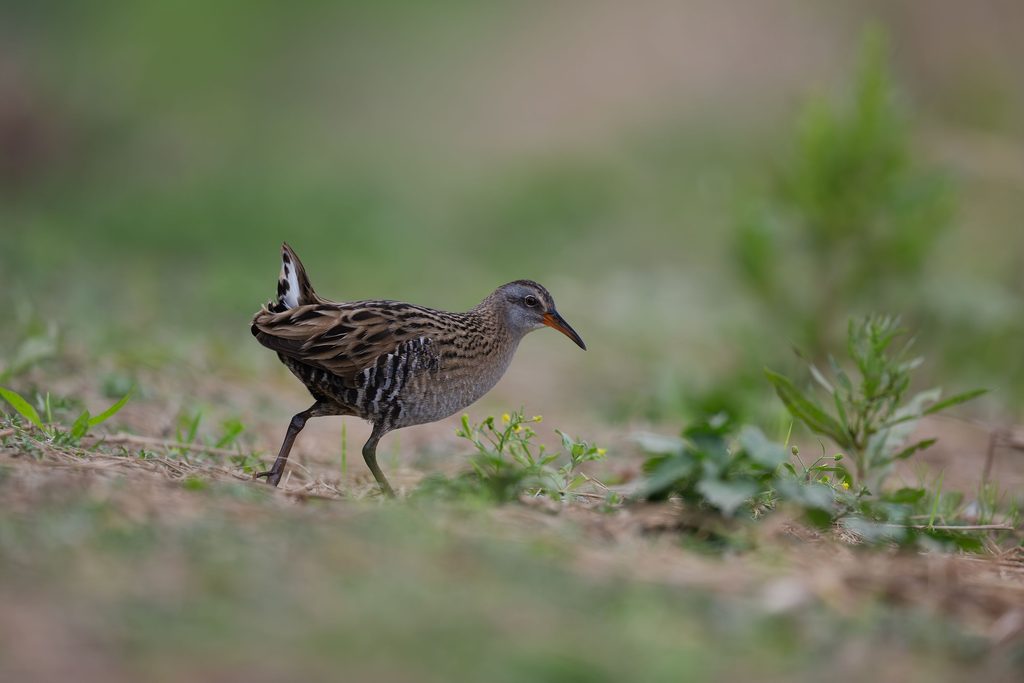
This bird lives only in the northern forests of Okinawa, Japan. Scientists did not describe it until 1981. Locals call it the yanbaru kuina. It has a red bill, a dark body, and white stripes along its flanks.
The rail is mostly ground-dwelling, though it can climb to roost in trees. That habit has helped it avoid some predators. Its main threats were mongooses, feral cats, and road traffic.
Control programs have helped numbers recover. This is a good example of how targeted action can change a species’ future. The rail remains rare, though, and needs ongoing protection.
14. Tasmanian Nativehen (Tribonyx mortierii)
This stocky bird lives only in Tasmania. It has olive-brown feathers, a pale beak, and strong legs. It is a fast runner and often feeds on open pasture.
The nativehen has an unusual family life. Groups of birds may share a nest and care for the chicks together. Sometimes two males breed with one female. This cooperative system is rare among birds.
It is common in its range, so it is not a conservation concern. I like that. Not every flightless bird is on the brink.
Penguins: Flightless Swimmers
Penguins use their wings as flippers. Their dense bones act like diving weights. Together, they make penguins some of the finest swimmers in the bird world.
15. Emperor Penguin (Aptenodytes forsteri)
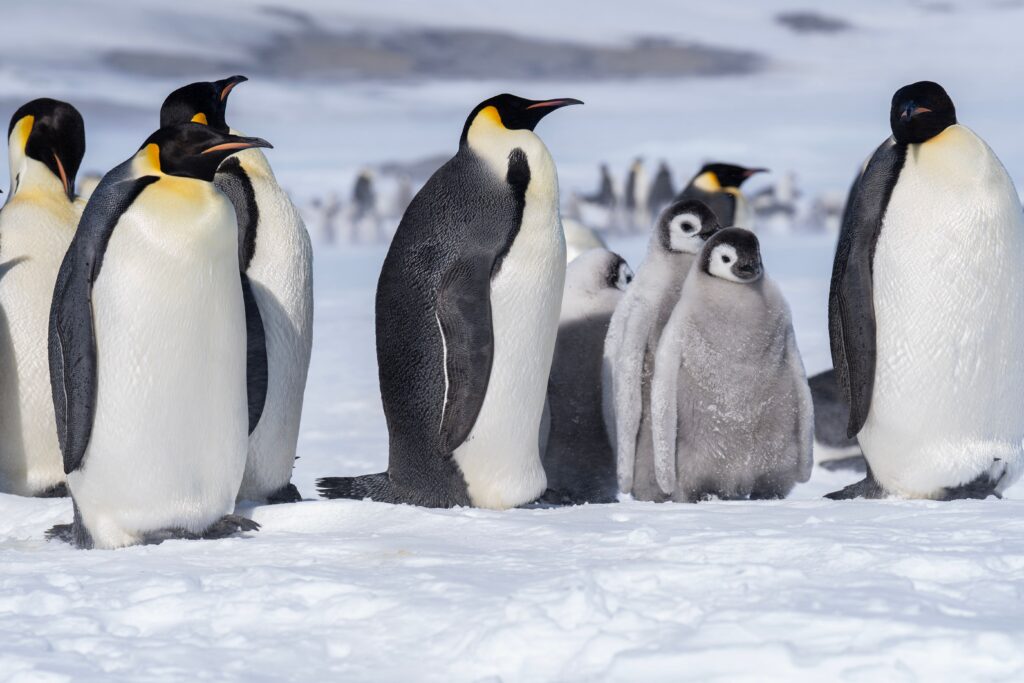
The emperor is the largest penguin. It stands about 4 feet (1.1 m) tall. It lives and breeds on the Antarctic ice, where winter temperatures can drop below −40°F.
Its breeding cycle is extreme. The female lays one egg, and the male balances it on his feet for about two months. He fasts the whole time. Meanwhile, she travels to the sea to feed.
Emperors can dive deeper than 1,500 feet (460 m). Climate change is a serious concern. The birds depend on stable sea ice for breeding, and warming seas are shrinking it.
16. King Penguin (Aptenodytes patagonicus)
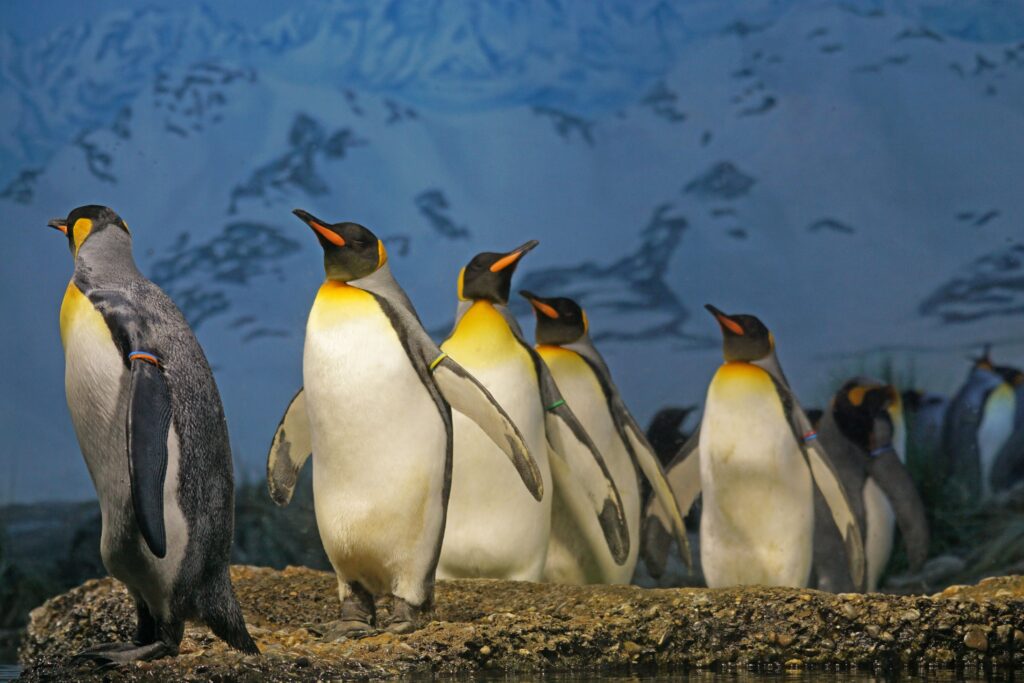
The king penguin is the second largest species. It stands about 3 feet tall and has bright orange patches on its neck. It breeds on sub-Antarctic islands, such as South Georgia.
Kings do not build nests. Each parent carries a single egg on top of its feet, tucked under a warm fold of skin. They take turns, and the chick takes more than a year to fledge.
Colonies can reach hundreds of thousands of birds. The noise and smell are intense, but the sight is breathtaking. Most populations are stable today.
17. African Penguin (Spheniscus demersus)
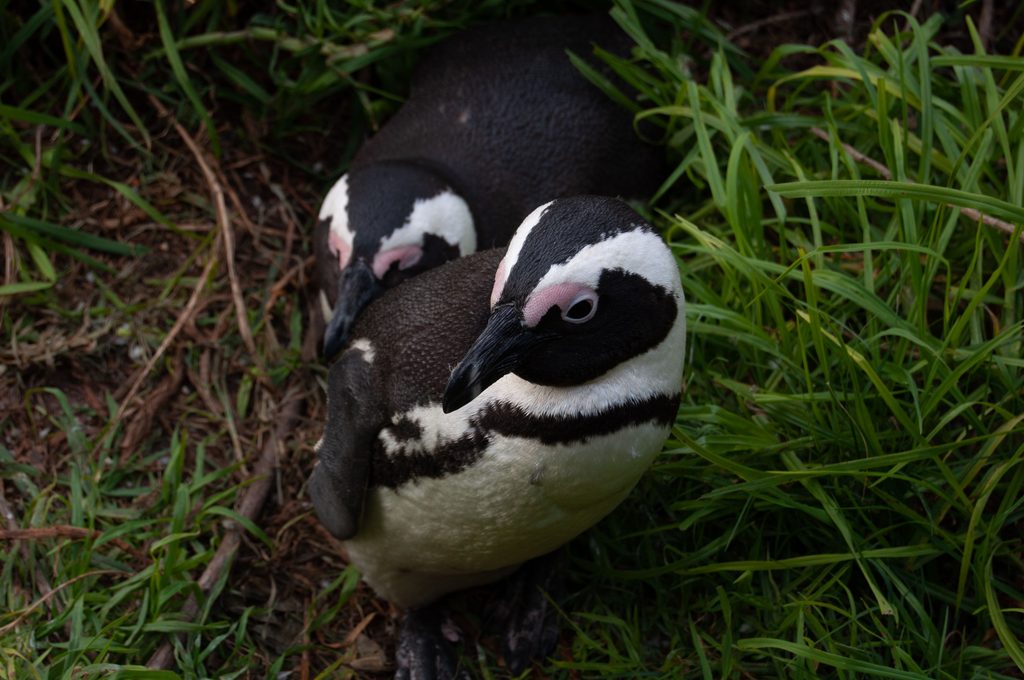
This bird has several nicknames. The U.S. Fish & Wildlife Service lists it as the jackass penguin, cape penguin, and black-footed penguin. The “jackass” name comes from its donkey-like bray.
It is the only breeding penguin on the African continent. Its range runs from Namibia to South Africa. The U.S. Fish & Wildlife Service notes that these birds usually stay within about 7.5 miles (12 km) of the shore.
The species is in deep trouble. It is now listed as Critically Endangered by the IUCN, with only about 10,000 breeding pairs left. Overfishing of sardines and anchovies has reduced its food supply. Protecting fish stocks near breeding sites is vital.
18. Galápagos Penguin (Spheniscus mendiculus)
This small penguin lives on the Galápagos Islands, right on the equator. It is the only penguin that regularly lives north of the equator. Cool ocean currents make that possible.
It stands about 20 inches tall. To stay cool, it holds its flippers over its feet and stands in the shade. It also pants like a dog.
Only about 1,000 to 2,000 birds remain. The species is Endangered. El Niño events are especially harmful, as warm water cuts the supply of small fish.
ALSO READ: 55 Birds Native to Florida (Identification, With Pictures)
19. Little Penguin (Eudyptula minor)
The little penguin is the smallest penguin in the world. It measures about 13 inches (33 cm) and weighs around 2 pounds. Its feathers are blue-gray, which is why some call it the “fairy penguin” or “blue penguin.”
It lives along the coasts of southern Australia and New Zealand. By day it hunts small fish at sea. At dusk, it returns to shore in groups, which draws tourists to places like Phillip Island.
Dogs, foxes, and cars are the main land threats. I once watched footage of the evening return, and it is hard not to smile. Small tunnels under roads now help the birds cross safely in some areas.
20. Adélie Penguin (Pygoscelis adeliae)
The Adélie is a classic Antarctic bird. It has a black head, a white ring around each eye, and a bold waddle. French explorer Jules Dumont d’Urville named it in 1840 after his wife, Adèle.
It breeds on rocky coasts around Antarctica. Parents build nests from small stones. Stealing stones from neighbors is a well-known habit, and I think it makes them rather charming.
Adélies depend on krill and sea ice. Some colonies on the Antarctic Peninsula have declined as the region has warmed. Others in the east have remained stable or grown.
21. Gentoo Penguin (Pygoscelis papua)
The gentoo is easy to spot. It has a white patch above each eye and a bright orange-red bill. It is also the fastest swimming penguin, with speeds of about 22 miles per hour (36 km/h).
Gentoos live on the Antarctic Peninsula and sub-Antarctic islands, including the Falklands. They are less tied to sea ice than other species. This has helped them expand south as the climate warms.
Like the Adélie, they build stone nests. They also feed on krill and small fish. Overall, the species is considered of lower concern than many other penguins.
22. Rockhopper Penguin (Eudyptes chrysocome)
The rockhopper is small but full of attitude. It has spiky yellow eyebrow plumes and red eyes. It moves across rocky shores by hopping with both feet together.
Colonies sit on steep, wave-battered cliffs on sub-Antarctic islands. Birds must leap from rock to rock to reach their nests. It looks clumsy, but it works.
Several rockhopper populations have declined sharply over recent decades. Fishing, climate shifts, and pollution may all contribute. Scientists are still working to understand the full picture.
ALSO READ: 40 Birds Native to North Dakota (Identification, With Pictures)
Other Flightless Water Birds
23. Flightless Cormorant (Nannopterus harrisi)
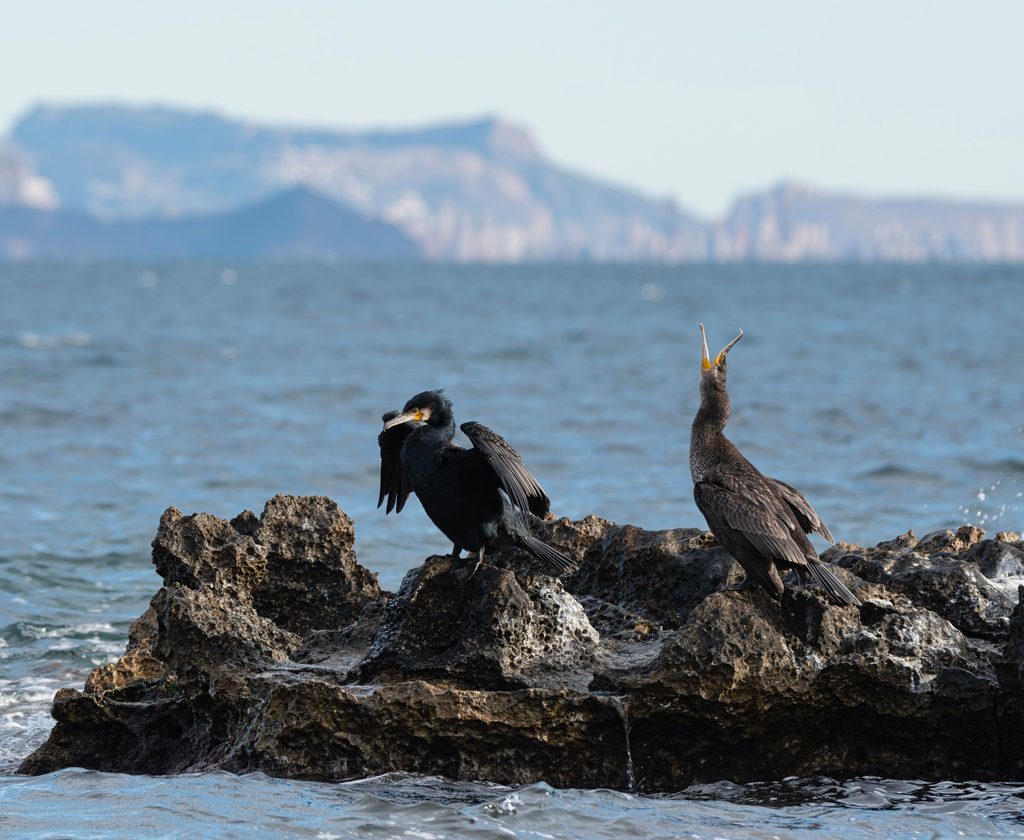
This bird lives only in the Galápagos Islands. It is the only cormorant that cannot fly. Its wings are about a third the size a bird of its weight would need.
Its strong legs and webbed feet do the work instead. It dives for eels, octopus, and fish along rocky coasts. Its feathers lack the waterproofing seen in other cormorants, so it dries its wings in the sun.
It is one of the rarest seabirds. Only about 2,000 individuals exist. A single oil spill, disease outbreak, or invasive predator could do real damage.
24. Falkland Flightless Steamer Duck (Tachyeres brachypterus)
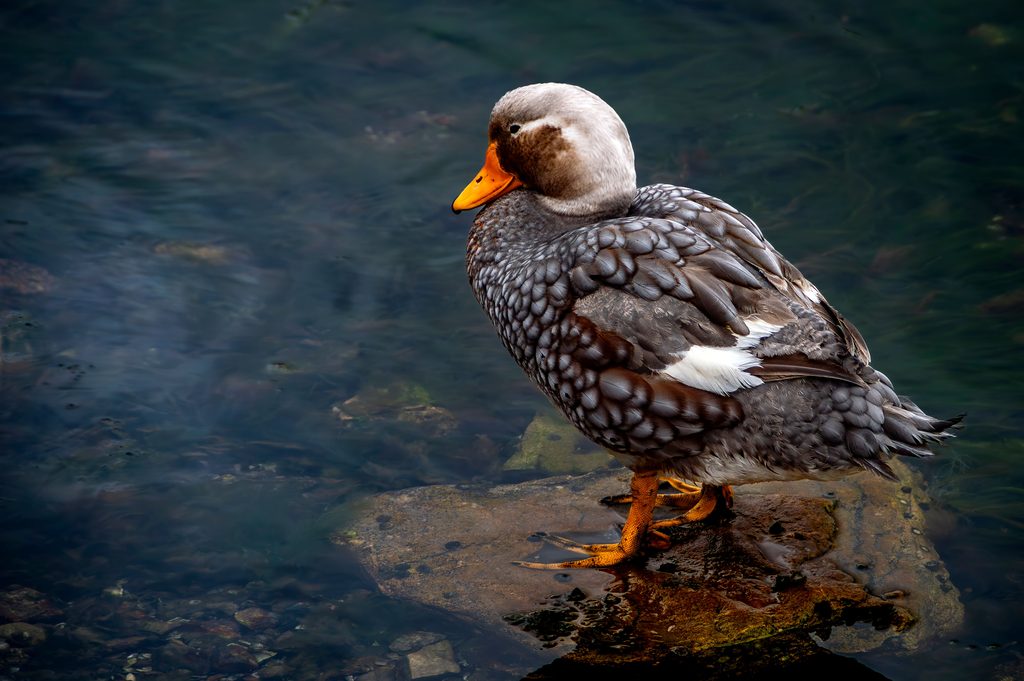
This is a heavy, powerful duck from the Falkland Islands. It gets its name from the way it paddles across the water. Its wings and feet churn like a paddle steamer.
It is strong and territorial. Males defend their patch of coast and will fight fiercely with their wing spurs. They feed on shellfish and other animals along the shore.
Because it cannot fly, it stays close to its home range. That makes it vulnerable to oil pollution and predators. Still, the Falkland population is considered fairly healthy.
25. Titicaca Flightless Grebe (Rollandia microptera)
The Titicaca grebe lives on Lake Titicaca, high in the Andes between Peru and Bolivia. The lake sits at about 12,500 feet (3,800 m). The bird has stubby wings that are far too small for flight.
It dives to catch small fish and invertebrates. It builds floating nests among the reeds. The reeds also give it shelter from the wind.
The species is listed as Endangered. Gill nets entangle and drown many birds. Pollution and reed harvesting add more pressure. Local conservation work is now trying to reduce these dangers.
ALSO READ: 35 Birds Native to Czech Republic (Identification, With Pictures)
Why Did These Birds Lose Flight?
Scientists link flightlessness to three main factors.
- No predators: On isolated islands, flying offered little benefit.
- High energy cost: Flight muscles burn a lot of energy, so losing them can save food.
- New lifestyles: Swimming, running, and diving can reward different body shapes than flying does.
Many flightless birds also lost the keel, a bone on the chest that anchors flight muscles. Without it, wings shrink and legs often grow stronger.
Flightless Birds in Danger
Sadly, flightlessness comes with a cost. A bird that can’t fly can’t escape new predators quickly. Cats, rats, stoats, snakes, and dogs have devastated several species. Habitat loss and climate change add more pressure.
Still, there is hope. Predator-free islands have saved the kakapo and Guam rail. Fishing limits are helping penguins. Community projects are protecting kiwi and cassowary habitat. Good science and steady effort can work.
Frequently Asked Questions
What is the largest flightless bird? The ostrich. It can reach 9 feet and weigh up to 300 pounds.
What is the smallest flightless bird? The Inaccessible Island rail, at about 5 inches long.
Are penguins really birds? Yes. They have feathers, lay eggs, and have beaks. They simply swim instead of fly.
How many flightless bird species exist? More than 60 species, depending on how scientists count them.
Final Thoughts
The 25 birds in this list live on every continent except one more than a few places. They run, swim, dive, and hop. Each has found a way to thrive without wings that lift.
Many now need our help. Learning about them is a small but real first step. I hope this guide leaves you with a stronger sense of how varied bird life can be.
References
- Smithsonian’s National Zoo. “Ostrich.” https://nationalzoo.si.edu/animals/ostrich
- Smithsonian’s National Zoo. “Emu.” https://nationalzoo.si.edu/animals/emu
- Smithsonian’s National Zoo. “Southern Cassowary.” https://nationalzoo.si.edu/animals/southern-cassowary
- Smithsonian’s National Zoo. “Greater Rhea.” https://nationalzoo.si.edu/animals/greater-rhea
- Smithsonian’s National Zoo. “North Island Brown Kiwi.” https://nationalzoo.si.edu/animals/north-island-brown-kiwi
- U.S. Fish & Wildlife Service. “Jackass Penguin (Spheniscus demersus).” https://www.fws.gov/species/jackass-penguin-spheniscus-demersus
- U.S. Fish & Wildlife Service. “Emperor Penguin (Aptenodytes forsteri).” https://www.fws.gov/species/emperor-penguin-aptenodytes-forsteri