45 Birds with Long Legs (Names, With Photos)
Long legs change how a bird looks and how it lives. They lift the body above water, mud and tall grass. They also give the bird a calm, almost royal posture.
So, which bird has the longest legs? Among living birds, the common ostrich has the most powerful pair. It stands up to 9 feet (2.7 m) tall, according to the Smithsonian’s National Zoo, and it sprints up to 43 mph (69 km/h).
Long legs are not only for running. Many birds use them to wade into deep water, stalk prey quietly, or stay cool in hot sun. Each design solves a different problem.
In this guide, I cover 45 birds with long legs. You will meet giant runners, tall cranes, pink flamingos, patient herons and slim shorebirds.
Some details surprised me while researching. The American flamingo averages about 5 feet (1.5 m) tall, yet its feet are small. The wood stork stands about 50 inches tall, according to the U.S. Fish and Wildlife Service.
Let us start with the biggest legs of all.
Giant Runners and Ground Walkers
1. Common Ostrich (Struthio camelus)
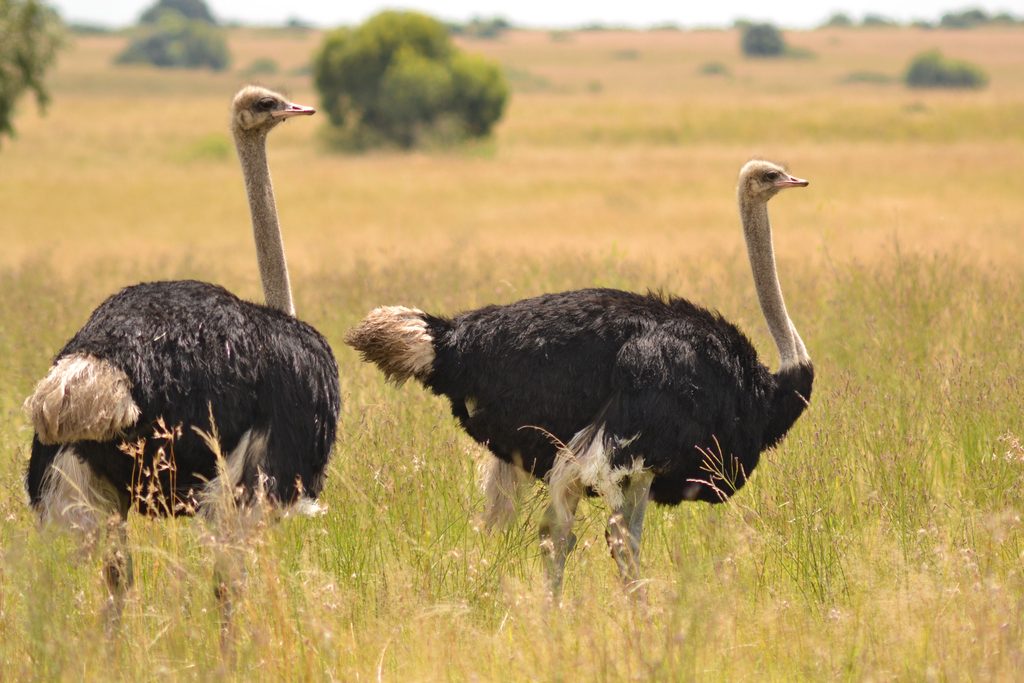
The common ostrich is the tallest and heaviest living bird. Adults weigh 200 to 300 pounds (90–136 kg), according to the Smithsonian’s National Zoo.
Its legs are thick, muscular and bare. Each foot has only two toes, and each toe ends in a long, sharp claw.
Those legs make it the fastest two-legged animal on land. Wild ostriches can keep a steady pace of 30 to 37 mph for long periods.
2. Somali Ostrich (Struthio molybdophanes)
The Somali ostrich looks much like the common ostrich. However, males show bluish-grey skin on the neck and legs during the breeding season.
It lives in dry scrub and semi-desert across the Horn of Africa. Many experts now treat it as a separate species.
I like how this bird shows that even a famous animal can hide a surprise. Its long legs help it cross hot, open ground with ease.
3. Emu (Dromaius novaehollandiae)
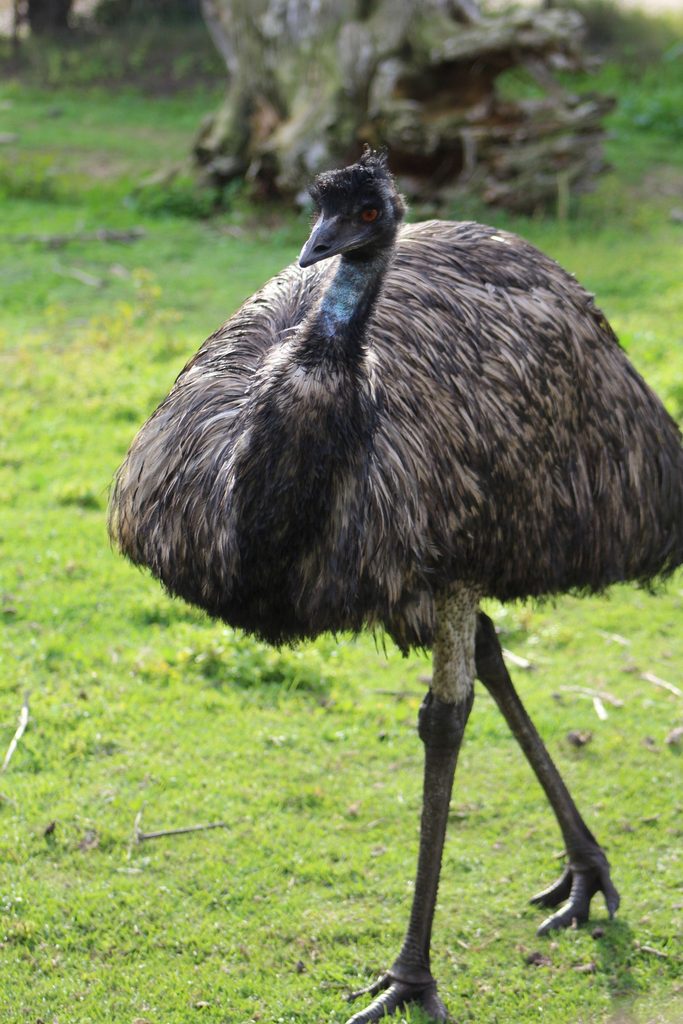
The emu is Australia’s largest bird and the second-tallest living bird. It stands about 6 feet (1.9 m) tall.
Its legs are long and strong, with three toes on each foot. They carry the bird across open plains at about 30 mph (50 km/h).
Emus also walk huge distances to find food and water. They are even good swimmers when a river is in the way.
4. Southern Cassowary (Casuarius casuarius)
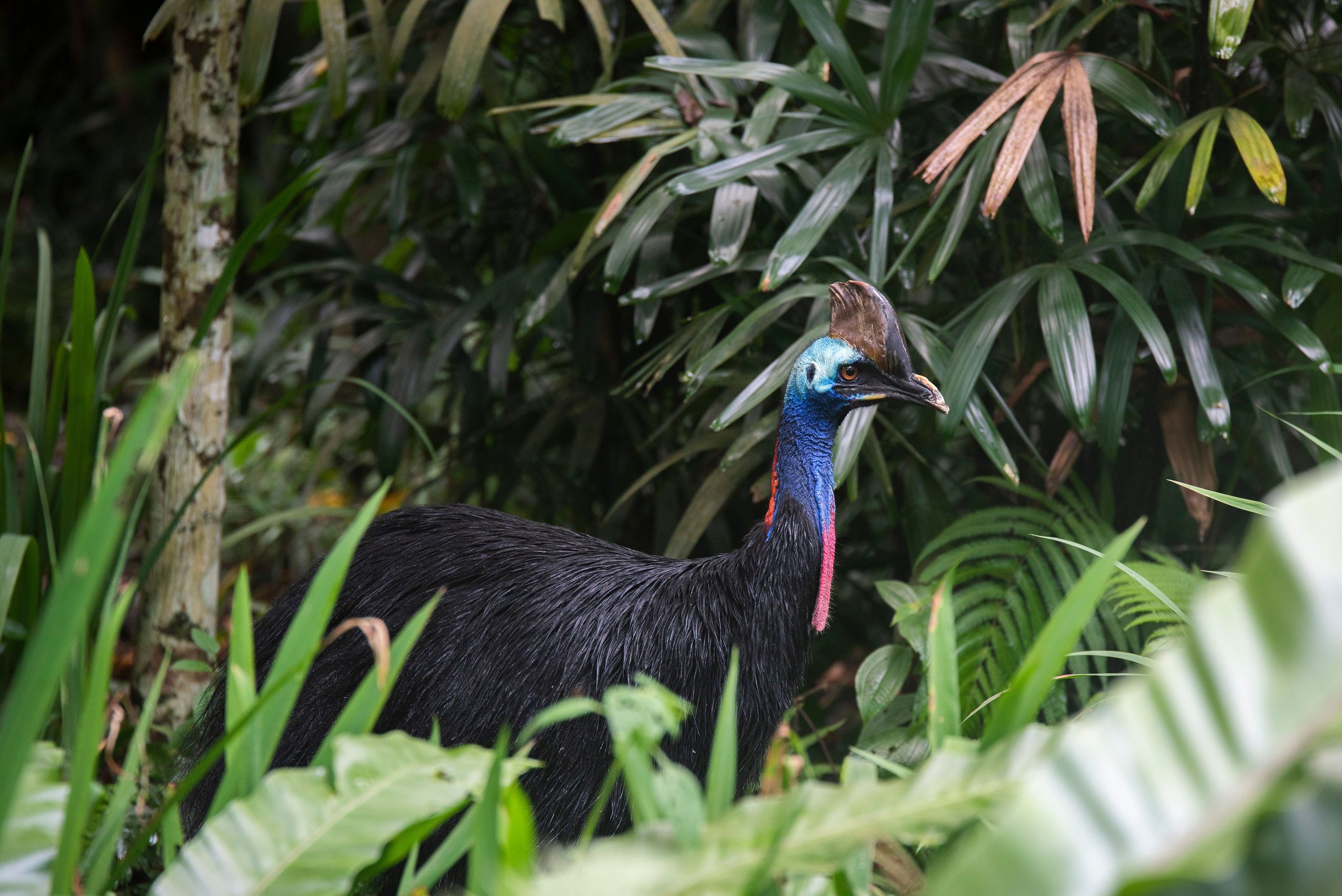
The southern cassowary lives in the rainforests of northern Queensland and New Guinea. It stands up to about 6 feet tall.
Its legs are thick and powerful. The inner toe carries a dagger-like claw about 4 inches (10 cm) long.
This bird is usually shy, but it can be dangerous if cornered. It is also a key seed spreader in tropical forests.
5. Greater Rhea (Rhea americana)
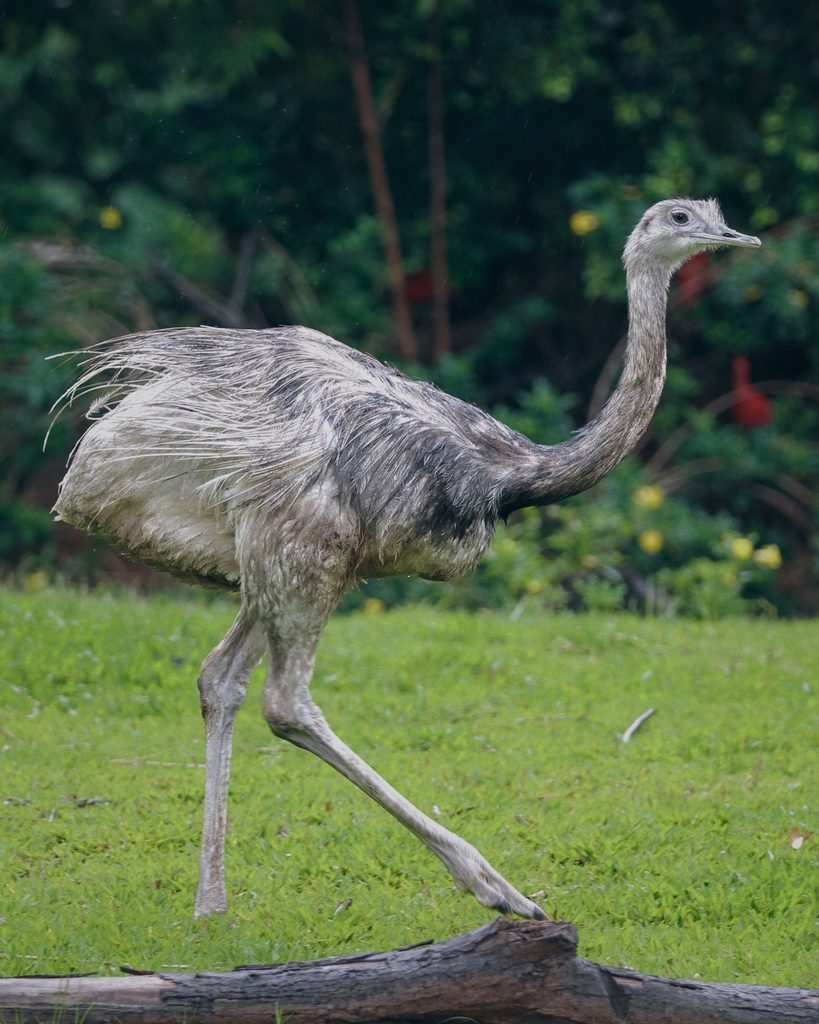
The greater rhea is South America’s largest bird. It stands roughly 5 feet (1.5 m) tall and roams grasslands and open scrub.
Its long legs have three toes and carry it away from danger at high speed. Like the ostrich, it cannot fly.
Males build the nest and raise the chicks. Several females may lay eggs in the same nest, so one male can guard dozens.
6. Secretary Bird (Sagittarius serpentarius)
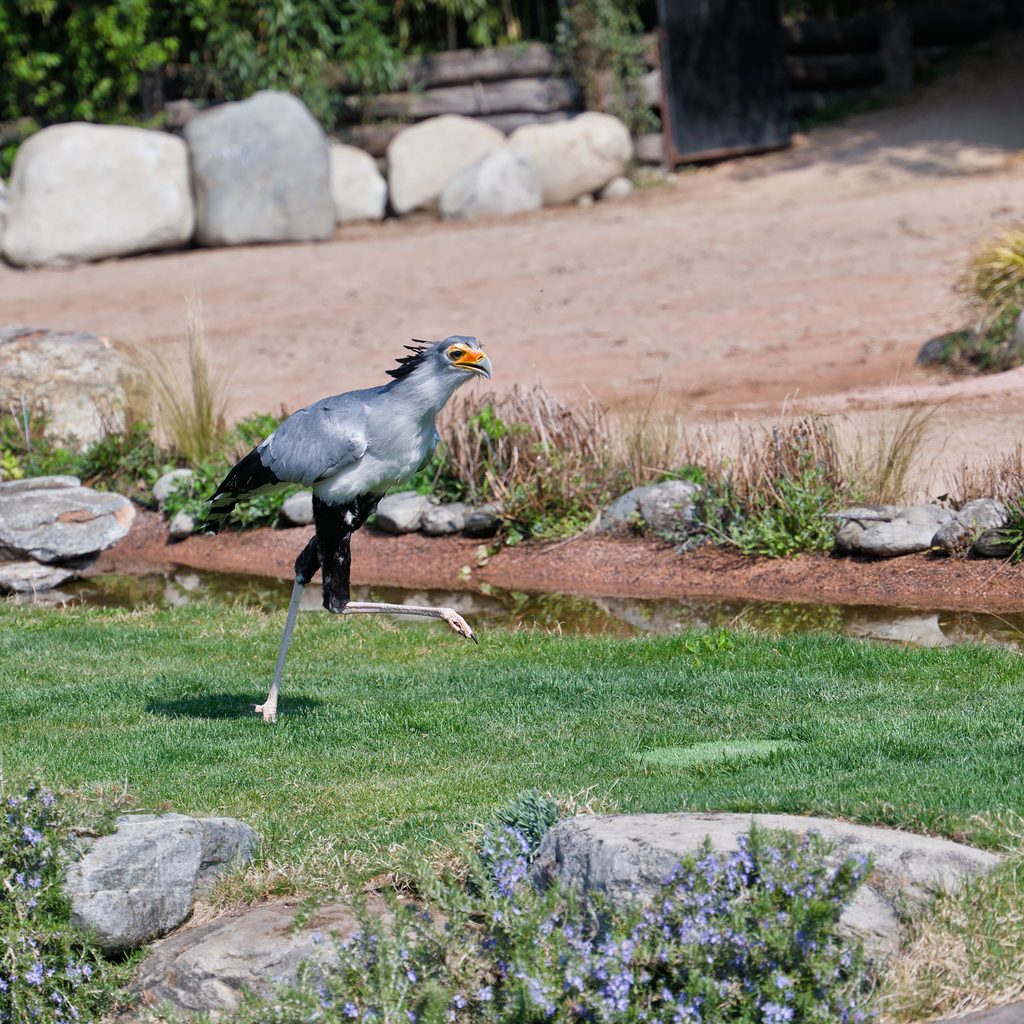
The secretary bird is a bird of prey that hunts on foot. It stands about 4 feet tall on very long legs, which look almost crane-like.
It stomps on snakes, lizards and rodents with fast, powerful kicks. Researchers have measured strikes with a force several times the bird’s own weight.
The species is now Endangered. Grassland loss and disturbance across Africa are the main reasons.
7. Kori Bustard (Ardeotis kori)
The kori bustard is one of the heaviest flying birds in the world. Large males can weigh around 40 pounds.
It stands about 3.3 feet tall on long, strong legs. It prefers to walk through the grass instead of flying.
You can find it in the savannas of eastern and southern Africa. Its bold courtship display, with puffed throat feathers, is a joy to watch.
Flamingos: Pink Birds on Slender Legs
8. Greater Flamingo (Phoenicopterus roseus)
The greater flamingo is the tallest flamingo, standing up to about 5 feet. It lives across Africa, southern Europe and South Asia.
Its pink legs are long and thin. They let the bird wade into deeper water while it filters food with its bill.
The pink color of its feathers comes from carotenoid pigments in its diet. I find that detail charming, because it shows how food shapes appearance.
ALSO READ: 50 Birds with Long Necks (Names, With Photos)
9. Chilean Flamingo (Phoenicopterus chilensis)
The Chilean flamingo stands about 3.5 feet tall. Its legs are grey-pink with bright pink joints, which makes it easy to tell apart.
What looks like a backward knee is actually the ankle. The real knee sits higher up, hidden by feathers.
The species is listed as Near Threatened. Mining and water use are drying some of its high-altitude wetlands.
10. Lesser Flamingo (Phoeniconaias minor)
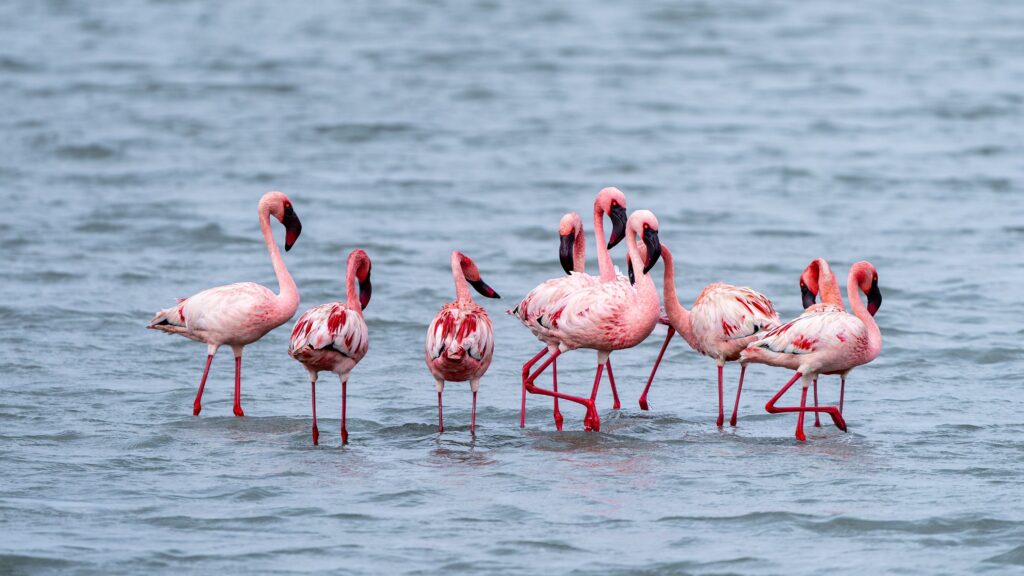
The lesser flamingo is the smallest flamingo, at about 3 feet tall. Its legs are still long and slim for its size.
It gathers in huge flocks on East Africa’s Rift Valley soda lakes. From far away, the shoreline can look completely pink.
It is also Near Threatened. Pollution and changing lake conditions can harm the algae it eats.
11. American Flamingo (Phoenicopterus ruber)
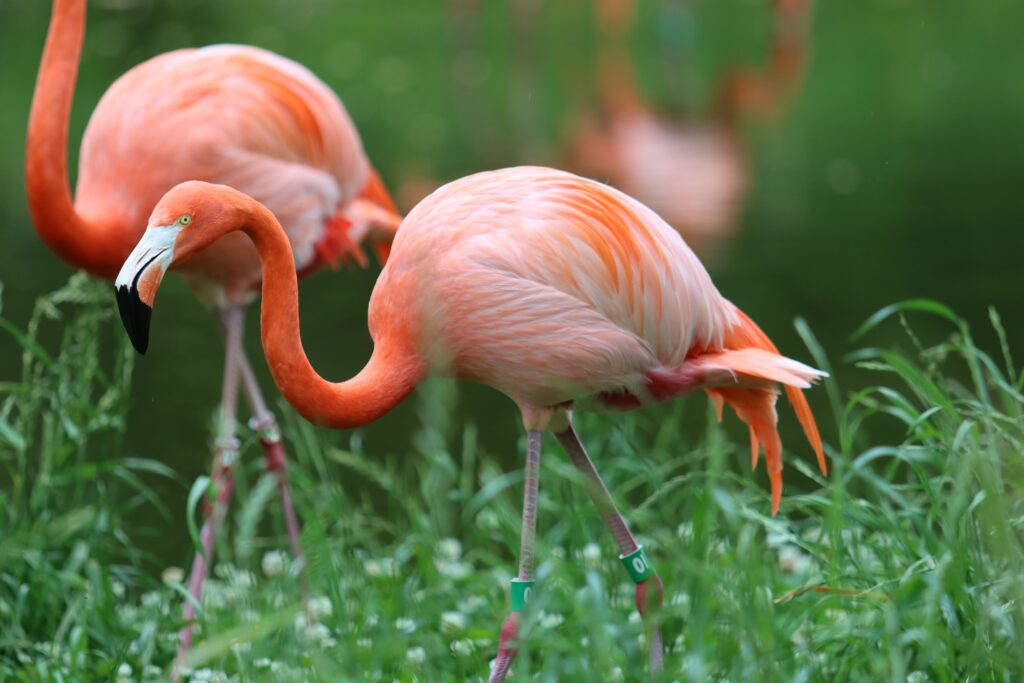
The American flamingo averages 5 feet (1.5 m) in height, according to the Smithsonian’s National Zoo. Its legs are very long compared with its small feet.
The three front toes are webbed. The back toe is tiny or missing, which suits wading in shallow water.
It often stands on one leg. The Zoo notes that this posture helps reduce heat loss through the legs and feet.
12. Andean Flamingo (Phoenicoparrus andinus)
The Andean flamingo is a high-mountain specialist. It feeds on salt lakes more than 13,000 feet (4,000 m) above sea level.
Its legs are yellow, which is unusual among flamingos. It also lacks the hind toe.
The species is listed as Vulnerable. Mining and water diversion remain real threats in the Andes.
Cranes: Tall, Loud and Elegant
13. Whooping Crane (Grus americana)
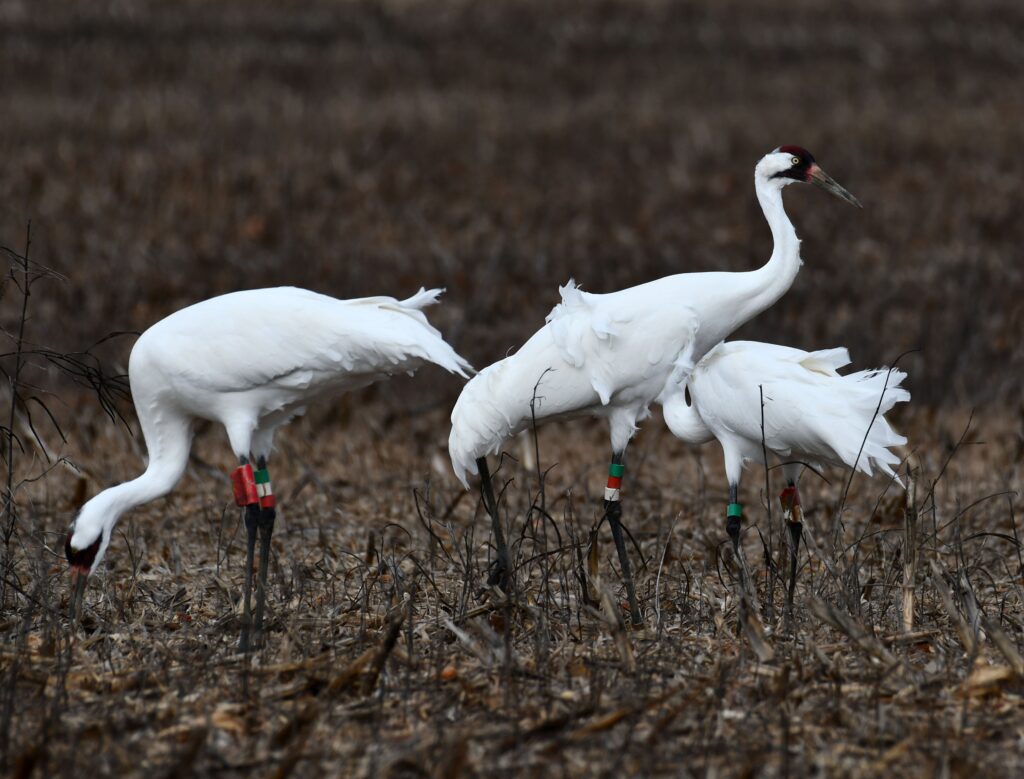
The whooping crane is North America’s tallest bird. Both sexes stand about 5 feet (1.5 m) tall, according to the U.S. Fish and Wildlife Service.
Its long black legs trail behind in flight, and its wingspan is more than 7 feet. It can live at least 30 years in the wild.
More than 10,000 once lived on the continent. By 1941, only 15 wintered at Aransas in Texas. The species remains endangered today.
14. Sandhill Crane (Antigone canadensis)
The sandhill crane stands 3 to 4 feet tall and has a wingspan of 6 to 7 feet. Its legs are long, dark and slim.
Each spring, hundreds of thousands gather along Nebraska’s Platte River. It is one of the great bird spectacles in North America.
Its dancing display, with bows and leaps, relies on those long legs. I find it hard to look away.
15. Sarus Crane (Antigone antigone)
The sarus crane is the tallest flying bird in the world, reaching up to about 6 feet. Its legs are long and pinkish-red.
It lives in India, Southeast Asia and northern Australia. In India it often feeds in farmland and wetlands.
The species is Vulnerable. Wetland loss is the main threat, and pairs are known for strong, lifelong bonds.
ALSO READ: 25 Birds That Can’t Fly (Identification, With Pictures)
16. Red-crowned Crane (Grus japonensis)
The red-crowned crane stands about 5 feet tall, with a white body, black legs and a red patch on its head.
In East Asia it is a symbol of long life and good luck. Its courtship dance is one of the most graceful displays in the bird world.
It is Endangered, with only a few thousand left. Hokkaido in Japan is the best place to see it in winter.
17. Grey Crowned Crane (Balearica regulorum)
This crane wears a golden crown of stiff feathers. It is about 3.5 feet tall and has dark, slim legs.
Unlike most cranes, it has a long hind toe. This lets it perch in trees, which is very unusual for a crane.
It is the national bird of Uganda and appears on that country’s flag. Sadly, it is Endangered because wetlands are drained.
18. Blue Crane (Grus paradisea)
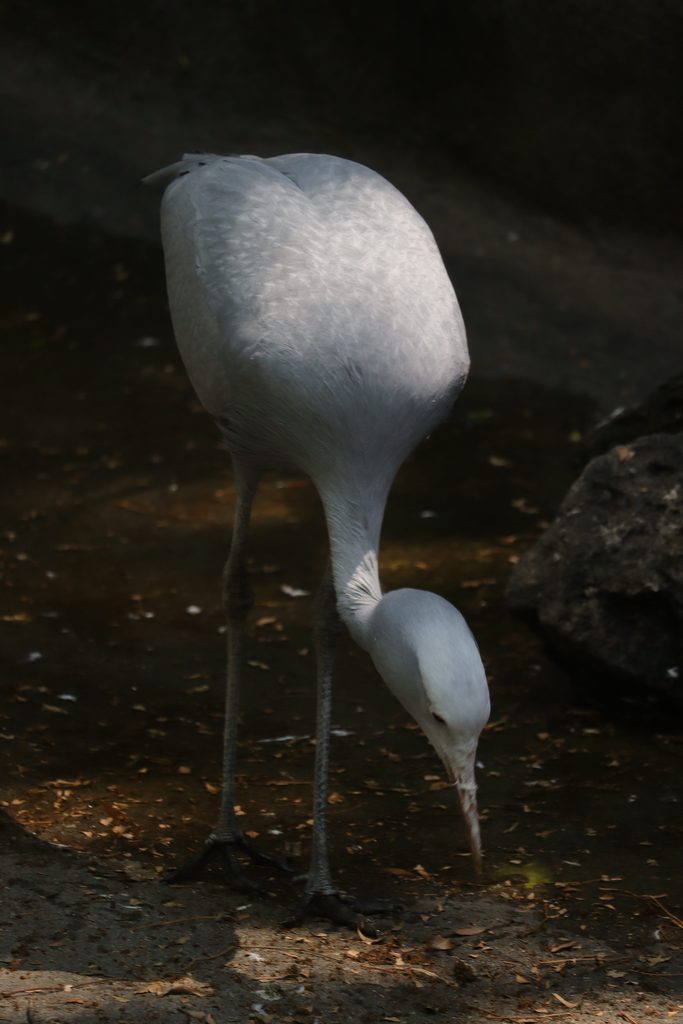
The blue crane is the national bird of South Africa. Its soft blue-grey plumage and long, drooping wing feathers give it a regal look.
It walks gracefully through grasslands and farm fields on slim dark legs. It feeds on seeds, insects and small animals.
The species is Vulnerable. Power-line collisions and poisoning are major problems.
19. Demoiselle Crane (Anthropoides virgo)
The demoiselle is the smallest crane, about 3 feet tall. A white tuft behind each eye adds a refined touch.
Its legs are black and slender. The name comes from the French word for a young lady.
It breeds across Central Asia and winters in India and Africa. The route takes it over the high Himalayas, which is a remarkable feat.
20. Wattled Crane (Bugeranus carunculatus)
The wattled crane is Africa’s tallest crane, at about 5 feet. Long white wattles hang from its chin.
It depends on large, healthy wetlands such as the Okavango Delta. Its long legs let it wade through deep sedges.
The species is Vulnerable. Dams and drained floodplains have shrunk its habitat.
Herons and Egrets: Patient Wading Hunters
21. Great Blue Heron (Ardea herodias)
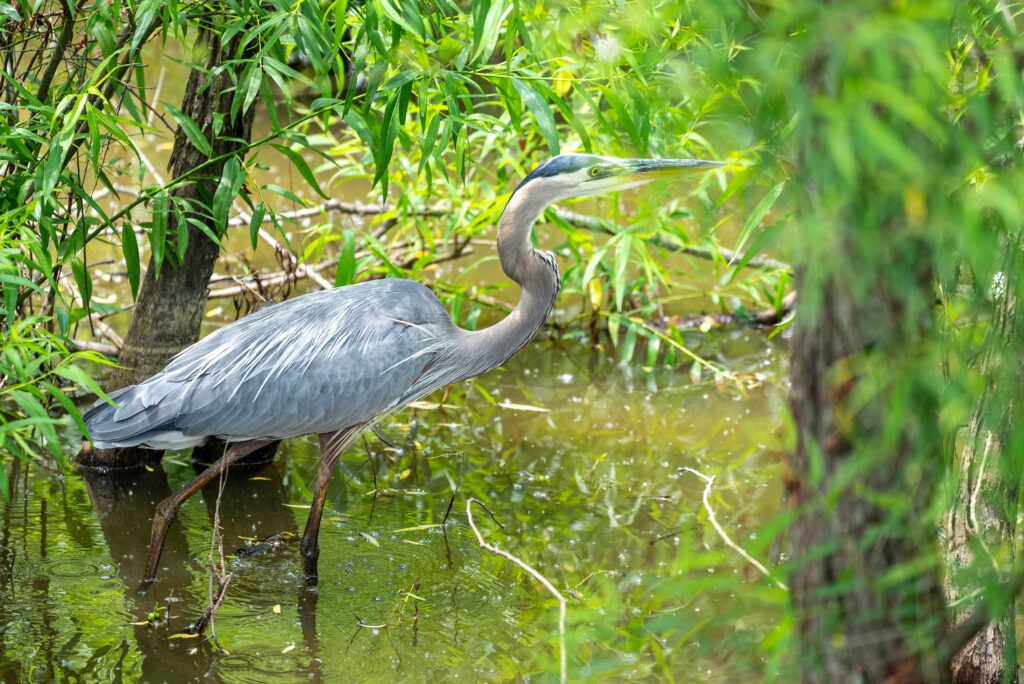
The great blue heron is North America’s largest common heron. It stands 3 to 4.5 feet tall, with a wingspan of up to about 6.5 feet.
It wades slowly on long, grey-brown legs. Then its neck shoots forward in a flash to snatch a fish.
You can see it in almost any wetland, from city ponds to coastal marshes. It is a bird I never tire of watching.
22. Grey Heron (Ardea cinerea)
The grey heron is the great blue heron’s cousin in Europe, Asia and Africa. It stands near 3 feet tall.
Its long yellowish legs let it stand in water for hours. It waits almost motionless for fish and frogs.
It often nests in colonies high in trees. Many towns now host small groups on park lakes.
23. Goliath Heron (Ardea goliath)
The goliath heron is the largest living heron, reaching about 5 feet (1.5 m). It has a rich chestnut neck and a heavy bill.
Its long dark legs help it wade in deeper water than other herons can. It lives in African wetlands and parts of South Asia.
It can take fish weighing several pounds. Seeing one in the wild is a real treat.
24. Great Egret (Ardea alba)
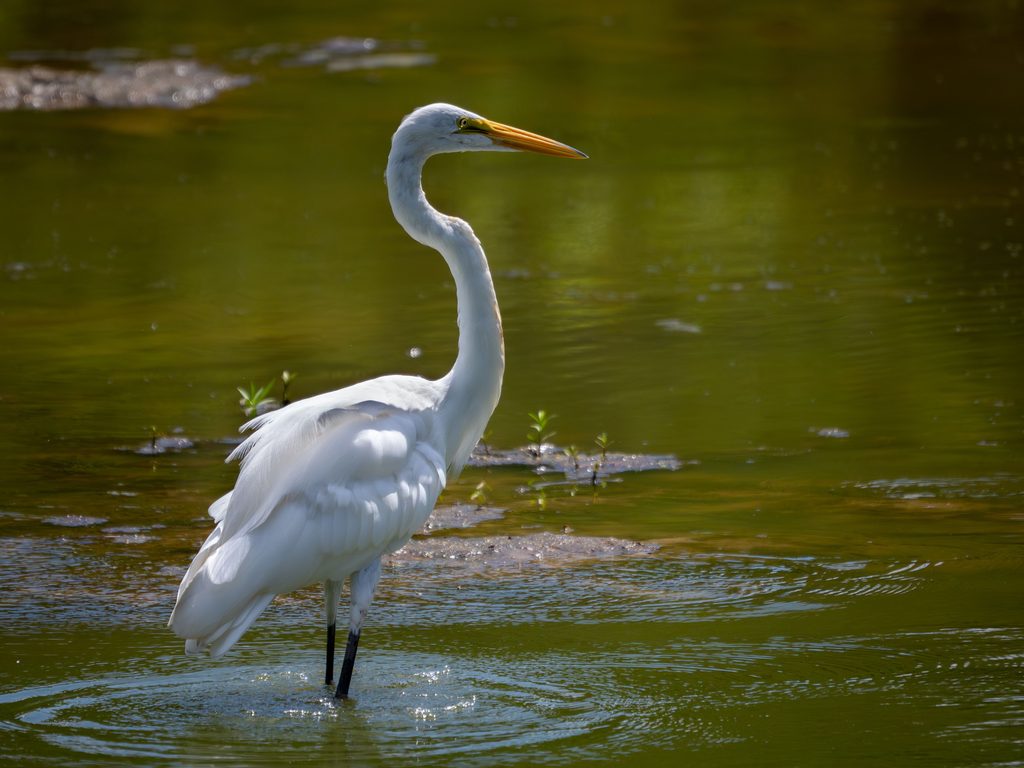
The great egret stands about 3 feet tall. It is all white, with a long yellow bill and black legs.
In the late 1800s, hunters killed huge numbers for their plumes. This crisis helped spark the early bird protection movement in the United States.
Laws such as the Migratory Bird Treaty Act helped it recover. Today it is a common and welcome sight.
25. Tricolored Heron (Egretta tricolor)
The tricolored heron is slim and slate-blue, with a white belly. Its legs are long and yellowish-green.
It lives in coastal marshes in the southern United States and Latin America. It runs and dashes through the water in pursuit of fish.
I like how lively it is compared with other herons. It rarely stands still for long.
26. Reddish Egret (Egretta rufescens)
The reddish egret is one of North America’s rarest herons. It has a shaggy, rust-colored neck and a pink bill with a dark tip.
It is famous for its “dancing” hunt. It sprints, spins and flaps on long legs to flush small fish.
The species is Near Threatened. Coastal development along the Gulf of Mexico limits its habitat.
27. Little Egret (Egretta garzetta)
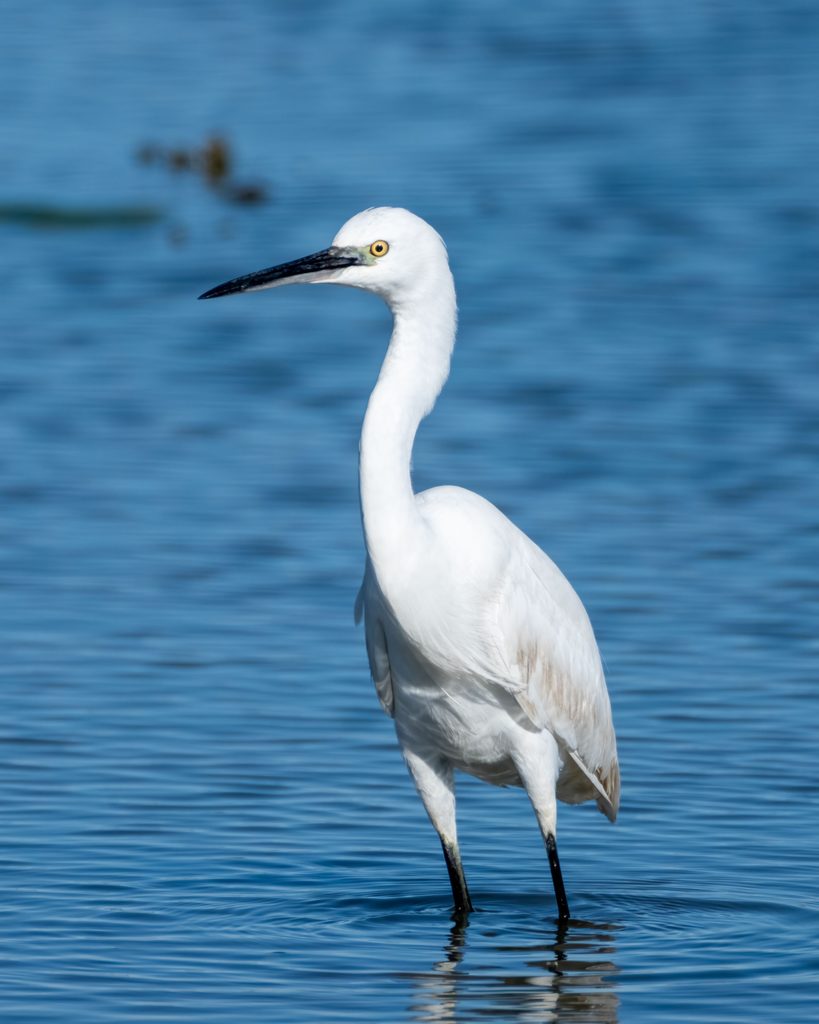
The little egret is a small white heron with black legs and bright yellow feet. People sometimes call them its golden slippers.
It stirs the mud with one foot to scare up hidden prey. This clever habit makes feeding easier.
Once rare in northern Europe, it has spread widely in recent decades. Warmer winters and better protection have helped.
ALSO READ: 15 Birds That Look Like Dinosaurs (Identification, With Pictures)
Storks: Large Birds on Tall Legs
28. Wood Stork (Mycteria americana)
The wood stork stands about 50 inches tall, with a wingspan of 60 to 65 inches, according to the U.S. Fish and Wildlife Service.
Its long legs let it wade through shallow ponds. It feeds by feeling for fish with its bill in muddy water.
Like other storks, it cools off by letting droppings run down its legs. It was once endangered but was later moved to threatened.
29. White Stork (Ciconia ciconia)
The white stork stands about 3.5 feet tall. It has white plumage, black flight feathers and bright red legs and bill.
Each year it migrates thousands of miles between Europe and Africa. Many pairs nest on rooftops and church towers.
Folklore says storks deliver babies. This story may explain why many people treat the bird with warmth.
30. Marabou Stork (Leptoptilos crumenifer)
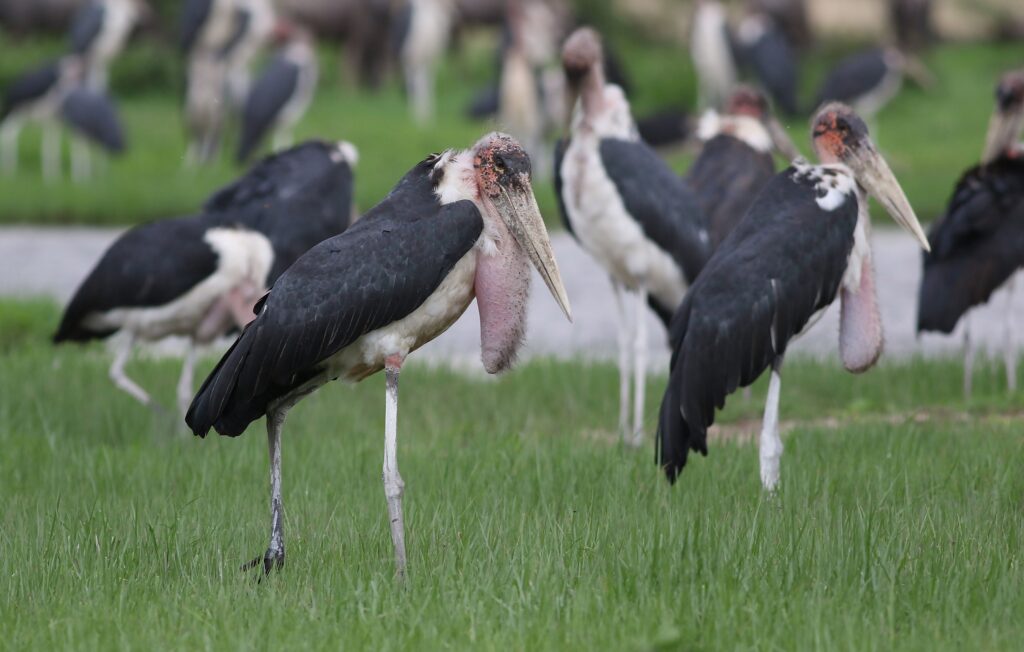
The marabou stork is a giant of Africa, standing up to 5 feet tall. Its wingspan can approach 10 feet.
Its legs often look white. That is because the bird cools itself by excreting on its legs, which leaves a pale coating.
It has a bare head and a hanging throat pouch. It feeds on carrion and waste, so it helps keep areas cleaner.
31. Saddle-billed Stork (Ephippiorhynchus senegalensis)
The saddle-billed stork is one of the tallest storks, standing close to 5 feet. Its red, black and yellow bill is hard to forget.
Its black legs have pink joints, which add a delicate touch. It wades in African wetlands for fish, frogs and crabs.
This bird is not common. It needs large, quiet wetlands to feed and breed.
32. Jabiru (Jabiru mycteria)
The jabiru is the tallest flying bird of South and Central America. It stands around 4.5 to 5 feet tall, with a wingspan of about 8 feet.
Its long black legs match a bare black neck with a red band at the base. The bill is long and slightly upturned.
The Pantanal in Brazil is one of the best places to see it. It builds very large stick nests in tall trees.
33. Black-necked Stork (Ephippiorhynchus asiaticus)
The black-necked stork lives in South Asia and Australia, where it is called the jabiru. It stands near 4.5 feet tall.
It has long red legs, a glossy black neck and a heavy straight bill. The contrast is striking.
It needs wetlands to survive. The species is Near Threatened because those wetlands are disappearing.
34. Shoebill (Balaeniceps rex)
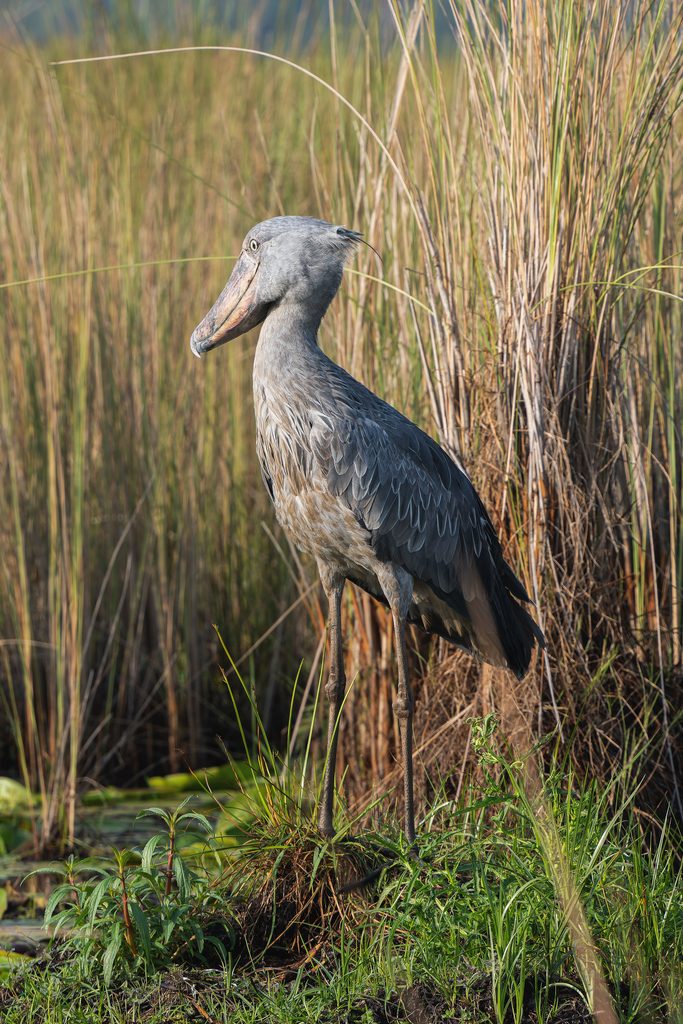
The shoebill is one of the strangest birds on Earth. It stands up to 4.5 feet tall and has a huge, shoe-shaped bill.
Its long legs end in very large feet. These spread its weight on floating plants in swamps of East and Central Africa.
It stays still for long periods, waiting for lungfish. The shoebill is Vulnerable, with only a few thousand left.
Shorebirds, Spoonbills and Other Long-Legged Waders
35. Black-necked Stilt (Himantopus mexicanus)
The black-necked stilt is about 14 inches long. Yet its bright pink-red legs are among the longest in proportion to body size of any bird.
It wades in shallow pools and marshes, picking up insects and tiny crustaceans. Its black-and-white plumage is crisp and neat.
Parents are very protective of their nests. They will call loudly and even fake an injury to lead intruders away.
ALSO READ: 25 Cold Hardy Chicken Breeds (Identification, With Pictures)
36. Black-winged Stilt (Himantopus himantopus)
The black-winged stilt is the Old World cousin of the black-necked stilt. It lives across Europe, Africa and Asia.
Its pink-red legs are extremely long and thin. They let it feed in water that is too deep for most small waders.
It often nests in loose colonies on salt pans and shallow lakes. I find its elegant walk hard to forget.
37. American Avocet (Recurvirostra americana)
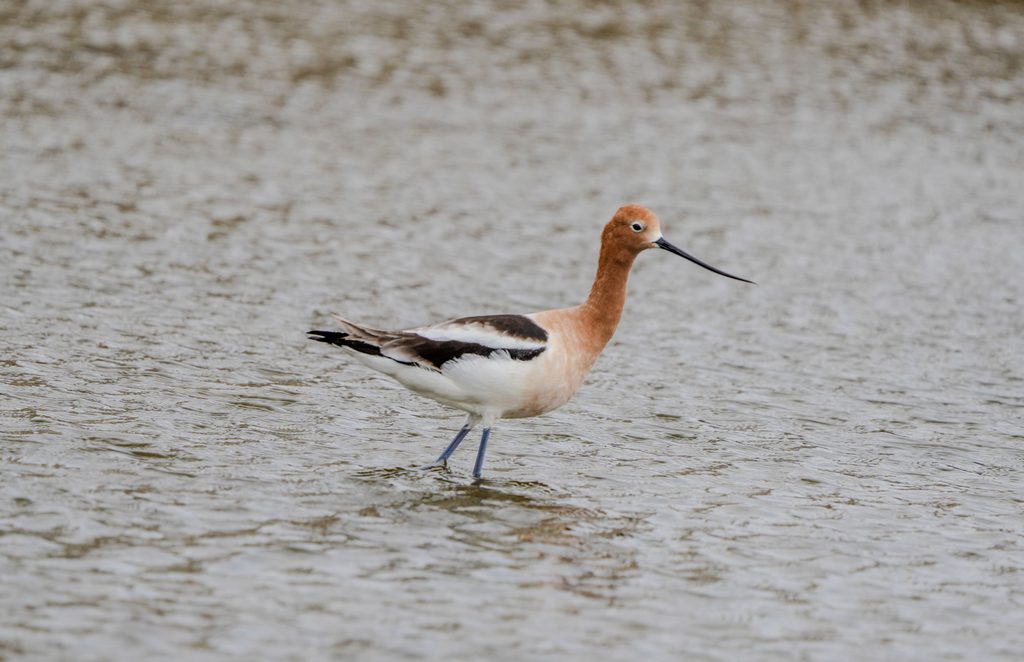
The American avocet is a tall, slim shorebird of western North America. It has blue-grey legs and a long, upturned bill.
It sweeps the bill from side to side through shallow water to catch tiny prey. In summer its head and neck turn a soft cinnamon.
Alkaline lakes and wetlands are vital for it. Protecting those habitats keeps migrating flocks healthy.
38. Pied Avocet (Recurvirostra avosetta)
The pied avocet is a black-and-white wader of Europe and Asia. It has pale blue legs and a sharply upcurved bill.
It is the emblem of the Royal Society for the Protection of Birds in the United Kingdom. It returned to England in the 1940s after a long absence.
Its comeback is a good conservation story. It shows what protected wetlands can achieve.
39. Roseate Spoonbill (Platalea ajaja)
The roseate spoonbill is a pink wading bird of the Americas. It stands about 2.5 feet tall on long legs.
It sweeps its flat, spoon-shaped bill through shallow water to catch small fish and shrimp. Its color comes from pigments in its food.
You can see it along the Gulf Coast and in Florida. The U.S. Fish and Wildlife Service lists it among its bird species.
40. Limpkin (Aramus guarauna)
The limpkin is a brown, streaked wader found in Florida and much of Latin America. Its long legs and toes help it walk on floating plants.
It feeds mainly on apple snails, which it opens with its slightly curved bill. Its loud, wailing call often rings out at night.
Wetland drainage is a concern. The bird depends on healthy snail populations.
41. Greater Yellowlegs (Tringa melanoleuca)
The greater yellowlegs is a medium shorebird, about 14 inches long. As the name says, its bright yellow legs are easy to spot.
It breeds in boreal wetlands across Canada. In winter, it travels as far as South America.
It wades in shallow water and often runs after small fish. Its loud, ringing call acts as an alarm for other birds.
42. Long-billed Curlew (Numenius americanus)
The long-billed curlew is North America’s largest shorebird. Its legs are long and grey, and its bill can reach about 8 inches.
It nests in open grasslands in the western United States and Canada. Its long legs help it walk through tall grass.
Grassland loss is a major threat. Protecting prairies helps this unique bird survive.
43. Northern Jacana (Jacana spinosa)
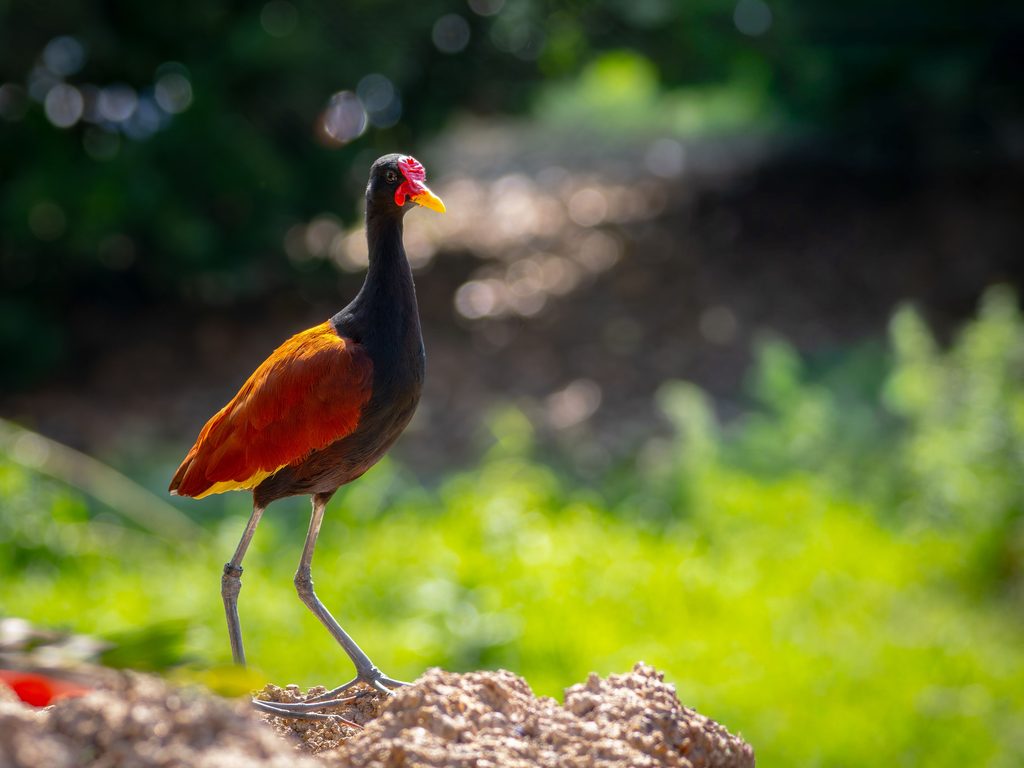
The northern jacana is nicknamed the “lily-trotter.” Its very long toes spread its weight, so it can walk on floating leaves.
Its legs are long and yellowish-green. The bird has a bright yellow-and-red face shield and a yellow bill.
Males handle most of the egg care and chick rearing. They sometimes carry chicks tucked under their wings.
44. Red-legged Seriema (Cariama cristata)
The red-legged seriema is a tall ground bird of South American grasslands. It stands near 2.5 to 3 feet tall on long red legs.
It hunts snakes, lizards and large insects. It may slam prey against the ground to break it up.
Each foot has an enlarged claw on the second toe. This sickle-shaped claw helps with the hunt.
45. Eurasian Spoonbill (Platalea leucorodia)
The Eurasian spoonbill is a white wader with long black legs and a flat, spoon-shaped bill. It stands near 3 feet tall.
It sweeps the bill through the water to feel for small prey. The sweeping motion is steady and calm.
It breeds in reed beds and marshes across Europe and Asia. Wetland protection has helped it return to parts of its old range.
Why Do Birds Have Long Legs?
Long legs serve four main purposes. They help birds wade, run, watch for danger and stay cool.
Waders use them to reach deeper water. Runners use them to cover ground fast. Storks and flamingos also use them to lose heat in warm climates.
Bird legs also work differently from ours. The part that looks like a backward knee is actually the ankle. This surprises many people.
Long-Legged Birds That Need Our Help
Several birds on this list are at risk. The red-crowned crane, grey crowned crane and secretary bird are Endangered. The Andean flamingo, sarus crane, blue crane and wattled crane are Vulnerable.
Wetlands are the biggest issue. Drained marshes, dams and farming leave birds with less space.
You can help in simple ways. Support wetland protection, keep a safe distance from nests, and join local bird counts. Small actions add up.
Quick FAQ
Which bird has the longest legs? The common ostrich has the longest and strongest legs among living birds.
Which long-legged bird is the tallest that can fly? The sarus crane, at up to about 6 feet.
Which bird has the longest legs for its size? Stilts are famous for it, and flamingos are close behind.
Why do flamingos stand on one leg? The Smithsonian’s National Zoo says it helps reduce heat loss.
Final Thoughts
These 45 birds show how one feature can take many forms. Legs can be built for speed, for wading, for hunting or for balance.
I hope this list helps you spot more of them. Next time you visit a lake or wetland, look down as well as up. The legs tell a story.
References
- Smithsonian’s National Zoo and Conservation Biology Institute. “Ostrich.” https://nationalzoo.si.edu/animals/ostrich
- Smithsonian’s National Zoo and Conservation Biology Institute. “American Flamingo.” https://nationalzoo.si.edu/animals/american-flamingo
- U.S. Fish and Wildlife Service. “Whooping Crane (Grus americana).” https://www.fws.gov/species/whooping-crane-grus-americana
- U.S. Fish and Wildlife Service. “Wood Stork (Mycteria americana).” https://www.fws.gov/species/wood-stork-mycteria-americana
- U.S. Fish and Wildlife Service. “American Avocet (Recurvirostra americana).” https://www.fws.gov/species/american-avocet-recurvirostra-americana
- U.S. Fish and Wildlife Service. “Roseate Spoonbill (Platalea ajaja).” https://www.fws.gov/species/roseate-spoonbill-platalea-ajaja
- U.S. Fish and Wildlife Service. “Great Blue Heron (Ardea herodias).” https://www.fws.gov/species/great-blue-heron-ardea-herodias