25 Birds That Sing at Night (Species Names, With Pictures)
I remember lying awake one spring night, convinced a dozen different birds were arguing outside my window. It turned out to be a single, very determined mockingbird. That night changed how I listen to darkness.
This guide covers 25 birds that sing at night, ranging from famous nocturnal singers like the nightingale to lesser-known callers like the corncrake and the American woodcock.
Why Do Some Birds Sing at Night?
Nighttime singing usually falls into one of three categories: mate attraction, territorial defense, or simply being naturally nocturnal.
For many songbirds, singing after dark is a mating strategy reserved almost entirely for unmated males. Research on the common nightingale, published through the National Center for Biotechnology Information, confirms that only unpaired males sing regularly at night, and nocturnal song likely serves to attract a mate rather than defend territory.
That same research found something interesting. Female nightingales searching for mates were shown to prospect breeding areas mostly at night, timing their search to match the exact hours when unpaired males sang loudest.
Cornell Lab of Ornithology’s All About Birds resource confirms a nearly identical pattern in North America’s most famous nocturnal singer, noting that most nocturnal singers among Northern Mockingbirds are unmated males, and nighttime singing becomes more common during a full moon.
A separate group of birds sings at night simply because they are nocturnal by nature. Owls and nightjars fall into this category, hunting after dark and calling as a normal part of that nighttime lifestyle rather than as an exception to daytime habits.
Now, let’s meet the 25 species that best represent these patterns.
Classic Nocturnal Songbirds
1. Common Nightingale
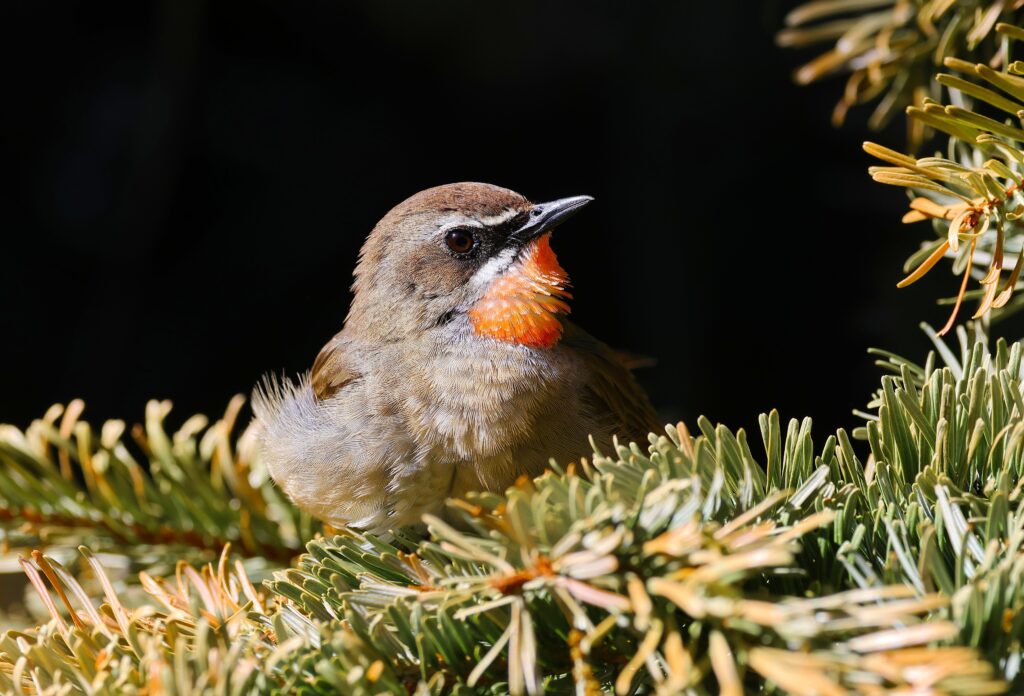
This small, plain-looking bird carries one of the most famous reputations in the entire bird world, inspiring centuries of poetry purely through sound rather than appearance.
Research confirms that only unpaired males sing regularly at night, and that nocturnal song is likely to serve attracting a mate, while dawn singing plays a larger role in defending territory.
Verified stat: According to detailed vocal behavior records, nightingale song activity peaks between dusk and midnight, with males capable of producing well over 100 distinct song phrases across a single breeding season.
I find it remarkable that such a plain brown bird produces one of the most complex songs in nature. Its secretive habits, staying low in dense shrubs, mean most people hear this bird for years before ever actually seeing one.
Nocturnal singing typically stops once a male successfully pairs with a female, usually sometime in May, after which the bird shifts its energy toward nesting duties instead.
2. Northern Mockingbird
This is likely the most commonly heard nighttime singer across North America. Cornell Lab of Ornithology notes that Northern Mockingbirds sing all through the day and often into the night, with most nocturnal singers being unmated males.
That same source confirms nighttime singing becomes more common during a full moon, and that males may maintain two entirely separate song repertoires, one used in spring and another in fall.
Mockingbirds are also remarkable mimics, weaving in phrases borrowed from dozens of other bird species, plus car alarms, sirens, and other artificial sounds picked up from their surroundings.
Why it matters: Artificial light from streetlights can extend this behavior further, since bright urban lighting disrupts a bird’s natural sense of when dusk actually ends.
Once paired, males typically stop this nighttime routine within a few weeks, redirecting their energy toward nest defense and feeding duties instead.
ALSO READ: 50 Types of Birds With Long Legs (Species Identification, With Pictures)
3. American Robin
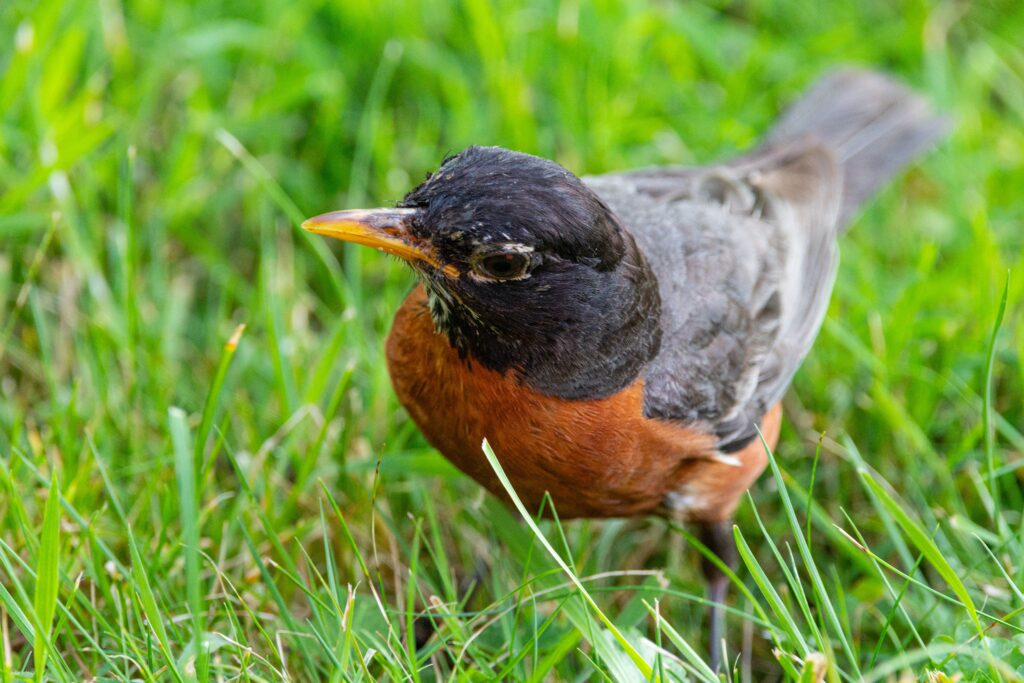
This familiar backyard bird is not naturally nocturnal, but urban populations frequently sing well after dark, particularly in areas with heavy artificial lighting.
Streetlights and illuminated buildings can suppress melatonin production in birds, disrupting their internal clock and effectively convincing the bird that dawn is approaching earlier than it actually is.
This effect is strong enough that robins in brightly lit urban parks have been documented singing at nearly any hour of the night during breeding season, a pattern far less common in robins living in darker, rural habitat.
4. European Robin
Like its American counterpart, this small European songbird frequently sings at night in urban and suburban settings, largely due to artificial light exposure.
Its song is often mistaken for a nightingale’s by casual listeners, since both species can be heard singing from dense shrubbery well after sunset.
Unlike the nightingale, European Robins maintain fairly consistent singing behavior across the year, making their nighttime song less tied to a specific unmated breeding strategy.
5. Corncrake
This secretive marsh and grassland bird produces a harsh, repetitive rasping call almost exclusively after dark, a sound once so common across European farmland that it became a familiar feature of summer nights.
Its call carries remarkably far across open fields, letting males advertise territory to females moving through the area during nighttime hours.
Corncrake populations have declined sharply due to changes in agricultural mowing schedules, since the bird nests directly on the ground in tall grass that modern farming equipment can disturb before chicks fledge.
6. Sedge Warbler
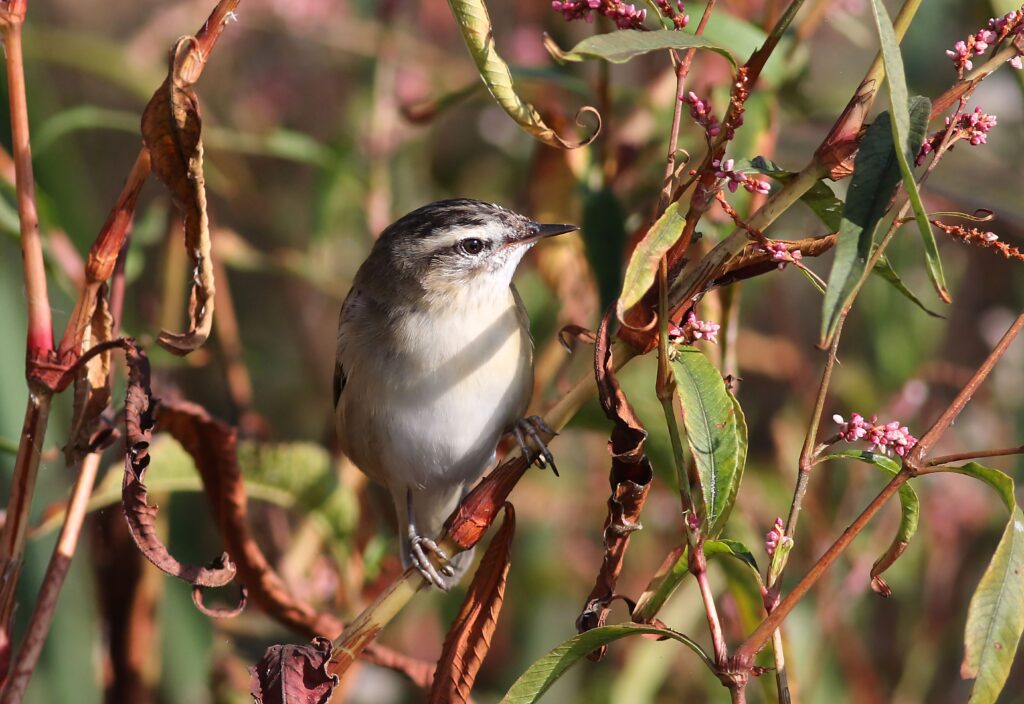
This small European warbler often extends its rapid, chattering song well into the night during peak breeding season, particularly on warm, still evenings.
Males use an especially varied song, rarely repeating the same phrase twice in a row, a trait researchers believe may help demonstrate vigor and experience to potential mates.
It favors dense reed beds and waterside vegetation, making its nighttime song a familiar sound near wetlands and slow-moving rivers across much of Europe.
7. Grasshopper Warbler
Named for its insect-like song, this small warbler produces a continuous, mechanical-sounding reeling trill that can last for several minutes without pause, often well after dark.
That reeling call is famously difficult to locate by ear, since its pitch and steady rhythm make distance and direction hard to judge even for experienced birders.
This species favors dense scrub and overgrown grassland, staying low and hidden even while producing one of the more distinctive night songs in the region.
ALSO READ: 25 Birds With Colorful Beaks (Identification, With Pictures)
Nightjars and Their Relatives
8. Eastern Whip-poor-will
Few night sounds are as recognizable in eastern North America as this bird’s own name repeated over and over. According to Massachusetts state wildlife records, calling is most intense during crepuscular hours but continues with real intensity through the night whenever the moon is at least half illuminated.
The U.S. Fish and Wildlife Service maintains an active federal species profile for this bird, reflecting ongoing conservation concern tied to population decline.
A U.S. Geological Survey study on Eastern Whip-poor-wills notes that this species remains poorly studied specifically because its nocturnal habits make it difficult to survey using traditional daytime bird count methods.
Verified detail: Massachusetts wildlife officials note the bird’s breeding cycle is timed closely to the lunar calendar, with eggs often hatching roughly ten days before a full moon so chicks benefit from maximum moonlight while parents forage.
This species has declined significantly across parts of its range, largely due to habitat loss, fire suppression changes, and declining populations of the large night-flying moths it depends on for food.
9. Chuck-will’s-widow
This larger relative of the whip-poor-will produces an equally persistent, repetitive night call, though slightly deeper and slower in cadence than its more famous cousin.
Wildlife researchers note it may chant its call hundreds of times across a single warm summer night, especially when a full moon provides extra hunting light.
Unlike the whip-poor-will, this species favors more open woodland edges, and its larger size occasionally allows it to catch small birds or bats in addition to its usual insect diet.
10. Common Poorwill
This nightjar produces a simple, whistled two-note call that echoes clearly across open canyons and dry scrubland in western North America.
It holds a rare distinction among birds: documented cases show this species can enter a extended state of torpor during cold weather, effectively hibernating for extended periods rather than migrating.
Its call is most active on calm, clear nights, following the same general lunar-linked pattern seen in its whip-poor-will relatives.
11. Common Nighthawk
Though technically a nightjar relative rather than a true hawk, this bird is often seen and heard at dusk, producing a sharp, nasal “peent” call during looping flight displays.
Males also perform a dramatic diving display, pulling out of a steep dive so suddenly that air rushing through their wing feathers produces a distinctive booming sound.
Common Nighthawks often forage over cities and stadium lights, taking advantage of insects drawn to artificial illumination, making their calls a familiar summer evening sound in many urban areas.
12. Common Pauraque
Found from the southern United States through much of Latin America, this nightjar produces a distinctive, whistled call often described as sounding like its own name repeated across warm, humid nights.
It favors thorn scrub and dense brushy habitat, staying low to the ground during the day where its mottled plumage provides near-perfect camouflage against leaf litter.
Like other nightjars, its calling activity intensifies significantly around dusk and during bright, moonlit conditions.
13. Mexican Whip-poor-will
Once considered the same species as the Eastern Whip-poor-will, this bird was later split into its own species based on differences in song and range across the southwestern United States and Mexico.
Its call closely resembles its eastern relative but differs slightly in pitch and pacing, a distinction researchers rely on to separate the two species by ear alone.
This bird favors wooded mountain slopes rather than the lowland forests preferred by its eastern counterpart, calling from similar perches on calm, moonlit nights.
14. European Nightjar
This Old World nightjar produces a long, continuous churring call that can last for several minutes without interruption, one of the more unusual and mechanical-sounding bird calls in Europe.
Males shift the pitch of this churring call slightly depending on wind direction, a subtle adjustment researchers believe helps the sound carry more effectively across open heathland.
Like its American relatives, this species is almost impossible to spot during the day, relying entirely on camouflage while resting motionless on the ground or along a horizontal branch.
ALSO READ: 30 Stunning Birds With Long Beaks (Species Identification, With Pictures)
Owls: Nature’s Full-Time Night Singers
15. Barred Owl
Famous for its distinctive “who cooks for you” call, this owl is one of the most vocal nighttime birds across eastern and increasingly western North America.
Beyond its classic hooting call, this species produces an unusual range of barks, cackles, and gurgling sounds, particularly during pair communication and territorial disputes.
Barred Owls have expanded their range significantly over the past century, now overlapping with the closely related Spotted Owl in parts of the Pacific Northwest, occasionally leading to competition between the two species.
16. Great Horned Owl
One of the most widespread owls in the Americas, this species produces a deep, resonant hooting call typically heard well before midnight during peak breeding season.
Its call plays a direct role in pair bonding, with mated pairs often producing overlapping duets that reinforce their bond and reassert shared territory to nearby rivals.
This owl is also among the most powerful nighttime predators in its range, capable of taking prey considerably larger than itself, including other owl species.
17. Eastern Screech-Owl
Despite its name, this small owl does not actually screech. Its real call is a soft, descending trill or a steady, level-pitched whinny, both delivered almost exclusively after dark.
It readily takes up residence in nest boxes and tree cavities near suburban neighborhoods, making it one of the more commonly heard owls in populated areas.
Two distinct color variations exist within the species, a reddish morph and a gray morph, though both produce essentially identical nighttime calls.
18. Barn Owl
This pale, heart-faced owl produces an eerie, drawn-out screech rather than a traditional hoot, a sound that has fueled folklore and superstition across many cultures for centuries.
Its exceptional hearing allows it to hunt small rodents in complete darkness, using sound alone to locate prey moving beneath grass or snow cover.
Barn Owls are found on every continent except Antarctica, making their distinctive nighttime call one of the most widely recognized owl sounds in the world.
19. Tawny Owl
Common across European woodlands, this owl produces the classic “twit-twoo” call, though that familiar sound is actually two different owls calling back and forth rather than a single bird.
Typically, the female produces the sharper “kewick” call, while the male answers with the longer, quavering hoot most people associate with owls in general.
This species is highly territorial, and its calling activity often intensifies sharply during autumn, when young owls disperse and adults must reassert existing territorial boundaries.
20. Long-eared Owl
This slender, well-camouflaged owl produces a low, repetitive hooting call, often delivered from deep within dense conifer cover, making the caller difficult to locate visually.
Its long ear tufts are not actual ears at all, but feather structures believed to help with camouflage rather than hearing.
This species often roosts communally outside breeding season, sometimes with a dozen or more owls sharing the same dense stand of trees during winter months.
21. Northern Saw-whet Owl
One of the smallest owls in North America, this species produces a repetitive, mechanical-sounding tooting call that can continue steadily for extended periods on calm spring nights.
Its call resembles a truck backing up, a comparison so frequently made that many birders use it as a memory aid for identification.
Despite being fairly common across much of its range, this owl’s small size and dense forest habitat make it one of the more rarely seen owls, even by experienced birdwatchers.
ALSO READ: 15 Breeds of Chicken With No Feathers on the Neck (With Pictures, and Care Tips)
Nocturnal Wading and Marsh Birds
22. Black-crowned Night Heron
As its name suggests, this heron is most active at dusk and through the night, producing a harsh, barking “quok” call as it flies between feeding and roosting sites.
Its large, red eyes are specifically adapted for low-light hunting, allowing it to spot fish and amphibians in near darkness far more effectively than daytime heron species.
This bird often nests in mixed colonies alongside egrets and other herons, though its own feeding schedule remains shifted almost entirely toward nighttime hours.
23. American Woodcock
This plump woodland bird performs one of the most unusual nighttime displays in North America, producing a nasal “peent” call from the ground before launching into a spiraling flight display.
During that display flight, air rushing through specialized wing feathers produces a distinctive twittering sound, followed by a musical chirping as the bird descends back to its display ground.
This performance typically occurs at dusk and continues intermittently through the night during peak breeding season, especially on clear, calm evenings in open fields near woodland edges.
24. Limpkin
Found mainly in Florida wetlands, this wading bird produces one of the most haunting sounds in North American nature, a loud, wailing scream often described as sounding almost human.
Its calls occur frequently at night, particularly when the bird is agitated or communicating across long distances of open marsh.
This eerie nighttime call has become so associated with Florida swamps that it was reportedly used as a stand-in sound effect in early jungle-themed films and radio productions.
25. Yellow-breasted Chat
This unusual songbird, now classified in its own family separate from typical warblers, produces an odd mix of whistles, rattles, and harsh chattering notes, frequently continuing well into the night during breeding season.
Its song is so varied and unpredictable that early ornithologists debated its exact classification for decades, partly due to how differently it behaves compared to related species.
Males sometimes deliver this call while performing an unusual, floppy display flight, even in low light conditions, a behavior rarely seen in more typical songbirds.
ALSO READ: 15 Breeds of Chicken With Feathers on Feet: (With Pictures, and Care Tips)
Quick Comparison Table
| Bird | Type of Call | Main Reason for Night Singing |
| Common Nightingale | Melodic, complex song | Mate attraction (unmated males) |
| Northern Mockingbird | Mimicked, varied song | Mate attraction and light pollution |
| Eastern Whip-poor-will | Repetitive namesake call | Lunar-linked territorial and mating call |
| Barred Owl | Hooting and barking | Territorial defense and pair bonding |
| American Woodcock | Peent call plus flight display | Courtship display |
| Corncrake | Harsh rasping call | Long-distance mate attraction |
How to Tell These Night Callers Apart
Start with rhythm. Nightjars like the whip-poor-will repeat the exact same phrase over and over, while mockingbirds constantly switch between different mimicked sounds.
Next, listen for tone. Owls produce low, resonant hoots or eerie screeches, while songbirds like the nightingale and robin produce higher, more melodic phrases.
Finally, consider habitat. Marsh-based callers like the limpkin and corncrake favor wetlands, while nightjars and owls are more often heard from open woodland or forest edges.
My own takeaway: Once you learn even five or six of these calls, a walk after dark stops feeling empty. It starts sounding like a packed, layered conversation you simply could not hear before.
Frequently Asked Questions
Why do some birds sing at night instead of during the day? Many species, especially unmated males, use the quieter nighttime hours to make their song carry farther and stand out more clearly to potential mates.
Is it normal for a mockingbird to sing all night long? Yes, particularly for unmated males during spring and summer breeding season. According to Cornell Lab of Ornithology, this behavior often becomes more frequent during a full moon.
Do owls count as birds that sing at night? Yes. While owls do not produce a traditional song, their calls serve the same core purposes, mate attraction and territorial defense, and occur almost entirely after dark.
Does artificial light affect nighttime bird singing? Yes, significantly. Streetlights and illuminated buildings can suppress natural melatonin production in birds, prompting species like robins to sing at unusual nighttime hours.
Final Thoughts
Twenty-five birds, and each one turns nighttime into a stage rather than simply a place to rest. Every call here serves a real purpose, whether that is finding a mate, defending ground, or simply living the nocturnal life nature designed for it.
I hope this guide gives you a reason to step outside after dark and actually listen. There is an entire second layer of bird life most of us walk past without ever noticing.
References
- National Center for Biotechnology Information, U.S. National Library of Medicine (PMC). “Nocturnal Song and Female Prospecting in Nightingales.” https://pmc.ncbi.nlm.nih.gov/articles/PMC2677238
- Cornell Lab of Ornithology. “Northern Mockingbird Overview — All About Birds.” https://www.allaboutbirds.org/guide/Northern_Mockingbird/overview
- U.S. Fish & Wildlife Service. “Eastern Whip-poor-will (Antrostomus vociferus) Species Profile.” https://ecos.fws.gov/ecp/species/10678
- U.S. Geological Survey. “Eastern Whip-poor-wills Are Positively Associated with Low Elevation Forest in the Central Appalachians.” https://pubs.usgs.gov/publication/70189481
- Commonwealth of Massachusetts. “Species Spotlight: Eastern Whip-poor-will.” https://www.mass.gov/info-details/species-spotlight-eastern-whip-poor-will
- Maryland Department of Natural Resources. “Native Animal Profile: Eastern Whip-poor-will.” https://news.maryland.gov/dnr/2024/10/01/native-animal-profile-eastern-whip-poor-will/
- Michigan State University, Michigan Natural Features Inventory. “Antrostomus vociferus (Eastern Whip-poor-will) Species Account.” https://mnfi.anr.msu.edu/species/description/11071/antrostomus-vociferus