40 Birds Native to North Dakota (Identification, With Pictures)
North Dakota may look quiet from the highway. Yet this prairie state is one of the best birding places in North America. Thousands of wetlands, wide grasslands, river valleys, and badlands all give birds a home.
The numbers show why. The North Dakota Game and Fish Department’s checklist lists 376 bird species that are possible to see in the state. Of these, 231 species nest or are inferred to nest here. That is a rich variety for a state with few trees.
This guide covers 40 birds native to North Dakota, explaining what each bird looks like, where it lives, and why it matters.
Native North Dakota Waterbirds and Wetland Birds
North Dakota sits in the heart of the Prairie Pothole Region. Glaciers left thousands of shallow wetlands behind. The region is often called the “Duck Factory” of North America.
1. Mallard
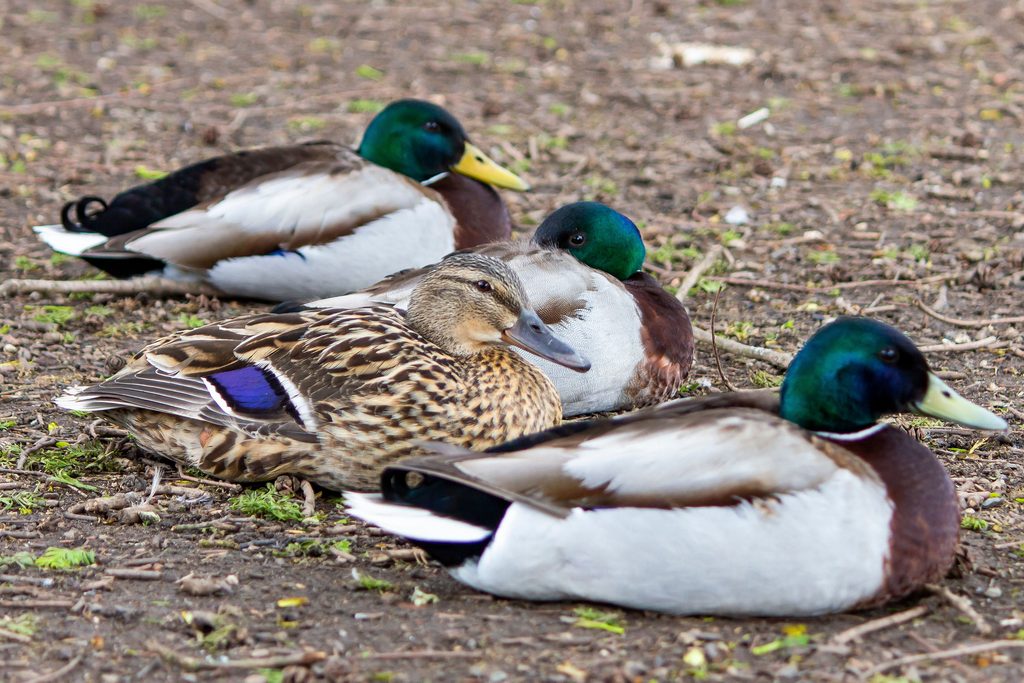
The mallard is the most familiar duck in the state. Males have a glossy green head and a yellow bill. Females are mottled brown.
It is a core species in North Dakota’s duck production. The Game and Fish Department’s spring survey estimated about 3.4 million breeding ducks in 2019. That was 40 percent above the long-term average.
You can see mallards on almost any pond, slough, or river. They adapt easily to farm ponds and town parks.
2. Blue-Winged Teal
The blue-winged teal is a small, fast duck. It has a bold white crescent on the face and a pale blue patch on the wing. It is one of the earliest ducks to head south in fall.
It nests in grass near shallow wetlands. Healthy grassland cover is vital for it. Without nesting cover, hens cannot raise broods.
In the 2019 survey, this species and the pintail were the only ones below the long-term average. That is a quiet warning about habitat.
3. Northern Pintail
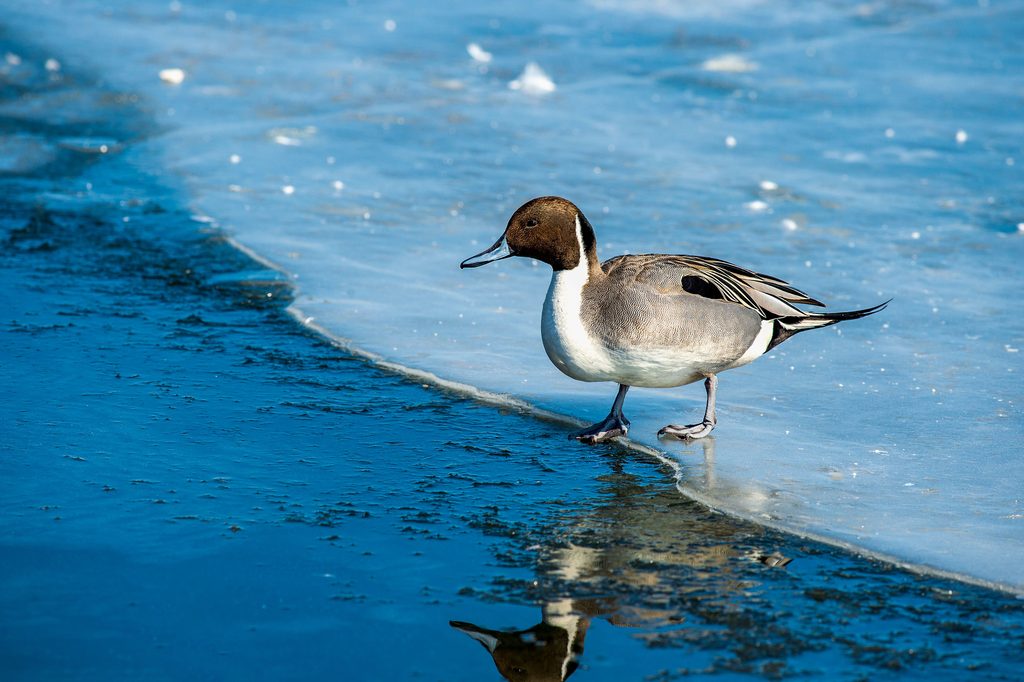
The northern pintail is a graceful duck with a long, thin neck. Males have a chocolate-brown head and a slender, pointed tail. It looks elegant, even from far away.
It is one of the first ducks to return in spring. It often nests early, sometimes while snow still lies in the fields. Its numbers have struggled across the continent.
The Game and Fish Department reported pintails up 40 percent from the previous year in 2019. Even so, they remained below the long-term average.
4. Canvasback
The canvasback is a large diving duck. The male has a rust-red head and a long, sloping profile. It looks like a sleek racing boat.
It prefers larger, semi-permanent wetlands with plenty of plants. It dives to feed on tubers and aquatic vegetation. Clean, deep marshes suit it best.
Hunters and birdwatchers prize it. Protecting big prairie marshes helps this bird.
5. Canada Goose
The Canada goose is a large, black-necked goose with a white chin strap. Its loud honking is a sound of spring and fall. Pairs mate for life.
North Dakota’s breeding population is large. A 2023 spring survey estimated about 297,914 Canada geese. That was down 23% from a record the year before.
They nest near ponds, rivers, and even city lakes. Please give nesting pairs space. They defend their young fiercely.
6. Snow Goose
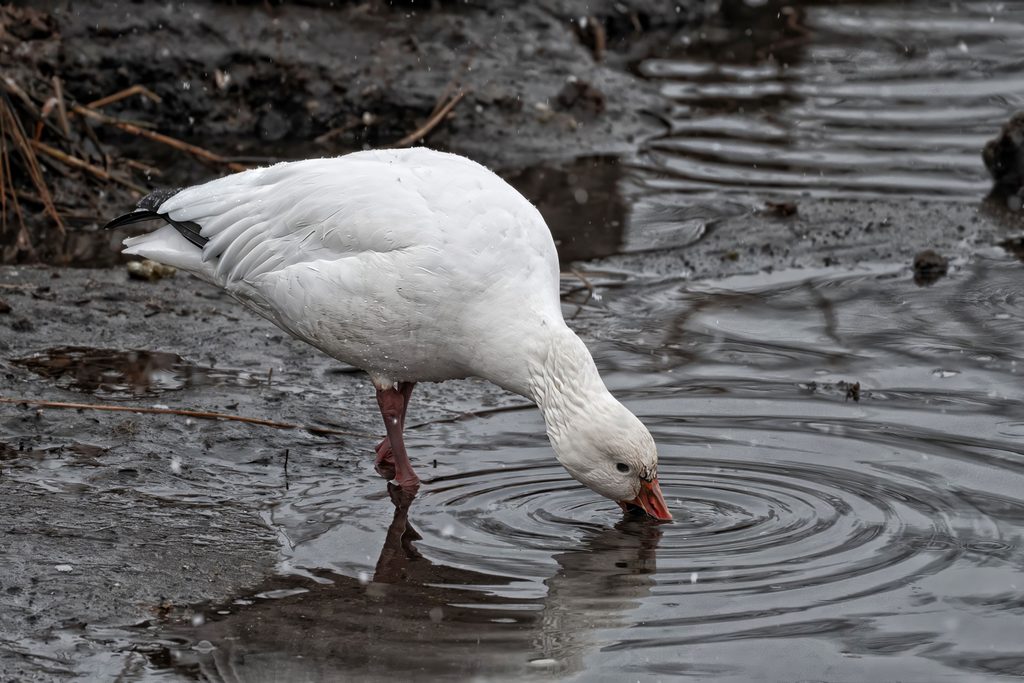
The snow goose is a white goose with black wingtips. It travels in enormous flocks. When thousands lift off together, the sky seems to move.
North Dakota is a major stopover during migration. Flocks gather on wetlands and fields in spring and fall. They are heading to and from Arctic nesting grounds.
Wildlife refuges and waterfowl production areas offer fine viewing. The noise of a big flock is unforgettable.
ALSO READ: 55 Different Types of Duck Species (With Pictures, and Info)
7. American White Pelican
The American white pelican is one of North America’s largest birds. Its wingspan is about nine feet. Black wingtips show when it flies.
It does not dive like a brown pelican. Instead, groups herd fish together in shallow water. They scoop them up with their huge pouches.
North Dakota has some famous nesting colonies, including Chase Lake. Seeing a pelican on the prairie surprises many visitors.
8. Western Grebe
The western grebe is a long-necked diving bird. It has a black cap, white face, and a thin yellow bill. It looks like a swan in miniature.
It performs a spectacular courtship dance. Pairs rise and “run” across the water side by side. It is one of the finest displays in nature.
Large lakes with reeds are its habitat. Devils Lake is a well-known place to watch it.
9. Sandhill Crane
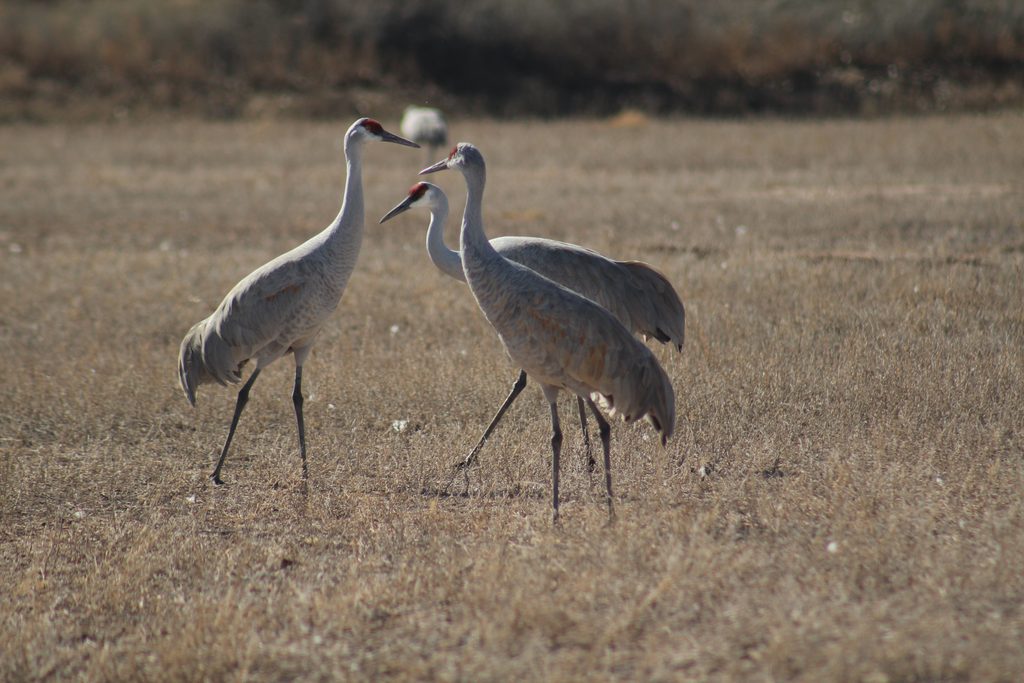
The sandhill crane is a tall, gray bird with a red patch on its crown. Its rolling, rattling call carries for miles. It stands about four feet tall.
It nests in wet meadows and marshes. Huge numbers also pass through the state on migration. In spring and fall, flocks fly high in V-shaped lines.
Hearing the cranes overhead is a wonderful moment. Even when you cannot see them, you know they are there.
10. Whooping Crane
The whooping crane is North America’s tallest bird. It stands nearly five feet tall. Adults are white with black wingtips and a red crown.
It is endangered. The wild population is still small, with only several hundred birds in the main flock. North Dakota lies on its migration route each spring and fall.
Many stop at wetlands and refuges on the way. If you see one, keep your distance. Report the sighting to wildlife officials.
11. American Avocet
The American avocet is a striking shorebird with a thin, upturned bill. In summer, its head and neck turn a soft orange. Its legs are long and blue-gray.
It sweeps its bill from side to side through shallow water. It catches tiny insects and crustaceans. It nests on alkali flats and prairie wetlands.
Look for avocets at shallow lakes in the western and central parts of the state. They are hard to mistake.
ALSO READ: 35 Birds Native to Czech Republic (Identification, With Pictures)
12. Marbled Godwit
The marbled godwit is a large, tawny shorebird. It has a very long, slightly upturned bill. The bill is pink at the base and dark at the tip.
It nests in native grasslands near wetlands. In spring, males perform noisy display flights. Their loud calls echo across the prairie.
It needs undisturbed grass and healthy ponds. Plowing up grassland is a serious threat.
13. Black Tern
The black tern is a graceful marsh bird. In summer, it has a black body and gray wings. It flies in light, dipping circles over water.
It nests on floating plant material in wetlands. It feeds on insects and small fish. Its nests are fragile and easily lost to changing water levels.
Its numbers have fallen in many places. Healthy cattail marshes help it survive.
14. Piping Plover
The piping plover is a small, sandy-colored shorebird. It has a single black breast band and an orange bill with a black tip. It blends perfectly into sandbars and gravel shores.
It was listed as a federally threatened species in 1985. According to North Dakota Game and Fish, the state ranks third out of 20 states for the share of the global breeding population, at about 9.73%. Roughly 300 to 400 pairs breed on the Missouri River system, and another 200 to 300 on alkali lakes.
Boaters and walkers can harm nests without knowing it. Keep away from sandbars with nesting birds, and keep dogs on leashes.
Native North Dakota Grassland Birds
Native prairie is one of the rarest habitats in North America. The birds that depend on it have declined sharply. North Dakota is a stronghold for many of them.
15. Sharp-Tailed Grouse
The sharp-tailed grouse is a prairie icon. The Lakota called it “Cansiyo,” or the “Fire Bird,” because it needs fire to keep grasslands open. It stays in North Dakota all year.
Theodore Roosevelt described it as the most plentiful feathered game in the region. It even appears on the Game and Fish Department’s logo. Unlike the pheasant, it has feathered legs for warmth.
In winter, it burrows into snow to stay warm. In spring, males dance on communal display grounds called leks. The sight is wonderful.
16. Greater Prairie-Chicken
The greater prairie-chicken is a stocky grouse with barred feathers. Males have orange air sacs on their necks. They inflate them during courtship.
They make a low, booming sound that carries across the grass. They stamp their feet and raise their pinnae feathers. It is one of the strangest displays in North American birds.
In North Dakota, this bird lives in parts of the east and southeast. It needs large, unbroken tracts of tall grass.
17. Western Meadowlark
The western meadowlark is North Dakota’s state bird. It has a bright yellow chest with a black V. Its flute-like song is one of the best-loved sounds of the plains.
It is very common. A classic survey by Stewart and Kantrud found about 28 breeding pairs per square mile on average. That makes it one of the state’s most abundant grassland birds.
It returns in early spring. For many residents, its first song marks the end of winter.
ALSO READ: 50 Different Types of Doves (With Pictures, and Species Info)
18. Bobolink
The bobolink is a small blackbird with an odd pattern. Males are black underneath and cream on the back. It looks as if it is wearing its tuxedo backward.
Its bubbling, tinkling song fills hayfields and meadows. It nests on the ground in tall grass. Early haying can destroy nests.
It makes one of the longest migrations of any songbird. It winters in South America, thousands of miles away.
19. Dickcissel
The dickcissel is a small, sparrow-like grassland bird. Males have a yellow chest with a black bib. Its song sounds like its name.
According to the Game and Fish Department, it is more closely related to cardinals and grosbeaks than to meadowlarks. That surprises many people. It sings from fence posts and tall weeds.
It is most common in the southern and eastern parts of the state. Good grass cover brings it back each summer.
20. Sprague’s Pipit
Sprague’s pipit is a small, streaky, brown grassland bird. It is shy and hard to see. The male’s song is its best-known feature.
He sings while flying high in the sky, often for long stretches. The sound is thin and descending. It seems to fall from the clouds.
It needs large patches of native prairie. It is listed as a bird of conservation concern. Its decline reflects the loss of intact grassland.
21. Chestnut-Collared Longspur
The male chestnut-collared longspur is a handsome little bird. In summer, it has a black belly and a chestnut patch on the back of the neck. It lives in mixed-grass prairie.
It sings while fluttering above the ground. Then it parachutes down. It nests on the ground, hidden in short grass.
Overgrazing and plowing reduce its habitat. Well-managed grazing lands help it.
22. Baird’s Sparrow
Baird’s sparrow is a secretive, buff-colored sparrow. It has a streaked back and a yellowish crown stripe. It is one of the most sought-after prairie birds.
It lives in native grass of moderate height. Its tinkling song ends in a trill. It is hard to see but easy to enjoy.
This species depends on healthy native prairie. North Dakota is an important breeding area for it.
23. Upland Sandpiper
The upland sandpiper is a shorebird that lives in grasslands. It stands on fence posts and holds its wings up after landing. Its long neck and small head give it a unique look.
It has a mournful, whistling call. Many people describe it as a “wolf whistle.” It is a classic prairie sound.
It migrates to South America. Pastures and large grass tracts keep it coming back.
ALSO READ: 25 Common Types of Parrots (Species Traits, With Pictures Explained )
24. Long-Billed Curlew
The long-billed curlew is the largest sandpiper in North America. Its bill is long and curved downward like a scythe. Its body is cinnamon-brown.
It returns to North Dakota in spring. The Game and Fish Department’s natural history calendar notes its arrival. It nests in short-grass prairie, mostly in the west.
It is declining in many regions. Preserving large open grasslands helps it.
Native North Dakota Raptors and Owls
Open skies make North Dakota a fine place to watch raptors. Fence posts and utility poles offer many perches.
25. Bald Eagle
The bald eagle is the national bird of the United States. It has a white head and tail, and a huge, yellow bill. Young birds are mottled brown.
It nests in tall trees along rivers and lakes. In winter, it often gathers where open water remains. The Missouri River is a good place to look.
Please keep well back from nests. Disturbance can make the adults abandon their eggs.
26. Golden Eagle
The golden eagle is a powerful, dark brown raptor. It has golden feathers on the back of its neck. It is larger and heavier than most hawks.
It nests on cliffs and rocky outcrops. In North Dakota, the badlands and western breaks are key habitats. It hunts rabbits, ground squirrels, and prairie dogs.
Seeing one soar over the buttes is a thrill. It moves with great ease and power.
27. Red-Tailed Hawk
The red-tailed hawk is the most common large hawk in North America. Adults have a rusty-red tail. It often sits on poles and fence posts.
It hunts rodents and rabbits. Its loud, raspy scream is used in movies for eagles. That is a fun fact for many viewers.
It nests in trees, on cliffs, and even on buildings. You will spot it along nearly every country road.
28. Swainson’s Hawk
Swainson’s hawk is a slim hawk of open country. It has long, pointed wings that it holds in a slight V. Its colors range from pale to very dark.
It has one of the longest hawk migrations. Many birds winter in Argentina, thousands of miles away. In summer, they feed on grasshoppers and small mammals.
It arrives in late April and May. Farm fields and prairies are its home.
ALSO READ: 25 Best Birds to Have as Pets (Species Identification, With Pictures)
29. Northern Harrier
The northern harrier is a slim hawk with a distinct white rump patch. It flies low over fields. It tilts from side to side as it hunts.
It has an owl-like face that helps it hear prey in tall grass. It nests on the ground in wet meadows. This makes it vulnerable to mowing.
Look for it over marshes and grasslands. Males are gray, while females are brown.
30. Great Horned Owl
The great horned owl is a large, powerful owl with ear tufts. It has bright yellow eyes. Its deep hooting is a classic night sound.
It stays in North Dakota all year. It is one of the first birds to nest, often in winter. It uses old hawk and crow nests.
It hunts rabbits, rodents, and even skunks. A quiet shelterbelt is a good place to spot one.
31. Snowy Owl
The snowy owl is a large, white owl from the Arctic. It comes south in winter. Females have darker barring.
It hunts in open fields and along roadsides. It often sits on fence posts, hay bales, or the ground. It looks like a patch of snow at first.
Winter birdwatchers love to find one. Keep your distance, because stress can hurt the bird.
Native North Dakota Woodland and Backyard Birds
North Dakota has fewer forests than most states. Even so, river valleys, shelterbelts, and the Turtle Mountains support many songbirds.
32. Black-Capped Chickadee
The black-capped chickadee is a tiny, cheerful bird. It has a black cap and bib, white cheeks, and a soft gray back. Its song sounds like “fee-bee.”
It stays all winter. It survives extreme cold by fluffing its feathers and lowering its body temperature at night. That is remarkable for such a small creature.
It readily uses feeders and nest boxes. An NDSU Extension circular even lists the chickadee among birds that use homemade nest sites.
33. American Robin
The American robin is a familiar bird with an orange-red breast. Its cheerful song is a sign of spring. Many people say it is the first bird they notice in the yard.
It feeds on worms and, in winter, on berries. It builds a sturdy cup-shaped nest of mud and grass. Eggs are a lovely pale blue.
It is common in towns, farms, and woodlands. A shallow dish of water can attract it.
34. Northern Flicker
The northern flicker is a large woodpecker with a spotted chest. Western birds show red wing linings, while eastern birds show yellow. Both have a white rump patch.
It often feeds on the ground, eating ants. This is unusual among woodpeckers. It also drums on trees and buildings.
It nests in tree cavities and nest boxes. The NDSU circular on homemade nest sites includes plans for the flicker.
35. Red-Headed Woodpecker
The red-headed woodpecker is a bold, striking bird. Its entire head is crimson, with a white body and black wings. It is hard to mistake.
It catches insects in flight and stores nuts and acorns. It nests in dead trees. In many areas, its numbers are falling.
Preserving old, dead trees can help it. They are not waste. They are homes.
36. Baltimore Oriole
The Baltimore oriole is a flash of orange and black. Males shine like glowing embers. Females are softer yellow-orange.
It weaves a hanging, sock-shaped nest high in a tree. It is a work of fine craft. It loves orange slices and grape jelly at feeders.
It is common in the eastern part of the state. Look for it in cottonwoods and elms.
ALSO READ: 25 Birds That Swim Underwater to Catch Fish (With Pictures, and Info)
37. Rose-Breasted Grosbeak
The male rose-breasted grosbeak has a black head and a bright rose-red patch on the chest. Its white belly and heavy bill complete the look. The female is brown and streaky.
Its song is rich and rolling, like a robin that has had singing lessons. It feeds on seeds, fruit, and insects. It often visits feeders.
It nests in woodlands, especially in eastern North Dakota. Males help incubate the eggs.
38. Mountain Bluebird
The mountain bluebird is a lovely, sky-blue bird. Males are bright turquoise, with no orange. Females are gray with blue tints.
It lives in open country in the west, often near badlands and ranchland. It hovers while hunting insects. It nests in cavities and boxes.
Nest boxes have helped bluebirds recover in many areas. A well-placed box is a gift to this species.
39. American Goldfinch
The American goldfinch is a small, bright yellow bird. Males wear a black cap in summer. They turn olive-brown in winter.
It nests late, often in July or August. This is when thistle and other seeds are ripe. It also uses thistle down to line the nest.
It is common at seed feeders. Its bouncy flight and cheerful call are easy to spot.
40. Ruffed Grouse
The ruffed grouse is a forest bird with mottled brown feathers. It has a fan-shaped tail. In spring, males drum by beating their wings against the air.
The sound is a deep thumping, like a distant motor starting. The Game and Fish natural history calendar tracks the drumming season. It is one of the most unusual sounds in the woods.
In North Dakota, it lives in aspen and deciduous forests, such as the Turtle Mountains and the Pembina Hills.
Why North Dakota’s Birds Matter
Birds show the health of the land. Waterfowl track wetlands, and grassland birds track prairie. When one group falls, it often signals trouble for the whole habitat.
Protected lands make a measurable difference. According to the U.S. Fish and Wildlife Service, waterfowl production areas, easements, and refuges make up less than 2% of the landscape in the Prairie Pothole states. Yet they produce nearly 23% of the area’s waterfowl.
North Dakota’s Devils Lake Wetland Management District alone protects more than 258,000 acres of wetland and grassland. It includes 257 waterfowl production areas open to the public.
How to Help North Dakota’s Birds
Anyone can help. You do not need a large farm or special training. Here are some practical steps:
- Leave nesting areas alone, especially sandbars and grasslands.
- Delay mowing hayfields until after nesting season.
- Keep dogs leashed near shorelines and ground nests.
- Put up nest boxes for bluebirds, chickadees, and flickers.
- Plant native grasses and shrubs in yards and fields.
- Keep cats indoors to protect songbirds.
- Report whooping crane sightings to wildlife officials.
Final Thoughts
North Dakota’s birds are bold, loud, and surprisingly beautiful. From the booming prairie-chicken to the tiny chickadee, each species adds to the character of the plains.
I find that the prairie rewards patience. Stand still at dawn near a wetland, and the whole landscape begins to sing. Next time you drive across the state, slow down and listen.
References
- North Dakota Game and Fish Department. Checklist of North Dakota Birds (2016). https://gf.nd.gov/sites/default/files/publications/nd-bird-checklist-2016.pdf
- North Dakota Game and Fish Department. Spring Breeding Duck Numbers Tallied. https://gf.nd.gov/news/3171
- North Dakota Game and Fish Department. Piping Plover (Species Profile). https://gf.nd.gov/ecology/species/birds/piping-plover
- North Dakota Game and Fish Department. Sharp-tailed Grouse or Fire Bird. https://gf.nd.gov/wildlife-notes/sharp-tailed-grouse-or-fire-bird
- U.S. Fish and Wildlife Service. J. Clark Salyer Wetland Management District. https://www.fws.gov/refuge/J_Clark_Salyer_WMD/
- U.S. Fish and Wildlife Service. Devils Lake Wetland Management District. https://www.fws.gov/refuge/devils-lake-wetland-management-district
- North Dakota State University, NDSU Extension. Homemade Nest Sites for North Dakota Song Birds (Extension Circular WL-964). https://library.ndsu.edu/ir/handle/10365/17469?show=full